
Reclaiming Identity: The Struggle for Indigenous Rights in the Andes

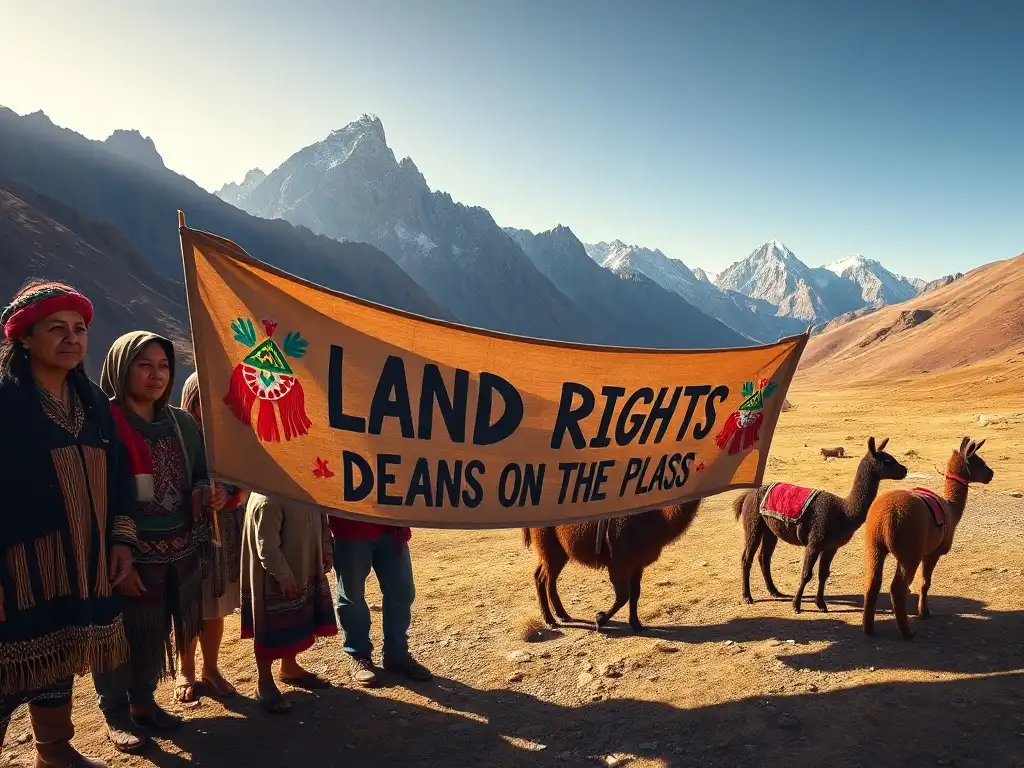
Step into a world lost to time, yet echoing powerfully in the present. For centuries, the breathtaking Andes Mountains have witnessed the rise and fall of magnificent civilizations – the Incas, Moche, Nazca, and more. But their legacy extends far beyond ancient ruins. Discover the unyielding spirit of the Andean people as we delve into the Andean indigenous rights struggle, a fight for cultural preservation and self-determination that continues to shape the region today. Are you ready to uncover the complexities of this vital, ongoing narrative?
- Reclaiming Identity: The Andean Indigenous Rights Struggle
-
Contemporary Challenges to Andean Indigenous Rights
- Land Rights and Resource Control: A Central Battleground for Andean Communities
- Cultural Preservation and Linguistic Rights: Protecting Andean Heritage
- Political Representation and Participation: The Voice of Andean Indigenous Peoples
- Economic Disparity and Social Injustice: Addressing Systemic Inequalities in the Andes
- The Ongoing Struggle for Recognition and Justice
-
The Future of Indigenous Rights in the Andes
- Building Inclusive Societies: A Path Towards Equality and Justice
- The Importance of Intercultural Dialogue and Understanding
- Climate Change Impacts on Andean Indigenous Communities
- Intergenerational Knowledge Transfer and Language Revitalization
- Sustainable Development and Traditional Ecological Practices
-
Frequently Asked Questions
- What is the main focus of the "Andean indigenous rights struggle"?
- Which Andean civilizations are most relevant to understanding this struggle?
- What are some key issues in the Andean indigenous rights struggle?
- How do Andean indigenous communities fight for their rights?
- What is the significance of reclaiming identity in this struggle?
- Final Reflection: Echoes of Resistance, Seeds of Hope
- Embrace Your Role in Supporting Indigenous Rights!
Reclaiming Identity: The Andean Indigenous Rights Struggle
The Andes Mountains, a majestic spine running down the western coast of South America, are not only a geographical marvel but also the cradle of vibrant and sophisticated civilizations. For centuries, the Inca, Moche, Nazca, and Tiahuanaco, among others, thrived in this challenging terrain, developing intricate social structures, awe-inspiring architecture, and remarkable agricultural techniques. However, the arrival of European colonizers in the 16th century dramatically altered the course of Andean history, initiating a long and painful process of dispossession, cultural suppression, and systemic marginalization that continues to impact Indigenous communities today.
This article explores the ongoing struggle for Andean indigenous rights, examining the historical roots of the conflict and highlighting the key aspects of the contemporary movement striving for self-determination and cultural revitalization. Understanding this struggle is crucial to appreciating the complexities of Andean societies and the enduring legacy of colonialism in the region.
The fight for Andean indigenous rights is not merely a historical narrative; it is a living testament to resilience, resistance, and the ongoing pursuit of justice and equality. It's a story of reclaiming identity and heritage in the face of overwhelming adversity.
The Historical Context of Indigenous Marginalization in the Andes
The Spanish conquest of the Andes was not simply a military victory; it was a systematic dismantling of Indigenous societies. The imposition of European laws, languages, and religious beliefs led to the erosion of traditional social structures and the suppression of indigenous knowledge systems. The encomienda system, which granted Spanish conquistadors control over Indigenous labor, resulted in forced labor, exploitation, and the decimation of populations through disease and starvation.
This period of brutal colonization had a profound and lasting impact, creating deep-seated inequalities that persist to this day. The legacy of colonialism manifests in various forms, including land dispossession, limited access to education and healthcare, and persistent discrimination in social and political spheres. The forced assimilation policies aimed to erase Indigenous identities, leading to the suppression of languages, traditions, and spiritual practices.
Even after independence from Spain, many Andean nations continued to marginalize Indigenous populations, often failing to recognize their land rights and cultural autonomy. This historical context is essential to understanding the contemporary struggles for indigenous rights in the Andes, as the fight is not just against current injustices but against a centuries-old legacy of oppression. The fight for self-determination is, therefore, a fight against historical amnesia and the ongoing effects of colonialism.
The Fight for Self-Determination: Key Aspects of the Andean Indigenous Rights Movement
The Andean indigenous rights movement is a diverse and multifaceted phenomenon, encompassing a range of organizations, strategies, and goals. However, several key themes unite these diverse efforts. A central focus is the reclaiming of ancestral lands. Indigenous communities are actively fighting for the recognition and restitution of territories that were unjustly taken during the colonial period and subsequent eras. This struggle often involves legal battles, community mobilization, and advocacy work with national and international organizations. Another vital aspect is the preservation and revitalization of Indigenous languages and cultures.
Efforts to revive traditional practices, languages, and knowledge systems are crucial to maintaining cultural identity and resisting assimilation. This includes promoting bilingual education, supporting cultural centers, and advocating for the recognition of Indigenous languages in official contexts. Furthermore, the movement actively seeks greater political participation and representation. Indigenous communities are demanding a greater voice in decision-making processes that affect their lives, including those related to land rights, resource management, and environmental protection. This involves advocating for political reforms, participating in elections, and forming Indigenous political organizations. The struggle also includes a fight for economic empowerment and social justice.
Indigenous communities are working to improve their economic conditions through initiatives such as sustainable agriculture, artisan production, and ecotourism. This also involves addressing issues such as poverty, inequality, and access to essential services like healthcare and education. The fight for Andean indigenous rights is a complex and ongoing process, requiring persistent advocacy, community mobilization, and international solidarity. The movement's success depends on a holistic approach that addresses the historical injustices and contemporary challenges faced by Indigenous communities in the Andes. The path to self-determination demands a multifaceted approach that tackles land rights, cultural preservation, political participation, and economic empowerment simultaneously.
Contemporary Challenges to Andean Indigenous Rights
This section delves into the multifaceted challenges faced by Andean indigenous communities in their ongoing struggle for recognition and self-determination. The fight for Andean indigenous rights is complex, encompassing land rights, cultural preservation, and political participation, all interwoven with a legacy of colonialism and ongoing systemic inequalities. Understanding these contemporary challenges is crucial to appreciating the depth and complexity of the Andean indigenous rights struggle.
Land Rights and Resource Control: A Central Battleground for Andean Communities
Land, for Andean communities, represents far more than mere territory; it is the foundation of their cultural identity, their spiritual connection to ancestral pasts, and their economic sustenance. The struggle for land rights and resource control remains a central battleground in the Andean indigenous rights struggle. For centuries, indigenous communities have faced dispossession, encroachment, and exploitation of their lands and resources by external forces, including mining companies, agricultural corporations, and government entities.
This has led to significant environmental degradation, the disruption of traditional livelihoods, and the erosion of cultural practices deeply intertwined with the land. The lack of secure land tenure frequently leaves Andean communities vulnerable to forced displacement and eviction. For example, [Specific case study of land disputes in a particular Andean region pending]. Furthermore, the extraction of natural resources, such as mining, often occurs without meaningful consultation or compensation for the indigenous communities whose ancestral lands are affected.
This often leads to conflicts and social unrest. The fight for land rights is not simply about property ownership; it's a fight for survival, cultural preservation, and the right to self-determination. The ongoing struggle highlights the urgent need for policies that recognize and protect indigenous land rights, ensuring equitable access to and control over their ancestral territories and resources.
Cultural Preservation and Linguistic Rights: Protecting Andean Heritage
The rich tapestry of Andean cultures, encompassing diverse languages, traditions, and spiritual beliefs, is under constant threat. The Andean indigenous rights struggle extends to the preservation of this invaluable heritage. The imposition of dominant languages and cultures has resulted in the marginalization and near-extinction of numerous indigenous languages. The loss of these languages represents not only a linguistic impoverishment but also a significant loss of cultural knowledge, traditions, and historical narratives passed down through generations.
Moreover, the commercialization and misappropriation of indigenous cultural expressions, such as textiles, music, and ceremonies, further undermines cultural integrity. The lack of intellectual property rights protection leaves indigenous communities vulnerable to exploitation and the erosion of their cultural identity. Efforts to revitalize indigenous languages and cultural practices are underway, but they face significant challenges, including limited resources, lack of government support, and the pervasive influence of globalized culture.
For example, [Specific example of a successful or unsuccessful cultural preservation initiative in the Andes pending]. Protecting Andean heritage requires a comprehensive approach that includes language revitalization programs, the promotion of indigenous arts and crafts, and the enforcement of intellectual property rights to safeguard indigenous cultural expressions. This is an integral part of the Andean indigenous rights struggle.
Political Representation and Participation: The Voice of Andean Indigenous Peoples
Meaningful political participation is essential for Andean indigenous communities to advocate for their rights and interests. However, historical marginalization and systemic discrimination have often excluded indigenous peoples from decision-making processes at all levels of government. The struggle for political representation and participation is a crucial aspect of the Andean indigenous rights struggle. This involves not only securing adequate representation in legislative bodies but also ensuring that indigenous voices are heard and considered in policy-making that affects their lives.
This requires overcoming barriers such as limited access to education, political awareness, and resources. Furthermore, structural inequalities within political systems often hinder effective participation. [Data on indigenous representation in Andean national legislatures pending]. The fight for political inclusion necessitates addressing systemic discrimination, promoting intercultural dialogue, and implementing mechanisms for meaningful consultation and participation in decision-making processes that affect indigenous communities.
The empowerment of indigenous leaders and organizations is also crucial in amplifying their voices and ensuring their effective engagement in political processes. Only through genuine political participation can Andean indigenous communities truly exercise their right to self-determination and shape their own futures. The ongoing pursuit of political representation is, therefore, a vital component of the broader Andean indigenous rights struggle.
The Andean region, despite its rich cultural heritage and natural resources, grapples with stark economic disparities and deep-rooted social injustices that disproportionately affect Indigenous communities. Generations of colonialism and neocolonial practices have created a system where Indigenous peoples often lack access to essential resources and opportunities, perpetuating a cycle of poverty and marginalization. This inequality manifests in several key areas. Access to land, a fundamental aspect of Andean Indigenous identity and livelihood, remains a significant challenge.
Many communities face land grabbing, insecure land tenure, and limited access to fertile land for agriculture, hindering their economic self-sufficiency and contributing to food insecurity. This is further exacerbated by the lack of investment in infrastructure and technology within Indigenous territories. The absence of adequate roads, communication networks, and access to markets severely limits their ability to participate in the wider economy and benefit from trade opportunities.
Furthermore, educational opportunities for Indigenous children and adults are often limited, hindering their ability to acquire the skills and knowledge necessary to compete in a globalized economy. This lack of access to quality education perpetuates the cycle of poverty and limits social mobility. The educational system, in many cases, fails to adequately acknowledge and incorporate Indigenous languages and knowledge systems, further marginalizing Indigenous cultures and identities.
The struggle for Andean indigenous rights is intrinsically linked to addressing these systemic inequalities. A holistic approach is needed, encompassing land reform, investment in infrastructure and education within Indigenous communities, and the promotion of culturally relevant education that values and respects Indigenous knowledge and languages.
The fight for economic justice also involves promoting fair trade practices and supporting Indigenous-led businesses. Many Andean communities are actively involved in sustainable agriculture, artisanal crafts, and ecotourism, but lack the resources and market access to fully realize the economic potential of these ventures. Government policies and international organizations need to prioritize initiatives that support these Indigenous-led enterprises, ensuring fair prices, access to markets, and the protection of Indigenous intellectual property rights. Without addressing these economic disparities, the struggle for Andean indigenous rights will remain an uphill battle. The path to true equality requires a fundamental shift in power dynamics, a commitment to social justice, and a recognition of the inherent rights and contributions of Andean Indigenous communities. The ongoing struggle highlights the urgent need for inclusive policies and sustainable development strategies that empower Indigenous communities and ensure their equitable participation in the economic and social life of the Andes.
The Ongoing Struggle for Recognition and Justice
The Andean indigenous rights struggle is a complex and multifaceted issue, deeply rooted in historical injustices and ongoing socio-economic disparities. For centuries, indigenous communities in the Andes have faced marginalization, dispossession of land and resources, and cultural suppression. While significant progress has been made in recent decades towards recognizing and protecting their rights, substantial challenges remain.
This section will delve into the legal and political landscape shaping the struggle, highlighting both the progress made and the obstacles that persist in securing true justice and self-determination for Andean indigenous populations. The fight for Andean indigenous rights continues to evolve, demanding a nuanced understanding of its historical context and current dynamics. Understanding this struggle requires analyzing both the legal mechanisms designed to protect these rights and the crucial role played by indigenous activism and advocacy.
Legal Frameworks and International Conventions: Protecting Indigenous Rights
International human rights law plays a crucial role in framing the Andean indigenous rights struggle. The United Nations Declaration on the Rights of Indigenous Peoples (UNDRIP), adopted in 2007, provides a comprehensive framework for the protection of indigenous rights globally. This declaration emphasizes the rights to self-determination, land rights, cultural preservation, and participation in decision-making processes affecting indigenous peoples. Many Andean nations have incorporated elements of UNDRIP into their national constitutions and legislation. However, the translation of these international standards into effective domestic policies and practices remains a significant challenge.
For instance, while many countries legally recognize indigenous land rights, the actual implementation often faces obstacles. Issues such as land titling processes, overlapping claims with other stakeholders (e.g., mining companies), and weak enforcement mechanisms frequently impede the effective protection of indigenous territories. Furthermore, the recognition of indigenous customary law and its integration within the national legal systems varies considerably across Andean nations.
Some countries have made significant strides in this area, while others still largely operate under a framework that prioritizes Western legal traditions, potentially undermining the legitimacy of indigenous governance structures. The effectiveness of legal frameworks is also dependent on consistent monitoring and enforcement, which are often lacking due to limited resources and capacity. This leads to a persistent gap between legal recognition and practical implementation, leaving many Andean indigenous communities vulnerable to exploitation and dispossession.
The Role of Activism and Advocacy: Empowering Andean Communities
Indigenous activism and advocacy are vital components of the Andean indigenous rights struggle. Grassroots organizations, indigenous leaders, and human rights defenders play a critical role in raising awareness, mobilizing communities, and advocating for policy changes. These groups employ a variety of strategies, including:
- Direct action and protests: Organizing demonstrations, marches, and other forms of direct action to pressure governments and corporations to address indigenous grievances.
- Legal advocacy: Using legal mechanisms, such as litigation and lobbying, to challenge discriminatory laws and policies.
- Community education and empowerment: Working to strengthen indigenous communities' capacity to participate in decision-making processes and protect their rights.
- International advocacy: Working with international organizations and human rights bodies to raise awareness and exert pressure on governments.
The success of these advocacy efforts depends heavily on the ability of indigenous communities to organize effectively, build alliances with other social movements, and leverage international support. The rise of digital technologies has also played a significant role, enabling indigenous communities to connect with each other and share information more easily, facilitating broader mobilization and advocacy efforts. However, activists often face significant risks, including threats, harassment, and even violence.
Protecting these essential voices and ensuring their safety is crucial for advancing the Andean indigenous rights struggle. The effectiveness of activism is further enhanced through the strategic use of media, both traditional and social media, to amplify their message and build public support.
Success Stories and Emerging Trends in the Andean Indigenous Rights Struggle
Despite the ongoing challenges, there are notable success stories emerging from the Andean indigenous rights struggle. Several indigenous communities have achieved significant victories in securing land rights, gaining greater control over their natural resources, and achieving greater recognition of their cultural identity. These achievements often result from sustained advocacy efforts, strategic alliances, and a growing international awareness of indigenous rights issues.
Examples include [Specific examples of successful indigenous rights movements and their achievements pending]. These successes demonstrate the potential for positive change when indigenous communities effectively mobilize and advocate for their rights. However, these victories are often hard-won and require persistent engagement.
Emerging trends in the Andean indigenous rights struggle include:
- Increased focus on climate change: Indigenous communities are increasingly recognizing the disproportionate impact of climate change on their livelihoods and are actively participating in climate change mitigation and adaptation efforts. This involves advocating for policies that protect their territories and traditional knowledge systems.
- Growing emphasis on self-determination: Indigenous communities are increasingly asserting their right to self-governance and control over their own affairs. This includes advocating for greater autonomy in areas such as education, healthcare, and resource management.
- Strengthening regional and international alliances: Indigenous communities are increasingly collaborating across national borders to share information, coordinate advocacy efforts, and build solidarity. This cross-border collaboration strengthens their collective voice and enhances their leverage in international forums.
The Andean indigenous rights struggle is an ongoing process, requiring sustained commitment, collaboration, and a deep understanding of the complex interplay of legal, political, and social factors. While challenges remain substantial, the progress made and the emerging trends suggest a promising path toward greater recognition, justice, and self-determination for indigenous communities in the Andes. The future of the struggle hinges on continued activism, effective legal frameworks, and a global commitment to upholding the rights of indigenous peoples.
The Future of Indigenous Rights in the Andes

The Andean indigenous rights struggle continues, demanding a future where ancestral knowledge and practices are not only preserved but also integrated into modern society. This requires a multifaceted approach, addressing historical injustices while fostering sustainable development that respects indigenous autonomy and self-determination. The path forward necessitates a profound shift in perspective, moving away from assimilationist policies towards inclusive models that value diversity and empower indigenous communities. Success hinges on the active participation of indigenous peoples in shaping their own destinies, alongside supportive national and international policies. The ongoing struggle is not merely about legal recognition but about achieving genuine equity and participation in all aspects of life, from political representation to economic opportunity. This evolution will require ongoing vigilance, advocacy, and a commitment to dismantling systemic barriers that perpetuate inequality. Crucially, it requires understanding the specific challenges faced by different Andean indigenous groups, recognizing their unique cultural contexts and needs.
Building Inclusive Societies: A Path Towards Equality and Justice
Building truly inclusive societies in the Andes requires a fundamental shift in how we understand and address social justice. It's not enough to simply grant legal recognition of indigenous rights; we must actively dismantle the systemic barriers that perpetuate inequality. This includes addressing historical injustices, such as land dispossession and cultural suppression. For example, the ongoing struggle for land restitution in Peru, where indigenous communities continue to fight for the return of ancestral territories illegally appropriated, highlights the need for concrete actions.
Furthermore, equitable access to education, healthcare, and economic opportunities is crucial. Indigenous languages should be promoted in educational systems, and healthcare services should be culturally sensitive and accessible to remote communities. The economic empowerment of indigenous communities requires support for sustainable development initiatives that respect traditional practices and knowledge.
This might involve promoting fair trade practices, supporting indigenous businesses, and investing in infrastructure that benefits these communities. Ultimately, the goal is to create a society where indigenous peoples are not marginalized but are fully integrated and empowered participants, contributing their unique perspectives and knowledge to the richness of Andean society. This requires a commitment to ongoing dialogue, collaboration, and a willingness to challenge deeply entrenched power structures.
The Importance of Intercultural Dialogue and Understanding
Intercultural dialogue is not merely a desirable goal; it is a fundamental necessity for achieving lasting peace and justice in the Andes. It requires a genuine commitment to understanding and respecting the diverse perspectives and worldviews of different Andean indigenous groups. This necessitates moving beyond superficial interactions and engaging in meaningful conversations that address the historical and ongoing challenges faced by these communities. For example, initiatives that bring together indigenous leaders, government officials, and civil society organizations can foster mutual understanding and build trust.
Such dialogues should focus on concrete issues, such as land rights, environmental protection, and access to resources. Furthermore, educational programs that promote intercultural understanding and appreciation are crucial. These programs should incorporate indigenous languages and perspectives into the curriculum, challenging dominant narratives and promoting a more inclusive understanding of Andean history and culture.
The goal is to create a society where different cultures coexist and enrich each other, rather than competing for dominance. This requires a willingness to listen, learn, and adapt, recognizing the value of indigenous knowledge and perspectives in addressing contemporary challenges. The process demands patience, persistence, and a genuine commitment to creating a more equitable and just society.
Climate Change Impacts on Andean Indigenous Communities
Climate change poses an existential threat to Andean indigenous communities, exacerbating existing inequalities and jeopardizing their livelihoods and cultural heritage. The melting glaciers, erratic rainfall patterns, and increased frequency of extreme weather events directly impact their agricultural practices, access to water resources, and overall food security. For instance, the shrinking glaciers in the Andes are impacting water availability for communities reliant on glacial meltwater for irrigation and drinking water. This is leading to water scarcity, conflicts over resources, and increased vulnerability to drought.
Furthermore, changes in weather patterns are disrupting traditional agricultural cycles, impacting crop yields and threatening food security. This necessitates the development of climate change adaptation strategies that are culturally appropriate and responsive to the specific needs of Andean indigenous communities. Such strategies might include promoting drought-resistant crops, developing sustainable water management techniques, and strengthening early warning systems for extreme weather events. However, effective adaptation requires not only technical solutions but also the empowerment of indigenous communities to participate actively in the design and implementation of these strategies.
It requires recognizing and valuing their traditional ecological knowledge and incorporating it into climate change adaptation planning. This participatory approach is crucial for ensuring that climate change adaptation efforts are effective, equitable, and sustainable. Ignoring the unique vulnerabilities of Andean indigenous communities to climate change will only exacerbate existing inequalities and undermine efforts to achieve lasting peace and justice in the region. The challenge is monumental, requiring significant investments in research, capacity building, and policy changes to protect these vulnerable communities.
Intergenerational Knowledge Transfer and Language Revitalization
The struggle for Andean indigenous rights is intrinsically linked to the preservation of ancestral knowledge and languages. For generations, knowledge about traditional medicine, agriculture, and societal structures has been passed down orally, often within families and specific communities. The suppression of indigenous languages during colonial periods and continued marginalization threatened this vital intergenerational transfer.
Many younger generations were discouraged from speaking their native tongues, leading to a significant decline in fluency and the erosion of a rich cultural heritage. This loss represents not only a linguistic tragedy but also a critical loss of knowledge embedded within the language itself. For instance, Quechua, Aymara, and other indigenous languages contain complex systems of classification for plants and animals, reflecting deep ecological understanding and traditional practices that are now threatened with extinction.
Efforts to revitalize these languages and knowledge systems are crucial for reclaiming indigenous identity and empowering communities. This involves active language immersion programs in schools and communities, the creation of multilingual educational materials, and the support of elders as keepers of traditional knowledge. Moreover, documenting and archiving traditional knowledge through digital platforms and community-led initiatives is paramount.
The success of these efforts relies heavily on community participation and ownership, ensuring that the process remains culturally relevant and respects the autonomy of indigenous groups. Without a concerted effort to preserve these languages and the knowledge they encapsulate, a vital part of Andean cultural heritage will be irrevocably lost, hindering the broader struggle for indigenous rights.
The ongoing challenge is to find innovative ways to integrate traditional knowledge into modern contexts, ensuring its relevance and value for future generations. This includes bridging the gap between traditional practices and modern scientific understanding, fostering a more holistic and sustainable approach to development.
Sustainable Development and Traditional Ecological Practices
Sustainable development in the Andes must recognize and integrate the traditional ecological knowledge and practices of indigenous communities. For centuries, Andean communities have developed sophisticated techniques for managing natural resources, including water management systems, agricultural practices adapted to high-altitude environments, and sustainable harvesting methods. These practices have proven remarkably resilient and effective in maintaining biodiversity and ecological balance.
However, these practices are often overlooked or even actively undermined by large-scale development projects that prioritize short-term economic gains over long-term environmental sustainability. The construction of dams, mining operations, and unsustainable agricultural practices often displace indigenous communities and destroy their traditional lands, impacting their livelihoods and disrupting their intricate relationship with the environment.
The integration of traditional ecological knowledge into development planning is essential for achieving genuine sustainability. This requires a shift from extractive models of development to participatory approaches that prioritize community involvement and consent. Free, prior, and informed consent (FPIC) is crucial in ensuring that indigenous communities have a voice in decisions that affect their lands and resources.
Furthermore, supporting community-based conservation initiatives and recognizing indigenous land rights are vital steps in protecting biodiversity and promoting sustainable resource management. Successful examples include community-managed protected areas where indigenous communities play a leading role in conservation efforts, demonstrating the effectiveness of integrating traditional knowledge with modern conservation science.
The challenge lies in creating policy frameworks that effectively recognize and support these community-led initiatives, ensuring that indigenous communities are not merely beneficiaries of development but active agents in shaping its future direction. This requires a fundamental change in perspective, moving away from a top-down approach to one that values and incorporates the wisdom and experience of Andean indigenous communities.
Frequently Asked Questions
What is the main focus of the "Andean indigenous rights struggle"?
The main focus is on reclaiming ancestral lands, cultural heritage, and self-determination. This includes fighting for political representation and economic justice for Indigenous communities. It's a fight for recognition and respect of their identity.
Which Andean civilizations are most relevant to understanding this struggle?
The struggle encompasses the legacy of many groups, including the Incas, Moche, Nazca, and Tiahuanaco. Understanding their pre-colonial societies helps contextualize present-day challenges and aspirations. Their historical experiences inform contemporary activism.
What are some key issues in the Andean indigenous rights struggle?
Key issues include land rights, access to resources, environmental protection, and the preservation of indigenous languages and traditions. The struggle also addresses issues of political marginalization and systemic discrimination.
How do Andean indigenous communities fight for their rights?
Communities utilize diverse strategies, including legal action, political mobilization, cultural revitalization, and international advocacy. They often work collaboratively with NGOs and other allies to amplify their voices.
What is the significance of reclaiming identity in this struggle?
Reclaiming identity is central to the struggle. It involves revitalizing languages, traditions, and spiritual practices, thereby strengthening community resilience and asserting their rightful place in society. It's a fundamental aspect of self-determination.
Final Reflection: Echoes of Resistance, Seeds of Hope
The fight for Indigenous rights in the Andes is not a relic of the past; it is a vibrant, ongoing struggle deeply intertwined with the challenges of climate change, economic inequality, and the preservation of cultural heritage. The echoes of past injustices resonate powerfully in the present, demanding our attention and action. The very survival of Andean cultures and their unique contributions to the world hang in the balance.
The resilience of Andean communities, their unwavering commitment to their ancestral lands and traditions, is profoundly inspiring. Their fight is a testament to the enduring power of identity and the strength found in collective action. We do not inherit the earth from our ancestors, we borrow it from our children.
This sentiment, though often attributed to various sources, perfectly encapsulates the urgency of the Andean struggle, highlighting the intergenerational responsibility we all share in protecting these vital ecosystems and cultures. The ongoing struggle for self-determination and resource control shapes not only the Andes but also informs global conversations about Indigenous rights and environmental justice.
You, the reader, now carry a deeper understanding of the complexities and nuances of this fight. Consider how the stories shared here resonate with your own life, your own community. What actions, however small, can you take to support the ongoing struggle for Indigenous rights in the Andes and beyond? Perhaps it's amplifying their voices, supporting Indigenous-led organizations, or simply educating yourself and others about the issues at stake. Let the echoes of resistance inspire you to become a seed of hope, nurturing a future where Indigenous voices are heard, respected, and empowered.
Embrace Your Role in Supporting Indigenous Rights!
Thank you for exploring the vital issue of Indigenous rights in the Andes. Your engagement is crucial for amplifying their voices and fostering greater understanding. Let's turn awareness into action. Here's how you can make a real difference:
- Join a local or online advocacy group dedicated to supporting Indigenous rights. Collective action is powerful, and your voice matters.
- Share this article with your network to spark conversations about Indigenous cultures and their rights. Every shared perspective helps raise awareness.
- Support Indigenous-led communities and initiatives, perhaps through visits or donations. Direct engagement enriches understanding and provides vital assistance to those affected.
What steps will you take today to support Indigenous communities?