
Inca Trade and Economy: The Flow of Goods and Resources


Step into a world lost to time, yet echoing with the whispers of empires past. Discover the secrets of the Andes, a region where ingenuity and power intertwined to forge remarkable civilizations. The Inca Empire, a testament to human resilience and ambition, relied on a complex network of trade – a system far more intricate than you might imagine. Unravel the mysteries surrounding Inca trade routes and resources and witness how the flow of goods shaped the destiny of a civilization that continues to fascinate us today. Prepare to be amazed.
The Inca Empire, a vast and sophisticated civilization that flourished in the Andes Mountains from the 15th to the 16th centuries, boasted a remarkably organized and efficient economic system. Unlike many other ancient societies reliant on individualistic market forces, the Inca economy was fundamentally based on principles of reciprocity and redistribution, overseen by a centralized state. This intricate system ensured the flow of essential goods and resources across the empire, facilitating its remarkable growth and stability.
This article will delve into the intricacies of Inca trade and its economic foundations, exploring the vast networks, key trade routes, and the crucial role of the Qhapaq Ñan in supporting the Inca way of life. Understanding the Inca economy provides crucial insight into the empire's remarkable achievements and enduring legacy. We will examine how the sophisticated Inca trade routes and resources fueled their impressive civilization and contributed to its overall success.
The Economic System of the Inca Empire
The Inca economic system was far from a chaotic free market. Instead, it was a highly structured and planned economy, centrally managed by the Sapa Inca and his bureaucracy. This system was designed to ensure the equitable distribution of resources and the provision of essential goods to all members of society. The empire's success relied heavily on efficient resource management, meticulous record-keeping (using quipus), and a well-defined system of labor organization. The absence of a formal monetary system is notable; instead, value was determined by the necessity and utility of goods within the context of the empire's needs.
Core Principles of the Inca Economy
The Inca economy operated on several key principles:
- Ayllu System: The ayllu, a community-based social and economic unit, formed the foundation of Inca society. Members of the ayllu worked collectively on communal lands, contributing their labor to support the entire group. This system fostered a sense of collective responsibility and ensured the equitable distribution of resources.
- Mit'a System: The mit'a was a mandatory labor system where individuals were required to contribute a certain amount of labor to public works projects, such as road construction, agriculture, and mining. This system was crucial for the construction and maintenance of the Qhapaq Ñan and other large-scale infrastructure projects.
- State Control of Resources: The Inca state controlled access to vital resources such as land, minerals, and livestock. This central control enabled the efficient redistribution of goods and prevented the concentration of wealth in the hands of a few.
The Role of Reciprocity and Redistribution in Inca Society
Reciprocity and redistribution were cornerstones of the Inca economy. Reciprocity involved the exchange of goods and services between individuals and groups, often within the ayllu system. Redistribution, overseen by the state, involved the collection of surplus goods from productive regions and their subsequent allocation to areas in need.
This system ensured that all members of society, regardless of their location or social standing, had access to essential goods and resources. This intricate system, involving meticulous record-keeping and a complex network of storage facilities, demonstrates the sophisticated organizational capacity of the Inca state. The effectiveness of this system is evidenced by the empire's ability to sustain a large population and withstand periods of drought or other environmental challenges.
Inca Trade Routes and Networks
The Inca Empire's vast territorial extent necessitated a sophisticated system of trade routes and networks to facilitate the movement of goods and resources across diverse geographical regions. This intricate system connected distant communities, ensuring the flow of essential commodities and supporting the empire's economic stability.
The Qhapaq Ñan: The Inca Road System
The Qhapaq Ñan, or "Royal Road," was the backbone of the Inca trade network. This extensive road system, stretching over 40,000 kilometers, connected the entire empire, facilitating the movement of goods, people, and messages. The remarkable engineering feats involved in its construction, including bridges, tunnels, and strategically placed tambos (roadside inns), stand as a testament to the Inca's advanced technological capabilities and organizational skills. The Qhapaq Ñan wasn't merely a trade route; it was a vital artery of the empire, facilitating communication, military mobilization, and the efficient distribution of resources.
Regional Trade Networks within the Inca Empire
Beyond the Qhapaq Ñan, a network of regional trade routes connected various communities within the Inca Empire. These routes often followed existing pre-Inca trails, adapting to the challenging Andean terrain. Different regions specialized in the production of specific goods, creating a system of inter-regional exchange. For example, coastal regions provided fish and salt, while highland areas produced potatoes and other agricultural products. This specialization and the subsequent exchange of goods fostered economic interdependence and strengthened the unity of the empire.
Key Trade Centers and Marketplaces in the Andes
Several key centers served as important marketplaces and hubs for trade within the Inca Empire. These locations facilitated the exchange of goods from different regions, often attracting traders from across the empire. While specific details about the organization and volume of trade in these centers are still being researched, their existence is a clear indication of the importance of trade in Inca society. The volume of goods exchanged, and the scale of the infrastructure required to support this trade, highlight the economic significance of these locations within the wider context of the Inca Empire.
Essential Resources and Goods in the Inca Economy
The Inca economy, a marvel of organization and efficiency for its time, relied on a diverse range of resources and goods. The empire's success hinged on its ability to effectively manage and distribute these resources across its vast territory, from the coastal deserts to the high Andes mountains. This intricate system, overseen by a centralized state, ensured the survival and prosperity of millions of people. Understanding the key resources is crucial to appreciating the complexity of the Inca economic system and its lasting impact.
The flow of goods and resources was meticulously planned and executed, reflecting the Inca's remarkable understanding of logistics and resource management. This sophisticated system allowed them to build and maintain their extensive empire. The Inca's ability to efficiently manage these resources was a key factor in their success.
Agricultural Products: Sustaining the Inca Population
Agriculture formed the backbone of the Inca economy. The ingenious terracing techniques allowed them to cultivate even the steepest slopes, maximizing arable land. Potatoes, maize (corn), quinoa, beans, and squash were staple crops, providing sustenance for the population. The Inca also cultivated coca, a plant with both ritual and medicinal significance. Their understanding of crop rotation and irrigation systems ensured high yields, contributing to the empire's stability and enabling surplus production for trade and storage.
The availability of diverse agricultural products not only sustained the population but also fueled their elaborate social structures and ceremonies. Agricultural surpluses were crucial for supporting the large population centers and maintaining the extensive infrastructure of the empire. The efficient management of agricultural resources reflects the sophisticated understanding of the Inca’s relationship with the environment. The Inca’s agricultural expertise and techniques are still studied and admired today.
The Importance of Textiles in Inca Society and Trade
Textiles played a pivotal role in Inca society, serving both practical and symbolic purposes. Alpaca and llama wool were prized materials, used to create intricate textiles of exceptional quality. These textiles were not merely clothing; they were integral to social status, religious ceremonies, and trade. Different types of textiles, varying in color, design, and quality, denoted social rank and status within the Inca hierarchy. Fine textiles served as tribute payments to the emperor and were used in religious rituals.
The production of textiles was a highly specialized craft, passed down through generations. The complex weaving techniques and intricate designs reveal the high level of skill and artistry of Inca artisans. Textiles also constituted a significant portion of the Inca trade network, exchanged for other goods and resources across the empire. The value of textiles in Inca society and trade highlights the sophistication of their craftsmanship and economic organization.
Mining and Precious Metals: The Inca's Wealth
The Inca Empire possessed considerable mineral wealth, particularly in gold, silver, and copper. These precious metals were used not only for ornamentation and religious objects but also as a form of currency and a symbol of imperial power. Mining operations were often extensive, involving significant labor and sophisticated techniques. The Inca used these metals to create impressive artifacts and jewelry, showcasing their advanced metalworking skills.
The control over these resources strengthened the Inca's political and economic dominance. The extraction and use of precious metals were integral to the Inca's religious beliefs and practices. The use of gold and silver in ceremonial objects and royal regalia emphasized the emperor's divine status and the empire's power. The Inca's mastery of mining and metallurgy remains a testament to their technological prowess.
Specialized Crafts and Artisan Goods
Beyond agriculture and mining, the Inca economy thrived on the production of a wide variety of specialized crafts and artisan goods. Pottery, stone carving, and featherwork were highly developed skills, resulting in beautiful and functional objects. These goods were not only used domestically but also traded extensively within the empire and sometimes beyond its borders. The quality and artistry of these goods reflect the high level of skill and specialization within Inca society.
The production and trade of these goods contributed significantly to the empire's economic complexity and diversity. The artisans were often organized into specialized workshops, overseen by state authorities, ensuring consistent quality and supply. The exquisite craftsmanship of Inca artisans is still appreciated and studied today, showcasing the empire's artistic achievements and their intricate economic organization.
Methods of Exchange and Distribution
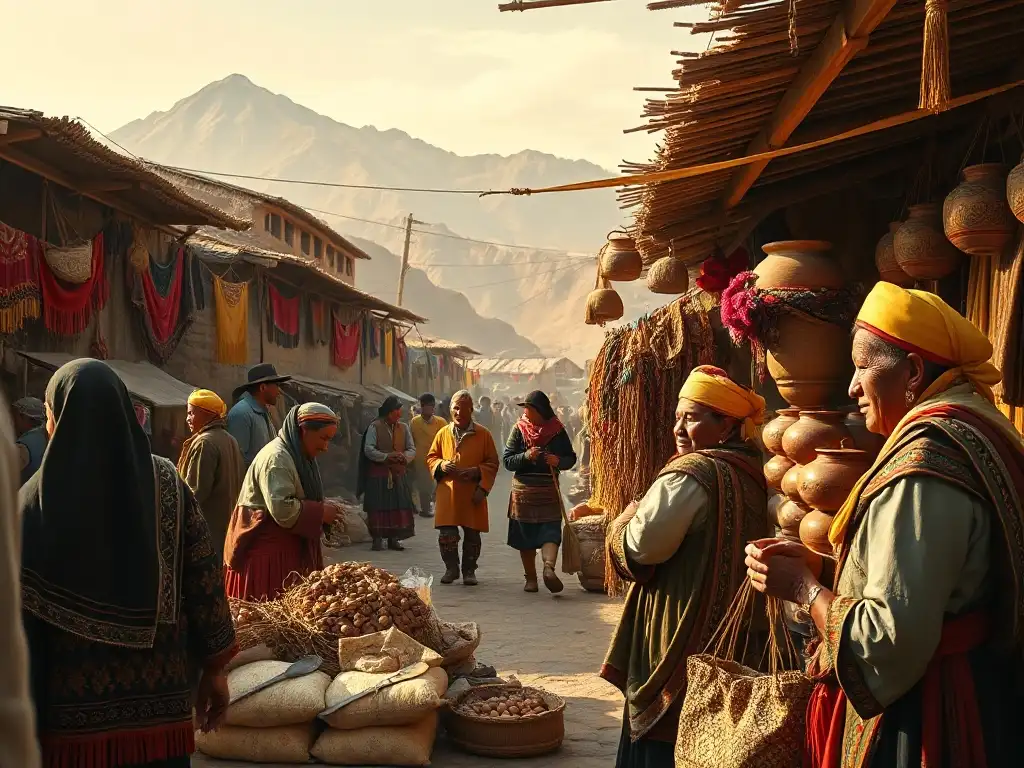
The Inca system of exchange and distribution was a remarkable feat of organization, ensuring the flow of goods and resources across a vast and diverse empire. The efficient management of this system was critical to the empire's stability and prosperity. This efficient system ensured that resources reached the population centers and supported the empire's extensive infrastructure. Understanding the intricacies of this system allows for a more complete understanding of the Inca civilization's economic power.
Barter and Exchange Practices in Inca Commerce
While the Inca did not have a formal monetary system in the same way as many later societies, they relied heavily on barter and exchange practices. Goods and services were exchanged directly, with the value of items determined by factors such as labor invested, rarity, and social significance. Textiles, agricultural products, and specialized crafts were common items used in barter. The system was facilitated by a well-organized network of roads and storage facilities, enabling the efficient movement of goods across the empire.
Barter was a fundamental aspect of the Inca economy, reflecting their social and economic organization. The system's effectiveness depended on the strong social ties and trust within the communities. The absence of a formal monetary system did not hinder the efficient exchange of goods and services within the Inca Empire.
Storage and Distribution of Resources
The Inca implemented an incredibly sophisticated system of storage and resource distribution. Granaries and storehouses were strategically located throughout the empire, ensuring that food and other essential goods were available even in times of scarcity. These storage facilities were carefully managed by state officials, who oversaw the collection, storage, and distribution of resources.
This centralized system allowed the Inca to effectively manage surpluses, redistribute resources in times of need, and support the empire's large population centers. The efficient management of storage and distribution was a key factor in the Inca's ability to sustain their vast empire. The sophisticated system of storage and distribution reflects the Inca's advanced understanding of logistics and resource management.
The Role of the State in Resource Management
The Inca state played a central role in managing the empire's resources. A highly organized bureaucracy oversaw the collection of taxes (in the form of goods and labor), the allocation of resources, and the distribution of goods throughout the empire. This centralized system ensured the efficient flow of goods and services, contributing to the stability and prosperity of the Inca Empire. The state's control over resources also served to reinforce its power and authority.
The efficient management of resources was essential for supporting the empire's vast infrastructure, including roads, irrigation systems, and public works projects. The Inca’s centralized system of resource management was a key factor in their success in building and maintaining a vast and complex empire. The state's intervention in the economy was not merely about controlling resources, but also about ensuring the well-being of the population and the stability of the empire.
The Impact of Inca Trade and Economy
The Inca trade and economy profoundly shaped the empire's social fabric, political stability, and overall development. A sophisticated system of resource management and distribution, coupled with extensive trade routes, fueled the Inca's remarkable expansion and influence across the Andes. The empire's success wasn't solely based on military might; its economic prowess played a pivotal role in maintaining control and fostering growth.
This intricate network ensured the flow of essential goods and resources, contributing to the empire's remarkable longevity and societal cohesion. The efficient management of resources, from agricultural products to precious metals, allowed for the construction of grand infrastructure projects, such as the impressive road system and monumental architecture, further cementing the Inca's power and prestige. This economic engine propelled the Inca Empire to become one of the most impressive civilizations of pre-Columbian South America.
Influence on Inca Social Structures
The Inca trade system directly influenced the empire's social structure. The mit'a system, a form of mandatory labor service, played a crucial role in maintaining the infrastructure necessary for trade. This system, while demanding, ensured that roads, bridges, and storage facilities remained in good condition, facilitating the efficient movement of goods. Furthermore, specialized artisans and craftsmen, often organized into guilds, produced high-quality goods for both local consumption and trade.
This specialization fostered a hierarchical social structure, with skilled artisans enjoying greater prestige and potentially better living conditions. The distribution of goods, managed through state-controlled warehouses, also played a role in social control, as access to resources was directly linked to an individual's position within the empire's hierarchy. The system, while potentially exploitative in certain aspects, maintained a degree of social order and stability.
Economic Stability and Growth in the Inca Empire
The Inca economy was characterized by remarkable stability and sustained growth. The empire's centralized control over resources, combined with efficient administrative systems, prevented major economic fluctuations. The ayllu, the community-based social structure, played a vital role in agricultural production, ensuring a reliable supply of food for the population. The state's control over agricultural surplus allowed for the storage of food in strategically located warehouses, mitigating the impact of droughts or other natural disasters.
This foresight and planning contributed significantly to the empire's resilience and long-term stability. The organization of labor and the efficient distribution of goods ensured that the Inca economy could support a large and growing population, contributing to the empire’s impressive expansion and enduring legacy. This stability allowed for investment in infrastructure projects and military campaigns, further solidifying the empire's power.
Legacy of Inca Economic Practices
The Inca legacy extends beyond their impressive architecture and sophisticated political system. Their economic practices, particularly their innovative approaches to resource management and trade, hold valuable lessons for modern societies. The emphasis on communal responsibility and resource sharing, as embodied in the ayllu system, offers a counterpoint to modern capitalist models, highlighting the potential for sustainable economic practices based on cooperation and equity.
The Inca's sophisticated understanding of logistics and infrastructure development also provides insights into efficient resource distribution and the importance of investing in infrastructure for economic growth. Their emphasis on sustainable agriculture and the careful management of natural resources offers a model for contemporary environmental stewardship. The study of Inca economic practices continues to inform our understanding of sustainable development and equitable resource distribution.
The Decline of the Inca Trade System
The decline of the Inca trade system was a gradual process, influenced by a complex interplay of factors. While the empire enjoyed periods of remarkable stability and economic growth, internal weaknesses and external pressures ultimately contributed to the disintegration of its sophisticated trade network. The disruption of trade routes and the decline in agricultural production played a significant role in the empire’s weakening.
This weakened the empire's ability to maintain its vast infrastructure and support its large population. The weakening of the centralized authority, coupled with the disruption of established trade routes, led to a decline in the efficient distribution of goods and resources.
Factors Contributing to the Collapse of the Inca Economy
Several interconnected factors contributed to the collapse of the Inca economy. Internal strife and succession crises weakened the central government's ability to effectively manage resources and maintain the vast infrastructure that supported the empire's trade network. The disruption of agricultural production, potentially due to climate change or disease, further strained the economy.
This shortage of food and resources led to social unrest and reduced the empire's ability to maintain its vast army and infrastructure. The growing burden of maintaining the empire's vast infrastructure and military, coupled with the dwindling resources, also put significant pressure on the Inca economy. These internal vulnerabilities made the Inca Empire increasingly vulnerable to external threats.
The Impact of the Spanish Conquest on Inca Trade
The Spanish conquest dealt a devastating blow to the Inca trade system. The arrival of the Spanish conquistadors marked a turning point, leading to the destruction of established trade routes, the disruption of agricultural production, and the exploitation of Inca resources for the benefit of the Spanish crown. The introduction of new diseases decimated the indigenous population, further disrupting agricultural production and the workforce necessary to maintain the infrastructure supporting trade.
The Spanish imposed their own economic system, prioritizing the extraction of precious metals like gold and silver, at the expense of traditional Inca economic activities. This shift resulted in the dismantling of the Inca's sophisticated system of resource management and trade, leaving a lasting impact on the Andean region. The legacy of the Spanish conquest continues to shape the economic landscape of the region to this day.
- The Economic System of the Inca Empire
- Inca Trade Routes and Networks
- Essential Resources and Goods in the Inca Economy
- Methods of Exchange and Distribution
- The Impact of Inca Trade and Economy
- The Decline of the Inca Trade System
- What role did trade play in the Inca Empire's success?
- How did the Inca manage to transport goods across challenging terrain?
- What were some of the key resources traded within the Inca Empire?
- How did the Inca system of trade differ from other Andean civilizations?
- What evidence exists to support our understanding of Inca trade routes and resources?
Frequently Asked Questions
What role did trade play in the Inca Empire's success?
Trade was essential to the Inca Empire's success. It facilitated the distribution of resources across vast distances, supporting a large and complex society. This efficient system ensured the stability and power of the Inca state.
How did the Inca manage to transport goods across challenging terrain?
The Inca utilized a sophisticated network of roads and trails, along with various animal transport methods (llamas, alpacas). They also developed innovative storage and relay systems to overcome geographical obstacles.
What were some of the key resources traded within the Inca Empire?
Agricultural products like maize, potatoes, and coca leaves were vital. Textiles, ceramics, and metals (gold, silver) were also significant trade items, along with luxury goods.
How did the Inca system of trade differ from other Andean civilizations?
The Inca Empire's trade system was characterized by its scale and organization, surpassing previous civilizations. State control over resources and production was much more pronounced than in earlier Andean societies.
What evidence exists to support our understanding of Inca trade routes and resources?
Archaeological evidence, including road networks, storage facilities, and artifacts, provides crucial insights. Ethnohistorical accounts from Spanish chronicles also offer valuable information about Inca trade practices.
Final Reflection: The Enduring Legacy of Inca Ingenuity
The intricate network of Inca trade routes and resource management, meticulously crafted centuries ago, continues to resonate in our modern understanding of sustainable economies and efficient logistics. The sheer scale of their achievement, spanning vast and challenging terrain, stands as a testament to human ingenuity and organizational prowess, a lesson we can still learn from today.
The Inca's sophisticated system of resource allocation and trade, far from being a relic of the past, profoundly shaped the cultural and social landscape of the Andes, leaving an indelible mark on subsequent civilizations. Their understanding of interconnectedness and the importance of equitable distribution offers a powerful counterpoint to our often-fragmented and inequitable global systems. Civilization exists by geological consent, subject to change without notice.
This quote, while not directly about the Inca, highlights the fragility of even the most impressive systems, reminding us to appreciate the ingenuity and foresight of the Inca and to consider the long-term consequences of our own actions.
Consider the ingenuity of the Inca road system, the chasquis relay runners, and the sophisticated storage techniques employed to manage resources across diverse climates. These weren't simply logistical feats; they were expressions of a deeply interconnected society, a testament to the power of collaboration and shared purpose. You, too, can find inspiration in their example.
Think about how you can build stronger connections within your own community, how you can strive for more sustainable practices in your daily life, and how you can contribute to a more equitable and interconnected world. Let the legacy of the Inca inspire you to build a better future.
Unveil the Rich Tapestry of Inca Trade!
Thank you for exploring the fascinating world of Inca trade and economy! Your interest in this intricate system offers valuable insights into how goods and resources shaped Andean civilization. Let's build on that knowledge and use it to further explore and share this captivating history.
Here are some ways you can continue your journey of discovery:
- Join a local historical society or online forum dedicated to ancient civilizations to discuss your newfound knowledge and connect with fellow enthusiasts.
- Share this article with friends and family who might be interested in the Inca economy, sparking a conversation about its lasting impact on modern trade systems.
- Delve deeper into related topics—research modern trade practices inspired by ancient Inca methods or explore the economic strategies of other ancient cultures.
What aspect of Inca trade captivates you most? Is it their innovative resource management or perhaps the extensive network of trade routes they established? Share your thoughts in the comments below!