
Tiahuanaco Civilization
Explore the Tiahuanaco Civilization, one of the most influential ancient Andean cultures, renowned for its monumental architecture, advanced engineering, sacred traditions, and enduring artistic legacy. Discover how this powerful civilization shaped religious beliefs, urban design, agriculture, and cultural development across the Andes. 🏛️🌄 Dive into the history of Tiahuanaco and uncover the mysteries of its remarkable achievements and lasting influence.
 Tiahuanaco Influence on Later Cultures
 The City of Tiahuanaco: Architecture and Engineering
 Tiahuanaco Religion and Cosmology
🏛️ Tiahuanaco Civilization: History, Culture, and Legacy
The Tiahuanaco Civilization, also known as Tiwanaku, was one of the most influential ancient societies of the Andes. Centered near the southern shores of Lake Titicaca in present-day Bolivia, Tiahuanaco flourished between approximately 500 and 1000 CE, creating a powerful cultural, religious, and economic network across the highlands of Bolivia, Peru, Chile, and northern Argentina.
Explore how Tiahuanaco developed advanced architecture, stonework, agriculture, religion, trade, and artistic traditions in one of the world’s most challenging environments. This category examines the origins of the civilization, the ceremonial center of Tiwanaku, its monumental architecture, distinctive iconography, relationship with Lake Titicaca, and enduring influence on later Andean cultures, including the Inca Empire.
Through detailed articles and historical analysis, readers can discover the meaning of the Gateway of the Sun, the function of Akapana and Kalasasaya, the importance of Andean cosmology, and the technological innovations that allowed Tiahuanaco communities to thrive at high altitude. Learn why Tiahuanaco remains essential to understanding pre-Columbian South American history and the development of Andean civilization.
🌞 Tiahuanaco Religion and Cosmology
This subcategory explores the spiritual beliefs, sacred symbols, rituals, and worldview of the Tiahuanaco people. Readers can learn about the importance of Andean cosmology, ancestor veneration, sacred landscapes, celestial observation, and agricultural ceremonies in Tiahuanaco society. Religious life was closely connected to mountains, water, fertility, animals, and the cycles of the sun and seasons.
Articles will examine major religious imagery, including the Staff God, winged figures, feline and camelid motifs, and the symbolism found on stone monuments and ceramics. Discover how ceremonial architecture supported religious practice and how Tiahuanaco beliefs may have influenced later traditions in the Andes.
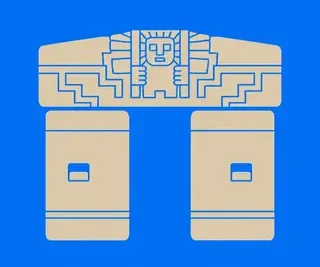
🧱 The City of Tiahuanaco: Architecture and Engineering
Discover the monumental city of Tiahuanaco and its remarkable achievements in stone architecture, urban planning, hydraulic engineering, and construction technology. This section explores major structures such as the Akapana pyramid, Kalasasaya temple, Semi-Subterranean Temple, Pumapunku, and the Gateway of the Sun.
Readers will learn how Tiahuanaco builders shaped and transported enormous stone blocks with extraordinary precision. The section also examines raised-field agriculture, drainage systems, ceremonial plazas, and the ways the city’s design responded to the high-altitude environment near Lake Titicaca.
🌎 Tiahuanaco Influence on Later Cultures
This subcategory investigates the wide-reaching cultural influence of Tiahuanaco throughout the ancient Andes. At its height, Tiahuanaco connected distant communities through trade, migration, religious traditions, artistic styles, and political relationships. Its influence extended across regions that are now part of Bolivia, Peru, Chile, and Argentina.
Explore how Tiahuanaco ideas affected later societies, including the Wari and the Inca. Articles will discuss the transmission of religious iconography, agricultural knowledge, textile designs, architectural concepts, and state organization, while also considering the continuing importance of Tiahuanaco heritage to Andean identity and archaeology.
❓ Frequently Asked Questions About the Tiahuanaco Civilization
When did the Tiahuanaco Civilization exist?
Tiahuanaco flourished primarily between approximately 500 and 1000 CE, although the settlement and surrounding region had earlier and later periods of occupation. Its greatest influence developed during the Middle Horizon of Andean history.
Where was the Tiahuanaco Civilization located?
The civilization was centered at the monumental site of Tiwanaku near Lake Titicaca in present-day Bolivia. Its cultural and economic influence extended across parts of Peru, Chile, and northern Argentina.
What is Tiahuanaco best known for?
Tiahuanaco is best known for its monumental stone architecture, sophisticated engineering, religious art, agricultural innovations, and regional influence. The Gateway of the Sun and the stone structures of Pumapunku are among its most famous achievements.
What religion did the Tiahuanaco people practice?
Tiahuanaco religion focused on sacred forces associated with nature, fertility, water, mountains, celestial bodies, and ancestors. Their art suggests the importance of powerful deities and supernatural beings, including the figure commonly called the Staff God.
How did Tiahuanaco influence the Inca?
Tiahuanaco contributed important religious, artistic, agricultural, and architectural traditions to later Andean cultures. Although the Inca Empire emerged centuries after Tiahuanaco declined, many Andean concepts associated with sacred landscapes, state power, and ceremonial design continued in modified forms.