Tiahuanaco Civilization

Explore Tiahuanaco religion and cosmology to uncover the sacred beliefs, rituals, deities, and celestial ideas that shaped this influential Andean civilization. 🌄 Discover how temples, monuments, symbolism, and reverence for nature reflected Tiahuanaco’s spiritual worldview and connected communities across the Andes. ✨ Learn about ancient creation myths, ceremonial practices, and the enduring legacy of Tiahuanaco culture in Andean history.
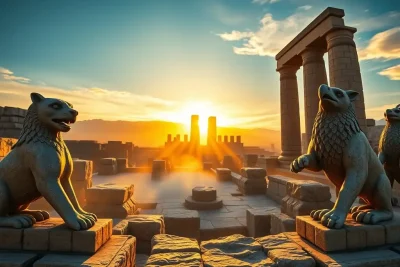
Discover the spiritual world of the Tiahuanaco civilization through its religion, mythology, sacred architecture, ritual practices, and cosmological beliefs. This subcategory explores how the ancient inhabitants of the Lake Titicaca region understood the universe, nature, ancestors, and the relationship between human communities and supernatural forces. Learn how Tiahuanaco religion shaped political authority, artistic expression, agricultural traditions, and ceremonial life in one of the most influential Andean civilizations.
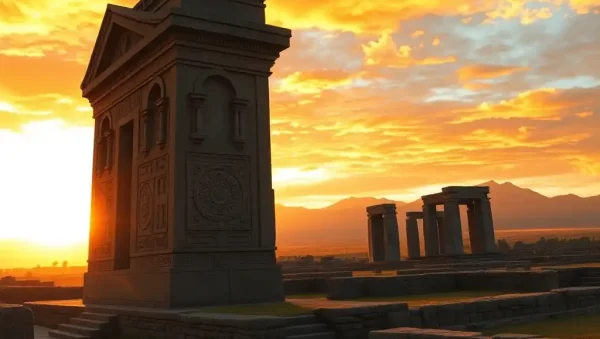
Tiahuanaco religious art is recognized for its powerful imagery, geometric patterns, supernatural beings, and highly symbolic representations. Articles in this section examine monuments such as the Gateway of the Sun, carved stone stelae, ceramic vessels, textiles, and architectural decorations. Readers can explore recurring motifs, including winged figures, feline imagery, staffs, radiant headdresses, and animals associated with the Andean environment.
These resources explain how visual symbols may have communicated religious teachings, social status, and connections with divine or ancestral powers. By studying Tiahuanaco iconography, readers can better understand the role of art in ritual ceremonies, sacred spaces, and the transmission of cultural beliefs across the Andes.
Tiahuanaco cosmology reflected a complex vision of the universe in which the sky, earth, water, mountains, animals, ancestors, and human society were interconnected. This section explores concepts of sacred landscapes, celestial observation, seasonal cycles, and the spiritual significance of Lake Titicaca and the Altiplano. Readers will learn how natural forces were incorporated into Tiahuanaco religious thought.
Special attention is given to the relationship between cosmology and agriculture. In a high-altitude environment, understanding rainfall, solar movements, frost, and planting seasons was essential for survival. Tiahuanaco ceremonial traditions may therefore be understood not only as spiritual practices but also as systems that helped organize community life and respond to the challenges of the Andean climate.
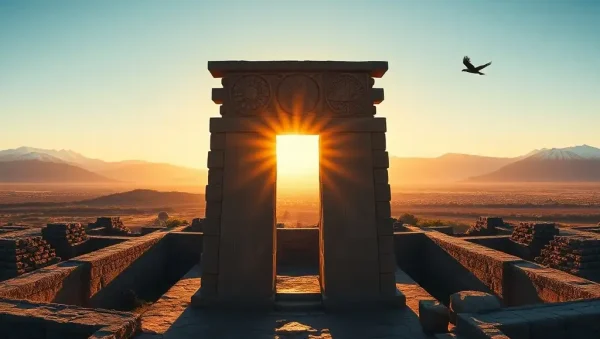
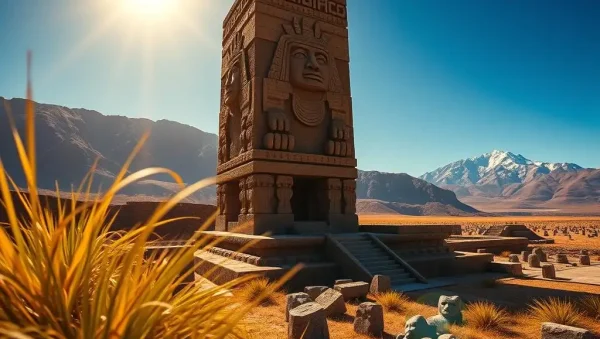
The Gateway of the Sun at Tiwanaku is one of the most important monuments associated with Tiahuanaco religion and cosmology. Its central figure, often called the Staff Deity, has inspired extensive scholarly discussion about divine rulership, creation myths, celestial power, and religious influence throughout the Andes. This section examines the monument’s carved imagery and its possible ritual meanings.
Readers can also explore the broader significance of the Staff Deity in Tiahuanaco art and later Andean traditions. Although interpretations remain debated, the figure is widely considered a key example of how Tiahuanaco artists represented supernatural authority, sacred knowledge, and the connection between divine beings and political leadership.
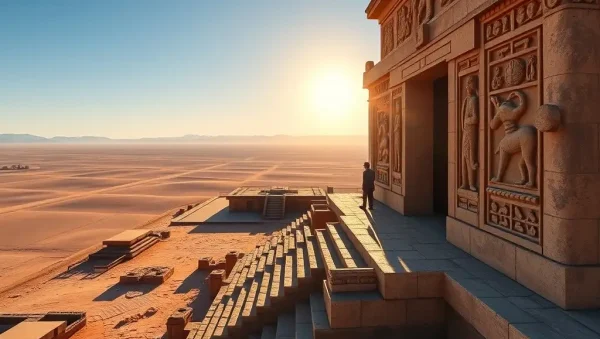
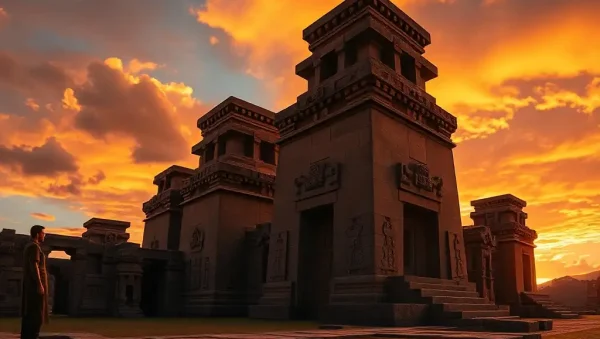
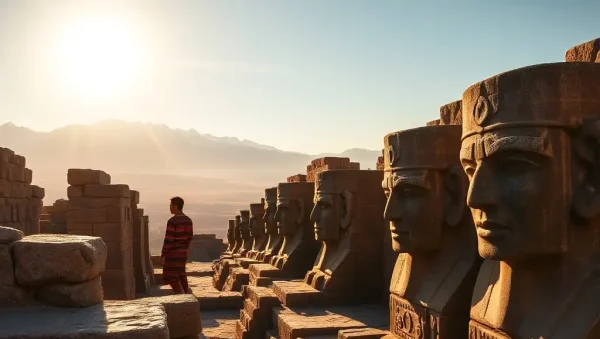
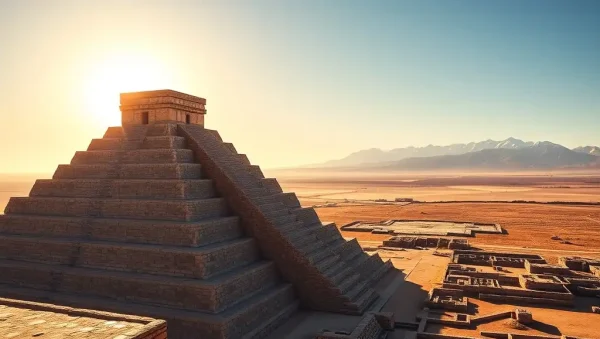
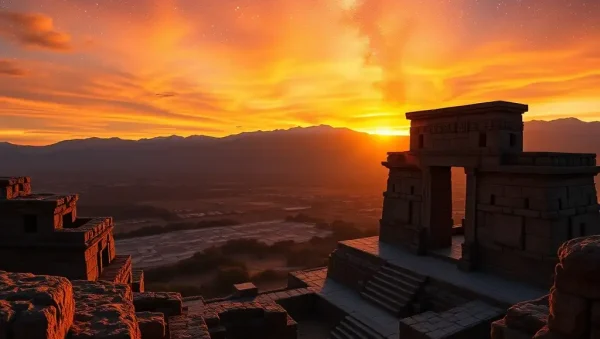
Tiahuanaco sacred architecture reveals how religion was integrated into urban planning and public life. Articles in this section explore major ceremonial structures, including the Kalasasaya, the Semi-Subterranean Temple, monumental gateways, sunken courts, and other ritual spaces. These sites demonstrate the importance of carefully designed plazas, stonework, processional movement, and controlled access to sacred areas.
Learn how ceremonies may have brought together priests, rulers, pilgrims, artisans, farmers, and regional communities. Archaeological evidence from temples and plazas provides valuable information about offerings, feasting, public rituals, ancestor veneration, and the use of architecture to reinforce Tiahuanaco religious authority.
Nature played a central role in Tiahuanaco spiritual beliefs. Lake Titicaca, nearby mountains, springs, caves, and fertile valleys were not simply geographical features; they were part of a sacred landscape inhabited by powerful beings and ancestral forces. This section explores the religious importance of water, highland peaks, animals, and the natural environment in Tiahuanaco culture.
Understanding sacred nature also helps explain the expansion of Tiahuanaco influence across the southern Andes. Religious ideas, ceremonial objects, artistic styles, and pilgrimage traditions connected distant communities while allowing local groups to maintain their own identities. Readers will discover how Andean environmental beliefs shaped both ritual practice and regional interaction.
Tiahuanaco society likely depended on religious specialists and leaders who interpreted divine signs, organized ceremonies, and maintained relationships with ancestors and supernatural powers. This section examines the possible roles of priests, rulers, ritual performers, and community leaders within Tiahuanaco religious life. It also considers how burial practices and human representations may reflect beliefs about death and the afterlife.
Religion and political power were closely connected. Monumental construction, ceremonial gatherings, and sacred imagery could strengthen the legitimacy of elites and promote social unity. Articles here explain how religious authority supported Tiahuanaco governance while also acknowledging the limits of archaeological evidence and the continuing debates among researchers.
Animals held important symbolic and practical roles in Tiahuanaco society. Llamas, condors, pumas, snakes, fish, and other creatures appear in art, ritual objects, and archaeological remains. This section explores how animals may have represented strength, fertility, the sky, the underworld, water, or the movement between different levels of the cosmos.
Readers can learn about offerings, ceremonial feasts, incense, precious materials, ceramic vessels, and other forms of ritual activity. These practices provide insight into how Tiahuanaco communities expressed devotion, requested agricultural prosperity, honored ancestors, and maintained balance between human society and the sacred world.
Tiahuanaco cosmology appears to have emphasized the interconnection of humans, ancestors, supernatural beings, animals, water, mountains, and celestial forces. The universe was likely understood as an ordered sacred system in which ritual actions helped maintain balance and prosperity.
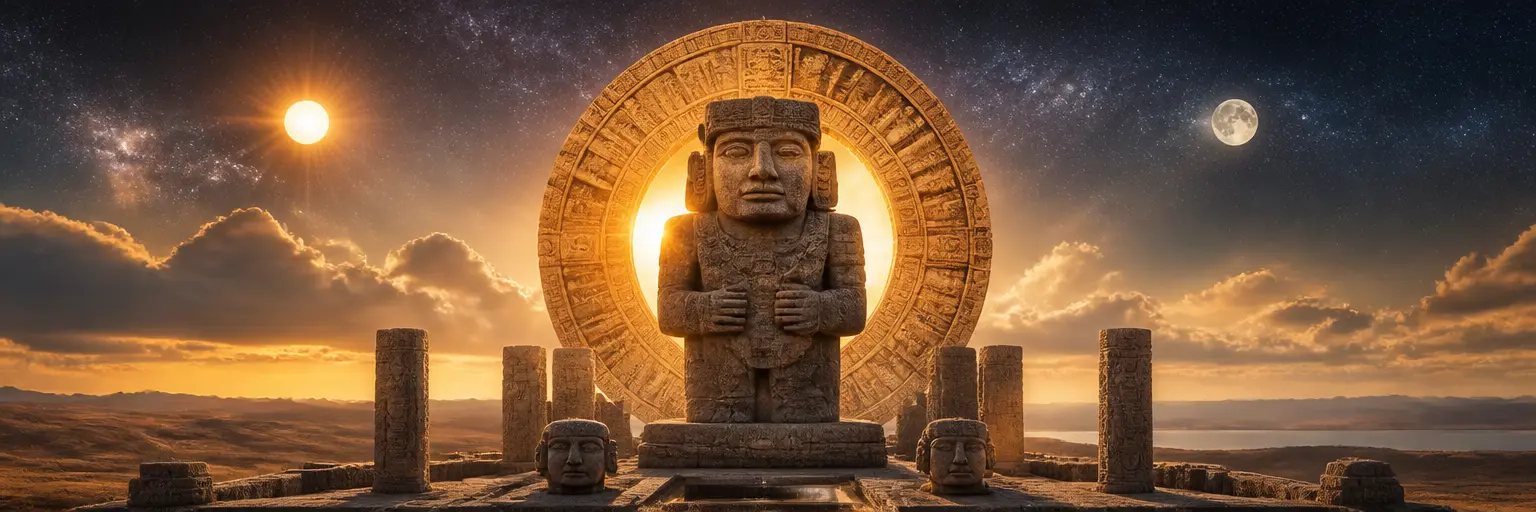
The Staff Deity is a prominent supernatural figure represented in Tiahuanaco monuments and artworks, especially the Gateway of the Sun. Scholars associate this figure with divine authority, creation, fertility, celestial power, or rulership, although its exact meaning remains debated.
The Gateway of the Sun is important because it combines monumental architecture with detailed religious imagery. Its carvings offer valuable evidence about Tiahuanaco iconography, ceremonial beliefs, supernatural figures, and the possible relationship between religion and political power.
Yes. Tiahuanaco religious symbols, artistic styles, ceremonial objects, and architectural traditions spread across large areas of the southern Andes. This influence reached communities in regions connected through trade, pilgrimage, migration, and political or religious interaction.
Lake Titicaca was likely a major sacred landscape associated with origins, fertility, water, ancestors, and supernatural power. Its importance can be seen in Tiahuanaco settlement patterns, regional traditions, and the symbolic presence of aquatic imagery in Andean religious art.