
Understanding the Andean Rainbow: A Bridge Between Worlds

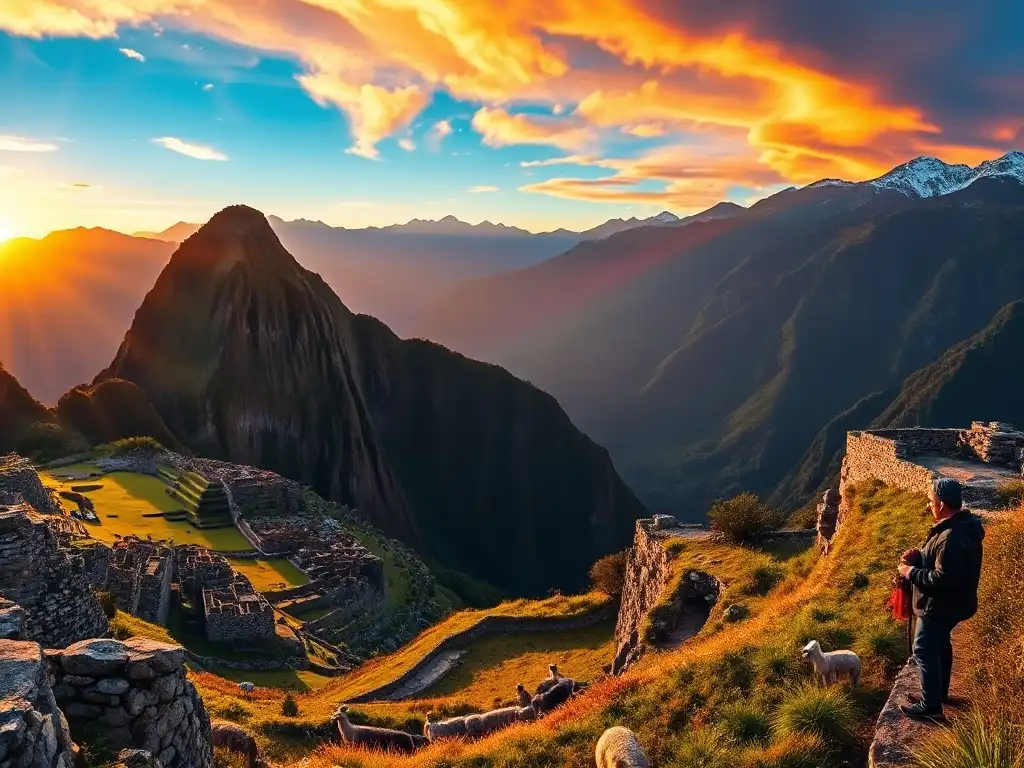
Unravel the mysteries of a world lost to time, yet echoing in the vibrant tapestry of today. Journey with us into the heart of the Andes, where the breathtaking landscapes hold secrets of advanced civilizations that defied the odds. Prepare to be captivated by the Andean civilizations history, a narrative woven with threads of innovation, spiritual depth, and breathtaking artistry. Discover how their unique cosmovision shaped their lives and left an indelible mark on the world. Are you ready to explore the Andean Rainbow?
The Andes Mountains, a majestic spine running down the western coast of South America, were not merely a geographical feature for the ancient civilizations that thrived there; they were a living, breathing entity, deeply interwoven with their spiritual beliefs and daily lives. This article delves into the fascinating world of Andean religion and cosmovision, specifically focusing on the symbolic power of the rainbow—a vibrant thread connecting the earthly realm with the supernatural.
Understanding the Andean rainbow provides crucial insight into the complex tapestry of Andean civilizations history, revealing their sophisticated understanding of the cosmos and their intricate relationship with the natural world. We will explore how the rainbow served as a powerful symbol, bridging the gap between the human and divine, the living and the dead, and the earthly and the celestial.
This exploration will illuminate the rich spiritual landscape of these remarkable cultures, highlighting their unique perspectives on life, death, and the interconnectedness of all things. Prepare to journey through a vibrant spectrum of beliefs and symbolism, uncovering the profound meaning behind this captivating natural phenomenon within the context of Andean civilizations.
The Rainbow in Andean Cosmovision: An Introduction to its Significance
The Andean rainbow, far from being a mere meteorological event, held profound spiritual significance for numerous Andean cultures. It was not simply a visual spectacle, but a powerful symbol imbued with complex meanings that varied slightly across different civilizations. For many, the rainbow represented a bridge between the earthly world (the kay pacha) and the upper world (the hanan pacha), a celestial pathway connecting the human realm with the realm of the gods. This connection was often visualized as a literal bridge, a vibrant arc spanning the chasm between these two planes of existence.
The colors themselves held symbolic weight. While the exact interpretations varied regionally and across different time periods, certain colors consistently held prominent meanings. For example, red often symbolized life force and blood, while yellow represented gold, the sun, and power. The specific combinations of colors within a rainbow and their intensity were believed to carry messages from the supernatural realm, often interpreted by shamans and religious leaders.
The appearance of a rainbow was frequently associated with significant events, both auspicious and ominous. A vibrant, clear rainbow might signal good fortune, a bountiful harvest, or the favor of the gods. Conversely, a faint or distorted rainbow could be interpreted as a warning of impending danger or misfortune. This deep-seated belief in the rainbow's prophetic power underscores its central role in Andean cosmovision.
We can see evidence of this in the surviving artifacts and iconography from various Andean cultures. Textiles, pottery, and rock art often depict rainbows prominently, integrated into complex narrative scenes reflecting their spiritual importance. Unfortunately, much of the oral tradition concerning specific interpretations has been lost to time, leaving us with gaps in our understanding. However, the surviving material evidence is still incredibly valuable in piecing together this rich and complex symbolic system.
The Andean Rainbow as a Link Between Worlds: Exploring its Symbolic Role
The rainbow's role as a link between worlds extended beyond a simple connection between the earthly and celestial realms. It also served as a conduit for communication between the living and the dead, facilitating ancestor veneration and spiritual guidance. Many Andean cultures believed that the spirits of deceased ancestors traveled along the rainbow's arc to visit the living, offering blessings, protection, or warnings. This concept highlights the cyclical nature of life and death within Andean belief systems, emphasizing the continued presence and influence of ancestors in the lives of their descendants.
Furthermore, the rainbow was often associated with powerful deities and supernatural beings. In some traditions, the rainbow itself was considered a manifestation of a divine entity, a visible representation of a powerful god or goddess. In other traditions, the rainbow served as a pathway for these deities to travel between the different realms, bringing blessings or intervening in human affairs. The precise deity associated with the rainbow varied across different cultures and regions within the Andes.
The rainbow's significance also extended to the realm of shamanic practices. Shamans, believed to possess the ability to communicate with the spirit world, often used the rainbow as a symbolic guide during their journeys to the otherworld. They might visualize themselves traveling along the rainbow's arc to consult with spirits, seek guidance, or perform healing rituals.
The rainbow, therefore, served as both a symbolic and a practical tool in their spiritual practices. Detailed accounts of these practices are often scarce, but archaeological findings and remaining anthropological records continue to offer glimpses into these profound shamanic experiences. The study of Andean civilizations history is constantly enriched by new discoveries and interpretations.
- The Rainbow in Andean Cosmovision: An Introduction to its Significance
- The Andean Rainbow as a Link Between Worlds: Exploring its Symbolic Role
- What are the main Andean civilizations discussed in this article?
- How does the article connect these different Andean cultures?
- What aspects of Andean civilization are covered?
- What is the significance of the title, "Understanding the Andean Rainbow"?
- Where can I learn more about Andean civilizations' history?
Andean Civilizations History and the Interpretation of the Rainbow
The vibrant tapestry of Andean civilizations history is interwoven with a profound understanding and reverence for nature. Nowhere is this more evident than in the interpretation of the rainbow, a celestial phenomenon imbued with deep symbolic meaning across various Andean cultures. Understanding the rainbow's significance requires delving into the rich iconography, mythology, and religious practices of these fascinating societies.
The rainbow wasn't merely a meteorological event; it served as a powerful bridge connecting the earthly realm with the spiritual world, a conduit for communication between humans and the supernatural. This section explores the diverse ways in which Andean societies, including the Inca, Moche, Nazca, and Tiahuanaco, perceived and incorporated the rainbow into their worldview, offering a glimpse into the complex interplay between cosmology, religion, and artistic expression within the broader context of Andean civilizations history.
The prevalence of rainbow motifs in textiles, pottery, and monumental architecture underscores its importance as a potent symbol across different periods and regions. Analyzing these visual representations, alongside surviving textual and archaeological evidence, reveals a nuanced understanding of the rainbow's role in the lives of these ancient peoples.
Rainbow Symbolism in Ancient Andean Art and Iconography
The rainbow's depiction in Andean art varies across different cultures and time periods, reflecting diverse beliefs and artistic styles. For example, Moche pottery often showcases rainbows as vibrant bands arching across scenes of daily life or mythical narratives. These representations frequently integrate the rainbow with other symbolic elements, such as stylized mountains, celestial bodies, and anthropomorphic figures, suggesting a complex relationship between the rainbow and the broader Andean cosmology.
Nazca lines, while primarily known for their geoglyphs, may also incorporate rainbow-like patterns, although their exact interpretation remains a subject of ongoing research and debate among scholars of Andean civilizations history. In Inca art, the rainbow is often associated with the sun god Inti, appearing as a radiant arc emanating from the solar deity or adorning his garments. This visual connection emphasizes the rainbow's association with power, divinity, and the sun's life-giving energy.
The use of specific colors within the rainbow depictions also holds significance, with certain hues potentially representing specific deities or natural forces. Further research is needed to fully decipher the nuanced meanings embedded within these color choices. Detailed analysis of Andean art, including textiles, ceramics, and metalwork, continues to shed light on the evolving symbolism of the rainbow across different Andean cultures and their rich history.
Example of Rainbow Depiction in Moche Pottery
A notable example is a Moche ceramic vessel depicting a rainbow arching over a scene of a shamanic ritual. The rainbow's vibrant hues contrast sharply with the muted tones of the surrounding landscape, highlighting its significance within the narrative. The shaman, depicted with elaborate headdress and attire, appears to be interacting with the rainbow, suggesting a direct connection between the human and divine realms. This scene offers a tangible illustration of the rainbow's symbolic power in Moche culture and its place within their complex religious practices, a vital aspect of Andean civilizations history.
The Rainbow and its Connection to Andean Deities and Supernatural Entities
The rainbow's connection to Andean deities and supernatural entities is central to understanding its symbolic importance. In many Andean cosmologies, the rainbow is seen as a bridge between the kay pacha (the human world) and the hanan pacha (upper world), a realm inhabited by gods and spirits. It represents a pathway for communication between the earthly and celestial spheres, facilitating the movement of deities and supernatural beings between these realms.
The rainbow's vibrant colors are often associated with specific deities or supernatural forces. For instance, certain colors might be linked to specific agricultural deities, reflecting the rainbow's association with fertility and abundance. The appearance of a rainbow could be interpreted as a divine omen, signifying good fortune, impending rain, or a message from the spirit world.
Shamans and priests played crucial roles in interpreting these omens, acting as intermediaries between the human and supernatural worlds, a vital function within the context of Andean civilizations history. Their understanding of rainbow symbolism was essential for maintaining social order and ensuring the well-being of the community. The rainbow's role in Andean religious practices, therefore, was far more than merely aesthetic; it was deeply intertwined with the spiritual and political fabric of Andean societies.
Inca Rainbow Symbolism and the God Inti
Within the Inca empire, the rainbow held a particularly strong association with Inti, the sun god. Inti, the supreme deity in the Inca pantheon, was believed to be the source of all life and energy. The rainbow, with its radiant colors and its celestial arc, was seen as a manifestation of Inti's power and glory.
The rainbow's appearance was often interpreted as a sign of Inti's favor, signifying prosperity, good harvests, and the continuation of the Inca empire's power. Inca iconography frequently depicts Inti with a rainbow emanating from his body or surrounding him, visually reinforcing this connection. The rainbow's association with Inti also linked it to the Inca imperial ideology, which emphasized the emperor's divine right to rule and his connection to the sun god.
The rainbow, therefore, served as a powerful symbol of both religious and political authority. The careful study of Inca textiles, pottery, and monumental architecture reveals the consistent presence of rainbow motifs in contexts related to imperial power and religious rituals, further highlighting the rainbow's multifaceted role within Inca society and its significant place in Andean civilizations history. The rainbow, in this context, was not just a beautiful phenomenon; it was a potent symbol of divine power, imperial authority, and the enduring legacy of the Inca civilization.
The Rainbow as a Representation of Balance and Duality in Andean Beliefs
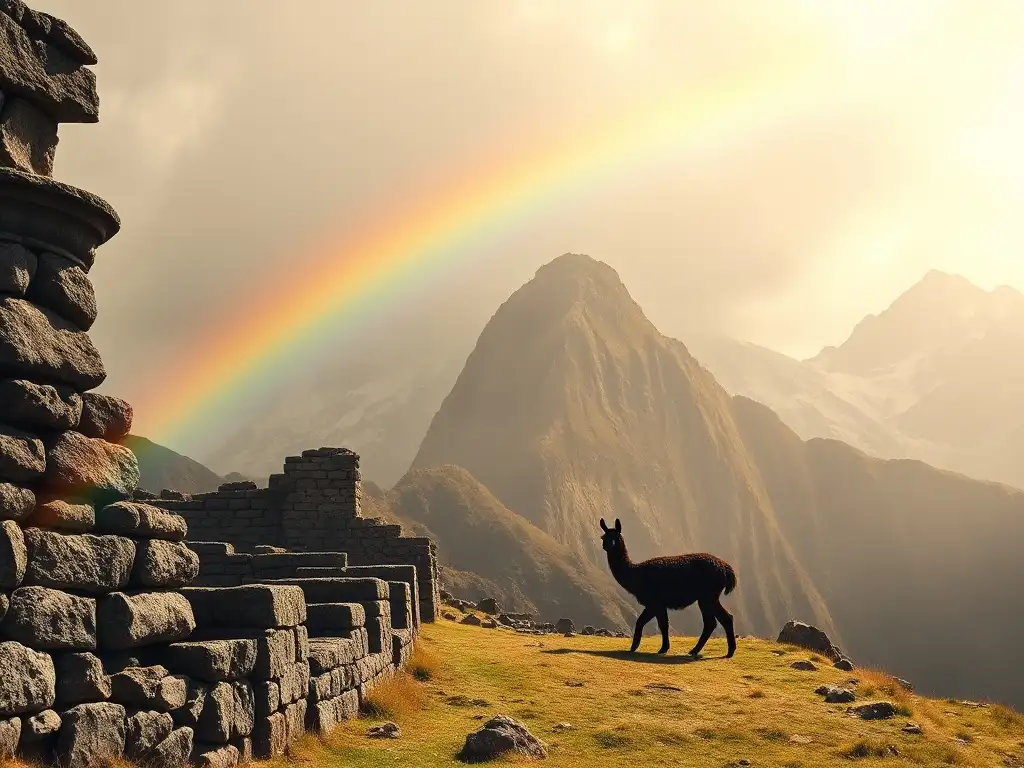
The vibrant spectrum of the rainbow held profound significance for the Andean civilizations, far beyond its purely meteorological aspect. It served as a potent symbol representing the delicate balance and inherent duality present in their worldview. This wasn't simply a visual appreciation; the rainbow was deeply embedded in their cosmology, mythology, and daily life, reflecting their understanding of the interconnectedness of opposing forces.
Understanding this symbolic representation is key to unlocking a deeper appreciation of Andean beliefs and their sophisticated understanding of the universe. The rainbow's presence in Andean art, textiles, and pottery reinforces its crucial role in their spiritual and cultural fabric. Analysis of these artifacts reveals consistent depictions of the rainbow, often connecting it to deities, sacred mountains ( apus), and other elements of their spiritual landscape.
The Rainbow's Role in Understanding Andean Dualism
Andean cosmology is fundamentally characterized by dualism – a harmonious interplay of opposing forces such as light and darkness, male and female, wet and dry, life and death. The rainbow, with its multitude of colors representing these contrasting elements, perfectly embodied this principle. It wasn't a representation of conflict, but rather a dynamic equilibrium, a bridge connecting these seemingly disparate forces.
The vibrant colors didn't clash; instead, they blended and flowed into one another, symbolizing the interconnectedness and interdependence of opposing energies. Think of the transition from the deep blue representing the vastness of the sky to the bright yellow representing the sun's life-giving energy. This seamless transition highlights the Andean understanding that duality is not about opposition but about complementary forces working in unison.
Further research into specific Andean myths and legends could reveal more nuanced interpretations of the rainbow's role in mediating these dualities. For example, [specific Andean myths about the rainbow pending].
The Rainbow and the Concept of Masculine and Feminine Energies
The rainbow's symbolic power extended to the realm of gender. In Andean belief systems, the masculine and feminine energies were not seen as antagonistic but as equally vital components of creation and life. The rainbow, with its vibrant spectrum, effectively symbolized this balance.
Certain colors might have been associated with specific masculine or feminine deities or principles, further enriching the complexity of this symbolism. For instance, [specific color associations with masculine and feminine energies in Andean culture pending]. The weaving techniques employed in traditional Andean textiles, often incorporating rainbow motifs, might reveal additional clues about the cultural encoding of gender within this symbolism.
Detailed analysis of these textiles, considering the specific colors, patterns, and placement of the rainbow, could provide further insight into this fascinating aspect of Andean cosmology. This intricate interplay of colors and patterns showcases the sophisticated understanding of the Andean people regarding the balance of masculine and feminine energies, reflected in their daily lives and spiritual practices.
The Rainbow and the Concept of Hanan and Hurin in Andean Thought
The Andean concept of Hanan (upper world) and Hurin (lower world) describes a cosmological structure where the heavens and the earth are not separate entities but interconnected realms. The rainbow served as a powerful visual metaphor for this connection, acting as a bridge between these two worlds. It was believed to be a pathway for communication between the deities inhabiting Hanan and the human realm of Hurin.
Shamans and priests likely played a crucial role in interpreting the rainbow's appearance and its potential messages from the divine. The rainbow's presence in rituals and ceremonies further solidified its role as a conduit between these two worlds. [Specific examples of rituals or ceremonies involving the rainbow in Andean culture pending].
The intensity and specific colors of a rainbow might have been interpreted as signs or omens, influencing decisions related to agriculture, social events, or even warfare. The intricate relationship between the rainbow, Hanan, and Hurin underscores the Andean worldview's holistic and interconnected nature, where the physical and spiritual realms are not separate but intimately intertwined. Further study of Andean iconography and oral traditions could reveal a more complete understanding of the rainbow's role within this cosmological framework.
Rainbows and Andean Ritual Practices: A Look into their Ceremonial Use
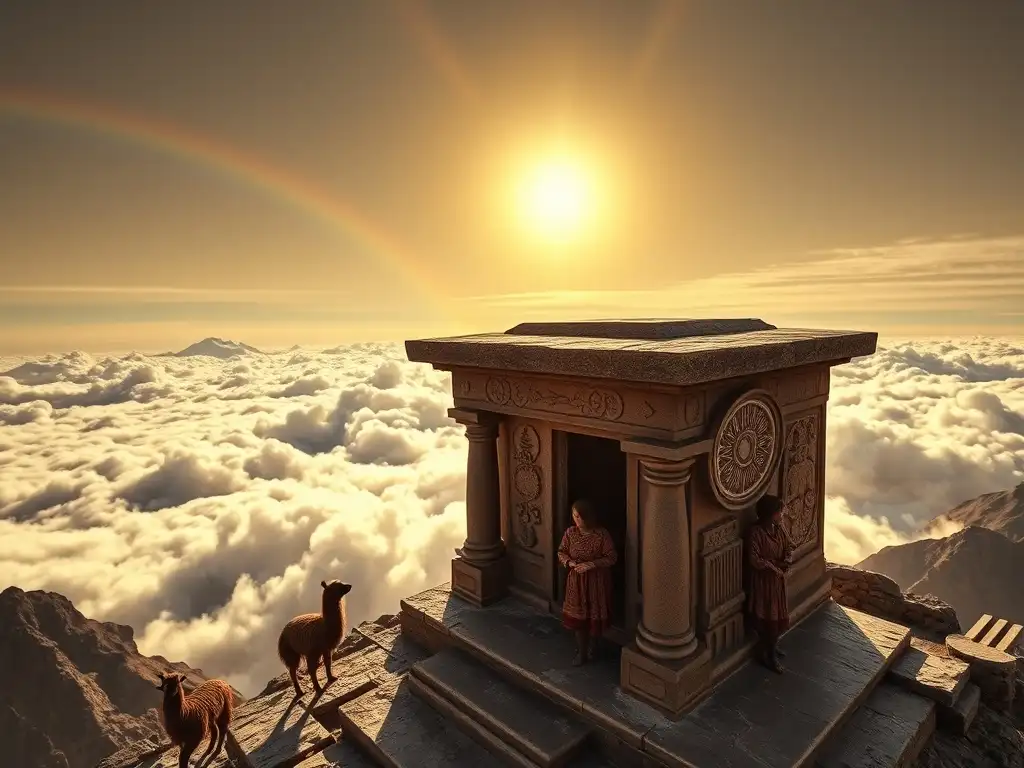
The vibrant hues of the rainbow held profound significance for Andean civilizations, far beyond simple meteorological phenomena. Rainbows weren't merely atmospheric displays; they were powerful symbols deeply interwoven with ritual practices, religious beliefs, and daily life. Understanding their role provides crucial insight into the complex spiritual world of these ancient societies and their relationship with the natural environment.
The Andean worldview, deeply connected to the cosmos and the land, imbued natural occurrences with spiritual meaning, and the rainbow, with its bridge-like appearance connecting earth and sky, was no exception. This section explores the ceremonial usage of rainbows in Andean cultures, examining how their appearance influenced rituals and religious observances.
The sheer variety of interpretations across different Andean groups underscores the rich tapestry of beliefs and practices that shaped their understanding of the world. Further research is needed to fully understand the nuances of rainbow symbolism across all Andean civilizations, as much of the knowledge was transmitted orally and is now only partially documented.
Rainbows and their Connection to Water Rituals in Andean Civilizations
Water, a life-giving force in the arid Andean landscape, was intrinsically linked to rainbow symbolism. Many Andean cultures believed that rainbows were manifestations of powerful water spirits or deities, directly connected to the sources of water that sustained their communities. The appearance of a rainbow, particularly after a drought, was often interpreted as a positive omen, a sign that the deities were pleased and would provide the necessary rainfall.
This belief led to the development of specific water rituals performed in conjunction with the sighting of a rainbow. These rituals often involved offerings of coca leaves, chicha (a fermented corn beverage), and other sacred objects to appease the water spirits and ensure continued abundance. Archaeological evidence, although limited in directly depicting rainbow-related rituals, supports this connection through the discovery of artifacts related to water worship and agricultural practices in sites associated with significant water sources.
For example, the discovery of intricately carved stone vessels depicting water deities in proximity to agricultural terraces suggests a strong connection between water, fertility, and religious beliefs. The precise nature of these rituals varied across different Andean groups, reflecting the diverse regional variations in their belief systems and practices. More detailed ethnographic studies are required to fully document the specific rituals associated with rainbows and water in different Andean communities.
The Rainbow in the Inti Raymi Festival
The Inti Raymi, the Inca festival of the sun, provides a compelling example of the rainbow's symbolic importance within a major Andean celebration. While not explicitly central to the Inti Raymi's core narrative, the rainbow's vibrant colours likely resonated with the festival's themes of solar power, fertility, and cosmic harmony. The festival, celebrated during the winter solstice, was a time of renewal and regeneration, mirroring the life-giving potential of rain and the promise of a bountiful harvest.
The rainbow, as a symbol of both rain and the sun's brilliance, could be seen as a visual representation of this cosmic balance. It's plausible that the appearance of a rainbow during the Inti Raymi festivities was considered an auspicious sign, reinforcing the power and blessings of the sun god, Inti. However, specific textual or iconographic evidence directly linking rainbows to the Inti Raymi is scarce.
Further research into Inca chronicles and archaeological findings related to the festival could shed more light on the rainbow's role during this important celebration. The lack of explicit documentation highlights the challenges in reconstructing the full range of symbolic meanings associated with Andean rituals.
The Rainbow as a Symbol of Prosperity and Blessings in Andean Culture
Beyond its connection to water and specific festivals, the rainbow held a broader symbolic meaning of prosperity and blessings in many Andean cultures. The rainbow's vibrant colours, representing the diversity and richness of the Andean landscape, were associated with abundance and good fortune. Its arc, spanning the earth and sky, symbolized the connection between the human and spiritual realms, suggesting that blessings flowed from the heavens to the earthly world.
This interpretation is supported by various accounts from colonial-era chroniclers and more recent ethnographic studies of Andean communities. Many indigenous communities still see the rainbow as a positive omen, associating it with good harvests, healthy livestock, and general well-being. The rainbow's symbolic power continues to resonate in contemporary Andean culture, reflecting the enduring influence of ancient beliefs and traditions.
The precise forms these beliefs take vary across different Andean regions, highlighting the richness and complexity of Andean cosmovision. The continued relevance of this symbolism underscores the enduring connection between Andean peoples and their ancestral heritage, demonstrating the powerful legacy of Andean civilizations history.
The Legacy of the Andean Rainbow: Its Enduring Impact on Modern Andean Communities
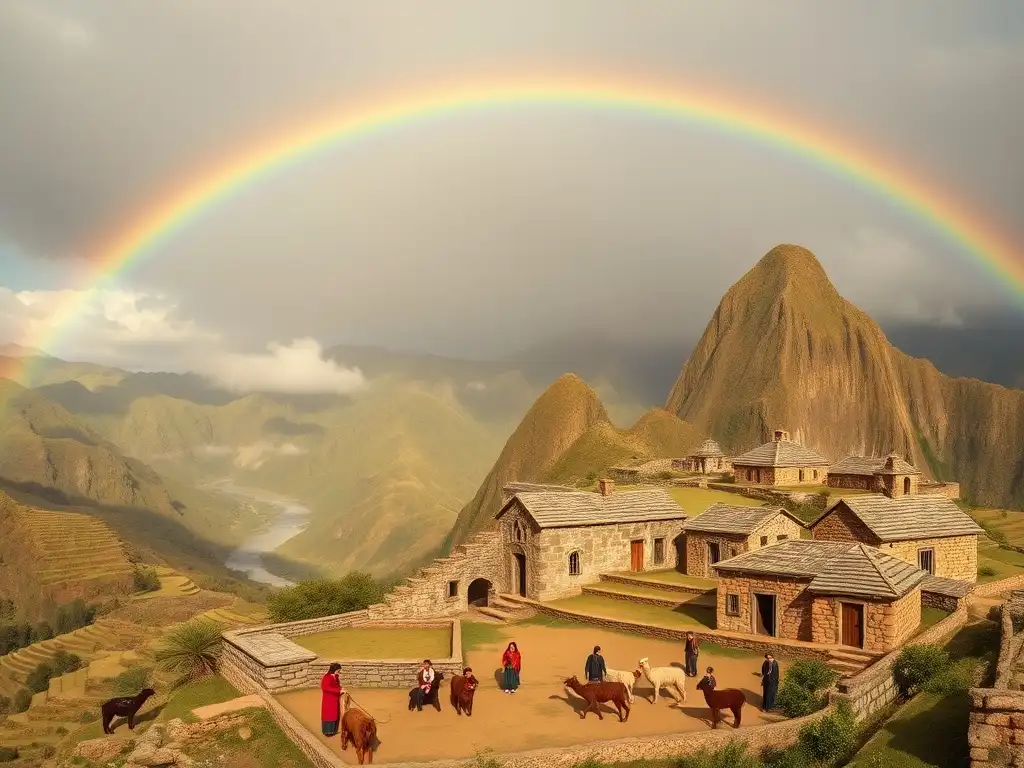
The vibrant hues of the Andean rainbow, far from being a mere meteorological phenomenon, held—and continues to hold—profound spiritual and symbolic significance for Andean civilizations. Its enduring impact is woven into the very fabric of modern Andean communities, manifesting in diverse artistic expressions, religious practices, and cultural traditions. Understanding this legacy reveals a deep connection between the past and present, demonstrating the resilience and continuity of Andean cosmovision.
The rainbow's enduring presence underscores the depth and complexity of Andean civilizations history, showcasing how ancient beliefs have adapted and persisted through centuries of change. This section delves into the specific ways the rainbow continues to influence contemporary Andean life.
The Rainbow in Contemporary Andean Art and Traditions
The Andean rainbow's symbolic power is vividly expressed in contemporary art. Artists often depict the rainbow as a bridge between the earthly and spiritual realms, a conduit for communication with deities and ancestors. For example, many contemporary paintings and sculptures feature rainbow motifs alongside depictions of Andean deities like Pachamama (Mother Earth) and Inti (the Sun God), reinforcing the rainbow's role as a sacred symbol connecting the human world with the divine. Furthermore, traditional Andean festivals and ceremonies frequently incorporate rainbow colors in costumes, decorations, and offerings.
The vibrant hues are not merely aesthetic choices; they represent the life-giving energies of the cosmos, reflecting the continuous interplay between the material and spiritual worlds. The use of rainbow colors in these celebrations ensures the enduring legacy of Andean civilizations history and its spiritual foundation. The continuity of these practices demonstrates the powerful influence of ancient beliefs on modern Andean culture.
The Persistence of Rainbow Symbolism in Andean Indigenous Cultures
Rainbow symbolism persists strongly within various Andean indigenous cultures. In many communities, the rainbow is associated with fertility, abundance, and good fortune. Farmers often view a rainbow as an auspicious sign, predicting a bountiful harvest.
This belief is rooted in the ancient Andean connection between the celestial world and agricultural cycles, highlighting the practical application of spiritual beliefs within daily life. Moreover, some Andean indigenous communities still utilize rainbow motifs in healing ceremonies and rituals, believing that the rainbow's energy can cleanse and purify both individuals and the land. These practices demonstrate a living connection to the ancient Andean civilizations history, showing how spiritual beliefs have been interwoven with practical aspects of life across generations.
The persistence of these traditions underscores the enduring power of Andean cosmovision. The symbolic weight of the rainbow is not merely a historical relic; it remains a vital part of the spiritual lives of many Andean peoples.
Rainbow Motifs in Modern Weaving and Textiles
The enduring presence of the rainbow is strikingly evident in modern Andean weaving and textiles. Traditional techniques, passed down through generations, continue to incorporate rainbow motifs into clothing, tapestries, and other woven articles. These designs are not simply decorative; they often encode complex narratives and symbolic meanings rooted in Andean cosmovision.
The specific arrangement of colors and patterns can convey messages about fertility, protection, or spiritual power. For instance, the use of specific rainbow hues in a textile might represent a particular deity or ancestral spirit, demonstrating the intricate relationship between artistic expression and spiritual belief. The continued prevalence of these weaving techniques represents a tangible link to the rich history of Andean civilizations, showing how ancient traditions have adapted and endured through time.
The intricate designs and symbolic meanings embedded within these textiles demonstrate the profound impact of Andean civilizations history on contemporary craft traditions. The vibrant colors and intricate patterns tell a story that spans centuries.
Conclusion: The Andean Rainbow as a Timeless Symbol of Connection
The vibrant tapestry of Andean civilizations history is intricately woven with threads of spirituality, cosmology, and a profound connection to the natural world. The rainbow, far from being a mere meteorological phenomenon, served as a powerful symbol bridging the earthly and celestial realms, connecting humanity with the divine. Its multifaceted symbolism, reflecting diverse interpretations across various Andean cultures, offers a compelling lens through which to understand the complex religious beliefs and practices of these fascinating societies. This enduring symbol continues to resonate today, highlighting the enduring legacy of Andean spirituality and its persistent influence on contemporary Andean identity.
The Importance of Understanding the Rainbow's Meaning in Andean Civilizations History
Understanding the rainbow's significance within the context of Andean civilizations history is crucial for a complete appreciation of their worldview. The rainbow wasn't simply a beautiful sight; it represented a tangible link between the kay pacha (the human world), the hanan pacha (the upper world of the gods), and the ukhu pacha (the underworld).
For example, in Inca mythology, the rainbow was often associated with the illapa, the powerful god of thunder and lightning, whose presence was both feared and revered. The illapa's power, often manifested in dramatic displays of atmospheric electricity and torrential rains, was visually linked to the vibrant spectrum of the rainbow, reinforcing its association with divine power and cosmic energy.
The diverse interpretations of the rainbow across different Andean cultures highlight the rich tapestry of their beliefs. While the Inca might have connected it to the illapa, other cultures, such as the Moche, might have integrated the rainbow into their complex narratives surrounding fertility, agriculture, and the cycles of life and death. Detailed iconographic analysis of Moche pottery, for instance, often reveals depictions of rainbows alongside stylized depictions of deities associated with water and abundance, suggesting a close connection between the rainbow and agricultural prosperity.
Further research is needed to fully explore the nuances of rainbow symbolism across all Andean cultures, but existing evidence strongly suggests its central role in their cosmovision. This understanding allows us to grasp the depth and complexity of Andean religious thought, moving beyond superficial observations to delve into the heart of their spiritual beliefs.
The Rainbow as a Continuing Symbol of Cultural Identity and Heritage
The rainbow's enduring presence in Andean culture extends far beyond its historical significance. It remains a potent symbol of cultural identity and heritage, connecting the past with the present. Even today, the rainbow's vibrant colors are frequently incorporated into Andean textiles, art, and ceremonies, representing continuity and the enduring strength of Andean traditions. The enduring power of this symbol is a testament to the resilience of Andean culture and its ability to adapt and evolve while retaining its core values and beliefs.
The rainbow's continued relevance is particularly evident in contemporary Andean art and crafts. Weavers often incorporate rainbow motifs into their textiles, using the vibrant colors to represent the diversity of Andean life and the interconnectedness of its communities. These textiles not only serve a practical purpose but also act as powerful visual representations of Andean identity, passing down ancestral knowledge and traditions through generations.
Moreover, the rainbow's symbolic power continues to inspire contemporary artists, who use it as a metaphor for hope, renewal, and the resilience of the Andean spirit. Its continued use in modern contexts demonstrates the remarkable staying power of this ancient symbol, underscoring its enduring importance in the cultural landscape of the Andes. The rainbow, therefore, serves not only as a window into the past but also as a beacon guiding the future of Andean culture.
Frequently Asked Questions
What are the main Andean civilizations discussed in this article?
This article explores the rich history of several key Andean civilizations, including the Incas, Moche, Nazca, and Tiahuanaco. It focuses on their interconnectedness and shared cultural traits.
How does the article connect these different Andean cultures?
The article uses the metaphor of a "rainbow" to illustrate the interconnectedness and shared cultural heritage between these seemingly disparate civilizations, highlighting their influences on one another.
What aspects of Andean civilization are covered?
The article delves into the history, culture, art, and technology of the Andean civilizations, providing a broad overview of their achievements and legacy.
What is the significance of the title, "Understanding the Andean Rainbow"?
The title symbolizes the diverse yet unified nature of Andean cultures, representing the spectrum of their achievements and their lasting impact on the world.
Where can I learn more about Andean civilizations' history?
This article serves as an introduction; for more in-depth knowledge, explore academic journals, museum websites, and books focused on Andean archaeology and history.
Final Reflection: Weaving the Threads of Andean Legacy
The echoes of Andean civilizations resonate powerfully in today's world, shaping our understanding of societal structures, spiritual beliefs, and the enduring power of human ingenuity in the face of adversity. Their sophisticated agricultural techniques, intricate social hierarchies, and profound connection to the natural world continue to inspire awe and offer valuable lessons for navigating the complexities of the modern era. The legacy of the Andes is not merely a historical footnote; it's a living tapestry woven into the fabric of our present.
The enduring impact of Andean cultures on our understanding of sustainable living, community building, and the intricate relationship between humanity and nature is undeniable. Their innovative approaches to agriculture, particularly terrace farming, remain relevant in addressing contemporary challenges of food security and environmental sustainability. The mountains are our mother, the rivers our veins, and the earth our sustenance.
This ancient Andean proverb encapsulates their deep-rooted respect for the environment, a philosophy we desperately need to re-embrace in the face of climate change and ecological degradation.
Consider the ingenuity of their astronomical observations, their mastery of metallurgy, and the breathtaking artistry expressed in their textiles and ceramics. These achievements weren't isolated events; they were the product of a vibrant, interconnected society. You, the reader, are now part of this ongoing conversation. Take a moment to reflect on the parallels between the challenges faced by Andean civilizations and those we confront today. What lessons can we learn from their resilience, their ingenuity, and their profound connection to the land? Let their story inspire you to build a more sustainable, equitable, and interconnected future.
Embrace the Colors of the Andes Today!
Thank you for exploring the vibrant world of Andean culture and its profound connection to nature. Now that you've learned more about this rich heritage, let's explore ways to deepen your appreciation.
Here are a few suggestions for further engagement:
- **Learn traditional Andean weaving techniques** by joining a local workshop or online class. Bring a piece of this colorful heritage into your home.
- **Share your newfound knowledge** with friends and family. Host a gathering to discuss the significance of Andean culture and its impact.
- Explore local museums and exhibitions showcasing Andean art and artifacts. You might discover treasures that inspire you!
Which aspect of Andean culture resonates most with you, and how will you integrate it into your life?