
Unraveling the Tiahuanaco Elite: Who Governed the Shores of Lake Titicaca?

Step into a world lost to time, yet echoing with the power of the Andes. Imagine a civilization that thrived on the shores of Lake Titicaca, a society whose influence stretched across vast territories. This is the story of Tiahuanaco, and its enigmatic elite. Unravel the mysteries surrounding their governance – discover who truly held the reins of power in this fascinating exploration of Tiahuanaco elite governance. Prepare to be captivated by a civilization that continues to challenge our understanding of ancient Andean history.
The enigmatic civilization of Tiahuanaco, flourishing on the shores of Lake Titicaca between approximately 500 and 1200 CE, remains a captivating subject for historians and archaeologists. Its monumental architecture, sophisticated irrigation systems, and widespread influence across the Andes continue to puzzle researchers. This article delves into the complex question of Tiahuanaco elite governance, aiming to shed light on the social structures and power dynamics that shaped this influential civilization.
Understanding the nature of Tiahuanaco's leadership is crucial to comprehending its remarkable achievements and eventual decline. We will explore the evidence, examining both the monumental structures themselves and the artifacts unearthed, to piece together a picture of who held power and how that power was exercised in this pre-Columbian society. The intricacies of Tiahuanaco's elite governance are not only fascinating in their own right but also contribute significantly to our broader understanding of Andean societal development and the complexities of power in ancient civilizations.
This exploration will focus specifically on the evidence available regarding the nature of the ruling class and their methods of control within the Tiahuanaco state. The keyword, "Tiahuanaco elite governance," will be frequently explored and contextualized through the lens of available archaeological and historical data.
Understanding Tiahuanaco Society: Beyond the Stone Monuments
Tiahuanaco's impressive stone structures, like the Gate of the Sun and the Kalasasaya Temple, are often the first images that come to mind when discussing the civilization. However, understanding its elite governance requires looking beyond the monumental architecture. Archaeological evidence suggests a highly stratified society. While the monumental architecture clearly indicates a centralized power structure capable of organizing large-scale projects, the exact nature of this structure remains debated.
Excavations have unearthed evidence of specialized craftspeople, suggesting a complex division of labor. This division of labor, coupled with the scale of the construction projects, points towards a sophisticated system of social organization and resource management, all overseen by a powerful elite. Furthermore, analysis of burial sites reveals significant differences in grave goods, indicating varying social status within the community. The presence of elaborate burials with prestigious artifacts points to a distinct elite class with privileged access to resources and power.
The distribution of these artifacts and their stylistic variations may provide clues about the hierarchy within the elite itself. Further research is needed to fully understand the nuances of this social stratification and its relationship to the political power structure. Careful analysis of ceramic styles, textiles, and other artifacts can further illuminate the complexities of Tiahuanaco society and the role of the elite within it.
The Enigma of Tiahuanaco Leadership: Identifying the Ruling Class
Identifying the specific individuals or groups who constituted the Tiahuanaco ruling class remains a significant challenge. The absence of a clear written language makes deciphering their political system difficult. However, iconography on various artifacts, including the Gate of the Sun, may provide clues. The depictions of figures in elaborate headdresses and ceremonial attire are often interpreted as representations of rulers or high-ranking officials. These depictions, while not definitive proof of a specific ruler's identity, suggest a highly ritualized and symbolic aspect to leadership.
Furthermore, the careful planning and execution of monumental constructions imply a centralized authority capable of mobilizing labor and resources on a large scale. The control over these resources, along with the religious symbolism present in many artifacts, suggests a close connection between religious authority and political power. Analysis of the distribution of elite grave goods within the city also helps to map out potential power structures. Were there distinct lineages? Was power inherited or achieved?
These are key questions that require further investigation. The study of administrative structures, including potential record-keeping systems (if any existed), is crucial to understanding the mechanisms of governance within Tiahuanaco society. The ongoing research into Tiahuanaco’s elite governance promises to unlock more secrets of this fascinating civilization. The interplay between religious belief, social stratification, and political power remains a key focus for future studies.
Evidence of Tiahuanaco Elite Power: Archaeological Insights
The imposing presence of Tiahuanaco's monumental architecture speaks volumes about the power wielded by its elite. Archaeological excavations have unearthed a wealth of evidence demonstrating sophisticated engineering and organizational capabilities, far beyond the capacity of a simple, egalitarian society. The scale of construction projects, the precision of stonework, and the vast quantities of resources required point towards a highly centralized system of control, managed by a powerful elite capable of mobilizing considerable human and material resources.
This control extended beyond mere construction; the elite's ability to command labor, regulate resource allocation, and maintain order across extensive territories is clearly evidenced in the city's layout and the sheer scale of its monuments. Further evidence points towards a sophisticated understanding of astronomy and calendrical systems, suggesting a level of intellectual and societal organization controlled by those in power.
The elite's ability to channel these intellectual pursuits into practical applications for societal organization further strengthens this argument. The intricate water management systems, for instance, demonstrate a capacity for sophisticated planning and control over vital resources, directly benefiting the elite and showcasing their administrative prowess.
Monumental Architecture as a Reflection of Elite Control
The sheer scale of Tiahuanaco's monumental structures, such as the Kalasasaya, Puma Punku, and Akapana, serves as a powerful symbol of elite power. These structures required immense labor input, sophisticated engineering techniques, and the mobilization of vast resources.
Their construction and maintenance demonstrate the elite's ability to command and control a large workforce, organize resource distribution, and maintain social order over an extended period. The precision of the stonework, with its incredibly tight fits and intricate carvings, suggests a highly skilled workforce organized under strict supervision, reflecting not only technical expertise but also the elite's capacity to manage and direct such complex undertakings.
The strategic placement of these monuments, often in relation to astronomical alignments and significant geographical features, adds another layer to the symbolism of elite control, suggesting a deliberate manipulation of the landscape to reinforce their authority and cosmic legitimacy. The monumental scale itself served as a visible demonstration of the elite's power and resources, effectively communicating their dominance to the wider population.
Iconography and Symbolism in Tiahuanaco Art: Decoding Elite Messages
Tiahuanaco art, with its elaborate iconography and symbolism, provides invaluable insights into the worldview and power structures of the elite. The recurring motifs, such as stylized figures, complex geometric patterns, and representations of deities, were likely used to convey specific messages about elite power, legitimacy, and cosmology. The depiction of specific individuals, adorned with elaborate headdresses and regalia, suggests a hierarchical society with clearly defined elite status.
Analysis of the iconography reveals a complex interplay of religious and political symbolism, demonstrating the elite's control over religious narratives and their use of religious ideology to legitimize their rule. The consistent repetition of these symbols across various artifacts and architectural elements suggests a deliberate strategy of propaganda, reinforcing the elite's authority and shaping the collective consciousness of the population.
Further research into the iconography holds the potential to unlock more nuanced understandings of the power dynamics within Tiahuanaco society. For example, the changing depictions of certain symbols over time could signify shifts in power or ideology within the ruling elite.
Burial Practices and Status: Differentiating Elite Graves
Excavations of Tiahuanaco graves reveal significant differences in burial practices, reflecting the social hierarchy and the privileged status of the elite. Elite burials often contained elaborate grave goods, including finely crafted artifacts, precious metals, and exotic materials, indicating their wealth and access to resources beyond the reach of the common population.
The presence of multiple individuals interred together in certain elite tombs suggests the practice of ancestor veneration and the importance of lineage in maintaining elite power. The scale and complexity of the tombs themselves, often featuring elaborate construction and architectural elements, further emphasizes the elite's privileged position in society.
Analysis of skeletal remains can also provide insights into the health and diet of the elite, potentially revealing disparities in access to resources and quality of life compared to the general population. Comparing the elite burials with those of commoners provides a tangible demonstration of the vast social and economic inequalities that characterized Tiahuanaco society, solidifying the concept of a powerful, stratified ruling class.
Theories on Tiahuanaco Elite Governance: Exploring Different Models
Understanding the nature of Tiahuanaco elite governance requires examining several competing models that attempt to explain the complexities of power distribution and decision-making. While the archaeological evidence strongly points towards a centralized system, the exact nature of this system remains a subject of ongoing debate among scholars. Different theories emphasize varying aspects of elite power, including religious authority, military strength, and bureaucratic administration.
These models are not mutually exclusive, and a more holistic understanding likely involves a combination of these factors. Future research incorporating interdisciplinary approaches, including anthropological, sociological, and political science perspectives, will be crucial in refining our understanding of Tiahuanaco’s governance. The lack of direct written records poses a significant challenge, but by carefully analyzing the material culture and archaeological findings, scholars can piece together a more complete picture.
The Role of Religious Authority in Tiahuanaco Elite Power
The prominent role of religious symbolism and iconography in Tiahuanaco suggests a strong connection between religious authority and elite power. The elite may have held priestly roles or controlled access to religious rituals and practices, thereby wielding significant influence over the population. The elite's control over religious narratives and the manipulation of religious symbols may have served to legitimize their rule and maintain social order.
The construction of monumental structures with clear astronomical alignments suggests a sophisticated understanding of cosmology and the elite's ability to interpret and control celestial events, further strengthening their religious authority and reinforcing their position as intermediaries between the human and divine realms. The intertwining of religious and political power likely formed the cornerstone of the Tiahuanaco elite's control, providing a powerful ideological foundation for their governance.
The Military Elite and Tiahuanaco Expansion
The evidence suggests that military prowess played a significant role in Tiahuanaco's expansion and the consolidation of elite power. The construction of defensive structures, the discovery of weaponry, and the depiction of military themes in art all point towards a strong military component within the elite. The control of extensive territories and resources likely required the ability to project military power, suppressing dissent and controlling trade routes.
The elite's ability to mobilize and command a military force was crucial in maintaining control over a vast empire, securing access to essential resources, and projecting their influence across the Andean region. The military elite, therefore, played a crucial role in the consolidation and maintenance of Tiahuanaco's power structure.
The Bureaucratic Structure of Tiahuanaco Administration
The monumental scale of Tiahuanaco's construction projects and the complex organization required for their completion suggest the existence of a highly developed bureaucratic system. The elite likely employed a sophisticated administrative structure to manage labor, resources, and the distribution of goods across the empire. This system likely involved specialized officials responsible for overseeing various aspects of governance, including taxation, resource allocation, and public works.
The standardization of architectural styles and the use of uniform iconography across the empire suggest a centralized administrative system capable of enforcing standards and controlling information flow. The existence of a complex bureaucratic system points towards a highly organized and centralized state controlled by a powerful and sophisticated elite. Further research into the organization of labor and resource management will provide more detailed insights into this crucial aspect of Tiahuanaco's governance.
The Impact of Tiahuanaco Elite on Regional Development
The Tiahuanaco elite's impact on regional development was profound and far-reaching, leaving an indelible mark on the Andean landscape and its inhabitants. Their sophisticated governance structures facilitated significant advancements in various aspects of life, shaping the cultural and political trajectory of the region for centuries. This wasn't merely a matter of imposing power; the elite actively fostered a complex system of interconnectedness that facilitated trade, agricultural innovation, and the standardization of cultural practices.
The construction of monumental architecture, such as the iconic Kalasasaya complex, served not only as a testament to their power but also as a crucial element in the organization of labor and the consolidation of their authority. This centralized planning and execution of large-scale projects showcases the elite's ability to mobilize resources and human capital on an unprecedented scale for the time.
The resulting infrastructure improvements, including irrigation systems and road networks, significantly enhanced agricultural productivity and facilitated communication across vast distances, supporting economic growth and social cohesion. The Tiahuanaco elite's influence extended beyond mere infrastructure; their sophisticated understanding of astronomy and calendrical systems is evident in their architectural designs and religious practices, underscoring a level of intellectual sophistication that contributed to the overall development of the region.
Tiahuanaco's Influence on Political Systems in the Andes
Tiahuanaco's influence on Andean political systems was transformative. The state's highly centralized administrative structure, with its complex network of regional governors and officials, served as a model for subsequent Andean polities. Evidence suggests a sophisticated system of tribute and taxation, facilitating the accumulation of resources and the maintenance of the state's power.
This system likely involved a hierarchical structure, with the elite at the apex and a complex web of loyalties and dependencies extending downwards. The impressive uniformity of architectural styles and religious practices across vast geographical areas suggests a strong degree of central control and the effective dissemination of Tiahuanaco ideology. Furthermore, the adoption of Tiahuanaco administrative practices and symbols by neighboring societies indicates the lasting impact of their political model.
While the exact nature of Tiahuanaco's political organization remains a subject of ongoing scholarly debate, the evidence strongly suggests a sophisticated system of governance that exerted significant influence on the political landscape of the Andes for centuries after its decline. The legacy of this centralized authority is visible in the organization of later Andean states, highlighting the lasting impact of Tiahuanaco's political innovations.
The Spread of Tiahuanaco Culture and Ideology
The spread of Tiahuanaco culture and ideology across the Andes is a testament to the power and influence of its elite. Their ability to disseminate their cultural practices and beliefs to distant regions highlights the effectiveness of their administrative and religious systems. The widespread adoption of Tiahuanaco artistic motifs, architectural styles, and religious iconography in sites far from the Lake Titicaca region demonstrates a significant level of cultural exchange and integration.
This wasn't simply a matter of forceful imposition; it involved a complex interplay of political influence, economic incentives, and religious appeal. The standardization of weights and measures, evident in archaeological finds, also points to a coordinated effort to integrate different regions under a common economic and cultural framework. The Tiahuanaco elite effectively used religion as a tool to solidify their power and legitimize their rule.
The widespread veneration of Tiahuanaco deities and the adoption of their religious rituals suggest a powerful ideological influence that transcended geographical boundaries. This cultural dissemination not only strengthened the Tiahuanaco state but also contributed to the formation of a shared Andean identity, with lasting consequences for the development of the region.
Economic Control by the Tiahuanaco Elite: Resource Management
The Tiahuanaco elite exerted considerable control over the region's resources, employing sophisticated strategies for their management and distribution. The state's control over agricultural production, through extensive irrigation systems and the mobilization of labor, was crucial to its economic power. This control over vital resources allowed the elite to maintain their authority and support a large bureaucracy.
Archaeological evidence suggests a system of centralized storage and redistribution, with the elite controlling the flow of goods and ensuring their equitable (or at least, controlled) distribution. This economic system likely involved a complex network of exchange and tribute, with goods flowing from the periphery to the center, strengthening the power of the elite while providing essential resources to the population.
The standardization of weights and measures, mentioned earlier, further indicates a structured and controlled economic system designed to facilitate trade and resource management. The elite's ability to effectively manage these resources was fundamental to the state's longevity and influence, demonstrating the intricate relationship between political power and economic control in Tiahuanaco society.
The Decline of Tiahuanaco and the End of Elite Rule
The decline of Tiahuanaco and the end of its elite rule represent a pivotal moment in Andean history. The reasons for this collapse remain a subject of ongoing research and debate amongst archaeologists and historians, with no single factor definitively explaining the event. However, a combination of factors, likely interacting in complex ways, contributed to the weakening and eventual disintegration of the state. This process wasn't sudden; rather, it was likely a gradual decline, marked by increasing internal instability and external pressures.
Factors Contributing to the Collapse of the Tiahuanaco State
Several factors likely contributed to the collapse of the Tiahuanaco state. Environmental changes, such as prolonged droughts or shifts in climate patterns, may have significantly impacted agricultural production, leading to widespread food shortages and social unrest. Internal conflicts and power struggles within the elite themselves may have weakened the state's ability to govern effectively. External pressures from rival groups and competing power centers also played a crucial role.
The rise of new regional polities, challenging Tiahuanaco's authority, may have further destabilized the state, leading to its fragmentation. The exact interplay of these factors is still being investigated, with ongoing research providing new insights into the complex dynamics that led to Tiahuanaco's downfall. The absence of a single, easily identifiable cause highlights the intricate web of political, economic, and environmental factors that contributed to the state's collapse.
The Legacy of Tiahuanaco's Elite Governance
Despite its decline, the legacy of Tiahuanaco's elite governance remains profound. The state's highly centralized administrative system, its sophisticated economic strategies, and its powerful cultural influence left an enduring mark on the Andean region. Many of the administrative and religious practices adopted by subsequent Andean states can be traced back to Tiahuanaco's innovations. The monumental architecture, intricate art, and sophisticated astronomical knowledge of the Tiahuanaco elite continue to inspire awe and wonder, serving as a testament to their achievements.
Their influence on the development of Andean civilization is undeniable, shaping the political, economic, and cultural landscape of the region for centuries to come. Studying Tiahuanaco's elite governance provides crucial insights into the complexities of pre-Columbian Andean societies and their enduring impact on the region's history and culture. The legacy of their sophisticated system of governance continues to resonate in the Andean world today.
Key Figures and Their Potential Roles in Tiahuanaco Elite Hierarchy
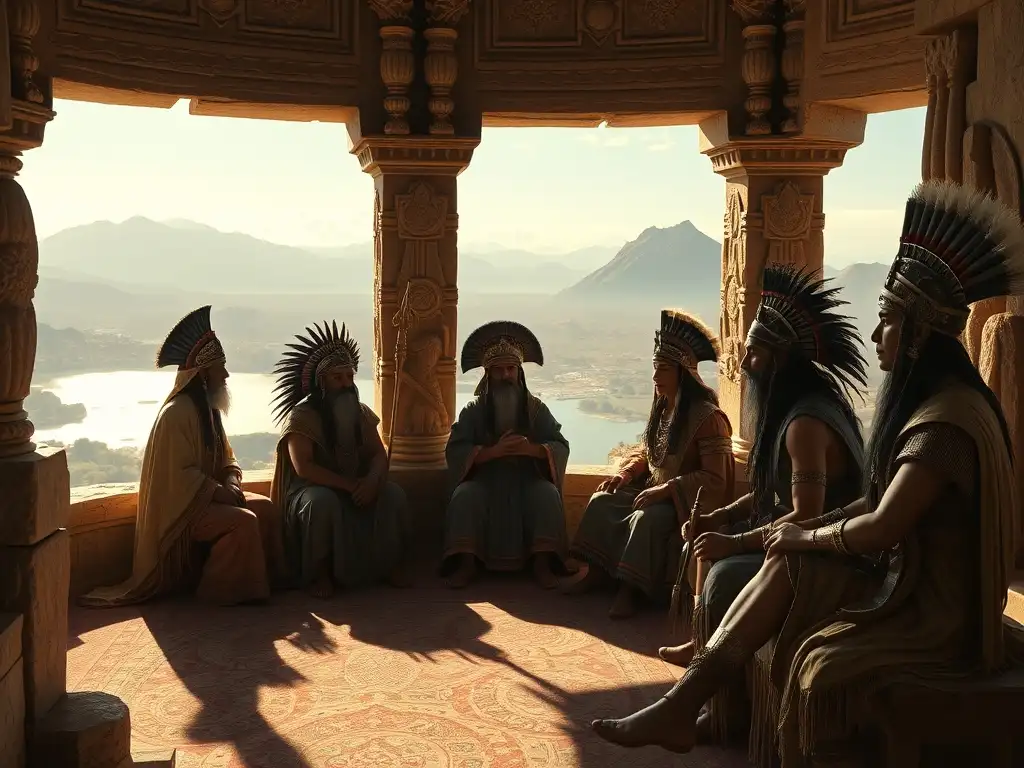
Identifying specific individuals within the Tiahuanaco elite remains a challenge due to the limited surviving textual records. Archaeological evidence, however, offers clues to the potential roles and hierarchy. Monumental architecture, such as the Kalasasaya and Pumapunku complexes, suggests a highly stratified society with a powerful ruling class. The elaborate carvings and intricate designs found on these structures point to a skilled workforce overseen by a centralized authority.
The sheer scale of these projects necessitates a complex organizational structure, implying a sophisticated system of governance and labor management. Furthermore, the presence of elite burials containing lavish grave goods indicates a clear distinction between the ruling class and the general population. These burials often contain gold ornaments, fine textiles, and other prestigious items, reflecting the power and wealth concentrated within the elite.
The distribution of these artifacts and their variations in style may also reflect different levels within the elite hierarchy itself, possibly indicating specialized roles or lineages. Further research into the chemical composition of artifacts and the analysis of human remains found in these burials could reveal more about the lifestyles and relationships of the Tiahuanaco elite. Understanding these nuances is crucial to reconstructing the social and political landscape of Tiahuanaco.
The Priest-King Model and its Interpretation
One prevalent interpretation of Tiahuanaco governance centers around the concept of a priest-king. This model proposes that religious and political authority were vested in a single individual, who served as both the supreme religious leader and the ultimate political authority. This interpretation is supported by the prominent role of religious iconography found throughout Tiahuanaco sites.
The intricate carvings depicting deities and ritualistic scenes suggest a society deeply intertwined with religious beliefs. The Kalasasaya complex, with its monumental structures and alignment with astronomical events, further reinforces this interpretation, suggesting a sophisticated understanding of cosmology and its connection to the ruling power. However, this model doesn't fully account for the complexity of the Tiahuanaco society.
It's likely that other powerful figures played significant roles alongside the priest-king, possibly managing different aspects of the state's administration and economy. Further research is needed to understand the dynamics of power within this model and to determine the extent of the priest-king's actual authority. The lack of clear textual evidence makes it difficult to definitively confirm the extent of the priest-king's influence, leaving room for alternative interpretations of the social and political organization of Tiahuanaco.
Potential Roles of High-Ranking Officials
Beyond the potential priest-king, a complex network of high-ranking officials likely managed the various aspects of Tiahuanaco society. These individuals might have overseen crucial areas such as agriculture, resource management, trade, and military affairs. Evidence suggests a highly organized system of agriculture, capable of supporting a large population.
This implies the existence of specialized officials responsible for irrigation systems, land distribution, and crop production. Similarly, the extensive trade networks of Tiahuanaco suggest a need for administrators to manage trade routes, negotiate agreements with other groups, and control the flow of goods. The presence of weaponry and defensive structures indicates a military component, implying the existence of military commanders and strategists within the elite.
Analyzing the distribution of artifacts and the architectural features of different sites might help identify the residences and administrative centers of these high-ranking officials. Furthermore, isotopic analysis of human remains could reveal dietary differences that might indicate social stratification and specialized roles within the elite.
Tiahuanaco Elite vs. Other Andean Leadership Models
Comparing the Tiahuanaco elite with other Andean civilizations offers valuable insights into the diversity of governance structures in the region. The unique characteristics of Tiahuanaco's political organization necessitate a nuanced comparative approach. While each civilization possessed its own unique characteristics, similarities and differences can be identified when comparing them with the Inca, Moche, and Nazca civilizations.
Comparing Tiahuanaco Leadership with Inca Rule
The Inca Empire, with its highly centralized and imperialistic structure, contrasts significantly with the arguably less centralized nature of Tiahuanaco. The Incas implemented a sophisticated bureaucracy, with clearly defined roles and responsibilities, while Tiahuanaco's system appears more enigmatic. The Inca's Sapa Inca held absolute power, a structure seemingly different from the potential priest-king model proposed for Tiahuanaco.
While both civilizations used monumental architecture and sophisticated engineering, the Inca's focus on centralized control and expansion is markedly different from the less overtly expansionist nature of Tiahuanaco, at least as currently understood. The Inca's system of mit'a labor, a form of mandatory public service, may have had parallels in Tiahuanaco's labor organization, but the precise nature of this labor organization in Tiahuanaco remains a subject of ongoing debate and research.
Contrasting Tiahuanaco's Elite with Moche Society
The Moche civilization, known for its elaborate iconography and sophisticated metalwork, presents a different leadership model compared to Tiahuanaco. The Moche elite, often depicted in powerful and ritualistic scenes, seemingly held significant religious and political authority. However, the Moche's power structure appears less centralized than that of the Inca but perhaps more so than Tiahuanaco’s.
The Moche's elaborate tombs and the depiction of rulers in their art offer more direct insights into their leadership compared to the more elusive evidence from Tiahuanaco. While both societies engaged in extensive craft production and trade, the nature of their elite’s involvement and control over these activities may have differed significantly.
The Moche's focus on warfare and military expansion is also a key distinction from Tiahuanaco, indicating different priorities and strategies for maintaining power and influence. Further comparative studies are needed to fully understand the nuances of these different leadership models and their impact on the broader Andean societies.
Conclusion: The Lasting Influence of Tiahuanaco Elite Governance
The intricacies of Tiahuanaco elite governance remain a subject of ongoing scholarly debate, yet the enduring impact of their system is undeniable. Their sophisticated administrative structures, evidenced by the monumental architecture and intricate irrigation systems, laid the groundwork for subsequent Andean societies. The influence of Tiahuanaco's political and religious ideologies extended far beyond the immediate shores of Lake Titicaca, shaping the cultural landscape of a vast region.
We see echoes of their artistic styles, religious practices, and even architectural techniques in later cultures like the Inca, suggesting a continuous thread of influence across centuries. Understanding Tiahuanaco's elite governance, therefore, is not merely an exercise in historical reconstruction; it is crucial to comprehending the complex tapestry of Andean civilization and its evolution. The sophisticated systems they developed, from centralized administration to advanced agricultural practices, served as a model and a foundation for the societies that followed, demonstrating the lasting legacy of their powerful and influential leadership.
Further research, particularly focused on deciphering the remaining iconography and analyzing newly discovered archaeological sites, promises to further illuminate the nuances of this remarkable civilization's governance and its lasting impact on the Andean world. The study of Tiahuanaco's elite governance continues to offer valuable insights into the complexities of pre-Columbian societies and their enduring influence on the historical trajectory of South America. The unraveling of this intricate system provides a crucial lens through which we can better understand the socio-political dynamics that shaped the Andean region for centuries to come.
- Understanding Tiahuanaco Society: Beyond the Stone Monuments
- The Enigma of Tiahuanaco Leadership: Identifying the Ruling Class
- Evidence of Tiahuanaco Elite Power: Archaeological Insights
- Theories on Tiahuanaco Elite Governance: Exploring Different Models
- The Impact of Tiahuanaco Elite on Regional Development
- The Decline of Tiahuanaco and the End of Elite Rule
- Key Figures and Their Potential Roles in Tiahuanaco Elite Hierarchy
- Tiahuanaco Elite vs. Other Andean Leadership Models
- Conclusion: The Lasting Influence of Tiahuanaco Elite Governance
- What role did religion play in Tiahuanaco governance?
- How did the Tiahuanaco elite maintain control over such a vast territory?
- What evidence reveals the structure of Tiahuanaco elite governance?
- What was the nature of the relationship between the Tiahuanaco elite and the common people?
- How did the Tiahuanaco elite's power eventually decline?
Frequently Asked Questions
What role did religion play in Tiahuanaco governance?
Religious beliefs were central to Tiahuanaco's governance. The elite likely held priestly roles, wielding power through their connection to the divine and control over religious rituals and ceremonies. This sacral kingship was crucial to their authority.
How did the Tiahuanaco elite maintain control over such a vast territory?
The Tiahuanaco elite maintained control through a combination of military strength, bureaucratic administration, and ideological influence. They likely used a system of regional governors and extensive road networks to manage their empire.
What evidence reveals the structure of Tiahuanaco elite governance?
Evidence comes from archaeological findings at sites like Puma Punku and Akapana. Monumental architecture, elite burials, and iconography provide insights into power structures and social hierarchy. Administrative records (if found) would further illuminate this.
What was the nature of the relationship between the Tiahuanaco elite and the common people?
The relationship between the elite and the common people was likely one of hierarchy and control. While the specifics remain debated, the monumental scale of Tiahuanaco's constructions suggests a highly stratified society with significant labor mobilization.
How did the Tiahuanaco elite's power eventually decline?
The exact causes of the Tiahuanaco decline are still being researched. Factors such as environmental changes, internal conflicts, and external pressures likely contributed to the gradual weakening and eventual collapse of their power.
Final Reflection: The Enduring Legacy of Tiahuanaco Governance
The sophisticated political structures of the Tiahuanaco civilization continue to resonate today, challenging our understanding of pre-Columbian power dynamics and offering valuable insights into the complexities of state formation. Their ability to manage vast resources, control extensive territories, and maintain social order across diverse landscapes remains a remarkable achievement, prompting ongoing scholarly debate and inspiring new avenues of research. The mysteries surrounding their governance continue to captivate and challenge us, urging a deeper exploration of their societal structures.
The influence of Tiahuanaco's elite governance extends far beyond its geographical boundaries and temporal limitations. Their innovations in agriculture, monumental architecture, and religious practices left an indelible mark on the Andean region, shaping the cultural landscape for centuries to come. Their sophisticated system of irrigation, for example, is a testament to their engineering prowess and their understanding of resource management. The Tiahuanaco state was not merely a political entity, but a complex socio-economic system that integrated diverse populations and resources into a unified whole.
This statement highlights the enduring impact of their integrated approach to governance, a model that continues to inspire discussions on effective state-building and resource management in modern contexts.
Consider the implications of Tiahuanaco's achievements. How did their understanding of social organization and resource management contribute to their success? What lessons can we learn from their successes and failures? You, the reader, are now invited to reflect on the enduring relevance of Tiahuanaco's legacy. Explore the parallels between their challenges and our own, and consider how a deeper understanding of their governance can inform our approach to building sustainable and equitable societies today. Let the echoes of Tiahuanaco inspire your own pursuit of knowledge and understanding.
Engage with the Legacy of Tiahuanaco!
Thank you for exploring the fascinating world of the Tiahuanaco elite and their influence around Lake Titicaca! We hope you gained valuable insights into their governance and cultural impact. Now it's time to delve even deeper!
Here are some ways to continue exploring this intriguing topic:
- Join our community: Sign up for our newsletter to receive exclusive content and future articles on Andean civilizations and their rich histories.
- Share your perspectives: Discuss your favorite discoveries about Tiahuanaco on social media or in our comment section—we value your insights!
- Explore local heritage: If you're near Lake Titicaca, a visit to experience its stunning beauty and ancient sites firsthand is highly recommended; you might uncover hidden secrets!
What aspect of the Tiahuanaco elite captivates you most, and how do you believe their governance shaped the future of Andean cultures? Let's discuss!