
The Role of Infrastructure: Roads and Bridges in Inca Dominance

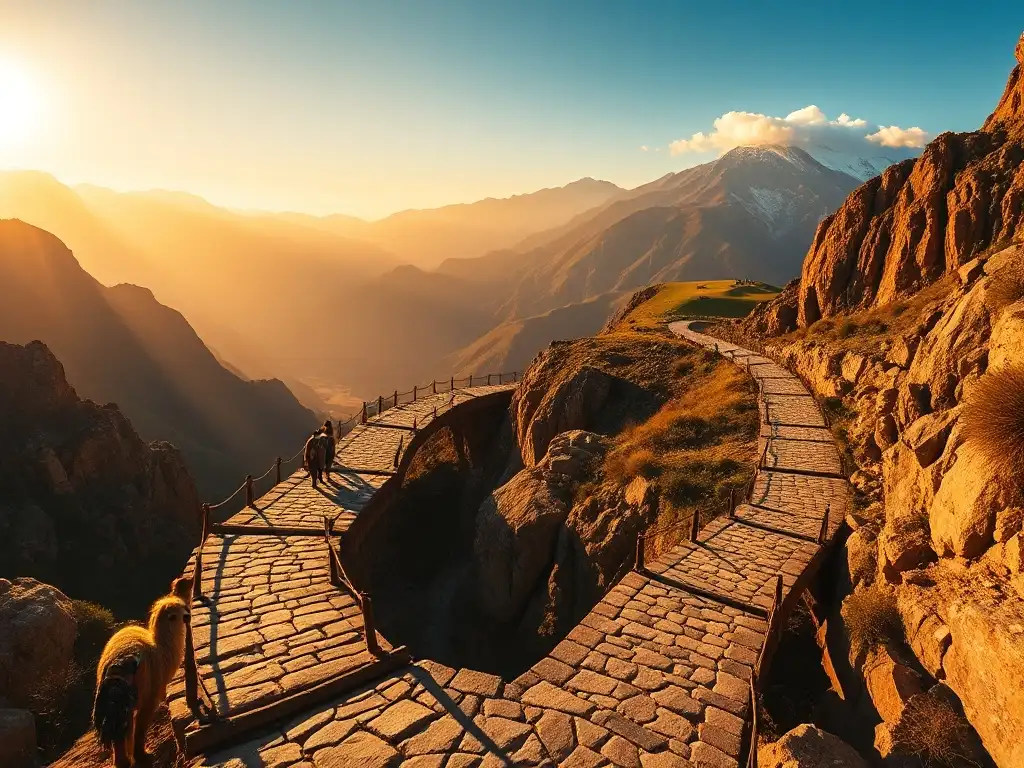
Unravel the mysteries of the Andes! Prepare to be captivated by the ingenuity and power of the ancient Andean civilizations. For centuries, empires rose and fell, leaving behind a legacy of breathtaking artistry and unparalleled engineering. But how did the Inca truly conquer such vast territories? The answer lies, in part, in the impact of their legendary road system. Discover the secrets behind the Inca road system's impact on their dominance and the breathtaking scope of their achievements—a story of innovation and mastery that will leave you breathless. Explore further to uncover the full story.
The Inca Empire, a civilization that flourished in the Andes Mountains from the 15th to the 16th centuries, stands as a testament to human ingenuity and organizational prowess. Its remarkable expansion and consolidation across challenging terrain were not solely the result of military might, but also, and perhaps more importantly, a sophisticated and extensive infrastructure.
This article delves into the critical role that the Inca road system and its accompanying bridges played in achieving and maintaining their dominance, exploring how this impressive feat of engineering facilitated communication, trade, military movement, and ultimately, the very fabric of their empire. Understanding the impact of the Inca road system is key to comprehending the scale and longevity of their civilization, highlighting its innovative solutions to logistical challenges that continue to inspire awe and admiration today.
We will examine the strategic importance of this infrastructure and analyze the intricate network that connected the vast Inca Empire, showcasing its profound influence on the Inca's remarkable success. The keyword "Inca road system impact" will be explored throughout, revealing its multifaceted contributions to the Inca's enduring legacy.
The Strategic Importance of Inca Infrastructure
The Inca's success wasn't solely due to military conquest; their strategic infrastructure played a pivotal role in their dominance. This infrastructure wasn't merely a collection of roads and bridges; it was a meticulously planned network designed to facilitate the efficient movement of people, goods, and information across their vast and challenging empire. The sheer scale of the undertaking is astonishing.
Consider the mountainous terrain, the diverse climates, and the sheer distances involved – building and maintaining such a system required advanced engineering knowledge, exceptional organizational skills, and a highly structured labor force. The impact of this organized system reverberated throughout the empire, enabling swift military responses to rebellions, efficient distribution of resources, and the rapid transmission of news and decrees. This intricate web of communication and transportation allowed for a level of centralized control unprecedented in the pre-Columbian Americas.
The strategic placement of tambos (roadside inns) provided resting places for travelers and relay stations for messengers, further highlighting the strategic importance of the Inca's infrastructure investment. The road system's impact on the empire's stability and longevity cannot be overstated; it was the backbone upon which the Inca's power rested.
The Inca Road System: A Network of Power
The Inca road system, often referred to as the Qhapaq Ñan, was a marvel of engineering. This network of roads stretched over 40,000 kilometers (approximately 25,000 miles), traversing diverse landscapes, from coastal deserts to high-altitude mountain passes. The roads were remarkably well-constructed, utilizing advanced techniques for paving and drainage. Some sections were paved with stone, while others were carefully graded and compacted earth.
The construction involved the meticulous fitting of stones without the use of mortar, a testament to Inca stonemasonry skills. The impact of this system extended beyond mere transportation. It facilitated the movement of armies, allowing for rapid responses to threats and the efficient consolidation of conquered territories. The swift transportation of goods, including food, textiles, and other resources, ensured the empire's economic stability.
Furthermore, the roads served as vital arteries for communication, enabling the rapid transmission of messages via a sophisticated relay system using chasquis (runners). The Inca road system, therefore, was not just a network of paths; it was a powerful instrument that underpinned the empire's political, economic, and military strength. The impact of this sophisticated system is still felt today, as evidenced by the ongoing efforts to preserve and study this incredible achievement. The meticulous planning and execution involved underscore the Inca's exceptional organizational abilities and foresight, solidifying their position as master engineers and administrators.
Qhapaq Ñan: The Royal Road and its Significance
The Qhapaq Ñan, meaning "Royal Road" in Quechua, was the backbone of the Inca Empire, a sophisticated network of roads stretching over 40,000 kilometers across the Andes Mountains. Its significance transcended mere transportation; it was a crucial element in the Inca's ability to maintain control over their vast and geographically challenging empire. The road system facilitated the rapid movement of troops, allowing for swift responses to rebellions or threats.
This efficient military response was a key factor in suppressing uprisings and maintaining the stability of the empire. Furthermore, the Qhapaq Ñan fostered a sense of unity and connectedness among the diverse populations under Inca rule, promoting cultural exchange and integration. The road wasn't just a physical pathway; it was a symbol of Inca power and authority, a visible testament to their mastery of engineering and their ability to unify a vast and diverse territory.
The sheer scale of the project, its meticulous planning, and its lasting impact on Andean geography are all testaments to the Inca's exceptional organizational and engineering skills. It's a feat of infrastructure that continues to fascinate and inspire awe centuries later. The impact of the Inca road system is still felt today, with sections of the Qhapaq Ñan still visible and used.
Engineering Marvels: Inca Road Construction Techniques
The construction of the Qhapaq Ñan was a remarkable feat of engineering, showcasing the Inca's advanced understanding of topography and materials science. They skillfully adapted their techniques to the varied terrain, employing different methods depending on the landscape. In mountainous regions, they carved roads directly into the rock face, utilizing sophisticated stone-cutting tools and techniques. In less rugged areas, they built roads using compacted earth and stone, often layering them for stability and drainage.
The roads were meticulously planned, with gradients designed to minimize the impact of steep inclines. They incorporated drainage systems to prevent erosion and damage from heavy rainfall. The impressive durability of these roads, many sections of which withstood centuries of use, speaks to the quality of Inca workmanship and their deep understanding of engineering principles.
The precision of the stonework, often fitted together without mortar, is a testament to their skill and patience. Archaeological evidence continues to reveal the complexity and sophistication of their methods, challenging modern engineering perspectives. The Inca road system, therefore, represents not only a logistical masterpiece, but also a significant contribution to the field of engineering.
The Qhapaq Ñan’s impact on trade and communication
The Qhapaq Ñan was not just a military highway; it played a vital role in facilitating trade and communication across the Inca Empire. The efficient transport of goods, from agricultural products to precious metals, was crucial to the empire's economic stability. The road network connected diverse regions, allowing for the exchange of goods and resources, fostering economic interdependence and prosperity across the empire.
The ability to quickly transport essential goods, such as food and textiles, was particularly important for supporting urban centers and maintaining social order. Beyond trade, the Qhapaq Ñan facilitated rapid communication. Runners, known as chasquis, relayed messages along the roads, ensuring that information could travel vast distances in remarkably short periods.
This efficient communication system was critical for the timely transmission of administrative orders, military intelligence, and news. The combination of efficient trade and rapid communication networks fostered cohesion and stability within the vast Inca Empire, contributing significantly to its longevity and influence. The Qhapaq Ñan's impact on the Inca economy and governance is undeniable, shaping the social and political landscape of the empire.
Inca Bridges: Connecting the Empire
The Inca road system would have been incomplete without its impressive network of bridges, which ingeniously connected disparate regions across rivers and ravines. These bridges weren't simply functional crossings; they represented a significant technological achievement and a testament to the Inca's problem-solving capabilities. The construction of these bridges was crucial to maintaining the integrity of the Qhapaq Ñan and facilitating travel, trade, and communication across the challenging Andean geography.
The Inca's mastery over diverse bridge-building techniques is particularly striking, demonstrating their adaptability and innovation. Different bridge types were employed depending on the specific geographical constraints and available resources. The strategic placement of these bridges allowed for efficient movement of people and goods throughout the empire, emphasizing the importance of connectivity in Inca governance and logistics.
Suspension Bridges: Inca Ingenuity in Engineering
Inca suspension bridges showcased remarkable engineering ingenuity. These bridges, often spanning deep gorges, were constructed using strong, lightweight materials like woven fibers (likely from ichu grass or similar plants) and secured to sturdy anchor points on either side of the chasm. The intricate weaving techniques used to create the bridge cables demonstrate a deep understanding of material properties and tensile strength.
These bridges were not merely rudimentary structures; they were sophisticated engineering marvels, capable of supporting significant weight and withstanding the forces of nature. Their construction required meticulous planning, precision, and a high degree of skill.
The design and construction of these suspension bridges represent a significant advancement in bridge-building technology for their time and a testament to the Inca's innovative approach to problem-solving. The remarkable longevity of some of these bridges, even if only partially preserved, further highlights the quality of the workmanship and the careful consideration given to their design and construction.
Pontoon Bridges: Temporary Solutions for River Crossings
While suspension bridges represented a more permanent solution, the Inca also employed pontoon bridges for temporary crossings, particularly during times of high water or in areas where building a permanent structure was impractical. These bridges, built using bundles of reeds, wood, or other buoyant materials, provided a temporary yet effective means of crossing rivers. Pontoon bridges allowed for flexibility in responding to changing conditions and provided a cost-effective solution for short-term needs. Their construction and deployment demonstrated practicality and adaptability in the face of variable environmental conditions.
The use of pontoon bridges highlights the Inca's understanding of buoyancy and their ability to create effective solutions using readily available materials. The implementation of this temporary bridge solution showcases the Inca's pragmatic and adaptable approach to infrastructure development, ensuring connectivity even in challenging and dynamic environments. This efficient and flexible system further enhanced the overall effectiveness of the Inca road system.
How the Inca Road System Impacted Expansion

The Inca road system, a marvel of engineering for its time, played a pivotal role in the empire's astonishing expansion across the challenging Andean terrain. Its impact can't be overstated; it wasn't merely a network of paths, but a crucial engine driving Inca dominance. The construction itself was a powerful statement of imperial might, demonstrating the Inca's capacity to overcome geographical obstacles and unify disparate regions under their rule.
The roads facilitated rapid communication and movement of people and goods, allowing the Inca to consolidate their power and extend their reach into previously inaccessible areas. This network significantly reduced the time needed for military campaigns and administrative oversight, contributing directly to the empire's remarkable growth. The ability to quickly deploy troops and resources across vast distances was a key factor in the Inca's ability to subdue resistant populations and incorporate new territories into their empire.
This infrastructure advantage allowed the Inca to maintain control over a vast and diverse population, ensuring the long-term stability and expansion of their realm. The strategic placement of roads also facilitated the integration of newly conquered territories into the existing administrative structure, further solidifying Inca control.
Facilitating Military Movements: The Inca Army's Advantage
The Inca army's effectiveness was significantly amplified by the extensive road network. Rapid troop deployment became a hallmark of Inca military strategy. Unlike their adversaries who often faced slow and arduous journeys across mountainous terrain, the Inca could swiftly mobilize their forces to quell rebellions, respond to threats, or launch offensive campaigns.
This speed advantage allowed them to decisively overcome opponents, often before resistance could fully organize. Furthermore, the roads facilitated the efficient transport of supplies, including food, weapons, and other necessities, ensuring the army's sustained operational capacity during prolonged campaigns. The strategic placement of chasquis (relay runners) along the road network enabled swift communication between military units and the imperial center, allowing for coordinated maneuvers and timely responses to changing battlefield conditions.
This superior logistical capacity, enabled by the road system, is a key factor explaining the Inca empire’s military success and rapid expansion. The speed and efficiency of the Inca military were unmatched in the region, contributing directly to the empire's dominance.
Efficient Resource Transportation: Sustaining the Empire
The Inca road system was not just vital for military purposes; it was equally crucial for the efficient transportation of resources across the empire. The movement of agricultural products, building materials, and other essential goods was significantly streamlined, allowing for the sustenance of a large and complex population. The network connected diverse regions, enabling the exchange of goods and resources, and mitigating the impact of localized shortages.
This efficient distribution system ensured the stability of the empire, preventing famines and unrest. The ability to quickly transport food and other necessities to remote areas was critical for maintaining social order and ensuring the loyalty of conquered populations.
The Inca's ability to manage and redistribute resources effectively was a key factor in their empire’s longevity and stability. This sophisticated logistical network, built upon the foundation of the road system, allowed the Inca to efficiently manage the vast resources of their empire and maintain a high standard of living across its diverse regions.
The Inca Road System's Influence on Political Control
The Inca road system served as more than just a logistical network; it was a powerful instrument of political control, facilitating efficient administration and the projection of imperial authority across the vast empire. Its impact on the empire's political landscape was profound and far-reaching, shaping the way the Inca governed their diverse population.
The strategic placement of roads and settlements, along with the efficient communication they enabled, allowed the Inca to maintain a firm grip on power, ensuring the stability and longevity of their rule. The road system's influence on political control extended beyond mere logistical support; it was integral to the functioning of the Inca state itself.
Administration and Governance via the Inca Road System
The Inca road system was instrumental in establishing and maintaining an effective administrative structure across the empire. The roads facilitated the regular travel of officials, inspectors, and messengers, allowing for consistent communication between the imperial center and distant provinces. This ensured that imperial decrees were promptly disseminated and that regional governors remained accountable to the central government.
The road network also enabled the efficient collection of taxes and tribute, crucial for financing the empire's vast administrative apparatus. This system of efficient communication and resource management was a key factor in the Inca empire's ability to govern such a vast and diverse territory effectively. The intricate network of roads allowed the Inca to monitor and control all aspects of governance with remarkable efficiency.
Imposing Imperial Authority through Infrastructure
The very construction of the Inca road system was a powerful demonstration of imperial authority. The scale and ambition of the project, the mobilization of vast labor forces, and the sophisticated engineering techniques employed, all served to impress upon conquered populations the might and power of the Inca empire. The roads themselves became symbols of Inca dominance, visually representing the empire's reach and control.
The strategic placement of roads and tambos (roadside inns) further reinforced imperial authority, providing resting places for travelers and strategic points for monitoring activity. The road network also facilitated the movement of Inca officials and military personnel, allowing for the swift suppression of any resistance or rebellion.
The Inca road system, therefore, was not merely a logistical network but a powerful tool for projecting imperial power and maintaining control over a vast and diverse empire. The very existence of this impressive infrastructure served as a constant reminder of the Inca's dominance.
The Legacy of Inca Roads and Bridges
The Inca road system, or Qhapaq Ñan, remains a testament to the ingenuity and organizational prowess of the Inca Empire. Its impact extended far beyond mere transportation; it facilitated the movement of armies, the efficient distribution of resources, and the consolidation of political power across a vast and challenging terrain. The construction techniques, utilizing locally sourced materials and adapting to diverse geographical features, were remarkably advanced for their time.
The meticulous planning and execution of the Qhapaq Ñan are still studied by engineers and historians today, revealing insights into Inca societal organization, resource management, and technological capabilities. The network's longevity, with sections still usable centuries later, underscores the quality of Inca workmanship and the enduring impact of their infrastructural achievements. The Qhapaq Ñan wasn't just a network of pathways; it was a living artery that pulsed with the lifeblood of the Inca Empire, connecting its farthest reaches and enabling its remarkable expansion and enduring legacy.
The sheer scale of the undertaking, encompassing thousands of miles across diverse landscapes, is a profound demonstration of Inca engineering skills and imperial ambition. The system's influence continues to resonate in modern-day infrastructure planning, highlighting the importance of sustainable and adaptable design principles.
Preserving Inca Engineering in Modern Infrastructure
Understanding the principles behind Inca road construction offers valuable lessons for contemporary infrastructure development. Their mastery of adapting to varied terrains, utilizing local materials, and creating sustainable structures provides inspiration for modern engineers facing similar challenges. The Inca's emphasis on minimizing environmental impact, integrating their infrastructure seamlessly into the landscape, is particularly relevant in today's context of sustainable development.
For example, modern road construction projects can learn from the Inca's use of natural materials and their methods of drainage and erosion control. The Inca's understanding of slope stabilization and the use of retaining walls provides valuable insights for creating resilient infrastructure in mountainous regions. Preserving existing sections of the Qhapaq Ñan not only safeguards a significant historical site but also allows for the study and application of Inca engineering techniques in current projects.
This preservation effort is crucial for maintaining a connection to the past and for informing more sustainable and resilient infrastructure design for the future. The Inca's ingenuity serves as a powerful reminder that environmentally conscious and locally appropriate construction methods can be both durable and effective.
The Qhapaq Ñan as a UNESCO World Heritage Site
The recognition of the Qhapaq Ñan as a UNESCO World Heritage Site in 2014 underscores its global significance. This designation acknowledges the exceptional universal value of the Inca road system as a remarkable feat of engineering and a testament to the cultural achievements of the Inca Empire. The Qhapaq Ñan, extending across six Andean countries, represents a shared cultural heritage and a symbol of regional unity. The UNESCO listing has spurred international collaboration in the preservation and promotion of this invaluable historical legacy.
The recognition also highlights the importance of protecting this infrastructure for future generations, fostering a deeper understanding of Inca civilization and its lasting impact. The site's inclusion on the World Heritage list increases tourism and provides economic opportunities for local communities along the ancient routes. Moreover, the UNESCO designation encourages further research and the development of educational programs about the Qhapaq Ñan, its construction, and its significance within the Inca Empire's broader context.
This prestigious recognition serves as a powerful catalyst for the continued preservation and celebration of the Inca road system's unparalleled historical and cultural importance. The ongoing efforts to protect and promote the Qhapaq Ñan illustrate the global commitment to safeguarding this significant piece of Andean heritage for the benefit of all humankind. The Inca road system's impact, therefore, extends far beyond its initial function, becoming a symbol of cultural preservation and international cooperation.
- The Strategic Importance of Inca Infrastructure
- The Inca Road System: A Network of Power
- Qhapaq Ñan: The Royal Road and its Significance
- Inca Bridges: Connecting the Empire
- How the Inca Road System Impacted Expansion
- The Inca Road System's Influence on Political Control
- The Legacy of Inca Roads and Bridges
- What was the extent of the Inca road system?
- How did the Inca road system impact their empire's success?
- What types of materials were used to build Inca roads and bridges?
- What innovative techniques did the Incas use in road construction?
- How did the Inca road system facilitate trade and communication?
Frequently Asked Questions
What was the extent of the Inca road system?
The Inca road system, known as the Qhapaq Ñan, was extensive, stretching over 40,000 kilometers across the Andes Mountains. It connected the vast Inca empire, facilitating communication and trade.
How did the Inca road system impact their empire's success?
The efficient Inca road system was crucial to their military dominance and political control. It allowed for rapid troop movement and the swift transmission of information.
What types of materials were used to build Inca roads and bridges?
Inca roads were built using stone paving, earth, and other locally sourced materials. Bridges were often constructed using stone, wood, and rope.
What innovative techniques did the Incas use in road construction?
The Incas employed advanced engineering techniques, including sophisticated drainage systems and the use of suspension bridges across deep ravines. Their mastery of stonework is evident in the durability of their roads.
How did the Inca road system facilitate trade and communication?
The Qhapaq Ñan facilitated trade by allowing for the movement of goods across vast distances. It also enabled rapid communication, strengthening the empire's political unity and stability.
Final Reflection: The Enduring Legacy of Inca Roads
The Inca road system wasn't merely a network of pathways; it was the very artery of an empire, a testament to ingenious engineering and a crucial factor in their unprecedented dominance. Its impact resonates even today, reminding us of the power of strategic infrastructure to shape civilizations and connect disparate communities. The efficiency and scale of this ancient network continue to inspire awe and serve as a powerful case study in logistical mastery.
The Inca road system's influence extends far beyond its purely practical applications. It fostered cultural exchange, facilitated trade, and solidified political control across a vast and challenging terrain. The very existence of this intricate network speaks volumes about the Inca's vision, their capacity for organization, and their profound understanding of the importance of connectivity. A road is a symbol of progress, a testament to the human spirit's ability to overcome obstacles and connect with one another.
This quote, while not directly from an Inca source, perfectly encapsulates the enduring significance of their road network. Its impact on the cultural and social landscape of the Andes continues to be felt, shaping the very fabric of modern-day communities.
Consider the impact of infrastructure in your own life. Think about how readily available transportation shapes your daily routines, your access to opportunities, and your connection to the wider world. You too, are connected to a vast network, a legacy built upon the foundations laid by generations past.
Let the ingenuity and foresight of the Inca inspire you to appreciate the importance of infrastructure, not just as a means to an end, but as a powerful force shaping societies and connecting people across time and space. Embrace the lessons of the past to build a more connected and prosperous future.
Unveil the Secrets of Inca Engineering!
Thank you for exploring the fascinating role of infrastructure in the Inca Empire's dominance. Your interest in their remarkable roads and bridges highlights how these engineering marvels shaped a vast and powerful civilization. Let's delve deeper!
To further enhance your understanding and appreciation of Inca achievements, consider these suggestions:
- Explore the Inca Trail: Embark on a virtual or in-person journey along these historic routes and experience firsthand the challenging landscapes that shaped their civilization.
- Share Your Discoveries: Discuss the impact of Inca infrastructure with friends, family, or online communities. Help others appreciate the ingenuity of these ancient builders.
- Join a Discussion: Engage with online forums or local history groups focused on Andean civilizations to exchange ideas and expand your knowledge.
What specific aspects of Inca infrastructure do you believe most significantly influenced their cultural legacy? Share your thoughts below!