
The Sapa Inca: Divine Ruler and Architect of the Inca Empire

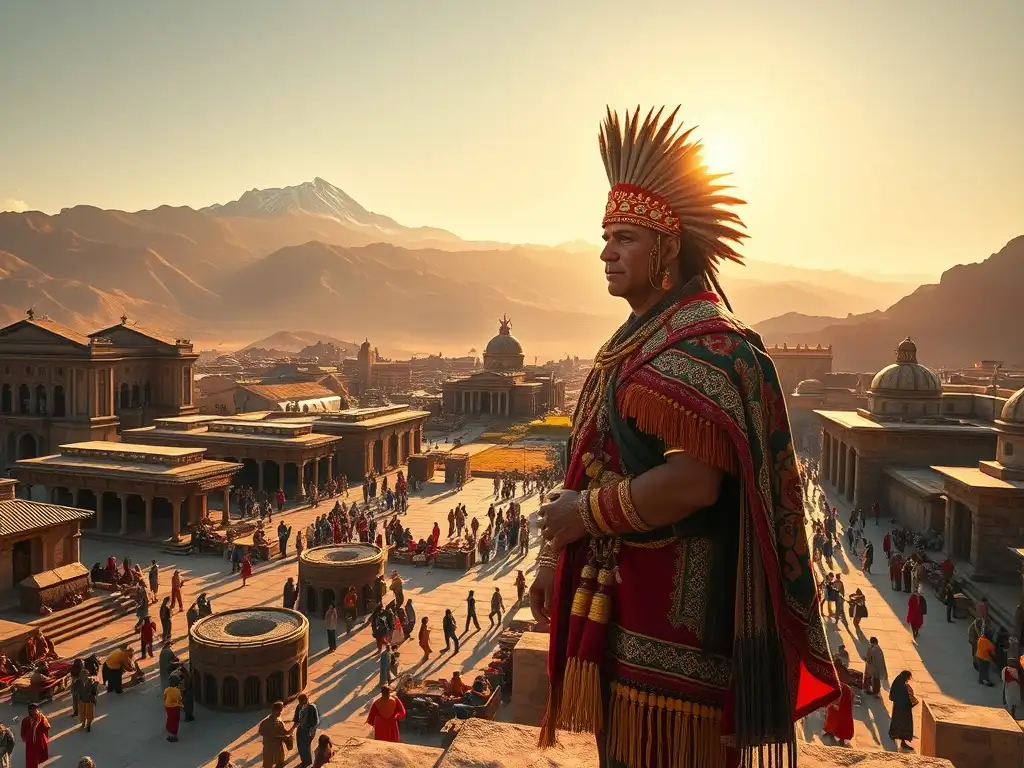
Step into a world lost to time, yet echoing with the power and majesty of the Andes. Prepare to unravel the mysteries surrounding the Inca Sapa Inca leadership, a system of divine rule that shaped one of history’s most remarkable empires. Discover how the Sapa Inca’s authority, woven into the very fabric of Inca society, forged a civilization renowned for its breathtaking artistry, ingenious engineering, and intricate social structures. Uncover the secrets behind their enduring legacy – the journey begins now.
The Inca Empire, a marvel of ancient engineering and societal organization, thrived for centuries thanks in large part to the powerful and centralized leadership of the Sapa Inca. This article delves into the multifaceted role of the Sapa Inca, exploring his divine mandate, his influence on Inca society, and his crucial functions as a political leader, religious authority, and supreme military commander. Understanding the Sapa Inca's leadership is key to comprehending the Inca Empire's remarkable success and enduring legacy.
We will examine the intricate balance of power, religious belief, and military strength that underpinned the Sapa Inca's authority and shaped the lives of millions within the vast Inca realm. This exploration of Inca Sapa Inca leadership will reveal the complexities of this unique and influential position within the Andean world.
The Divine Mandate of the Inca Emperor
The Sapa Inca wasn't merely a ruler; he was considered a direct descendant of the sun god, Inti, and thus held a divine status. This divine mandate legitimized his absolute authority and ensured the unquestioning obedience of his subjects. The Inca religion played a crucial role in reinforcing the Sapa Inca's power.
Elaborate ceremonies, sacrifices, and rituals constantly reaffirmed his connection to the divine, solidifying his position as the intermediary between the gods and the people. This divine connection was not just a matter of belief; it was actively cultivated and propagated through state-sponsored religious practices and carefully controlled narratives. The Inca worldview deeply intertwined political power with spiritual authority, making the Sapa Inca's rule both divinely sanctioned and politically inviolable.
This belief system fostered a strong sense of unity and loyalty among the Inca population, contributing significantly to the empire's stability and expansion. The intricate system of religious beliefs surrounding the Sapa Inca's authority highlights the sophisticated nature of Inca governance.
The Sapa Inca's Role in Inca Society
The Sapa Inca's influence permeated every aspect of Inca life. His decisions impacted everything from agricultural practices and infrastructure projects to religious ceremonies and military campaigns. He was not merely a figurehead; he was the central organizing force of the entire empire.
His authority extended to all aspects of the state, from the allocation of resources and the appointment of officials to the regulation of trade and the administration of justice. The Sapa Inca's decisions directly shaped the lives of millions, influencing everything from the construction of monumental architecture to the daily routines of ordinary citizens. His role transcended simple governance; it encompassed the very fabric of Inca society, making him the ultimate arbiter of social and political order.
The Sapa Inca as a Political Leader
The Sapa Inca held absolute political power, making all major decisions regarding governance, law, and administration. He oversaw a complex bureaucratic system, appointing governors ( Apus) and other officials to manage different provinces. This hierarchical structure ensured efficient administration across the vast empire. The Sapa Inca also played a crucial role in resolving disputes and maintaining order, ensuring the smooth functioning of the Inca state.
His decisions were final, and his word was law. The effectiveness of this centralized system is evidenced by the empire's longevity and its impressive achievements in infrastructure, agriculture, and social organization. The Sapa Inca's political acumen was essential in maintaining the empire's unity and stability.
The Sapa Inca's Religious Authority
As the supreme religious leader, the Sapa Inca presided over all religious ceremonies and rituals. He was considered the chief priest and intermediary between the gods and the people. His participation in religious events reinforced his divine status and maintained the people's faith.
The Sapa Inca's religious authority was inextricably linked to his political power, further strengthening his position within the empire. This dual role highlights the unique blend of religion and politics that characterized Inca society. The Sapa Inca’s religious authority was not merely symbolic; it was a cornerstone of his power and a vital element in maintaining social cohesion.
The Sapa Inca's Military Command
The Sapa Inca also served as the supreme commander of the Inca army. He directed military campaigns, appointed generals, and oversaw the training and organization of the troops. The Inca army was a powerful force, crucial in expanding and defending the empire.
The Sapa Inca's military prowess and strategic decisions contributed significantly to the empire's territorial expansion and its ability to maintain control over its vast domains. The military strength of the Inca Empire was directly linked to the Sapa Inca's leadership, making him not only a political and religious leader but also a skilled military strategist. The effectiveness of the Inca military was a testament to the Sapa Inca’s military expertise and his ability to command a large and diverse army.
The Sapa Inca's Lineage and Succession
The Sapa Inca, meaning "the only Inca," wasn't just a political leader; he was considered a divine figure, a descendant of the sun god Inti. This divine lineage was crucial to his authority. The legitimacy of his rule stemmed directly from his ancestry, a belief deeply ingrained in Inca society.
Any break in this perceived divine connection could severely undermine the emperor's power and potentially lead to instability within the vast empire. Maintaining this carefully crafted narrative of divine right was a constant concern for the Inca elite. The Inca royal family wasn't just a biological family; it was a political institution, carefully managed to ensure the continuity of power and the preservation of the divine lineage.
The meticulous record-keeping of royal genealogies highlights the importance placed on bloodline and heredity in the Inca system of governance. This emphasis on lineage wasn't merely symbolic; it served as the cornerstone of the Sapa Inca's authority and the stability of the empire. Challenges to the Sapa Inca's lineage could have catastrophic consequences, leading to civil war and the fragmentation of the empire.
The Inca Royal Family and Hereditary Power
The Inca royal family played a pivotal role in the succession process and the maintenance of power. The family wasn't just a group of relatives; it was a carefully orchestrated network of individuals holding significant political influence. Royal siblings, cousins, and other close relatives held high positions within the government, military, and religious institutions.
This ensured a concentration of power within the royal family, reinforcing the Sapa Inca's authority and minimizing the threat of external challenges. The royal family's influence extended far beyond the imperial court; they controlled vast estates, commanded loyal armies, and wielded considerable economic power.
This concentration of resources and influence within the family acted as a powerful bulwark against any potential rebellion or disruption of the established order. The Inca's intricate system of kinship and marriage alliances further solidified the family's power, creating a complex web of loyalties and dependencies that contributed to the stability of the Inca Empire.
Inca Succession Practices: Choosing the Next Emperor
The selection of the next Sapa Inca wasn't a simple matter of primogeniture. While lineage was paramount, the process was often complex and involved various factors. The reigning Sapa Inca, often in consultation with high-ranking officials and priests, would choose his successor from among his sons or close male relatives.
This wasn't a purely arbitrary decision; the chosen heir needed to demonstrate qualities deemed essential for leadership, such as strength, intelligence, and charisma. The process, however, wasn't always smooth; disputes over succession were not uncommon, leading occasionally to civil wars and power struggles. The Inca system attempted to mitigate these risks through various mechanisms, including the careful grooming of potential heirs and the use of religious rituals to legitimize the chosen successor.
The death of a Sapa Inca triggered a period of intense political maneuvering, with various factions vying for influence and power. The successful candidate needed not only the support of the royal family but also the backing of the powerful military and religious leaders.
The Sapa Inca's power wasn't solely based on his divine lineage; it was visually reinforced through a complex system of symbols and rituals. These symbols served to visually communicate his authority and divine status to the population, ensuring obedience and reinforcing the social hierarchy. The Inca understood the power of symbolism and used it masterfully to maintain control and order within their vast empire.
The elaborate ceremonies, costumes, and architecture served as constant reminders of the Sapa Inca's elevated position and the divine right to rule. This visual reinforcement of power was crucial in a society where literacy was limited and visual communication played a significant role in conveying authority and maintaining social order.
The Royal Regalia and Attire of the Inca Ruler
The Sapa Inca's attire was a powerful symbol of his authority and divinity. He wore elaborate garments made of fine textiles, adorned with gold, silver, and precious stones. The colors and designs of his clothing held specific symbolic meanings, often representing his connection to the sun god and his role as the supreme ruler.
The use of specific headdresses, jewelry, and ornaments further emphasized his divine status and distinguished him from the rest of the population. This elaborate attire wasn't merely decorative; it was a carefully constructed visual representation of his power, reinforcing his authority and inspiring awe and respect among his subjects. The meticulous craftsmanship of his regalia underscored the importance placed on his role and the resources dedicated to maintaining his image as a divine ruler.
The Inca Emperor's Palace and Royal Court
The Sapa Inca's palace, located in Cusco, served as the center of imperial power and a symbol of his authority. The grandeur of the palace, its elaborate architecture, and the surrounding royal court projected an image of power and magnificence.
The palace wasn't simply a residence; it was a complex administrative center where the emperor conducted state affairs, met with officials, and received tributes from throughout the empire. The royal court itself was a carefully orchestrated environment, with a strict hierarchy and elaborate rituals governing the interactions between the emperor and his courtiers.
The palace and its surrounding structures were not only impressive feats of Inca engineering but also powerful symbols of the Sapa Inca's absolute authority and the centralized nature of his rule. The size and complexity of the palace, along with the elaborate ceremonies conducted within its walls, served to constantly remind the population of the emperor's power and the importance of obedience to his rule.
The Sapa Inca's Impact on Inca Administration
Inca Governance and the Role of the Sapa Inca
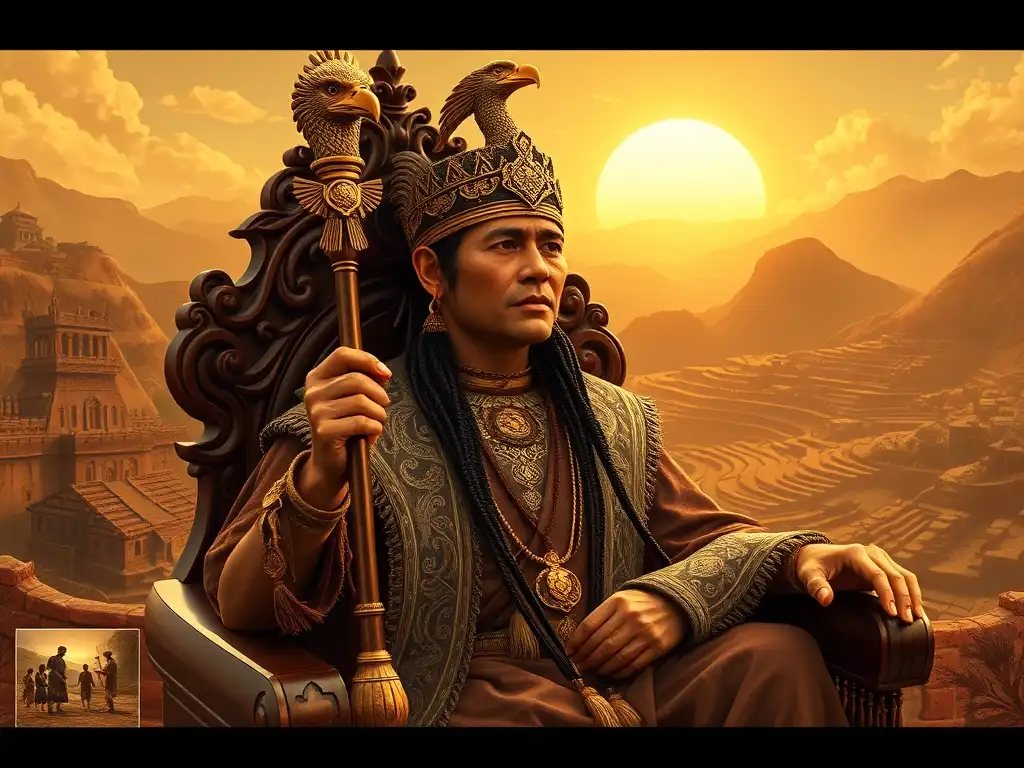
The Sapa Inca, the emperor of the Inca Empire, held absolute power. His authority wasn't merely political; it was considered divine. This divine right to rule permeated every aspect of Inca governance. The Sapa Inca wasn't simply a head of state; he was the central figure in a complex system of administration that stretched across a vast and diverse empire.
He appointed all high-ranking officials, controlled the allocation of resources, and oversaw the intricate network of tribute and labor systems that sustained the empire. Decisions made by the Sapa Inca had far-reaching consequences, shaping everything from infrastructure projects to religious practices. His word was law, and his decisions were implemented through a hierarchical bureaucracy that ensured his commands reached every corner of the empire. The efficiency of this system is a testament to the Sapa Inca's ability to organize and control a large and diverse population.
The Sapa Inca's Influence on Inca Laws and Policies
The Sapa Inca's influence extended to all aspects of Inca law and policy. The legal system, while not codified in the way we understand modern legal systems, was deeply intertwined with the Sapa Inca's authority. He was the ultimate arbiter of justice, and his decisions served as precedents for future cases.
His pronouncements on matters of law and custom were meticulously recorded and transmitted through the empire’s communication network, ensuring consistency and uniformity across the vast territories. The Sapa Inca’s policies influenced everything from land distribution and agricultural practices to taxation and trade. His decisions often reflected a pragmatic approach, aiming to maintain social order and economic stability while consolidating his power.
The system was designed to ensure the smooth functioning of the empire and to prevent challenges to the Sapa Inca's authority. Specific examples of his influence on legal matters are unfortunately scarce due to the limited written records, but oral traditions and archeological findings offer glimpses into his role as the supreme judge and lawmaker.
How the Sapa Inca Maintained Control Over the Empire
Maintaining control over such a vast and diverse empire required a sophisticated system of governance and control. The Sapa Inca employed several key strategies. Firstly, a highly centralized administrative structure, with officials appointed directly by the Sapa Inca, ensured loyalty and efficient implementation of his decrees.
Secondly, a complex system of roads and communication networks allowed for rapid transmission of information and the swift movement of troops and officials, facilitating quick responses to any threats or challenges. Thirdly, the Sapa Inca utilized a carefully managed system of tribute and labor, extracting resources and manpower from conquered territories while simultaneously distributing them strategically to maintain stability and loyalty. This system, while demanding, ensured the empire's economic prosperity and fostered a sense of shared purpose among its diverse population.
Furthermore, the Sapa Inca's religious authority, his status as a divine ruler, played a significant role in maintaining his control. His legitimacy stemmed from his perceived connection to the gods, reinforcing his authority and fostering obedience. The Inca religion, with its emphasis on the Sapa Inca's divine status, played a crucial role in consolidating and maintaining his power.
The Legacy of the Sapa Inca
The Sapa Inca's Influence on Inca Culture and Society
The Sapa Inca's influence extended far beyond the realm of politics and administration. His role as a divine ruler profoundly shaped Inca culture and society. Religious practices were centered around the Sapa Inca, with elaborate rituals and ceremonies designed to reinforce his divine status and ensure the prosperity of the empire. Art and architecture reflected the Sapa Inca's power and authority, with monumental structures and intricate artwork serving as symbols of imperial grandeur.
The Sapa Inca's patronage of the arts and sciences fostered innovation and creativity, leading to advancements in various fields, including textiles, metalwork, and astronomy. The social hierarchy, with the Sapa Inca at its apex, was firmly established and maintained through a combination of religious beliefs, political power, and carefully constructed social structures. The Sapa Inca's legacy is woven into the fabric of Inca culture, shaping its values, beliefs, and artistic expressions.
The Sapa Inca's Role in the Expansion of the Inca Empire
The Sapa Inca played a pivotal role in the expansion of the Inca Empire. Military campaigns, often led by the Sapa Inca himself or under his direct command, were instrumental in conquering neighboring territories and incorporating them into the empire. The expansion was not merely a matter of military conquest; it involved a sophisticated strategy of integration, incorporating conquered populations into the empire's administrative and economic systems.
The Sapa Inca's ability to effectively manage and govern the newly acquired territories was critical to the empire's continued growth and stability. His policies aimed to balance the needs of the conquered populations with the interests of the empire, fostering a sense of belonging among the diverse groups that made up the Inca Empire. The expansion, though often involving conflict, also resulted in cultural exchange and the spread of Inca innovations throughout the Andes region.
Pachacuti's Reign and the Expansion of the Inca Empire
Pachacuti Inca Yupanqui's reign (circa 1438-1471) marks a turning point in the history of the Inca Empire. He is widely credited with transforming a relatively small kingdom into a vast empire. His military campaigns were exceptionally successful, leading to the conquest of numerous neighboring territories and significantly expanding the empire's boundaries.
Pachacuti's military prowess was matched by his administrative skills. He implemented significant reforms in the empire’s governance, creating a more centralized and efficient administrative structure. This included establishing a system of provincial governors, improving communication networks, and standardizing taxation and labor systems.
His reign saw the construction of impressive infrastructure projects, such as roads and irrigation systems, which facilitated the integration of conquered territories and contributed to the empire’s economic prosperity. Pachacuti's innovations in governance and military strategy laid the foundation for the Inca Empire's subsequent growth and success under his successors. His legacy is indelibly linked to the expansion and consolidation of Inca power, transforming the empire into a dominant force in the Andes region.
The End of the Sapa Inca's Rule
The reign of the Sapa Inca, while seemingly absolute and divinely ordained, was ultimately finite. The intricate system of Inca governance, built upon a foundation of religious authority and meticulous administration, proved vulnerable to internal strife and external pressures. Succession disputes, though often carefully managed through a complex system of inheritance and potential heirs, occasionally erupted into open conflict, weakening the empire's stability.
These internal power struggles often involved competing claims to the throne, fueled by ambitious nobles vying for influence and control. The carefully constructed balance of power within the Inca court could be easily disrupted, leading to periods of uncertainty and instability that could be exploited by external forces. The inherent limitations of a system reliant on a single, all-powerful ruler became increasingly apparent as the empire expanded and its complexities grew.
The sheer scale of the administrative burden and the difficulties of maintaining control over vast and diverse territories contributed to the eventual unraveling of the Inca system. The centralization of power, while effective in its prime, ultimately proved a weakness in the face of significant challenges.
The Spanish Conquest and the Fall of the Inca Empire
The arrival of the Spanish conquistadors in the early 16th century marked a turning point in Inca history. The vastly superior weaponry and military tactics of the Spanish, combined with the existing internal vulnerabilities of the Inca Empire, paved the way for the swift and decisive conquest. The Inca, initially unaware of the true extent of the Spanish threat, underestimated their capabilities, leading to a series of strategic miscalculations.
The Inca’s sophisticated societal structure and intricate communication networks, while impressive, proved inadequate against the Spanish's superior technology and ruthless efficiency. Diseases introduced by the Europeans, such as smallpox, further decimated the Inca population, weakening their ability to resist the invaders. The capture and execution of Atahualpa, the last Sapa Inca to rule a relatively unified empire, marked the symbolic end of the Inca Empire and a devastating blow to Inca authority.
The subsequent subjugation of the empire by the Spanish was swift, brutal, and effectively ended the Sapa Inca's reign forever. The Spanish conquest serves as a stark reminder of the fragility of even the most powerful empires in the face of unforeseen external threats and internal weaknesses. The fall of the Inca Empire dramatically altered the course of history in the Andes region, leaving an enduring legacy of colonialism and cultural transformation.
Atahualpa and the Final Years of the Inca Empire
Atahualpa's reign, though tragically brief, represents a pivotal moment in Inca history. He ascended to the throne amidst a period of intense internal conflict following the death of his father, Huayna Capac. This internal struggle for power significantly weakened the Inca Empire, making it more vulnerable to external threats. Atahualpa’s rise to power was marked by civil war and brutal power struggles against his brother Huáscar, a conflict that dramatically weakened the Inca military and administrative capabilities.
The ensuing power vacuum allowed the Spanish conquistadors under Francisco Pizarro to exploit the situation and decisively defeat Atahualpa, ultimately leading to the collapse of the Inca Empire. Despite his short reign, Atahualpa's legacy remains a complex and controversial one. While his leadership was marked by internal conflict, his ambition and strategic decisions shaped the final years of the Inca Empire.
His capture and subsequent execution by Pizarro symbolize the tragic end of Inca independence and the beginning of a new era of Spanish colonial rule. The story of Atahualpa serves as a cautionary tale of the devastating consequences of internal division and the vulnerability of even the most powerful empires to external forces. His reign underscores the importance of unity and effective leadership in maintaining the stability and longevity of any empire.
- The Divine Mandate of the Inca Emperor
- The Sapa Inca's Role in Inca Society
- The Sapa Inca's Lineage and Succession
- The Sapa Inca's Symbols of Power and Authority
- The Sapa Inca's Impact on Inca Administration
- The Legacy of the Sapa Inca
- The End of the Sapa Inca's Rule
Frequently Asked Questions
What was the role of the Sapa Inca in Inca society?
The Sapa Inca was the supreme ruler of the Inca Empire, considered a divine figure with absolute authority. His power extended to all aspects of life, from religious ceremonies to military campaigns and infrastructure projects.
How did the Sapa Inca maintain control over such a vast empire?
The Sapa Inca maintained control through a complex system of administration and bureaucracy, employing loyal officials and a network of roads and messengers to communicate and enforce his will across the empire. Military power also played a crucial role.
What were the religious beliefs surrounding the Sapa Inca?
The Sapa Inca was believed to be a descendant of the sun god Inti, granting him immense religious authority. His legitimacy was crucial to the Inca's cosmological order and social structure. Rituals and ceremonies reinforced his divine status.
How was the Sapa Inca chosen?
While ideally the Sapa Inca was chosen from among the sons of the previous ruler, the succession wasn't always straightforward. Intrigue and power struggles were common, with eldest sons generally favored but other factors influencing the selection.
What were some of the Sapa Inca's key responsibilities?
The Sapa Inca's responsibilities included religious leadership, overseeing military campaigns, managing the empire's vast resources, and overseeing infrastructure projects such as roads and irrigation systems. He was the ultimate decision-maker.
Final Reflection: The Enduring Legacy of Sapa Inca Leadership
The power wielded by the Sapa Inca resonates far beyond the crumbling stones of Machu Picchu; its influence on centralized governance and societal structure continues to shape our understanding of effective leadership today. The Inca Empire's remarkable achievements, from its sophisticated infrastructure to its intricate social organization, stand as a testament to the power of a divinely ordained ruler who commanded loyalty and fostered innovation. This legacy serves as a compelling case study in the complexities of power, authority, and the enduring impact of a single individual's vision.
The Sapa Inca's role extended far beyond mere political control; it represented a profound spiritual connection with the Inca people, a bond forged through ritual, ceremony, and the carefully constructed image of divine authority. This carefully cultivated image, a blend of religious reverence and political pragmatism, ensured the stability and expansion of the empire. The Inca ruler was not merely a king; he was the embodiment of the sun, the guarantor of cosmic order, and the ultimate source of justice and prosperity.
This quote encapsulates the multifaceted nature of the Sapa Inca's power and its profound impact on Inca society. Understanding this complex interplay of religion and politics is crucial to comprehending the empire's success and eventual decline.
Consider the implications of this divinely ordained leadership model. How does the concept of a divinely appointed ruler compare to modern democratic systems? What lessons can we learn from the Inca's approach to governance, infrastructure development, and social organization?
You, the reader, are now invited to reflect on these questions and consider how the principles of effective leadership, as exemplified by the Sapa Inca, might inform your own approach to leadership and decision-making in your own sphere of influence. The legacy of the Sapa Inca is not merely a historical curiosity; it is a powerful lens through which to examine the enduring questions of power, authority, and the enduring impact of strong leadership.
Unveil the Legacy of the Sapa Inca!
Thank you for exploring the fascinating world of the Sapa Inca with us! You've discovered how this remarkable ruler shaped the Inca Empire and its architectural wonders. Now, let's build on this knowledge and further explore Andean history.
Here are some ways you can continue your journey:
- **Visit** the impressive Inca ruins in your region, or plan a trip to Peru to experience the majesty of Machu Picchu.
- **Share** your newfound knowledge of the Sapa Inca with friends and family. Start a conversation about ancient civilizations and their lasting influence on our world.
- **Engage** with local cultural events celebrating Andean heritage. Connect with your community and others who share your passion for this rich history.
What aspect of the Sapa Inca's reign most captivates you, and how will you integrate this inspiration into your life?