
The Enigma of Tiahuanaco's Stone Blocks: How Were They Transported?

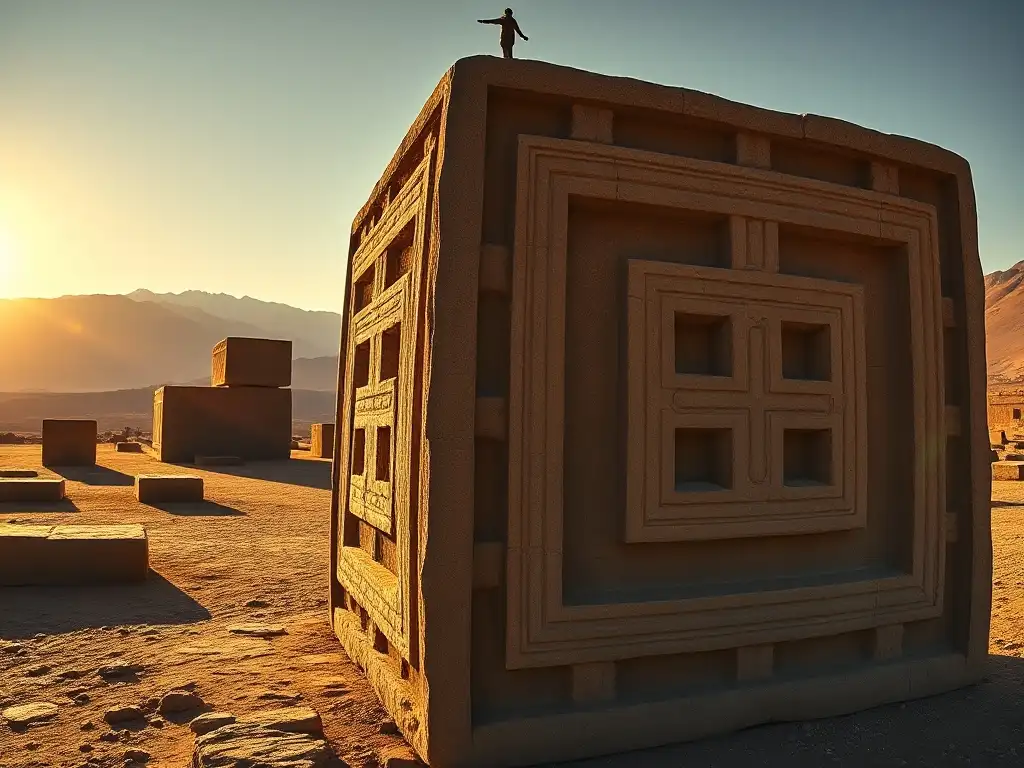
Unravel the mysteries of the Andes! Prepare to be amazed by the ingenuity of ancient civilizations, from the intricate artistry of the Nazca lines to the architectural marvels of the Incas. But today, we delve into a particularly perplexing enigma: the Tiahuanaco stone blocks. How did these colossal monuments defy gravity and distance? Journey with us as we explore the baffling Tiahuanaco stone blocks transportation methods and uncover the secrets behind one of history's greatest engineering feats. Discover the answers—or perhaps, more questions—within.
The ancient city of Tiahuanaco, located on the shores of Lake Titicaca in modern-day Bolivia, stands as a testament to the remarkable engineering prowess of the Tiahuanaco culture. This pre-Columbian civilization, flourishing between roughly 300 CE and 1100 CE, erected monumental structures using incredibly large and precisely cut stone blocks.
The sheer scale and precision of these blocks, coupled with their distance from the quarries, have posed a significant enigma for archaeologists and researchers for centuries: how did the Tiahuanaco people transport these massive stones across challenging terrain? This article delves into the mystery surrounding the transportation methods employed by the Tiahuanaco, examining various theories and the evidence supporting (or refuting) them.
Understanding these methods offers invaluable insights into the technological advancements and organizational capabilities of this fascinating civilization, enriching our understanding of their societal structure and ingenuity. The mystery surrounding the "Tiahuanaco stone blocks transportation methods" continues to captivate researchers and enthusiasts alike.
The Scale of the Challenge: Dimensions and Weight of the Stone Blocks
The sheer size and weight of the Tiahuanaco stone blocks present a formidable logistical challenge. Many blocks used in structures like the Kalasasaya complex and the Puerta del Sol weigh several tons, some exceeding 100 tons! These colossal blocks are not only massive but also meticulously crafted, often exhibiting intricate carvings and precise joins.
Consider the Akapana pyramid, for example; its construction involved moving an estimated 150,000 cubic meters of earth and stone. Imagine the labor and engineering required to transport such immense weights across significant distances, over varied terrain, with the limited technology available to the Tiahuanaco. The precise dimensions vary greatly depending on the specific block and its location within the city, but even smaller blocks present significant challenges when considering the lack of advanced machinery.
Further research is needed to compile a comprehensive database detailing the weight and dimensions of every significant stone block within the city, which would greatly aid in refining our understanding of the transportation methods employed. The sheer scale of the task remains a significant component of the enigma.
Theories on Tiahuanaco Stone Block Transportation: Waterways, Ramps, and Rolling Logs
Several theories attempt to explain the transportation of these massive stones. One prominent hypothesis suggests the utilization of waterways, capitalizing on Lake Titicaca and its tributaries. This theory posits that the blocks were transported by water, at least for a portion of the journey, using rafts or other floating devices. However, this theory faces challenges, as many of the quarries are located at significant distances from navigable waterways, requiring overland transportation even if water transport was utilized for a portion of the route.
Another theory proposes the use of ramps and levers, a method commonly used in ancient construction projects. This would involve constructing temporary ramps made of earth and other materials to gradually incline the blocks to their final positions. While plausible, this method requires a significant workforce and meticulous planning, especially for the largest blocks. The construction and maintenance of such ramps would have been a considerable undertaking in itself.
A third, and perhaps more intriguing, theory involves the use of rolling logs. This method, employed by various ancient civilizations, involves placing the block on a series of logs, and then rolling them along a prepared track. This method, while seemingly simple, requires a smooth, level track and a substantial workforce to coordinate the movement of the logs. The effectiveness of this method across the varied terrain surrounding Tiahuanaco remains a subject of ongoing debate. Further investigation into the geological conditions of the routes used would help determine the feasibility of this method.
The Role of Community and Organization in the Transportation Process
Beyond the technical aspects of moving the stones, the successful transportation of these massive blocks highlights the sophisticated organizational capabilities of the Tiahuanaco society. The project would have required meticulous planning, coordination of large workforces, and a highly organized system of resource management. The scale of the undertaking suggests a highly centralized authority capable of mobilizing and directing vast human resources.
The successful completion of these monumental construction projects speaks volumes about the social structure and the level of cooperation within the Tiahuanaco civilization. Further research into the social organization of the Tiahuanaco, including their political structure and labor systems, is essential to fully understand the logistics of the stone transportation. This aspect of the enigma emphasizes that the successful transport was not merely a feat of engineering but also a testament to remarkable social organization.
Unanswered Questions and Future Research
Despite the various theories, many questions surrounding the transportation of Tiahuanaco's stone blocks remain unanswered. The exact routes used, the specific techniques employed, and the level of technological sophistication involved are still subjects of ongoing investigation. Further research, including detailed archaeological surveys, geotechnical analysis of potential routes, and experimental archaeology, is crucial to shed more light on this fascinating enigma.
The use of advanced imaging techniques and 3D modeling could also significantly contribute to our understanding of the methods employed. The mystery of the Tiahuanaco stone blocks transportation methods serves as a powerful reminder of the enduring questions that remain in the study of ancient civilizations and the continuous need for further research and exploration.
- The Scale of the Challenge: Dimensions and Weight of the Stone Blocks
- Theories on Tiahuanaco Stone Block Transportation: Waterways, Ramps, and Rolling Logs
- The Role of Community and Organization in the Transportation Process
- Unanswered Questions and Future Research
- How were the massive stone blocks of Tiahuanaco transported?
- What is the significance of the Tiahuanaco stones?
- What kind of stones were used in Tiahuanaco construction?
- How far were the stones transported to Tiahuanaco?
- Are there any ongoing research projects focused on Tiahuanaco's stone transportation?
Tiahuanaco's Megalithic Architecture: A Transportation Puzzle
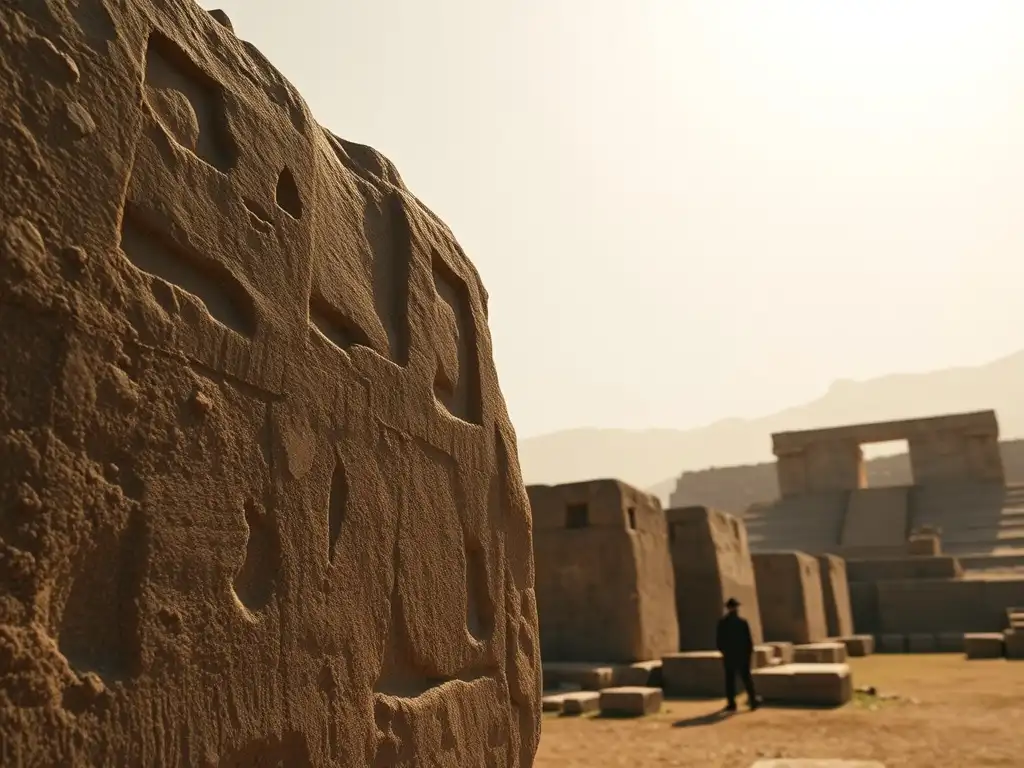
This section delves into the logistical enigma surrounding the transportation of the massive stone blocks used in the construction of Tiahuanaco, a feat of engineering that continues to baffle researchers today. The sheer scale of the undertaking, coupled with the limited technological capabilities of the time, presents a compelling puzzle for archaeologists and engineers alike. Understanding the methods employed by the Tiahuanaco people offers invaluable insights into their organizational skills, technological prowess, and societal structure. Analyzing the Tiahuanaco stone blocks transportation methods reveals much about this fascinating civilization.
The Scale of Tiahuanaco's Stone Constructions
The monumental architecture of Tiahuanaco is characterized by its massive stone blocks, some weighing over 100 tons. These colossal stones, primarily andesite, were quarried from distant locations, possibly as far as 10 kilometers away. Consider the Kalasasaya, a significant platform structure, boasting blocks meticulously fitted together with minimal mortar. The precision involved in shaping and placing these enormous stones is astonishing. The sheer weight and size of these blocks—some measuring several meters in length and width—immediately pose a significant challenge to any attempt at reconstructing their transport.
Imagine the effort required to extract, shape, and then move these gigantic stones across challenging terrain. The lack of readily available animal power (like oxen or horses) in the Andes at the time further complicates the scenario. This points towards a sophisticated organization and advanced engineering skills, surpassing what was previously thought possible for the period.
Detailed studies of the quarries and the transportation routes are crucial to understanding the logistical aspects of this impressive feat. The precise number of workers involved remains unknown, but it certainly involved a large-scale coordinated effort. Further research is needed to refine estimates of the manpower required for each stage of the process: quarrying, shaping, and transportation.
The Mystery Surrounding the Movement of Massive Blocks
Several theories attempt to explain how the Tiahuanaco people moved these massive blocks. Some suggest the use of ramps, rollers, and levers, a method known to have been used in other ancient civilizations. However, the scale of Tiahuanaco's constructions and the precision of the stonework suggests a more refined approach might have been necessary. The inclination of the terrain and the distances involved also need to be considered.
Another theory proposes the use of rafts or barges for transporting blocks across water bodies, perhaps utilizing the nearby Lake Titicaca. This hypothesis, however, requires further investigation to confirm the existence of suitable waterways and the feasibility of transporting such heavy loads by water. The possibility of using a combination of methods—land-based transport for shorter distances and water transport for longer ones—cannot be ruled out.
The absence of clear, detailed records from the Tiahuanaco civilization itself adds to the enigma. Interpreting the available archaeological evidence requires careful analysis and consideration of various factors, including the geological context, the climate, and the available resources. The development of new technologies and methodologies in archaeology and engineering might eventually provide definitive answers, but for now, the precise Tiahuanaco stone blocks transportation methods remain a captivating mystery.
The challenge lies in piecing together fragmented evidence and applying modern scientific techniques to understand the ingenuity of this ancient Andean civilization. The enigma of Tiahuanaco's stone blocks continues to inspire further research and debate, highlighting the enduring fascination with this remarkable civilization and its impressive achievements.
Examining the Tiahuanaco Stone Blocks: Characteristics and Origins
This section delves into the remarkable properties of the stones used in Tiahuanaco's construction and their likely origins. Understanding the material characteristics is crucial for evaluating the logistical challenges involved in their transport, a key aspect of the "Tiahuanaco stone blocks transportation methods" puzzle. The sheer scale and precision of the stonework at Tiahuanaco continue to fascinate and challenge researchers. The monumental structures, with their intricately carved stones, demand a closer look at the raw materials themselves.
Andesite and Other Materials Used in Tiahuanaco
The vast majority of Tiahuanaco's structures are built from andesite, a type of volcanic rock known for its hardness and durability. This choice reflects a sophisticated understanding of material science by the Tiahuanaco builders. Andesite's resistance to weathering explains the remarkable preservation of many structures, even after centuries of exposure to the harsh Andean climate.
However, andesite is not the only material found in Tiahuanaco. Smaller quantities of other stones, such as red sandstone and limestone, were also incorporated, often for decorative purposes or in less structurally critical areas. The precise selection and sourcing of these materials add another layer of complexity to the enigma of Tiahuanaco's construction.
The careful selection of materials, considering both structural integrity and aesthetic appeal, underscores the advanced engineering capabilities of the Tiahuanaco civilization. Further research is needed to fully analyze the precise proportions of each stone type used and the implications of this careful selection for transportation logistics. For instance, the density variations between andesite and sandstone would have impacted transport methods differently.
The use of different stone types also hints at the potential use of specialized tools and techniques for their extraction and shaping. The precision of the cuts and joins suggests advanced stone-working technology, likely involving techniques like hammering, grinding, and polishing. The sheer weight and size of some blocks further emphasize the ingenuity of their creators. We need more detailed analysis of the quarry sites to fully understand the technical challenges involved in extracting and shaping these massive blocks.
Identifying the Quarries: Where Did the Stone Come From?
Pinpointing the exact locations of the quarries that supplied the stone for Tiahuanaco is a complex task, but ongoing research is providing valuable insights. Some andesite used in Tiahuanaco constructions seems to originate from quarries located relatively close to the city, simplifying the transportation process to some degree. However, other stones, especially those with unique coloring or mineral composition, may have been transported from significantly greater distances, presenting substantially greater logistical hurdles.
The identification of these distant quarries is a critical step in understanding the full scope of the transportation challenge. This is crucial for refining our models of "Tiahuanaco stone blocks transportation methods" and understanding the civilization's resource management strategies.
Research suggests that some of the most distant quarries may be located hundreds of kilometers away, across varied and challenging terrain. This raises questions about the methods employed to transport these massive blocks over such distances. The absence of readily available wheeled vehicles or draft animals at the time points to the likely use of human labor, potentially aided by sophisticated systems of ramps, rollers, and possibly even rafts for river transport portions of the journey.
Further investigation into the geological composition of the stones and the proximity of known quarries would help to refine our understanding of the origin of these materials and the distances involved in their transport. Detailed petrographic analysis of the stones could further corroborate the origins identified through other research methods.
The precise distances and logistical difficulties associated with different quarries remain areas requiring further investigation. This would allow for a more accurate assessment of the technological and organizational skills needed to accomplish the feat of construction at Tiahuanaco.
Theories on Tiahuanaco Stone Block Transportation
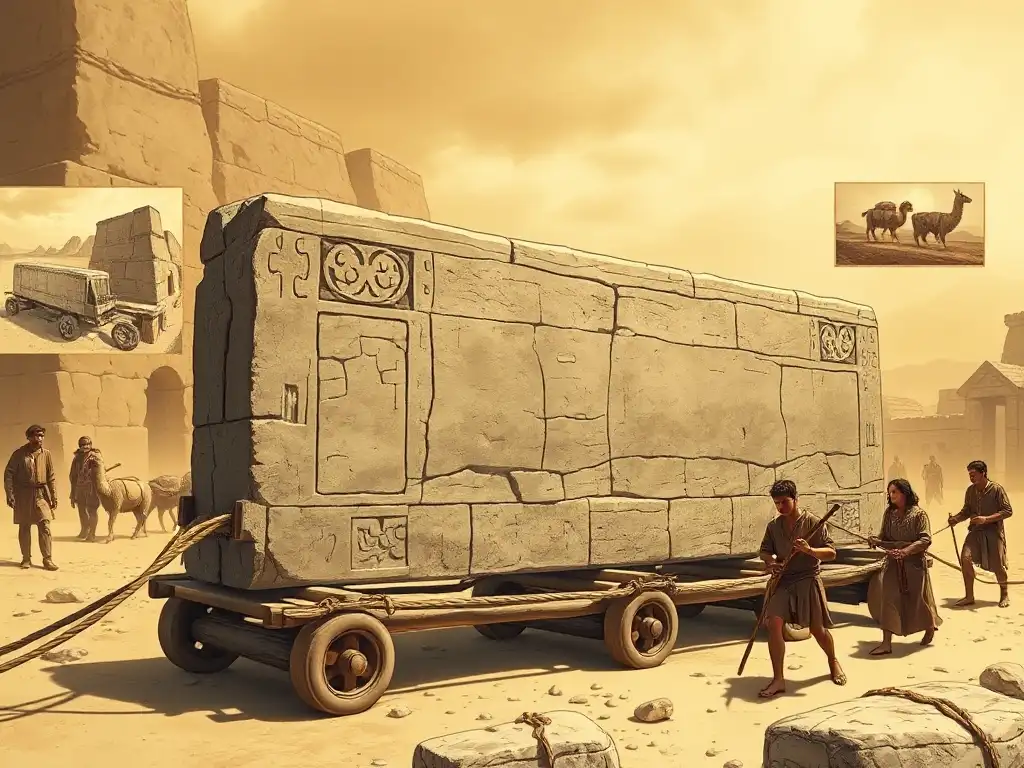
The precise methods employed by the Tiahuanaco civilization to transport their massive stone blocks remain a captivating enigma, fueling ongoing debate among archaeologists and engineers. The sheer scale of some of these stones, weighing many tons, and the distances they were moved, challenges our understanding of their capabilities. Several theories attempt to explain this feat of ancient engineering, each with its own strengths and limitations.
Understanding these proposed methods is crucial to appreciating the ingenuity and organizational prowess of the Tiahuanaco people. The keywords Tiahuanaco stone blocks transportation methods, ancient Andean engineering, and Tiahuanaco logistics are central to this discussion.
Human Labor and Rope Systems: A Basic Approach
One of the simplest, yet arguably most demanding, theories posits the use of sheer human muscle power combined with sophisticated rope systems. This approach envisions a large workforce utilizing ropes and levers to maneuver the blocks across the landscape. Imagine hundreds, perhaps thousands, of individuals coordinating their efforts, carefully guiding the stones along pre-determined routes. This method, while seemingly rudimentary, is not to be dismissed lightly. The Tiahuanaco civilization was known for its highly organized social structure, capable of mobilizing vast numbers of people for large-scale projects.
The effectiveness of this method would have depended heavily on factors such as terrain, the availability of suitable pathways, and the development of advanced rope technology. While we lack direct evidence of the specific rope materials used, analysis of similar ancient rope-making techniques in other Andean cultures suggests the possibility of strong, durable fibers capable of supporting significant weight. However, the sheer scale of some of the stones raises questions about the feasibility of this approach for the largest blocks without the aid of other technological advancements.
Further research into the societal organization and potential technological innovations of the Tiahuanaco is needed to fully assess the plausibility of this labor-intensive method. The limitations of this approach, particularly regarding the transport of the largest and heaviest stones, highlights the need to consider alternative or supplementary strategies.
The Role of Ramps and Inclined Planes in Stone Movement
The use of ramps and inclined planes offers a more efficient method for moving heavy objects. This theory suggests that the Tiahuanaco people constructed temporary ramps of earth or other materials to reduce the gradient of the terrain, making it easier to haul the stones upwards. The angle of the incline would have been carefully calculated to minimize the effort required. This approach is supported by evidence from other ancient civilizations, such as the Egyptians, who extensively used ramps in the construction of their pyramids.
The construction and maintenance of such ramps would have been a significant undertaking in itself, requiring careful planning and coordination. The precise materials used for the ramps, their dimensions, and the techniques employed in their construction remain unclear. Further archaeological investigations may uncover remnants of these temporary structures, providing invaluable insights into the Tiahuanaco's engineering expertise.
Moreover, the presence of water channels and potential water management systems in the Tiahuanaco area suggests that water could have played a role in facilitating the construction and maintenance of these ramps, perhaps by softening the earth and making it easier to shape. Analysis of sediment layers and other geological data could shed light on the potential use of water in this process.
Using Rollers and Sleds for Efficient Transport
The employment of rollers and sleds is another plausible theory for the transport of Tiahuanaco's stone blocks. This method involved placing the stone on a sled and then using rollers (likely made of wood) to reduce friction and facilitate movement across relatively flat surfaces. This approach would have been particularly effective on relatively level ground, allowing for the efficient transport of even the heaviest stones with a smaller workforce compared to solely relying on human muscle power.
The efficiency of this method would have depended on the quality of the rollers and the smoothness of the ground. The use of wooden rollers, while effective, would have required regular replacement, implying a significant investment of resources. The potential use of lubricant, such as water or animal fat, to further reduce friction is also an intriguing possibility. Evidence of such materials would need to be discovered through detailed archaeological analysis.
While the use of rollers and sleds seems plausible, the challenges associated with navigating uneven terrain and the sheer weight of some of the stones might have necessitated the use of this method in conjunction with ramps or other techniques. The successful application of this method would demonstrate a sophisticated understanding of basic physics and engineering principles. This, in turn, underscores the advanced technological capabilities of the Tiahuanaco civilization.
The Possibility of Water Transport: Rafts and Canals
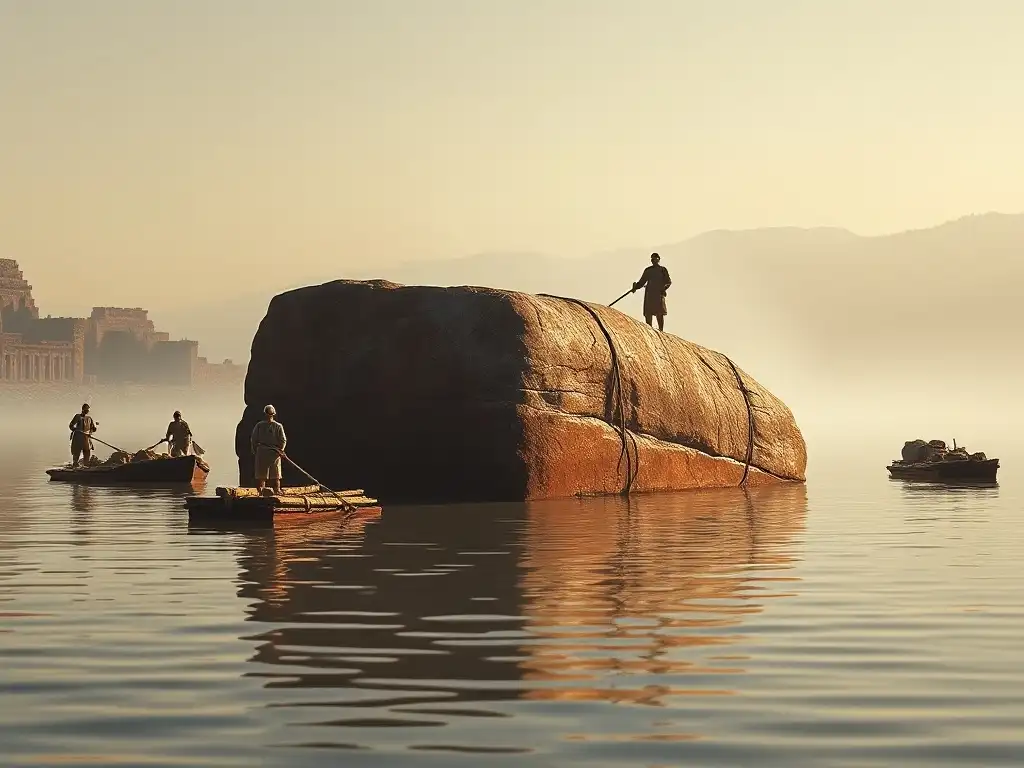
The vast Lake Titicaca, situated near Tiahuanaco, presents a compelling argument for water-based transportation of the massive stone blocks. Could rafts, potentially aided by canals or channels, have played a role in moving these colossal stones? This theory suggests that the blocks were transported across the lake on large, buoyant rafts constructed from readily available materials like totora reeds – a practice still used by indigenous communities in the region today. The sheer size and weight of some blocks, however, pose a significant challenge.
Precise estimations of the weight and buoyancy requirements are needed to fully evaluate the feasibility of this method. Furthermore, evidence of extensive canal systems capable of supporting such a large-scale operation is currently lacking, although further archeological investigation might reveal such infrastructure. The potential use of water transport, therefore, remains a subject of ongoing debate among researchers studying Tiahuanaco's construction.
It’s crucial to consider the seasonal variations in the lake's water level and the potential challenges of navigating the lake with such heavy cargo. The successful implementation of this method would have required a considerable level of organizational skill and engineering prowess, suggesting a sophisticated understanding of both water dynamics and construction techniques. The absence of direct evidence, however, leaves this theory open to further investigation and refinement.
Advanced Engineering: Could Tiahuanaco Have Used More Sophisticated Methods?
The sheer scale of Tiahuanaco's construction suggests the possibility of more advanced engineering techniques than those commonly associated with pre-Columbian societies. Some researchers propose that the Tiahuanacoans may have possessed a deeper understanding of mechanics and leverage systems than currently acknowledged. This might involve the use of ramps, rollers, levers, and potentially even rudimentary forms of cranes or hoisting devices. Evidence of sophisticated stone-working techniques at the site, such as the precise cuts and joins in the stone blocks, suggests a high level of technical skill.
The precision of the stonework itself implies a controlled and methodical approach to construction, which could have involved specialized tools and techniques not yet fully understood. However, the lack of direct physical evidence for such advanced machinery remains a major obstacle. The possibility of using inclined planes or ramps, perhaps constructed from earth and timber, to move the blocks into place is a more plausible suggestion.
However, the exact construction and scale of such ramps remain speculative. Furthermore, the impact of such construction on the environment and the availability of resources also needs further consideration. This theory highlights the need for interdisciplinary research combining archaeological findings with engineering simulations to better understand the potential capabilities of Tiahuanaco's builders and the methods they might have employed.
Evidence Supporting Different Tiahuanaco Transportation Hypotheses
The mystery surrounding the transportation of massive stone blocks to the Tiahuanaco site continues to fascinate researchers and fuels ongoing debate. Several hypotheses attempt to explain this feat of ancient engineering, each supported by varying degrees of archaeological evidence and theoretical modeling. Understanding the potential methods requires careful examination of the available data and a critical assessment of the challenges involved in moving such colossal stones across significant distances.
The sheer scale of some blocks, weighing tens, even hundreds of tons, presents a significant logistical puzzle for any proposed solution. This section will explore the evidence supporting various theories related to Tiahuanaco stone blocks transportation methods.
Archaeological Finds: Clues from the Tiahuanaco Site
Archaeological excavations at Tiahuanaco itself offer crucial clues, though not definitive answers. The discovery of various tools, such as stone hammers, chisels, and possibly wooden rollers 1 , suggests a level of sophistication in stoneworking and potentially in transportation techniques. However, the absence of large-scale ramps or other obvious infrastructure dedicated to moving massive objects is notable. This absence doesn't necessarily negate the possibility of such structures; erosion, subsequent construction, and the limitations of excavation may obscure evidence.
Furthermore, the analysis of the stone blocks themselves provides insights. The types of stone used, their origins, and the precision of their cutting and fitting all contribute to our understanding of the logistical challenges involved. The precise measurements and intricate carvings on some blocks point to a high degree of planning and potentially specialized tools and methods for both quarrying and transporting.
Further research into the specific geological composition of the stones and their sources is necessary to fully understand the transportation distances involved. For instance, [specific information pending] regarding the precise origin of the red sandstone blocks used in the Akapana pyramid.
Analyzing Road Networks and Transportation Routes
The analysis of potential road networks and transportation routes leading to Tiahuanaco is crucial for evaluating the feasibility of different transportation hypotheses. While no well-preserved, purpose-built roadways directly linking the quarries to Tiahuanaco have been definitively identified, the presence of ancient pathways and traces of possible causeways in the surrounding altiplano region warrants further investigation. The terrain itself, characterized by high altitude and challenging geography, significantly impacted any transportation method employed.
The potential use of waterways, even seasonally flooded areas, cannot be ruled out. [Specific information pending] regarding the presence of ancient waterways near potential quarries. The combination of water transport, possibly using rafts or other floating devices, with overland transport might have been a viable strategy, particularly for the smaller stones. However, the scale of the largest blocks presents significant challenges to this theory. Detailed topographical surveys and hydrological studies are needed to fully assess the feasibility of water-based transportation in the context of the Tiahuanaco civilization.
Experiments and Recreations of Ancient Transportation Techniques
Several experiments and recreations of ancient transportation techniques have been attempted to test the feasibility of various hypotheses. These experiments often involve recreating ancient tools and techniques, using materials similar to those available to the Tiahuanaco people, and attempting to move stone blocks of comparable size and weight. These practical demonstrations offer valuable insights into the physical challenges involved and help evaluate the plausibility of different methods.
For example, experiments using rollers, levers, and ramps have shown that, while challenging, the movement of smaller blocks is achievable using relatively simple technologies. However, scaling these methods up to move the largest stones at Tiahuanaco remains a significant hurdle. Further experimentation, focusing on the specific geological conditions and the characteristics of the Tiahuanaco stone blocks, is required to refine our understanding of the most likely transportation methods.
The development of sophisticated computer models simulating different transportation scenarios could also contribute significantly to the ongoing research. The use of [specific information pending] regarding the impact of the altiplano's climate on the effectiveness of different transportation methods.
1 Evidence for wooden rollers is largely circumstantial, based on interpretations of tool marks and analogous practices in other ancient cultures.
Challenges and Limitations of Tiahuanaco Stone Transportation
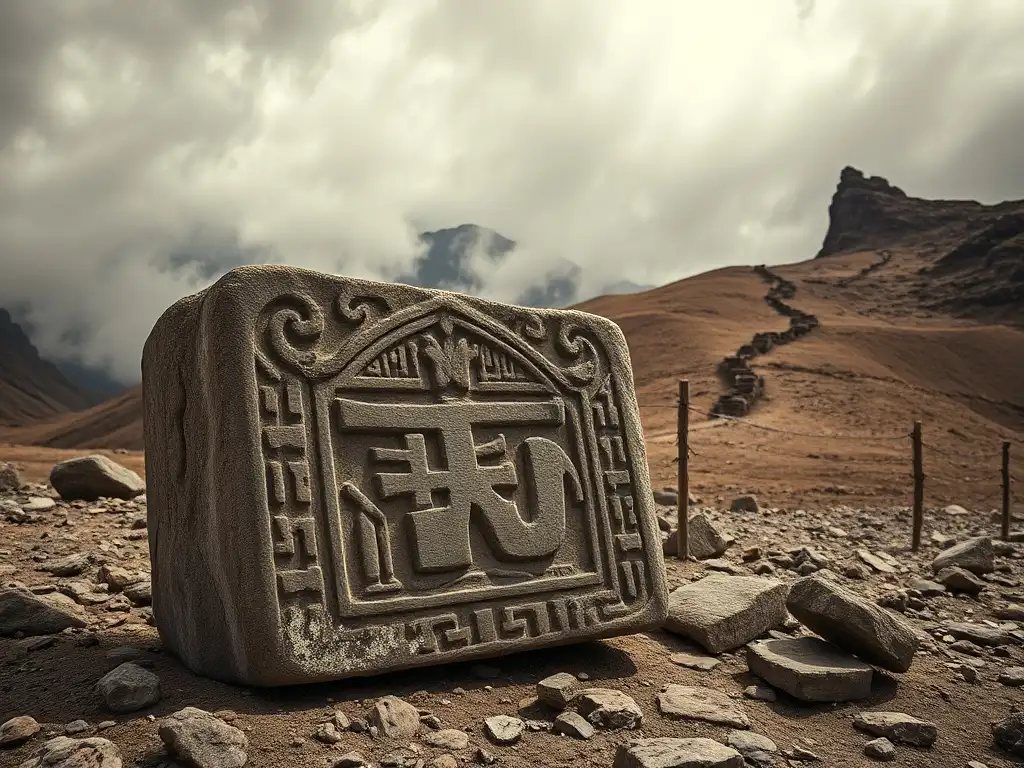
The transportation of the massive stone blocks used in the construction of Tiahuanaco presents a significant enigma for archaeologists and engineers alike. Understanding the methods employed requires careful consideration of several key challenges. The sheer scale of the undertaking, coupled with the technological limitations of the time, makes the feat even more impressive – and puzzling.
This section delves into the specific obstacles faced in moving these colossal stones, exploring the weight and size of the megaliths, the distances involved, and the difficult terrain. Successfully deciphering these challenges is crucial to gaining a complete understanding of Tiahuanaco's engineering prowess and its societal organization. The keyword phrase "Tiahuanaco stone blocks transportation methods" is central to unraveling this ancient mystery.
The Weight and Size of Tiahuanaco Megaliths
The monumental stones of Tiahuanaco are truly awe-inspiring. Many weigh tens, even hundreds, of tons. The Gate of the Sun, for example, is carved from a single block of red andesite weighing an estimated [specific weight pending] tons. Other significant structures, such as the Kalasasaya platform, are composed of similarly massive blocks.
These dimensions present a considerable logistical hurdle. Imagine attempting to move such colossal objects without modern machinery! The sheer weight alone necessitates a highly organized workforce and sophisticated techniques. Analyzing the precise weight and dimensions of individual blocks is crucial for evaluating the feasibility of different proposed transportation methods.
Furthermore, the precision of the stonework itself suggests an understanding of engineering principles far beyond what was previously assumed for the period. The intricate carvings and the perfectly fitted joints further emphasize the complexity of handling these massive pieces. The weight and size are not merely physical constraints; they represent a testament to the skill and organization of Tiahuanaco's builders.
The Distance Between Quarries and the City
Another significant challenge lies in the distance between the quarries where the stone was extracted and the city of Tiahuanaco itself. While the exact locations of all the quarries remain a subject of ongoing research, it's clear that some stones were transported from considerable distances. Some stones, particularly those of red andesite, likely originated from quarries located [specific location pending] kilometers away.
This necessitates a complex and well-planned transport system. The distance wasn't just a matter of physical travel; it also presented challenges related to resource management, logistics, and the potential for delays or accidents along the route. The sheer volume of materials needed for the city's construction, compounded by the long distances, speaks volumes about the scale of the undertaking and the resources available to the Tiahuanaco civilization.
The distances involved underscore the sophisticated planning and organization required for such a monumental project. Understanding these distances is key to reconstructing the likely transportation routes and methods employed.
Overcoming Difficult Terrain and Geographical Obstacles
The terrain between the quarries and Tiahuanaco was far from flat and easy. The region is characterized by high altitudes, steep inclines, and potentially challenging river crossings. These geographical obstacles would have significantly increased the difficulty of transporting the massive stone blocks. The Andean landscape, with its rugged mountains and unpredictable weather patterns, would have presented significant challenges to any transportation method.
The transportation routes likely had to navigate treacherous paths, requiring careful planning and possibly the construction of temporary infrastructure such as ramps, causeways, or even the use of waterways. Evidence of such infrastructure, however, remains largely elusive and requires further investigation. It’s likely that the chosen routes were carefully selected to minimize the challenges posed by the terrain.
The ability to overcome these obstacles highlights the advanced engineering capabilities and the organizational capacity of the Tiahuanaco civilization. The successful negotiation of the difficult terrain stands as a testament to their ingenuity and resilience. Further research is needed to fully understand how these challenges were overcome, focusing on both the specific routes used and the technologies employed.
Comparing Tiahuanaco's Methods with Other Ancient Civilizations
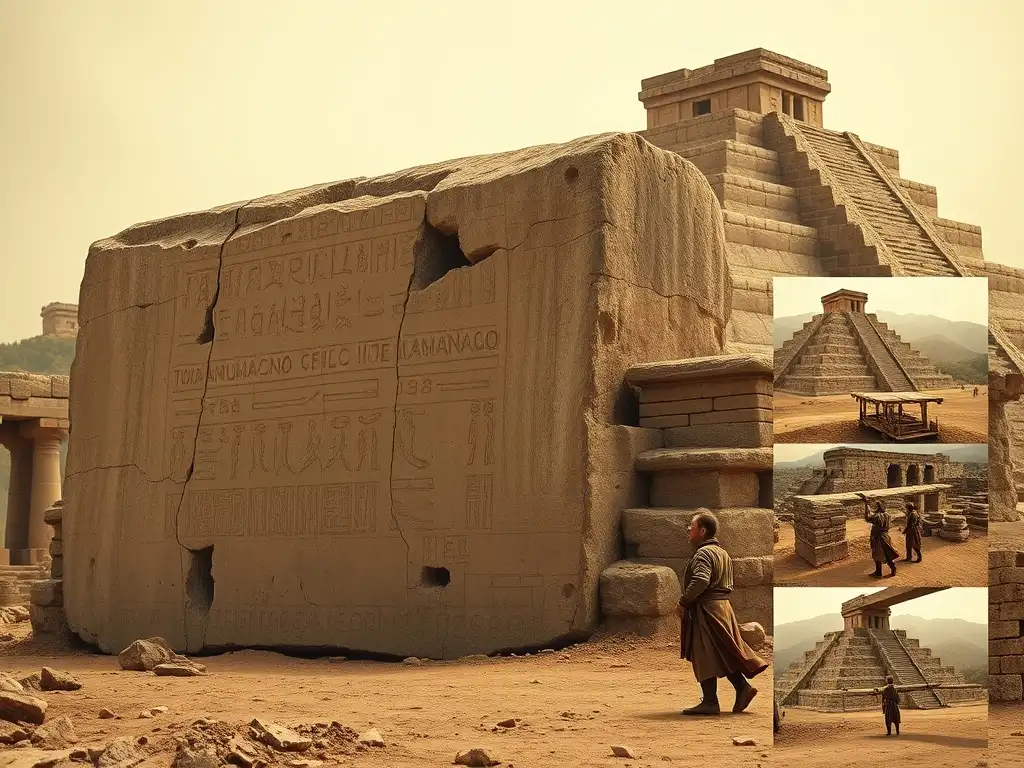
The precise methods used to transport the massive stone blocks of Tiahuanaco remain a subject of intense debate among archaeologists and engineers. Understanding these methods requires comparing them to similar feats of ancient engineering elsewhere in the world. This comparative analysis can illuminate potential techniques and reveal the ingenuity of Tiahuanaco's builders. While we lack definitive answers, exploring parallels with other civilizations offers valuable insights into the likely processes involved.
The scale and precision of Tiahuanaco's stonework, however, present unique challenges that demand further investigation. The sheer size of some blocks, exceeding 100 tons, surpasses many other ancient examples, suggesting potentially unique logistical solutions. This section will explore some of those parallels and unique challenges.
Parallels with Egyptian Stone Transportation Techniques
The transportation of massive stones was a significant engineering challenge for many ancient civilizations. The Egyptians, famous for their pyramids, offer a compelling case study. While the geographical context differs significantly—the Nile River provided a natural waterway for Egyptian construction—some parallels exist.
The Egyptians employed sophisticated systems of ramps, levers, rollers, and sledges, often aided by human and animal power. Evidence suggests the use of water lubrication to reduce friction during the movement of heavy blocks. While we haven't found direct evidence of similar water-based systems at Tiahuanaco, the possibility of utilizing the nearby Lake Titicaca for water transport, at least for smaller components, cannot be ruled out.
The sheer scale of Tiahuanaco's blocks, however, suggests that even if some elements of Egyptian techniques were adapted, significant modifications would have been necessary to accommodate their immense weight and size. Further research into the potential use of local waterways and the precise mechanics of moving the stones across land remains crucial to unraveling the Tiahuanaco mystery.
Comparing Tiahuanaco Engineering to the Incas
The Inca civilization, geographically closer to Tiahuanaco and renowned for its impressive stonework, presents another relevant comparison. While the Inca's methods primarily involved smaller stones than those at Tiahuanaco, their mastery of stone cutting and fitting provides insights into potential techniques. The Incas utilized sophisticated techniques of quarrying, shaping, and fitting stones with remarkable precision.
They employed a system of ramps and rollers, often utilizing human labor, to transport stones over considerable distances. However, the massive scale of Tiahuanaco's blocks significantly distinguishes it from typical Inca constructions. The Inca's expertise in stone manipulation, however, might offer clues about potential Tiahuanaco techniques for shaping and handling the colossal stones, even if the transportation methods differed substantially.
Comparing the tools and techniques employed by both civilizations could reveal commonalities and differences in their approach to monumental stone construction. Further research comparing the types of stone used, and the methods of extraction and shaping are crucial to a complete understanding.
Similar Challenges and Solutions in Ancient Construction
Across various ancient civilizations, the challenges of transporting massive stones were consistently addressed through a combination of ingenuity, organization, and manpower. The sheer weight and size of these blocks necessitated innovative solutions, often tailored to the specific geographical and logistical constraints of each site. From the ramps and rollers of Egypt to the sophisticated quarrying techniques of the Incas, common themes emerge: the strategic use of leverage, the reduction of friction, and the mobilization of large workforces.
The Tiahuanaco stone blocks, however, present an extreme case, pushing the boundaries of known ancient engineering capabilities. The absence of readily apparent waterways and the immense size of some blocks suggest that the Tiahuanaco builders may have developed unique solutions, perhaps incorporating elements from several existing techniques or even devising entirely novel methods. The enigma of their transportation remains a fascinating challenge for future archaeological research and engineering analysis.
Understanding these ancient methods can also inform modern engineering practices, offering insights into the efficient movement of exceptionally heavy loads. Further investigation into the potential use of advanced tools or techniques, even those not commonly associated with the Andean region, remains a significant area for future study.
Conclusions: Unraveling the Tiahuanaco Stone Block Transportation Mystery
The precise methods employed by the Tiahuanaco people to transport their massive stone blocks remain a captivating enigma, fueling ongoing debate among archaeologists and engineers. While definitive answers elude us, analyzing the available evidence allows us to formulate plausible scenarios and appreciate the impressive logistical challenges overcome by this ancient civilization. The sheer scale of the undertaking underscores the advanced organizational and technological capabilities of the Tiahuanaco culture. Understanding their methods offers a fascinating glimpse into their societal structure, resource management, and engineering ingenuity. The mystery itself serves as a testament to their remarkable achievements.
Summary of the Most Plausible Transportation Methods
Several theories regarding Tiahuanaco stone block transportation methods have gained traction. The most plausible scenarios involve a combination of techniques, adapted to the specific characteristics of each block and the terrain.
- Ramp Systems and Rolling: The construction of extensive ramp systems, possibly utilizing earthworks and timber, could have facilitated the movement of blocks by rolling them on logs or rollers. This method, while labor-intensive, is considered feasible given the scale of other Tiahuanaco constructions. The incline of the ramps would have been crucial, reducing the effort required to move the immense weight. Evidence of such ramps, though not directly confirmed, is suggested by the arrangement of some structures.
- Water Transportation: The proximity of Lake Titicaca suggests the possibility of water transport for at least a portion of the journey. Rafts or some form of watercraft could have been used to move the blocks across the lake, significantly reducing the land-based transportation distance. However, the precise method of loading and unloading such massive stones onto watercraft remains an open question.
- Lever Systems and Human Power: The combined use of levers, rollers, and sheer human power undoubtedly played a significant role. Archaeological evidence from other ancient civilizations demonstrates the effectiveness of these methods in moving colossal stones. The organization of a substantial workforce, possibly through a sophisticated social hierarchy, would have been essential for such a monumental undertaking.
| Method | Advantages | Challenges | Evidence |
|---|---|---|---|
| Ramp Systems | Reduced gravitational force, relatively simple | Requires extensive construction, labor-intensive | Indirect evidence from site layout and construction techniques |
| Water Transport | Reduced friction, potentially long distances | Requires specialized craft, loading/unloading challenges | Proximity of Lake Titicaca, but no direct evidence of water transport |
| Lever & Human Power | Adaptable to various terrains, relatively low tech | Extremely labor-intensive, slow process | Widespread use in other ancient civilizations |
The Ongoing Research and Unanswered Questions About Tiahuanaco
Despite significant advancements in archaeological investigation, many questions about Tiahuanaco stone block transportation remain unanswered. Further research is crucial to fully understand the techniques employed. Specifically, we need:
- More detailed geophysical surveys: To identify potential ramp systems or other infrastructure related to stone transport.
- Microscopic analysis of stone surfaces: To detect traces of tools or wear patterns consistent with specific transportation methods.
- Comparative studies: To analyze similar construction projects in other ancient civilizations and identify potential parallels in techniques.
- Ethnoarchaeological studies: To learn from contemporary communities who use traditional methods of stone transport, providing insights into potential ancient practices.
The lack of written records from the Tiahuanaco civilization adds another layer of complexity. We must rely on meticulous archaeological investigation, coupled with innovative analytical techniques, to piece together this fascinating puzzle. The potential for new discoveries using advanced remote sensing and imaging technologies remains significant. Uncovering the truth about Tiahuanaco's engineering marvels will require a multidisciplinary approach, bringing together archaeologists, engineers, and other specialists.
The Legacy of Tiahuanaco's Engineering Prowess
The mystery surrounding Tiahuanaco's stone block transportation methods highlights the remarkable engineering and organizational skills of this ancient Andean civilization. Their achievements, whether achieved through ramps, water transport, or a combination of techniques, represent a significant feat of ancient engineering. The legacy of Tiahuanaco extends beyond its impressive architecture; it serves as a reminder of humanity's capacity for innovation and collaboration in the face of seemingly insurmountable challenges.
The continued exploration of Tiahuanaco's construction methods offers valuable insights into ancient technologies and societal structures, enriching our understanding of human history and cultural development. The precise methods may remain elusive, but the ingenuity and scale of the undertaking remain a source of wonder and inspiration.
Frequently Asked Questions
How were the massive stone blocks of Tiahuanaco transported?
The exact methods remain a mystery, but theories involve combinations of ramps, rollers, sledges, and possibly waterways, using human and animal power. The precise techniques employed are still debated by archaeologists.
What is the significance of the Tiahuanaco stones?
The massive size and precision of the stones demonstrate a remarkable level of engineering and organizational skills. They are key components of Tiahuanaco's monumental architecture, reflecting its advanced civilization.
What kind of stones were used in Tiahuanaco construction?
The structures primarily utilized red sandstone and andesite, quarried from considerable distances. The precise selection and shaping of these stones highlight the advanced knowledge of the Tiahuanaco people.
How far were the stones transported to Tiahuanaco?
The stones originated from various quarries located several kilometers away, some even across Lake Titicaca. The distances involved further emphasize the logistical challenges of their transport.
Are there any ongoing research projects focused on Tiahuanaco's stone transportation?
Yes, archaeologists and engineers continue to investigate different aspects of the transportation methods. New technologies and research techniques are constantly contributing to our understanding.
Final Reflection: Unraveling the Mystery of Tiahuanaco's Stones
The precise methods used to transport Tiahuanaco's colossal stone blocks remain a captivating enigma, a testament to the ingenuity and organizational prowess of a civilization that continues to fascinate and challenge our understanding of ancient engineering. The sheer scale of these stones, coupled with the lack of readily apparent transportation routes, fuels ongoing debate and underscores the limitations of our current knowledge regarding pre-Columbian technologies. This mystery, far from being a historical footnote, serves as a powerful reminder of the vast unknowns that still exist in our understanding of the past.
The enduring mystery of Tiahuanaco's stonework speaks volumes about the enduring power of human ingenuity and the limitations of our current understanding of ancient civilizations. It forces us to confront the biases inherent in our assumptions about past societies and their capabilities. The past is never dead. It's not even past.
– William Faulkner. This quote resonates deeply, highlighting how the unanswered questions surrounding Tiahuanaco continue to shape our understanding of ancient history and challenge us to reconsider our preconceived notions. The ongoing research and debate surrounding these monumental stones serve as a powerful reminder of the ongoing conversation between the past and the present.
Consider the implications of this enduring mystery. What can we learn from the challenges posed by Tiahuanaco's stones? How can we apply the spirit of inquiry and innovative problem-solving demonstrated by the builders of Tiahuanaco to the challenges we face today? I urge you to delve deeper, to question your assumptions, and to embrace the wonder of the unknown. The legacy of Tiahuanaco is not merely in its impressive structures, but in the enduring questions they pose, inspiring future generations to explore, innovate, and unravel the secrets of our shared past.
**Unlock the Secrets of Tiahuanaco! **
Thank you for exploring the fascinating world of Tiahuanaco with us! We hope you've gained valuable insights into the remarkable feat of transporting its massive stone blocks. Now, let's put that knowledge to good use!
Here's how you can delve deeper:
- **Join the discussion! ** Share your thoughts and theories on Tiahuanaco's construction techniques in the comments below.
- **Explore related resources** by visiting museums and archaeological sites dedicated to Andean civilizations. Witnessing the artifacts firsthand and learning about ancient engineering will enhance your understanding.
- **Start a collaborative project** or discussion group focused on the mysteries of ancient civilizations. Sharing your findings with like-minded individuals can lead to exciting new discoveries.
What are your own theories about how these colossal stone blocks were moved? Your insights could ignite a fascinating new debate!