
The Significance of the Milky Way: The Cosmic River in Andean Thought


Unravel the mysteries of a lost world where the cosmos held the key to life itself. Journey with us into the heart of the Andean civilizations, where the celestial river of the Milky Way wasn't just a spectacle in the night sky, but a vibrant thread weaving through their beliefs, rituals, and daily lives. Discover how these ancient cultures interpreted the cosmos and the profound significance they placed on this celestial pathway. Prepare to be amazed by the intricate connection between the Andean world and the Milky Way – a story waiting to be unveiled.
The Andean civilizations, renowned for their intricate social structures, impressive engineering feats, and breathtaking artistry, possessed a deeply spiritual worldview profoundly shaped by their celestial observations. Unlike many cultures that focused solely on the sun and moon, the ancient Andean peoples held a profound reverence for the Milky Way galaxy, viewing it not merely as a celestial phenomenon but as a fundamental element of their cosmos, deeply intertwined with their deities, rituals, and understanding of the universe.
This article delves into the significance of the Milky Way, exploring its representation as a celestial river— Mayu—and its crucial role in shaping Andean thought and religious practices across various cultures, including the Incas, Moche, Nazca, and Tiahuanaco. We will examine how this cosmic river influenced their agricultural practices, social organization, and spiritual beliefs, revealing the profound connection between the Andean peoples and the night sky.
Understanding this connection offers a crucial lens through which to interpret their art, mythology, and societal structures, enriching our comprehension of these fascinating ancient civilizations.
Introduction to Andean Cosmovision and the Night Sky
Andean cosmovision, a complex and multifaceted system of beliefs, was intrinsically linked to the natural world. Mountains, rivers, and celestial bodies were not merely geographical features or astronomical objects; they were living entities, imbued with spiritual power and considered fundamental components of a vibrant, interconnected cosmos. The night sky, in particular, played a vital role, serving as a calendar, a source of guidance, and a powerful symbol of the divine.
The constellations, planets, and, most importantly, the Milky Way, were carefully observed and interpreted, influencing agricultural cycles, social hierarchies, and religious ceremonies. Unlike the Western tradition that often focuses on individual stars, Andean astronomy emphasized the broader patterns and relationships within the celestial sphere, highlighting the interconnectedness of the terrestrial and celestial realms. This holistic perspective is crucial to understanding the profound significance attributed to the Milky Way within their worldview.
For the Andean peoples, the celestial landscape was not just something to be observed, but a powerful force that actively shaped their lives and experiences. Their profound understanding of astronomical cycles and celestial events underscores their advanced knowledge of astronomy and its integral role in their daily lives and spiritual practices.
The Milky Way as Mayu: The Celestial River in Andean Worldview
The Milky Way, in Andean cosmology, was not simply a band of light across the night sky; it was Mayu, a celestial river, a powerful, life-giving force mirroring the terrestrial rivers that sustained their agricultural societies. This cosmic river was believed to flow through the universe, connecting the earthly and heavenly realms. Many Andean cultures considered this river sacred, associating it with various deities and supernatural beings.
The path of the Milky Way was often considered a pathway for spirits and the souls of the deceased, connecting the world of the living with the afterlife. Furthermore, the Milky Way's seasonal changes and its position in the sky were closely observed and interpreted as indicators of agricultural cycles, influencing planting and harvesting decisions.
The precise details varied across different Andean cultures, but the overarching theme of the Milky Way as a vital, life-giving cosmic river remained consistent, highlighting its central role in their religious beliefs and daily practices. The significance of Mayu extended beyond mere agricultural practicality; it was deeply embedded in their spiritual beliefs, shaping their understanding of life, death, and the cosmos as a whole.
Understanding the Andean Concept of Mayu
The Andean concept of mayu is crucial to understanding the significance of the Milky Way. Mayu translates to "river," but it encompasses far more than just a waterway. In Andean cosmology, mayu represents a powerful, life-giving force, a conduit connecting the terrestrial and celestial realms.
This concept extends beyond literal rivers; it includes the mayu of the sky – the Milky Way – a celestial river flowing across the night sky, mirroring the earthly rivers that sustain life. The Andean worldview saw these celestial rivers as extensions of the earthly ones, part of a continuous, interconnected system vital for the balance and prosperity of the world. This interconnectedness is reflected in their agricultural practices, their social structures, and their understanding of the cosmos.
The mayu wasn't simply a physical entity; it was a symbolic representation of life's flow, energy, and interconnectedness. Understanding this concept is key to deciphering the profound significance the Milky Way held for Andean civilizations. The celestial mayu was not just an astronomical phenomenon; it was a living, dynamic force within their cosmology.
The Milky Way's Role in Andean Cosmology and Creation Myths
The Milky Way played a pivotal role in Andean cosmology and creation myths. For many Andean cultures, the Milky Way wasn't just a beautiful celestial feature; it was a fundamental element in their understanding of the universe's creation and ongoing existence. Different Andean groups held varied creation myths, but a common thread running through many narratives is the Milky Way's role as a cosmic pathway, a bridge between the heavens and the earth.
Some myths depict the Milky Way as the path taken by creator deities or ancestral spirits to reach the earthly realm. Others describe it as the river of life, nourishing the land and providing the essential elements for all life to flourish. The Milky Way’s position in the night sky guided their agricultural cycles, influencing their understanding of time and the seasons.
Its prominent visibility made it a constant presence, reminding them of the celestial order and their place within it. The precise details varied from culture to culture, but the central role of the Milky Way in Andean creation narratives remains undeniable. Its presence was not merely decorative; it was foundational.
The Milky Way and its Connection to Andean Deities

The Milky Way held a profound connection to various Andean deities, further emphasizing its spiritual significance. The celestial river wasn't simply a passive element in their cosmology; it served as a conduit for divine power and influence. The specific deities associated with the Milky Way varied among different Andean groups and their unique belief systems. However, the common theme was the Milky Way's role as a sacred pathway for these divine beings, a symbol of their power and influence over the terrestrial world.
The Milky Way's presence in the night sky served as a constant reminder of the deities' watchful presence and their involvement in the earthly realm. This connection infused the Milky Way with immense spiritual significance, making it a central focus in religious practices and rituals. The understanding of this celestial river was intrinsically linked to the understanding of the divine, shaping their worldview and religious practices.
Wiracocha and the Creation of the Milky Way
Wiracocha, a prominent creator deity in several Andean cultures, is often associated with the creation of the Milky Way. While specific narratives vary, many myths depict Wiracocha using the Milky Way as a tool or a pathway during the creation of the world. He may have used it to travel across the cosmos, to shape the land, or to bring forth life.
Some interpretations suggest the Milky Way itself is a physical manifestation of Wiracocha's creative power, a tangible representation of his cosmic influence. The Milky Way, therefore, became not just a celestial body but a symbol of Wiracocha's generative power and his ongoing influence over the universe.
The enduring presence of the Milky Way served as a constant reminder of Wiracocha's creative act and his continuous involvement in the world's affairs. The precise details of these creation myths differ across various Andean groups, highlighting the diversity within their shared cosmological framework.
The Milky Way as a Path for Divine Beings
Beyond Wiracocha, the Milky Way served as a pathway for other divine beings in Andean cosmology. It was seen as a celestial road, a route used by spirits, ancestors, and other supernatural entities to travel between the earthly and celestial realms. This further solidified the Milky Way's importance as a sacred and powerful element within the Andean worldview.
This belief influenced various rituals and ceremonies, with the Milky Way's position in the night sky often used to guide practices and determine auspicious times for important events. The celestial river was not only a path for deities but also a conduit for communication and interaction between the human and spiritual worlds.
The Milky Way's role as a sacred pathway underscores its crucial position in Andean religion and its deep integration into their daily lives. This belief system fostered a sense of interconnectedness between the human and spiritual realms, reinforcing the spiritual significance of the night sky and the cosmos as a whole.
The Milky Way in Andean Rituals and Ceremonies
The Milky Way, known as the Mayu or Mayu Q'asa (Milky Way River) in Quechua, held immense significance in Andean rituals and ceremonies. It wasn't merely a celestial phenomenon; it was a powerful, living entity, a cosmic river flowing through the Andean cosmos, connecting the earthly and spiritual realms. Many ceremonies were timed to coincide with specific appearances or alignments of the Milky Way, reflecting a deep understanding of its celestial movements and their impact on earthly life.
For example, certain agricultural rites were directly linked to the Milky Way's seasonal visibility, ensuring the fertility of the land and a bountiful harvest. These rituals often involved offerings, prayers, and symbolic actions intended to appease the celestial forces and maintain a harmonious relationship between the human and cosmic worlds. The precise nature of these ceremonies varied across different Andean cultures and regions, reflecting the diverse interpretations and practices associated with the Mayu.
However, the underlying theme of reverence and connection to the Milky Way remained consistent throughout. Shamans and priests played crucial roles in interpreting the Milky Way's movements and guiding the community in performing appropriate rituals. Their expertise in astronomy and cosmology ensured the proper timing and execution of these sacred events, maintaining the cosmic balance and the well-being of the community.
Astronomical Observations and the Milky Way
Andean civilizations possessed sophisticated astronomical knowledge, meticulously tracking the movements of celestial bodies, including the Milky Way. Their observations weren't merely casual; they formed the basis for a comprehensive understanding of the cosmos and its influence on earthly events. Archaeological evidence reveals the existence of sophisticated astronomical observatories, such as the structures at Machu Picchu, which were strategically positioned to observe celestial phenomena.
These structures allowed for precise tracking of the Milky Way's movements throughout the year, enabling the prediction of solstices, equinoxes, and other significant astronomical events. The Inca, for instance, used their knowledge of the Milky Way's position to determine the optimal times for planting and harvesting, ensuring agricultural success. This detailed observation system was critical for their sophisticated calendar system, which integrated astronomical events with agricultural cycles and religious ceremonies.
The accuracy of their astronomical observations is a testament to their advanced understanding of astronomy and its practical applications in various aspects of Andean life. This level of astronomical precision demonstrates a deep connection between Andean culture and the cosmos, highlighting the importance of the Milky Way as a guiding force in their lives.
Inti Raymi and the Milky Way's Alignment
Inti Raymi, the Inca festival of the sun, provides a compelling example of the Milky Way's integration into Andean religious practices. This grand ceremony, held annually during the winter solstice, celebrated the sun god Inti and marked the renewal of the agricultural cycle. While the sun was the central focus, the Milky Way played a crucial role in the festival's timing and symbolism.
The precise alignment of the Milky Way with specific mountain peaks or other geographical features likely held deep symbolic meaning, reinforcing the connection between the earthly and celestial realms. The festival's timing, coinciding with the winter solstice and specific Milky Way alignments, further underscores the importance of astronomical observations in the Inca calendar and religious practices.
Unfortunately, detailed accounts of the specific Milky Way alignments during Inti Raymi are scarce, but existing evidence strongly suggests that its position held symbolic significance, enriching the ritual's cosmological and agricultural meanings. Further research is needed to fully understand the precise astronomical parameters of the Milky Way's role in Inti Raymi.
The Milky Way's Influence on Andean Agriculture and Calendar Systems
The Milky Way's influence on Andean agriculture and calendar systems was profound. The Andean peoples, renowned for their agricultural prowess in challenging mountainous terrain, developed sophisticated calendar systems intricately linked to the celestial movements, particularly those of the Milky Way. The seasonal appearance and disappearance of the Milky Way provided crucial time markers for planting and harvesting, ensuring optimal agricultural yields.
The Mayu's position in the night sky served as a celestial clock, guiding agricultural practices and shaping the rhythms of Andean life. This intimate relationship between the cosmos and agriculture reflects a deep understanding of the environment and the celestial cycles that governed it.
This sophisticated knowledge allowed Andean communities to adapt to the varied climatic conditions of the Andes, optimizing their agricultural practices for maximum productivity. The integration of astronomical observations into their calendar systems exemplifies the holistic worldview of Andean civilizations, where the human world was inextricably linked to the cosmic order.
The Milky Way as a Time Marker
The Milky Way served as a highly reliable time marker for Andean communities. Its predictable seasonal appearances and changes in visibility provided a framework for organizing their agricultural activities and religious ceremonies. The rising and setting of specific constellations along the Milky Way, coupled with the changing positions of the sun and moon, allowed for precise determination of the time of year. This astronomical knowledge was crucial for planning agricultural activities, such as planting and harvesting, ensuring optimal yields and food security.
The ability to predict seasonal changes through celestial observations was a critical factor in the success of Andean agriculture, allowing them to thrive in challenging environments. This sophisticated understanding of celestial mechanics highlights the advanced knowledge and ingenuity of Andean civilizations. This precision in tracking the Milky Way's movements is a testament to their keen observational skills and their profound connection to the cosmos.
The Milky Way and its Role in Agricultural Cycles
The Andean agricultural calendar was deeply intertwined with the Milky Way's movements. Specific phases of the Milky Way's visibility were associated with particular agricultural activities. For example, the appearance of certain constellations along the Milky Way might have signaled the ideal time for planting particular crops, while its disappearance could have marked the start of the harvest season.
This intricate connection between the celestial cycles and the agricultural calendar demonstrates a sophisticated understanding of the relationship between the cosmos and the earth. The Milky Way wasn't just a visual phenomenon; it was a practical tool, guiding agricultural practices and contributing to the success of Andean agriculture. The precise details of these correlations are still being researched, but the existing evidence strongly suggests a highly developed system of agricultural knowledge deeply integrated with astronomical observations of the Milky Way.
This sophisticated system highlights the Andean people’s deep understanding of their environment and their ability to harness celestial cycles for their benefit. The integration of astronomy and agriculture was not a mere coincidence; it was a fundamental aspect of Andean life and survival.
The Milky Way in Andean Art and Iconography
The Milky Way, known as the Mayu (river) or Mayu Q'asa (Milky Way River) in Quechua, held immense significance for Andean civilizations. Its representation in art and iconography provides invaluable insight into their cosmological beliefs and worldview. The celestial river wasn't merely a decorative element; it was a powerful symbol deeply embedded in their spiritual and social fabric.
The Andean peoples didn't simply observe the Milky Way; they interacted with it, perceiving it as a dynamic, living entity crucial to their understanding of the cosmos. This intimate relationship is vividly reflected in their artistic expressions. The intricate details and symbolic language woven into their art reveal a profound connection to the celestial realm and its influence on their lives.
Their artistic representations of the Milky Way weren't arbitrary; they were carefully constructed to convey specific meanings and beliefs, offering a window into their rich spiritual tapestry. Understanding these visual representations is crucial to deciphering the complexities of Andean cosmology.
Representations of the Milky Way in Andean Art
Andean artists masterfully captured the Milky Way's essence in diverse mediums. Rock art, for instance, displays celestial imagery, often integrating the Milky Way with other cosmological elements. These depictions vary across different Andean cultures, reflecting regional differences in cosmological interpretations. Some rock art panels depict the Milky Way as a winding river, teeming with celestial beings and symbolic creatures.
Other representations might focus on specific constellations or celestial events closely associated with the Milky Way, such as solstices or equinoxes. These depictions often serve as a visual record of astronomical observations and their religious significance. The precision in some of the rock art suggests a sophisticated understanding of celestial movements and their relationship to the earthly realm. The continued discovery of new rock art sites further enriches our comprehension of the Andean perception of the Milky Way and its role in their mythology.
The Milky Way Depicted in Textiles and Pottery
Textiles and pottery offer further evidence of the Milky Way's importance. Intricate woven patterns on textiles, particularly those from the Nazca and Paracas cultures, often feature representations of the Milky Way. These intricate designs, created using diverse techniques and vibrant colors, showcase the artist's profound understanding of the night sky.
The Milky Way is frequently depicted as a continuous, flowing line, interwoven with other symbolic motifs representing celestial bodies, animals, and deities. Similarly, pottery from various Andean cultures displays depictions of the Milky Way, often integrated into scenes depicting cosmological events or mythological narratives. These artifacts not only showcase artistic skill but also provide essential clues to understanding the symbolic language and beliefs of these ancient civilizations.
The careful execution and detailed representations demonstrate the significance placed upon accurate depictions of the cosmic river and its celestial context. The combination of textile and pottery art provides a comprehensive view of the Milky Way’s multifaceted representation in Andean culture.
Contrasting Western and Andean Perceptions of the Milky Way
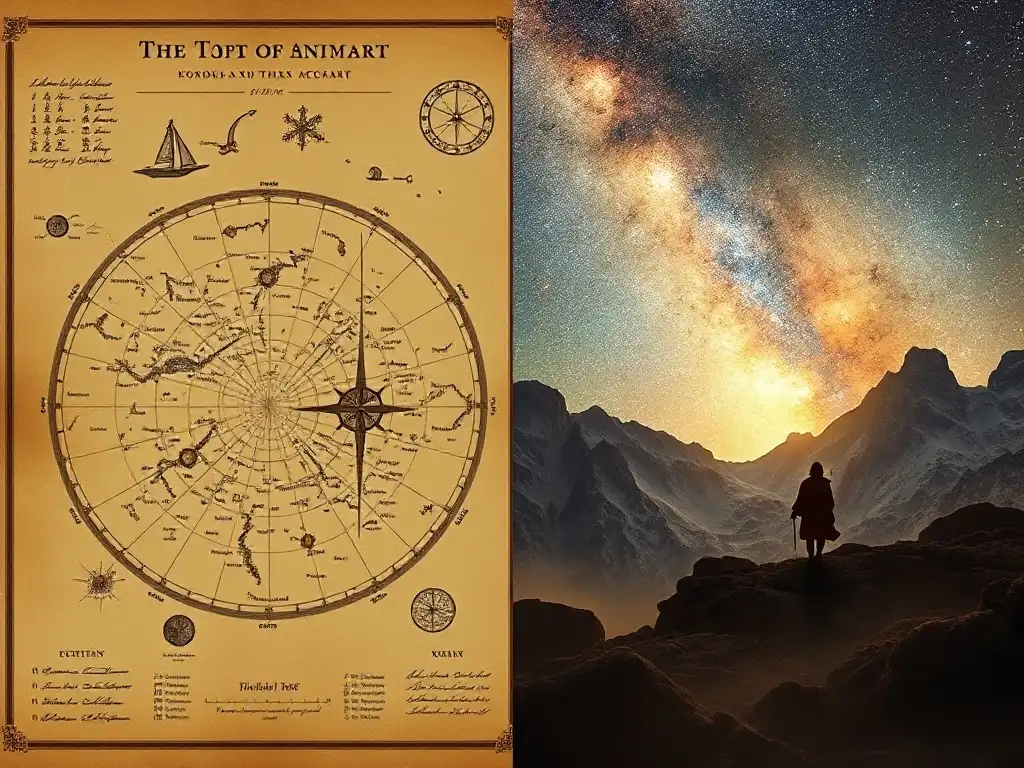
While Western cultures often view the Milky Way as a distant galaxy, a collection of stars, the Andean worldview presents a fundamentally different perspective. For Andean civilizations, the Milky Way wasn't just a distant astronomical phenomenon; it was a living, dynamic entity, intimately connected to the terrestrial world. They perceived it as a river, a path, or a road, often associating it with water, life, and the flow of energy.
This contrasts sharply with the more detached, scientific approach of Western astronomy. In the Andean cosmology, the Milky Way played a crucial role in their understanding of the cosmos, acting as a bridge between the heavens and the earth. The Milky Way was not simply observed; it was integrated into their daily lives, influencing their agricultural practices, religious rituals, and social structures.
This deep connection contrasts with the Western tendency to view the cosmos as an object of scientific study, separated from human experience. The differences highlight the diverse ways humans interpret and interact with the universe, emphasizing the importance of understanding diverse cosmological perspectives. The Andean worldview offers a rich alternative to a purely scientific understanding of the Milky Way, emphasizing the spiritual and symbolic significance of celestial phenomena.
The Enduring Legacy of the Milky Way in Contemporary Andean Culture
The reverence for the Milky Way, far from being relegated to the past, continues to resonate deeply within contemporary Andean culture. While the precise rituals and beliefs may have evolved, the fundamental connection between the celestial river and Andean identity persists. Many indigenous communities still maintain strong astronomical traditions, integrating observations of the Milky Way into their agricultural cycles and social practices. For example, the timing of certain agricultural activities, such as planting and harvesting, is often guided by the Milky Way's position in the night sky.
This reflects a deep understanding of the celestial calendar and its influence on the earthly realm, a knowledge passed down through generations. The Milky Way's appearance also plays a role in various festivals and ceremonies, acting as a celestial marker for significant events and celebrations. These celebrations often involve traditional music, dance, and offerings, reinforcing the enduring spiritual significance of the Milky Way. Furthermore, the vibrant textiles and artwork produced by contemporary Andean artisans often feature representations of the Milky Way, showcasing its continued presence in their artistic expression and cultural identity.
These intricate designs, passed down through generations, serve as a visual testament to the enduring legacy of this celestial river in Andean cosmology. The Milky Way, therefore, remains a powerful symbol of continuity, connecting the past with the present and embodying the enduring spirit of Andean culture. Its continued presence in various aspects of daily life and artistic expression underscores its profound and lasting impact on Andean societies.
Conclusion: The Milky Way's Profound Significance in Andean Civilizations
The Milky Way's role in Andean civilizations transcends mere astronomical observation; it represents a fundamental element of their cosmology, worldview, and spiritual life. From the intricate astronomical knowledge demonstrated in their monumental architecture to the deeply embedded beliefs reflected in their myths, rituals, and artistic expressions, the celestial river played a pivotal role in shaping their understanding of the universe and their place within it. Its representation as a sacred river, a pathway to the gods, and a source of life and fertility underscores its profound significance in Andean thought.
The enduring legacy of this cosmic river continues to influence contemporary Andean culture, demonstrating the lasting impact of these ancient beliefs and practices. Understanding the significance of the Milky Way provides crucial insight into the complex religious and cosmological systems of Andean civilizations, offering a richer understanding of their worldview and their intricate relationship with the natural world. The study of Andean astronomy and cosmology reveals not only their advanced astronomical knowledge but also the profound spiritual and cultural significance they attributed to the celestial phenomena they observed, particularly the majestic Milky Way, a celestial river that continues to flow through the heart of Andean culture.
Further research into specific Andean cultures and their unique interpretations of the Milky Way is essential to fully appreciate the diverse expressions of this cosmic phenomenon across the Andean region. The Milky Way, therefore, stands as a powerful symbol of the interconnectedness of the cosmos and the human experience within the Andean world.
- Introduction to Andean Cosmovision and the Night Sky
- The Milky Way as Mayu: The Celestial River in Andean Worldview
- Understanding the Andean Concept of Mayu
- The Milky Way's Role in Andean Cosmology and Creation Myths
- The Milky Way and its Connection to Andean Deities
- The Milky Way in Andean Rituals and Ceremonies
- The Milky Way's Influence on Andean Agriculture and Calendar Systems
- The Milky Way in Andean Art and Iconography
- Contrasting Western and Andean Perceptions of the Milky Way
- The Enduring Legacy of the Milky Way in Contemporary Andean Culture
- Conclusion: The Milky Way's Profound Significance in Andean Civilizations
- What role did the Milky Way play in Andean cultures?
- How did the Andean people represent the Milky Way in their art and architecture?
- Were there specific constellations or celestial events related to the Milky Way that held special meaning?
- How did the Milky Way influence Andean religious beliefs and practices?
- Did all Andean cultures share the same interpretations of the Milky Way's significance?
Frequently Asked Questions
What role did the Milky Way play in Andean cultures?
The Milky Way, referred to as a cosmic river or Mayu in Quechua, held immense significance. It was seen as a sacred pathway, connecting the earthly and spiritual realms, influencing daily life and cosmology.
How did the Andean people represent the Milky Way in their art and architecture?
The Milky Way's representation varied across different Andean cultures. Ceremonial sites were often aligned with its path, and textiles and pottery frequently depicted its celestial form.
Yes, specific constellations and events along the Milky Way were significant. For example, the appearance of certain stars or the crossing of the Milky Way by the sun marked important times in the agricultural calendar.
How did the Milky Way influence Andean religious beliefs and practices?
The Milky Way played a crucial role in Andean spiritual beliefs. It was associated with ancestor veneration, fertility, and shamanistic journeys. Rituals and ceremonies were often tied to its celestial movements.
While the Milky Way held universal importance, its specific interpretations varied across cultures. The Incas, Moche, Nazca, and Tiahuanaco each had their unique cosmologies and beliefs surrounding this celestial river.
Final Reflection: Tracing the Celestial River: Andean Wisdom and Our Modern Sky
The ancient Andean reverence for the Milky Way, far from being a relic of the past, offers a powerful lens through which to understand our own relationship with the cosmos. Its enduring significance challenges our modern, often fragmented, view of the universe and reminds us of the profound interconnectedness between humanity and the celestial realm.
The Milky Way's influence on Andean cosmology permeates every aspect of their lives, from agriculture and social structures to spiritual beliefs and artistic expression. Its celestial river, a vibrant pathway across the night sky, served as a guide, a calendar, and a source of profound spiritual meaning. The Milky Way is not just a collection of stars, but a living entity, a cosmic river that flows through the heart of the universe and connects us to the divine.
This sentiment, though paraphrased from various Andean oral traditions, encapsulates the deep spiritual connection that the Andean people fostered with the cosmos, a connection that continues to resonate today. We can learn much from their holistic approach to understanding the universe and our place within it.
Consider, for a moment, the vastness of the cosmos and our own small place within it. The Andean perspective, with its deep respect for the natural world and the celestial bodies that govern it, offers a powerful antidote to the alienation and disconnection that often characterize modern life.
Let the Milky Way, that celestial river of light, inspire you to reconnect with the natural world, to appreciate the interconnectedness of all things, and to find your own place within the grand cosmic tapestry. Embrace the wisdom of the ancients, and let it guide you on your own journey of discovery.
Embrace the Cosmic River: Connect with the Milky Way!
Thank you for exploring the wonders of the Milky Way and its importance in Andean culture! Your journey has enriched your understanding of our cosmic connection and deepened your appreciation for how cultural narratives shape our perception of the universe. Now, let's delve even deeper!
- Join our community: Share your thoughts and experiences on the Milky Way's influence on your life and cultural perspective in the comments below.
- Expand your knowledge: Explore our curated resources featuring Andean myths and stories celebrating the cosmos.
- Connect with the night sky: Take some time tonight to observe the stars. Reflect on their meaning to you and the Milky Way's role in your personal journey.
What insights and reflections do you have on the relationship between the cosmos and your own culture? Share them with us below!