
Pizarro's Rise: From Humble Beginnings to the Conqueror of the Andes

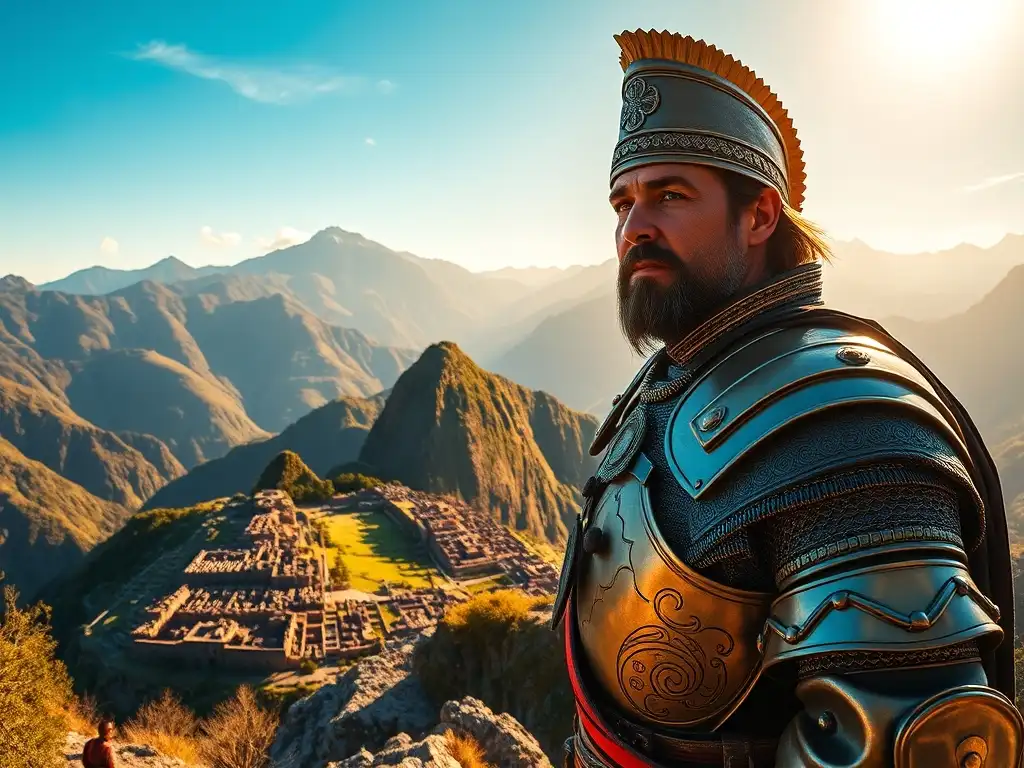
Step into a world lost to time, yet echoing with the grandeur of the Andes. For centuries, these majestic mountains were home to remarkable civilizations, each leaving behind a legacy of breathtaking artistry and ingenious engineering. But their story isn't just one of triumph; it's one of dramatic upheaval. Discover how Pizarro's conquest of the Incas irrevocably altered the course of history, a tale of ambition, betrayal, and the clash of two worlds. Unravel the mysteries and delve into the captivating details—your journey into the heart of the Andean empires begins now.
The conquest of the Inca Empire by Francisco Pizarro remains one of the most significant and controversial events in South American history. This dramatic chapter profoundly altered the course of Andean civilizations, leaving an indelible mark on the continent's cultural landscape and political trajectory. Understanding Pizarro's conquest requires delving into the life and motivations of the man himself, tracing his journey from humble origins to the ruthless subjugation of a powerful empire.
This article explores Pizarro's rise to power, examining the key events, personalities, and decisions that shaped his ambition and ultimately led to the fall of the Inca. We will investigate his early life, his expeditions across the treacherous South American terrain, his encounters with indigenous populations, and the relentless pursuit of gold and glory that fueled his conquest.
The narrative will focus on the strategic maneuvers, alliances, and betrayals that contributed to Pizarro's ultimate success in overthrowing the Inca, paving the way for Spanish colonization and the enduring legacy of the conquest. This exploration will provide a nuanced understanding of "Pizarro's conquest of the Incas," considering the complexities of the historical context and the lasting impact of this pivotal moment in Andean history.
Early Life and Influences Shaping Francisco Pizarro
Francisco Pizarro's early life, marked by poverty and a lack of formal education, hardly foreshadowed his future as the conqueror of the Inca Empire. Born around 1475 in Trujillo, Extremadura, Spain, he was the illegitimate son of a minor nobleman. His upbringing instilled in him a sense of ambition and a willingness to take risks, characteristics that would serve him well in his later adventures.
While details about his youth are scarce, it's evident that he was exposed to the prevalent culture of exploration and conquest that characterized 16th-century Spain. The stories of Christopher Columbus' voyages and the allure of riches and glory in the New World likely ignited a spark of ambition within him. This early exposure, coupled with his inherent tenacity and strategic thinking, laid the groundwork for his future exploits in the Americas.
He learned the skills of a soldier early on, likely participating in minor skirmishes and gaining practical experience that would prove invaluable during his expeditions to South America. Pizarro's early life, while unremarkable in many respects, became the foundation upon which he would build his extraordinary and controversial career.
Pizarro's Expeditions and Exploration of South America
Pizarro's journey to the Americas began with his participation in various expeditions, gradually gaining experience and knowledge of the New World. His initial ventures were driven by a combination of ambition, greed, and the desire for adventure. These early encounters with indigenous populations and the vast, unknown territories of South America shaped his strategies and tactics in subsequent expeditions. The harsh realities of exploration, including disease, starvation, and conflict, tested his resilience and honed his leadership skills.
He also learned to exploit existing rivalries between different indigenous groups to his advantage, a tactic he would masterfully employ during his conquest of the Inca. This period of exploration wasn't simply about geographical discovery; it was a crucial phase in the development of Pizarro's understanding of the Andean landscape, its resources, and its inhabitants. The knowledge he gained during these early expeditions would prove vital in his later campaigns.
The Initial Voyages and Encounters with Indigenous Peoples
Pizarro's first voyages to South America were fraught with hardship and uncertainty. He faced treacherous seas, unpredictable weather, and the constant threat of disease. His early encounters with indigenous peoples were often characterized by both cooperation and conflict. He learned to navigate complex social structures and political dynamics, observing the power struggles and alliances between different tribes.
This knowledge would become a crucial factor in his later success. While he engaged in some violent conflicts, Pizarro also demonstrated a capacity for diplomacy, forging alliances with certain groups to gain an advantage over others. These early interactions, characterized by a mixture of violence and negotiation, were essential in his learning process. The information he gathered about the geography, resources, and social structures of the region was invaluable in his subsequent plans for conquest.
The Search for Gold and the Legends of a Rich Empire
The lure of gold played a significant role in motivating Pizarro's expeditions. Rumors of a fabulously wealthy empire in the Andes, filled with gold and other precious metals, circulated among Spanish conquistadors. These stories, exaggerated as they may have been, fueled Pizarro's ambition and perseverance. His determination to find this legendary empire drove him through years of hardship and setbacks.
The pursuit of gold, however, was not merely a matter of personal enrichment for Pizarro; it was also a crucial element in securing the support of the Spanish crown and attracting investors to his ambitious ventures. The promise of immense wealth helped to justify the risks and costs associated with his expeditions, driving him relentlessly forward in his quest for conquest and riches. The legend of El Dorado, while perhaps mythical in its purest form, served as a powerful catalyst in shaping Pizarro's goals and actions.
Pizarro's Conquest of the Incas: The Turning Point
The conquest of the Inca Empire wasn't a swift, decisive victory; it was a gradual process fueled by strategic alliances, brutal tactics, and a healthy dose of luck. Pizarro's ambition, coupled with the internal conflicts already weakening the Inca Empire, proved to be a potent combination. The death of Huayna Capac and the subsequent civil war between Huáscar and Atahualpa had left the Inca Empire fractured and vulnerable.
Pizarro astutely exploited this weakness, using his relatively small force to maximum effect. His understanding of Inca social structures and power dynamics, gleaned through observation and the assistance of native informants, allowed him to manipulate events to his advantage. This period marked a fundamental shift in the power dynamics of the Andes, irrevocably altering the course of Andean history.
The conquest wasn't just a military campaign; it was a calculated takeover of a complex civilization, orchestrated with a ruthless pragmatism. The seeds of Spanish dominance were sown not only on the battlefields but also in the political maneuvering and manipulation of existing social structures.
The Strategic Alliance with Native Groups
Pizarro's success wasn't solely due to his military prowess. He understood the importance of forging alliances with indigenous groups who resented Inca rule. Many ethnic groups subjected to Inca control saw the Spanish as potential liberators, offering their support in exchange for freedom from oppressive Inca rule.
These alliances provided Pizarro with invaluable intelligence, logistical support, and crucial reinforcements, significantly outnumbering his Spanish troops. The Cañaris, for instance, provided essential supplies and knowledge of the terrain, proving instrumental in several key battles. This network of alliances allowed Pizarro to effectively circumvent Inca defenses and exploit their internal divisions, turning the Inca's own strength against them.
The strategy underscores the crucial role of diplomacy and political maneuvering in Pizarro's overall strategy, complementing the military force he commanded. The Spanish were not a monolithic force; they were a coalition built on opportunistic alliances and promises, often broken once the immediate objectives were achieved.
The Capture of Atahualpa and the Battle of Cajamarca
The Battle of Cajamarca, in 1532, is often cited as the pivotal moment in Pizarro's conquest. The seemingly miraculous capture of Atahualpa, the Inca emperor, was a masterclass in deception and military strategy. Pizarro, with a vastly inferior force, lured Atahualpa into a seemingly peaceful meeting, only to unleash a devastating surprise attack.
The element of surprise, combined with the superior weaponry of the Spanish, resulted in the capture of the Inca emperor and the decimation of his retinue. This event shattered the Inca's morale and effectively paralyzed the empire's ability to mount an effective resistance. The ensuing ransom, a room filled with gold and silver, further enriched the Spanish and fueled their ambition.
The capture of Atahualpa wasn't just a military victory; it was the symbolic seizure of the Inca Empire itself, paving the way for its complete subjugation. The event remains a stark reminder of the brutality and asymmetry of the conquest.
The Fall of the Inca Empire Under Pizarro's Rule
Following the capture of Atahualpa and the subsequent execution, the Inca Empire faced a period of intense turmoil and fragmentation. The absence of a strong central authority created a power vacuum that Pizarro and his men ruthlessly exploited. The Spanish systematically dismantled the Inca administrative and social structures, replacing them with a colonial system designed to extract wealth and resources.
The Inca's sophisticated infrastructure, once the envy of the region, was repurposed to serve the needs of the Spanish crown. The fall of the Inca Empire wasn't merely a military defeat; it was a systematic dismantling of a highly organized society, a cultural genocide veiled under the guise of conquest.
The Siege of Cusco and the Consolidation of Power
The Siege of Cusco, the Inca capital, was a crucial stage in the consolidation of Spanish power. The city, a symbol of Inca authority and cultural heritage, was fiercely defended by loyalist Inca forces. The siege, which lasted several months, showcased both the resilience of the Inca resistance and the brutal efficiency of the Spanish conquest.
The eventual fall of Cusco marked the end of organized Inca resistance in the heartland of the empire. The Spanish systematically destroyed Inca temples and palaces, replacing them with colonial structures, effectively erasing Inca cultural identity from the heart of their former empire. This act of cultural destruction was deliberate and aimed at breaking the spirit of the conquered people and establishing unquestioned Spanish dominance.
The Establishment of Spanish Colonial Rule in the Andes
The establishment of Spanish colonial rule in the Andes marked a profound transformation of the region. The Spanish introduced a new political, economic, and social order, characterized by exploitation, forced labor (the encomienda system), and the imposition of Catholicism. The indigenous population suffered immensely under this new regime, facing disease, enslavement, and the destruction of their traditional ways of life.
The extraction of precious metals, particularly silver, fueled the Spanish economy but came at an immense human cost. The establishment of Spanish colonial rule was not a benevolent act of governance but a system designed to extract maximum wealth from the conquered territories, leaving a lasting legacy of inequality and oppression that continues to shape the region today. The Andes, once a vibrant center of indigenous civilization, were transformed into a colonial periphery, servicing the needs of the Spanish empire.
Pizarro's Legacy and Lasting Impact on Andean History
Pizarro's conquest of the Inca Empire irrevocably altered the course of Andean history. His actions, driven by greed and ambition, resulted in the destruction of a sophisticated civilization and the imposition of a brutal colonial regime. The impact resonates even today. The introduction of European diseases alone decimated the indigenous population, leading to a demographic collapse that profoundly shaped the social and economic landscape for centuries.
This demographic catastrophe, coupled with the disruption of traditional social structures, created a power vacuum filled by the Spanish conquistadors and their exploitative practices. The Inca's intricate system of governance, based on a complex network of ayllus (kinship groups) and a centralized state, was dismantled, replaced by a hierarchical system centered around the Spanish crown. This shift resulted in the loss of traditional knowledge, skills, and cultural practices, forever changing the fabric of Andean life.
The legacy of Pizarro’s conquest is not merely one of military victory but also of profound cultural and societal disruption. The very fabric of Andean society was torn apart, leaving a legacy of inequality and suffering that persists to this day. Understanding Pizarro's conquest necessitates a thorough examination of its long-term consequences, extending far beyond the immediate violence of the conflict.
Pizarro's Role in the Transformation of Andean Society
Pizarro's role in transforming Andean society was multifaceted and devastating. His conquest didn't just involve military subjugation; it involved the systematic dismantling of the Inca's social and economic structures. The Inca's highly organized agricultural system, renowned for its terraces and irrigation techniques, was disrupted, leading to decreased food production and widespread famine. The Inca's sophisticated road network, a marvel of engineering that facilitated communication and trade across the vast empire, was gradually neglected.
The traditional religious beliefs and practices of the Inca were suppressed, replaced by Catholicism. Temples were destroyed, religious artifacts were looted, and indigenous priests were persecuted. This cultural destruction was a deliberate policy aimed at erasing Inca identity and imposing Spanish dominance.
The introduction of the encomienda system, which granted Spanish conquistadors control over indigenous labor and resources, further solidified the exploitation and marginalization of the native population. Pizarro's actions set in motion a process of cultural assimilation and the erosion of indigenous autonomy that would continue for generations. The Inca's sophisticated social hierarchy was replaced with a rigid class system based on race and ethnicity, with the Spanish at the top and the indigenous population at the bottom.
Analysis of the Long-Term Consequences of the Inca Conquest
The long-term consequences of Pizarro's conquest of the Inca Empire were far-reaching and devastating. The introduction of European diseases, such as smallpox, measles, and influenza, caused a catastrophic decline in the indigenous population. Estimates suggest that the population plummeted by as much as 90% in the decades following the conquest. This demographic collapse had profound social and economic repercussions.
The loss of life disrupted agricultural production, leading to widespread famine and economic instability. The Inca's centralized economy, based on a system of tribute and redistribution, was replaced by a market-based economy controlled by the Spanish. This transition resulted in the exploitation of indigenous labor and the accumulation of wealth in the hands of a small elite. The conquest also led to the loss of valuable knowledge, skills, and cultural practices, as indigenous communities were forced to adopt European ways of life.
The legacy of this conquest continues to impact Andean societies today, shaping their political, economic, and social structures. The inequality and social stratification that emerged from the conquest persist, highlighting the enduring consequences of Pizarro's actions. The historical narrative surrounding the conquest needs to encompass these long-term effects to fully understand its true impact.
The End of Pizarro: Betrayal and Assassination
Francisco Pizarro's reign of power and brutality in Peru ultimately ended not on the battlefield, but through betrayal and assassination. His ambition and ruthless pursuit of wealth and power created numerous enemies, both among the indigenous population and within his own ranks of conquistadors. The years following the capture of Atahualpa were marked by increasing internal strife within the Spanish camp. Jealousy, greed, and power struggles were rife, leading to a climate of distrust and intrigue.
Pizarro's own ruthlessness and disregard for the well-being of his fellow conquistadors fueled these tensions. The final act of his life was a meticulously planned assassination, orchestrated by his rivals who sought to seize control of the vast wealth and power he had amassed. The assassination, taking place in 1541, marked a turning point in the Spanish conquest of Peru.
It highlighted the inherent instability and violence that characterized the colonial enterprise. The death of Pizarro, while seemingly a chaotic event, was in fact the culmination of years of simmering resentment and calculated maneuvering for power within the Spanish ranks. It demonstrated the fragility of power, even for a man who had conquered an empire.
The Internal Conflicts within the Spanish Conquistadors
The Spanish conquest of the Inca Empire was not a monolithic effort; it was characterized by significant internal conflicts among the conquistadors themselves. These conflicts stemmed from a combination of factors, including personal ambition, greed, and disagreements over the distribution of spoils. Pizarro's leadership style, marked by ruthlessness and a tendency to favor his own family and close allies, fueled resentment among other conquistadors who felt cheated or overlooked.
Competition for land, resources, and indigenous labor intensified these tensions. The struggle for power was not limited to Pizarro's immediate circle; it extended to other prominent conquistadors who saw opportunities to usurp control. These internal conflicts often manifested as open rebellions, leading to violent clashes and power struggles that destabilized the colonial administration.
The ongoing disputes within the Spanish ranks diverted resources and attention away from consolidating their control over the conquered territories, ultimately hindering the long-term success of the colonial project. This internal warfare and infighting among the conquistadors contributed to the instability of early colonial rule in Peru.
Pizarro's Death and the Aftermath of His Actions
Pizarro's assassination in 1541, while ending his personal reign of terror, did not immediately resolve the conflicts and instability that characterized the early years of Spanish rule in Peru. His death triggered a power vacuum, leading to further struggles among the conquistadors for control of the newly conquered territories. The aftermath saw a period of ongoing violence and political upheaval, with different factions vying for dominance.
The long-term consequences of Pizarro's actions continued to shape Peruvian society for centuries to come. The exploitation of indigenous populations, the destruction of Inca culture, and the establishment of a deeply unequal social hierarchy all stemmed directly from his conquest. The legacy of Pizarro's brutal conquest continues to be felt in Peru today, highlighting the profound and lasting impact of his actions on the region's history and its people.
His death marked a pivotal moment, but the consequences of his life's work endured, shaping the political, social, and economic landscape of the Andean region for generations. The struggle for power continued, but the seeds of colonial oppression had already been sown.
Conclusion: Pizarro's Complex Legacy in Andean History
Pizarro's conquest of the Incas represents a watershed moment in Andean history, irrevocably altering the course of the Inca Empire and leaving a complex legacy that continues to be debated and analyzed today. His ambition, ruthlessness, and cunning were undeniable factors in his success, but his actions also resulted in immense suffering, the destruction of a sophisticated civilization, and the introduction of devastating diseases that decimated the indigenous population. The introduction of European diseases alone resulted in a population collapse that historians still struggle to fully quantify, further complicating the assessment of Pizarro's impact.
While some might view him as a ruthless conqueror, others may point to his role in initiating a period of cultural exchange, albeit a forced one, that eventually led to the blending of Andean and European cultures. The long-term consequences of his actions, including the social, political, and economic structures of modern-day Peru and other Andean nations, remain deeply intertwined with Pizarro's legacy. Understanding Pizarro requires acknowledging both the brutality of his methods and the lasting impact of his conquest on the region.
His story serves as a potent reminder of the complexities of historical figures and their actions, urging us to examine the past with nuance and critical perspective. The very fabric of Peruvian society, its economy, and its cultural identity bear the indelible mark of Pizarro's conquest. His legacy is therefore multifaceted and continues to shape discussions about colonialism, power, and cultural transformation in the Andean region.
A Summary of the Key Events of Pizarro's Life
Pizarro's life, marked by both ambition and brutality, can be summarized through several key events. Born in Trujillo, Extremadura, Spain, around 1475, his early life was unremarkable, characterized by a relatively humble background. His early years involved involvement in minor skirmishes and expeditions, but it was his participation in the conquest of Panama that truly shaped his trajectory. This experience provided him with crucial knowledge of indigenous populations, warfare tactics, and the opportunities presented by the New World.
The subsequent exploration and conquest of Peru, undertaken with his brothers and other conquistadors, marked a pivotal point. His initial expeditions into the Inca Empire, though initially unsuccessful, laid the groundwork for his later, decisive victory at Cajamarca. The capture and execution of Atahualpa, the Inca emperor, was a turning point, effectively shattering the Inca empire's power structure and opening the way for Spanish colonization.
The following years witnessed the brutal suppression of Inca resistance, the establishment of Lima as the capital of the Viceroyalty of Peru, and Pizarro’s consolidation of his power and wealth. Despite his success, Pizarro faced internal conflicts and political intrigue among his fellow conquistadors, ultimately leading to his assassination in 1541 in Lima. His death, however, did not signify the end of Spanish dominance in the Andes; rather, it marked a transition in the power dynamics of the newly established colonial regime.
Reflection on Pizarro's Place in the History of the Inca Empire and the Spanish Conquest
Pizarro’s conquest stands as a pivotal event in both Inca and Spanish history, marking a profound turning point for both societies. For the Inca Empire, it signified the abrupt and violent end of a powerful civilization, characterized by sophisticated administrative systems, intricate social structures, and impressive architectural achievements. The conquest led to the destruction of Inca institutions, the displacement of the indigenous population, and the imposition of a new colonial order.
The introduction of European diseases further exacerbated the devastation, leading to a dramatic decline in the Inca population. For Spain, the conquest of Peru represented a monumental expansion of its colonial empire, resulting in a massive influx of wealth in the form of silver and gold, transforming the Spanish economy and bolstering its global influence. Pizarro's actions, however, were not without their internal consequences within Spain; his conquest ignited disputes and conflicts among the conquistadors themselves, leading to power struggles and internal conflicts that characterized the early years of Spanish rule in Peru.
Pizarro's role in this complex historical process is one that continues to be debated and reinterpreted, demonstrating the intricate and far-reaching consequences of his actions on both the Inca Empire and the Spanish colonial project. His story serves as a compelling case study in the exploration of power, conquest, and the lasting impact of colonialism.
- Early Life and Influences Shaping Francisco Pizarro
- Pizarro's Expeditions and Exploration of South America
- Pizarro's Conquest of the Incas: The Turning Point
- The Fall of the Inca Empire Under Pizarro's Rule
- Pizarro's Legacy and Lasting Impact on Andean History
- The End of Pizarro: Betrayal and Assassination
- Conclusion: Pizarro's Complex Legacy in Andean History
- What role did Francisco Pizarro play in the Spanish conquest of the Incas?
- How did Pizarro manage to conquer such a vast and powerful empire?
- What were the consequences of Pizarro's conquest of the Inca Empire?
- What were some of the key battles in Pizarro's campaign against the Incas?
- What is the lasting legacy of Pizarro's conquest?
Frequently Asked Questions
What role did Francisco Pizarro play in the Spanish conquest of the Incas?
Francisco Pizarro was the principal leader of the Spanish conquest of the Inca Empire. His ambition, ruthlessness, and strategic alliances with rival Inca factions led to the downfall of the empire and the capture and execution of Atahualpa.
How did Pizarro manage to conquer such a vast and powerful empire?
Pizarro's success stemmed from a combination of factors: superior weaponry, internal Inca conflicts, disease, and effective manipulation of Inca politics. He exploited existing tensions within the Inca Empire to his advantage.
What were the consequences of Pizarro's conquest of the Inca Empire?
Pizarro's conquest resulted in the destruction of Inca civilization, the death of countless people, and the imposition of Spanish colonial rule. It fundamentally reshaped the Andean region's social, political, and economic landscape.
What were some of the key battles in Pizarro's campaign against the Incas?
Significant battles include the Battle of Cajamarca, where Atahualpa was captured, and subsequent battles against Inca resistance forces. These battles demonstrated the Spanish advantage in military technology.
What is the lasting legacy of Pizarro's conquest?
Pizarro's conquest led to the end of the Inca Empire and the beginning of Spanish colonial rule in Peru. His actions continue to be debated and studied due to their profound and lasting impact on the region's history and culture.
Final Reflection: The Enduring Legacy of Conquest
The brutal efficiency of Pizarro's conquest of the Incas remains a chilling reminder of the unchecked power of ambition and the devastating consequences of unchecked greed. His rise, from humble beginnings to the subjugation of an empire, serves as a stark warning against the seductive allure of unchecked power and the catastrophic impact of colonialism on indigenous populations. The echoes of his actions still resonate today, shaping our understanding of history and the ongoing struggles for justice and equality.
Pizarro's conquest wasn't merely a military victory; it was a cultural earthquake. It irrevocably altered the course of South American history, leaving behind a legacy of exploitation and inequality that continues to impact the region. The very fabric of Andean society was torn apart, its rich traditions and sophisticated civilization brutally suppressed. History is not merely what happened, but what is remembered, how it is remembered, and who does the remembering.
This quote highlights the importance of understanding Pizarro's conquest not just as a historical event, but as a narrative constructed and reconstructed over centuries, often to serve the interests of the conquerors.
Consider the implications of Pizarro's actions. Reflect on the enduring impact of colonialism and the ongoing fight for indigenous rights. You, the reader, hold the power to shape the future. By engaging with this history, by understanding the complexities of Pizarro's rise and fall, you can contribute to a more informed and empathetic understanding of the past, and, crucially, a more just and equitable future. Let the story of Pizarro serve not as a celebration of conquest, but as a catalyst for critical reflection and a commitment to building a world where such injustices are never repeated.
**Embrace Your Own Journey: Take Action Today! **
Thank you for exploring the captivating story of Pizarro and his extraordinary rise to power! His journey offers valuable insights into history and, more importantly, inspires us to unlock our own potential and pursue our ambitions. Reflecting on his experiences can be incredibly motivating. To begin your own transformative journey, consider these steps:
- **Set a challenging personal goal** that pushes you beyond your comfort zone. What kind of impact do you want to make on the world?
- **Share your insights and discoveries** with friends, family, or online communities. Inspire others to embark on their own journeys of self-discovery and accomplishment.
- **Connect with our community** by subscribing to our newsletter or following us on social media. Engage in discussions about history and the remarkable legacies of influential figures like Pizarro.
What's the next significant step you will take on your path to achieving your goals?