
Atahualpa's Perspective: Exploring the Conquest From the Inca's Point of View

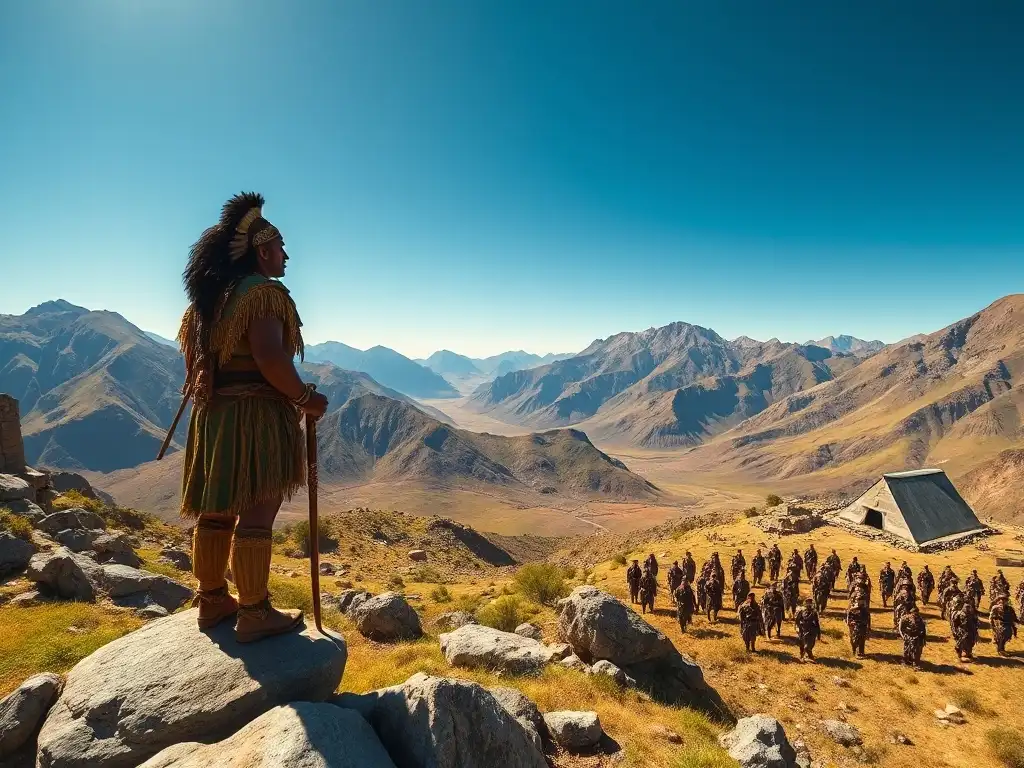
Step into a world lost to time, yet echoing with the whispers of empires. Imagine witnessing the breathtaking Andes through the eyes of those who called them home. Forget the conquistadors' tales; here, we delve into Atahualpa Inca's perspective, unveiling a side of the Spanish Conquest rarely explored. Dare to uncover the untold story of power, resilience, and the fall of a magnificent civilization. Prepare to be captivated.
The Spanish conquest of the Inca Empire remains one of history's most pivotal events, dramatically reshaping the political landscape of South America. While traditional accounts often focus on the exploits of conquistadors like Francisco Pizarro, this article offers a crucial shift in perspective: we will explore the conquest through the eyes of Atahualpa, the last Sapa Inca to rule a unified Tawantinsuyu before the arrival of the Spanish. By understanding Atahualpa's world, his reign, and his ultimate downfall, we gain a deeper and more nuanced appreciation of the complexities of this transformative period in Andean history.
This exploration aims to provide a richer understanding of the Inca perspective on the conquest, challenging conventional narratives and highlighting the devastating impact of colonization on a sophisticated and thriving civilization. We will examine the Inca Empire's political structure, religious beliefs, and social organization to better comprehend the Inca's response to the unexpected and ultimately devastating arrival of the Spanish.
This approach allows us to analyze the events leading to Atahualpa's capture not simply as a military defeat, but as a cultural collision with profound and lasting consequences. The keyword "Atahualpa Inca perspective" will be explored throughout, providing a unique lens through which to view this crucial historical event.
The Inca World Before the Arrival of the Spanish
The Reign of Atahualpa: Consolidating Power After the Civil War
Atahualpa's ascension to the Inca throne was far from peaceful. He inherited a fractured empire following a brutal civil war against his half-brother Huáscar. This conflict significantly weakened the Inca military and political structure, leaving the empire vulnerable to external threats. Atahualpa's victory, achieved through shrewd military strategy and political maneuvering, solidified his control over the northern territories, but the scars of the civil war remained.
This internal instability played a crucial role in the empire's subsequent vulnerability to Pizarro's comparatively small force. The resources expended during the civil war left the Inca army depleted and less prepared to face the Spanish. Atahualpa's focus on consolidating his power and rebuilding the empire after the conflict likely diverted resources from strengthening defenses against potential external threats.
The Structure of the Inca Empire: Tawantinsuyu's Vast Reach
The Inca Empire, or Tawantinsuyu, was a marvel of ancient engineering and administration. Its vast territory spanned thousands of miles along the Andes Mountains, encompassing diverse ecological zones and a vast population. The empire was meticulously organized through a sophisticated system of roads, administrative centers, and a highly centralized government.
This intricate structure, while impressive, ultimately proved to be a double-edged sword. The centralized nature of the empire meant that disruption in one area could quickly destabilize the entire system, as seen in the vulnerability caused by the preceding civil war. The reliance on a centralized power structure left the Inca Empire susceptible to a swift collapse once its leadership was compromised.
Inca Religion: Inti, Pachamama, and the Ancestor Veneration
Inca religion was deeply intertwined with the natural world and ancestor veneration. The sun god, Inti, held supreme importance, and the Inca rulers were considered descendants of the sun god, lending divine authority to their rule. Pachamama, the earth goddess, was also revered, reflecting the importance of agriculture and the land to Inca society.
Ancestor veneration played a vital role in maintaining social order and continuity. The Spanish conquest not only resulted in the physical destruction of Inca temples and religious sites but also in the disruption of these deeply held beliefs, leading to cultural disorientation and the loss of traditional practices. The clash between Inca religious beliefs and Spanish Catholicism significantly contributed to the cultural devastation that followed the conquest.
The Arrival of the Conquistadors: A Clash of Worlds
Initial Encounters: Atahualpa's Skepticism and Curiosity
The initial encounters between Atahualpa and the Spanish were marked by a mixture of skepticism, curiosity, and perhaps, a degree of naivete regarding the true nature of the Spanish threat. Atahualpa, accustomed to the relative technological superiority of the Inca Empire within its region, may have initially underestimated the potential danger posed by the relatively small Spanish force.
This initial assessment, which proved tragically inaccurate, shaped Atahualpa's early decisions and ultimately contributed to his capture. Reports suggest a cautious approach, attempts at understanding the newcomers, and a possible initial belief that they might be integrated into the existing political structure.
The Battle of Cajamarca: The Massacre and Atahualpa's Capture
The infamous Battle of Cajamarca remains a stark illustration of the disparity in military technology and strategy between the Inca and the Spanish. Pizarro's audacious plan, utilizing superior weaponry and a surprise attack, resulted in a swift and brutal massacre of Atahualpa's unsuspecting army. This event marked a decisive turning point in the conquest, effectively shattering the Inca's military power and leading to Atahualpa's capture.
The sheer brutality and unexpectedness of the Spanish attack highlight the significant technological gap and the devastating consequences for the Inca. The event serves as a testament to the strategic brilliance of Pizarro, but also to the vulnerability of the Inca Empire despite its size and sophisticated organization.
The Capture of Atahualpa: A Shift in Power Dynamics
Atahualpa's capture marked a profound shift in the power dynamics of the Inca Empire. The Sapa Inca, once the supreme ruler of a vast and powerful empire, was now a prisoner of a relatively small band of conquistadors. This capture not only symbolized the military defeat of the Inca but also represented a devastating blow to the cultural and spiritual authority of the Inca leadership.
The subsequent events, including the infamous ransom and Atahualpa's execution, further underscore the devastating impact of the Spanish conquest on the Inca Empire and its people, forever altering the course of Andean history. The capture of Atahualpa represents more than just a military defeat; it signifies the beginning of the systematic dismantling of the Inca Empire and the imposition of Spanish colonial rule.
Atahualpa's Strategic Thinking and Diplomatic Efforts
Atahualpa's reign, though relatively short, was marked by significant strategic thinking and diplomatic efforts. He inherited a vast empire grappling with internal tensions and succession disputes following the death of his father, Huayna Capac. His initial focus was on consolidating power and quelling any potential rebellions. This involved shrewd political maneuvering, strategic alliances, and the deployment of his armies to quell dissent.
His actions reveal a leader acutely aware of the delicate balance of power within his realm and the necessity of maintaining order to effectively respond to external threats. His understanding of Inca governance and the intricate web of loyalties within the empire was crucial in his early success. However, the arrival of the Spanish drastically altered his priorities, forcing him to adapt his strategies to confront an entirely new type of adversary.
Atahualpa's Perspective on the Spanish: Assessing Their Strengths and Weaknesses
From Atahualpa's perspective, the Spanish initially appeared as a minor threat, a relatively small group of men with strange customs and weaponry. Their advanced weaponry, particularly firearms and steel, quickly became apparent as a significant advantage. What Atahualpa might have initially underestimated was the Spanish's ruthlessness, their willingness to employ violence and treachery, and their strategic use of alliances with indigenous populations who resented Inca rule.
Atahualpa's initial attempts at diplomacy and understanding were likely hampered by cultural misunderstandings and a lack of comprehension of the Spanish intentions. He may have initially viewed them as potential trading partners or allies, only to realize the depth of their ambition for conquest. This miscalculation proved devastating.
The Ransom of Atahualpa: A Calculated Gamble for Freedom
The offer of a vast ransom—a room filled with gold and twice as much in silver—was a calculated gamble on Atahualpa's part. He likely believed that the allure of such unimaginable wealth would outweigh the Spanish desire for conquest and war. This strategy reflected his understanding of the Spanish greed and their materialistic motivations.
The immense quantity of gold and silver amassed demonstrated the Inca's wealth and power, showcasing the potential gains of cooperating with the Inca Empire. However, the Spanish ultimately broke their promise, demonstrating their inherent treachery and disregard for agreements. This act revealed the fatal flaw in Atahualpa's gamble: his inability to fully comprehend the nature of his adversaries.
Atahualpa's Political Maneuvers During Captivity: Maintaining Authority
Even in captivity, Atahualpa attempted to maintain his authority and control over his empire. He used his influence to direct the collection of the ransom, demonstrating his continued power and sway over his people. He may have hoped to use this control to negotiate his release and continue ruling.
His efforts to communicate with his followers and maintain internal stability show his determination to resist the Spanish conquest, even in the face of overwhelming odds. However, the Spanish strategically isolated him, preventing him from effectively leading his people and fostering rebellion. The systematic dismantling of his authority was a key part of the Spanish strategy to consolidate their control.
The Trial and Execution of Atahualpa: An Inca Tragedy
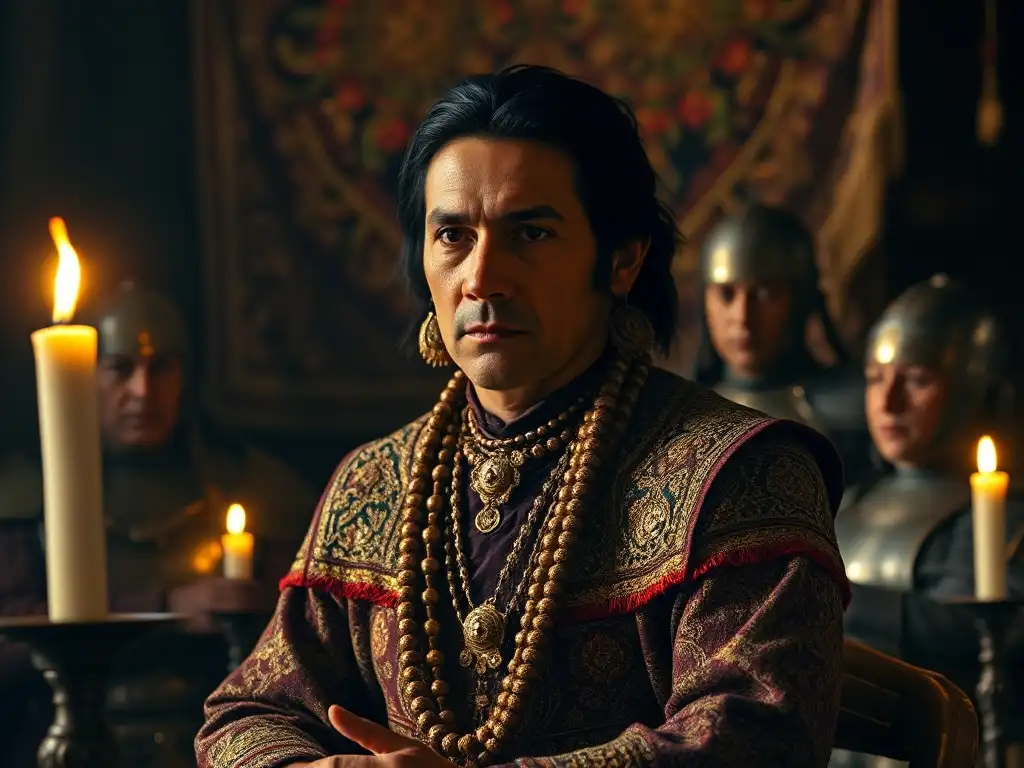
The trial and execution of Atahualpa represent a pivotal moment in the Spanish conquest and a profound tragedy from the Inca perspective. The charges against him—idolatry and treason—were manufactured to justify the seizure of power and the subjugation of the Inca Empire. The Spanish utilized a legal system largely incomprehensible to Atahualpa and his advisors, deliberately exploiting cultural differences to secure a conviction.
The entire process was a sham, a blatant disregard for Inca laws and customs, and a clear demonstration of the Spanish intent to claim the empire for themselves. The execution was not just the death of a ruler; it was the symbolic destruction of Inca power and authority.
The Spanish Justification for Atahualpa's Death: Accusations of Idolatry and Treason
The Spanish justification for Atahualpa's execution rested on flimsy accusations of idolatry and treason. These charges were convenient tools to legitimize their actions to both the Spanish crown and the indigenous population. Idolatry, a common accusation against non-Christian rulers, served to justify the imposition of Catholicism and Spanish rule. The accusation of treason, however, was more complex. Atahualpa's resistance, his attempts to maintain authority, and his reluctance to fully submit to Spanish demands were all interpreted as acts of rebellion. This justification masked the true motives of the Spanish: land, gold, and the expansion of their empire.
Atahualpa's Final Words: A Plea for Justice and Recognition
Atahualpa's final words, while not definitively recorded with complete accuracy, likely conveyed a plea for justice and recognition of his rightful rule. He might have expressed his understanding of the injustice of his execution and the betrayal he experienced at the hands of the Spanish. His final statement might have been a testament to his faith in the Inca gods and a condemnation of the Spanish actions. The precise details remain lost to history, yet the sentiment of a leader unjustly condemned remains a powerful symbol of Inca resistance and resilience.
The Impact of Atahualpa's Execution: Disarray and Loss of Leadership
The execution of Atahualpa had a devastating impact on the Inca Empire. The loss of its supreme leader created a power vacuum, leading to internal strife and a weakening of resistance to the Spanish. The ensuing civil war amongst competing factions further destabilized the empire, making it easier for the Spanish to conquer and control the remaining territories.
The death of Atahualpa marked not only the end of an era but also the beginning of a period of profound upheaval and change for the Inca civilization. The empire, once powerful and unified, was plunged into chaos, paving the way for complete Spanish domination.
Understanding the Conquest Through Atahualpa's Eyes
To grasp the Spanish conquest from Atahualpa's perspective requires understanding the Inca worldview and social structure. Atahualpa, as Sapa Inca, inherited a vast empire characterized by a complex system of administration, intricate agricultural techniques, and a deeply ingrained religious belief system. His perspective wasn't simply that of a ruler facing a military threat; it was the perspective of a leader whose entire cosmology was being challenged.
The arrival of the Spaniards, with their strange customs, weaponry, and seemingly insatiable desire for gold, represented a profound disruption of the Inca's carefully balanced world order. Atahualpa's initial interactions with the Spaniards, perhaps marked by curiosity and attempts at diplomacy, likely quickly transformed into a struggle for survival as the true nature of the Spanish intentions became clear.
The Inca likely underestimated the Spaniards' military capabilities and their ruthless ambition, a miscalculation that would have devastating consequences. The Inca's understanding of warfare, based on large-scale mobilization and ritualistic combat, proved ineffective against the Spanish's superior weaponry and tactics.
Analyzing Atahualpa's Actions and Decisions: A Leader in a Changing World
Atahualpa's actions during the conquest are a subject of ongoing debate among historians. Some criticize his initial reluctance to engage the Spanish militarily, arguing that a more decisive response could have altered the course of events. Others point to the inherent difficulties of coordinating a defense against a technologically superior force, especially considering the internal divisions within the Inca empire following Huayna Capac's death and the ensuing civil war between Atahualpa and his brother Huáscar.
Analyzing Atahualpa's decisions requires considering the context: the unexpected nature of the Spanish invasion, the lack of information about the Spanish capabilities, and the internal political turmoil that weakened the Inca empire. His decision to offer a ransom, for example, might be viewed as a strategic maneuver in a desperate situation, an attempt to buy time and perhaps even negotiate a peaceful resolution.
However, this action ultimately sealed his fate, highlighting the clash of cultures and understanding of power dynamics between the Inca and the Spanish. The Inca's concept of tribute and exchange differed significantly from the Spanish's insatiable greed for gold and resources.
The Inca Perspective on the Spanish Conquest: Loss of Sovereignty and Cultural Disruption
The Spanish conquest represented a catastrophic loss of sovereignty for the Inca. Atahualpa, as the Sapa Inca, embodied the spiritual and political authority of the empire. His capture and subsequent execution were not simply a political event; they were a symbolic destruction of the Inca's world order. The destruction of the Inca infrastructure, the imposition of Spanish law and religion, and the disruption of traditional social structures caused immense suffering and cultural disruption.
The Inca perspective on the conquest was one of profound loss – the loss of land, freedom, culture, and spiritual identity. The systematic destruction of Inca temples, the suppression of religious practices, and the forced conversion to Christianity represent a deliberate attempt to erase the Inca's cultural heritage. This cultural disruption extended beyond religious practices to encompass all aspects of Inca life, from agriculture and architecture to social organization and governance.
Atahualpa's Perspective: A Reflection on the Nature of Power
Atahualpa's story offers a compelling reflection on the nature of power. His rise to power, marked by civil war and political maneuvering, already demonstrated the complexities and inherent fragility of Inca authority. The Spanish conquest further exposed the limitations of power based on tradition, religious authority, and military might when confronted with a technologically superior and ideologically driven force.
Atahualpa's experience highlights the crucial distinction between perceived power and actual power. While he commanded a vast empire, his control was ultimately insufficient to withstand the onslaught of the Spanish. His story serves as a cautionary tale about the limitations of power, the importance of adaptability in the face of change, and the devastating consequences of cultural clashes and misunderstandings.
The Enduring Legacy of Atahualpa and the Inca Resistance
Despite the devastating impact of the Spanish conquest, Atahualpa's legacy endures as a symbol of Inca resistance and cultural resilience. His story resonates with modern Andean populations, serving as a reminder of the past and a source of inspiration for future generations. Even in defeat, Atahualpa's defiance in the face of overwhelming odds continues to inspire. His execution didn't mark the end of Inca resistance; it ignited a prolonged struggle for survival and liberation. The legacy of Atahualpa is not just one of defeat, but also one of enduring resistance, cultural preservation, and the ongoing struggle for self-determination.
Atahualpa as a Symbol of Inca Resistance: A Martyr for His People
Atahualpa's execution transformed him into a martyr figure in the Inca narrative of the conquest. His death, viewed as a sacrifice, solidified his image as a leader who defended his people against an oppressive force. This martyrdom fueled continued resistance movements, and Atahualpa's memory became a rallying point for those striving to preserve their cultural identity and fight for their freedom from Spanish rule.
The stories and myths surrounding his life and death were passed down through generations, preserving his image as a symbol of Inca resistance and a powerful reminder of the injustices of the conquest. His sacrifice serves as a potent symbol of the fight for cultural survival and national identity.
The Cultural Impact of the Conquest on the Inca: The Erosion of Traditions
The Spanish conquest had a profound and lasting impact on Inca culture. The imposition of Spanish rule led to the suppression of traditional practices, the destruction of sacred sites, and the forced assimilation of the indigenous population. While some aspects of Inca culture survived, many traditions were lost or significantly altered.
The fusion of indigenous and Spanish cultural elements, however, created a new, hybrid culture in the Andean region, showcasing the resilience and adaptability of the Inca people. The process of cultural erosion was complex and uneven, with some traditions fading more quickly than others. The impact varied across different regions and communities, depending on the intensity of Spanish control and the resistance of the local populations.
Remembering Atahualpa: His Significance in Modern Andean Identity
Atahualpa's legacy continues to hold immense significance in modern Andean identity. He represents a pivotal moment in Andean history, a symbol of both loss and resistance. His story is incorporated into narratives of national identity, highlighting the struggle against colonialism and the importance of preserving indigenous heritage.
Atahualpa's image is frequently used in art, literature, and public discourse, reflecting his enduring impact on the cultural consciousness of the Andean region. The commemoration of Atahualpa and the events surrounding the conquest is not merely a historical exercise; it is a vital part of the ongoing process of reclaiming and celebrating Andean identity in a postcolonial context. His story serves as a powerful reminder of the resilience and perseverance of the Andean peoples.
- The Inca World Before the Arrival of the Spanish
- The Arrival of the Conquistadors: A Clash of Worlds
- Atahualpa's Strategic Thinking and Diplomatic Efforts
- The Trial and Execution of Atahualpa: An Inca Tragedy
- Understanding the Conquest Through Atahualpa's Eyes
- The Enduring Legacy of Atahualpa and the Inca Resistance
- What was Atahualpa's role in the Inca Empire before the Spanish conquest?
- How did Atahualpa's perspective differ from the Spanish accounts of the conquest?
- What was the significance of the ransom offered by Atahualpa?
- How did Atahualpa's death impact the Inca Empire?
- Where can I learn more about Atahualpa and the Inca perspective on the conquest?
Frequently Asked Questions
What was Atahualpa's role in the Inca Empire before the Spanish conquest?
Atahualpa was the last Sapa Inca of the Inca Empire before the Spanish conquest. He ascended to the throne after a civil war with his half-brother Huáscar, solidifying his power just before the arrival of Pizarro.
How did Atahualpa's perspective differ from the Spanish accounts of the conquest?
Spanish accounts often portray Atahualpa as a ruthless tyrant, while Inca oral traditions and surviving accounts suggest a more nuanced and complex leader. His perspective emphasizes the Inca's strength and the deception employed by the Spanish.
What was the significance of the ransom offered by Atahualpa?
The immense gold and silver ransom offered by Atahualpa highlights the Inca's wealth and power, and showcases the Spanish greed and ambition. Despite fulfilling the ransom, Atahualpa was ultimately executed.
How did Atahualpa's death impact the Inca Empire?
Atahualpa's execution marked a critical turning point in the Spanish conquest. His death left the Inca Empire leaderless and vulnerable, significantly weakening its ability to resist the Spanish advance.
Where can I learn more about Atahualpa and the Inca perspective on the conquest?
You can explore further through academic journals and books focusing on Andean history and the Spanish conquest. Many museums and archaeological sites also offer insights into Inca culture and the impact of the conquest.
Final Reflection: Reclaiming Atahualpa's Voice, Reframing History
The brutal conquest of the Inca Empire remains a stark reminder of the devastating consequences of unchecked power and the silencing of marginalized voices. Understanding this pivotal moment in history solely through the lens of the conquerors offers an incomplete, and frankly, unjust narrative. By centering Atahualpa's perspective, we begin to reclaim a truth often buried beneath layers of colonial propaganda.
The enduring legacy of the Spanish conquest continues to shape the social and political landscape of Latin America today, impacting everything from cultural identity to economic disparities. The echoes of this historical trauma resonate in the ongoing struggle for indigenous rights and the fight against systemic inequalities. History is written by the victors,
a phrase often repeated, highlights the crucial need to actively seek out and amplify the voices of those who have been historically marginalized. This article represents a small step in that direction, a testament to the power of re-examining the past to better understand the present.
Now, consider the weight of Atahualpa's story. Imagine the complexities of his leadership, the challenges he faced, and the devastating betrayal he ultimately suffered. You, the reader, now hold a piece of this reclaimed history. Reflect on the power dynamics at play, the importance of diverse perspectives, and the responsibility we all share in shaping a more accurate and equitable understanding of the past. Let Atahualpa's story inspire you to seek out the untold narratives that surround you, to question dominant narratives, and to actively participate in building a future where all voices are heard.
Unveil the Untold Stories of the Inca Conquest!
Thank you for exploring Atahualpa's perspective on the conquest of the Inca Empire. Gaining this insight is a crucial step towards understanding the complexities of this pivotal historical event and the cultural clashes it involved. Let's continue this journey of discovery!
Here are a few ways to build on what you've learned:
- Dive Deeper: Expand your understanding of this fascinating period by researching other Andean civilizations and their histories. This broader context will enrich your appreciation of the region's rich and complex past.
- Share Your Knowledge: Discuss Atahualpa's story and the Inca's legacy with friends, family, or online communities. Help spread awareness of this important historical perspective and the valuable lessons it offers.
- Engage with Our Community: Join our online forum dedicated to Andean civilizations to connect with fellow history enthusiasts. Share your thoughts on Atahualpa's perspective and its implications for understanding cultural encounters.
What new perspectives on cultural encounters and their consequences did Atahualpa's story provide?