
Andean Cosmology and Time: An Introduction to a NonWestern Perspective

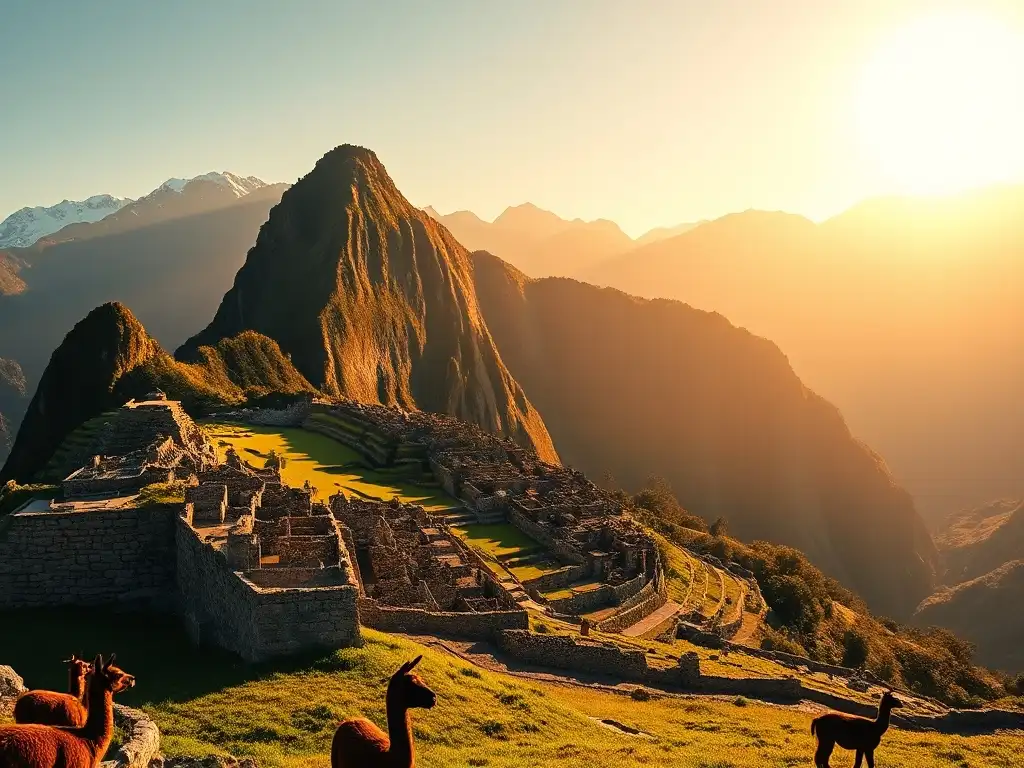
Step into a world where the mountains whisper secrets of the cosmos, and the very fabric of time is woven into the landscape. Prepare to unravel the mysteries of Andean civilizations cosmology, a perspective unlike any other. How did these remarkable cultures perceive the universe, and how did that vision shape their lives? Dive into the captivating world of the Incas, Moche, Nazca, and Tiahuanaco to discover the answers, and unlock a truly intriguing understanding of Andean worldview.
- Andean Civilizations Cosmology: An Introduction to Time and the Universe
- The Concept of Time in Andean Cosmology
- The Andean Cosmos: Structure and Key Elements
- Andean Calendar Systems and Time Measurement
- Andean Cosmology vs Western Perspectives on Time
- Significance of Andean Cosmology in Modern World
- Frequently Asked Questions
- Final Reflection: Weaving the Threads of Time in Andean Cosmology
- Embrace the Flow of Andean Time!
Andean Civilizations Cosmology: An Introduction to Time and the Universe
The Andean worldview, encompassing the rich tapestry of cultures across the Andes Mountains – from the Incas to the Moche, Nazca, and Tiahuanaco – offers a fascinating departure from Western conceptions of time and space. Unlike linear Western models, Andean cosmology presents a cyclical and interconnected understanding of the universe, deeply intertwined with the natural world and the spiritual realm. This article delves into the fundamental principles of Andean cosmology, specifically focusing on their unique perspective on time, exploring its relationship with the cosmos, the cyclical nature of life and death, and its profound impact on their social structures and daily lives.
Understanding Andean notions of time requires moving beyond the familiar Western framework and embracing a profoundly different, yet equally sophisticated, understanding of the universe and our place within it. This exploration will reveal how the Andes' physical landscape, its agricultural cycles, and its intricate social organization shaped a cosmology profoundly different from the Western tradition, enriching our understanding of the diversity of human experience and thought.
We will explore the evidence archaeologists and anthropologists have unearthed to piece together this complex and compelling worldview, revealing how these civilizations perceived and interacted with the universe. Prepare to embark on a journey into a world where the past, present, and future are not simply linear points on a timeline, but rather interconnected threads in a vibrant, ever-repeating cosmic tapestry.
Understanding Andean Worldview: Foundations of Time and Space
The Andean understanding of time and space is fundamentally different from Western perspectives. Instead of a linear progression from past to future, Andean cosmology emphasizes cyclical patterns reflected in the natural world. The agricultural cycle, with its seasons of planting, growth, harvest, and fallow, served as a primary metaphor for understanding the cyclical nature of life, death, and rebirth. This cyclical perspective is reflected in their art, architecture, and religious practices.
For example, the intricate designs found on Nazca ceramics often depict cyclical processes like the movement of celestial bodies or the life cycle of plants and animals. The monumental architecture of sites like Machu Picchu, with its precise alignment with astronomical events, further underscores the importance of observing and integrating with the rhythms of the cosmos. This intricate relationship between the human world and the celestial sphere demonstrates a deep understanding of the interconnectedness of all things, where the heavens are not separate from the earthly realm, but rather an integral part of it. The cyclical understanding of time also influences their social structures and governance, with rulers often seen as intermediaries between the human and spiritual realms, responsible for maintaining the cosmic balance.
The concept of Pachamama (Mother Earth) further exemplifies this deep interconnectedness, highlighting the profound respect and reverence for the natural world and its life-giving forces. The Andean worldview is not simply a cosmological model; it is a holistic framework that shaped their entire way of life, deeply embedded in their daily practices and beliefs. The evidence suggests a sophisticated system of astronomical observation and knowledge, used not only for agricultural planning, but also for religious rituals and political decision-making. Understanding this profound connection between the cosmos and human society is crucial to comprehending the intricacies of Andean civilizations.
The Concept of Time in Andean Cosmology
The Andean concept of time profoundly differs from Western linear models. Instead of a unidirectional arrow progressing from past to present to future, Andean civilizations, including the Inca, Moche, Nazca, and Tiahuanaco, viewed time as cyclical and multi-layered, interwoven with the cosmos and the cyclical rhythms of nature. This understanding of time, deeply embedded in their cosmology and worldview, influenced their social structures, agricultural practices, and artistic expressions.
Understanding Andean conceptions of time provides crucial insights into their sophisticated understanding of the universe and their place within it. This perspective, often referred to as "Andean civilizations cosmology," offers a compelling alternative to the dominant Western linear paradigm. Their worldview was not solely focused on a singular, ever-progressing timeline, but rather on a complex interplay of recurring cycles and interconnected events.
Cyclical Time: The Andean Understanding of Repetition and Renewal
The Andean understanding of time is fundamentally cyclical. They observed the cyclical nature of the seasons, the agricultural cycle, and the celestial movements. This cyclical perception was not merely an observation of recurring patterns; it was integral to their worldview.
The repetition was not seen as static or monotonous, but rather as a process of renewal and regeneration. The yearly agricultural cycle, for example, mirrored the cyclical renewal of life and death, reflecting a deep-seated understanding of the interconnectedness of all living things. The cyclical nature of time also underpinned their religious beliefs and rituals, which were designed to ensure the continuous flow of this regenerative process.
The celebration of solstices and equinoxes, meticulously observed and celebrated by Andean societies, further underscores this cyclical understanding of time. These events marked crucial turning points within the annual cycle, moments of renewal and revitalization. The meticulous astronomical observations made by Andean cultures, evidenced by their sophisticated calendar systems and monumental architecture aligned with celestial events, demonstrate their profound awareness and appreciation of cyclical time.
Pachakuti: The Andean Concept of Cosmic Turning Points
Within this cyclical framework, the concept of Pachakuti holds significant importance. Pachakuti translates roughly to "cosmic turning point" or "world upheaval," signifying a period of radical transformation and change. These were not merely historical events; they were perceived as moments of cosmic significance, signifying a shift in the balance of the world.
These Pachakuti events could manifest as natural disasters, social upheavals, or changes in leadership. They were understood as opportunities for renewal and the potential for a new world order to emerge from the chaos. The Inca conquest itself is often interpreted as a Pachakuti event, marking a dramatic shift in the political and social landscape of the Andes.
The concept of Pachakuti emphasizes the dynamic and transformative nature of time within the cyclical framework. It highlights that cyclical time is not static; rather, it involves periods of intense change and upheaval, followed by periods of stability and renewal. This perspective contrasts sharply with Western linear models, which often strive for continuous progress and avoid acknowledging periods of disruption or regression.
Non-Linear Time: Beyond Western Chronological Frameworks
Andean conceptions of time resist easy categorization within Western chronological frameworks. Their understanding is not simply a linear progression of events, nor is it merely a repetition of identical cycles. It is a multi-layered, complex system where multiple timelines and perspectives coexist.
The past, present, and future are not rigidly separated but are intertwined and mutually influential. This non-linear perception is reflected in their oral traditions, where stories and myths often blend past, present, and future narratives seamlessly. The integration of ancestral knowledge and spiritual beliefs into their daily lives further illustrates this interconnectedness.
This understanding challenged the Western linear notion of progress, instead emphasizing a cyclical interplay of different temporal dimensions. The Andean worldview demonstrates a sophisticated understanding of time that surpasses the limitations of a purely linear or cyclical model, showcasing a more holistic and interconnected perspective. Further research is needed to fully understand the nuances and complexities of this non-linear temporal perspective in different Andean cultures, as [specific information pending] on the variations across different groups.
The Andean Cosmos: Structure and Key Elements
This section delves into the fundamental structure of the Andean cosmos, a complex and multifaceted worldview profoundly different from Western perspectives. Understanding this structure is crucial to grasping Andean concepts of time, as time itself was not perceived as a linear progression but rather as a cyclical and interconnected process within this cosmic framework. The Andean understanding of "Andean civilizations cosmology" emphasizes the interconnectedness of all things, a holistic perspective that permeates every aspect of their lives and beliefs.
Hanan Pacha, Kay Pacha, and Ukhu Pacha: The Three Realms of Andean Cosmology
Andean cosmology is often described through the lens of three interconnected realms: Hanan Pacha, Kay Pacha, and Ukhu Pacha. These are not simply physical locations but represent different planes of existence, interwoven and interacting continuously.
- Hanan Pacha (Upper World): This is the realm of the gods, celestial beings, and ancestors. It is associated with the sky, the sun, the moon, and the stars. Think of it as a spiritual plane, the source of power and creation. Many Andean creation myths originate in Hanan Pacha, detailing the emergence of the world and the first humans from this celestial realm. The celestial bodies within Hanan Pacha played a vital role in Andean timekeeping and agricultural cycles, acting as celestial markers for planting and harvesting.
- Kay Pacha (Here and Now): This is the earthly realm, the world of living beings, including humans, animals, and plants. It's the plane of everyday existence, where the Andean people interacted with the natural world and carried out their daily lives. However, Kay Pacha is not separate from the other realms; it's deeply connected to both Hanan Pacha and Ukhu Pacha, with constant interaction and influence between them. The concept of Pachamama (Mother Earth), a powerful deity representing the fertility and life-giving force of the earth, is central to this realm.
- Ukhu Pacha (Underworld): This is the realm of the dead, spirits, and the unseen forces of nature. It’s associated with the earth's interior, the depths of mountains, and the subterranean world. Ukhu Pacha is not necessarily a place of darkness or evil; it's a realm of transformation and regeneration, representing the cyclical nature of life and death. The ancestors, believed to hold significant power and influence, reside in Ukhu Pacha, maintaining a connection with the living world. Many rituals and ceremonies were performed to honor and communicate with the spirits of Ukhu Pacha.
Sacred Mountains and Water Sources: Connection to the Andean Universe
Sacred mountains and water sources played a pivotal role in Andean cosmology, serving as tangible links between the three realms. Mountains were seen as powerful entities, often considered the homes of gods or spirits. They were not merely geographical features but central points of energy and connection to the cosmic order. The Incas, for example, built many of their important sites, such as Machu Picchu, on mountaintops, highlighting the spiritual significance of these locations.
Water, similarly, held immense spiritual importance. Rivers, lakes, and springs were seen as life-giving forces, connecting Hanan Pacha, Kay Pacha, and Ukhu Pacha. Water was essential for agriculture and survival, and its presence was deeply intertwined with the Andean understanding of life, fertility, and the cyclical nature of time. Many rituals and ceremonies were performed at sacred water sources, seeking blessings and maintaining a harmonious relationship with the natural world. The intricate system of canals and irrigation developed by Andean civilizations further underscores the importance of water in their cosmology and daily life.
The Sun, Moon, and Stars: Their Role in Andean Timekeeping
The celestial bodies—the sun, moon, and stars—were essential components of the Andean understanding of time. Unlike Western linear conceptions, Andean time was cyclical, reflecting the recurring patterns of nature. The sun's movements dictated agricultural cycles, marking planting and harvesting seasons. The moon's phases were also carefully observed, influencing various rituals and social practices. The stars served as navigational guides and celestial markers, further contributing to the complex system of Andean timekeeping.
Detailed observations of the celestial bodies allowed Andean astronomers to develop sophisticated calendars and predict astronomical events with remarkable accuracy. This knowledge was crucial for agricultural planning, religious ceremonies, and the organization of social life. The intricate relationship between the celestial bodies and the earthly realm reflects the interconnectedness of the Andean cosmos and the cyclical nature of time within this cosmological framework.
The study of Andean constellations and their significance in their cosmology offers a fascinating glimpse into a non-Western system of understanding time and the universe. Further research into specific Andean cultures, such as the Inca, Nazca, and Moche, would reveal even more nuanced details about their individual approaches to celestial observation and timekeeping.
Andean Calendar Systems and Time Measurement
Andean civilizations didn't adhere to a single, unified calendar system. Instead, diverse and complex systems existed across different cultures and regions, reflecting their unique environments and beliefs. Understanding Andean time necessitates recognizing this variability and appreciating the intricate relationship between their cosmology and their temporal frameworks. The concept of linear time, so prevalent in Western thought, was largely absent.
Instead, Andean conceptions of time were cyclical, interwoven with agricultural cycles, astronomical events, and ritual practices. This cyclical view of time emphasized the continuous renewal and regeneration of life, mirroring the natural rhythms of the Andes. The importance of observing and interpreting these cycles was paramount for survival and spiritual well-being. This holistic approach to time is a key element of understanding Andean civilizations cosmology.
Agricultural Cycles and their Influence on Andean Time
Agricultural cycles profoundly impacted Andean timekeeping. The Andean people's survival depended on the precise timing of planting, harvesting, and other agricultural activities. Their calendar systems were intricately linked to the agricultural seasons, with specific festivals and rituals marking key moments in the agricultural year.
The availability of water, crucial for crop production, was meticulously observed, and its cycles directly influenced the temporal organization of their lives. For example, the rainy season, crucial for maize cultivation – a staple crop – dictated the timing of planting ceremonies and subsequent agricultural tasks. The capacocha, a significant ritual sacrifice, may have been timed to coincide with specific agricultural milestones, ensuring the fertility of the land and the prosperity of the community.
Variations in agricultural practices across different ecological zones resulted in diverse calendar systems, tailored to the specific needs and challenges of each region. The meticulous observation of nature and its cycles forms a fundamental aspect of Andean civilizations cosmology.
The Use of Astronomy in Andean Timekeeping Practices
Astronomy played a crucial role in Andean timekeeping. The precise observation of celestial bodies, such as the sun, moon, and stars, allowed them to track the passage of time with remarkable accuracy. Many Andean sites, including Machu Picchu and Chankillo, exhibit sophisticated astronomical alignments, suggesting a deep understanding of celestial movements and their connection to earthly events.
The Inca, for example, used a complex system of knotted strings called quipus to record astronomical observations and other important information. These observations weren't merely scientific; they were deeply intertwined with their religious beliefs and cosmological worldview.
The movements of the sun, moon, and stars were seen as manifestations of divine power, influencing the rhythms of life and the agricultural cycles. The precise tracking of solstices and equinoxes, marked by specific ceremonies and rituals, highlights the crucial role of astronomy in shaping Andean concepts of time within the larger context of Andean civilizations cosmology.
The Importance of Festivals and Rituals in Andean Time
Festivals and rituals were integral to the Andean experience of time. These events, often tied to agricultural cycles and astronomical observations, marked significant moments in the year and provided a framework for community life. The timing of these celebrations was crucial, reflecting the cyclical nature of Andean time and the importance of maintaining harmony between the human and spiritual worlds.
Each festival held specific significance, with elaborate ceremonies, offerings, and processions designed to honor deities and ensure the continued prosperity of the community. The Inti Raymi, the Inca festival dedicated to the sun god Inti, was a particularly significant event, marking the winter solstice and symbolizing the sun's renewal and the continuation of life. These festivals weren't merely celebrations; they were powerful expressions of Andean cosmology, reinforcing the cyclical nature of time and the interconnectedness of the human and divine realms.
The careful observation and celebration of these events were paramount in the Andean understanding of time and are essential elements in understanding Andean civilizations cosmology. The detailed organization and ritualistic precision of these celebrations demonstrates a sophisticated understanding of time's significance within their society.
Andean Cosmology vs Western Perspectives on Time
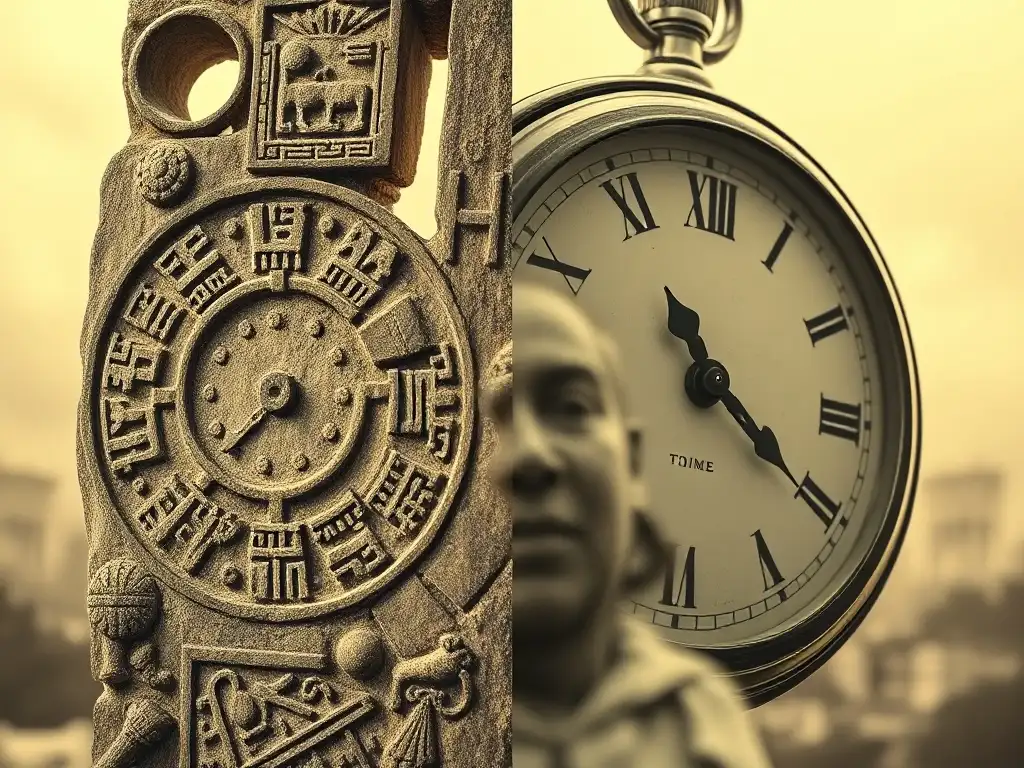
This section explores the fundamental differences between Andean conceptions of time and those prevalent in Western thought. Understanding these disparities is crucial to accurately interpreting Andean cosmology and avoiding anachronistic interpretations. The core difference lies in the contrasting models of time: linear versus cyclical.
Contrasting Linear and Cyclical Time Concepts
Western cultures largely perceive time as linear – a straight line progressing from a beginning to an end. This linear progression often emphasizes progress, development, and a teleological view of history. Think of the typical timeline presented in history classes, moving unidirectionally from past to present to future. This framework profoundly influences Western understanding of events, causality, and the very nature of existence.
Conversely, Andean civilizations, including the Inca, Moche, Nazca, and Tiahuanaco, viewed time more cyclically. Time wasn't a singular, irreversible flow but a recurring pattern of cycles, mirroring the natural rhythms of the cosmos: the sun's journey, the phases of the moon, the agricultural seasons, and the life-death-rebirth cycle prevalent in Andean mythology. This cyclical understanding emphasized repetition, renewal, and the interconnectedness of all things within a continuous, ever-repeating process.
The past, present, and future were not distinct entities but aspects of a single, unbroken continuum. This perspective is reflected in their art, architecture, and religious practices, where recurring motifs and patterns symbolize the endless cycle of time and regeneration.
For example, the intricate designs found on Nazca ceramics often depict cyclical processes, such as the planting and harvesting cycles or the journey of the sun across the sky. These visuals weren't simply decorative; they were powerful representations of their cosmological beliefs and their understanding of time's cyclical nature. The cyclical worldview is further reinforced by the importance placed on ancestor veneration and the continuity of traditions across generations.
Differences in Understanding the Relationship Between Humans and the Universe
The Andean understanding of time is intrinsically linked to their perception of the relationship between humanity and the cosmos. Unlike the Western tendency to see humanity as separate from and dominant over nature, Andean cosmology emphasized a profound interconnectedness between humans and the universe. Humans were not external observers but integral participants in the cosmic cycle, their lives mirroring and reflecting the rhythms of the cosmos.
This intimate relationship is reflected in their religious practices and worldview. Andean societies revered the forces of nature – the sun, moon, stars, mountains, and rivers – as divine entities intimately involved in human life. These forces were not merely objects of study or control but active participants in the ongoing cosmic dance.
Rituals and ceremonies were performed to maintain harmony and balance within this interconnected web of life. The concept of Pachamama, Mother Earth, encapsulates this intimate relationship, representing the Earth as a nurturing and powerful entity deserving of respect and reverence. Disrupting this balance, through actions deemed disrespectful or harmful to the environment, was believed to have dire consequences.
The Misinterpretation of Andean Calendar Systems as Simple Agricultural Tools
A common misconception is that Andean calendar systems were solely agricultural tools. While these calendars certainly played a vital role in agricultural planning and scheduling, to reduce them to this function is a significant oversimplification. The intricate complexity of these systems—which involved careful observation of celestial bodies and the meticulous tracking of seasonal changes—indicates a much deeper cosmological significance.
The Inca quipus, for instance, were not merely accounting devices but also served as complex mnemonic systems capable of storing and transmitting vast amounts of astronomical and calendrical data. These knotted strings encoded information about the movements of celestial bodies, agricultural cycles, and historical events, demonstrating a sophisticated understanding of time and its relationship to the cosmos. The precise alignment of Inca structures with astronomical events further underscores the intricate connection between their calendrical systems and their cosmological beliefs.
The precise positioning of structures like Machu Picchu, for example, reveals a deep understanding of astronomical cycles and their significance within the Andean worldview. To understand the Andean calendar systems purely through an agricultural lens ignores the rich tapestry of cosmological beliefs interwoven into their design and function.
They were sophisticated tools that reflected a holistic worldview, connecting the mundane realities of daily life to the grand cosmic order. Further research is needed to fully elucidate the intricate workings of these systems and their broader cosmological implications.
Significance of Andean Cosmology in Modern World
Andean cosmology, with its intricate tapestry of celestial observations, cyclical time perception, and interconnectedness of the natural and spiritual worlds, offers invaluable insights for understanding contemporary challenges. Its influence extends far beyond academic circles, impacting various aspects of modern life and thought.
This section will explore the enduring relevance of Andean cosmological concepts in the 21st century, focusing on its preservation, its contribution to a broader understanding of time and space, and its potential in addressing environmental concerns. The study of Andean civilizations cosmology provides a unique non-Western lens through which to view our own relationship with the cosmos and the planet.
Preserving Ancient Knowledge and its Relevance Today
The preservation of Andean cosmological knowledge is crucial not only for historical accuracy but also for its potential to enrich contemporary understanding. Many Andean communities actively maintain traditional practices, ceremonies, and narratives that reflect a deep connection to their ancestral cosmology. However, the encroachment of modern lifestyles and globalization threatens this delicate heritage.
Efforts to document and safeguard this knowledge, through ethnographic studies, archaeological research, and community engagement initiatives, are vital for ensuring its survival. This includes translating ancient texts and oral traditions, creating accessible archives, and supporting indigenous communities in their efforts to transmit their knowledge to future generations. The loss of this knowledge would represent a significant loss to humanity's collective understanding of the universe and our place within it.
For example, the intricate knowledge of medicinal plants and their astronomical alignments, passed down through generations, could hold the key to discovering new treatments and understanding the complex relationship between humans and nature. The accurate recording and interpretation of Andean astronomical observations, often inscribed on textiles or pottery, can also contribute to a more holistic understanding of astronomical phenomena.
The Importance of Indigenous Perspectives on Time and Space
Andean cosmology presents a radically different perspective on time and space compared to Western, linear models. Instead of a linear progression from past to future, Andean conceptions often emphasize cyclical patterns, reflecting the rhythms of nature, the agricultural calendar, and the celestial cycles. This cyclical understanding of time fosters a sense of continuity and interconnectedness between past, present, and future.
Understanding this perspective is crucial for fostering intercultural dialogue and challenging the dominant Western worldview. By valuing indigenous perspectives, we gain access to a more nuanced understanding of human experience and our place in the universe. This richer framework can help us to appreciate the cyclical nature of ecological processes and the importance of long-term planning in environmental management.
Moreover, the Andean emphasis on the interconnectedness of all living things challenges the anthropocentric views prevalent in Western thought, offering a valuable ethical framework for addressing environmental issues. Further research is needed to fully understand how these distinct perspectives on time and space influence decision-making and social structures within Andean communities.
Exploring the Potential of Andean Cosmology in Environmental Conservation
The principles of Andean cosmology, particularly its emphasis on the interconnectedness of all living things and the cyclical nature of time, offer a powerful framework for environmental conservation. The Andean worldview emphasizes a harmonious relationship between humanity and nature, viewing humans as integral parts of the ecosystem, rather than separate from it. This perspective contrasts sharply with the anthropocentric views that have contributed to environmental degradation in many parts of the world.
By adopting elements of Andean cosmology, conservation efforts can benefit from a more holistic approach, emphasizing the long-term sustainability of ecosystems and the importance of respecting the intrinsic value of all living things. For instance, the traditional Andean practices of sustainable agriculture, which incorporate knowledge of soil fertility, water management, and crop rotation, offer valuable lessons for modern agricultural practices. The integration of traditional ecological knowledge with scientific methods can lead to more effective and culturally appropriate conservation strategies.
Further investigation into the specific ways Andean cosmological principles can be applied to contemporary environmental challenges, such as climate change and biodiversity loss, is needed to fully realize its potential. This requires collaborative research involving Andean communities, scientists, and policymakers.
Frequently Asked Questions
What is Andean cosmology?
Andean cosmology is a non-Western system of beliefs about the universe, encompassing spiritual, social, and natural elements. It differs significantly from Western perspectives, emphasizing a cyclical view of time and a close relationship between humanity and the cosmos. It's a complex system reflecting diverse Andean cultures.
How did the Andes' geography influence their cosmology?
The rugged terrain and high altitudes of the Andes profoundly shaped Andean cosmology. Mountains were considered sacred, acting as intermediaries between the earthly and spiritual realms, influencing their understanding of the cosmos and their place within it. The challenges of the landscape are reflected in their beliefs.
What role did celestial observations play in Andean cosmology?
Celestial observations were crucial, informing agricultural practices and rituals. Andeans meticulously tracked the movements of the sun, moon, and stars to determine planting and harvesting times, demonstrating a deep understanding of astronomical cycles and their impact on life.
How did Andean cosmology differ from European cosmology?
A key difference lies in the cyclical versus linear view of time. While European cosmology often presents a linear progression, Andean cosmology emphasizes cyclical patterns of renewal and rebirth, reflected in their agricultural practices and worldview. Their understanding of the universe was also deeply intertwined with their social structures.
What are some examples of Andean cosmological beliefs reflected in their art and architecture?
Many examples exist! Monumental architecture, like Machu Picchu, is aligned with astronomical events. Textiles and pottery often depict mythological figures and cosmological symbols, reflecting their spiritual beliefs and worldview. Iconography plays a crucial role in conveying these intricate beliefs.
Final Reflection: Weaving the Threads of Time in Andean Cosmology
The cyclical understanding of time inherent in Andean cosmology offers a powerful counterpoint to the linear Western perspective, a stark reminder of our interconnectedness with the natural world and the enduring legacy of indigenous knowledge. In a world increasingly dominated by technological advancement and a relentless pursuit of progress, rediscovering these ancient wisdoms feels not just relevant, but essential for navigating the complexities of the 21st century and fostering a more sustainable future.
The enduring influence of Andean cosmology extends far beyond academic circles; it continues to shape the spiritual practices, social structures, and artistic expressions of Andean communities. Its cyclical view of time, emphasizing renewal and reciprocity, offers a potent antidote to the often-destructive linear progression often associated with Western thought. Time is not a line, but a circle; it returns to its beginning.
This simple yet profound statement encapsulates the core of Andean cosmology and its enduring relevance in a world grappling with environmental degradation and social inequality. Understanding this cyclical perspective allows us to appreciate the interconnectedness of all things and the importance of respecting the rhythms of nature.
Consider the profound implications of this ancient wisdom for your own life. How might embracing a cyclical understanding of time, one that values renewal and interconnectedness, shift your perspective on personal growth, community engagement, and your relationship with the natural world? I invite you to explore the rich tapestry of Andean cosmology, not merely as an academic exercise, but as a pathway towards a more holistic and sustainable way of being. Let the wisdom of the Andes inspire you to weave your own threads into the vibrant fabric of time.
Embrace the Flow of Andean Time!
Thank you for exploring the intricate nuances of Andean cosmology with us! We hope you gained profound insights into the unique Andean perception of time, revealing the richness of this non-Western worldview. Now, let's continue your journey of understanding.
Here are a few ways to deepen your connection with Andean cosmology:
- Engage with local communities: Participate in workshops or cultural events celebrating Andean traditions and their unique understanding of time. Consider visiting a community to learn firsthand.
- Explore further readings: Delve deeper into Andean cosmology through books, documentaries, or academic articles. You might discover a new favorite resource!
- Share your insights: Discuss your newfound understanding with friends, family, or online communities. Encourage others to explore and appreciate this fascinating perspective.
What aspect of Andean time and cosmology resonates most with you, and how will you integrate these insights into your daily life?