
The Spoken Law: How Oral Tradition Governed Andean Societies

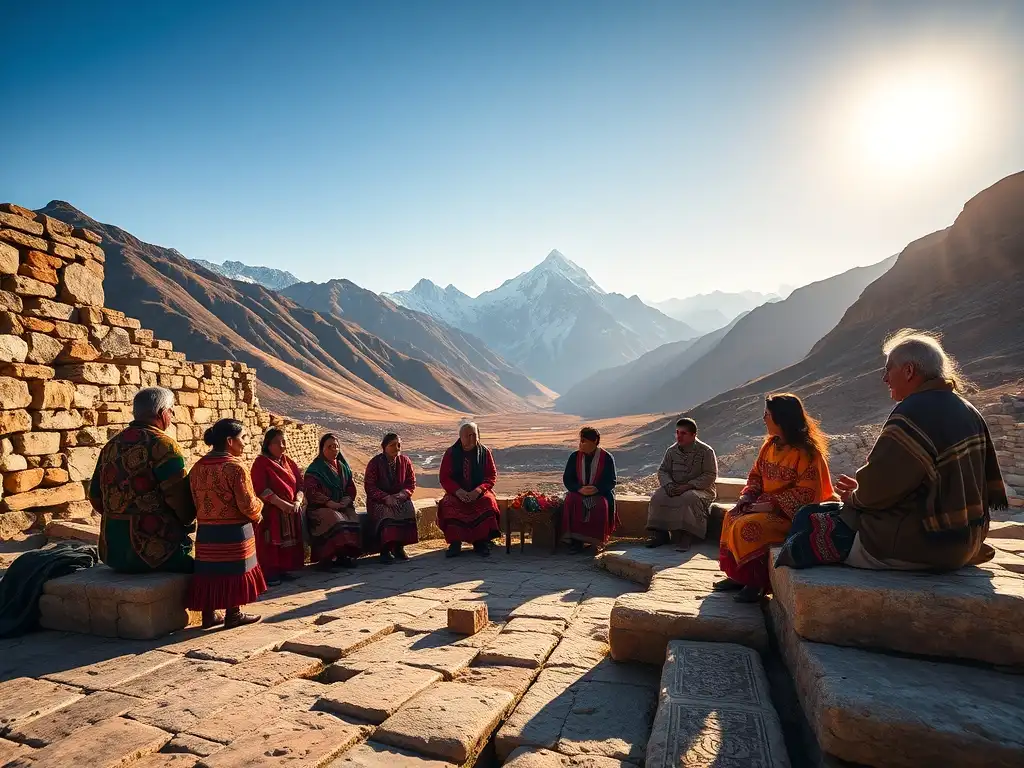
Unravel the mysteries of the Andes! Beyond the breathtaking landscapes and iconic Machu Picchu lies a world of intricate societal structures governed not by written law, but by something far more fascinating: Andean oral legal traditions. Journey with us to discover how these ancient civilizations, from the Incas to the Nazca, built complex societies using the spoken word as their foundation. Prepare to be captivated by the ingenuity and power of a legal system unlike any other. Dive into the rich tapestry of Andean history and uncover the secrets held within their spoken laws.
Before the arrival of the Spanish conquistadors, the Andean region boasted a complex tapestry of diverse societies, each with its own unique social structures and governance systems. While written records were not prevalent across all Andean cultures, a sophisticated system of law existed, intricately woven into the fabric of their oral traditions.
This article delves into the fascinating world of Andean oral legal traditions, exploring how memory, storytelling, and community participation shaped justice and social order in pre-Columbian Andean societies like the Inca, Moche, Nazca, and Tiahuanaco. We will examine how these oral legal traditions impacted various aspects of daily life, from resolving disputes to maintaining social harmony, demonstrating the profound influence of spoken word on the governance and cultural identity of these remarkable civilizations.
Understanding these Andean oral legal traditions offers a crucial lens through which to appreciate the complexity and resilience of pre-Columbian Andean societies and challenges common misconceptions about their level of societal organization. The rich legacy of oral law continues to resonate today, providing valuable insights into the enduring power of cultural memory and the importance of community-based governance.
Understanding Andean Legal Systems Through Oral History
The absence of widespread written legal codes in many Andean societies doesn't imply a lack of law. Instead, it highlights a legal system deeply rooted in oral tradition. Oral history, passed down through generations via meticulously preserved narratives, songs, and rituals, served as the primary mechanism for transmitting legal principles and precedents. These weren't simply stories; they were carefully constructed accounts, often imbued with symbolic meaning, that codified acceptable behavior, defined rights and responsibilities, and established mechanisms for dispute resolution.
Consider, for example, the intricate kinship systems prevalent in many Andean communities. These systems, meticulously documented through oral tradition, dictated inheritance laws, marriage customs, and social hierarchies, all contributing to a complex and nuanced legal framework. The specific details of these systems varied across different Andean cultures, reflecting the regional diversity of the Andes. However, a common thread runs through them all: the reliance on oral transmission to maintain social order and ensure the continuity of legal norms.
Archaeological evidence, such as the discovery of ceremonial sites and artifacts depicting legal proceedings, further supports the significance of oral legal traditions in shaping Andean societies. Furthermore, the study of surviving indigenous languages and their rich vocabulary related to law and justice provides invaluable insights into the intricacies of these oral systems. Ethnographic studies of contemporary Andean communities that retain aspects of their ancestral traditions also offer crucial information on how these oral legal systems functioned.
The Role of Memory and Storytelling in Andean Law
The effectiveness of Andean oral legal traditions hinged critically on the collective memory and storytelling abilities of the community. Specialized individuals, often elders or religious leaders, played a crucial role in preserving and interpreting these oral narratives. Their knowledge wasn't simply memorized; it was actively performed and re-enacted through rituals and ceremonies, embedding legal principles deeply within the cultural consciousness. Storytelling wasn't a passive activity; it was a dynamic process, with narratives constantly being adapted and reinterpreted to reflect changing circumstances and social needs.
This adaptability ensured that the legal system remained relevant and responsive to the evolving needs of the community. Furthermore, the use of mnemonic devices, such as songs, poems, and symbolic objects, facilitated the transmission of complex legal information across generations. These devices served not only to aid memory but also to enhance the impact and memorability of legal principles. The community's active participation in the storytelling process was also essential.
By engaging with and interpreting these narratives, individuals internalized legal norms and contributed to their ongoing evolution. The emphasis on collective memory and community participation fostered a strong sense of shared identity and social cohesion, reinforcing the authority of the oral legal system. The power of storytelling in shaping Andean societies highlights the profound influence of oral tradition in creating and maintaining social order. The intricate interplay of memory, narrative, and community participation created a robust and adaptable legal framework that sustained Andean civilizations for centuries.
Oral Transmission of Legal Norms in Pre-Inca Societies
The Andean region, long before the Inca Empire's rise, boasted a vibrant tapestry of cultures, each with its unique legal systems primarily transmitted orally. These weren't codified laws in the Western sense, but rather intricate networks of customs, traditions, and beliefs that dictated social behavior and conflict resolution. The absence of widespread writing systems meant that legal knowledge was carefully passed down through generations via storytelling, songs, rituals, and specialized instruction within families and kinship groups.
This oral transmission ensured the continuity of legal norms, adapting them to changing circumstances while maintaining a core set of values specific to each community. The effectiveness of this system relied heavily on the community's collective memory and the authority of elders and respected figures who acted as custodians of this living legal tradition. Variations existed across different societies, reflecting the diverse environments and social structures of the Andes.
For instance, coastal communities might have emphasized maritime law and resource management, while highland societies focused on land ownership and agricultural practices. The strength of these oral traditions lay in their inherent flexibility and adaptability, allowing them to respond to the unique challenges faced by each society. This dynamic legal system was deeply intertwined with the spiritual beliefs and cosmological understanding of each culture, ensuring its continued relevance and acceptance within the community.
The Moche and Their Emphasis on Ritual Law
The Moche civilization (c. 100-800 CE), known for its impressive artistic achievements and sophisticated irrigation systems, also possessed a complex legal framework deeply intertwined with ritual and religious practices. Their oral traditions emphasized the importance of maintaining a harmonious relationship between the human and supernatural worlds. Legal disputes were often resolved through rituals and ceremonies, where offerings and prayers played a crucial role.
The Moche elite, depicted in their elaborate ceramics, likely played a significant role in interpreting and enforcing these ritual laws, maintaining social order through a combination of religious authority and political power. Evidence suggests that certain offenses, like theft or sacrilege, were considered highly serious, with punishments potentially involving ritual sacrifice or banishment. The absence of written records necessitates a reliance on archaeological evidence, such as iconography and burial practices, to understand the intricacies of their legal system.
The Moche's emphasis on ritual law highlights the profound connection between the legal and religious spheres in pre-Columbian Andean societies, demonstrating that justice wasn't solely a secular matter but was deeply rooted in the spiritual beliefs of the community. The intricate details of their legal system remain partially obscured by the limitations of the archaeological record, but ongoing research continues to illuminate the complexities of Moche society and its unique approach to law and order.
How Lineage and Oral Genealogies Defined Legal Rights
Across many pre-Inca Andean societies, lineage and oral genealogies played a pivotal role in defining legal rights and responsibilities. Knowledge of one's ancestry was not simply a matter of personal identity; it determined access to resources, land ownership, and social standing. Oral genealogies, meticulously preserved and transmitted through generations, served as legal documents, outlining inheritance patterns and determining who held authority within a community.
These weren't merely lists of names and dates; they were narratives that embedded legal principles and social obligations within the fabric of the community’s history. Disputes over land or inheritance often involved the recitation and verification of these genealogies, with elders and respected community members acting as judges, assessing the authenticity and accuracy of the claims. This system ensured the stability of social structures and prevented arbitrary seizures of resources.
The intricate details of these oral genealogies, often including mythical ancestors and sacred sites, underscored the deep connection between law, land, and spiritual beliefs. The oral tradition ensured that legal rights were not abstract concepts but were firmly rooted in the lived experience and collective memory of the community. The detailed knowledge of lineage and ancestry was fundamental to the functioning of pre-Inca Andean societies, demonstrating the sophisticated legal frameworks that existed before the arrival of the Inca.
The Inca Empire and its Reliance on Oral Legal Traditions
Despite the Inca's development of a sophisticated administrative system, oral traditions remained central to their legal system. While the Inca implemented a more centralized bureaucracy than previous Andean societies, they did not abandon the established oral traditions of legal transmission. Instead, they adapted and integrated these practices into their imperial structure.
This demonstrates a continuity in legal practices rather than a radical shift, highlighting the enduring influence of pre-Inca legal norms. The Inca's vast empire, encompassing diverse ethnic groups and ecological zones, necessitated a flexible and adaptable legal system, and oral traditions provided this flexibility. The ability to adapt legal norms to specific contexts and communities was vital for maintaining social order and preventing widespread rebellion.
The use of oral pronouncements and decrees ensured that laws were accessible to a population largely illiterate in the Western sense. The Inca's skillful integration of oral traditions into their imperial system facilitated effective governance and contributed to the empire's remarkable longevity and stability.
The Inca's Hierarchical Justice System and Oral Decrees
The Inca Empire’s legal system was hierarchical, reflecting the empire’s centralized political structure. At the apex was the Sapa Inca, whose decrees, delivered orally and often through designated officials, held ultimate authority. These decrees, often communicated through public pronouncements and ceremonial events, established laws, resolved disputes, and reinforced social order.
Lower levels of the hierarchy, such as local curacas (chiefs) and administrative officials, also had the authority to adjudicate disputes within their jurisdictions, applying customary law and Inca decrees as appropriate. This hierarchical structure ensured that justice was dispensed across the vast empire, albeit unevenly, reflecting the power dynamics inherent in the Inca state. While the Sapa Inca's pronouncements held ultimate authority, local customs and traditions were often considered in resolving disputes, ensuring a degree of local autonomy and maintaining social harmony.
The oral nature of these decrees allowed for flexibility and adaptation to specific circumstances, preventing a rigid, inflexible legal code from being imposed across such a diverse population. This system, though hierarchical, attempted to balance centralized authority with local customs, reflecting the complexities of governing a vast and diverse empire.
The Use of Quipus for Record-Keeping of Legal Obligations
While the Inca did not possess a writing system in the alphabetic sense, they utilized quipus – complex systems of knotted strings – for record-keeping. While the precise nature of quipu information remains a subject of ongoing debate, evidence suggests that they were used to record a variety of information, including legal obligations, tribute payments, and population censuses. The quipus likely served as supplementary tools to the oral traditions, providing a visual record of important legal information.
This combination of oral transmission and quipu record-keeping allowed for a more efficient and accurate system of legal administration. The quipus provided a tangible record that could be consulted, particularly in cases of disputes or when verifying legal obligations. However, it's important to note that the quipus themselves could not fully replace the role of oral tradition in the Inca legal system.
Their interpretation required expertise and understanding of the context within which they were created, highlighting the continued importance of oral knowledge in understanding and applying the information recorded on the quipus. The use of quipus demonstrates the Inca's innovative adaptation of existing technologies to serve their administrative needs, showcasing their pragmatic and sophisticated approach to governance.
Key Elements of Andean Oral Legal Systems

Andean oral legal systems, far from being chaotic or arbitrary, possessed sophisticated structures and principles. These systems were deeply intertwined with the cosmological worldview of the Andean peoples, viewing the natural world and the social order as interconnected and interdependent. Justice wasn't solely a matter of resolving disputes; it was about maintaining balance and harmony within the community and the cosmos. This holistic approach meant that legal decisions often considered the social, economic, and spiritual well-being of the entire community, not just the individuals involved in a conflict.
The emphasis was on restorative justice, aiming to repair relationships and restore equilibrium rather than simply punishing offenders. This contrasts sharply with the punitive approach often seen in Western legal systems. Key to this approach was the importance of community consensus and the role of respected elders and leaders in mediating disputes.
These weren't simply legal professionals; they were individuals deeply embedded in the social fabric, possessing a profound understanding of customary law and community values. Their decisions were informed by a deep knowledge of ancestral traditions and a commitment to upholding the social order. The effectiveness of these systems stemmed from their integration into daily life and their ability to address the specific needs and challenges of Andean communities.
Community Assemblies and the Role of Curacas in Legal Judgments
Community assemblies, often held in open spaces or designated meeting places, formed the cornerstone of Andean dispute resolution. These assemblies, attended by community members, provided a forum for airing grievances, presenting evidence, and reaching a consensus. The curacas, local leaders who held both political and spiritual authority, played a crucial role in guiding these assemblies. Their judgments were not based solely on legal codes but also on their deep understanding of community norms, customary law, and the specific circumstances of each case.
The curacas acted as mediators, facilitators, and interpreters of customary law, ensuring that decisions were fair, just, and in line with the community's values. Their authority stemmed not from coercion but from their respected position within the community, their wisdom, and their ability to navigate complex social dynamics. The process involved extensive deliberation, often incorporating rituals and symbolic actions aimed at restoring harmony and balance.
Decisions were often reached through consensus, reflecting the community's collective responsibility for upholding justice. This participatory approach ensured that legal outcomes were seen as legitimate and reflective of the community's will. The system valued restorative justice, focusing on reconciliation and the reintegration of offenders into the community rather than punishment.
Ayni and Its Influence on Dispute Resolution
The principle of ayni, a reciprocal system of mutual exchange and cooperation, deeply influenced Andean legal practices. Ayni wasn't merely an economic system; it was a foundational social principle that shaped relationships, obligations, and the very concept of justice. In resolving disputes, ayni fostered a sense of shared responsibility and mutual obligation.
The emphasis was on restoring balance and reciprocity rather than assigning blame or punishment. For instance, if a dispute arose over property or resources, the solution might involve a negotiated exchange or reciprocal obligations to restore balance. This approach differed significantly from adversarial legal systems focused on establishing guilt or innocence.
The idea of community responsibility permeated the entire process, with the emphasis placed on repairing relationships and maintaining social harmony. Ayni encouraged collaboration and understanding, fostering a sense of shared purpose and collective responsibility for maintaining social order. This principle continues to hold significance in many Andean communities today, shaping their social interactions and influencing their approaches to conflict resolution.
Impact of Colonization on Andean Oral Legal Practices
The arrival of the Spanish in the 16th century profoundly impacted Andean oral legal traditions. The imposition of Spanish legal and administrative systems represented a significant challenge to existing structures and practices. The Spanish Crown aimed to establish its control and authority by dismantling indigenous governance structures and replacing them with its own.
This process led to a gradual erosion of traditional Andean legal practices and the marginalization of indigenous knowledge and authority. The Spanish crown's introduction of written law, emphasizing individual rights and formal procedures, contrasted sharply with the community-based and holistic approach of Andean oral traditions. The Spanish system emphasized the authority of the state and the court over community-based decision making.
This shift from a community-centered to a state-centered approach had profound implications for Andean communities, affecting their access to justice, their ability to govern themselves, and their cultural identity. The consequences of this shift are still felt today in many Andean communities.
The Imposition of Spanish Civil and Canon Law
The Spanish colonial regime systematically imposed its civil and canon law on the Andean populations. This involved the establishment of new courts, legal procedures, and a written legal code that largely disregarded existing indigenous legal traditions. Spanish law emphasized individual rights, private property, and formal legal processes, often at odds with the community-based and restorative justice approach of Andean systems.
The imposition of Spanish law led to a significant power shift, concentrating legal authority in the hands of Spanish officials and undermining the authority of indigenous leaders like the curacas. This created a system where indigenous people often had limited access to justice and were subject to a legal system that didn't reflect their cultural values or social structures.
The introduction of written law and formal legal procedures marginalized the role of oral traditions and community consensus in resolving disputes. This created a legal system that was often alienating and ineffective for many Andean communities.
The Underground Survival of Andean Legal Practices
Despite the efforts of the Spanish to suppress them, Andean oral legal practices did not disappear entirely. Many communities continued to utilize traditional methods of conflict resolution alongside the imposed Spanish legal system. These practices often operated "underground," maintaining a significant presence in daily life while remaining largely invisible to the colonial authorities.
This resilience demonstrates the deep-rooted nature of these traditions and their importance to Andean communities. Oral traditions, community assemblies, and the principle of ayni continued to play important roles in resolving disputes and maintaining social order, even under the pressure of colonial rule. This demonstrates the enduring strength and adaptability of Andean legal traditions, which have managed to survive and evolve despite centuries of colonial influence.
The persistence of these practices highlights the importance of understanding and respecting the rich legal heritage of Andean communities. The incorporation of elements of Andean legal traditions into modern legal systems represents a significant step towards addressing historical injustices and fostering more inclusive and equitable legal frameworks.
The Enduring Legacy of Andean Oral Legal Traditions
Andean oral legal traditions, far from being relics of the past, continue to exert a profound influence on contemporary Andean societies. The principles of community consensus, reciprocal exchange (ayni), and respect for ancestral knowledge remain deeply ingrained in legal and social structures. While written law has become increasingly prevalent, particularly with the influence of Spanish colonial and subsequent national legal systems, oral traditions persist as a vital, often primary, source of authority and justice, especially in rural communities.
This enduring legacy is a testament to the adaptability and resilience of Andean legal systems, demonstrating their capacity to navigate the complexities of globalization while preserving core cultural values. The strength of these traditions lies in their ability to adapt and integrate with modern legal frameworks, creating a hybrid system that values both ancient wisdom and contemporary legal structures.
This unique blend of old and new is a defining characteristic of Andean legal systems today. The continued relevance of oral traditions underscores the importance of understanding their historical context and ongoing significance in shaping Andean societies today.
Oral Testimony and its Weight in Contemporary Land Rights Cases
The weight of oral testimony in contemporary land rights cases in the Andes is substantial. In many instances, particularly concerning ancestral lands and water rights, oral histories and community accounts form the cornerstone of legal arguments. These accounts, passed down through generations, often predate written documentation and provide critical evidence of long-standing land tenure and customary practices.
While official land registries might be incomplete or inaccurate, reflecting historical injustices and colonial dispossession, oral testimony, supported by community witnesses and corroborated by archaeological evidence or other contextual factors, can serve as a powerful tool for asserting land claims. For example, in numerous cases involving indigenous communities in the Peruvian Andes, oral histories detailing the historical use and stewardship of particular lands have been crucial in legal battles against encroaching mining operations or land developers.
The challenge, however, lies in ensuring that oral testimonies are given due weight within the formal legal system, which often privileges written documentation. Efforts to bridge this gap involve legal advocacy groups working to integrate traditional legal practices with contemporary legal frameworks, ensuring that indigenous voices and perspectives are heard and respected within the courtroom.
The Revitalization of Traditional Andean Legal Practices
A growing movement advocates for the revitalization of traditional Andean legal practices. This involves not only the preservation of oral traditions but also their conscious application in addressing contemporary challenges. This revitalization is driven by several factors, including a heightened awareness of indigenous rights, a resurgence of indigenous identities, and a growing recognition of the limitations of Western legal models in addressing the unique social and environmental contexts of the Andes.
Initiatives range from community-based legal education programs that teach traditional dispute resolution methods to the incorporation of traditional legal principles into national and regional policy frameworks. The aim is not to replace formal legal systems but to create more inclusive and equitable legal frameworks that recognize and value the wisdom and practices of Andean communities. This process requires careful consideration, ensuring that the revitalization efforts are community-led and respectful of internal diversity within Andean cultures.
The integration of traditional and modern legal systems is a complex and ongoing process, requiring collaboration between legal professionals, community leaders, and scholars to ensure that the revitalization efforts are effective and sustainable. The long-term goal is to create a legal landscape that truly reflects the rich diversity and enduring wisdom of Andean societies.
- Understanding Andean Legal Systems Through Oral History
- The Role of Memory and Storytelling in Andean Law
- Oral Transmission of Legal Norms in Pre-Inca Societies
- The Inca Empire and its Reliance on Oral Legal Traditions
- Key Elements of Andean Oral Legal Systems
- Impact of Colonization on Andean Oral Legal Practices
- The Enduring Legacy of Andean Oral Legal Traditions
- What role did oral tradition play in Andean legal systems?
- How were disputes resolved without written laws?
- Did the absence of written law lead to a less effective legal system?
- How did oral traditions ensure the continuity of Andean legal practices?
- How did the Spanish conquest affect Andean oral legal traditions?
Frequently Asked Questions
What role did oral tradition play in Andean legal systems?
Oral tradition was paramount in Andean societies. Laws, customs, and historical accounts were transmitted verbally through generations, shaping social structures and conflict resolution. This system relied heavily on memory and storytelling.
How were disputes resolved without written laws?
Disputes were settled through community-based processes. Community elders, respected figures, and sometimes even ritual specialists, mediated conflicts based on established oral traditions and customary law. Consensus and restorative justice were prioritized.
Did the absence of written law lead to a less effective legal system?
The effectiveness of the Andean oral legal system is a matter of ongoing scholarly debate. While lacking written codification, it provided a flexible and culturally relevant approach to justice, deeply embedded within the social fabric of the communities. Its effectiveness is best judged within its specific socio-cultural context.
How did oral traditions ensure the continuity of Andean legal practices?
The continuity of Andean legal practices relied on specialized roles within communities, such as storytellers, ritual leaders, and community elders. These individuals were responsible for memorizing and transmitting legal principles and precedents across generations, ensuring the preservation and adaptation of the legal framework.
How did the Spanish conquest affect Andean oral legal traditions?
The Spanish conquest significantly disrupted Andean oral legal traditions. The imposition of written Spanish law and the suppression of Indigenous authorities led to the decline of traditional legal practices. Many oral traditions were lost or suppressed, although some aspects persist in modern Andean communities.
Final Reflection: Echoes of the Past, Voices of the Future
The enduring power of oral tradition in shaping Andean societies continues to resonate today, a testament to the ingenuity and resilience of a culture that prioritized community and collective memory over written law. While written legal systems now dominate, understanding the sophisticated mechanisms of Andean oral legal traditions offers invaluable insights into alternative models of governance, conflict resolution, and social cohesion. The echoes of these ancient practices still reverberate in contemporary Andean communities, influencing their social structures and legal perspectives.
The intricate web of kinship, reciprocity, and communal responsibility woven into the fabric of Andean oral law profoundly impacted the social landscape, fostering a sense of shared identity and collective well-being that is often absent in modern, individualistic societies. The law is not a thing, but a relationship.
This sentiment, though not directly from an Andean source, perfectly captures the essence of their oral legal systems, which prioritized the ongoing dialogue and negotiation within the community over codified rules. The emphasis on restoring balance and harmony, rather than simply punishing offenders, offers a compelling alternative to our often adversarial legal frameworks.
Consider the implications of this for your own life. How might prioritizing dialogue and community responsibility, principles central to Andean oral traditions, improve your interactions with others and strengthen your own sense of belonging? Embrace the wisdom of the past to build a more just and equitable future. Let the echoes of the spoken law inspire you to seek understanding, foster collaboration, and work towards a society where harmony and collective well-being are paramount.
Unleash the Power of Storytelling in Your Life!
Thank you for exploring the fascinating world of Andean societies and their unique governance through oral tradition. Discovering how spoken law shaped their culture for centuries reveals the immense power of community knowledge and storytelling. Now, let's explore how you can apply this inspiration to enrich your own life.
Here are some ways to embrace and celebrate the power of storytelling:
- Share a story: Connect with your community by sharing a traditional tale from your heritage or learning about Andean folklore. Host a storytelling evening where everyone can contribute their unique experiences and wisdom.
- Learn the art of storytelling: Participate in workshops focused on storytelling or oral history. These interactive sessions provide valuable techniques for crafting compelling narratives that resonate with others.
- Create or revive a family tradition: Begin a new family tradition, or revive an old one, of sharing stories during gatherings. Encourage participation from all family members and consider documenting these stories for future generations.
How will you honor and preserve the stories that have shaped your life and culture? ✨