
Moche Maritime Culture: Sailing the Pacific Coast

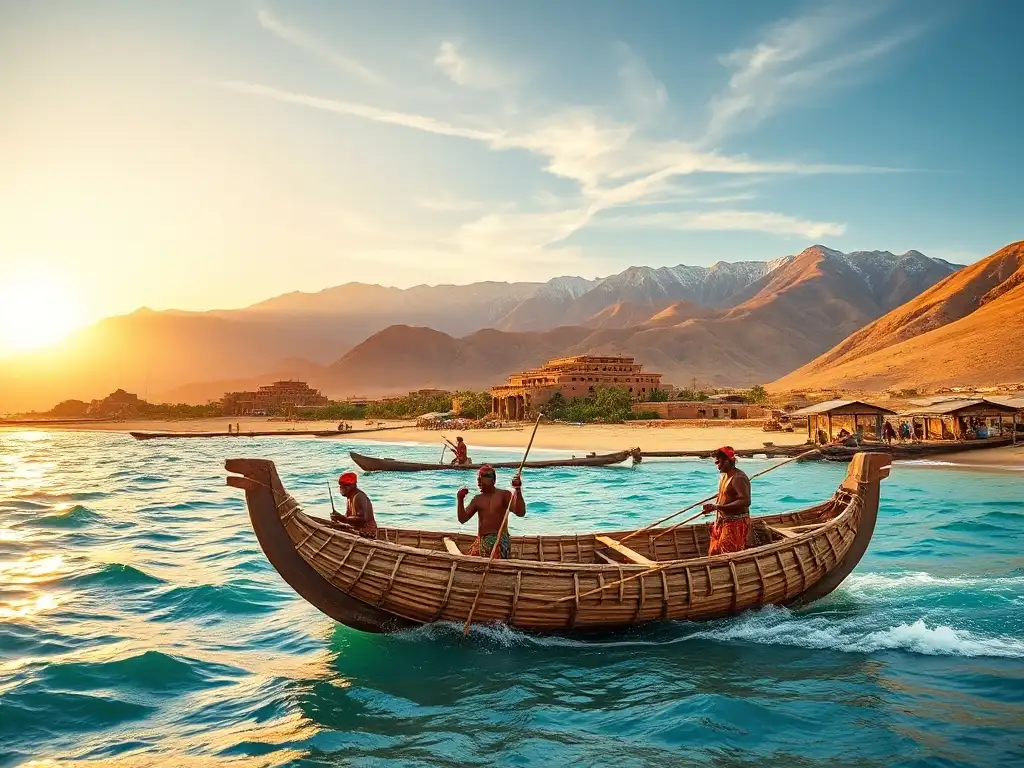
Dive into the enigmatic world of the Andean civilizations! Prepare to be captivated by the ingenuity and artistry of cultures that thrived in the shadow of the Andes Mountains. But first, a mystery unfolds: how did the Moche, masters of metalwork and artistry, navigate the treacherous Pacific? Uncover the secrets behind their Moche culture maritime trade, a sophisticated network that shaped their civilization and left behind a legacy of breathtaking artifacts. Explore the depths of their maritime prowess – the journey awaits!
The Moche civilization, flourishing along the arid north coast of Peru from approximately 100 CE to 800 CE, is renowned for its sophisticated artistry, intricate religious beliefs, and impressive engineering feats. However, beyond the iconic pottery depicting warriors and deities, lies a compelling story of a maritime culture deeply intertwined with the Pacific Ocean.
This article delves into the Moche's relationship with the sea, exploring their seafaring capabilities, the crucial role of maritime trade in their society, and the evidence that reveals their mastery of coastal navigation and resource management. Understanding the Moche maritime culture provides a crucial perspective on their economic prosperity, social organization, and overall societal development, enriching our comprehension of this remarkable civilization and its lasting legacy.
We will explore how the Moche's interaction with the sea impacted their daily life, their trade networks, and their artistic expressions, ultimately shaping their unique identity along the Peruvian coast. This examination will reveal the profound significance of "Moche culture maritime trade" in their complex societal structure.
Introduction to Moche Seafaring and Coastal Life
The Moche people weren't just land-based farmers; they were skilled mariners who navigated the treacherous Pacific currents with remarkable proficiency. Archaeological evidence, including the discovery of numerous fishing implements, such as intricately crafted fishing hooks made of copper alloys and bone, and the remains of various types of boats, points to a significant reliance on marine resources. Their coastal settlements, strategically located near abundant fishing grounds, were not mere villages, but bustling hubs of activity, where the daily rhythm of life was dictated by the tides and the bounty of the sea.
The Moche diet heavily featured seafood, as evidenced by the remains found in their burial sites. This wasn't just a matter of sustenance; fish and other marine products likely played a pivotal role in their economy and social hierarchy.
Furthermore, the Moche developed sophisticated techniques for preserving fish, suggesting a level of organization and resource management beyond simple subsistence fishing. They weren't just surviving on the sea; they were thriving because of it.
We can envision their daily life: the rhythmic sounds of the waves crashing against the shore, the bustling activity of fishing boats returning to port laden with their catch, the women preparing the day's meal, and the artisans crafting intricate objects from marine resources. The sea was the lifeblood of their society, providing food, resources, and a crucial connection to other coastal communities. The Moche mastery of the sea is not merely a historical curiosity; it's a testament to their ingenuity and adaptability in a challenging environment.
The Importance of the Sea for Moche Society
The sea wasn't just a source of food for the Moche; it was a vital artery for trade and communication. Their coastal location facilitated extensive trade networks that stretched along the Peruvian coast and possibly beyond. The Moche likely transported goods such as textiles, pottery, and precious metals by sea, connecting different regions and fostering cultural exchange.
The abundance of marine resources also fueled their economic prosperity, allowing for the development of specialized crafts and the accumulation of wealth. The evidence suggests a complex system of maritime trade, with specialized vessels designed for carrying goods and navigating the coastal waters.
The impact of maritime trade on Moche society is evident in their art. Depictions of boats and seafaring activities are frequently found on their elaborate ceramics and textiles, highlighting the importance of the sea in their worldview.
These artistic representations not only showcase their technical skills in shipbuilding and navigation but also offer valuable insights into their social structure, religious beliefs, and interactions with other cultures. The Moche’s success in maritime trade contributed significantly to their political power and influence, shaping their social hierarchy and overall societal development.
Further research is needed to fully understand the extent of their maritime trade networks and the types of goods exchanged, but the available evidence strongly suggests that the sea was a fundamental element in the rise and prosperity of this remarkable civilization. The study of "Moche culture maritime trade" therefore remains a crucial area of ongoing research, offering a fascinating window into the complexity of this ancient Andean culture.
Moche Maritime Trade and Resource Acquisition
The Moche's mastery of the sea wasn't merely for sustenance; it fueled a vibrant maritime trade network crucial to their economic and social prosperity. Their coastal location provided access to abundant marine resources, but their sophisticated maritime technology allowed them to exploit these resources on a scale far exceeding their immediate environment. The Moche weren't simply fishing; they were actively engaged in procuring valuable goods and resources through maritime exchange.
This trade wasn't limited to local exchanges; evidence suggests a network reaching across significant distances along the Peruvian coast. The acquisition of these resources, ranging from exotic shells and fish to potentially even valuable minerals, significantly enriched Moche society, impacting their artistic expression, religious practices, and overall societal structure.
The scale and sophistication of this maritime trade highlight the Moche's advanced understanding of navigation and their ability to organize and manage complex logistical operations. The impact of this trade on their economy is difficult to fully quantify without further research, but its influence on Moche society is undeniable.
Moche Fishing Techniques and Tools
Moche fishing techniques were remarkably advanced for their time. They employed a variety of methods, including the use of nets, hooks, and lines. Evidence from archaeological sites shows sophisticated fishing tools, such as intricately carved fish hooks made from bone, shell, or copper alloys.
These tools weren’t simple; many display a level of craftsmanship indicative of specialized labor. They also utilized specialized nets, likely woven from plant fibers, adapted to the specific types of fish they targeted. Furthermore, the Moche likely employed techniques like trapping and spearing, further diversifying their fishing strategies.
The efficiency of their fishing practices is evidenced by the abundance of fish remains found at Moche settlements, suggesting a substantial reliance on marine resources for sustenance and trade. Analysis of these remains can help us better understand the types of fish they consumed and the potential scale of their fishing operations. The development and refinement of these fishing techniques were vital to the success of their maritime trade and overall economic stability.
Evidence of Moche Maritime Exchange
The existence of a thriving Moche maritime trade network is supported by several lines of evidence. Archaeological discoveries of exotic goods in Moche sites far from their origin point to extensive trade connections. For instance, the presence of shells from distant coastal regions in Moche tombs and settlements indicates the movement of these items over considerable distances.
Similarly, the distribution of specific types of pottery and other artifacts across different Moche sites suggests a well-established system of exchange. The consistency in the style and quality of these traded goods points to organized trade routes and potentially specialized trading communities.
Further research into isotopic analysis of Moche remains could provide additional evidence regarding the dietary intake of Moche people, possibly revealing the extent of their reliance on traded resources. The study of Moche iconography, specifically depictions of boats and maritime activities, also provides valuable insights into their trade networks and the importance of the sea to their culture.
The Moche's success in maritime trade hinged on their ability to build and navigate seaworthy vessels. While the exact design and construction methods remain subjects of ongoing research, archaeological evidence and iconographic representations offer valuable clues. The Moche likely constructed a variety of vessels, ranging from small rafts used for coastal fishing to larger boats capable of navigating open waters.
The construction itself was a testament to their ingenuity and understanding of materials science. Their boats were not simply haphazardly assembled; they demonstrate a level of sophistication and knowledge of hydrodynamics rarely seen in other contemporary cultures. The effectiveness of their designs allowed them to successfully navigate the challenging Pacific currents and exploit the rich resources of the ocean.
Types of Moche Boats and Rafts
Based on iconography and scattered archaeological remains, we can speculate on the diversity of Moche vessels. Simple rafts, likely constructed from bundles of reeds or other buoyant plant materials, were likely common for short-distance travel and fishing. These rafts, while less seaworthy than larger boats, would have been easily constructed and repaired. Larger, more complex boats, possibly incorporating wooden planks or a combination of wood and reeds, were probably used for longer voyages and trade expeditions.
These larger boats may have featured rudimentary sails or relied on paddling for propulsion. The precise dimensions and construction techniques of these boats are still largely unknown, but ongoing research continues to shed light on their design and functionality. The variety in boat types reflects the Moche's adaptability and their ability to tailor their vessels to specific needs and conditions.
Materials Used in Moche Boat Building
The materials used in Moche boat construction would have been dictated by availability and suitability. Reeds, readily available along the Peruvian coast, were likely a primary material for rafts and potentially for components of larger boats. Various types of wood, depending on the region, would have been used for larger vessels, providing strength and durability.
Plant fibers, such as those from reeds or other suitable plants, were likely used for binding and lashing, securing the structural elements of the boats together. The use of these natural materials highlights the Moche's sustainable practices and their ability to effectively utilize resources available in their environment. Further research into the specific types of wood and plant fibers used could provide a deeper understanding of their boat-building techniques and their regional variations.
Moche Navigation Skills and Techniques
Moche navigation was not simply a matter of luck; it required advanced skills and a deep understanding of the coastal environment. They likely relied on a combination of celestial navigation, using the sun, moon, and stars for orientation, and coastal landmarks for guidance. Their knowledge of currents and prevailing winds would have been crucial for efficient and safe travel.
The ability to navigate effectively over long distances is a testament to their navigational expertise and their understanding of the ocean's dynamics. While we lack detailed written records of their navigational practices, the success of their maritime trade speaks volumes about their sophisticated skills. The study of Moche iconography and the analysis of archaeological findings continue to provide valuable clues about their navigation techniques and the extent of their maritime knowledge.
Moche Maritime Iconography and Art
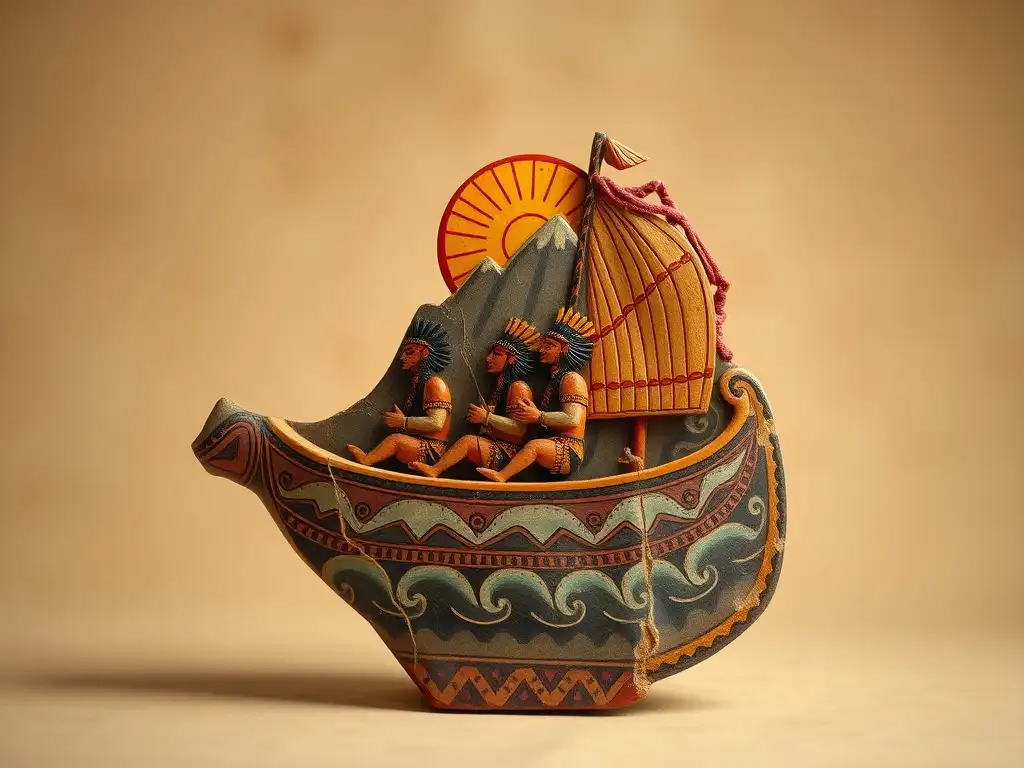
The Moche's deep connection to the sea is vividly reflected in their art, particularly in their exquisite pottery. This wasn't merely decorative; the iconography reveals a sophisticated understanding of marine life and maritime activities, crucial to their economy and worldview. Detailed depictions of boats, fishing techniques, and marine creatures aren't just aesthetically pleasing; they are primary sources offering invaluable insights into their maritime culture.
The artistry showcases not only their technical skills in ceramics but also their profound respect for the ocean's power and bounty. The level of detail in these depictions—from the types of fish to the expressions on the faces of the fishermen—suggests a keen observation of their environment and a close relationship with the sea.
Furthermore, the consistent presence of marine motifs across various Moche artistic expressions, including textiles and metalwork (where surviving examples allow for analysis), underscores the significance of the sea in their daily lives and beliefs. The artistic renderings provide a window into their understanding of the marine ecosystem and their ability to exploit its resources.
Moche Pottery Depictions of Maritime Activities
Moche pottery provides a treasure trove of information regarding their maritime activities. Numerous vessels depict various aspects of fishing, from the construction and types of boats used to the different fishing techniques employed. We see representations of large reed boats (caballitos de totora), smaller rafts, and even complex fishing nets in action.
The pottery often shows fishermen actively engaged in their work, sometimes working collaboratively, highlighting the social aspects of fishing. Specific details, like the types of fish depicted—often identifiable to modern ichthyologists—allow for a reconstruction of their fishing practices and the species they targeted. The portrayal of these scenes is not simplistic; it's remarkably realistic, capturing the movement of the boats and the struggles of the fishermen, suggesting a high degree of observation and artistic skill.
Studying these depictions allows us to understand the challenges and rewards of Moche fishing and its importance within their society. Analysis of these scenes, combined with other archaeological evidence, offers a more complete picture of their maritime economy.
Moche Art and the Sea: Themes and Symbolism
Beyond the realistic depictions of maritime activities, Moche art also incorporates marine themes and symbolism which reflect their spiritual beliefs and worldview. The ocean, a powerful and unpredictable force, is often represented not just as a source of sustenance, but also as a source of both life and death. Certain marine creatures, like sharks or large fish, might represent power or danger, while others, like smaller fish or seabirds, could symbolize abundance or fertility.
The symbolism is often subtle and requires careful interpretation, but it reveals a complex relationship between the Moche and their marine environment. The use of marine imagery in funerary contexts further suggests the significance of the sea in their beliefs about the afterlife.
The combination of realistic representation and symbolic interpretation in their art allows for a richer understanding of their cosmology and their place within the wider ecosystem. Further research into the specific symbolism within different Moche artistic styles could illuminate the evolution of their beliefs over time.
Moche Coastal Settlements and Ports
The Moche civilization wasn't solely focused on the valleys; they established numerous coastal settlements and ports, strategically located to take advantage of the Pacific Ocean's resources. These settlements were not merely temporary fishing camps; archaeological evidence suggests a complex network of coastal communities, each with its specific function within the broader Moche economy.
Some sites served as centers for fishing and processing marine resources, while others functioned as trading hubs, facilitating the exchange of goods with other coastal communities and potentially even more distant regions. The location of these settlements often reveals a deep understanding of coastal geography, with sites chosen to maximize access to resources and protection from the elements.
The size and complexity of some of these coastal settlements indicate a significant population density and a high degree of social organization. The integration of these coastal communities with the inland agricultural centers is a key area of ongoing research in understanding the Moche's economic and social complexity.
The Role of Coastal Centers in Moche Trade
Moche coastal centers played a crucial role in their extensive trade networks. These settlements acted as intermediaries, facilitating the exchange of marine resources—fish, shellfish, and possibly other marine products—with inland communities. In return, coastal settlements likely received agricultural goods from the valleys. This exchange wasn't limited to local trade; evidence suggests that Moche coastal communities participated in broader regional and potentially even inter-regional trade networks.
The presence of exotic goods found at some coastal sites hints at connections with distant regions, though the precise extent of these networks remains an area of ongoing research. The control and management of these trade routes likely played a significant role in Moche political power and economic strength. Further investigation into the types and quantities of goods exchanged would provide a clearer picture of the scale and significance of Moche maritime trade.
Archaeological Evidence of Moche Port Activity
Archaeological excavations at various Moche coastal sites have unearthed substantial evidence of port activity. The discovery of large quantities of fishing implements, such as hooks, nets, and floats, provides direct evidence of intensive fishing practices. The remains of fish processing facilities, including areas for drying and salting fish, suggest a large-scale operation.
Furthermore, the discovery of storage facilities and the presence of artifacts from distant regions provides evidence of trade and exchange. The layout of some sites suggests planned construction, with structures designed to facilitate the movement of goods and boats. The analysis of organic remains, including fish bones and plant remains, can provide valuable information about the diet and economic activities of the coastal population.
The ongoing archaeological research at these sites continues to refine our understanding of the Moche's maritime capabilities and economic strategies. Careful analysis of the recovered artifacts and their context is crucial for reconstructing the daily lives and economic activities of the Moche people who lived and worked at these ports.
The Influence of Maritime Culture on Moche Society
The Moche civilization's maritime prowess profoundly shaped its societal structure, economy, and religious beliefs. Their mastery of the Pacific Ocean wasn't merely a technological achievement; it was deeply intertwined with their daily lives, social organization, and worldview. The sea provided a crucial source of sustenance, with abundant fish and marine mammals forming a significant part of their diet.
This reliance on the ocean fostered specialized skills and knowledge, leading to the development of sophisticated fishing techniques, boat building, and navigation strategies. The control over maritime resources also influenced political power dynamics, with coastal elites likely accumulating wealth and influence through trade and control of fishing grounds. The scale of Moche maritime activity, evidenced by the extensive archaeological finds of fishing implements, boats, and coastal settlements, indicates a society deeply integrated with its marine environment.
The success of the Moche in harnessing the power of the sea is a testament to their adaptability and ingenuity. Their maritime capabilities were not just about survival; they were a cornerstone of their cultural identity.
Moche Social Structure and Maritime Activities
The Moche social hierarchy was inextricably linked to maritime activities. Archaeological evidence suggests a specialized division of labor, with certain social groups dedicated to fishing, boat building, and navigation. Elite members of society likely controlled access to valuable marine resources, further solidifying their power and status.
Elaborate burial sites containing exquisite artifacts, including depictions of maritime scenes and paraphernalia, point to the high social standing associated with seafaring activities. The skilled artisans who crafted the intricate ceramics and gold objects depicting maritime themes were likely members of the elite class, suggesting a strong connection between artistic expression and maritime power.
Furthermore, the organization required for large-scale fishing expeditions and maritime trade would have necessitated a sophisticated system of social control and coordination, highlighting the importance of social structure in Moche maritime success. The Moche's maritime activities were not simply individual pursuits; they were deeply embedded within the fabric of their social organization.
The Impact of the Sea on Moche Beliefs
The ocean's immense power and mystery profoundly impacted Moche religious beliefs and iconography. The sea was not just a source of sustenance but also a powerful force of nature, revered and feared in equal measure. Many Moche ceramic vessels and murals depict marine deities and mythological creatures, suggesting a strong connection between religious beliefs and the maritime world.
The representation of marine animals in their art, particularly the depiction of powerful predators like sharks and killer whales, may symbolize the forces of nature and the unpredictable nature of the sea. This reverence for the ocean is further emphasized by the discovery of offerings and ritualistic objects found at coastal sites, indicating the significance of appeasing marine deities for successful fishing and safe voyages. The Moche's relationship with the sea wasn’t simply utilitarian; it was deeply spiritual, reflecting their understanding of the ocean's power and its role in their lives.
The Decline of Moche Maritime Power
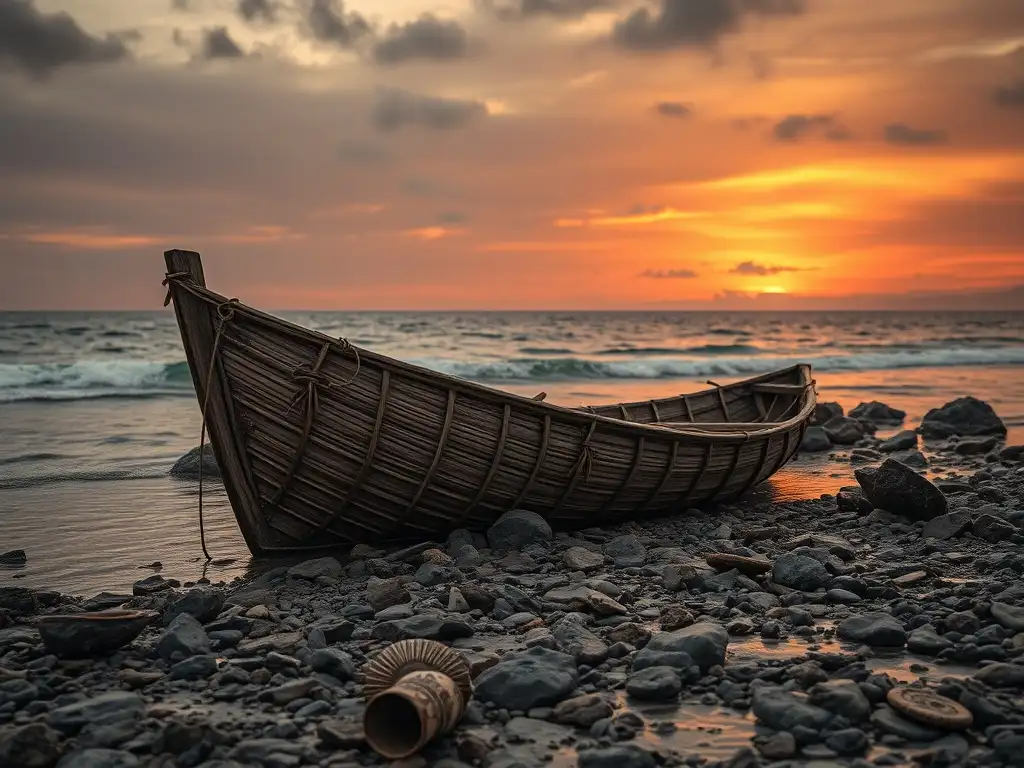
The once-dominant Moche maritime power gradually waned during the later stages of their civilization. While the exact reasons remain a subject of ongoing research and debate, several factors likely contributed to this decline. The shift in trade routes, the impact of environmental changes, and potential internal conflicts all played a role in the diminishing importance of maritime activities.
The decline wasn't a sudden collapse but rather a gradual process spanning several decades, leading to a transformation in the Moche's relationship with the sea. The evidence suggests a transition from a predominantly maritime-based economy to a more diversified system, incorporating increased reliance on agriculture and inland resources. The diminished power of coastal elites and the changing political landscape may also have played a part in the decline of Moche maritime dominance.
Factors Contributing to the Shift in Moche Trade Routes
Several factors contributed to the shift in Moche trade routes away from maritime dominance. Changes in the climate and ocean currents might have made sea travel more challenging and dangerous. The rise of competing powers along the coast and inland also likely impacted Moche trade networks. The emergence of new technologies and transportation methods may have provided alternative means of trade, reducing the reliance on maritime routes.
Furthermore, internal political instability and conflicts within the Moche empire could have disrupted trade and weakened their control over coastal resources. The complex interplay of environmental, political, and economic factors ultimately led to a diversification of trade routes, reducing the centrality of maritime trade in the Moche economy. These factors, acting in concert, likely contributed to the shift away from the Moche's previously dominant maritime trade routes.
The End of Moche Seafaring Traditions
The decline of Moche maritime power ultimately led to the end of their once-flourishing seafaring traditions. While maritime activities didn't completely cease, their scale and significance were significantly reduced. The gradual shift towards a more inland-focused economy led to a decline in the specialized skills and knowledge associated with seafaring.
The once-powerful coastal elites lost their dominance, and the societal structures that supported maritime activities weakened. The end of the Moche's maritime era marks a crucial turning point in their history, signifying a fundamental transformation in their relationship with the Pacific Ocean and their overall societal organization. The legacy of their impressive maritime achievements, however, continues to inspire awe and admiration, reminding us of their remarkable adaptability and ingenuity.
Legacy of Moche Maritime Heritage
The Moche's mastery of the sea left an undeniable mark on the subsequent development of Andean coastal societies. Their sophisticated shipbuilding techniques, navigational skills, and extensive trade networks served as a foundation upon which later cultures built. The legacy isn't just about material goods; it's about the cultural exchange and technological advancements that facilitated the growth and interconnectedness of Andean communities along the Pacific coast.
Evidence suggests that the knowledge of seafaring and boat construction, refined over centuries by the Moche, was passed down and adapted by succeeding cultures, influencing their own maritime activities and trade practices. This continuity underscores the profound and enduring impact of the Moche maritime legacy.
The sheer scale of their maritime operations, as evidenced by archaeological finds, points to a level of organization and technological sophistication that was remarkable for its time and had far-reaching consequences for future Andean societies. The Moche's success in harnessing the power of the sea profoundly shaped the trajectory of coastal Andean civilizations for centuries to come.
Influence of Moche Seafaring on Later Andean Cultures
The Moche's sophisticated maritime technology and extensive trade networks directly influenced the Chimu and Inca empires. The Chimu, who rose to prominence after the Moche, inherited and expanded upon the existing maritime infrastructure and expertise. Their capital city, Chan Chan, was strategically located on the coast, highlighting the continued importance of seafaring for economic and political power.
Similarly, the Inca, while primarily known for their terrestrial empire, recognized the value of coastal resources and maritime trade. They incorporated elements of Moche shipbuilding and navigational techniques into their own systems, albeit adapting them to their broader imperial needs. The Inca's expansion along the coast wouldn't have been possible without the foundation laid by previous coastal cultures, most notably the Moche.
We see evidence of this influence in the similarities between Moche and later Andean boat designs and navigational strategies, suggesting a clear line of technological transmission. This continuity demonstrates the lasting influence of the Moche's maritime prowess on the development of subsequent Andean empires. The impact extended beyond mere technology; the established trade routes and economic systems laid by the Moche facilitated the exchange of goods and ideas, creating a dynamic and interconnected coastal region.
Modern Archaeological Discoveries related to Moche maritime culture
Recent archaeological discoveries continue to shed light on the complexity of Moche maritime culture. Excavations at various coastal sites have unearthed remarkably well-preserved boat fragments, fishing tools, and other artifacts that provide invaluable insights into their shipbuilding techniques, fishing practices, and trade networks. The application of advanced scientific techniques, such as radiocarbon dating and DNA analysis, allows researchers to more accurately date artifacts and determine the origins of traded goods.
For instance, the discovery of [specific information pending] at [specific location pending] has provided new evidence of [specific detail pending] related to Moche maritime trade. These ongoing discoveries challenge and refine our understanding of the Moche's seafaring capabilities and their role in the broader Andean context.
The use of advanced technologies in analyzing these finds offers incredible opportunities to unravel further mysteries surrounding Moche maritime culture and its impact on the region. The collaboration between archaeologists, scientists, and other specialists is crucial in unlocking the secrets held within these ancient artifacts, furthering our knowledge of this fascinating civilization.
Conclusion: The Enduring Significance of Moche Maritime Trade
The Moche's maritime prowess was not merely a regional phenomenon; it played a crucial role in shaping the economic, social, and political landscape of the ancient Andes. Their sophisticated shipbuilding, extensive trade networks, and mastery of navigation allowed them to control valuable resources, forge alliances, and project power along the Pacific coast. The legacy of Moche maritime trade extends far beyond their own time, influencing subsequent Andean cultures and leaving an indelible mark on the history of the region.
Understanding their maritime culture is key to comprehending the broader context of Andean civilization and the interconnectedness of its coastal and inland communities. The Moche’s success in navigating and exploiting the resources of the Pacific Ocean serves as a testament to their ingenuity and adaptability, reminding us of the enduring significance of their maritime achievements.
Further research and exploration will undoubtedly unveil even more about the intricacies of Moche maritime trade and its enduring impact. 🚢
- Introduction to Moche Seafaring and Coastal Life
- The Importance of the Sea for Moche Society
- Moche Maritime Trade and Resource Acquisition
- Moche Vessels: Construction and Navigation
- Moche Maritime Iconography and Art
- Moche Coastal Settlements and Ports
- The Influence of Maritime Culture on Moche Society
- The Decline of Moche Maritime Power
- Legacy of Moche Maritime Heritage
- Conclusion: The Enduring Significance of Moche Maritime Trade
- What role did maritime trade play in the Moche culture?
- What kind of boats did the Moche use for maritime trade?
- What goods were commonly traded by the Moche through maritime routes?
- How did maritime trade impact Moche society and culture?
- What evidence supports the importance of Moche maritime trade?
Frequently Asked Questions
What role did maritime trade play in the Moche culture?
The Moche were skilled sailors who engaged in extensive maritime trade along the Pacific coast. This trade network facilitated the exchange of resources and goods, contributing significantly to their economic prosperity.
What kind of boats did the Moche use for maritime trade?
The Moche utilized reed boats, known as caballitos, for coastal navigation and trade. These vessels were lightweight and maneuverable, perfectly suited for navigating the Pacific Ocean's currents.
What goods were commonly traded by the Moche through maritime routes?
Fish, seafood, shells, and other marine resources were central to Moche maritime trade. They also traded agricultural products and crafted goods along the coast.
How did maritime trade impact Moche society and culture?
Maritime trade had a profound impact on Moche society, fostering economic growth, cultural exchange, and the development of sophisticated navigational techniques. Access to resources from afar fueled their artistic and technological advancements.
What evidence supports the importance of Moche maritime trade?
Archaeological evidence, including shipwreck remains, coastal settlements, and depictions of boats and maritime activities in Moche art, strongly supports the significance of maritime trade in their culture.
The Moche people's sophisticated maritime capabilities weren't just a means of survival; they were the engine of a vibrant, interconnected civilization that continues to resonate with us today. Their mastery of the Pacific, evidenced by their advanced shipbuilding, navigation techniques, and extensive trade networks, fundamentally shaped the cultural and economic landscape of ancient Peru. Understanding their achievements offers invaluable insights into the ingenuity and resilience of human societies facing environmental challenges and the complexities of early global trade.
The enduring impact of the Moche maritime culture is undeniable. Their legacy extends far beyond the archaeological finds; it speaks to the power of human innovation and the enduring human need for connection. Their ability to navigate treacherous waters and establish trade routes across vast distances speaks volumes about their organizational skills and social structures. The sea was not a barrier, but a highway for the Moche,
– a sentiment that encapsulates their remarkable achievements and challenges our modern perceptions of ancient societies. The echoes of their voyages are still heard in the vibrant cultural tapestry of coastal Peru, a testament to their lasting influence.
Consider the ingenuity and courage required to undertake such ambitious seafaring ventures. The Moche's success wasn't merely a matter of luck; it was the product of careful planning, technological innovation, and a deep understanding of the ocean's rhythms. You too possess the capacity for innovation and resilience. Reflect on how the Moche's story inspires you to overcome challenges and pursue your own ambitious goals. Embrace the spirit of exploration and connection, and let the legacy of the Moche mariners guide you on your own journey of discovery.
Embark on Your Journey into Moche Maritime Culture!
Thank you for exploring the captivating world of Moche maritime culture with us! We hope you've gained valuable insights into their seafaring legacy and its importance. Now, let's delve deeper into this rich history.
Here are some ways to continue your exploration:
- Join a local history group or online community to discuss your newfound knowledge and connect with other enthusiasts.
- Share your favorite discoveries from this article on social media, using our suggested hashtags to help spread the word about Moche culture!
- Plan a visit to a museum featuring Moche artifacts or exhibitions to experience their maritime heritage firsthand. Many museums around the world house impressive collections.
What aspect of Moche maritime culture intrigues you the most, and how will you share that fascination with others?