
The Inca Language: Quechua and Imperial Communication

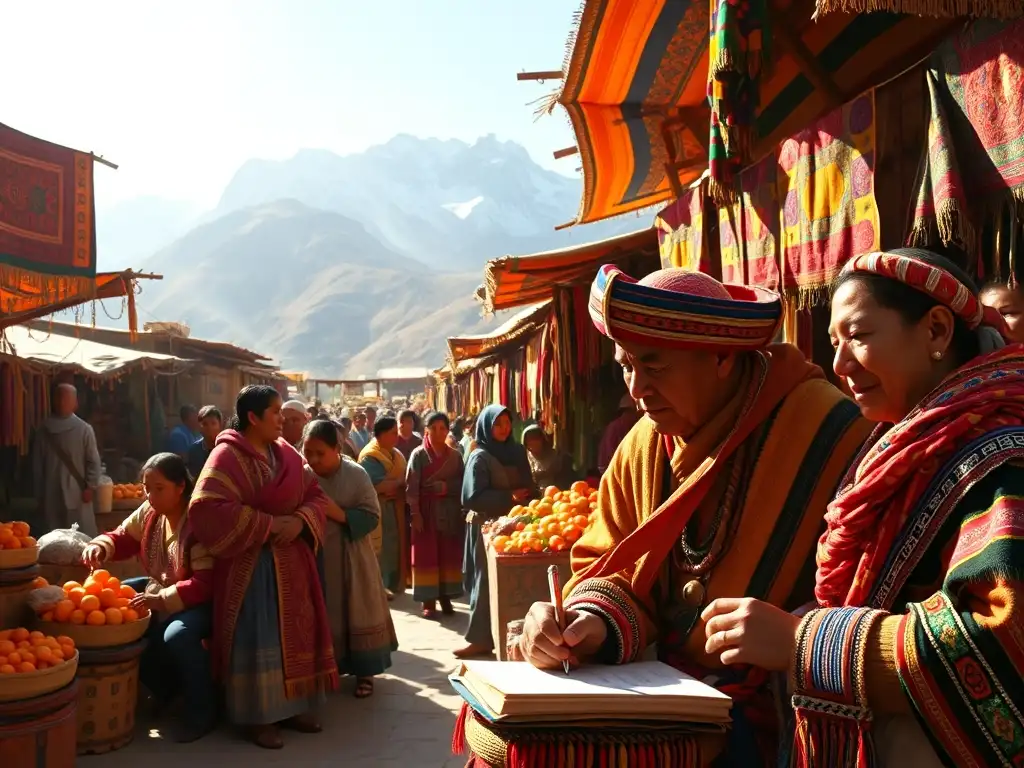
Unravel the mysteries of the Andes! Journey through time and discover a world of breathtaking artistry, innovative engineering, and complex social structures. From the towering heights of Machu Picchu to the intricate textiles of the Nazca, we delve into the heart of the Andean civilizations. But what secrets did the Inca language Quechua hold, and how did it shape the vast Inca Empire? Prepare to be amazed as we unlock the linguistic keys to understanding this incredible civilization.
The Inca Empire, a vast and sophisticated civilization that dominated the Andes Mountains for centuries, achieved its remarkable political and administrative unity through a complex interplay of factors. Among these, the role of language – specifically Quechua – stands out as a crucial element in facilitating communication, cultural assimilation, and the overall consolidation of imperial power.
This article delves into the intricacies of Quechua, exploring its origins, evolution, and its vital function as the lingua franca of the Inca Empire. We will examine how Quechua not only served as a tool for governance but also played a significant role in shaping the cultural landscape of the Andean region.
Understanding the Inca language and its translation is key to unlocking a deeper understanding of the Inca civilization and its lasting legacy. This exploration will enhance your understanding of the keyword "Inca language Quechua translation" and its significance within the broader context of Inca history.
Introduction to Quechua: The Language of the Inca Empire
Quechua, a family of related languages, is far from a monolithic entity. Rather, it encompasses a diverse array of dialects spoken across a wide geographical area, encompassing modern-day Peru, Bolivia, Ecuador, Colombia, Argentina, and Chile. During the Inca Empire's zenith, one particular dialect of Quechua, often referred to as Runa Simi (the language of people), became the official language of administration and communication.
Its adoption by the Inca rulers facilitated the efficient management of their vast territory, enabling effective communication between different regions and ethnic groups within the empire. The standardization of Quechua, however, wasn't a complete process. Numerous regional dialects persisted, leading to variations in pronunciation and vocabulary, even within the imperial administration.
This linguistic diversity, while posing some challenges, also contributed to the richness and complexity of the language itself. The impact of Quechua's standardization on the Inca Empire's administration and cultural homogeneity was profound, leaving an undeniable mark on the Andean world even today. The enduring legacy of Quechua demonstrates its importance as a vehicle for cultural transmission and societal cohesion.
The Origins of Quechua Before the Inca Expansion
The precise origins of Quechua remain a subject of ongoing scholarly debate. However, it's widely accepted that the language predates the Inca Empire by centuries. Evidence suggests that Quechua, or its proto-forms, was spoken in the central Andes long before the rise of the Inca.
Tracing its roots requires examining the linguistic landscape of the pre-Inca period, analyzing archaeological findings, and comparing Quechua with related language families. The process of understanding Quechua's pre-Inca history involves piecing together fragmented information from various sources, a task that requires meticulous research and careful interpretation. The exact timeline and the specific location of Quechua’s origins are still debated amongst experts, but the pre-Inca presence of the language is undeniable.
Early Quechua Dialects and Their Distribution
Before the Inca expansion, various Quechua dialects were likely spoken across the central Andes. The precise geographical distribution and the relationships between these early dialects are not fully understood. Archaeological evidence, such as inscriptions and pottery fragments, provides limited insights, and the interpretation of these findings often remains open to debate.
Linguistic analysis of modern Quechua dialects helps to reconstruct possible earlier forms, but the absence of extensive written records from the pre-Inca period presents a significant challenge. Researchers continue to explore various methods to reconstruct the pre-Inca linguistic landscape, including comparative linguistics and the analysis of toponyms (place names). The complexity of this research highlights the intricate process of reconstructing the history of a language with limited historical documentation.
Quechua's Role in Pre-Inca Andean Societies
While the precise extent of Quechua's influence in pre-Inca societies is still under investigation, it is clear that the language played a role in communication and social interaction. The presence of Quechua-related linguistic features in other Andean languages suggests a degree of contact and interaction between different linguistic groups. The extent to which Quechua functioned as a lingua franca before the Inca expansion, however, is unclear.
It is possible that Quechua's use was limited to specific regions or social groups, and its eventual dominance may have been tied to the Inca's political and military success. Further research is needed to fully understand the complex interplay between language, culture, and power dynamics in the pre-Inca Andes. The investigation into this topic continues to reveal fascinating details about the evolution of Quechua and its significance within the broader context of Andean history.
The Inca Adoption and Standardization of Quechua
The Inca Empire, at its zenith, controlled a vast and diverse territory encompassing numerous ethnic groups, each with their own languages and dialects. The efficient administration and communication across such a geographically and culturally diverse empire required a common language. While the Inca did not invent Quechua, they strategically adopted and standardized a specific dialect of the language, which became the lingua franca of the empire.
This standardization wasn't a top-down imposition but rather a gradual process, influenced by the political and social dynamics of the expanding empire. The Inca rulers understood the power of language in consolidating power and fostering unity, a key factor in their successful imperial expansion.
This process of standardization involved promoting the use of Quechua in administration, commerce, and military affairs, gradually supplanting other local languages, particularly in the central and northern regions of the empire. The impact of this linguistic standardization on the cultural landscape of the Andes is still felt today.
How the Inca Empire Promoted Quechua
The Inca state actively promoted the use of Quechua through various means. The establishment of administrative centers and colonies throughout the empire, populated by Quechua-speaking officials and colonists, played a crucial role. These officials, often drawn from the imperial core, acted as agents of linguistic and cultural change. In addition, the Inca implemented policies that favored the use of Quechua in official settings. Royal decrees, laws, and administrative records were increasingly kept in Quechua. The construction of roads, the Qhapaq Ñan, facilitated communication and the movement of people, further contributing to the spread of Quechua. The establishment of standardized weights and measures, along with a unified system of taxation and tribute, also relied heavily on Quechua for communication and record-keeping. This multifaceted approach effectively fostered the widespread adoption of Quechua across the empire. Furthermore, the Inca elite often married into local ruling families, further integrating Quechua into regional power structures.
The Imperial Quechua Dialect: Cusco Quechua
The dialect of Quechua that emerged as the dominant language of the Inca Empire is known as Cusco Quechua, named after the imperial capital, Cusco. While it wasn't necessarily the purest or most ancient form of Quechua, its prominence stemmed from its association with the imperial administration and the Inca elite. Cusco Quechua became the standard for official communication, administration, and record-keeping.
Its use in royal decrees and official pronouncements solidified its position as the prestigious form of the language. The standardization of Cusco Quechua was not a process devoid of regional variations; however, the imperial administration actively worked to minimize linguistic differences, contributing to a greater degree of linguistic uniformity across the empire. The adoption of Cusco Quechua as the imperial language also contributed to the cultural prestige of the city of Cusco and further reinforced its position as the heart of the Inca Empire.
Quechua as a Tool for Inca Administration
Quechua played a vital role in the Inca administrative system. The vast empire relied on a complex network of officials, including governors, tax collectors, and messengers, all of whom needed to communicate effectively. Quechua served as the common language that facilitated this communication. The use of Quechua in record-keeping was essential for tracking taxes, tribute, and population data. This facilitated the efficient distribution of resources and the maintenance of order across the empire.
The centralized administration of the Inca Empire depended heavily on the ability to collect and transmit information effectively. Quechua, as a standardized language, was indispensable for this process. The Inca's administrative success was, in part, a result of their effective use of Quechua as a tool for communication and record-keeping. Without a common language, the intricate system of governance that characterized the Inca Empire would have been considerably more difficult to maintain.
Quechua and Inca Imperial Communication
The Inca Empire's success depended heavily on its ability to maintain effective communication across its vast and diverse territories. Quechua, as the official language, served as a crucial tool for this communication. The language facilitated interactions between different ethnic groups within the empire, fostering a sense of unity and shared identity.
The implementation of a standardized system of communication was integral to the Inca's ability to govern effectively and maintain control over their far-flung territories. The use of Quechua in various aspects of imperial life reflects the Inca's sophisticated understanding of the role of language in maintaining power and order.
The Role of Quechua in Inca Governance
Quechua was instrumental in the day-to-day functioning of Inca governance. From local village level administration to the highest levels of imperial authority, Quechua served as the primary medium for communication and decision-making. The use of Quechua in official meetings, consultations, and pronouncements ensured that imperial policies and decrees reached all corners of the empire.
The language facilitated the seamless flow of information between different levels of government, allowing for efficient coordination and control. The standardized use of Quechua minimized misunderstandings and facilitated the smooth running of the imperial bureaucracy. This efficient communication system was a significant factor in the Inca Empire’s ability to govern effectively such a large and diverse population.
Quechua and the Inca Army: Communication and Control
The Inca army, a powerful force responsible for maintaining order and expanding the empire, relied heavily on Quechua for communication and coordination. Soldiers from diverse linguistic backgrounds could communicate with each other and with their commanders, facilitating effective troop movements and battle strategies. This unified communication system was essential for the success of Inca military campaigns.
Orders, strategies, and battle plans were relayed through Quechua, ensuring that the army functioned as a cohesive unit. Furthermore, Quechua played a crucial role in maintaining discipline and control within the army. The ability to communicate effectively enabled the Inca to manage their vast military force efficiently and decisively.
Using Quechua for Inca Law and Record-Keeping
The Inca legal system, although not codified in the same way as many modern legal systems, relied heavily on oral traditions and record-keeping. Quechua played a crucial role in this process. Laws, customs, and precedents were transmitted orally in Quechua, and important legal decisions were recorded in the language.
This ensured consistency and continuity in the application of law across the empire. The use of Quechua in legal matters fostered a sense of fairness and justice, as it ensured that all subjects, regardless of their native language, could access and understand the legal processes. The Inca’s ability to maintain a relatively stable and just legal system across their vast empire was significantly aided by the use of a common language.
Royal Decrees and Edicts in Quechua
Royal decrees and edicts, the official pronouncements of the Inca emperor, were issued in Quechua. These decrees covered a wide range of topics, from taxation and tribute to religious observances and public works projects. The use of Quechua ensured that these important announcements reached all parts of the empire, regardless of the local language spoken.
The dissemination of royal decrees in Quechua helped to maintain order, enforce laws, and promote the emperor’s authority. The standardization of the language used in royal decrees further contributed to the unification and cohesion of the Inca Empire. The royal decrees served as a potent tool for shaping public opinion and consolidating imperial power.
The Importance of Quechua Translators in the Inca Empire
Given the linguistic diversity within the Inca Empire, translators played a vital role in facilitating communication. These individuals, often bilingual or multilingual, bridged the linguistic gap between the Quechua-speaking imperial administration and the diverse populations under their rule. Their skills were essential for effective governance, trade, and military operations. Translators facilitated the transmission of imperial decrees, the collection of taxes, and the resolution of disputes.
Their role was crucial in ensuring that the empire functioned smoothly and that its policies were understood and implemented across its vast territories. The importance of translators highlights the Inca’s recognition of the essential role of linguistic diversity and the need for effective communication in managing a multi-ethnic empire. Their work was vital in maintaining the unity and stability of the Inca Empire.
Understanding Quechua: Linguistic Features and Grammar

Quechua, the language of the Inca Empire, is a fascinating subject for linguistic study. Its structure differs significantly from Indo-European languages like English or Spanish, offering unique insights into the cognitive processes of its speakers. Understanding its grammar and phonology is crucial to appreciating its role in the Inca's vast administrative and social structures.
The Inca's ability to effectively govern a massive empire hinged, in part, on their capacity for clear and efficient communication, a feat facilitated by the standardization and widespread adoption of Quechua. This wasn't merely a matter of conveying basic information; it involved complex administrative details, religious pronouncements, and the subtle nuances of social hierarchy. The linguistic dexterity of the Inca facilitated the integration and control of diverse ethnic groups throughout their empire.
Quechua Phonology and Pronunciation
Quechua phonology, the study of its sound system, reveals a rich inventory of consonants and vowels. Unlike Spanish, which distinguishes between voiced and unvoiced consonants (like 'b' and 'p'), Quechua often utilizes a system of glottalized consonants, adding a slight catch in the throat. This subtle difference significantly alters the meaning of words. The vowel system is also unique, with various vowel lengths and qualities that can subtly shift the meaning of a word.
Mastering Quechua pronunciation requires careful attention to these nuances, as mispronunciations can easily lead to misunderstandings. The sounds of Quechua reflect the Andean environment and the physical characteristics of its speakers, a testament to the intricate relationship between language and its cultural context. Accurate pronunciation is fundamental for anyone seeking to understand the complexities of Quechua and its historical significance.
Basic Quechua Grammar and Sentence Structure
Quechua grammar differs significantly from languages like English. It is an agglutinative language, meaning that grammatical relationships are expressed by adding suffixes to the root word. This allows for a high degree of morphological complexity, with single words capable of conveying information that would require multiple words in English. For example, verb conjugations in Quechua incorporate information about tense, aspect, mood, and person within a single word.
Sentence structure typically follows a Subject-Object-Verb (SOV) order, which is the reverse of the Subject-Verb-Object (SVO) order common in English. This inversion, among other grammatical features, presents a significant learning curve for those accustomed to Indo-European languages, but mastering it unlocks a deeper understanding of the Inca worldview and communication style. The agglutinative nature of Quechua allowed for the precise and nuanced communication essential for a complex, hierarchical society.
Key Quechua Vocabulary Related to Inca Society
Quechua vocabulary reflects the social, political, and religious structures of the Inca Empire. Words related to governance, such as those for "ruler," "official," and "tax," reveal the intricacies of the Inca administrative system. Terms for religious concepts, including "Inti" (Sun), "Pachamama" (Earth Mother), and names of various deities, illuminate the Inca worldview and cosmology. Vocabulary related to agriculture, such as terms for different crops and agricultural techniques, reflects the crucial role of agriculture in Inca society.
The vocabulary also includes words for various social roles and kinship terms, shedding light on the social organization of the Inca Empire. Studying this vocabulary provides a window into the values and priorities of Inca society, highlighting the importance of centralized authority, religious beliefs, and agricultural productivity. The precise meanings of these words, and the way they are combined, reveal a sophisticated system of social and political thought.
Examples of Quechua Words: 'Inti' (Sun), 'Pacha' (Earth), 'Apu' (Mountain)
The words Inti (sun), Pacha (earth/world/time), and Apu (mountain/mountain spirit) are fundamental to understanding Inca cosmology and worldview. Inti, the sun god, was central to Inca religion and held immense power. The sun's daily cycle was viewed as a reflection of the cosmic order, influencing Inca rituals and social life. Pacha, a more complex term, encompasses the concepts of earth, time, and space, reflecting the interconnectedness of these elements in Inca thought.
Apu, representing mountain spirits, highlights the spiritual significance of the Andean landscape. These words are not merely labels for natural phenomena; they represent powerful spiritual forces that shaped Inca beliefs and practices. Understanding their significance within the broader context of Quechua reveals a deep connection between the Inca and their environment, a connection expressed through their language and religious practices. The enduring presence of these words in modern Quechua dialects underscores their enduring cultural importance.
Quechua's Legacy: From Imperial Language to Modern Usage
Despite the Spanish conquest and the subsequent suppression of Indigenous languages, Quechua continues to thrive in various forms across the Andes. Its resilience is a testament to its cultural significance and the enduring strength of Andean communities. The language's transformation from an imperial tool of communication to a vibrant expression of modern Andean identity is a compelling narrative of cultural survival and adaptation. The evolution of Quechua reflects the historical experiences and ongoing cultural dynamism of the Andean peoples.
The Survival of Quechua After the Spanish Conquest
The Spanish conquest aimed to eradicate Indigenous languages and impose Spanish as the dominant tongue. However, Quechua's deep roots in Andean society and its practical utility in daily life ensured its survival. Despite official efforts to suppress Quechua, it persisted in rural communities and became a crucial tool for communication among Indigenous groups.
The language adapted to the changed circumstances, incorporating new vocabulary and evolving its grammatical structures. This adaptation reflects the resilience and adaptability of the Andean populations who continued to communicate and preserve their cultural heritage through Quechua. The survival of Quechua is a powerful counter-narrative to the often-told story of linguistic dominance and erasure during colonialism.
Quechua's Presence in Contemporary Andean Cultures
Quechua remains a vital part of contemporary Andean culture. It is spoken by millions of people across several Andean countries, serving as a primary language in many communities. It is used in various settings, including education, media, and religious practices. Quechua's presence in these domains demonstrates its continued relevance and its role in shaping Andean identities. The language's survival and adaptation reflect the cultural vitality of Andean communities and their ongoing efforts to preserve their heritage. The integration of Quechua into contemporary life demonstrates its adaptability and continued significance in the twenty-first century.
Current Quechua Dialects and Variations
Quechua is not a monolithic language; rather, it encompasses a diverse range of dialects, each with its own unique features. These dialects reflect the geographic and cultural diversity of the Andes. The variations in pronunciation, vocabulary, and grammar among these dialects illustrate the rich linguistic landscape of the region. Understanding these variations is crucial for appreciating the full complexity of Quechua and its historical evolution. The existence of multiple dialects highlights the dynamic nature of language and its adaptation to various contexts and communities. This linguistic diversity underscores the richness of Andean cultural heritage.
Efforts to Preserve and Promote the Quechua Language
Numerous organizations and individuals are actively working to preserve and promote the Quechua language. These efforts include developing educational materials, creating Quechua-language media, and conducting linguistic research. These initiatives aim to ensure the continued vitality of Quechua and its transmission to future generations.
The dedication of these groups reflects the importance of language preservation in maintaining cultural identity and fostering linguistic diversity. Their work is crucial for ensuring that Quechua continues to thrive as a vibrant and dynamic language in the Andes. These efforts are vital for counteracting language loss and preserving a crucial part of Andean heritage for future generations.
Quechua Translation: Challenges and Resources
Quechua translation, while crucial for understanding Inca history and culture, presents significant challenges. The language itself is not monolithic; numerous Quechua dialects exist, each with its own unique vocabulary, grammar, and pronunciation. This linguistic diversity complicates the translation process, requiring specialized knowledge of the specific dialect under consideration.
For instance, a text written in the Cuzco dialect might not be readily understood by someone fluent in the Quito dialect, necessitating careful identification and consideration of the source dialect before commencing any translation work. Furthermore, the lack of standardized orthography in many historical Quechua texts adds another layer of complexity, often leading to ambiguous interpretations and requiring significant paleographic expertise.
Finally, the cultural context embedded within Quechua texts – including idioms, metaphors, and references to specific Inca customs – poses another hurdle for translators, necessitating a profound understanding of Inca society and worldview. Successfully navigating these complexities requires experienced translators with strong linguistic and historical knowledge.
Difficulties in Translating Quechua Texts
One of the most significant difficulties stems from the inherent ambiguity present in many ancient Quechua texts. The lack of standardized spelling conventions, coupled with the passage of time and the degradation of some historical documents, often results in incomplete or damaged texts. Deciphering these fragmentary records requires meticulous analysis, often involving comparing multiple versions of the same text or cross-referencing with related documents in other languages.
Additionally, the metaphorical and symbolic nature of some Quechua writing presents a substantial challenge. Understanding the intended meaning often requires interpreting the text within its socio-cultural context, which can be challenging due to limited historical documentation and the complexities of Inca social structures.
For example, deciphering the meaning of certain ritualistic chants or agricultural instructions requires a deep understanding of Inca religious beliefs and agricultural practices. These challenges highlight the need for interdisciplinary approaches to Quechua translation, bringing together linguists, historians, and anthropologists to achieve accurate interpretations.
Dictionaries and Linguistic Databases for Quechua Translation
Fortunately, a growing number of resources are available to aid in Quechua translation. Several comprehensive Quechua-Spanish dictionaries exist, though their comprehensiveness varies depending on the specific dialect covered. These dictionaries, while invaluable, often lack the depth needed to address the nuances of archaic or dialectal variations. Moreover, specialized linguistic databases are being developed, containing digitized versions of historical Quechua texts along with detailed linguistic analyses and annotations.
These databases offer powerful tools for researchers and translators, allowing for efficient searching and cross-referencing of words and phrases. The development of digital corpora, containing large collections of digitized Quechua texts, is also underway, offering valuable resources for understanding the evolution and variations within the language. The ongoing development and refinement of these tools are critical for advancing the field of Quechua translation and improving the accuracy of historical interpretations.
The Importance of Accurate Quechua Translation for Historical Understanding
Accurate Quechua translation is paramount for a complete and nuanced understanding of Inca history and culture. Many primary sources relating to Inca society, governance, and daily life are written in Quechua, making accurate translation essential for historians, archaeologists, and anthropologists. Misinterpretations can lead to flawed historical narratives and a skewed understanding of Inca civilization. For instance, inaccurate translation of administrative records could misrepresent the Inca system of taxation or labor organization.
Similarly, misinterpretations of religious texts could distort our understanding of Inca beliefs and cosmology. The consequences of inaccurate translation extend beyond academia, impacting the cultural heritage of Quechua-speaking communities today. Precise translations ensure that the rich cultural heritage of the Inca is preserved and accurately represented, fostering a more complete and respectful understanding of this remarkable civilization.
Conclusion: The Enduring Importance of Quechua
Quechua, the language of the Inca Empire, continues to hold immense historical and cultural significance. Its preservation and study are crucial for understanding the complexities of Inca civilization and its enduring legacy. While challenges remain in translating ancient Quechua texts, ongoing advancements in linguistic resources and methodologies offer hope for improving translation accuracy and fostering a deeper appreciation of Inca history and culture.
The pursuit of accurate "Inca language Quechua translation" is not merely an academic exercise; it is a vital step in preserving cultural heritage and achieving a more complete understanding of one of the most remarkable civilizations of the ancient world. The ongoing work in this area will undoubtedly continue to yield valuable insights into the lives, beliefs, and achievements of the Inca people.
- Introduction to Quechua: The Language of the Inca Empire
- The Origins of Quechua Before the Inca Expansion
- The Inca Adoption and Standardization of Quechua
- Quechua and Inca Imperial Communication
- Understanding Quechua: Linguistic Features and Grammar
- Quechua's Legacy: From Imperial Language to Modern Usage
- Quechua Translation: Challenges and Resources
- Conclusion: The Enduring Importance of Quechua
Frequently Asked Questions
What language did the Inca Empire primarily use?
The Inca Empire primarily used Quechua, although many other languages were spoken within the vast empire. Quechua became the official language for administration and communication.
How many Quechua dialects exist today?
There are numerous Quechua dialects, varying significantly across different regions of the Andes. Linguists debate the exact number, but it's safe to say there are many dozens.
Was Quechua a written language before the Spanish conquest?
While Quechua did not have a widely used written form before the Spanish conquest, the Inca used a system of knotted cords called quipus for record-keeping. These quipus did not represent Quechua directly, but rather numerical and possibly other data.
What is the significance of Quechua today?
Quechua remains a living language spoken by millions in the Andes. Its continued use is vital for preserving Andean cultural heritage and identity.
Where can I find resources for Quechua language learning and Inca language Quechua translation?
Numerous online resources and language learning apps exist for Quechua. Universities and cultural centers often offer Quechua courses and translation services. Searching online for "Quechua translation" will provide many options.
Final Reflection: Quechua's Enduring Echo in a Globalized World
The legacy of the Inca Empire, powerfully communicated through the Quechua language, continues to resonate in the modern world, a testament to its resilience and the enduring strength of indigenous cultures. While the Spanish conquest sought to erase Quechua, its survival and resurgence speak volumes about the power of language to preserve identity and history, even in the face of immense pressure. The ability to translate and understand Quechua today is not just a linguistic skill; it's a key to unlocking a rich tapestry of cultural heritage.
The impact of Quechua extends far beyond the Andes; its presence in literature, music, and daily life across South America highlights its enduring vitality. Its continued use, despite the dominance of Spanish and other languages, underscores the importance of linguistic diversity and the need to protect and celebrate indigenous languages worldwide. A language is not just a means of communication; it is a carrier of culture, a repository of history, and a vehicle for identity.
This quote perfectly encapsulates the significance of Quechua's survival and its ongoing contribution to the cultural landscape.
Now, consider the power you hold. By learning even a few words of Quechua, by engaging with its literature, or by supporting initiatives that promote its preservation, you become a part of a larger movement to honor and protect a vibrant cultural heritage. You have the opportunity to connect with a history that spans centuries, to understand a culture rich in tradition, and to contribute to the ongoing survival of a language that deserves to be heard. Embrace this opportunity; let the echo of Quechua resonate within you.
**Explore the Rich Tapestry of Quechua Today! **
Thank you for exploring the fascinating world of Quechua, the language of the Inca Empire! You've discovered how this unique language shaped communication throughout the vast Inca realm and continues to enrich Andean cultures today. Now, let's put your newfound knowledge into practice!
Here are some impactful ways to engage further:
- **Learn Basic Quechua Phrases:** Begin your journey by learning a few key phrases online or through language-learning apps. It's a rewarding way to connect with the rich Andean heritage.
- **Share Your Discoveries:** Discuss what you've learned with friends, family, or on social media. Inspiring others to explore the wonders of Andean civilizations can lead to enriching conversations.
- **Connect with the Community:** Join online forums or local groups dedicated to Andean cultures and languages. Participate in discussions or attend local workshops if available—a fantastic opportunity to learn from others.
What aspects of the Quechua language and its significance within the Inca Empire most captivate you? Share your thoughts below!