
The Inca Civil War: A Fatal Division That Made the Empire Vulnerable

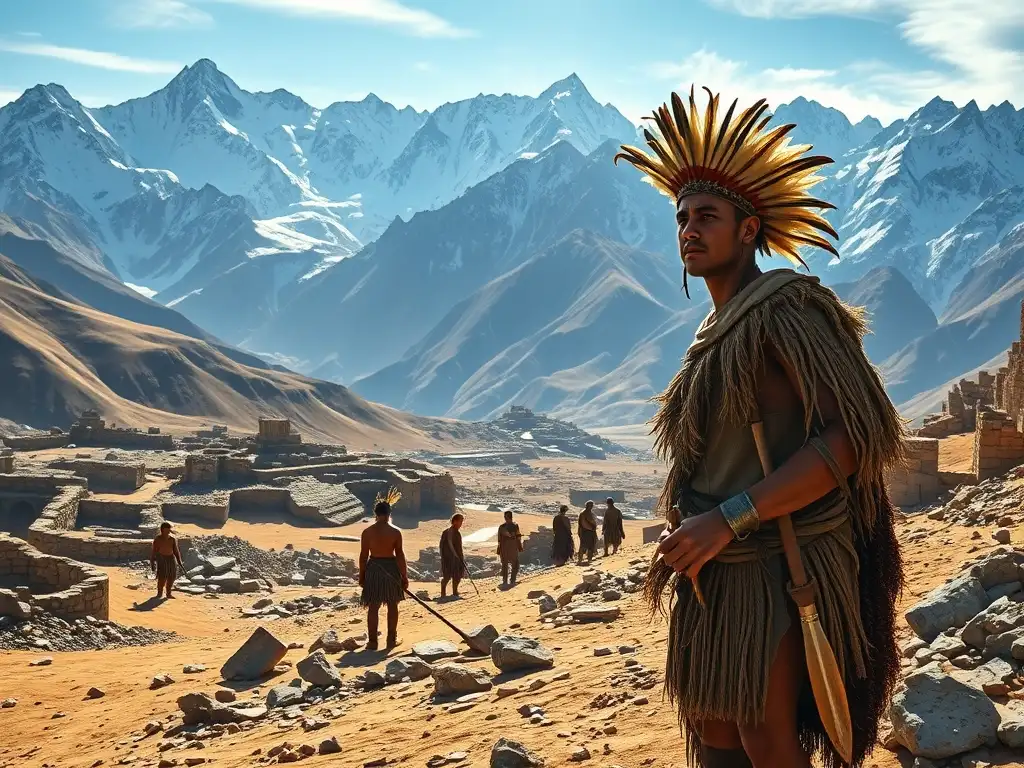
Step into a world lost to time, yet echoing with the power and mystery of the Andes. For centuries, these majestic mountains cradled empires of breathtaking ingenuity – the Incas, Moche, Nazca, and Tiahuanaco among them. But even the mightiest civilizations crumble. Discover the untold story of the Inca's downfall, a tale of ambition, betrayal, and a civil war that paved the way for the Spanish Conquest. Unravel the enigma of the Inca civil war causes and witness how internal divisions ultimately sealed the fate of a remarkable empire. Dare to explore further?
The Spanish conquest of the Inca Empire, a monumental event in world history, was not solely the result of superior European weaponry and tactics. A crucial factor contributing to the Inca's downfall was a devastating civil war that erupted just decades before the arrival of Pizarro. This internal conflict, fueled by a complex interplay of political ambition, succession disputes, and deep-seated social tensions, significantly weakened the empire, leaving it vulnerable to the relatively small Spanish force.
This article delves into the causes of this fratricidal conflict, exploring the key players, the underlying tensions, and the lasting consequences that paved the way for the Spanish conquest. Understanding the Inca civil war's causes is essential to grasping the full narrative of the Inca Empire's demise and the subsequent impact on Andean history.
We will examine the key factors that ignited this conflict and ultimately shattered the unity of a once-mighty empire. The consequences of this civil war reverberate through history, shaping the political and social landscape of the Andes to this day.
The Death of Huayna Capac and the Succession Crisis
The death of Huayna Capac, the powerful Inca emperor, in 1527 (or possibly 1528, the exact date remains debated amongst historians 1 ), triggered a chain of events that plunged the Inca Empire into chaos. His unexpected demise, possibly due to smallpox 2 , left a power vacuum at the heart of the empire. Two prominent contenders emerged to claim the throne: Huáscar, the legitimate heir according to Inca tradition, and Atahualpa, Huayna Capac's son from a northern province. This lack of a clear and universally accepted succession plan, a critical weakness in the Inca system, immediately fueled rivalries and ambitions amongst powerful nobles and regional leaders who sought to align themselves with one of the two princes. The resulting power struggle was not merely a dispute over inheritance; it was a clash between established power structures and emerging regional interests. The empire, accustomed to centralized authority under Huayna Capac, found itself fractured along regional lines, with each faction vying for control of resources and territories.
Huáscar vs. Atahualpa: A Clash of Personalities and Power Bases
The conflict between Huáscar and Atahualpa was not simply a political power struggle; it was a clash of personalities and contrasting power bases. Huáscar, based in Cusco, the traditional Inca capital, represented the established order and the traditional power structures of the empire. Atahualpa, however, commanded the loyalty of the northern provinces, a region increasingly powerful and less inclined to accept Cusco's dominance.
This division mirrored underlying tensions within the Inca Empire, reflecting the challenges of governing such a vast and diverse territory. Atahualpa's military prowess and his strategic alliances in the northern regions proved crucial in his initial successes against his brother. The conflict was further exacerbated by the differing styles of leadership of the two brothers; Huáscar's perceived weakness and Atahualpa's ruthless ambition only fueled the flames of conflict.
The Role of the Inca Nobility and Regional Rivalries
The Inca civil war was not solely a conflict between two brothers; it was also a reflection of deep-seated regional rivalries and the ambitions of the Inca nobility. Many powerful nobles and regional governors saw the succession crisis as an opportunity to advance their own interests and consolidate power. They strategically aligned themselves with either Huáscar or Atahualpa, often based on pre-existing loyalties and regional considerations, rather than on a genuine belief in either brother's claim to the throne.
This factionalism within the nobility effectively paralyzed the empire's ability to respond effectively to the emerging threat from the Spanish. The civil war drained the empire’s resources and manpower, leaving its military forces weakened and divided just as the Spanish arrived on the scene.
The Weakening of the Inca Empire and the Arrival of the Spanish
The protracted and brutal civil war profoundly weakened the Inca Empire. The conflict drained its resources, depleted its manpower, and shattered its internal unity. The once-formidable Inca army was divided and exhausted, its infrastructure damaged, and its economy disrupted.
When Pizarro and his small band of conquistadors arrived, they encountered not a unified and powerful empire, but a fractured and vulnerable society ripe for conquest. The Inca civil war, therefore, served as a critical catalyst, effectively paving the way for the rapid and relatively easy conquest of the Inca Empire by the Spanish. The devastating consequences of this internal conflict are undeniable, highlighting the importance of internal stability in maintaining the power and longevity of any empire.
1 Further research is needed to definitively establish the exact date. 2 While smallpox is a leading theory, other illnesses are also considered possibilities.
- The Death of Huayna Capac and the Succession Crisis
- Huáscar vs. Atahualpa: A Clash of Personalities and Power Bases
- The Role of the Inca Nobility and Regional Rivalries
- The Weakening of the Inca Empire and the Arrival of the Spanish
The Seeds of Discord: Understanding the Inca Succession Crisis
The Inca Empire, renowned for its sophisticated infrastructure and vast territorial reach, was ultimately undone by internal strife. The "Inca civil war causes" are complex and multifaceted, stemming from a confluence of factors that gradually eroded the empire's stability. A crucial element was the unexpectedly swift death of Emperor Huayna Capac, and the subsequent power vacuum that ignited a brutal succession crisis.
This crisis, far from being a simple clash over inheritance, exposed deep-seated tensions within the imperial structure, weakening it significantly and paving the way for the Spanish conquest. The lack of a clear and established succession process played a critical role, creating fertile ground for ambitious contenders to seize power. This absence of established protocols ultimately proved disastrous for the empire.
The Death of Huayna Capac and the Initial Power Struggle
The death of Huayna Capac in 1527 (or possibly 1528, the exact date remains debated amongst historians) from a smallpox epidemic plunged the Inca Empire into chaos. While the exact circumstances surrounding his death remain shrouded in some mystery, the suddenness of his demise left no clear heir apparent. This absence of a designated successor immediately triggered a struggle for power amongst his sons.
Huayna Capac had two prominent sons: Huáscar, who was likely designated as heir at some point, and Atahualpa, a powerful military leader who commanded considerable loyalty in the northern provinces. The initial power struggle wasn't overtly violent; rather, it was characterized by subtle maneuvering, strategic alliances, and the consolidation of support bases. Each prince attempted to secure the allegiance of key officials, military commanders, and regional governors.
This period of subtle conflict, however, laid the groundwork for the escalating violence that would soon engulf the empire. The initial conflict highlighted the weakness of the Inca administrative system, which proved unable to handle a succession crisis without fracturing into violent factions. This internal vulnerability would be ruthlessly exploited by the competing factions.
The Division of the Inca Empire: Huascar vs Atahualpa
The subtle power struggle quickly escalated into open warfare as Huáscar and Atahualpa openly challenged each other's claim to the throne. The empire was effectively split, with Huáscar controlling the southern regions, including Cusco, the imperial capital, and Atahualpa dominating the north. This division was not merely geographical; it represented a fundamental schism within the Inca elite. The conflict was fueled by a combination of factors:
- Regional loyalties: The northern and southern regions had distinct identities and interests, creating a natural line of division that Atahualpa and Huascar were able to exploit.
- Military strength: Atahualpa controlled a more powerful military force, hardened by years of campaigning in the northern territories. This gave him a considerable advantage over his brother.
- Political maneuvering: Both princes engaged in ruthless political maneuvering, forming alliances, and eliminating rivals through assassination and other underhanded tactics. This period saw a significant weakening of the Inca bureaucracy as officials switched loyalties based on perceived advantage.
The Inca civil war, therefore, was not simply a fight for the throne; it was a clash of regional interests, military might, and political ambition. The ensuing conflict severely weakened the empire, leaving it ripe for conquest by the Spanish conquistadors who arrived on the scene in 1532. The prolonged civil war depleted the Inca's resources, demoralized its armies, and fractured its political unity, all factors that ultimately contributed to the empire's swift demise. The devastating impact of the "Inca civil war causes" is undeniable, proving that internal divisions can be as destructive as external forces.
The Escalation of Conflict: Key Events of the Inca Civil War
The Inca Civil War, a brutal conflict fueled by succession disputes and simmering internal tensions, significantly weakened the empire, paving the way for the Spanish conquest. Understanding the Inca civil war causes requires examining the key events that escalated the conflict from a power struggle to all-out war. This wasn't a sudden eruption; rather, it was a slow burn ignited by the death of Huayna Capac, the powerful Inca emperor, and exacerbated by a lack of clear succession plans.
The ensuing power vacuum triggered a cascade of events that ultimately shattered the Inca's unity and military strength. The war's impact extended far beyond the battlefield, leaving a trail of devastation and instability that profoundly affected the Inca people and their once-mighty empire.
Early Battles and Shifting Alliances in the Inca Civil War
The initial stages of the Inca civil war were marked by a series of skirmishes and strategic maneuvering between the two main contenders: Huáscar, the legitimate heir according to Inca tradition, and Atahualpa, Huayna Capac's son from a later union. While Huáscar initially held the advantage, controlling the heartland of Cuzco, Atahualpa cleverly cultivated alliances in the northern provinces, leveraging his military prowess and charisma to amass a formidable army.
The early battles were characterized by shifting alliances and betrayals, as regional governors and military commanders weighed their loyalties and assessed the strength of each claimant. This period saw significant bloodshed and the destruction of vital infrastructure, weakening the overall capacity of the Inca state to effectively govern and maintain order.
One key turning point was the battle of [Location of early battle pending], which resulted in [Specific outcome pending] and significantly altered the balance of power. The fluctuating alliances during this phase highlight the complex political landscape of the Inca empire, where loyalty and power were often intertwined and subject to change.
Atahualpa's Rise and the Capture of Huascar
Atahualpa's eventual triumph was not simply a matter of superior military strength; it was also a result of astute political strategy and a willingness to employ ruthless tactics. His army, initially smaller than Huáscar's, gradually gained momentum through a series of decisive victories. Atahualpa’s skillful use of propaganda and his ability to win over key commanders through promises and threats played a crucial role in his ascent.
The capture of Huáscar, a pivotal moment in the conflict, effectively sealed Huáscar's fate and solidified Atahualpa's claim to the throne. This capture, achieved through [Specific tactics or battles pending], shattered the remaining resistance to Atahualpa's rule and brought an end to the first major phase of the civil war.
The details surrounding Huáscar's imprisonment and subsequent treatment remain a subject of debate among historians, with accounts ranging from relatively humane confinement to brutal execution. Regardless of the specifics, the capture of Huáscar undeniably marked a significant turning point in the Inca civil war, paving the way for Atahualpa's undisputed rule – albeit a short-lived one.
The Brutality and Impact of the Inca Civil War on the Population
The Inca civil war inflicted immense suffering on the Inca population. Years of fighting ravaged the land, disrupting agriculture, trade, and the intricate social fabric of the empire. The constant warfare led to widespread famine, disease, and displacement.
Estimates of the death toll vary widely, but it's clear that the conflict significantly reduced the Inca population and weakened its overall resilience. The brutality of the war extended beyond the battlefield; accounts suggest widespread atrocities, including the massacre of civilians and the destruction of sacred sites. The war's impact on the Inca civil war causes is a complex interplay; the initial conflict weakened the empire, making it vulnerable to external threats, ultimately facilitating the Spanish conquest.
The disruption of the intricate Inca administrative system, the loss of skilled artisans and laborers, and the widespread destruction of infrastructure all contributed to the empire's decline. The long-term consequences of the civil war were profound, leaving a lasting scar on the Inca civilization and shaping the course of Andean history. The civil war's legacy serves as a stark reminder of the devastating consequences of internal conflict and the fragility of even the most powerful empires.
Inca Civil War Causes: Analyzing the Underlying Factors
The Inca Empire, renowned for its sophisticated infrastructure and vast territorial control, ultimately succumbed to internal strife and external conquest. Understanding the Inca civil war causes is crucial to grasping the empire's demise. While the Spanish conquest played a decisive role, the seeds of destruction were sown long before Pizarro's arrival.
This section delves into the key factors that fueled the devastating Inca Civil War, ultimately weakening the empire and making it vulnerable to the Spanish. The conflict wasn't a spontaneous eruption, but rather the culmination of long-simmering tensions and deeply rooted structural weaknesses. Analyzing these Inca civil war causes reveals a complex interplay of political machinations, regional rivalries, and power struggles among the elite.
Political Instability and Inca Succession Laws
The Inca succession system, while seemingly organized, contained inherent flaws that contributed significantly to the Inca civil war causes. The Sapa Inca, the emperor, held absolute power, and his death often triggered a struggle for the throne. While the ideal was a peaceful transfer of power to a designated heir, this rarely occurred in practice. The system lacked clear and consistently enforced rules regarding succession, leading to ambiguity and competition among potential successors. This ambiguity often stemmed from the emperor's ability to choose his successor, leaving the door open to manipulation and challenges from powerful relatives or ambitious individuals.
The death of Huayna Capac in 1527, likely from smallpox, triggered a crisis. His designated heir, Ninan Cuyochi, also succumbed to the epidemic. This left a power vacuum, intensifying pre-existing tensions and sparking the devastating conflict.
The lack of a clear and universally accepted successor, coupled with the absence of a strong, centralized authority to resolve the dispute, directly fueled the Inca civil war causes. The ensuing power struggle between Huáscar, Huayna Capac's son by a previous wife, and Atahualpa, his son by a later wife and a strong military leader, highlighted the weakness of the Inca succession system. This power vacuum, directly linked to the ambiguous succession laws, was a primary Inca civil war cause.
Regional Tensions and Loyalty to Different Inca Factions
Beyond the central power struggle, regional tensions played a significant role in the Inca civil war causes. The Inca Empire, despite its impressive size and organization, was not a monolithic entity. Different regions, particularly those conquered relatively recently, maintained distinct identities and loyalties. These regions often had their own powerful elites who could switch allegiances based on perceived benefits. The empire's vastness and the inherent difficulties in maintaining control over such a diverse population further exacerbated these tensions.
The conflict between Huáscar and Atahualpa perfectly illustrates this point. Huáscar, based in Cusco, the traditional capital, commanded the loyalty of the southern regions. However, Atahualpa, based in Quito, controlled the northern provinces, which were more recently incorporated into the empire.
The northern armies, often composed of troops from recently conquered territories, were more loyal to Atahualpa, who had spent more time amongst them and had a reputation as a strong military commander. This division along regional lines, fueled by pre-existing loyalties and grievances, turned the Inca civil war causes into a multifaceted conflict with deep roots in the empire's structure. The loyalty of regional elites proved crucial, demonstrating how the empire's vastness and the incomplete integration of conquered territories contributed to its internal fragility and the Inca civil war causes.
The Role of Inca Elites and Power Dynamics
The Inca elite played a pivotal role in the unfolding of the Inca civil war causes. The struggle for power wasn't solely between Huáscar and Atahualpa; it involved a complex web of alliances, betrayals, and shifting loyalties amongst the nobility. Powerful families and regional leaders strategically aligned themselves with either Huáscar or Atahualpa, often motivated by personal ambitions and the potential for increased influence under a particular leader. This factionalism within the elite, characterized by competing interests and power plays, deepened the existing divisions and prolonged the conflict.
Furthermore, the Inca system of mit'a, a form of mandatory labor, contributed to the Inca civil war causes. While it was a vital part of the empire's infrastructure projects, it could also be a source of discontent and resentment, particularly when implemented unfairly or excessively. The control and distribution of resources, including land and labor, were also sources of contention among the elite, further fueling the existing tensions.
The intricate power dynamics within the Inca court and among the regional elites, combined with the inherent inequalities within the system, significantly contributed to the Inca civil war causes, ultimately undermining the empire's unity and stability. The internal strife among the elite, a critical component of the Inca civil war causes, directly weakened the empire's ability to resist the Spanish invasion.
The Consequences of the Inca Civil War: The Empire's Weakening
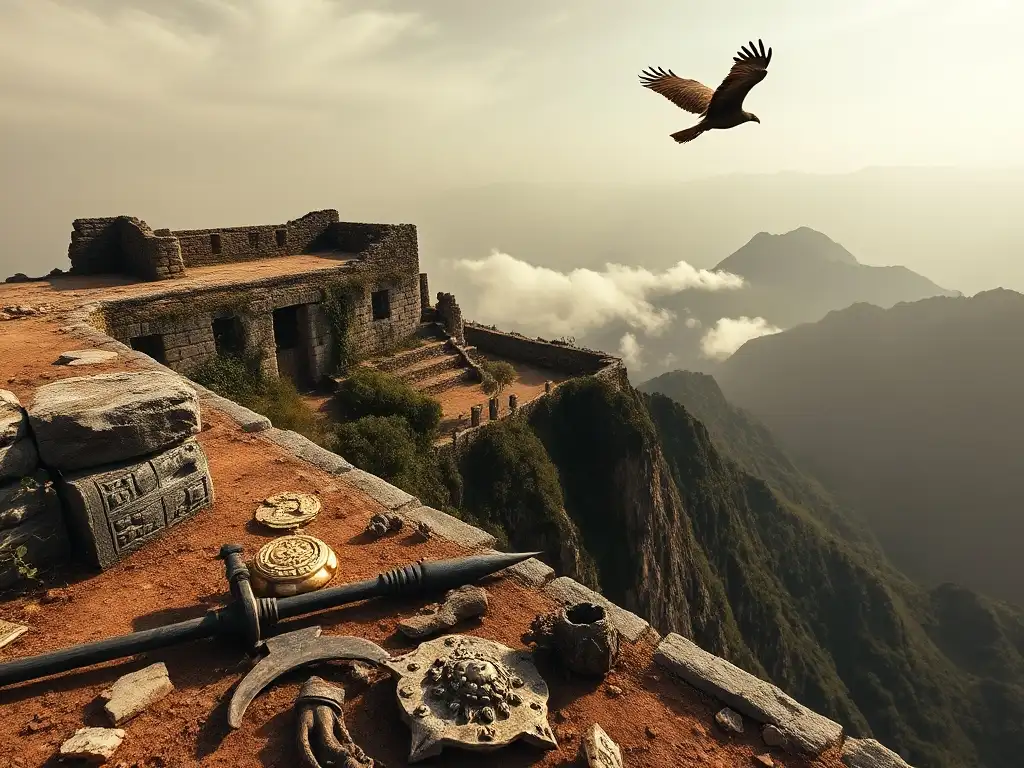
The Inca Civil War, a brutal conflict fought between Huáscar and Atahualpa for control of the Inca Empire, had devastating and long-lasting consequences that significantly weakened the empire, leaving it vulnerable to the Spanish conquistadors. The war wasn't just a power struggle; it was a systemic collapse that fractured the intricate social, political, and military fabric of the Inca state. The impact reverberated throughout the empire, creating a power vacuum and societal disruption that ultimately paved the way for the Spanish conquest.
Understanding the consequences of this conflict is crucial to comprehending the relatively swift downfall of a seemingly invincible empire. The keyword "Inca civil war causes" is important here because understanding the causes directly informs the understanding of the effects.
The Inca Empire Divided and Vulnerable to External Threats
The most immediate consequence of the Inca civil war was the fracturing of the empire itself. The prolonged conflict, lasting several years, left the empire deeply divided. Loyalties were fractured, regional power struggles intensified, and the previously centralized authority crumbled. The war depleted resources, manpower, and infrastructure across vast territories.
This division created a fertile ground for external threats, most notably the Spanish, who arrived to find a weakened and disunified empire ripe for conquest. The internal strife effectively neutralized the Inca's formidable military capabilities, leaving them unable to mount a unified and effective defense against the relatively small Spanish force. The Inca's superior numbers were rendered useless by their internal divisions.
The war's devastating impact on the Inca's organizational capacity is exemplified by the lack of a cohesive response to the Spanish invasion; instead of a united front, the conquistadors faced scattered resistance from fragmented factions. This disunity was a direct consequence of the civil war and a key factor in the Spanish victory. It's crucial to remember that the Spanish conquest wasn't simply a military victory; it was also a political one, facilitated by the pre-existing chaos caused by the Inca civil war.
The Decimation of the Inca Army and Infrastructure
The Inca civil war resulted in a significant decimation of the Inca army and its infrastructure. Years of intense fighting led to massive casualties on both sides. The elite warriors, the backbone of the Inca military, were heavily depleted, leaving behind a weakened and demoralized force.
Beyond the human cost, the war also destroyed vital infrastructure, including roads, bridges, storehouses, and irrigation systems. These were crucial components of the Inca's sophisticated logistical network, enabling efficient communication and resource distribution across the vast empire. The destruction of this infrastructure severely hampered the Inca's ability to mobilize resources and troops effectively, hindering their response to the Spanish invasion.
One can imagine the logistical nightmare the Inca faced, trying to coordinate defense with damaged roads and disrupted communication lines. The civil war left the Inca with a crippled military and a broken logistical system, making them far less capable of resisting external threats. The magnitude of the damage is difficult to fully quantify, but the impact on their capacity to defend against the Spanish is undeniable.
How the Inca Civil War Facilitated the Spanish Conquest
The Inca civil war played a pivotal role in facilitating the Spanish conquest. The weakened state of the empire, characterized by internal divisions, depleted resources, and a demoralized army, presented a unique opportunity for the comparatively small Spanish force. The conquistadors skillfully exploited these divisions, forging alliances with factions hostile to both Huáscar and Atahualpa. This strategy allowed them to gain a foothold in the empire and gradually expand their control.
The absence of a unified Inca resistance, a direct outcome of the civil war, was a critical factor in the Spanish success. Had the Inca been unified and their military intact, the outcome of the encounter might have been vastly different. The Spanish victory wasn't solely due to superior weaponry or tactics; it was significantly aided by the internal strife and resulting weakness of the Inca Empire.
The civil war, therefore, can be seen as a crucial precursor to the Spanish conquest, effectively paving the way for the fall of a once-powerful civilization. The Spanish conquest, in this light, becomes less a story of military superiority and more a narrative of how internal conflict can cripple even the most formidable empires, making them vulnerable to external forces. The keyword phrase "Inca civil war causes" provides the context for understanding the devastating consequences that ultimately led to the conquest.
The Lasting Legacy of the Inca Civil War
The Inca Civil War, a brutal conflict fought between Huáscar and Atahualpa for control of the vast Inca Empire in the early 16th century, left an indelible mark on Andean history. Its consequences extended far beyond the immediate bloodshed, profoundly shaping the empire's vulnerability to the Spanish conquest just a few short years later. Understanding the lasting legacy of this internal conflict is crucial to comprehending the fall of one of the most impressive civilizations of the pre-Columbian Americas. The Inca civil war causes are multifaceted and continue to be debated by historians, but its impact is undeniable.
Lessons Learned from the Internal Conflict
The Inca Civil War provided a stark lesson in the fragility of even the most powerful empires. The conflict exposed deep-seated weaknesses within the Inca political system, primarily the lack of a clear and robust succession process. The seemingly arbitrary selection of an heir, coupled with the inherent tensions between different regions and factions within the empire, created fertile ground for ambitious individuals to challenge the established order.
This power vacuum, fueled by ambition and resentment, ultimately proved fatal. The war demonstrated the dangers of centralized power without effective mechanisms for managing internal dissent and succession. The prolonged and bloody conflict drastically weakened the military and administrative capacities of the Inca state, leaving it significantly vulnerable when the Spanish arrived.
Furthermore, the war highlighted the importance of strong internal cohesion and effective communication networks, both of which were severely lacking during the conflict. The empire's communication systems, while sophisticated for their time, were ultimately insufficient to quell the rebellion swiftly and decisively.
The Impact on Inca Culture and Society
The Inca Civil War had a devastating impact on Inca culture and society. The years of intense warfare led to widespread loss of life and the destruction of infrastructure, including vital agricultural systems and religious centers. The disruption of established social structures and economic networks led to widespread famine and social unrest, further weakening the empire's resilience.
The war also fostered a climate of fear and uncertainty, undermining the authority of the Inca rulers and eroding the people's faith in the empire's stability. The cultural repercussions were profound. Sacred sites were desecrated, traditional rituals were disrupted, and the intricate social fabric of Inca society was torn apart.
Many skilled artisans and craftsmen perished in the conflict, resulting in a decline in the production of high-quality textiles, ceramics, and metalwork. This cultural disruption significantly hampered the Inca's ability to resist the Spanish invasion and adapt to the new realities that followed. The loss of life and infrastructure was so significant that the recovery process was slow and incomplete, even after the war's conclusion.
The Inca Civil War in Historical Interpretations
Historical interpretations of the Inca Civil War vary, with different scholars emphasizing different aspects of the conflict. Some historians highlight the role of personal ambition and familial rivalry in triggering the war, focusing on the personalities and motivations of Huáscar and Atahualpa. Others emphasize the broader socio-political factors that contributed to the conflict, such as regional tensions, economic inequalities, and the inherent limitations of the Inca administrative system.
Still others focus on the impact of the war on the Spanish conquest, arguing that the weakened state of the Inca Empire after the civil war significantly facilitated the Spanish victory. There is no single, universally accepted interpretation of the Inca civil war causes, and ongoing research continues to shed light on the complex interplay of factors that led to this devastating conflict. The ongoing debate reflects the complexity of the event and the challenges involved in reconstructing a historical narrative from limited and often conflicting sources.
The study of the Inca Civil War remains a vibrant field of historical inquiry, with new perspectives and interpretations constantly emerging. The search for a comprehensive understanding of the “Inca civil war causes” continues to be a central focus for researchers.
Frequently Asked Questions
What triggered the Inca Civil War?
The Inca Civil War was primarily triggered by the death of Emperor Huayna Capac in 1527. His two sons, Huáscar and Atahualpa, fought for control of the vast empire, leading to a brutal conflict. This succession crisis fractured the empire's unity.
How long did the Inca Civil War last?
The Inca Civil War lasted approximately five years, from around 1527 to 1532. This period of internal conflict significantly weakened the empire, leaving it vulnerable to Spanish conquest.
What were the main consequences of the Inca Civil War?
The war resulted in a weakened Inca Empire, massive loss of life, and the destruction of infrastructure. The conflict severely depleted the Inca army and resources, making them susceptible to the Spanish conquistadors.
Did the Inca Civil War directly lead to the Spanish conquest?
The Inca Civil War was a crucial factor in the Spanish conquest. The internal strife and weakened state of the empire made it significantly easier for Pizarro and his forces to conquer the Inca.
What were the key differences between Huáscar and Atahualpa's claims to the throne?
Huáscar, the legitimate heir according to Inca tradition, ruled from Cusco. Atahualpa, Huayna Capac's son from a northern province, challenged Huáscar's claim, leading to a power struggle that escalated into a full-blown civil war.
Final Reflection: Echoes of Conquest: The Inca Civil War's Enduring Legacy
The Inca Civil War, a brutal conflict fueled by ambition and internal strife, wasn't merely a historical event; it remains a stark warning about the fragility of even the most powerful empires. The consequences of this fratricidal struggle, weakening the Inca state and paving the way for the Spanish conquest, continue to resonate in discussions of power, succession, and the dangers of unchecked ambition. Understanding its causes is crucial to comprehending not only Inca history but also the broader dynamics of societal collapse and the enduring impact of internal conflict.
The legacy of the Inca Civil War extends far beyond the battlefield, shaping the cultural and social landscape of the Andes for centuries to come. The trauma of this period, the loss of life, and the disruption of established social structures left an indelible mark on the indigenous populations. The very fabric of Inca society was torn, leaving a vacuum that the Spanish readily exploited. As the historian John Hemming poignantly observed, The civil war had destroyed the Inca's capacity for resistance.
This quote underscores the profound and lasting impact of internal divisions on the ability of a society to withstand external pressures.
Consider the implications of this historical tragedy for your own life. How can we learn from the Inca's experience to foster unity and prevent the destructive consequences of internal conflict within our own communities and societies? Let the story of the Inca Civil War serve as a potent reminder of the importance of collaboration, understanding, and the dangers of unchecked power. By reflecting on this pivotal moment in history, we can strive to build more resilient and harmonious societies, ensuring that the echoes of conquest are replaced by the resounding strength of unity and cooperation.
**Unlock the Secrets of the Inca Legacy! **
Thank you for exploring the fascinating history of the Inca Civil War and the critical divisions that weakened this extraordinary empire. Now, let's delve deeper into the rich culture and enduring lessons of the Andean civilizations.
Here's how you can continue your journey of discovery:
- **Explore Further:** Discover more about the triumphs and challenges of the Inca Empire by reading our in-depth articles on other key events in Andean history.
- **Share Your Knowledge:** Discuss this captivating topic with friends and family, or share your insights on social media. Help spread the word about the remarkable story of the Inca Empire!
- **Join Our Community:** Connect with fellow history enthusiasts in our online forum. Exchange ideas and share your thoughts on how past conflicts continue to shape our world today.
What valuable lessons can we learn from the internal conflicts that ultimately led to the downfall of the Inca Empire? Share your reflections in the comments below!