
The Meeting at Cajamarca: A Clash of Worlds, Ambush or Divine Encounter?

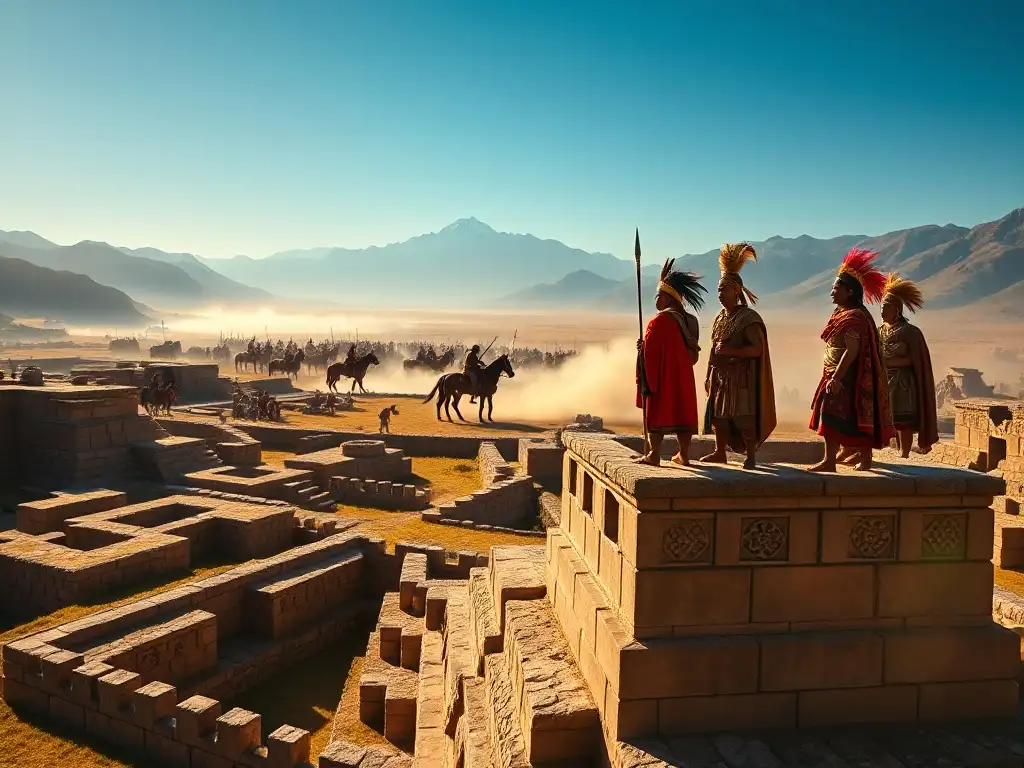
Step into a world lost to time, where the majestic Andes Mountains witnessed the rise and fall of empires. Explore the breathtaking ingenuity of the ancient Andean civilizations—from the Incas to the Nazca—and uncover the secrets of their vibrant cultures. But prepare to be captivated by a pivotal moment: the Inca Cajamarca encounter. Was it a cunning ambush, a clash of civilizations, or something far more… divine? Discover the truth behind this legendary meeting and delve into the fascinating story of the Spanish Conquest.
The year is 1532. The Inca Empire, a vast and sophisticated civilization stretching along the Andes Mountains, stands at a precipice. For centuries, it had thrived, building magnificent cities, developing intricate agricultural systems, and forging a complex social and political structure.
But this meticulously constructed world is about to be irrevocably shattered by the arrival of Francisco Pizarro and his Spanish conquistadors. The meeting at Cajamarca, a seemingly insignificant town in the heart of the Inca Empire, would become a pivotal moment in history – a brutal encounter that irrevocably altered the course of Andean civilizations and forever shaped the landscape of South America.
This article delves into the events surrounding the Inca Cajamarca encounter, examining the context, the strategies employed, and the long-term consequences of this fateful meeting, questioning whether it was a carefully planned ambush or a divinely ordained event. We will explore the perspectives of both the Inca and the Spanish, analyzing the factors that contributed to the overwhelming Spanish victory.
Introduction to the Inca Cajamarca Encounter
The Inca Cajamarca encounter represents a dramatic clash between two vastly different worlds. On one side stood the Inca Empire, a powerful civilization with a sophisticated social structure and advanced technology. On the other, a relatively small band of Spanish conquistadors, armed with superior weaponry and driven by insatiable greed and a fervent belief in their own superiority. The meeting, which took place in November 1532, was not a chance encounter but rather the culmination of years of Spanish exploration and Inca internal strife.
The outcome, the capture of the Inca emperor Atahualpa, was swift and decisive, marking the beginning of the end for the Inca Empire. The disparity in military technology played a crucial role, but the event also reveals a complex interplay of political maneuvering, cultural misunderstandings, and sheer brutality. Understanding this encounter requires examining the pre-existing conditions within both the Inca Empire and the Spanish expedition.
The Context of the Cajamarca Meeting
The Cajamarca meeting didn't occur in a vacuum. It was the result of a confluence of factors, both within the Inca Empire and among the Spanish conquistadors. To fully grasp its significance, we need to understand the prevailing circumstances.
The Inca Empire Before Cajamarca
The Inca Empire, at the time of the Spanish arrival, was still relatively young, having undergone a period of rapid expansion under Emperors Huayna Capac and Huáscar. However, Huayna Capac's death triggered a devastating civil war between his sons Huáscar and Atahualpa, weakening the empire significantly. This internal conflict, marked by bloody battles and political instability, left the Inca Empire vulnerable and fractured just as Pizarro and his men arrived. The empire's resources were stretched thin, its military weakened, and its leadership divided – a perfect storm for conquest.
The Inca societal structure, while complex and effective in times of peace, proved ill-equipped to handle the unprecedented threat posed by the Spanish. [Specific details on Inca military organization and political structure pending]. The consequences of this internal conflict would be devastatingly clear in the events at Cajamarca.
The Arrival of Pizarro and the Spanish Conquistadors
Francisco Pizarro's expedition, though small in number, possessed a significant advantage: superior weaponry. They possessed firearms, steel armor, and horses—all unknown to the Inca. This technological superiority was a key factor in the Spanish victory. Furthermore, Pizarro's strategic planning and knowledge of Inca weaknesses, gathered through previous encounters and interactions with indigenous populations, played a crucial role.
The Spanish conquistadors also benefited from the internal conflicts within the Inca Empire; they skillfully exploited these divisions to their advantage. [Specific details on the size and composition of Pizarro's expedition, and their strategic planning, pending]. The arrival of the Spanish was not merely a military invasion; it was also the introduction of new diseases, which would have a devastating long-term impact on the Inca population. The Spanish conquest was, therefore, not solely a military affair but a complex interplay of military force, disease, and political manipulation.
The Events at Cajamarca: A Detailed Breakdown
The Initial Contact and Diplomatic Overtures
The initial contact between Francisco Pizarro's conquistadors and the Inca emperor Atahualpa was far from straightforward. Reports suggest a period of tense negotiation and maneuvering, with both sides attempting to gauge the other's strength and intentions. Atahualpa, initially unaware of the true extent of the Spanish forces' power, likely underestimated their capabilities. The Spanish, on the other hand, meticulously planned their strategy, exploiting the Inca's relative unfamiliarity with firearms and cavalry.
These initial diplomatic exchanges, characterized by gifts and seemingly friendly gestures, masked the underlying tensions and ultimately served as a prelude to the dramatic events that would unfold. The exchange of gifts, while seemingly amicable, was heavily weighted in favor of the Spanish, who sought to impress the Inca with their advanced technology and, more importantly, gain a strategic advantage. This carefully orchestrated first contact laid the groundwork for the ambush that was to come.
The Setup of the Cajamarca Meeting
Pizarro's strategic genius is evident in the meticulous planning of the Cajamarca meeting. He chose the location carefully, a narrow plaza surrounded by buildings that provided excellent cover for his troops. The Spanish forces, though vastly outnumbered, were strategically positioned to maximize their impact. They concealed their artillery and cavalry, presenting a seemingly smaller force to Atahualpa.
This deception was crucial in luring Atahualpa into a trap, as the Inca emperor likely approached the meeting with a sense of confidence, unaware of the deadly ambush awaiting him. The meticulous planning involved not only the physical layout but also the timing, carefully coordinating the attack to coincide with Atahualpa's arrival and maximizing the element of surprise. The careful arrangement of the Spanish troops, along with the use of the plaza's natural features, ensured a decisive victory for the vastly outnumbered conquistadors.
The Capture of Atahualpa: A Pivotal Moment
The capture of Atahualpa marked a turning point in the Spanish conquest of the Inca Empire. The speed and efficiency of the Spanish attack were astonishing. The element of surprise, coupled with the use of superior weaponry, overwhelmed the Inca forces. Atahualpa's capture, though swift, was not without resistance.
However, the Inca army, lacking the training and coordinated tactics of the Spanish, was quickly routed. The capture of the emperor was not merely a military victory; it was a symbolic blow that shattered the Inca's sense of security and authority. The subsequent events, including the ransoming of Atahualpa and his eventual execution, further solidified Spanish dominance over the Inca Empire. This pivotal moment dramatically altered the balance of power, paving the way for the subsequent conquest of the vast Inca territories.
Analyzing the Cajamarca Encounter: Interpretations and Perspectives
Was it an Ambush? Examining the Evidence
The overwhelming consensus among historians is that the Cajamarca encounter was indeed a carefully planned ambush. The evidence points to a deliberate strategy designed to exploit the Inca's lack of familiarity with European weaponry and tactics. The meticulous selection of the location, the strategic positioning of Spanish troops, and the element of surprise all contribute to this interpretation.
While some might argue that the meeting was initially intended as a diplomatic encounter, the overwhelming evidence suggests that Pizarro intended to capture or kill Atahualpa from the outset. The sheer disparity in casualties underscores the premeditated nature of the attack. The historical accounts, while sometimes conflicting, consistently point to a carefully orchestrated trap, not a chance encounter.
A Divine Encounter or a Clash of Cultures?
The Cajamarca encounter can be interpreted as both a clash of cultures and a perceived divine encounter. From the Spanish perspective, their victory was often attributed to divine intervention, a sign of God's favor in their conquest. This religious interpretation reinforced their sense of mission and justification. However, viewing the event purely through a religious lens overlooks the significant cultural disparities and the strategic military planning involved.
The Inca, accustomed to a different form of warfare and lacking experience with European weaponry, were at a significant disadvantage. Therefore, the encounter represents not only a clash between religious beliefs but also a clash between vastly different military strategies and technological capabilities. The interpretation of the encounter hinges on perspective, with the Spanish viewing it through a religious lens, while historians today analyze it primarily as a strategic military maneuver.
The Impact of the Cajamarca Encounter
The Cajamarca encounter had profound and lasting consequences. The capture of Atahualpa marked the beginning of the end for the Inca Empire. The event shattered Inca authority and paved the way for the rapid Spanish conquest of the vast Inca territories. The consequences extended far beyond the immediate military victory, leading to the destruction of Inca culture, the introduction of new diseases, and the transformation of the Andean landscape.
The subsequent colonization and exploitation of the region had devastating effects on the indigenous population, altering the demographic and cultural makeup of the Andes permanently. The impact of this event reverberates to this day, shaping the history and culture of the region. The Cajamarca encounter remains a significant turning point in Andean history, a pivotal moment that irrevocably changed the course of the Inca civilization and the entire region.
Consequences of the Capture of Atahualpa
The capture of Atahualpa at Cajamarca in 1532 marked a pivotal moment in Andean history, triggering a cascade of events that irrevocably altered the course of the Inca Empire. The immediate consequence was the shattering of Inca political and military power. Atahualpa, the Sapa Inca, the supreme ruler, was imprisoned, effectively decapitating the empire's leadership. This power vacuum created chaos and instability, weakening the empire's ability to resist further Spanish encroachment.
The sophisticated administrative system, renowned for its efficiency and reach, was disrupted, leading to widespread confusion and ultimately, collapse. The Inca's centralized organization, reliant on the Sapa Inca for decision-making and resource allocation, crumbled under the weight of this sudden and unexpected leadership void. The intricate network of communication and control, crucial for maintaining order and stability across the vast empire, was severely compromised.
The psychological impact on the Inca population was equally devastating. The capture of their divine ruler, a figure imbued with both temporal and spiritual authority, deeply undermined the Inca worldview and belief system. This loss of faith in their leadership created fertile ground for dissent and further facilitated the Spanish conquest.
The Ransom of Atahualpa and its Aftermath
Atahualpa, in an attempt to secure his freedom, offered an immense ransom—a room filled with gold and twice its size with silver. This staggering wealth, while temporarily enriching the Spanish conquistadors, ultimately proved insufficient to fully secure his life. Despite fulfilling the terms of the ransom, Atahualpa was executed by Francisco Pizarro on charges of idolatry, fratricide, and rebellion.
The execution, a blatant act of betrayal, further demoralized the Inca people and solidified Spanish dominance. The influx of gold and silver, while initially beneficial to the Spanish crown, also inadvertently fueled inflation and contributed to the long-term economic instability of Spain. The ransom itself became a symbol of the vast disparity in power and the ruthless exploitation that characterized the Spanish conquest.
The aftermath of the ransom saw the Spanish further consolidate their power, using the wealth to fund their military campaigns and solidify their control over the Inca territories. This event demonstrated the limitations of even the most substantial wealth in the face of overwhelming military and political power.
The Power Vacuum and the Inca Resistance
The death of Atahualpa plunged the Inca Empire into a protracted civil war. Rival claimants to the throne emerged, vying for control of the fractured empire. This internal conflict significantly weakened the Inca's ability to mount an effective resistance against the Spanish.
While pockets of resistance persisted throughout the empire, they were ultimately fragmented and unable to coordinate a unified opposition. The Spanish skillfully exploited these divisions, playing factions against each other to further their own objectives. Despite the internal strife, significant Inca resistance continued for decades after the capture of Atahualpa.
Figures like Manco Inca Yupanqui, a nephew of Atahualpa, led significant rebellions against the Spanish, demonstrating the enduring strength of Inca resistance even in the face of overwhelming odds. This prolonged resistance highlights the resilience of the Inca people and their determination to fight for their independence. The fragmented nature of this resistance, however, ultimately proved insufficient to overcome the superior weaponry and tactics of the Spanish conquistadors.
Conclusion: The Lasting Significance of the Cajamarca Meeting
The meeting at Cajamarca represents a profound and enduring historical event, a stark illustration of the clash between two vastly different worlds. The consequences of this encounter continue to resonate today. The event highlights the devastating impact of European colonization on Indigenous populations in the Americas, underscoring the loss of life, culture, and sovereignty that accompanied the conquest.
The Inca Cajamarca encounter serves as a potent reminder of the brutality and complexities of colonialism and the long-lasting repercussions it had on the social, political, and economic landscapes of the Andes. The narrative of the Inca Cajamarca encounter is a critical component of understanding the broader context of the Spanish conquest and its enduring legacy in the Americas.
The Clash of Civilizations at Cajamarca
The Cajamarca encounter was not merely a military confrontation; it was a clash of civilizations, a collision of vastly different worldviews, technologies, and social structures. The Inca, with their sophisticated agrarian society, complex political organization, and advanced infrastructure, were met by the Spanish, armed with superior weaponry, horses, and a ruthless pursuit of wealth and power. The disparity in military technology played a crucial role in the outcome, but the encounter also exposed a fundamental difference in societal values and political systems.
The Inca's concept of a divinely appointed ruler contrasted sharply with the Spanish quest for territorial expansion and material gain. This clash of values and beliefs ultimately shaped the trajectory of the Inca Empire and the subsequent history of the Andes region.
The Enduring Questions and Debates
The Cajamarca encounter continues to generate debate and discussion among historians. Questions surrounding the exact numbers involved, the details of the ambush, and the motivations of both the Inca and the Spanish remain subjects of ongoing scholarly inquiry. The interpretation of events, particularly the degree of Spanish treachery versus Inca naiveté, varies widely depending on the perspective and sources consulted.
The lack of a unified Inca account of the events further complicates the task of reconstructing a complete and objective picture of what transpired at Cajamarca. The historical record, often biased towards the Spanish perspective, underscores the need for continued critical analysis and the incorporation of diverse viewpoints to gain a more nuanced understanding of this pivotal encounter.
The Importance of Understanding the Inca Cajamarca Encounter
Understanding the Inca Cajamarca encounter is crucial for comprehending the complexities of the Spanish conquest of the Andes. This event serves as a case study in the dynamics of colonial encounters, highlighting the interplay of military power, cultural differences, and political maneuvering. The study of this event allows us to analyze the impact of colonialism on Indigenous populations, the lasting consequences of conquest, and the importance of preserving and understanding diverse historical narratives.
The Inca Cajamarca encounter remains a significant historical event, offering valuable insights into the dynamics of power, the resilience of Indigenous cultures, and the enduring legacy of colonialism. The continued study and re-evaluation of this event are essential for a more complete and accurate understanding of Andean history and the broader global impact of the Spanish conquest.
- Introduction to the Inca Cajamarca Encounter
- The Context of the Cajamarca Meeting
- The Events at Cajamarca: A Detailed Breakdown
- Analyzing the Cajamarca Encounter: Interpretations and Perspectives
- Consequences of the Capture of Atahualpa
- Conclusion: The Lasting Significance of the Cajamarca Meeting
Frequently Asked Questions
What was the significance of the Cajamarca encounter?
The Cajamarca encounter in 1532 marked a decisive moment in the Spanish conquest of the Inca Empire. It saw the capture of Emperor Atahualpa, leading to the empire's swift collapse. This event dramatically altered the course of Andean history.
Why did the Inca believe the Spanish were gods?
Some historians suggest the Incas initially perceived the Spanish as divine beings, due to their advanced technology, particularly firearms and horses, which were unknown in the Andes. This misperception played a crucial role in their vulnerability.
How did the Spanish manage to capture Atahualpa so easily?
The Spanish employed a carefully planned ambush, utilizing superior weaponry and exploiting the Incas' initial awe and reluctance to engage in open warfare. The element of surprise was a key factor in their success.
What happened to Atahualpa after his capture?
Following his capture, Atahualpa was held ransom by the Spanish conquistadors. Despite paying an immense ransom, he was eventually executed by Francisco Pizarro.
What is the lasting legacy of the Cajamarca encounter?
The encounter at Cajamarca symbolizes the brutal clash between two vastly different cultures. It represents a pivotal point in the destruction of the Inca Empire and the beginning of Spanish colonial rule in the Andes.
Final Reflection: Echoes of Cajamarca in a Globalized World
The meeting at Cajamarca, a seemingly singular event in history, continues to resonate powerfully in our modern world. The clash between the Inca Empire and the Spanish conquistadors serves as a stark reminder of the fragility of power and the enduring consequences of cultural misunderstanding. Its legacy extends far beyond the immediate aftermath, shaping global perceptions of colonialism, conquest, and the complexities of intercultural exchange.
The story of Cajamarca is more than just a historical account; it's a potent symbol of the power dynamics that continue to shape international relations. The narrative of seemingly insurmountable odds, the devastating impact of disease and advanced weaponry, and the subsequent dismantling of a sophisticated civilization, all serve as cautionary tales. History does not repeat itself, but it often rhymes,
observed Mark Twain, and the echoes of Cajamarca can be heard in countless instances of unequal power dynamics throughout history and even today. We must learn from the past to avoid repeating its mistakes.
Consider the implications of Cajamarca in your own life. How do you approach encounters with those who are different from you? Do you strive to understand their perspectives, or do you allow preconceived notions to cloud your judgment? The legacy of Cajamarca challenges us to actively cultivate empathy, to engage in respectful dialogue, and to build bridges of understanding across cultural divides. Let the story of this fateful encounter inspire you to create a more just and equitable world, one where the lessons of the past guide us towards a more compassionate future.
Unveil the Secrets of Cajamarca's Encounter!
Thank you for exploring the fascinating history of the meeting at Cajamarca! You've uncovered pivotal moments that shaped cultures and the world. Now, let's build on that knowledge.
Here's how you can deepen your understanding and connect with this remarkable story:
- Discover More: Explore related articles on the impact of Andean civilizations and their lasting legacies. Further research will enrich your understanding.
- Share Your Insights: Start a conversation! Share your thoughts on social media or with friends to spark discussions about this historic encounter.
- Engage with the Community: Join our forum, Andean Civilizations, to connect with other history enthusiasts and exchange ideas on the diverse influences that shaped our world.
What was the most significant impact of the meeting at Cajamarca on today's society? Share your thoughts in the comments below!