
The Role of Messengers and Communication Networks in Andean Uprisings

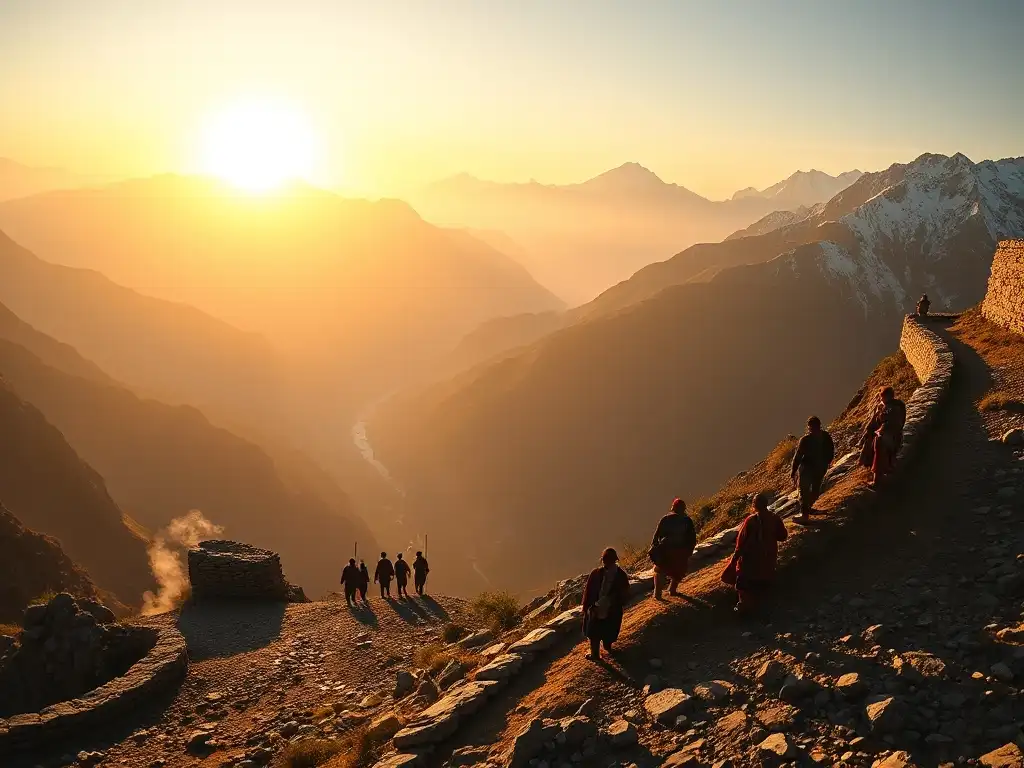
Step into a world lost to time, yet echoing with the whispers of a powerful past. Imagine a vast empire, held together not by brute force, but by an intricate network of communication spanning the Andes. Forget everything you think you know about ancient civilizations – the secrets of Andean civilization communication networks and their crucial role in the Spanish Conquest await you. Uncover the ingenious strategies and daring messengers that shaped the fate of empires, and prepare to be amazed. Dive in and discover the truth.
The Spanish conquest of the Andes was not a swift, inevitable triumph. Instead, it was met with fierce and sustained resistance, fueled by intricate communication networks that allowed Andean communities to coordinate their efforts against the invaders.
This article delves into the crucial role played by messengers and sophisticated communication systems in Andean uprisings against Spanish rule, examining the pre-existing infrastructure and its adaptation to the challenges of colonial oppression. Understanding these communication networks is key to comprehending the resilience and organizational capacity of Andean societies in the face of overwhelming odds.
We will explore the sophisticated methods employed, ranging from the use of chasquis (runners) to the ingenious adaptation of existing infrastructure, highlighting how effective communication proved vital to sustaining rebellion and coordinating resistance movements across vast and challenging terrains. This exploration will reveal a crucial, often overlooked, aspect of Andean civilization, demonstrating the vital role of communication in shaping the history of resistance against Spanish colonialism.
Introduction to Andean Communication Systems and Their Significance
Before the arrival of the Spanish, the Andes boasted a remarkably advanced communication system. Far from being isolated communities, the various Andean civilizations—including the Inca, Moche, Nazca, and Tiahuanaco—maintained extensive networks that facilitated trade, governance, and cultural exchange. These systems were not simply rudimentary means of passing information; they were integral to the very fabric of Andean society, underpinning its political, economic, and social structures.
The efficiency of these networks is evidenced by the rapid spread of information across vast distances, enabling swift responses to both internal and external events. This pre-existing infrastructure played a pivotal role in facilitating the organization of resistance against the Spanish. The speed and efficiency with which messages could be relayed were instrumental in coordinating rebellions, mobilizing resources, and maintaining morale among disparate groups.
The effectiveness of these systems was a testament to the ingenuity and organizational prowess of Andean civilizations, allowing them to challenge the far-reaching power of the Spanish empire. The speed at which news of Spanish movements could be spread, for example, allowed for timely defensive strategies and the organization of coordinated attacks.
The significance of these communication systems extends beyond their practical applications. They represent a sophisticated understanding of logistics, engineering, and social organization. The development and maintenance of these networks required significant investment of resources and manpower, reflecting the high value placed on communication within Andean societies. This understanding of the importance of communication is crucial to understanding the Andean response to the Spanish conquest. It was not merely a matter of military strength, but also of logistical and communicative capabilities that allowed for sustained resistance.
Pre-Columbian Andean Communication Infrastructure: A Foundation for Resistance
The foundation for Andean resistance lay in the pre-existing communication infrastructure, honed over centuries. The most well-known element of this system is the network of chasquis, a highly organized relay system utilizing runners strategically positioned along well-defined routes across the Andes. These runners, often stationed at tambos (roadside inns), could transmit messages with remarkable speed, covering vast distances in relatively short periods.
This system, while impressive, was only one component of a broader network. The Inca, for example, utilized a sophisticated system of roads, bridges, and pathways, carefully engineered to traverse the challenging Andean terrain. These routes not only facilitated the movement of chasquis but also allowed for the rapid transportation of troops, supplies, and other essential resources vital for both governance and defense.
Beyond the physical infrastructure, the Andean communication system also relied on a complex system of symbols, signals, and codes. While many details remain shrouded in mystery, evidence suggests the use of visual signals, such as smoke signals or strategically placed markers, to convey information over long distances. Furthermore, the use of quipus (knotted cords) provided a means of recording and storing information, acting as a form of pre-Columbian data storage and retrieval system, albeit one that still requires much further research for complete understanding.
These methods, combined with oral traditions and established social hierarchies, created a robust and multifaceted communication network that proved invaluable in mobilizing resistance against the Spanish. The adaptability of this system to the challenges posed by the conquest is a testament to the ingenuity and resilience of Andean societies.
The network allowed for the dissemination of information about Spanish movements, the coordination of attacks, and the maintenance of solidarity amongst disparate groups resisting colonial rule. The impact of this pre-existing communication infrastructure on the success and longevity of Andean uprisings cannot be overstated.
The Chasquis: Imperial Messengers and Their Vital Role
The chasquis formed the backbone of the Inca Empire's remarkably efficient communication system. These runners, strategically positioned along the extensive qhapaq ñan (Inca Road system), relayed messages with astonishing speed across vast distances. Their training was rigorous, focusing not only on endurance and speed but also on discretion and loyalty. Chasquis were selected for their physical prowess and mental acuity, undergoing years of preparation to master their demanding roles.
They weren't simply carrying messages; they were vital cogs in the imperial machine, ensuring the swift transmission of orders, news, and tributes across the empire. The system's efficiency allowed the Inca leadership to respond quickly to crises, maintain control over far-flung provinces, and mobilize resources effectively. The speed and reliability of the chasqui network were crucial to the empire's stability and longevity, playing a particularly significant role in suppressing rebellions and maintaining order.
The chasquis weren't just messengers; they were living embodiments of the Inca state's power and reach. Their actions directly impacted the empire's ability to quell uprisings and maintain control. The speed at which information traveled thanks to the chasquis meant that rebellions could be dealt with swiftly, before they could gather significant momentum or support.
Andean Communication Networks: Beyond the Inca Roads
While the Inca qhapaq ñan and the chasquis are justly famous, Andean communication extended far beyond the imperial highways. Pre-Inca civilizations, such as the Moche, Nazca, and Tiahuanaco, developed their own sophisticated communication systems, often adapted to the specific geography and social structures of their regions. These networks relied on a combination of methods, including visual signals (smoke signals, mirrors reflecting sunlight), messengers traveling established trails, and intricate systems of knotted strings known as quipus.
These quipus served not only as accounting tools but also as a means of recording and transmitting information, potentially including messages related to uprisings or resistance movements. The varied nature of these pre-Inca communication networks highlights the diverse strategies employed across different Andean societies.
Understanding these networks sheds light on the ways in which resistance movements could organize and communicate even without the highly centralized system of the Inca Empire. Furthermore, these pre-existing communication channels often continued to function even after the Inca conquest, providing alternative routes for information exchange during times of rebellion against the Inca or later, the Spanish.
Local Communication Practices in Andean Societies
Beyond the large-scale networks, local communication practices played a crucial role in organizing and sustaining Andean uprisings. These methods often involved more informal networks based on kinship ties, community bonds, and established social hierarchies. Word-of-mouth communication, facilitated by shared language and cultural understanding, was a primary mode of disseminating information within villages and smaller communities.
This informal network allowed for rapid dissemination of news about Spanish actions, rallying points for resistance, and strategies for evading capture. The close-knit nature of Andean communities made them effective spaces for coordinating resistance, enabling rapid mobilization and the sharing of vital intelligence. The importance of trust and established social structures within these communities cannot be overstated; these factors were vital in ensuring the success of many local uprisings.
The Importance of Oral Tradition and Storytelling
Oral tradition and storytelling were not merely forms of entertainment; they were integral to Andean communication and cultural transmission. Stories, songs, and myths served as powerful tools for conveying historical knowledge, social values, and resistance strategies across generations. These narratives often encoded messages of defiance, preserving memories of past injustices and inspiring future generations to resist oppression.
The use of symbolic language and allegorical storytelling allowed for the subtle dissemination of information that might have been dangerous to communicate openly under Spanish rule. Furthermore, oral traditions helped maintain a sense of collective identity and purpose among the Andean communities, strengthening their resolve in the face of Spanish dominance.
The enduring power of oral traditions in preserving cultural memory and inspiring resistance is a testament to their significance in shaping Andean responses to colonial rule. The persistence of these stories into the modern era demonstrates the lasting influence of this crucial communication method.
The Spanish Conquest and Disruption of Andean Communication

The Spanish conquest dramatically altered the pre-existing communication networks of the Andes. Before the arrival of the Europeans, the Inca Empire, for example, boasted a remarkably sophisticated system of communication, relying on a network of chasquis – relay runners – who could transmit messages across vast distances with impressive speed. These runners, strategically positioned along well-maintained roads (the qhapaq ñan), were integral to the empire's administration and control. Their swift delivery of messages facilitated the efficient mobilization of resources, the dissemination of imperial decrees, and the rapid response to any threats or emergencies.
The system was highly organized, with specific routes and checkpoints, ensuring consistent and reliable communication. The Spanish conquest, however, systematically dismantled this intricate network. The destruction of roads, the disruption of established routes, and the decimation of the chasqui system through violence and disease severely hampered the ability of indigenous populations to communicate effectively.
This disruption had far-reaching consequences, hindering the organization of resistance efforts and weakening the ability of Andean communities to maintain their cultural identity and social cohesion. The conquest effectively severed the crucial arteries of communication that had once bound the empire together. The silencing of these networks was a deliberate act designed to control and subdue the indigenous population.
Adaptation of Indigenous Communication Methods During Colonial Rule
Despite the disruption caused by the Spanish conquest, indigenous populations in the Andes demonstrated remarkable resilience and adaptability in maintaining communication networks. While the formal Inca system was largely destroyed, indigenous communities adapted and repurposed existing methods, often employing clandestine strategies to circumvent Spanish control. They cleverly utilized established trails and routes, albeit in a more covert manner, to transmit vital information.
Oral traditions, already deeply ingrained in Andean culture, became even more crucial for preserving history, transmitting knowledge, and coordinating resistance efforts. The use of songs, stories, and coded messages woven into seemingly innocuous narratives ensured that information could be shared without arousing suspicion from Spanish authorities. This demonstrated a sophisticated understanding of the need for secrecy and a remarkable capacity for innovation in the face of oppression.
The adaptation of communication methods highlights the ingenuity and determination of Andean communities in preserving their cultural heritage and in organizing resistance against colonial rule. The resilience displayed in maintaining communication channels underscores the enduring importance of communication in Andean societies.
Secret Messengers and Coded Communication
The need for secrecy during the colonial period spurred the development of sophisticated methods of coded communication. Secret messengers, often individuals trusted within the community, played a critical role in transmitting vital information. These messengers might use a variety of techniques to conceal their messages, including using songs with embedded codes, employing specific gestures or symbols, or hiding messages within everyday objects.
For example, a seemingly ordinary woven textile might contain a coded message conveyed through the pattern or color of the threads. The development of such techniques highlights the ingenuity and creativity of Andean communities in adapting their communication strategies to the challenges posed by colonial rule. The level of sophistication in these methods underscores the importance of communication in maintaining social cohesion and coordinating resistance activities.
Specific examples of these coded messages, unfortunately, are often lost to history, obscured by time and the deliberate efforts of the Spanish to suppress such communication. Further research is necessary to fully uncover the richness and complexity of these clandestine communication strategies.
Utilizing Existing Networks for Resistance Movements
Even after the destruction of the formal Inca road system, the underlying geographical knowledge and pre-existing social networks continued to provide a foundation for resistance movements. Indigenous communities leveraged existing trails, familiar paths through the mountains, and established kinship ties to transmit messages and coordinate actions. These networks, though less organized than the imperial system, proved surprisingly effective in facilitating communication across considerable distances.
The familiarity of the terrain and the established social structures within Andean communities allowed for a degree of resilience and adaptability that surprised Spanish authorities. This ability to adapt and utilize pre-existing resources for communication played a crucial role in enabling various uprisings and rebellions against Spanish rule.
The effectiveness of these adapted networks underscores the significant role that indigenous knowledge and social structures played in resisting colonial power. The strategic use of these informal communication channels highlights the enduring importance of social connections and geographical knowledge in Andean societies, even under conditions of extreme oppression.
The Role of Communication in Key Andean Uprisings
Andean civilization communication networks played a crucial role in the success and scope of various uprisings against Spanish colonial rule. These networks, often underestimated by Spanish chroniclers who focused on military strategies, were vital for coordinating rebellions across vast distances and diverse terrains. The effectiveness of these communication systems stemmed from a sophisticated understanding of the Andean landscape, coupled with established indigenous practices and pre-existing social structures.
These were not simply random bursts of resistance; they were carefully planned and executed movements heavily reliant on the efficient transmission of information and coordinated action. The speed and reach of these networks allowed for the rapid mobilization of forces and the dissemination of crucial information, such as troop movements, Spanish vulnerabilities, and planned actions.
The ability to quickly communicate across mountainous regions and through dense jungles significantly impacted the scale and duration of these rebellions, demonstrating the ingenuity and resilience of the Andean peoples. The intricate web of relationships and established routes within Andean communities formed the backbone of these communication networks, proving far more resilient than the Spanish initially anticipated.
The Túpac Amaru II Rebellion: Coordination and Information Dissemination
The Túpac Amaru II Rebellion (1780-1781), one of the most significant Andean uprisings, serves as a prime example of the importance of effective communication. Túpac Amaru II, a descendant of the Inca nobility, skillfully utilized existing Andean communication systems to mobilize support across a wide geographical area. Runners, known for their endurance and knowledge of the terrain, relayed messages across vast distances, connecting disparate communities and coordinating rebel activities.
These weren't simply messengers; they were integral parts of a complex network, often using pre-arranged signals and coded messages to avoid detection by Spanish authorities. This intricate system allowed for the rapid spread of information about the rebellion's progress, the gathering of support, and the coordination of attacks against Spanish targets. The rebellion's initial success was, in no small part, due to the efficient dissemination of information and the swift mobilization of forces across the Andes.
The swift response to Spanish countermeasures also indicates a robust, decentralized communication system capable of adapting to changing circumstances. The eventual failure of the rebellion, while highlighting the power of the Spanish military, does not diminish the vital role played by Andean communication networks in the rebellion’s initial success and its wide-ranging impact.
The Great Rebellion of 1780-1783: Communication and Mobilization
The Great Rebellion, encompassing the Túpac Amaru II rebellion and other simultaneous uprisings across the Andes, showcases the interconnectedness of Andean communication networks. While Túpac Amaru II’s rebellion was the most prominent, it wasn't isolated. Simultaneous uprisings in other regions, such as those led by other indigenous leaders, demonstrate the existence of a broader, interconnected communication system.
These rebellions, though geographically separated, displayed coordinated timing and similar strategies, suggesting a level of communication and coordination far beyond the capabilities of isolated, independent movements. The spread of news, strategies, and calls to action across vast distances, despite the efforts of the Spanish to suppress communication, underscores the resilience and sophistication of the Andean communication infrastructure.
The ability to quickly organize resistance across different ethnic groups and regions highlights the strength of pre-existing social structures and communication pathways within Andean society. While specific details of the communication methods used during this period require further research, the coordinated nature of the uprisings strongly suggests a highly developed and effective system.
The Legacy of Andean Communication Networks in Modern Times
The legacy of Andean communication networks continues to resonate in modern times. While the methods have evolved, the principles of utilizing local knowledge and existing social structures remain relevant. The knowledge of the terrain and the intricate understanding of the Andean landscape that facilitated the rapid communication during rebellions still informs modern infrastructure projects and resource management.
The reliance on community networks and interpersonal communication, a hallmark of Andean communication systems, persists in many rural Andean communities today. Moreover, the strategies employed during these uprisings, particularly the use of decentralized communication networks to resist centralized power, offer valuable lessons for contemporary social movements and resistance efforts.
Understanding the resilience and effectiveness of these historical communication systems provides insights into the enduring power of community-based organization and the importance of adapting communication strategies to specific geographic and social contexts. The study of these historical networks provides valuable insights for effective communication in challenging terrains and diverse societies, showcasing the enduring relevance of indigenous knowledge and practices.
Analyzing the Effectiveness of Andean Communication in Uprisings

The effectiveness of Andean communication networks during uprisings against the Spanish varied considerably depending on several factors. Geographic location played a crucial role; mountainous terrain and dense jungle presented significant challenges to rapid communication, while more open areas facilitated quicker dissemination of information. The type of uprising also influenced communication strategies. Smaller, localized rebellions often relied on word-of-mouth and established kinship ties, while larger, more coordinated uprisings required more sophisticated networks capable of reaching wider audiences.
The Spanish themselves, aware of the importance of communication for the indigenous population, actively sought to disrupt these networks. This involved destroying existing infrastructure, capturing messengers, and spreading misinformation. Despite these obstacles, indigenous Andean populations demonstrated remarkable resilience and adaptability in their communication strategies, constantly evolving their techniques to counter Spanish efforts. The success or failure of a particular uprising was often inextricably linked to the effectiveness of its communication network.
For example, the swift mobilization of forces during certain uprisings suggests highly effective communication, while the relatively quick suppression of others points to vulnerabilities in the communication infrastructure. Further research into specific case studies is needed to thoroughly understand the nuanced relationship between communication effectiveness and uprising outcomes. Historians are still piecing together the complete picture, as many details remain lost to time, destroyed by the Spanish, or obscured by the passage of centuries.
Strengths and Limitations of Indigenous Communication Strategies
Indigenous Andean communication relied heavily on a combination of established techniques. Strengths included the deeply ingrained social structures that facilitated rapid dissemination of information through kinship networks and pre-existing community ties. The use of chasquis, a relay system of runners, allowed for relatively swift transmission of messages across vast distances, a feat remarkable for the time. Furthermore, the intricate system of quipus, knotted cords used for record-keeping, provided a means of storing and transmitting information, although the exact nature of their use is still debated among scholars.
However, limitations existed. The reliance on oral tradition meant that information could be distorted or lost in transmission. The Spanish actively targeted chasquis and disrupted established routes, significantly hindering communication. The dependence on existing social structures meant that communication could be more easily disrupted when these structures were compromised by Spanish actions.
Moreover, the complexity of the quipus system was not fully understood by all, limiting its accessibility as a communication tool for the wider population. The lack of a written language in the standard sense also presented a challenge compared to the Spanish who could utilize written documents for more efficient and permanent record-keeping and communication. The interplay of these strengths and limitations shaped the effectiveness of indigenous communication during uprisings.
Andean Communication Networks: A Vital Element of Resistance
Andean communication networks were not merely a means of disseminating information; they were a vital component of resistance against Spanish rule. These networks facilitated the organization of rebellions, the coordination of military strategies, and the sharing of resources among disparate groups. The swift mobilization of indigenous forces during numerous uprisings underscores the efficiency of these systems. By understanding and utilizing pre-existing social structures and established communication routes, Andean communities could quickly mobilize large numbers of people and coordinate their actions.
The chasquis system, while vulnerable to Spanish disruption, played a critical role in conveying urgent messages, warning of impending attacks, and organizing resistance. The use of coded messages and symbolic communication also helped to ensure that information reached its intended recipients while evading Spanish surveillance. The ability to communicate effectively across vast distances and diverse communities was crucial in sustaining resistance over extended periods. The preservation of cultural identity and the transmission of knowledge across generations were also facilitated by these networks, demonstrating their importance beyond the immediate context of uprisings.
The study of Andean communication networks provides valuable insights into the resilience and resourcefulness of indigenous populations in the face of overwhelming odds. The effectiveness of these networks, despite the challenges posed by the Spanish, serves as a testament to the ingenuity and adaptability of Andean civilizations. The enduring legacy of these communication strategies continues to fascinate and inform scholars studying Andean history and resistance. Understanding these networks is crucial to a complete understanding of Andean civilization communication networks and their role in shaping the history of the region.
Conclusion: The Enduring Impact of Communication on Andean History
The effectiveness of Andean communication networks during uprisings against Spanish rule underscores their crucial role in shaping the course of history. While the Spanish conquistadors initially exploited existing power vacuums and communication gaps to their advantage, the indigenous populations quickly adapted and utilized their established systems – often refined and improved upon – to coordinate resistance. The intricate network of chasquis, runners who relayed messages across vast distances, proved remarkably resilient in the face of Spanish attempts to disrupt it.
This demonstrates not only the ingenuity of Andean communication strategies but also the deep-rooted social structures that supported them. The rapid dissemination of information, vital for mobilizing rebellions and coordinating defensive strategies, significantly hampered Spanish efforts to consolidate control.
The legacy of these sophisticated Andean communication networks extends far beyond the immediate context of the uprisings. The strategies employed, the resilience demonstrated, and the underlying social structures that facilitated communication all contributed to a lasting cultural heritage. Understanding these systems provides invaluable insight into the political organization, social dynamics, and cultural resilience of Andean societies.
Furthermore, the study of Andean communication networks offers a compelling case study for understanding the importance of effective communication in resistance movements throughout history. The ability to coordinate efforts, share intelligence, and maintain morale across vast distances proved critical to the longevity and impact of many Andean rebellions. The echoes of these sophisticated communication networks resonate even today, highlighting the enduring power of information and communication in shaping human societies and their responses to oppression.
Their study offers crucial lessons for understanding the dynamics of power, resistance, and social change, even in the modern era. The enduring impact of these systems is a testament to the ingenuity and adaptability of the Andean peoples in the face of overwhelming odds.
The study of Andean civilization communication networks provides a rich tapestry of information, revealing not only the technological prowess of these civilizations but also the depth of their social organization and the tenacity of their resistance. The efficient and effective systems they developed served as a crucial factor in their ability to challenge and, at times, successfully resist the overwhelming power of the Spanish empire. Their legacy continues to inspire and inform our understanding of communication's vital role in shaping historical events.
- Introduction to Andean Communication Systems and Their Significance
- Pre-Columbian Andean Communication Infrastructure: A Foundation for Resistance
- The Chasquis: Imperial Messengers and Their Vital Role
- Andean Communication Networks: Beyond the Inca Roads
- The Spanish Conquest and Disruption of Andean Communication
- Adaptation of Indigenous Communication Methods During Colonial Rule
- The Role of Communication in Key Andean Uprisings
- The Legacy of Andean Communication Networks in Modern Times
- Analyzing the Effectiveness of Andean Communication in Uprisings
- Andean Communication Networks: A Vital Element of Resistance
- Conclusion: The Enduring Impact of Communication on Andean History
- How did Andean civilizations communicate over vast distances?
- What role did messengers (chasquis) play in Andean societies?
- How did communication networks support Andean uprisings?
- What types of messages were transmitted through the Andean communication networks?
- Were the Andean communication networks solely used for official purposes?
Frequently Asked Questions
How did Andean civilizations communicate over vast distances?
Andean civilizations relied on sophisticated communication networks. These included a system of trained runners (chasquis) who relayed messages along strategically placed relay stations, covering incredible distances rapidly. Road systems also facilitated communication and transport.
What role did messengers (chasquis) play in Andean societies?
Chasquis were vital to the efficient communication within the Andean empires. They formed a relay system that allowed for quick transmission of information across vast territories, crucial for governance, trade, and military operations. Their speed and reliability were essential.
How did communication networks support Andean uprisings?
Effective communication networks were crucial for organizing and coordinating rebellions. Rapid transmission of information allowed for swift mobilization of forces, strategic planning, and the dissemination of propaganda, significantly impacting the success or failure of uprisings.
What types of messages were transmitted through the Andean communication networks?
Messages conveyed through the network varied greatly, including military orders, political decrees, census data, and important news. Also transmitted were religious pronouncements, trade information, and even personal correspondence, demonstrating the network's versatility.
Were the Andean communication networks solely used for official purposes?
While primarily used for official communication, the Andean networks likely facilitated some private communication as well. The extensive network's reach meant it was likely used for personal messages, albeit likely secondary to the empire's needs.
Final Reflection: Echoes of the Inca Road: Communication and Andean Resistance
The intricate communication networks of the Andes, far from being relics of a bygone era, hold crucial lessons for understanding contemporary social movements and the power of collective action. The ability to rapidly disseminate information, coordinate resistance, and build solidarity remains a vital component of successful uprisings, regardless of the technological context. This resonates deeply in our hyper-connected world, where the speed and reach of information can make or break a movement.
The enduring legacy of the Inca road system and its sophisticated communication strategies continues to shape our understanding of Andean identity and resistance. The ingenuity displayed in utilizing chasquis, tambos, and other communication methods underscores the importance of adaptable and resilient networks. These weren't simply logistical systems; they were vital arteries of cultural exchange and social cohesion. The Inca Empire was not just a political entity, but a network of interconnected communities bound together by a shared culture and a sophisticated system of communication.
This quote highlights the inextricable link between communication and the very fabric of Andean society, a link that persists even today in the forms of community organizing and cultural preservation.
Consider the ways in which information flows shape your own world. How can you leverage the power of communication to build bridges, foster understanding, and amplify the voices of the marginalized? Embrace the spirit of the chasqui, the tireless messenger, and become a conduit for positive change in your own community. By understanding the past, we can better navigate the present and build a more just and equitable future, inspired by the resilience and ingenuity of the Andean peoples.
Ignite Conversations and Inspire Change!
Thank you for exploring the crucial role of communication networks in the Andean uprisings. Your interest in this vital aspect of history highlights the importance of connectivity to social movements and progress. Let's now consider how we can apply this knowledge.
Here are some ways you can make a difference today:
- **Engage with Your Community:** Share your insights about the ingenious communication systems used in the Andean uprisings with friends, family, or online history groups. Discussions can lead to new perspectives and a deeper understanding.
- **Explore Local Histories:** Research examples of resilience and effective communication within your own community, perhaps uncovering unique networks that facilitated change during challenging times.
- **Contribute to the Conversation:** Join our forum on Andean Civilizations to share your thoughts on the parallels between historical and modern communication strategies. Your contributions will enrich our collective understanding.
What innovative communication methods could empower contemporary movements for equality and justice? Let's continue the discussion!