
Tiahuanaco's Shadow: Exploring the Political and Economic Influence on Later Societies

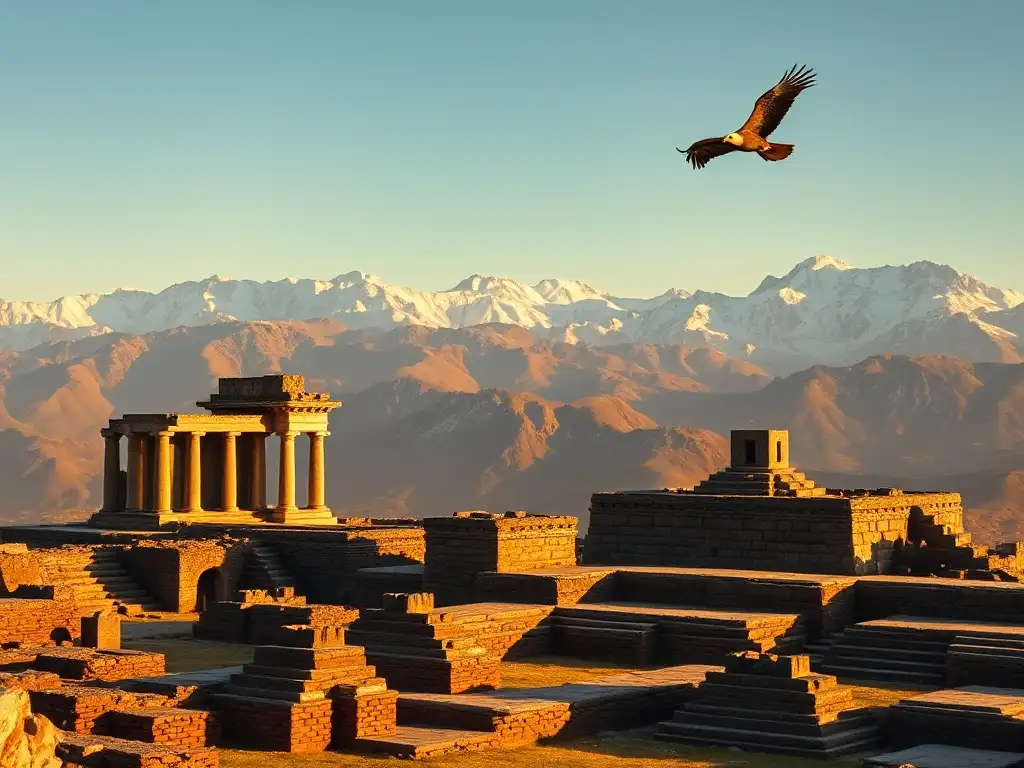
Step into the enigmatic world of the Andes, where towering monuments whisper tales of forgotten empires. For centuries, the legacy of Tiahuanaco has cast a long shadow, its influence rippling through subsequent Andean cultures in ways both subtle and profound. Discover the surprising extent of Tiahuanaco's impact on later Andean societies – a story of political maneuvering, economic innovation, and enduring cultural echoes that will rewrite your understanding of this fascinating region. Prepare to be captivated.
-
Tiahuanaco's Shadow: Exploring its Influence on Later Andean Societies
- Understanding Tiahuanaco's Preeminence in the Andes
- Tiahuanaco's Political Legacy: Shaping Subsequent Andean States
- Economic Foundations of Tiahuanaco's Influence: Trade and Resource Control
- The Cultural Diffusion of Tiahuanaco: Beyond Political Borders
- Tiahuanaco's Impact on Later Andean Cultures: Specific Case Studies
- Tiahuanaco's Enduring Legacy: A Foundation for Future Andean Societies
- Conclusion: Tiahuanaco's Profound Influence on Later Andean Cultures
-
Frequently Asked Questions
- What was Tiahuanaco's most significant contribution to later Andean cultures?
- How did Tiahuanaco's political system influence later Andean states?
- Did Tiahuanaco's religious beliefs affect later Andean cultures?
- What was the extent of Tiahuanaco's economic impact on neighboring societies?
- How did Tiahuanaco's collapse affect the development of later Andean civilizations?
- Final Reflection: Tiahuanaco's Enduring Legacy
- Unveil New Insights and Take Action!
Tiahuanaco's Shadow: Exploring its Influence on Later Andean Societies
The sprawling ruins of Tiahuanaco, located on the shores of Lake Titicaca in modern-day Bolivia, stand as a testament to a powerful and sophisticated civilization that flourished between approximately 500 and 1000 CE. This enigmatic culture left an indelible mark on the subsequent development of Andean societies, profoundly impacting their political structures, economic systems, and religious beliefs.
This article delves into the multifaceted influence of Tiahuanaco, exploring how its preeminence shaped the trajectory of later Andean cultures and continues to fascinate researchers today. We will examine Tiahuanaco's political and economic power, its reach across the Andean region, and the lasting legacy of its unique societal organization on kingdoms and empires that followed.
The exploration of Tiahuanaco's impact is crucial to understanding the complex tapestry of Andean history and the interconnectedness of its diverse civilizations. This analysis will reveal how Tiahuanaco's “shadow” extended far beyond its physical borders, casting a long influence on the Andean world.
Understanding Tiahuanaco's Preeminence in the Andes
The Rise of Tiahuanaco: A Political and Economic Powerhouse
Tiahuanaco's rise to prominence was a gradual process, marked by strategic expansion and the development of sophisticated agricultural techniques that allowed for a significant increase in food production. This agricultural surplus fueled population growth and enabled the construction of monumental architecture, intricate irrigation systems, and a complex social hierarchy. The ability to control resources and manpower allowed Tiahuanaco to exert considerable political and economic influence over neighboring communities.
Evidence suggests that Tiahuanaco engaged in extensive trade networks, exchanging goods such as textiles, ceramics, and precious metals across a vast geographical area. This control over resources solidified its position as a regional powerhouse. The development of a sophisticated administrative system further cemented its dominance.
Tiahuanaco's Core Territory and Influence Sphere
While the exact extent of Tiahuanaco's direct control remains a subject of ongoing research, archaeological evidence points to a core territory encompassing the Lake Titicaca basin and its immediate surroundings. However, its influence extended far beyond this core area, reaching into regions of present-day Peru, Bolivia, and Chile. This influence was exerted through a combination of political alliances, military campaigns, and economic leverage.
The distribution of Tiahuanaco-style ceramics and architecture across a wide geographic area provides compelling evidence of cultural and political interaction. The presence of Tiahuanaco-style artifacts in distant locations suggests the establishment of satellite settlements or the adoption of Tiahuanaco's cultural practices by local populations. The precise nature of these interactions—whether they were marked by cooperation or coercion—remains an area of active debate among scholars.
Tiahuanaco's Political Legacy: Shaping Subsequent Andean States
Tiahuanaco's Model of Centralized Authority and Governance
Tiahuanaco's political system was characterized by a high degree of centralized authority, with a powerful ruling elite controlling access to resources and wielding significant power. This centralized model, though the specifics are still debated, contrasted sharply with the more decentralized political structures of many preceding Andean societies. The evidence suggests a complex system of administration and control, possibly involving a hierarchical bureaucracy and a system of tribute or taxation.
This model of centralized governance would later influence the development of subsequent Andean states, such as the Wari and Inca empires. The scale of Tiahuanaco's monumental architecture and the complexity of its urban planning underscore the level of organizational capacity required to manage such a large-scale undertaking. This organizational capacity served as a model for later Andean states, which similarly undertook massive construction projects requiring centralized planning and resource management.
The Role of Religious Ideology in Tiahuanaco's Political Control
Religious ideology played a crucial role in consolidating and maintaining Tiahuanaco's political power. The construction of monumental structures, such as the Kalasasaya temple complex, served not only as expressions of power but also as centers of religious ritual and practice. The religious beliefs and practices of Tiahuanaco were likely instrumental in legitimizing the rule of the elite and fostering a sense of unity and shared identity among the population.
The iconography found in Tiahuanaco art suggests a complex cosmology and a sophisticated religious system that integrated elements of nature worship and ancestor veneration. This religious system would influence subsequent Andean belief systems, with echoes of Tiahuanaco's religious practices evident in later cultures. The use of religious symbols and rituals to reinforce political authority is a recurring theme in Andean history, showcasing the enduring legacy of Tiahuanaco's approach.
Tiahuanaco's Political Structures and Their Influence on Later Kingdoms
The collapse of Tiahuanaco's empire around 1000 CE did not mark the end of its influence. Its political structures, administrative systems, and even some of its religious beliefs continued to resonate in the succeeding Andean kingdoms. The subsequent rise of states such as the Wari and, later, the Inca, show clear evidence of adopting and adapting elements of Tiahuanaco's political organization. For example, the Wari state, which rose to prominence in the central Andes after the decline of Tiahuanaco, exhibited similarities in its administrative structure and its control over vast territories.
The Inca, in turn, built upon the achievements of earlier Andean states, integrating and refining existing systems of governance. The enduring legacy of Tiahuanaco's political structures highlights its profound impact on the trajectory of Andean civilization. Analyzing these similarities provides valuable insights into the processes of political and cultural transmission across time and space in the Andes.
Economic Foundations of Tiahuanaco's Influence: Trade and Resource Control
Tiahuanaco's significant impact on later Andean cultures stemmed, in no small part, from its mastery of economic control. This wasn't solely about accumulating wealth; it was about strategically managing resources and trade networks to exert influence across a vast region. Their success hinged on a sophisticated understanding of agriculture, allowing for surplus production, and their control over vital trade routes.
This economic power translated directly into political dominance and shaped the economic structures of subsequent societies. The ability to control the flow of goods and resources proved a potent tool for maintaining power and extending influence far beyond Tiahuanaco's immediate borders. The economic model they established served as a blueprint for later Andean civilizations, highlighting the crucial interplay between economic strength and political power in the Andes.
Tiahuanaco's Agricultural Innovations and Surplus Production
Tiahuanaco's success was fundamentally rooted in its advanced agricultural techniques. They developed sophisticated irrigation systems, allowing them to cultivate crops in the otherwise challenging altiplano environment. This mastery of water management resulted in significant surplus production, exceeding the needs of the Tiahuanaco population. This surplus wasn't simply consumed; it became a crucial element of their economic power.
The excess food allowed for the support of a large population, including a specialized class of artisans, priests, and administrators. This surplus also fueled trade, becoming a valuable commodity exchanged for other resources and goods, solidifying Tiahuanaco's economic influence and providing a foundation for their political and social structures. The impact of their agricultural innovations is evident in the subsequent adoption of similar techniques by later Andean cultures, indicating the lasting legacy of Tiahuanaco's agricultural expertise.
Control of Trade Routes and Exchange Networks
Tiahuanaco's strategic location along important trade routes played a pivotal role in its economic dominance. They controlled access to vital resources, including precious metals, textiles, and exotic goods, and they effectively managed the exchange networks that connected different regions of the Andes. This control allowed them to tax trade, accumulate wealth, and distribute resources strategically to maintain their power.
The control of these routes wasn't merely economic; it facilitated the spread of their culture and ideas, further solidifying their influence. The evidence suggests a sophisticated system of exchange, with standardized weights and measures, indicating a high degree of economic organization and control, which served as a model for later Andean societies. The economic power derived from controlling these trade networks was inextricably linked to Tiahuanaco's political and cultural impact.
The Economic Impact of Tiahuanaco's Collapse on Regional Economies
The collapse of Tiahuanaco had profound and widespread economic repercussions throughout the Andes. The disruption of established trade routes, the loss of centralized resource control, and the decline in agricultural production led to instability and economic hardship in many regions. The absence of a strong central authority meant that the previously well-organized economic systems fragmented, leading to local competition and conflict over resources.
The economic consequences of Tiahuanaco's decline varied across regions, with some experiencing more significant impacts than others. This period of instability undoubtedly influenced the economic development of subsequent Andean cultures, shaping their strategies for resource management and trade. The economic fallout highlights the interconnectedness of the Andean world and the far-reaching consequences of the fall of such a powerful economic entity.
The Cultural Diffusion of Tiahuanaco: Beyond Political Borders
The cultural influence of Tiahuanaco extended far beyond its political boundaries. Its impact is visible in the art, architecture, religion, and even the daily lives of numerous later Andean societies. This cultural diffusion wasn't a simple process of imposition; it involved complex interactions and adaptations, resulting in a rich tapestry of cultural exchange and syncretism. The spread of Tiahuanaco's culture is a testament to its enduring legacy and its profound impact on the development of Andean civilization.
Tiahuanaco Iconography and its Spread Across the Andes
Tiahuanaco's distinctive iconography, characterized by its intricate designs and symbolic representations, is widely found in the art and artifacts of later Andean cultures. The stylistic elements, such as the stylized figures, geometric patterns, and religious motifs, were adopted and adapted, often blended with local traditions. This widespread dissemination of Tiahuanaco iconography demonstrates the significant cultural influence the civilization exerted, even in regions that were not directly under its political control.
The presence of these motifs in geographically distant locations suggests complex networks of cultural exchange and interaction, showcasing the power of Tiahuanaco's artistic and symbolic systems. The persistence of these iconic elements in later art forms underscores their cultural significance and lasting impact.
Architectural Styles and Engineering Techniques Adopted Post-Tiahuanaco
Tiahuanaco's advanced architectural and engineering techniques left an indelible mark on later Andean societies. The mastery of monumental stonework, the use of sophisticated construction methods, and the integration of large-scale structures into the landscape were adopted and adapted by subsequent cultures. The influence is clearly seen in the architectural styles and engineering practices of later civilizations, demonstrating the continuity of architectural traditions and the transmission of knowledge and skills.
The adoption of these techniques reflects not only the admiration for Tiahuanaco's achievements but also the practicality and effectiveness of their methods. This architectural legacy showcases the enduring influence of Tiahuanaco's engineering prowess.
Religious Practices and Rituals Evoking Tiahuanaco Traditions
Religious practices and rituals in several later Andean cultures show clear evidence of Tiahuanaco's influence. The adoption of specific deities, the incorporation of Tiahuanaco religious symbols into rituals, and the continuation of certain ceremonial practices suggest a significant transmission of religious beliefs and practices. The persistence of these religious elements in later cultures indicates the deep-seated impact of Tiahuanaco's religious system and its capacity to shape spiritual beliefs across the Andean region.
This religious continuity highlights the enduring power of Tiahuanaco's ideological legacy and its profound impact on the spiritual lives of later Andean societies. The blending of Tiahuanaco religious elements with pre-existing traditions demonstrates the complex process of cultural exchange and adaptation.
Tiahuanaco's Impact on Later Andean Cultures: Specific Case Studies
The Wari Empire: A Successor to Tiahuanaco's Political Model
The Wari Empire, flourishing between roughly 600 and 1000 CE, presents a compelling case study of Tiahuanaco's influence. While not a direct successor in the sense of a continuous political entity, the Wari demonstrably adopted and adapted elements of Tiahuanaco's administrative and political structures. Evidence suggests a significant degree of cultural exchange, including architectural styles, ceramic motifs, and possibly even administrative techniques.
The Wari's expansive road network, for example, bears some resemblance to the sophisticated infrastructure attributed to Tiahuanaco, hinting at a possible inherited understanding of the importance of connecting distant parts of an empire for efficient governance and resource management. The Wari capital, located in the Ayacucho region, reveals architectural features echoing Tiahuanaco's monumental constructions, although adapted to the Wari's specific context and needs. This suggests a process of selective adoption, where the Wari chose to integrate elements that served their own imperial ambitions.
Further research into administrative practices and iconography could reveal more concrete links between the two civilizations. The precise nature of the relationship—whether it was one of direct conquest, cultural diffusion, or a combination of both—remains a subject of ongoing debate among scholars. However, the undeniable similarities between Wari and Tiahuanaco political and architectural strategies strongly suggest a significant influence.
The Influence of Tiahuanaco on the Lupaqa Kingdom
The Lupaqa, a pre-Inca kingdom inhabiting the southern shores of Lake Titicaca, offer another fascinating example of Tiahuanaco's enduring legacy. Unlike the Wari, the Lupaqa's relationship with Tiahuanaco appears to have been more nuanced, perhaps involving a complex interplay of trade, cultural exchange, and possible tributary relations. Archaeological findings in Lupaqa territories reveal the presence of Tiahuanaco-style ceramics and architectural elements, indicating a significant level of cultural interaction.
The Lupaqa seem to have selectively adopted aspects of Tiahuanaco culture, integrating them into their own unique identity. Their adaptation of Tiahuanaco iconography and artistic styles, however, was not simply imitation; it was a process of reinterpretation and integration into existing Lupaqa traditions. This suggests a more complex relationship than simple dominance or imitation, pointing towards a dynamic exchange where the Lupaqa maintained their distinct cultural identity while incorporating elements from the powerful Tiahuanaco civilization.
Further research into the political and economic structures of the Lupaqa kingdom will shed more light on the precise nature and extent of Tiahuanaco's influence. Understanding the specific mechanisms of cultural transmission—whether through trade, migration, or political alliances—remains a crucial area of future research.
Evidence of Tiahuanaco Cultural Influence in Tiwanaku Site
The Tiwanaku site itself, the heart of the Tiahuanaco culture, continues to yield evidence of its profound impact on subsequent Andean societies. The monumental architecture, the intricate carvings, and the sophisticated irrigation systems all served as models and inspirations for later cultures. The very layout of the site, with its carefully planned plazas and monumental structures, likely influenced the urban planning of later Andean cities.
The intricate stonework, demonstrating mastery of engineering and architectural techniques, likely inspired awe and emulation in subsequent generations. The site's religious and symbolic significance also played a crucial role, with its iconography and religious beliefs influencing the worldview and practices of later Andean societies. Ongoing excavations and analyses continue to reveal new details about the site's construction, use, and symbolism, enriching our understanding of its influence on the development of Andean culture.
The enduring presence of the site itself, a tangible testament to Tiahuanaco's power and sophistication, ensured that its legacy would continue to be felt for centuries to come. The sheer scale and complexity of the site served as a powerful symbol of Tiahuanaco's power and influence, leaving an indelible mark on the imagination of later Andean cultures.
Tiahuanaco's Enduring Legacy: A Foundation for Future Andean Societies
The Long-Term Influence of Tiahuanaco's Political and Economic Systems
Tiahuanaco's impact extended far beyond its immediate geographical area and temporal boundaries. Its sophisticated political and economic systems, characterized by centralized administration, extensive networks of trade, and advanced agricultural techniques, laid the groundwork for the development of later Andean empires. The efficient management of resources, the development of sophisticated irrigation systems, and the establishment of well-defined administrative structures all contributed to the success of subsequent Andean societies.
The evidence suggests a long-term impact on subsequent societies' ability to organize themselves politically and economically, with the legacy of Tiahuanaco's organizational models influencing the way later Andean societies structured their own power and resources. The sophistication of Tiahuanaco's administrative practices, even if not directly replicated, provided a model for later empires to adapt and refine. The long-term influence can be seen in the way subsequent Andean civilizations approached the challenges of governing vast territories and managing complex economic systems.
Rethinking Tiahuanaco's Role in the Development of Andean Civilization
Tiahuanaco's role in the development of Andean civilization is often discussed within the framework of a linear narrative of progress and decline. However, a more nuanced understanding requires us to move beyond this simplistic view. Tiahuanaco's influence was not simply a matter of direct political control or military conquest; it involved a complex interplay of cultural exchange, trade, and adaptation.
Recent research has emphasized the importance of considering the diverse ways in which Tiahuanaco's culture interacted with and influenced other Andean societies. This includes examining the processes of cultural exchange, adaptation, and resistance that occurred in different regions and at different times.
A more holistic approach recognizes the complex and dynamic nature of interactions between Tiahuanaco and other Andean cultures, moving beyond simplistic notions of linear succession and acknowledging the diversity of responses to Tiahuanaco's influence. This requires a more detailed examination of the local contexts and the ways in which Tiahuanaco's influence was interpreted and adapted by different groups.
Tiahuanaco's Enduring Impact on Andean Thought and Identity
The impact of Tiahuanaco extends beyond the realm of material culture. Its sophisticated religious and cosmological beliefs, reflected in its iconography and monumental architecture, deeply influenced the worldview and identity of later Andean societies. The symbolic language of Tiahuanaco, with its intricate representations of deities, mythical creatures, and cosmological concepts, resonated throughout the Andes for centuries.
These beliefs and symbols were often reinterpreted and adapted by subsequent cultures, integrated into their own religious and cosmological systems. The enduring power of Tiahuanaco’s religious and symbolic legacy is evidenced by the continued presence of its iconography and themes in later Andean art and religious practices.
The deeply embedded symbolism of Tiahuanaco continues to be a subject of ongoing study, revealing the enduring impact of its religious and cosmological system on Andean thought and identity. The persistence of these themes underscores the profound and lasting impact of Tiahuanaco on the cultural landscape of the Andes.
Conclusion: Tiahuanaco's Profound Influence on Later Andean Cultures
The monumental legacy of Tiahuanaco reverberates throughout subsequent Andean societies, leaving an undeniable mark on their political structures, economic systems, and cultural expressions. While the exact mechanisms and extent of this influence remain subjects of ongoing scholarly debate, the evidence strongly suggests a significant and multifaceted impact. The sophisticated irrigation systems, advanced agricultural techniques, and centralized administrative structures pioneered by Tiahuanaco served as blueprints for later civilizations, enabling them to manage increasingly complex societies and support larger populations. The adoption and adaptation of Tiahuanaco's religious iconography and artistic motifs in subsequent cultures, such as the Wari and Inca, demonstrate a powerful cultural continuity and the enduring appeal of Tiahuanaco's ideological framework.
This influence wasn't simply a matter of direct imitation; rather, it involved a complex process of selective borrowing, modification, and reinterpretation, reflecting the unique circumstances and needs of each succeeding society. The collapse of Tiahuanaco itself didn't erase its impact; instead, its ruins became powerful symbols, inspiring awe and potentially influencing the development of new power structures and belief systems. Studying Tiahuanaco's impact on later Andean cultures offers a crucial lens through which to understand the long-term processes of cultural transmission, adaptation, and innovation in the Andes. The enduring presence of Tiahuanaco's legacy underscores its profound and lasting contribution to the rich tapestry of Andean civilization.
Further research, particularly focused on detailed comparative analyses of material culture and iconography across different Andean societies, will undoubtedly shed further light on the subtle yet significant ways in which Tiahuanaco's influence shaped the course of Andean history. Understanding this influence is key to appreciating the interconnectedness and dynamism of Andean cultural development. The story of Tiahuanaco's impact is far from complete, and future discoveries promise to further illuminate this fascinating chapter in Andean history.
Frequently Asked Questions
What was Tiahuanaco's most significant contribution to later Andean cultures?
Tiahuanaco's extensive road network facilitated trade and communication across vast distances, significantly impacting subsequent Andean societies. Their advanced agricultural techniques, such as raised fields, also influenced later civilizations' food production.
How did Tiahuanaco's political system influence later Andean states?
Tiahuanaco's highly organized and centralized political structure served as a model for later Andean empires, including the Inca. The concept of a powerful, centralized authority profoundly impacted the development of subsequent political systems.
Did Tiahuanaco's religious beliefs affect later Andean cultures?
Yes, Tiahuanaco's complex religious iconography and rituals influenced the religious practices of later Andean cultures. Many shared deities and symbolic motifs are evident in subsequent artistic and religious expressions.
What was the extent of Tiahuanaco's economic impact on neighboring societies?
Tiahuanaco's control over vital resources like metals and agricultural products gave them significant economic influence. Their extensive trade networks connected distant communities, shaping economic patterns for centuries afterward.
How did Tiahuanaco's collapse affect the development of later Andean civilizations?
The collapse of Tiahuanaco created a power vacuum in the Andes, leading to the emergence of new regional powers. The fragmentation of its territory and the scattering of its population influenced the subsequent political landscape.
Final Reflection: Tiahuanaco's Enduring Legacy
The sophisticated political and economic systems of Tiahuanaco didn't simply vanish with its decline; their echoes reverberate through Andean history, shaping the cultural landscape we see today. The intricate web of influence, from its advanced agricultural techniques to its powerful religious ideology, continues to fascinate and challenge our understanding of pre-Columbian societies. Understanding Tiahuanaco's impact is crucial to comprehending the complexities of later Andean civilizations and the enduring power of cultural inheritance.
The legacy of Tiahuanaco is not merely a historical footnote; it's a living testament to the resilience and adaptability of human societies. Its influence can be seen in the architectural styles, religious practices, and even the agricultural methods employed by subsequent Andean cultures. The echoes of Tiahuanaco's power resonate in the very fabric of the Andes. As the historian John Murra eloquently stated, The impact of Tiahuanaco was not simply a matter of conquest and control, but a complex interplay of cultural exchange, adaptation, and resistance.
This nuanced understanding is essential to appreciating the richness and complexity of Andean history.
Consider the enduring power of Tiahuanaco's innovations. How have its advancements in agriculture and urban planning influenced your own understanding of societal development? What lessons can we learn from the rise and fall of this remarkable civilization? I urge you to delve deeper, to explore the fascinating history of Tiahuanaco and its enduring impact on the Andean world. Let its story inspire you to consider the lasting power of human ingenuity and the intricate connections that bind past and present.
Unveil New Insights and Take Action!
Thank you for exploring the fascinating world of Tiahuanaco and its profound influence on subsequent societies. Your curiosity has deepened your understanding of Andean civilizations.
Now, let's put that knowledge to use:
- **Learn more:** Delve deeper into Tiahuanaco's rich history and cultural impact by visiting our dedicated section on the site.
- **Share your discoveries:** Discuss this article with friends and family, or share it on social media to spread awareness of ancient Andean cultures.
- **Join the conversation:** Connect with other history enthusiasts in our forum and share your perspectives on Tiahuanaco's enduring legacy.
Reflecting on these insights, consider how Tiahuanaco's influence might shape modern understanding of cultural heritage. Your thoughts could spark a fascinating discussion!