
The Inca Scribes: Recording History and Knowledge


Unravel the mysteries of a lost world. Step into the heart of the Andes and discover the breathtaking ingenuity of ancient civilizations, from the Incas to the Nazca. But what secrets did the Inca scribes truly record? Their meticulous history-keeping offers a captivating glimpse into a sophisticated society far beyond what you might imagine. Dive into the fascinating world of Inca scribes history recording and uncover the legacy they left behind.
The Inca Empire, a civilization that flourished in the Andes Mountains from the 15th to the 16th century, left an indelible mark on history. While renowned for their impressive architectural feats like Machu Picchu and their sophisticated agricultural techniques, understanding the Inca's administrative prowess and societal organization requires exploring their sophisticated system of record-keeping.
This crucial aspect of Inca life relied heavily on the expertise of their scribes, individuals who played a vital role in preserving and transmitting knowledge across generations. This article delves into the world of Inca scribes, examining their role in Inca society and the ingenious methods they employed to record history and knowledge, providing a fascinating glimpse into the intricacies of this remarkable civilization.
The Inca scribes' history is inextricably linked to the empire's power and longevity, making their story a critical component of understanding the full scope of Inca achievements. Their work, though often overlooked, offers invaluable insights into the Inca worldview and their complex social structures, enriching our understanding of "Inca scribes history recording."
The Role of Scribes in Inca Society
Inca society was highly structured, with a complex hierarchy and intricate administrative systems. The quipucamayocs, or "keepers of the knots," were the elite scribes responsible for maintaining meticulous records. Unlike many other ancient civilizations that utilized written alphabets, the Inca relied on a unique system of knotted strings called quipus. These weren't mere decorative items; they were sophisticated data storage devices capable of recording vast amounts of information.
The quipucamayocs were highly trained individuals, often selected for their exceptional memory and mathematical abilities. Their roles extended beyond simple record-keeping; they acted as advisors to the Sapa Inca (emperor), participating in important governmental decisions and ceremonies. Their expertise was vital for managing the empire's resources, tracking population censuses, and documenting historical events.
The significance of their position is reflected in the fact that they were often members of the Inca nobility, enjoying high social standing and considerable influence within the court. The training required to become a quipucamayoc was rigorous and lengthy, emphasizing the importance of this specialized skill within Inca society. Their contributions to the empire's administration were fundamental to its success and stability.
The Inca System of Record Keeping
The Inca system of record-keeping, centered around the quipus, was remarkably advanced for its time. These knotted strings, made from various materials such as cotton or llama wool, employed a complex system of knots, colors, and string arrangements to represent numerical data, as well as potentially other forms of information. Each string represented a category, and the different types of knots and their positions along the strings conveyed specific information. While the exact methods of interpreting quipus are still debated among scholars, it is clear that they were capable of recording a wide array of data, including:
- Population counts
- Agricultural yields
- Tax records
- Historical events
- Genealogical information
The use of different colors added another layer of complexity, potentially representing different regions, types of goods, or other significant distinctions. The mastery of this system required years of dedicated study and practice, highlighting the specialized knowledge possessed by the quipucamayocs. The survival of numerous quipus today offers tangible evidence of this sophisticated system, although fully deciphering their meaning remains a challenge for modern researchers.
Further research is crucial to fully understand the complexity and capabilities of this unique method of "Inca scribes history recording." The enduring legacy of the quipus serves as a testament to the Inca's ingenuity and their advanced understanding of data management. The ongoing efforts to decipher these intricate artifacts promise to reveal even more about the intricacies of Inca society and its remarkable achievements.
Inca Writing System: Beyond the Alphabet

The Inca civilization, renowned for its sophisticated engineering and intricate social structures, lacked an alphabet-based writing system comparable to those of ancient Mesopotamia or Egypt. This absence often leads to misconceptions about their ability to record and transmit knowledge. However, the Inca developed ingenious methods to document history, manage resources, and preserve cultural narratives, relying heavily on a unique system of knotted cords and sophisticated oral traditions.
The notion that the Inca were "pre-literate" is a simplification that fails to acknowledge the complexity and effectiveness of their record-keeping techniques. Understanding their methods provides valuable insight into their advanced administrative capabilities and rich cultural heritage. The keyword "Inca scribes history recording" highlights the central focus of this section: how the Inca, without a conventional writing system, effectively documented their history.
The Quipu: Knotted Cords for Inca Data Storage
The most well-known Inca record-keeping system is the quipus. These are assemblages of colored strings, with knots of varying sizes and positions encoding numerical and potentially other types of information. Far from being mere decorative items, quipus were sophisticated tools used for a wide range of administrative tasks.
The complexity of quipu construction and the diversity of their applications challenge the simplistic view of them as merely tally sticks. Recent research suggests a level of sophistication far beyond simple numerical recording, hinting at the possibility of representing more complex information, perhaps even narrative elements. While the exact methods of interpretation remain partially elusive, advancements in quipu research are continually unveiling new insights into this fascinating system.
How Quipus Were Used for Accounting and Census Data
Quipus played a crucial role in the Inca empire's efficient administration. They were used for meticulously tracking agricultural yields, managing taxes, and conducting accurate censuses of the population. The numerical data encoded in the knots allowed for detailed record-keeping across the vast empire. For instance, a quipu might record the amount of maize harvested from a specific region, or the number of individuals in a particular ayllu (community).
This data was essential for resource allocation, taxation, and maintaining social order. The accuracy and scale of this accounting system demonstrate the Inca’s remarkable organizational skills and their understanding of the importance of precise data for effective governance. The precision required for such large-scale accounting highlights the training and expertise of the Inca quipucamayocs—the specialized individuals responsible for creating and interpreting these intricate cords.
Interpreting the Intricacies of Quipu Encoding
Deciphering the information encoded within quipus remains a significant challenge for researchers. While the numerical system is relatively well-understood, the interpretation of other potential types of information is still debated. Some scholars believe that color and knot types might have represented different concepts or categories, potentially allowing for the recording of more complex information than just numbers. Others propose that the spatial arrangement of the cords and knots held additional meaning, creating a multi-dimensional system of encoding.
The lack of a written key or accompanying text complicates the process, requiring meticulous analysis of surviving quipus and cross-referencing with other historical sources. Further research, utilizing advanced analytical techniques, is needed to fully unlock the secrets held within these fascinating artifacts. Unraveling the mysteries of quipu encoding is crucial for a more complete understanding of Inca administration and societal organization.
Other Methods of Inca Record Keeping
While the quipu stands out as the most prominent system, the Inca employed other methods for recording and transmitting information. The absence of a written script doesn't imply a lack of sophisticated information management strategies. Instead, it points to a reliance on alternative techniques tailored to their specific needs and cultural context. These included intricate oral traditions, mnemonic devices, and visual representations in art and architecture.
Inca Oral Traditions and Storytelling
Oral traditions played a vital role in preserving Inca history, law, and cultural knowledge. Specialized amautas (wise men) served as keepers of knowledge, memorizing and reciting lengthy genealogies, historical accounts, and religious myths. These traditions were passed down through generations, ensuring the continuity of cultural heritage. The Inca emphasis on memory and oral transmission underscores the importance of human memory as a powerful tool for knowledge preservation in societies lacking written scripts. The skillful recitation and memorization of these amautas are testament to the effectiveness of this method in a pre-literate society.
Visual Representations and Symbolism in Inca Art
Inca art, particularly in textiles and ceramics, often incorporated symbolic elements that conveyed historical or religious narratives. These visual representations provided a supplementary method of recording and transmitting information, complementing the oral traditions and quipu system. The intricate designs and motifs found on textiles and pottery often held specific meanings, creating a visual language that communicated historical events, religious beliefs, and social structures.
Analyzing these visual cues offers valuable insights into Inca worldview and historical events. The symbolism embedded in Inca art provides a rich source of information for researchers working to reconstruct the Inca past. The study of these visual representations complements the analysis of quipus and oral traditions, offering a more complete picture of Inca record-keeping practices.
The Importance of Inca Scribes in Historical Context
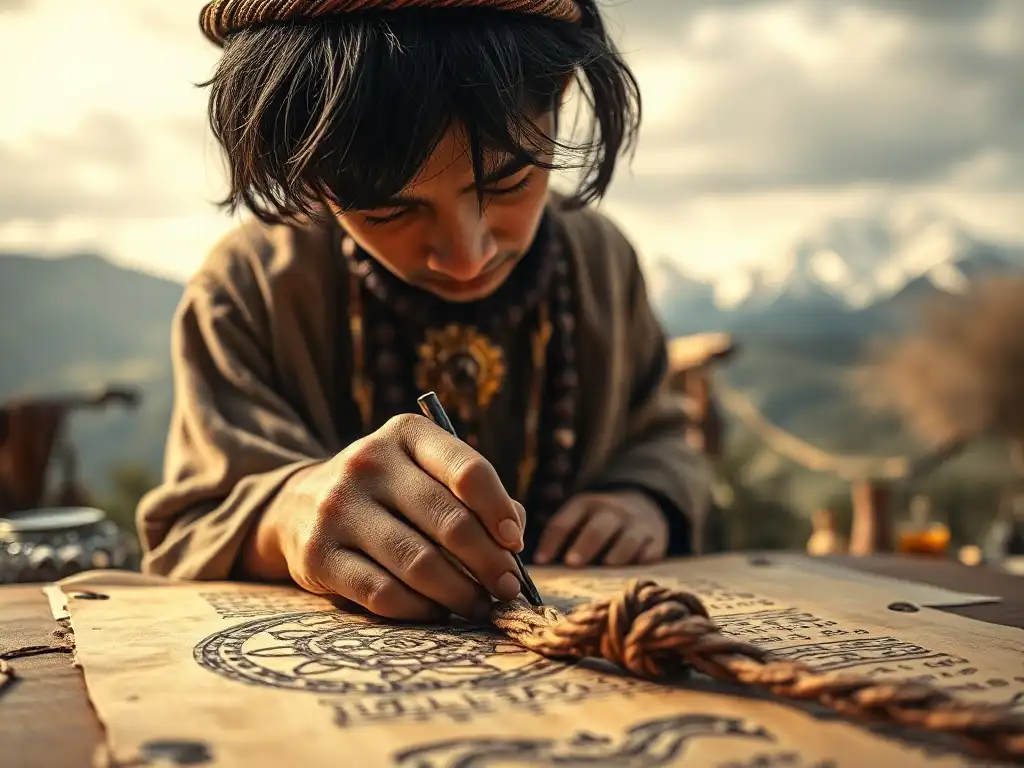
The Inca civilization, renowned for its sophisticated infrastructure and intricate social organization, relied heavily on a specialized class of individuals known as quipucamayocs – Inca scribes. These individuals played a crucial role in preserving and transmitting knowledge, shaping the very fabric of Inca society. Their work extended far beyond simple record-keeping; it formed the bedrock of Inca governance, cultural identity, and historical memory.
Understanding the role of Inca scribes is essential to understanding the Inca empire's remarkable achievements and its lasting legacy. The meticulous record-keeping undertaken by these scribes provides invaluable insights into Inca history, far surpassing the limited information gleaned from archaeological findings alone. Analyzing their work allows historians to reconstruct a more complete picture of Inca life, governance, and societal structures.
The detailed nature of their records allows us to understand not only the what of Inca history, but also the how and the why. This section will delve into the specific functions of these crucial figures, highlighting their significance in preserving Inca history and administrative control.
Preserving Inca Royal Lineage and Genealogies
The Inca empire placed immense importance on maintaining a clear and unbroken royal lineage. The legitimacy of the Sapa Inca, the emperor, rested directly on his descent from the previous rulers. Inca scribes meticulously documented these royal genealogies, creating detailed records that traced the lineage back through generations.
These records weren't simply lists of names; they included details about significant events in the lives of each ruler, marriages, conquests, and even perceived divine connections. This meticulous record-keeping served several critical purposes: it established and reinforced the legitimacy of the current Sapa Inca, it provided a framework for understanding the history of the empire, and it helped to solidify the Inca’s claim to power and authority. The preservation of these genealogies was arguably the most critical task undertaken by the quipucamayocs, ensuring the continuity of power and the stability of the empire.
The precise methods used to record these genealogies, often involving intricate systems of knots and colors on quipus (counting devices), are still being studied by researchers today, revealing the sophisticated mathematical and mnemonic systems employed by these skilled scribes. Consider, for example, the detailed accounts of the reign of Pachacuti, meticulously recorded, highlighting his military campaigns and administrative reforms. These records weren't simply historical accounts; they were instruments of power, used to legitimize rule and maintain social order.
Recording Inca Laws and Administrative Orders
Beyond royal genealogies, Inca scribes played a vital role in documenting the empire's intricate legal and administrative systems. Inca law, though not codified in the same way as many modern legal systems, was complex and far-reaching. It governed every aspect of Inca life, from agricultural practices to religious rituals. Inca scribes were responsible for recording these laws, decrees, and administrative orders, ensuring their consistent application throughout the vast empire.
This involved creating comprehensive records of land ownership, tax assessments, labor assignments ( mita ), and the distribution of resources. These records were essential for maintaining social order and economic stability. The meticulous nature of this record-keeping is evident in the surviving archaeological evidence, revealing a sophisticated system of administration that facilitated the efficient management of a vast and diverse population.
The accuracy and comprehensiveness of these records were critical to the smooth functioning of the Inca state. Imagine the logistical challenges of managing an empire spanning thousands of miles – the scribes’ work was instrumental in overcoming these challenges. The records also allowed for the efficient allocation of resources during times of drought or other crises, demonstrating the foresight and planning inherent in Inca governance.
The Legacy of Inca Scribes and Their Impact
The legacy of Inca scribes extends far beyond the realm of historical record-keeping. Their work provides invaluable insights into the complexities of Inca society, revealing a level of sophistication and organization that is often underestimated. The surviving fragments of quipus, though incomplete, offer a glimpse into the intellectual capabilities of the Inca civilization, demonstrating their mastery of numerical systems, data management, and information storage. The skills and knowledge of the Inca scribes were passed down through generations, ensuring the continuity of Inca administrative and cultural traditions.
Their role in maintaining social order, preserving historical memory, and facilitating effective governance was paramount to the success and longevity of the Inca empire. The detailed records they created continue to inform and inspire historians and researchers today, offering a deeper understanding of this remarkable civilization. Their impact is undeniable; without their meticulous work, our understanding of Inca history would be significantly impoverished.
Further research into Inca scribal practices promises to unlock even more secrets of this fascinating and influential culture, highlighting the importance of preserving and studying these invaluable historical records. The study of Inca scribes and their contributions continues to be a vibrant field of research, revealing new insights into the complexity and sophistication of this remarkable civilization. 🗺️
Understanding Inca Historical Records Today

The study of Inca history relies heavily on the surviving records painstakingly created by Inca scribes. Unlike many other ancient civilizations that left behind vast libraries of written texts, the Inca primarily used a system of knotted strings called quipus to record information. This presents unique challenges for modern historians seeking to understand their society, governance, and daily life. While quipus are undeniably a crucial source, their interpretation remains a complex and ongoing endeavor.
The Inca scribes, highly trained specialists within the imperial bureaucracy, were responsible not only for creating these quipus but also for orally transmitting historical narratives, genealogies, and legal codes. This oral tradition, though less tangible than written records, played a vital role in preserving and disseminating Inca knowledge. Understanding the interplay between quipus and oral tradition is key to unlocking the secrets of Inca record-keeping.
The sheer volume of information potentially held within surviving quipus and the fragmented nature of the oral traditions passed down through generations necessitates a multidisciplinary approach to decipher their meaning. This involves collaboration between anthropologists, archaeologists, linguists, and historians, each bringing their unique expertise to bear on this fascinating puzzle. The meticulous work of these scholars continues to shape our understanding of Inca "Inca scribes history recording".
Challenges in Deciphering Inca Written Records
Deciphering Inca quipus presents significant challenges. Unlike alphabetic writing systems, quipus used a complex system of colored strings, knots, and their placement to represent numerical data, possibly calendrical information, and potentially even narrative elements. The exact meaning of many quipus remains elusive. Furthermore, the scarcity of surviving quipus limits the available data.
Many were likely destroyed during the Spanish conquest, representing an irreplaceable loss of information. Another significant obstacle is the lack of a comprehensive key or Rosetta Stone to unlock the system's intricacies. Scholars have proposed various interpretations, often based on contextual clues and comparisons with other Inca artifacts and records, but a definitive understanding remains out of reach. The ambiguity inherent in the quipus system necessitates careful consideration of multiple interpretations and the possibility of multiple layers of meaning embedded within each individual quipu.
The challenge is compounded by the degradation of many existing quipus, which makes the already difficult task of interpretation even more complex. The colors may have faded, strings may be broken, and knots may be damaged, making it difficult to accurately reconstruct the original form of the quipus. This underscores the critical importance of preservation and careful handling of these invaluable historical artifacts.
Ongoing Research and Discoveries in Inca Scribe Studies
Despite the challenges, significant progress has been made in understanding Inca quipus. Recent research employs advanced techniques, including 3D scanning and digital modeling, to analyze the intricate details of these knotted records. This allows scholars to examine the quipus with unparalleled precision, identifying previously unnoticed features.
Moreover, the application of statistical methods and computational analysis is helping uncover patterns and relationships within the data encoded in the quipus. Cross-referencing information from different quipus and comparing them with archaeological findings and ethnographic accounts also contributes to a more holistic understanding. Ethnohistoric accounts, written by Spanish chroniclers who interacted with the Inca after the conquest, although sometimes biased, provide valuable contextual information that can aid in the interpretation of quipus.
Ongoing excavations at Inca sites continue to yield new quipus and other artifacts that shed light on Inca record-keeping practices. Each new discovery provides valuable clues and refines our understanding of the Inca scribes' intricate system. The collaborative nature of this research, bringing together experts from diverse fields, is crucial for making significant advances in our understanding of Inca "Inca scribes history recording".
The Future of Inca History and the Role of Record Analysis
The future of Inca history research hinges significantly on continued advancements in quipu analysis. As technology improves, more sophisticated methods will undoubtedly emerge, leading to more accurate and comprehensive interpretations of these records. The development of artificial intelligence and machine learning algorithms could potentially revolutionize the field, helping to identify patterns and relationships in the data that would be impossible for humans to discern.
Further interdisciplinary collaboration between archaeologists, historians, anthropologists, mathematicians, and computer scientists will be vital in unlocking the full potential of quipus as sources of Inca history. Preservation efforts are also crucial. Protecting existing quipus from further deterioration and ensuring their proper storage and handling are essential for future generations of scholars.
The ultimate goal is to create a more complete and nuanced picture of Inca society, politics, economy, and daily life, relying less on speculation and more on the data encoded within their remarkable record-keeping system. The ongoing quest to understand the Inca scribes and their methods promises to significantly reshape our understanding of this fascinating civilization and its enduring legacy. The continued study of "Inca scribes history recording" will undoubtedly reveal further insights into this sophisticated and complex culture.
Frequently Asked Questions
What role did Inca scribes play in society?
Inca scribes, or amautas, held a highly prestigious position. They were responsible for recording and preserving vital information, including historical accounts, laws, and astronomical data, vital for the empire's administration and continuity. Their literacy was crucial to the empire's functioning.
What writing system did the Inca scribes use?
The Inca did not have an alphabet in the traditional sense. Instead, they used a system of knotted strings called quipu. These complex records encoded numerical and potentially textual information, showcasing a unique form of record-keeping.
How did the Inca scribes learn their craft?
Scribal training was a rigorous and specialized process. Young individuals with aptitude were selected for extensive apprenticeships under experienced amautas, mastering the intricate art of quipu making and interpretation. This ensured the continuation of this vital skill.
What kind of information did Inca scribes record?
Inca scribes documented a vast range of information. This included historical events, genealogies of rulers, census data, agricultural yields, and astronomical observations. This detailed record-keeping was essential for the empire's efficient governance and planning.
How important was the work of Inca scribes to Inca history?
The work of Inca scribes was absolutely crucial for understanding Inca civilization. While quipu are not fully deciphered, they provide invaluable insights into Inca society, administration, and worldview, offering a unique perspective on their history and culture.
Final Reflection: Echoes of the Quipu: The Enduring Legacy of Inca Scribes
The meticulous record-keeping of Inca scribes, far from being a relic of the past, offers a crucial lens through which to understand the complexities of information management and societal organization in a pre-Columbian world. Their innovative systems, particularly the intricate quipu, challenge our modern assumptions about literacy and demonstrate the power of alternative methods of knowledge transmission. This understanding is vital in a world increasingly grappling with data overload and the preservation of cultural heritage.
The ingenuity of the Inca scribes continues to resonate today, reminding us of the diverse ways humans have sought to document their experiences and transmit their knowledge across generations. Their dedication to preserving history and culture, despite lacking a written alphabet in the way we understand it, is profoundly inspiring. The quipu was not merely a mnemonic device; it was a sophisticated system of record-keeping that allowed the Inca to manage their vast empire.
This statement highlights the complexity and sophistication of their methods, challenging simplistic narratives of pre-Columbian societies.
Consider the impact of their work: how the meticulous recording of agricultural cycles, astronomical observations, and population data shaped their society. Now, consider your own life. How do you record and preserve your own history, your own knowledge? What systems do you use, and how might you learn from the innovative approaches of the Inca scribes to better organize and share your own experiences and insights? Embrace the challenge of finding new ways to preserve your own story, ensuring that your legacy, like that of the Inca scribes, endures.
Unveil the Secrets of Inca History Today!
Thank you for exploring the fascinating world of Inca scribes with us! You've gained insight into how these ancient record-keepers shaped history and knowledge. Now, let's delve deeper into this captivating legacy!
Here are some ways to continue your exploration of Inca civilization:
- Explore the influence of Inca technology on modern record-keeping. Our website offers many additional articles and resources.
- Visit a museum or exhibit showcasing Inca artifacts to experience their culture firsthand.
- Share your newfound knowledge with friends and on social media to inspire others to learn about the Andean civilizations.
What aspect of Inca history most fascinates you, and how do you believe it impacts our understanding of record-keeping today?