
The Seeds of Empire: Understanding the Foundations of the Inca State

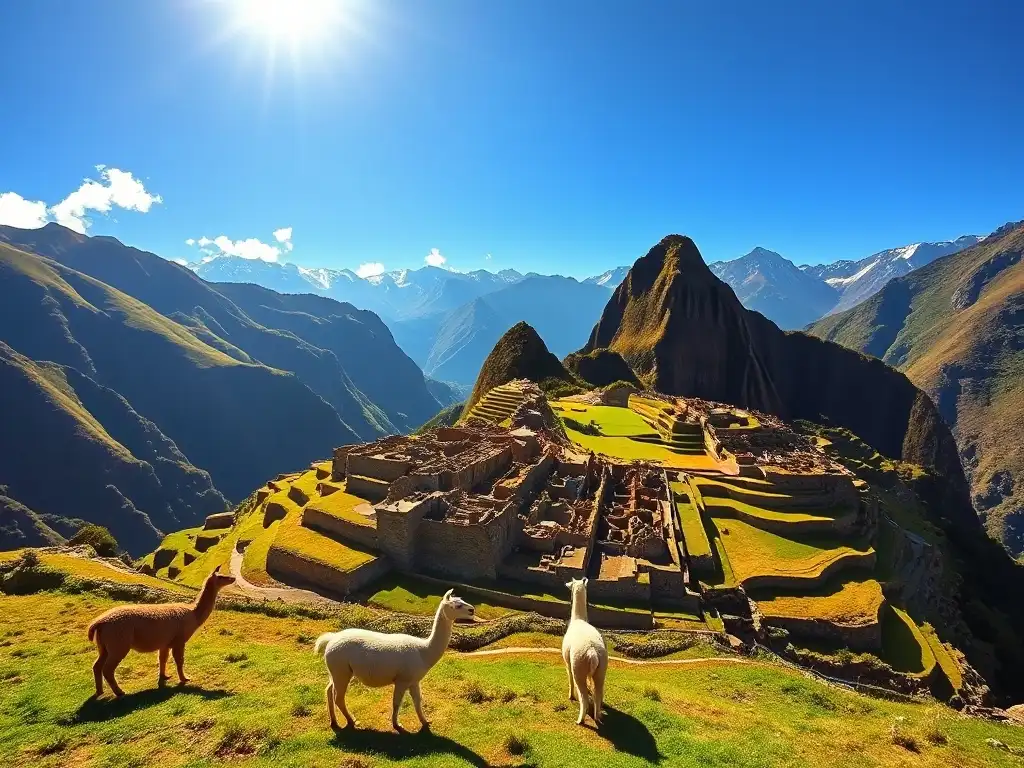
Step into a world lost to time, yet echoing with the whispers of a magnificent empire. Journey with us through the breathtaking landscapes of the Andes, where civilizations flourished and left behind an enduring legacy. Unravel the mysteries surrounding the Inca empire foundation, a pivotal moment that shaped the destiny of a continent.
Discover how ingenious engineering, intricate social structures, and a profound connection to their environment laid the groundwork for the Inca's astonishing rise to power. Prepare to be amazed as we delve into the fascinating Pre-Incan Cultures of the Highlands and explore the seeds of this extraordinary empire.
The Inca Empire, a civilization renowned for its sophisticated engineering, intricate social structures, and vast territorial reach, didn't emerge from a vacuum. Its impressive rise was built upon centuries of cultural and political development in the Andes, a process involving complex interactions, adaptations, and innovations by numerous pre-Inca societies.
Understanding the Inca empire foundation requires delving into the rich tapestry of Andean history, exploring the contributions of preceding cultures that laid the groundwork for the Inca state’s remarkable success. This article examines the crucial role played by these earlier civilizations, focusing on how their legacies shaped Inca political organization, social structures, and technological advancements.
We will explore the significant influences of cultures like the Wari and Tiwanaku, highlighting their lasting impact on the Inca Empire's foundation and subsequent expansion. The Inca achievement was not a spontaneous creation, but rather a culmination of centuries of Andean ingenuity and adaptation, a testament to the enduring power of cultural inheritance.
Early Andean Societies and the Genesis of Inca Power
Long before the Inca, the Andean highlands were home to a diverse array of sophisticated societies. These groups, often characterized by their mastery of agriculture in challenging terrains, developed complex irrigation systems, innovative architectural techniques, and intricate social hierarchies. The development of agriculture, particularly the cultivation of potatoes and other Andean staples, provided the economic base for population growth and the emergence of larger, more complex settlements.
Early Andean societies like the Chavín, Paracas, and Nazca laid the groundwork for later developments, demonstrating an understanding of advanced technologies and social organization that would be crucial for the subsequent rise of the Inca. The ability to manage resources, build infrastructure, and maintain social order were skills honed over generations, paving the way for the Inca's later achievements.
These early societies left behind a legacy of cultural and technological innovation that would profoundly influence the Inca empire foundation, setting the stage for its extraordinary expansion. Understanding these antecedents is essential to fully appreciating the magnitude of the Inca achievement.
The Role of Pre-Incan Cultures in Shaping the Inca Empire Foundation
The Inca Empire didn't simply conquer and replace existing societies; it inherited, adapted, and integrated elements from its predecessors. The Inca skillfully incorporated pre-existing administrative structures, religious beliefs, and technological innovations into their own system. This process of cultural synthesis was a key factor in the empire's success, allowing for a relatively smooth integration of conquered territories and populations.
The Inca were adept at recognizing and utilizing the strengths of existing systems, adapting them to their own imperial needs. This pragmatic approach, rather than a complete imposition of Inca culture, contributed significantly to the stability and longevity of the empire. The integration of diverse cultural elements, rather than their suppression, was a hallmark of Inca imperial strategy, and a crucial aspect of understanding the Inca empire foundation.
Influence of the Wari Culture on Inca Statecraft
The Wari culture, flourishing from approximately 600 to 1000 CE, left a significant mark on the Andes. Their extensive road network, sophisticated administrative system, and standardized pottery styles provided models that the Inca later adapted and expanded upon. The Wari's centralized administration, with its emphasis on control and efficient resource management, served as a blueprint for the Inca's own imperial bureaucracy.
Evidence suggests that the Inca adopted and refined many of the Wari's administrative practices, incorporating them into their own system of governance. The Wari's legacy in statecraft is evident in the Inca's ability to effectively manage a vast and diverse empire, showcasing the lasting influence of this pre-Inca culture on the Inca empire foundation. Further research is needed to fully quantify the extent of this influence, but the parallels between the two systems are undeniable.
The Legacy of Tiwanaku in Inca Social Organization
The Tiwanaku civilization, flourishing from approximately 300 to 1000 CE, exerted a profound influence on Andean culture. Their monumental architecture, sophisticated agricultural techniques, and complex social structures left an enduring legacy on subsequent Andean societies, including the Inca. The Tiwanaku’s mastery of hydraulic engineering, evident in their extensive irrigation systems, provided a template for Inca agricultural practices.
Furthermore, their complex social organization, with its clearly defined hierarchies and specialized labor, likely influenced the Inca's own social structure. While the exact nature of the relationship between Tiwanaku and the Inca remains a subject of ongoing research, the similarities between their social organizations and agricultural practices suggest a significant degree of cultural continuity. This continuity played a crucial role in the Inca empire foundation, demonstrating the enduring impact of pre-Inca civilizations on the development of the Inca state.
Regional Power Dynamics Before the Rise of the Inca
The Inca Empire's emergence wasn't a sudden event; it was the culmination of centuries of complex interactions between various Andean societies. Long before the Inca, the region was a patchwork of powerful kingdoms and chiefdoms, each vying for dominance and control over resources. The area surrounding Cusco, the future Inca capital, was particularly contested.
Different groups, such as the Wari and Tiwanaku, had exerted significant influence in the preceding centuries, leaving behind a legacy of sophisticated urban planning, advanced agriculture, and intricate social structures. These earlier civilizations laid the groundwork for the later development of complex societies, including the Inca, by demonstrating the possibilities of large-scale organization and centralized control. The legacy of warfare and competition between these pre-Inca groups also shaped the Inca's own expansionist tendencies and military strategies.
Understanding these pre-existing power dynamics is crucial for grasping the Inca's relatively rapid rise to power. The Inca Empire didn't emerge in a vacuum; it built upon, and ultimately superseded, a long history of regional competition and consolidation.
The Development of Complex Societies in the Cusco Region
The Cusco region, the heartland of the Inca Empire, witnessed the rise and fall of several significant pre-Inca societies. Archaeological evidence suggests a gradual evolution of social complexity, starting with smaller, less centralized settlements and evolving into more hierarchical structures. The development of sophisticated irrigation systems, indicative of advanced agricultural practices, allowed for larger populations and greater surpluses. These surpluses, in turn, supported the growth of specialized labor and the emergence of elites who controlled access to resources and power.
The construction of monumental architecture, such as the impressive remains found at sites like Pikillacta, points to a growing capacity for organized labor and centralized planning. This evolution of complex societies in the Cusco region created a fertile ground for the Inca's later expansion and consolidation of power. It wasn't just the Inca who built impressive structures; they built upon the foundations laid by earlier Andean cultures.
Competition and Consolidation: The Path to Inca Hegemony
The Inca's rise wasn't simply about military conquest; it involved a complex process of political maneuvering, strategic alliances, and brutal warfare. The Inca initially controlled a relatively small territory around Cusco. Through a combination of skillful diplomacy, strategic marriages, and military campaigns, they gradually expanded their influence, subduing neighboring groups and incorporating them into their growing empire. This process wasn't linear; it involved periods of both rapid expansion and consolidation, setbacks and renewed advances.
The Inca often employed a strategy of divide and conquer, exploiting existing rivalries between different groups to weaken their opponents and facilitate their own conquests. The incorporation of conquered peoples into the Inca system was crucial; it involved the relocation of populations, the imposition of tribute obligations, and the adoption of Inca administrative practices. This process of competition and consolidation is essential to understanding the Inca's remarkable achievement in forging a vast and powerful empire.
Key Factors Contributing to the Inca Empire's Rise
Several crucial factors contributed to the Inca Empire's remarkable rise to dominance among the Andean civilizations. These factors weren't isolated events but interconnected elements that reinforced each other, creating a synergistic effect that propelled the Inca to unprecedented power and influence. The combination of effective agricultural techniques, strategic infrastructure development, and a well-organized military played a pivotal role in the Inca Empire's success.
Agricultural Innovations and Resource Management
The Inca's success was profoundly linked to their mastery of agriculture. They developed sophisticated irrigation systems, terraced farming techniques, and innovative crop storage methods that allowed them to support a large and growing population. Their understanding of Andean ecosystems enabled them to maximize agricultural output, ensuring food security even in challenging environments.
This agricultural prowess was not only essential for sustaining the empire's population but also provided a surplus that could be used to support the empire's vast bureaucracy, military, and infrastructure projects. The efficient management of resources was crucial to their success, providing a stable base for their expansion and consolidation of power. This efficient system allowed the Inca to effectively feed their growing population and their armies.
The Importance of Infrastructure: Roads and Communication
The Inca's extensive road network was a marvel of engineering and a key factor in their ability to control their vast empire. These roads, stretching thousands of kilometers, facilitated the movement of troops, goods, and messages across the rugged Andean terrain. The construction of bridges, tunnels, and strategically placed waystations demonstrated the Inca's advanced engineering skills and their commitment to efficient communication and transportation.
This infrastructure allowed for rapid response to rebellions, efficient distribution of resources, and the swift transmission of information, all crucial for maintaining control over such a large and diverse empire. The road system was vital for the political, economic, and military strength of the Inca Empire.
Military Organization and Expansionist Policies
The Inca army was a highly organized and effective fighting force, playing a crucial role in their expansion and consolidation of power. Their military organization was hierarchical, with a clear chain of command and specialized units for different roles. The Inca army's efficiency stemmed from its discipline, training, and effective logistical support. Their expansionist policies were not simply about conquest; they were carefully planned strategies that aimed to incorporate conquered territories into the empire and integrate them into the Inca system.
The Inca employed a combination of military force and diplomacy to achieve their goals, incorporating conquered peoples into their vast empire. The success of the Inca military was directly linked to their organizational prowess and strategic planning. Their ability to swiftly mobilize and deploy troops across their vast empire was a key factor in their dominance.
The Emergence of the Inca as a Dominant Force

The Inca Empire, at its zenith, controlled a vast territory stretching along the Andes Mountains. But its rise wasn't sudden; it was a gradual process of expansion and consolidation built upon the shoulders of earlier Andean cultures. The Inca's success wasn't solely due to military might, but also a shrewd understanding of political strategy, economic management, and cultural integration.
They skillfully adapted and incorporated elements from the societies they conquered, creating a unique and powerful empire. This process of becoming a dominant force wasn't a linear progression, however; it involved periods of setbacks and challenges that the Inca leadership navigated effectively.
The story of the Inca's rise is a compelling narrative of ambition, adaptation, and ultimately, remarkable success in building an empire that would leave a lasting legacy on South America. Their ability to absorb and integrate the strengths of conquered peoples, rather than simply suppressing them, proved to be a key element in their success.
From Local Chiefdom to Regional Power
The Inca origins are shrouded in some mystery, but evidence suggests they began as a small, relatively insignificant group in the Cusco region. Archaeological findings point to a gradual expansion of their influence, starting with the subjugation of neighboring communities. Early Inca society was likely structured as a chiefdom, with a leader who controlled a limited territory and resources.
The transition from a local chiefdom to a regional power involved a combination of factors. Strategic alliances, skillful diplomacy, and increasing military prowess enabled the Inca to gradually extend their control over a larger area. This period involved numerous conflicts and power struggles, with the Inca strategically forging alliances with some groups while subduing others.
This expansion was not simply a matter of conquest; it involved the incorporation of conquered populations into the Inca system, a process that involved both coercion and negotiation. The Inca leadership understood the importance of creating a sense of shared identity and purpose, which helped to stabilize their growing empire.
The Early Inca Rulers and Their Consolidation of Power
The early Inca rulers played a crucial role in shaping the empire's foundation. Figures like Pachacuti Inca Yupanqui are often credited with transforming the Inca from a small group into a formidable power. His military campaigns and administrative reforms were instrumental in expanding Inca control and consolidating power.
The early rulers implemented sophisticated systems of governance, infrastructure, and resource management that proved essential for sustaining their expanding empire. These rulers weren't simply conquerors; they were also skilled administrators who understood the importance of integrating conquered territories into their political and economic systems. Their success lay not only in their military prowess but also in their ability to create a stable and effective governing structure that could manage the diverse populations and vast territories under their control.
The legacy of these early rulers laid the groundwork for the later expansion and achievements of the Inca Empire. Further research is needed to fully understand the contributions of each individual ruler and the nuances of their reigns.
Understanding the Inca Empire Foundation: A Synthesis
The Inca Empire's foundation wasn't a singular event but a complex interplay of various factors. It wasn't simply a matter of military conquest; rather, it was a sophisticated process involving strategic alliances, economic policies, and cultural adaptations. Understanding the Inca's rise requires analyzing these interconnected factors and recognizing their contribution to the empire's overall success. The Inca's success is a testament to their ability to learn from, adapt to, and integrate the diverse cultures and systems they encountered during their expansion.
The Interplay of Cultural, Economic, and Political Factors
The Inca Empire's foundation rested on a delicate balance of cultural, economic, and political factors. Culturally, the Inca skillfully integrated elements from the societies they conquered, creating a sense of shared identity and purpose. This involved adopting and adapting existing religious practices, agricultural techniques, and social structures to create a unified, albeit hierarchical, society. Economically, the Inca implemented a sophisticated system of resource management and redistribution, ensuring the flow of goods and services throughout their vast empire.
This involved the construction of extensive road networks, storage facilities, and irrigation systems. Politically, the Inca established a centralized government with a clear hierarchy of power, ensuring effective control over their territories. The interplay of these factors – cultural integration, economic efficiency, and political control – was crucial to the empire's success. The failure to maintain this delicate balance would later contribute to the empire's decline.
The Long-Term Impact of Pre-Incan Developments
The Inca Empire didn't emerge in a vacuum. It built upon the foundations laid by previous Andean cultures. The advancements in agriculture, technology, and social organization made by earlier civilizations, such as the Nazca, Moche, and Tiwanaku, provided a crucial foundation for the Inca's later success. The Inca inherited and adapted existing irrigation systems, agricultural techniques, and administrative structures, modifying and improving them to meet their own needs.
This legacy of pre-Inca developments highlights the importance of understanding the historical context of the Inca Empire. The Inca's success was not solely due to their own innovations but also their ability to build upon and adapt the achievements of their predecessors. Without the groundwork laid by these earlier cultures, the Inca Empire might not have achieved the same level of complexity and sophistication. The Inca empire foundation, therefore, owes a significant debt to the advancements of preceding Andean civilizations.
Conclusion: The Enduring Legacy of Inca State Formation
The Inca Empire's rise wasn't a sudden event but a gradual process built upon the achievements and failures of preceding Andean cultures. Understanding the Inca empire foundation requires acknowledging the complex interplay of factors, from environmental adaptation and agricultural innovation to sophisticated political strategies and military prowess. The Inca's success wasn't solely due to their own ingenuity; it was a culmination of centuries of cultural exchange and adaptation within the Andes. They inherited and refined existing technologies, administrative systems, and social structures, ultimately forging a vast and enduring empire.
The legacy of Inca state formation continues to resonate today. Their sophisticated road system, still visible in parts of the Andes, stands as a testament to their engineering skills and their ability to integrate diverse regions. Their mastery of agriculture, particularly terrace farming, allowed them to cultivate even the steepest slopes, a practice that continues to inspire sustainable agricultural techniques.
Moreover, the Inca's administrative and social organization, with its emphasis on community and reciprocity, offers valuable insights into effective governance and societal cohesion. Studying the Inca empire foundation allows us to appreciate not only their impressive achievements but also the enduring relevance of their innovations for contemporary societies. The meticulous record-keeping using quipus, though still partially enigmatic, demonstrates an advanced understanding of data management and administration.
Archaeological discoveries continue to unveil further details of their sophisticated societal structure and its complex relationship with the environment, enriching our understanding of the Inca empire foundation. The resilience of their cultural practices and the enduring presence of Quechua, the Inca language, in many Andean communities underscore the lasting impact of this remarkable civilization. In essence, the study of Inca state formation provides a rich tapestry of lessons in political organization, technological innovation, and societal adaptation, offering valuable insights into the complexities of state building and cultural continuity.
- Early Andean Societies and the Genesis of Inca Power
- The Role of Pre-Incan Cultures in Shaping the Inca Empire Foundation
- Regional Power Dynamics Before the Rise of the Inca
- Key Factors Contributing to the Inca Empire's Rise
- The Emergence of the Inca as a Dominant Force
- Understanding the Inca Empire Foundation: A Synthesis
- Conclusion: The Enduring Legacy of Inca State Formation
Frequently Asked Questions
What factors contributed to the Inca Empire's foundation?
The Inca Empire's foundation stemmed from a combination of factors including military prowess, skilled administration, and strategic alliances. Their ability to conquer and integrate diverse populations played a crucial role.
When did the Inca Empire begin?
While the exact date is debated, the Inca Empire's rise is generally placed in the late 13th or early 14th century CE, originating in the Cusco region. The expansion phase began soon after.
How did the Inca Empire expand so rapidly?
The Incas utilized superior military tactics and effective organization, along with diplomacy and strategic marriages to conquer and incorporate neighboring territories. Impressive infrastructure also facilitated expansion.
What was the role of Pachacuti in the Inca Empire's foundation?
Pachacuti Inca Yupanqui is considered the key figure in the Inca Empire's expansion and consolidation. His military victories and administrative reforms laid the groundwork for the empire's growth.
What were some of the challenges faced during the Inca Empire's early years?
The early Inca state faced challenges such as resistance from conquered groups, managing diverse populations, and internal conflicts. Overcoming these obstacles was crucial to its success.
Final Reflection: Echoes of Empire: Legacy and Future of Inca Foundations
The meticulous planning and innovative social structures of the Inca Empire remain strikingly relevant today. Their sophisticated system of resource management, road networks, and agricultural techniques offer valuable lessons for addressing modern challenges like sustainable development and effective governance in diverse and geographically challenging environments. The Inca's ability to unify a vast and varied population under a single banner continues to inspire awe and serves as a compelling case study in nation-building.
The enduring impact of the Inca Empire is not merely historical; it resonates deeply within the cultural landscape of modern-day South America. The legacy of their architectural marvels, intricate textiles, and rich traditions continues to shape the identities and artistic expressions of countless communities. Their sophisticated understanding of astronomy and their reverence for nature offer a powerful counterpoint to the often exploitative relationship between humanity and the environment that characterizes much of the modern world. The Inca were not just conquerors; they were builders, innovators, and architects of a society that, in many ways, was ahead of its time.
Consider the ingenuity of the Inca's terraced farming techniques, their intricate system of knotted strings (quipus) for record-keeping, or their remarkable feats of engineering in the Andes mountains. These achievements are not relics of a bygone era; they are potent reminders of human potential and the enduring power of collaboration, innovation, and a deep respect for the natural world. You too can cultivate the seeds of progress, building upon the foundations laid by those who came before, striving for a future where ingenuity, sustainability, and social harmony prevail.
**Cultivate Your Understanding of the Inca Empire! **
Thank you for exploring the fascinating foundations of the Inca Empire with us! We hope you've gained new insights into the rich history and culture of this powerful Andean civilization. Now, let's further cultivate your curiosity.
Here are some exciting ways to deepen your understanding:
- **Expand your knowledge** by visiting a local museum to see artifacts firsthand or watching a documentary that brings the Inca's story to life.
- **Share your discoveries** about the Inca civilization on social media or in our comments section—what aspect surprised you the most?
- **Join our community! ** Subscribe to our newsletter for more insightful articles and resources on Andean civilizations.
What aspect of the Inca Empire intrigues you most, and how will you continue to explore it?