
The Linguistic Legacy of the Inca Empire: A Foundation Built on Quechua

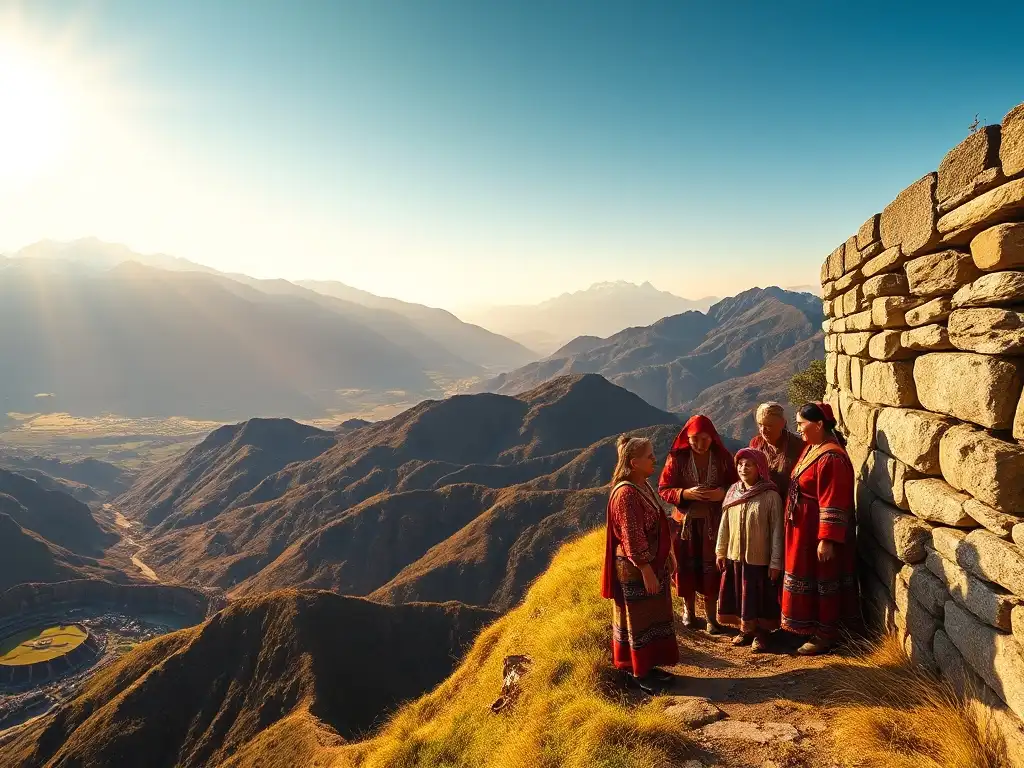
Step into a world lost to time, yet echoing with vibrant voices. The Andean Civilizations website unveils the mysteries and marvels of ancient South America, from the towering heights of Inca ingenuity to the intricate artistry of the Nazca. But what truly bound these empires together? Discover the profound impact of the Inca Empire's Quechua language, a linguistic legacy that continues to resonate today. Unravel the story behind its influence—a tale of power, adaptation, and cultural endurance—and embark on an unforgettable journey through history.
The Inca Empire, a civilization that flourished in the Andes Mountains from the 15th to the 16th centuries, left an indelible mark on South America. Its sophisticated infrastructure, intricate social structures, and impressive agricultural techniques are well-documented. However, less often explored is the crucial role of language in forging and maintaining this vast empire.
This article delves into the linguistic legacy of the Inca, focusing on Quechua, the language that served as the cornerstone of Inca power and communication, and whose influence continues to resonate across modern-day Peru, Bolivia, Ecuador, Colombia, and Argentina. We will explore how Quechua's adoption as the lingua franca facilitated the Inca's expansion, administration, and cultural unification, leaving an enduring imprint on the Andean linguistic landscape.
Understanding the Inca Empire's reliance on Quechua is key to understanding the empire's very structure and its lasting impact on the region. This exploration will address the keyword "Inca Empire Quechua language influence" and its multifaceted implications.
Introduction to Quechua's Role in the Inca Empire
Quechua wasn't simply the language spoken within the Inca Empire; it was the very glue that held the diverse populations together. Far from a mere communication tool, Quechua became a powerful instrument of political control, cultural assimilation, and administrative efficiency. The Inca's deliberate promotion of Quechua as the official language facilitated the integration of conquered territories and fostered a sense of shared identity, albeit often imposed, across a vast and geographically diverse empire.
This wasn't a passive process; the Inca actively implemented policies to standardize and disseminate Quechua, demonstrating a sophisticated understanding of language's power in shaping a unified political entity. The impact of this language policy is still felt today, with millions of speakers across the Andes region, a testament to Quechua's enduring legacy.
The Rise of Quechua as the Lingua Franca of the Inca
The elevation of Quechua to the status of lingua franca within the Inca Empire was a gradual but deliberate process. It wasn't simply a matter of one language naturally dominating others; rather, it was the result of conscious imperial policies designed to solidify Inca control and facilitate communication across a vast and diverse population. This process involved several key stages, reflecting the evolving nature of the Inca state and its expansionist ambitions.
Quechua's Pre-Inca Origins and its Spread
Before the Inca Empire's rise, Quechua was already spoken in various dialects across the central Andes. Archaeological and linguistic evidence suggests a complex pre-Inca history, with different Quechua varieties evolving and interacting. The exact origins and early spread of Quechua remain subjects of ongoing research, but it's clear that the language possessed a certain adaptability and prevalence even before the Inca's expansionist phase. This inherent adaptability likely contributed to its later success as an imperial language. [Specific information pending on pre-Inca Quechua dialect distribution maps]
Inca Expansion and the Imposition of Quechua
The Inca Empire's relentless expansion played a crucial role in the widespread adoption of Quechua. As the Inca conquered new territories, they often implemented policies to promote the use of Quechua in administration, trade, and everyday life. This wasn't always a peaceful process; resistance to Inca rule often involved resistance to the imposition of Quechua. However, the Inca's strategic placement of Quechua-speaking officials and the establishment of communication networks ensured the gradual dominance of the language across their vast dominion. [Specific data on the number of Quechua speakers at different stages of Inca expansion is needed].
Quechua as a Tool for Inca Administration and Control
The Inca's use of Quechua extended far beyond simple communication. It was strategically employed as a tool for administration, control, and the maintenance of their vast empire. Quechua-speaking officials were appointed to govern conquered territories, facilitating communication between the central government and local populations. The standardization of weights, measures, and administrative practices, often expressed in Quechua, further cemented the language's role in the empire's functioning.
Furthermore, the use of Quechua in religious ceremonies and royal pronouncements served to reinforce Inca authority and legitimize their rule. The Inca understood that controlling the language meant controlling the flow of information and, ultimately, controlling the empire itself. This strategic approach underscores the sophisticated understanding the Inca had of the power of language in maintaining their authority. The impact of this language policy continues to resonate today, with Quechua remaining a vital part of the cultural identity of many Andean communities.
Key Features of Inca Quechua
Inca Quechua, the language spoken during the height of the Inca Empire, possessed several key linguistic features that distinguished it from other Quechuan languages and contributed to its widespread adoption throughout the Andes. One significant characteristic was its agglutinative nature. This means that grammatical relationships are expressed by adding suffixes to the root word, allowing for complex sentence structures with a relatively small vocabulary.
This efficiency in expression likely played a role in its rapid dissemination. Furthermore, Inca Quechua exhibited a relatively high degree of morphological complexity, with numerous derivational and inflectional affixes. This allowed for a nuanced expression of grammatical relations, including tense, aspect, mood, and person.
The system of noun classes, or genders, also contributed to the richness and precision of the language, allowing speakers to categorize nouns based on their inherent properties. Finally, the presence of various grammatical particles and enclitics allowed for subtle shifts in meaning and emphasis, adding layers of complexity to the already rich grammatical structure. The standardization efforts undertaken by the Inca administration further shaped the language, leading to a degree of uniformity across vast distances.
Phonology and Grammar of Classical Quechua
The phonology of Classical Quechua, the form of Quechua spoken during the Inca Empire, is characterized by a relatively small inventory of consonants and vowels. The consonant system showed a prevalence of stops and fricatives, with a limited number of affricates and nasals. The vowel system, typically composed of three to five vowels, was relatively simple compared to other languages.
The grammar, as previously mentioned, was agglutinative, meaning grammatical functions were expressed by stringing suffixes onto word stems. This system allowed for the expression of a wide range of grammatical categories with a relatively limited number of morphemes. The order of morphemes within words was strictly defined, contributing to the overall regularity of the grammatical system.
The use of postpositions, rather than prepositions, to mark grammatical relations was another distinctive feature. While specific details require further research and analysis of surviving texts, the available evidence points toward a relatively consistent and well-defined grammatical structure that facilitated both ease of learning and complexity of expression.
The Vocabulary of Inca Quechua: Concepts of Power and Social Structure
The vocabulary of Inca Quechua reflects the hierarchical structure and imperial ideology of the Inca Empire. Words related to power, authority, and social status were prominent. Terms for the Inca emperor (Sapa Inca), nobles (curacas), and other officials held significant weight within the lexicon, demonstrating the importance of social hierarchy in Inca society.
Furthermore, words related to state administration, such as those denoting taxes (mita), labor obligations, and tribute, occupied a central position in the language, reflecting the empire's centralized administrative system. Many words related to agriculture and resource management were also essential, demonstrating the Inca's focus on agricultural production and control over resources. The vocabulary related to religion and ritual practices further illustrates the significance of religious beliefs and practices in Inca society.
Analyzing the vocabulary reveals a profound interplay between linguistic expression and the socio-political organization of the Inca Empire. The terminology used to describe different social strata and power dynamics provides a window into the Inca worldview and the mechanisms they employed to maintain control.
Dialectal Variations of Quechua within the Inca Empire
Despite the standardization efforts of the Inca administration, significant dialectal variation existed within Quechua across the vast expanse of the empire. These variations manifested in phonology, grammar, and vocabulary. Regional dialects often reflected the unique environmental and cultural contexts of different provinces.
For example, coastal Quechua might have incorporated vocabulary related to marine life and seafaring activities, while highland dialects emphasized terms associated with Andean agriculture and pastoralism. The extent of mutual intelligibility between these dialects is a subject of ongoing research, although it's likely that significant variation existed, creating communicative challenges across the empire's diverse regions.
Some scholars suggest that the "official" form of Quechua used in administrative contexts might have been a standardized version, possibly based on a specific regional dialect, but this is still a matter of debate. The presence of these dialectal variations highlights the dynamism and diversity of Quechua within the Inca Empire, even amidst efforts towards linguistic unification.
The Influence of Quechua on Inca Culture and Society
Quechua's influence on Inca culture and society extended beyond its role as a primary means of communication. It served as a vehicle for transmitting knowledge, beliefs, and traditions across generations. Oral traditions, rich in mythological narratives and historical accounts, were passed down through the generations in Quechua, solidifying its role as a cornerstone of Inca cultural identity. The language further shaped the empire's administrative and legal systems.
Official decrees, land records, and other crucial documents were written in Quechua, establishing its status as the language of governance. The language permeated all aspects of daily life, from interpersonal communication to religious rituals and artistic expression. Its pervasive use fostered a sense of shared identity among the diverse populations within the Inca Empire, contributing to the empire's overall cohesion. The impact of Quechua is evident in the surviving artifacts, architecture, and social structures of the Inca civilization.
Quechua in Inca Oral Traditions and Literature
Inca oral traditions, encompassing myths, legends, and historical accounts, were primarily transmitted through Quechua. These narratives played a vital role in shaping Inca worldview, social values, and cultural identity. Although no written literature in the sense of books or large-scale texts survives, the snippets of oral traditions preserved by Spanish chroniclers reveal a rich literary tradition. These narratives often featured complex characters, intricate plots, and moral lessons.
The use of poetry, songs, and other forms of oral performance enhanced the storytelling, making it both entertaining and memorable. While the exact form and style of Inca oral literature remain partially unknown due to the limited extant sources, the evidence suggests a robust and complex tradition that contributed significantly to the transmission of knowledge and cultural values. The influence of Quechua in shaping this tradition is undeniable, highlighting the language's role as a cultural repository.
Quechua's Role in Inca Rituals and Religious Practices
Quechua played a central role in Inca religious practices, serving as the medium for prayers, chants, and other ritualistic expressions. Religious ceremonies involved the recitation of specific texts and formulas in Quechua, underscoring the language's importance in connecting the people to their deities and ancestors. The use of Quechua in ritual contexts strengthened its association with the sacred and reinforced its role in maintaining social order and cohesion.
The language was likely used to invoke spiritual forces, communicate with the supernatural world, and interpret omens. While precise details of these practices are often lost to history, the available evidence points toward a profound integration of language and religion, reflecting the deep spiritual significance attributed to Quechua within Inca society. The religious use of the language further cemented its importance in the fabric of Inca life.
Quechua and the Construction of Inca Identity
Quechua was instrumental in the construction of Inca identity. Its widespread adoption across the empire fostered a sense of shared cultural heritage among diverse ethnic groups. The language became a unifying force, transcending regional and linguistic differences. The Inca administration actively promoted the use of Quechua, further solidifying its role in fostering imperial unity.
The use of Quechua in administrative, religious, and social contexts contributed to the creation of a collective Inca identity that extended beyond ethnic boundaries. The language's association with power, authority, and cultural traditions reinforced its significance in establishing a shared sense of belonging within the vast Inca Empire. The linguistic unification facilitated by Quechua stands as a significant factor in the empire's success and cultural impact.
The Impact of the Spanish Conquest on the Quechua Language

The Spanish conquest of the Inca Empire in the 16th century had a profound and devastating impact on the Quechua language. Prior to the arrival of the Spanish, Quechua was the lingua franca of the vast Inca empire, facilitating communication and administration across a geographically diverse and culturally rich region. The imposition of Spanish as the official language of the colony led to a systematic effort to suppress Quechua, impacting its use in all spheres of life.
This suppression wasn't merely a matter of linguistic dominance; it was intrinsically linked to the broader project of cultural and political subjugation. The Spanish aimed to erase indigenous identities and replace them with a Spanish-centric worldview, and language was a key battleground in this struggle.
The consequences of this linguistic imperialism are still felt today, highlighting the lasting legacy of colonialism on Andean societies. The initial impact was immediate and severe, with Quechua speakers facing social and economic disadvantages for using their native tongue.
The Suppression of Quechua by the Spanish Colonizers
Spanish colonizers actively worked to suppress the use of Quechua. This suppression took many forms, including the prohibition of Quechua in official settings, like government and the church. Education was exclusively in Spanish, effectively denying Quechua speakers access to opportunities for social mobility. The use of Quechua was often associated with a lack of sophistication or education, contributing to its marginalization.
Furthermore, religious institutions played a significant role in suppressing the language, actively discouraging its use within religious contexts and promoting Spanish as the language of God and salvation. This intentional suppression aimed to weaken indigenous communities by undermining their cultural foundation and linguistic identity. The consequences were far-reaching, impacting the transmission of knowledge, cultural practices, and community cohesion across generations. The systematic dismantling of the Inca's administrative structure also played a role, as Quechua's use in governance was replaced entirely by Spanish.
Quechua's Adaptation and Resistance During the Colonial Period
Despite the systematic suppression, Quechua demonstrated remarkable resilience. While facing significant challenges, Quechua speakers found ways to adapt and resist the imposition of Spanish. The language persisted in the domestic sphere, within families and communities, acting as a crucial element in maintaining cultural identity and transmitting traditional knowledge.
Secret or covert use of Quechua became common, especially in rural areas where the Spanish presence was less dominant. This hidden use of Quechua contributed to its survival, safeguarding its vocabulary, grammar, and cultural significance from complete erasure. Moreover, the development of a mixed language, Quechua-Spanish, known as mestizo, emerged as a testament to the people's ingenuity in adapting to the colonial reality while preserving elements of their native tongue.
This hybrid language allowed for continued communication and cultural preservation in a context of linguistic oppression. The persistence of Quechua, despite these obstacles, is a powerful demonstration of its importance to the Andean people and their determination to preserve their cultural heritage.
The Legacy of Colonial Quechua: Linguistic Changes and Continuities
The colonial period left an undeniable mark on the Quechua language. While the core structure of the language survived, significant changes occurred, particularly in vocabulary. The influx of Spanish loanwords enriched the lexicon, reflecting the cultural exchange and the unavoidable contact between the two languages.
However, it's crucial to note that this borrowing wasn't a passive process; Quechua speakers adapted Spanish words to fit the grammatical structure of their own language, showcasing the language's inherent strength and resilience. The colonial experience also led to dialectal diversification, as different Quechua-speaking communities experienced varying degrees of contact with Spanish, resulting in unique regional variations.
Yet, despite these changes, many fundamental aspects of Quechua grammar, phonology, and core vocabulary remained remarkably intact, a testament to the language's enduring strength and the determination of its speakers to maintain their linguistic heritage. The coexistence of Quechua and Spanish in many communities also led to code-switching, where speakers seamlessly transition between the two languages within a single conversation, reflecting the complex linguistic landscape of the Andes.
The Enduring Legacy of Quechua in Modern Andean Societies
Quechua remains a vital language in many parts of the Andes today, showcasing its remarkable resilience and enduring significance. Despite centuries of oppression and marginalization, Quechua continues to thrive in various communities, serving as a cornerstone of their cultural identity and social cohesion. Its survival is a powerful testament to the determination of Quechua speakers to preserve their linguistic and cultural heritage.
The language's ongoing presence is a complex phenomenon, influenced by factors such as geographic location, social dynamics, and government policies. Understanding this enduring legacy requires examining its current status, the efforts dedicated to its preservation, and its ongoing cultural significance.
Quechua's Status as an Indigenous Language Today
Quechua is recognized as an official language in several Andean countries, including Peru, Bolivia, Ecuador, and Colombia. However, its official status doesn't fully reflect the complex realities on the ground. While millions still speak Quechua, the language faces ongoing challenges, including the continued dominance of Spanish in education, media, and government. Many Quechua speakers are bilingual, utilizing both Quechua and Spanish depending on the context.
The geographic distribution of Quechua speakers is also uneven, with some regions having high concentrations of Quechua speakers while others have far fewer. Understanding the language's current status requires acknowledging both its official recognition and the ongoing challenges it faces in a predominantly Spanish-speaking region. The vibrant presence of Quechua in literature, music, and community events demonstrates its continued importance to Andean identity.
Quechua Revitalization Efforts and Language Preservation
Numerous initiatives are underway to revitalize and preserve the Quechua language. These efforts range from community-based language nests and immersion programs to government-sponsored initiatives promoting Quechua education and media. The goal is to ensure the language's survival for future generations and to counter the effects of linguistic marginalization.
These revitalization efforts involve various strategies, including the creation of Quechua-language materials, the training of Quechua teachers, and the promotion of Quechua in different media. The success of these initiatives depends on the involvement of Quechua communities, the support of governments, and the broader recognition of the language's cultural and social importance. The commitment to preserving Quechua reflects a deep understanding of the inextricable link between language and cultural identity.
The Cultural Importance of Quechua in the Andean Region
Quechua is not merely a language; it is an integral part of Andean culture, carrying within it centuries of history, traditions, and knowledge. It is the vehicle through which stories, songs, and beliefs are transmitted across generations, ensuring the continuity of Andean cultural heritage. The language is deeply embedded in the social fabric of many Andean communities, shaping their social interactions, worldview, and artistic expressions.
Quechua's cultural significance is evident in various forms of artistic expression, including music, literature, and traditional storytelling. The preservation of Quechua is therefore crucial for safeguarding the rich tapestry of Andean cultural identity. The language acts as a living archive, preserving invaluable knowledge about traditional practices, medicinal plants, and astronomical observations.
Quechua's Influence on Spanish Spoken in the Andes
The long history of contact between Quechua and Spanish has resulted in a significant influence of Quechua on the Spanish spoken in the Andes, creating a unique dialect often referred to as Andean Spanish. This influence is evident in vocabulary, pronunciation, and even grammar. Many Quechua words have been integrated into the local Spanish lexicon, enriching the language and reflecting the cultural exchange that has taken place over centuries.
The pronunciation of Spanish in the Andes also bears the imprint of Quechua, with certain sounds and intonation patterns reflecting Quechua's influence. Even grammatical structures have been subtly affected, showcasing the deep and lasting impact of Quechua on the Spanish spoken in the region.
This linguistic blending underscores the interconnectedness of the two languages and the enduring legacy of Quechua in the Andean linguistic landscape. The study of Andean Spanish offers valuable insights into language contact and the dynamic interplay between different linguistic systems.
Conclusion: The Lasting Influence of Inca Empire Quechua Language
The Inca Empire's legacy extends far beyond its impressive architectural feats and sophisticated social structures. The enduring influence of Quechua, the language spoken throughout the vast empire, remains a powerful testament to Inca dominance and cultural impact. Even after the Spanish conquest dramatically altered the political and social landscape, Quechua persisted, adapting and evolving while maintaining its core identity. This resilience speaks volumes about the language's deep integration into the daily lives and cultural practices of the Andean peoples.
The continued use of Quechua in various forms across modern-day Peru, Bolivia, Ecuador, Colombia, and Argentina demonstrates its remarkable vitality and enduring connection to the rich history of the Inca Empire. It is a living testament to the ingenuity and cultural strength of the Inca, a language that continues to shape identities and bind communities together, centuries after the fall of the empire. The ongoing efforts to preserve and promote Quechua, including its incorporation into educational systems and media, ensure that this vital part of Andean heritage thrives for generations to come. Understanding the linguistic legacy of the Inca Empire provides crucial insight into the enduring cultural impact of this remarkable civilization, highlighting the profound connection between language, identity, and cultural survival.
The story of Quechua is not merely a linguistic one; it is a narrative of resilience, adaptation, and the enduring power of cultural heritage. It's a story worth telling and preserving for future generations, ensuring that the voice of the Inca Empire continues to resonate in the modern world. The ongoing vitality of Quechua stands as a powerful symbol of the enduring legacy of the Inca Empire, a legacy that continues to shape the cultural landscape of the Andes today.
- Introduction to Quechua's Role in the Inca Empire
- The Rise of Quechua as the Lingua Franca of the Inca
- Key Features of Inca Quechua
- The Influence of Quechua on Inca Culture and Society
- The Impact of the Spanish Conquest on the Quechua Language
- The Enduring Legacy of Quechua in Modern Andean Societies
- Conclusion: The Lasting Influence of Inca Empire Quechua Language
Frequently Asked Questions
What is the Quechua language's connection to the Inca Empire?
Quechua was the official language of the Inca Empire, facilitating communication and administration across its vast territory. Its widespread use cemented its importance as a symbol of Inca power and cultural identity.
How did the Inca Empire use Quechua to maintain control?
The Inca implemented a system of administrative control using Quechua, ensuring that messages and orders could be efficiently communicated throughout the empire. This linguistic uniformity helped to consolidate power and suppress rebellion.
Did Quechua influence other languages in the Andes?
Yes, Quechua's influence is evident in many Andean languages, with loanwords and grammatical structures reflecting its dominance during the Inca period. This demonstrates its enduring linguistic impact on the region.
How is Quechua still relevant today?
Quechua remains a living language spoken by millions across the Andes. Its survival is a testament to its cultural significance and the enduring legacy of the Inca Empire. It's a vital part of Andean cultural identity.
What are some examples of Quechua words still used today?
Many everyday words, especially related to agriculture and Andean life, are derived from Quechua. Examples include words related to potatoes, llamas, and specific Andean landscapes; these words continue to reflect the cultural legacy of the Inca Empire.
Final Reflection: Echoes of the Inca: Quechua's Enduring Legacy
The enduring power of language shapes not only our understanding of the past but also the realities of the present. The linguistic legacy of the Inca Empire, woven into the very fabric of Quechua, continues to resonate across South America, a testament to the empire's sophisticated administrative and cultural systems. Its survival, despite centuries of colonial pressures, stands as a powerful symbol of resilience and cultural continuity.
The influence of Quechua extends far beyond mere linguistic survival; it represents a vibrant tapestry of cultural identity and resistance. Its continued use in various Andean communities speaks volumes about the enduring strength of indigenous traditions and the importance of preserving linguistic diversity. Language is the road map of a culture. It tells you where its people come from and where they are going.
– Rita Mae Brown. This quote perfectly encapsulates the significance of Quechua's persistence, highlighting its role not just as a communication tool, but as a living testament to the Inca's rich heritage and the ongoing struggle for indigenous rights.
Consider, for a moment, the impact of language loss on cultural heritage. The disappearance of a language is the silencing of a unique perspective, a loss of invaluable knowledge and tradition. You, the reader, have the power to contribute to the preservation of linguistic diversity. By learning about Quechua, sharing its story, and supporting initiatives that promote its continued use, you actively participate in safeguarding a vital part of human history and ensuring that the echoes of the Inca Empire continue to resonate for generations to come.
Unveil the Rich Heritage of Quechua Today!
Thank you for joining us on this exploration of the Inca Empire's linguistic legacy! We hope you gained valuable insights into Quechua's role in shaping cultural identity and communication. Now let's put that knowledge to practical use.
Here are some ways to deepen your connection with Quechua and its rich history:
- **Learn the Quechua Language:** Begin by learning basic phrases! Many online resources and language-learning apps are available.
- **Explore Inca Culture:** Delve into books and documentaries about the Inca Empire to fully appreciate the cultural context of the Quechua language.
- **Share Your Discoveries:** Discuss this article with friends and family, or share it on social media. Inspire others to explore the beauty and significance of Quechua!
Which aspect of Quechua culture resonates most with you, and how will you share its enduring legacy with others?