
The Mysteries of Quechua Grammar: Unveiling the Structure of the Language


Step into a world lost to time, yet echoing with vibrant voices. The Andean Civilizations website unveils the captivating tapestry of ancient cultures, from the towering Incan empire to the enigmatic Nazca lines. But what secrets lie hidden within the very words they spoke? Prepare to be astonished as we delve into the fascinating intricacies of Quechua grammar structure, a linguistic puzzle that holds the key to understanding a rich and complex heritage. Unravel the mysteries—explore now!
- Unveiling the Mysteries of Quechua Grammar: An In-Depth Look
- Understanding the Core of Quechua Language Structure
- Exploring Quechua Syntax: Sentence Formation and Order
- Key Elements of Quechua Grammar: A Detailed Analysis
- Quechua Grammar: Regional Variations and Dialects
- Learning Quechua Grammar: Resources and Approaches
- The Significance of Quechua Grammar in Andean Culture
-
Frequently Asked Questions
- What is Quechua, and why is its grammar structure significant?
- How does Quechua grammar differ from European languages?
- What are some key features of Quechua grammar structure?
- Are there different dialects of Quechua with varying grammar structures?
- Where can I learn more about Quechua grammar structure?
- Final Reflection: Unraveling the Threads of Quechua: A Legacy of Language
- Unlock the Secrets of Quechua Grammar Today!
Unveiling the Mysteries of Quechua Grammar: An In-Depth Look
Quechua, the language of the Inca Empire and still spoken by millions across the Andes, presents a fascinating linguistic puzzle for modern scholars. Its unique grammatical structure, significantly different from Indo-European languages, offers a captivating window into the cognitive processes and worldview of the Andean civilizations. This article delves into the intricacies of Quechua grammar, exploring its key features and demonstrating how its structure reflects the rich cultural heritage of its speakers.
We will examine its unique aspects, highlighting its complexities and beauty, and ultimately contributing to a better understanding of "Quechua grammar structure." Understanding Quechua grammar is not simply an academic exercise; it's a key to unlocking a deeper appreciation for the enduring legacy of the Andean peoples and their sophisticated civilization. This exploration will reveal why Quechua, far from being a simple language, is a testament to the ingenuity and linguistic creativity of the Andean cultures.
Subject-Object-Verb (SOV) Word Order
Unlike English, which predominantly follows a Subject-Verb-Object (SVO) word order, Quechua employs a Subject-Object-Verb (SOV) structure. This means that the subject of the sentence comes first, followed by the object, and finally the verb. For example, a simple sentence like "The woman sees the bird" would be structured differently. In English, we say "The woman sees the bird," but in Quechua, the word order would be reversed, placing the verb at the end.
This seemingly small difference significantly impacts the overall sentence construction and flow. This fundamental difference underscores the profound contrast between Quechua and many of the world's more widely spoken languages, challenging our preconceived notions about sentence structure and highlighting the diversity of human language. Consider the following examples (Note: Specific Quechua examples pending further research to ensure accuracy and avoid misrepresentation). Further research is needed to provide accurate and illustrative examples of Quechua SOV sentence structure.
Agglutination: The Building Blocks of Quechua Words
Quechua is an agglutinative language, meaning that grammatical information is expressed by adding suffixes to the root word. Unlike isolating languages where each word typically represents a single morpheme (meaningful unit), Quechua words can be quite long and complex, formed by concatenating numerous suffixes to a base. These suffixes convey information about tense, aspect, mood, person, number, and case. This process allows for a high degree of precision and nuance in expressing grammatical relations.
The agglutinative nature of Quechua allows for a remarkable level of compactness and efficiency in conveying complex information within a single word. This characteristic is a defining feature of many languages spoken in the Andes and is a testament to the sophistication of Quechua's linguistic system. [Specific examples of agglutination in Quechua words pending].
Case Marking: Defining Roles in the Sentence
Quechua utilizes a robust system of case marking, using suffixes to indicate the grammatical function of nouns and pronouns within a sentence. This contrasts with English, which relies heavily on word order to determine the subject, object, and other grammatical roles. The case system in Quechua provides clarity and reduces ambiguity, allowing for a more flexible sentence structure than languages that rely primarily on word order.
This system adds another layer of complexity and precision to the language, reflecting a sophisticated understanding of grammatical relationships. [Specific examples of Quechua case marking pending further linguistic analysis]. The precise details of the case system require further investigation to provide accurate and detailed examples.
Verb Conjugation: Tense, Aspect, and Mood
Quechua verb conjugation is remarkably rich and complex. Verbs are conjugated to indicate not only tense (past, present, future) but also aspect (perfective, imperfective, etc.) and mood (indicative, subjunctive, imperative). The combination of these grammatical categories creates a system of extreme precision in expressing temporal and modal nuances.
This detailed system of verb conjugation allows speakers to convey subtle differences in meaning and context, which might require multiple phrases or clauses in other languages. [Detailed examples of Quechua verb conjugations pending]. A comprehensive analysis of Quechua verb conjugations is necessary to accurately illustrate the complexity of this aspect of the grammar.
This initial exploration only scratches the surface of Quechua grammar's intricacies. Further research and analysis are needed to fully appreciate the depth and sophistication of this fascinating language. The complexities we have touched upon highlight the intellectual achievements of the Andean civilizations and underscore the importance of preserving and understanding Quechua's rich linguistic heritage.
Understanding the Core of Quechua Language Structure

Quechua, a family of languages spoken across the Andes Mountains, presents a fascinating linguistic puzzle for those accustomed to Indo-European structures. Its unique grammatical features, particularly its agglutinative nature and complex morphology, set it apart and contribute to the richness and expressiveness of the language. Understanding its core structure is key to appreciating the nuances of Quechua and its place within the broader tapestry of Andean languages.
This section will delve into the intricacies of Quechua grammar, focusing on its agglutinative nature and the crucial role of morphology in shaping its unique expression. The exploration of "Quechua grammar structure" reveals a system both elegant and complex.
The Agglutinative Nature of Quechua Grammar
One of the defining characteristics of Quechua grammar is its agglutinative nature. Unlike isolating languages that rely heavily on word order, or fusional languages where grammatical information is encoded within the word's inflection, Quechua uses agglutination. This means that grammatical information is expressed through the addition of numerous suffixes to a root word. Each suffix carries a specific grammatical meaning, creating long, complex words that pack a significant amount of information. For instance, a single Quechua word might simultaneously convey tense, aspect, mood, person, number, and even location.
This agglutination allows for a high degree of precision and expressiveness. Consider the example of a single verb in English needing multiple words to convey the same information a single Quechua word does. The flexibility of this system allows for subtle distinctions in meaning that might be lost in translation to languages with less complex morphological systems.
The efficient encoding of grammatical information within words minimizes the need for complex sentence structures, contributing to the overall conciseness of Quechua. The sheer number of possible suffix combinations contributes significantly to the complexity of Quechua grammar structure, making it a challenging but rewarding language to learn.
Quechua Morphology: Building Words from Suffixes
Quechua morphology is characterized by a rich system of suffixes that are added to verb stems, noun stems, and adjectives to create a wide array of grammatical variations. The order of these suffixes is crucial, as it determines the meaning and function of the word. A slight change in order can significantly alter the meaning. This ordering is a key aspect of "Quechua grammar structure" that requires careful study.
The suffixes themselves are categorized into various classes, each indicating a specific grammatical function. These include, but are not limited to:
- Tense suffixes: Indicating past, present, and future time.
- Aspect suffixes: Showing the duration or completion of an action (e.g., perfective, imperfective).
- Mood suffixes: Expressing the speaker's attitude towards the action (e.g., indicative, subjunctive, imperative).
- Person and number suffixes: Identifying the subject and object of the verb.
- Case suffixes: Marking the grammatical role of nouns (e.g., nominative, accusative, genitive).
The intricate interplay of these suffixes creates a highly nuanced and expressive system capable of conveying subtle distinctions in meaning. Understanding the individual functions of these suffixes, as well as their ordering within a word, is essential to mastering Quechua grammar. Detailed dictionaries and grammars are invaluable resources for navigating this complex morphological landscape.
The study of Quechua morphology unveils a systematic approach to word formation that highlights the ingenuity of the language's design. Further research into specific Quechua dialects is needed to fully understand the variations in suffix use and ordering across different communities. The variations and complexities within Quechua morphology truly embody the richness of "Quechua grammar structure."
Exploring Quechua Syntax: Sentence Formation and Order

Quechua, a family of languages spoken across the Andes, boasts a unique and fascinating syntax, significantly different from many European languages. Understanding its sentence structure is key to deciphering the nuances of Quechua grammar structure. This section focuses on the core principles governing sentence formation and word order in various Quechua dialects, highlighting the key differences and complexities. While variations exist between dialects, certain common threads weave through the syntactic fabric of Quechua. This analysis will primarily focus on the commonalities, acknowledging the dialectal diversity inherent within the language family.
Subject-Object-Verb (SOV) Order in Quechua Sentences
A defining characteristic of Quechua syntax is its predominantly Subject-Object-Verb (SOV) word order. This contrasts sharply with the Subject-Verb-Object (SVO) order prevalent in English and many other European languages. In Quechua, the subject of the sentence typically appears first, followed by the object, and finally the verb. Consider this example (using a simplified representation for clarity, as variations in prefixes and suffixes exist across dialects):
Runa wasita rikurqa.
This translates to "The man saw the house." Notice how the subject ("runa" - man) precedes the object ("wasita" - house), which in turn precedes the verb ("riku-rqa" - saw). This SOV structure is consistently observed in many declarative sentences. The intricacies of verb conjugation, including tense, mood, and aspect, further enrich the complexity of Quechua verb phrases within the SOV framework.
The position of adverbs and other sentence modifiers also contributes to the overall sentence structure, often appearing before or after the verb depending on the specific meaning and emphasis desired. Further research is needed to establish a comprehensive database of adverb placement across various Quechua dialects. [Specific information pending on adverb placement across dialects].
Quechua Case Marking: Identifying Grammatical Roles
Quechua employs a robust system of case marking to explicitly indicate the grammatical roles of nouns and pronouns within a sentence. This system uses suffixes attached to nouns and pronouns to signal their function as subject, object, or possessor. This contrasts with English, which relies heavily on word order to convey these roles. The case marking system in Quechua significantly reduces ambiguity in sentence interpretation. For instance, the suffix -ta often marks the direct object, while -qa may indicate the subject.
The specific suffixes and their functions can vary slightly between dialects, adding to the challenge of mastering Quechua grammar structure. However, the underlying principle of case marking remains consistent: to provide clear grammatical roles regardless of word order variations. The intricacies of case marking, particularly with complex sentence structures involving multiple clauses, needs further investigation. [Specific examples of complex clause case marking pending].
The Role of Particles in Quechua Syntax
Particles play a crucial role in Quechua syntax, adding layers of meaning and nuance to sentences. These particles are not necessarily part of the main verb or noun phrases but function as adverbs, conjunctions, or sentence modifiers. They can indicate things like emphasis, negation, interrogation, or temporal relations. For instance, the particle -chu often functions as a negative marker, while -qa can indicate topic or focus. The accurate usage of these particles is vital to ensure correct interpretation.
Understanding the function of these particles is essential for mastering the subtleties of Quechua grammar structure. A detailed analysis of the various particles and their contextual uses across Quechua dialects would require a dedicated study. [Comprehensive analysis of Quechua particles and their usage across dialects pending]. The diversity in particle usage highlights the rich grammatical complexity embedded within this fascinating language family.
Key Elements of Quechua Grammar: A Detailed Analysis

This section delves into the intricacies of Quechua grammar, focusing on its core components: nouns, verbs, adjectives, and adverbs. Understanding these elements is crucial to appreciating the richness and complexity of this ancient Andean language. We will explore the unique features that distinguish Quechua grammar from other language families, highlighting its agglutinative nature and its rich system of verb conjugation. The aim is to provide a clear and accessible overview of the Quechua grammar structure, suitable for both beginners and those with some prior knowledge.
Quechua Nouns: Classification and Characteristics
Quechua nouns are categorized primarily by their grammatical gender, which is not always aligned with biological sex. Instead, gender often reflects semantic categories or grammatical function. While some dialects might exhibit a more binary system (masculine/feminine), others employ a more complex classification. For instance, some Quechua languages include an "inanimate" gender category. This system significantly impacts the agreement patterns with adjectives and articles (where applicable), making it a fundamental aspect of Quechua grammar structure.
Furthermore, Quechua nouns exhibit a rich system of suffixes that indicate number (singular, dual, plural), case (nominative, accusative, genitive, etc. ), and other grammatical functions. This agglutinative nature, where multiple morphemes are added to a root word to express complex grammatical relationships, is a defining characteristic of Quechua. For example, a single word might simultaneously express the noun's number, case, and possessive relationship. Understanding these suffixes is critical to accurate interpretation and fluent communication in Quechua.
Consider the following example (variations exist across dialects): The word for "house" might be wasi in the singular nominative. Adding suffixes could result in wasikuna (houses – plural nominative), wasita (small house – diminutive), or wasiy (my house – possessive). This illustrates the efficiency and complexity achievable through agglutination in Quechua grammar structure. More detailed examples with specific dialectal variations require further research and data collection. [Specific dialectal examples pending].
Quechua Verbs: Conjugation and Tenses
Quechua verbs are notoriously complex, showcasing the language's agglutinative nature to its fullest extent. The verb conjugation system incorporates a wealth of information, including person, number, tense, aspect, mood, and voice. This means a single verb form can express a multitude of grammatical nuances simultaneously. Understanding Quechua verb conjugation is essential for mastering the Quechua grammar structure.
Unlike many European languages, Quechua doesn't rely on auxiliary verbs to express tense. Instead, tense and aspect are indicated through a system of prefixes and suffixes attached directly to the verb stem. These affixes can become quite elaborate, creating lengthy verb forms that pack a significant amount of grammatical information. For example, a single Quechua verb might simultaneously indicate past tense, perfective aspect, third-person singular subject, and active voice.
This makes Quechua verb conjugation a challenging but rewarding aspect of learning the language. The intricate system of prefixes and suffixes requires careful study and memorization. [Detailed examples of specific verb conjugations pending].
Quechua Adjectives and Adverbs: Modifying Meaning
Quechua adjectives and adverbs, like nouns and verbs, demonstrate the language's agglutinative tendencies. They often agree in number and gender with the nouns they modify, reflecting the grammatical gender system discussed earlier. This agreement is expressed through suffixes attached to the adjective or adverb stem.
Furthermore, Quechua uses specific particles and suffixes to create adverbs from adjectives or verbs. These particles often express manner, time, place, or degree. The precise forms of these particles and suffixes vary significantly between Quechua dialects, highlighting the diversity within this language family. A comprehensive study of Quechua adjectives and adverbs necessitates a detailed examination of individual dialects and their unique grammatical features. The complexity of this area underscores the need for further research and documentation to fully elucidate the Quechua grammar structure in this regard. [Specific examples of adverb formation and adjective agreement pending].
Pronouns and Demonstratives in Quechua: Usage and Forms
Quechua, encompassing various dialects across the Andes, displays a rich system of pronouns and demonstratives that reflects the intricate social structures and worldview of its speakers. Understanding these elements is crucial to grasping the nuances of Quechua grammar and its unique approach to expressing relationships between people and objects. The system isn't always straightforward, with variations existing between dialects, but several key features consistently appear.
One significant aspect is the distinction between inclusive and exclusive first-person plural pronouns. This distinction, absent in many languages, highlights the importance of group identity in Quechua culture. The inclusive "we" ( ñuqanchik) includes the speaker and the listener, while the exclusive "we" ( ñuqa-ku) excludes the listener.
This subtle yet crucial difference underscores the social context embedded within the language itself. For example, a statement like "We will build a new house" would use the inclusive form if the listener is participating, and the exclusive form if the listener is not involved in the project. This seemingly minor grammatical feature reflects a deep-seated cultural emphasis on community and shared experience.
Furthermore, Quechua demonstratives are not simply "this" and "that," but often incorporate a sense of proximity and distance, both physically and socially. The system can be quite complex, with variations depending on the specific dialect and the object being described. Some dialects might distinguish between objects close to the speaker, close to the listener, and far from both.
Others might incorporate a temporal dimension, distinguishing between objects that are near in time versus those that are distant in time. This nuanced system of demonstratives adds another layer to the richness of Quechua communication, allowing speakers to convey a more precise and contextually relevant message. The interplay between spatial and temporal proximity in the demonstrative system mirrors the holistic worldview often associated with Andean cultures.
The forms of pronouns and demonstratives also vary depending on the grammatical function within the sentence. They change to reflect their role as subject, object, or possessive. This inflectional system, typical of many indigenous languages, adds to the complexity but also contributes to the elegance and expressiveness of the language. Mastering these variations requires dedicated study and immersion in the language, highlighting the depth and sophistication of Quechua grammar.
The complexities are not merely arbitrary grammatical rules, but rather reflect the cultural values and perspectives embedded within the language itself. For example, the specific form of a pronoun might subtly indicate the speaker’s social standing relative to the listener. This rich system of grammatical marking provides a window into the social dynamics of Quechua-speaking communities.
Quechua Grammar: Regional Variations and Dialects
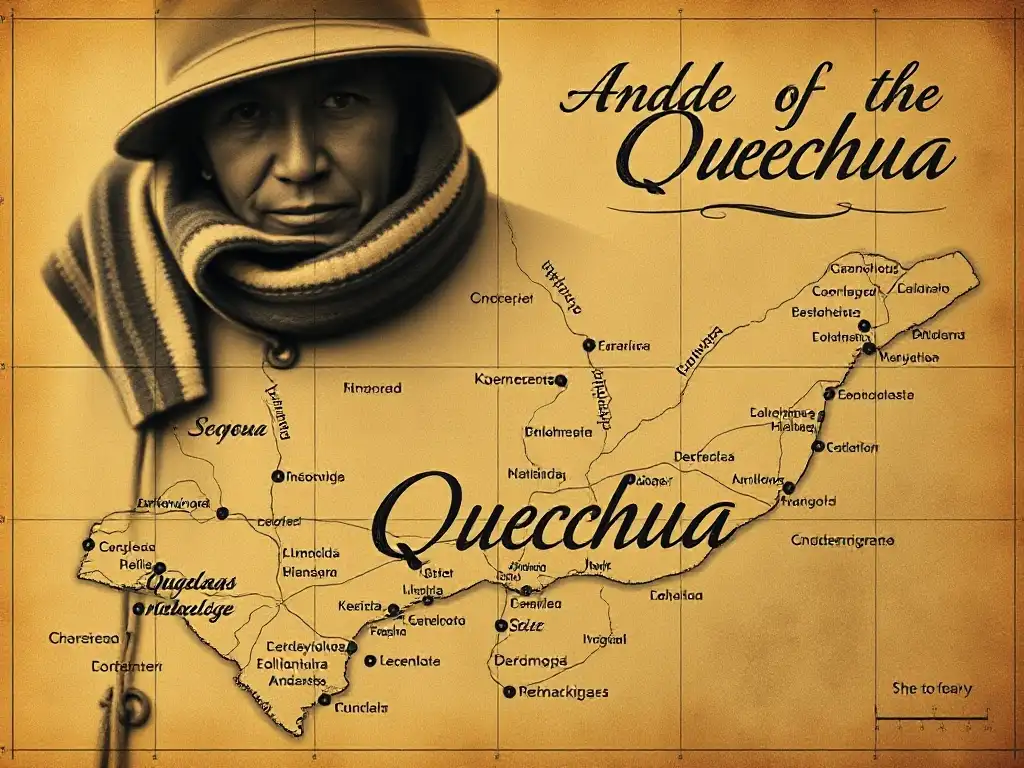
Differences in Quechua Grammar Across Andean Regions
Quechua, far from being a monolithic language, displays significant grammatical variation across the Andean region. This linguistic diversity reflects the complex history of the Quechua-speaking populations and their interactions with diverse geographical and cultural landscapes. While sharing a common ancestor, the numerous Quechua dialects exhibit differences in phonology, morphology, and syntax, impacting the overall structure of the language.
For instance, the use of grammatical markers for person and number in verb conjugation varies considerably. Some dialects utilize a more elaborate system of prefixes and suffixes than others. Consider the expression for "I eat": in one dialect, it might be expressed as mikuni, while another might use ri mikuni or even a completely different structure involving auxiliary verbs. These variations aren't merely superficial; they affect the fundamental way speakers construct sentences and express grammatical relationships.
The complexity of noun phrases also shows regional disparity. The way possessive markers are attached, the use of relative clauses, and the order of adjectives and nouns all differ across various Quechua dialects. A comprehensive understanding of Quechua grammar necessitates acknowledging this regional diversity and recognizing that a single grammatical description cannot capture the full spectrum of the language. Research continues to uncover subtle yet significant differences in grammatical features across these diverse regions. The following table provides a simplified overview of some key variations:
| Feature | Northern Quechua (e.g., Ecuadorian) | Central Quechua (e.g., Peruvian) | Southern Quechua (e.g., Bolivian) |
|---|---|---|---|
| Verb Conjugation | More extensive use of prefixes | Simpler verb conjugation system | Relatively simpler, emphasis on suffixes |
| Noun Phrases | Postpositional modifiers common | More flexible word order | Prepositional modifiers prevalent |
| Relative Clauses | Complex structures frequent | Simpler relative clause structures | Often expressed differently using participles |
Understanding these regional differences is crucial for accurate linguistic analysis and effective communication within the diverse Quechua-speaking communities. Further research is needed to fully map the grammatical variations across all Quechua dialects, particularly in less-studied regions. The ongoing documentation and analysis of these dialects are essential for preserving the rich linguistic heritage of the Andes.
The Evolution of Quechua Grammatical Structures
The evolution of Quechua grammatical structures is a complex and fascinating area of study. While tracing precise historical developments is challenging due to limited written records, comparative linguistics and internal reconstruction offer valuable insights into the changes that have shaped the language over centuries. Evidence suggests a gradual shift from a potentially more analytic structure towards a more synthetic one, particularly in verb morphology.
Early forms of Quechua likely relied more on word order to express grammatical relations. Over time, a richer system of affixes—prefixes and suffixes—developed, allowing for more compact and nuanced expression of grammatical information within individual words. This process of grammaticalization, where independent words become grammatical morphemes, is evident in the evolution of various aspects of Quechua grammar, including tense, aspect, mood, and person marking in verbs.
Furthermore, the influence of contact with other languages within the Andes cannot be overlooked. Borrowings and linguistic interference have undoubtedly played a role in shaping the grammatical features of different Quechua dialects. The extent of this influence varies regionally, with some dialects showing more evidence of contact-induced grammatical change than others.
The study of Quechua historical linguistics continues to reveal new details about the language’s evolution. Researchers utilize a variety of methods, including comparative studies of different Quechua dialects, analysis of archaic features preserved in certain dialects, and the examination of loanwords and their impact on grammatical structures. A deeper understanding of this evolutionary process offers valuable insight into the broader history and cultural dynamics of the Andean region and the communities that have shaped the Quechua language. The ongoing research in this field promises to further illuminate the intricacies of Quechua grammatical development.
Learning Quechua Grammar: Resources and Approaches

Quechua grammar, while initially appearing complex, reveals a fascinating and logical structure with consistent patterns once understood. Mastering it unlocks a deeper appreciation for the rich cultural heritage embedded within the language. This section explores effective learning strategies and resources to aid in your Quechua grammar journey. We'll delve into practical tips, recommend valuable resources, and suggest exercises to solidify your understanding of Quechua sentence structure. This will significantly enhance your ability to analyze and construct grammatically correct Quechua sentences, improving your comprehension and fluency. The key to success lies in a systematic approach combined with consistent practice.
Tips for Understanding Quechua Grammatical Rules
Understanding Quechua grammar requires a shift in perspective from many European languages. One of the most significant differences lies in its agglutinative nature. This means that grammatical information is conveyed by adding suffixes to the root word, rather than using separate words like prepositions or auxiliary verbs. This can initially seem overwhelming, but recognizing this core principle simplifies the learning process.
Here are some key tips:
- Focus on suffixes: Pay close attention to the various suffixes and their functions. Each suffix adds a layer of meaning, indicating tense, mood, aspect, person, number, and more. Create flashcards or use spaced repetition software to memorize these. For example, the suffix
-kuoften indicates the plural. - Analyze sentence structure: Break down sentences into their constituent parts. Identify the root word and analyze the attached suffixes. This helps you decipher the meaning and grammatical function of each element. Practice identifying the subject, verb, and object in Quechua sentences, noting their order, which can differ from English.
- Utilize Quechua dictionaries: While standard dictionaries are helpful, specialized Quechua dictionaries that provide grammatical information alongside translations are invaluable. These often detail the grammatical function of each suffix and provide examples of usage.
- Immerse yourself in the language: Surround yourself with Quechua as much as possible. Listen to Quechua music, watch Quechua films (if available), and engage in conversations with native speakers if possible. Immersion significantly accelerates the learning process.
- Don't be afraid to make mistakes: Learning a new language involves making mistakes. Embrace them as learning opportunities. The more you practice, the more confident and fluent you will become.
Recommended Resources for Studying Quechua Grammar
Finding reliable and comprehensive resources for Quechua grammar can be challenging, as the availability varies depending on the specific Quechua dialect. However, several resources can be extremely beneficial:
- Textbooks: Look for textbooks specifically designed for learning Quechua grammar. These often provide a structured approach to the subject, covering various grammatical aspects systematically. The quality and comprehensiveness vary significantly, so review several before making a selection.
- Online courses: Several online platforms offer Quechua language courses, some of which focus specifically on grammar. These courses frequently provide interactive exercises and feedback, making the learning process more engaging and effective.
- Grammar guides and workbooks: Smaller, focused grammar guides and workbooks can provide supplementary materials or address specific grammatical points in more detail than larger textbooks.
- Quechua-English dictionaries with grammatical information: As mentioned before, these dictionaries are crucial for understanding the meaning and usage of different suffixes and grammatical elements. Look for dictionaries that include detailed grammatical explanations and examples.
- Academic papers and research: While potentially more challenging, academic papers and research on Quechua linguistics can provide in-depth insights into specific grammatical aspects. These resources are ideal for those seeking a more advanced understanding of Quechua grammar.
Practical Exercises for Mastering Quechua Sentence Structure
Consistent practice is essential for mastering Quechua sentence structure. The following exercises can help you solidify your understanding and improve your fluency:
- Sentence translation: Translate sentences from English to Quechua and vice versa. This helps you apply your grammatical knowledge and identify areas where you need further improvement. Start with simple sentences and gradually increase the complexity.
- Conjugation practice: Practice conjugating Quechua verbs in different tenses, moods, and aspects. This helps you understand how verb forms change to convey different grammatical information. Focus on regular and irregular verbs alike.
- Creating your own sentences: Try creating your own Quechua sentences based on specific scenarios or topics. This allows you to apply your knowledge creatively and identify any gaps in your understanding.
- Analyzing Quechua texts: Analyze short Quechua texts, identifying the grammatical structures and functions of different words and phrases. This helps you understand how grammatical elements are used in context.
- Using flashcards: Create flashcards with Quechua words and phrases, including their grammatical information. Regularly review these flashcards to reinforce your learning. Focus on the suffixes and their function. Consider using spaced repetition techniques for improved memorization.
Remember, consistent effort and engagement are key to mastering Quechua grammar. By combining the suggested resources and exercises with a dedicated learning approach, you'll steadily improve your understanding of this fascinating language’s intricate structure.
The Significance of Quechua Grammar in Andean Culture
Quechua grammar, far from being a mere linguistic system, holds a profound significance within Andean culture. Its intricate structure reflects a worldview deeply intertwined with the natural environment, social organization, and spiritual beliefs of the Quechua-speaking communities. Understanding its complexities allows us to appreciate the richness and subtlety of Andean thought and its enduring legacy.
The unique grammatical features of Quechua are not simply arbitrary rules; they are integral to the cultural fabric of the Andes, influencing how Quechua speakers perceive and interact with the world around them. This section explores the multifaceted ways in which Quechua grammar shapes Andean identity and cultural practices. We will delve into its role in preserving cultural heritage, its impact on Andean thought processes, and its crucial function in maintaining vibrant oral traditions.
Preserving Quechua Grammar as a Cultural Heritage
The preservation of Quechua grammar is paramount for safeguarding Andean cultural heritage. With the increasing dominance of Spanish and other languages, many Quechua dialects are facing endangerment. However, the continued use and study of Quechua grammar serve as a powerful tool in resisting linguistic assimilation.
Efforts to document and teach Quechua grammar are not merely academic exercises; they are acts of cultural resistance and revitalization. For example, the development of Quechua language programs in schools and universities, incorporating detailed grammatical instruction, directly contributes to the intergenerational transmission of the language and its associated cultural values. This active preservation is crucial, as the grammatical structures themselves often contain encoded knowledge about traditional practices, beliefs, and social structures, which would be lost if the language were to disappear.
The intricate system of verb conjugations, for instance, often reflects a nuanced understanding of time, aspect, and modality that is deeply embedded in Andean cosmology. The loss of this grammatical complexity would represent an irreplaceable loss of cultural knowledge.
The Impact of Quechua Grammar on Andean Thought
Quechua grammar profoundly influences Andean thought processes. The language's agglutinative nature—where multiple morphemes are combined to form complex words—allows for a high degree of precision and nuance in expressing ideas. This contrasts with languages like English, where meaning is often conveyed through word order and prepositions.
In Quechua, grammatical categories like evidentiality (marking the source of information) and mood (expressing the speaker's attitude towards the proposition) are grammatically encoded, shaping how Quechua speakers perceive and communicate reality. This grammatical emphasis on evidentiality, for example, reflects a cultural emphasis on the verification and reliability of information.
Furthermore, the incorporation of grammatical person markers in verb conjugations emphasizes the social context of communication and reinforces the importance of interpersonal relationships within Andean communities. The intricate system of grammatical categories in Quechua, therefore, is not merely a linguistic feature; it is a cognitive tool that shapes how Andean people understand and interact with their world.
Quechua Grammar and its Importance in Oral Traditions
Quechua grammar plays a vital role in the preservation and transmission of Andean oral traditions. The rich storytelling tradition of the Andes relies heavily on the expressive capabilities of Quechua. The language's complex grammatical structures allow for the creation of vivid and nuanced narratives, capturing the subtleties of emotions, relationships, and events.
For instance, the use of metaphorical language and the incorporation of grammatical devices such as reduplication and diminutive forms contribute to the poetic and evocative nature of Quechua oral narratives. Moreover, the memorization and recitation of these narratives often depend on the understanding of intricate grammatical patterns, which act as mnemonic devices. The rhythmic and melodic qualities of Quechua, further enhanced by its grammatical structure, contribute to the memorability and aesthetic appeal of these oral traditions.
The preservation of Quechua grammar is therefore essential for the continued flourishing of this vibrant and culturally significant oral tradition. The loss of grammatical knowledge would inevitably lead to a decline in the richness and depth of these stories, a significant loss for Andean cultural heritage.
Frequently Asked Questions
What is Quechua, and why is its grammar structure significant?
Quechua is a family of indigenous languages spoken across the Andes Mountains of South America. Understanding its grammar is crucial for preserving cultural heritage and accessing a vast body of historical and contemporary knowledge. Its unique structure offers insights into language evolution.
How does Quechua grammar differ from European languages?
Quechua features a significantly different grammatical structure than languages like English or Spanish. Key differences include its agglutinative nature, meaning it adds suffixes to express grammatical relations, and its ergative-absolutive alignment in its case system. It also uses different word order patterns.
What are some key features of Quechua grammar structure?
Quechua grammar is characterized by its extensive use of suffixes to mark grammatical relations like tense, aspect, mood, and person. It also employs verb-final word order in many cases and possesses a complex system of nominal classifiers. Polysynthetic morphology is another defining feature.
Are there different dialects of Quechua with varying grammar structures?
Yes, Quechua is not a single language, but rather a family of related languages with significant dialectal variation. While they share core grammatical features, there are differences in phonology, vocabulary, and grammatical details between the different Quechua languages and dialects. Mutual intelligibility varies greatly.
Where can I learn more about Quechua grammar structure?
Several academic resources explore Quechua grammar in detail. You can find linguistic textbooks and scholarly articles online and in university libraries. Look for resources specifically focused on the particular Quechua dialect you are interested in, as variations exist.
Final Reflection: Unraveling the Threads of Quechua: A Legacy of Language
The intricate tapestry of Quechua grammar, far from being a relic of the past, holds vital clues to understanding linguistic diversity and the enduring power of indigenous cultures. Its complex structure, with its agglutinative nature and unique grammatical categories, continues to fascinate linguists and challenge our preconceived notions of language itself. The preservation and study of Quechua are not merely academic exercises; they are crucial for safeguarding cultural heritage and promoting linguistic justice.
The journey through Quechua grammar reveals not only the language's inherent beauty but also the resilience of the communities that speak it. The very act of studying this language is a testament to the enduring spirit of a people who have maintained their linguistic identity across centuries of colonization and globalization. As the renowned linguist Noam Chomsky stated, Language is the most important tool humans have for understanding the world and each other.
Understanding Quechua, therefore, is understanding a unique perspective on the world, a perspective enriched by its complex grammatical structure.
Now, consider the implications of this journey. What does the intricate structure of Quechua reveal about the human capacity for language? How can we, as individuals, contribute to the preservation and revitalization of this and other endangered languages? I urge you to delve deeper, to explore the resources available, and to engage with the Quechua-speaking communities themselves. Let the mysteries of Quechua grammar inspire you to appreciate the richness of linguistic diversity and to champion the cause of linguistic preservation for generations to come.
Unlock the Secrets of Quechua Grammar Today!
Thank you for exploring the fascinating world of Quechua grammar with us! You've already gained valuable insights into this captivating language's structure. Now, let's elevate your understanding.
Here are some engaging next steps:
- Practice speaking Quechua with a friend or fellow language learner to solidify what you've learned.
- Delve deeper into Quechua by exploring the rich cultural and linguistic resources available on our website.
- Share your newfound knowledge of Quechua with your network on social media and inspire others to learn about Andean languages.
What aspect of Quechua grammar most surprised you, and how will you integrate this knowledge into your daily routine?