
The Staff God's Authority: Iconographic Representations of Power in Andean Art

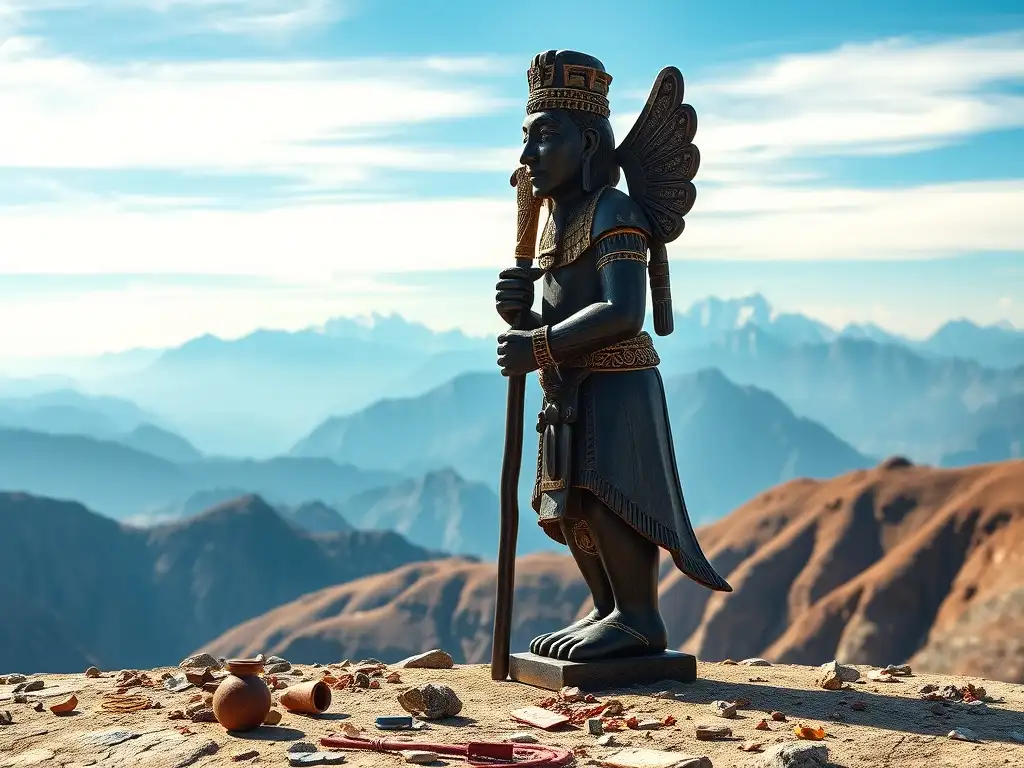
Step into a world lost to time, yet echoing with power and mystery. Dive into the captivating realm of Andean civilizations, where intricate artistry held profound meaning. Uncover the secrets behind the Andean art staff god symbolism, and witness how these powerful icons shaped the lives and beliefs of the Incas, Moche, Nazca, and Tiahuanaco. What stories do these ancient artifacts whisper? Explore the enigma further and unlock the secrets of their enduring legacy.
The vibrant tapestry of Andean art is rich with symbolism, offering a fascinating glimpse into the beliefs, values, and power structures of ancient civilizations. This article delves into the captivating iconography of the "Staff God," a recurring figure whose presence in Andean art speaks volumes about the complex relationship between divinity, authority, and earthly control. We will explore the varied representations of this powerful deity across different Andean cultures, examining the symbolism embedded within the staff itself and its connection to concepts like agriculture, fertility, and resource management.
Understanding the Staff God's iconography provides crucial insight into the worldview and social organization of these remarkable ancient societies, enriching our appreciation of Andean art and its profound cultural significance. This exploration will unpack the meaning behind the "Andean art staff god symbolism," revealing the layers of meaning encoded within these captivating images.
Understanding the Andean Staff God: A Central Figure in Ancient Iconography
The Staff God's Prevalence in Andean Cultures
The Staff God, a deity frequently depicted holding a long staff or scepter, appears across a wide range of Andean cultures and time periods. While specific attributes and interpretations might vary, the overarching symbolism of power and authority remains consistent. From the coastal cultures of the Moche to the highland civilizations of the Tiwanaku and Inca, the image of the Staff God demonstrates a remarkable continuity in religious beliefs and artistic expression across diverse Andean societies.
The prevalence of this figure highlights its central role in the cosmology and social structures of these ancient peoples. Further research is needed to fully understand the nuances of the Staff God’s representation across all Andean cultures, but preliminary findings suggest a widespread reverence for this deity. More specific data on the geographic distribution and temporal variations of Staff God depictions is [specific information pending].
Defining the Staff God: Attributes and Characteristics
The Staff God is not a monolithic figure; rather, artistic representations showcase variations in attire, posture, and accompanying symbols. However, certain common attributes help define this deity. He is often depicted wearing elaborate headdresses and garments, sometimes adorned with symbolic motifs. The staff itself, a crucial element, varies in design but consistently signifies authority and power.
Sometimes, the Staff God is shown interacting with other figures or animals, providing further context to his role within the Andean worldview. A comparative study of different artistic representations is needed to fully classify the variations in the Staff God’s iconography and to determine the specific attributes associated with different Andean cultures. [Specific examples of varying representations pending].
The Significance of the Staff in Andean Iconography
The Staff as a Symbol of Power and Authority
The staff held by the Staff God is not merely a prop; it is a potent symbol of power and authority. In Andean iconography, the staff frequently represents control over resources, both earthly and spiritual. Its verticality may symbolize the connection between the earthly and celestial realms, reinforcing the deity's mediating role. The material and craftsmanship of the staff could also carry further meaning, potentially reflecting the social status and influence of the deity.
This powerful symbolism reinforces the Staff God's position as a central figure in the Andean pantheon. Further analysis of the materials and construction of staffs depicted in Andean art could reveal additional layers of meaning. [Specific examples of staff materials and construction pending].
The Staff God's Connection to Agriculture and Fertility
Many depictions of the Staff God link him closely to agriculture and fertility. The staff itself can be interpreted as a symbol of growth and life-giving power, reflecting the importance of agricultural practices in Andean societies. The Staff God's association with fertility is further emphasized by the presence of agricultural symbols, such as maize or other crops, in the iconography.
This connection highlights the deity's role in ensuring the prosperity and survival of the Andean communities. Detailed studies of the agricultural context surrounding Staff God depictions are needed to fully understand the nuances of this association. [Specific examples of Staff God depictions associated with agriculture pending].
The Staff God and the Control of Resources
Beyond agricultural fertility, the Staff God's authority often extends to the control of other vital resources. Depictions frequently associate him with water, minerals, and other essential elements for Andean life. The staff, in this context, symbolizes the deity's power to regulate and distribute these resources, maintaining social order and prosperity.
This interpretation emphasizes the importance of resource management in the Andean worldview and the Staff God's crucial role in its governance. Further research is needed to identify the specific resources associated with the Staff God in different Andean regions and time periods. [Specific examples of Staff God's association with resources pending].
Regional Variations in the Depiction of the Staff God
The Staff God, a prominent figure in Andean iconography, wasn't uniformly represented across all regions. Variations in style, attributes, and associated symbols reflect the diverse cultural expressions and beliefs of different Andean societies. While the core concept of a powerful, often divine, figure wielding a staff remained consistent, the specific details of the iconography evolved to reflect local traditions and interpretations.
This regional diversity highlights the dynamic nature of Andean religious beliefs and artistic practices, demonstrating a complex interplay between shared cosmological ideas and unique cultural identities. Understanding these regional variations is crucial for a complete understanding of the Staff God's significance within the broader context of Andean art and religion. The subtle differences in posture, attire, and accompanying iconography provide valuable insights into the evolving beliefs and artistic conventions of various Andean cultures.
Tiahuanaco: The Staff God as a Supreme Deity
In Tiahuanaco art, the Staff God often appears as a supreme deity, embodying power and cosmic authority. Representations from this period, particularly in stone carvings and ceramics, depict the figure with elaborate headdresses, often featuring feline features or stylized bird motifs, emphasizing his connection to the supernatural realm. The staff itself is frequently depicted as a powerful, almost ritualistic object, often adorned with intricate carvings or symbolic elements.
The Staff God's elevated status in Tiahuanaco art is further reinforced by his association with other important deities and symbols within the culture's complex pantheon. The monumental scale of many Tiahuanaco sculptures featuring the Staff God underscores his importance as a central figure in their religious cosmology. Scholars have suggested that the Staff God's prominence in Tiahuanaco art reflects the centralized political and religious structure of the Tiahuanaco civilization.
Wari: Adaptations and Transformations of the Staff God Iconography
The Wari culture adopted and adapted the Staff God iconography, incorporating it into their own artistic traditions. While maintaining the core features of the deity—the staff and often regal attire—Wari depictions often show stylistic variations. The staff itself might be simplified or altered, and the deity's headdress or other adornments could differ significantly from Tiahuanaco representations. This suggests a process of cultural assimilation, where the Wari adapted existing iconography to fit their own religious and political context.
The changes observed in Wari depictions of the Staff God may reflect shifts in religious beliefs or the evolving power structures within the Wari state. Further research is needed to fully understand the nuanced significance of these adaptations. The Wari examples demonstrate the adaptable nature of Andean religious iconography and its capacity to be reinterpreted across different cultural contexts.
Paracas: The Staff God in Textile Art
Unlike the monumental stone carvings of Tiahuanaco or the ceramics of Wari, the Paracas culture expressed their reverence for the Staff God through intricate textiles. These textiles, often richly colored and adorned with complex patterns, depict the Staff God in a unique style reflecting the Paracas' distinctive artistic sensibilities. The staff, often prominently displayed, is woven into the fabric with exceptional detail, showcasing the sophisticated weaving techniques of the Paracas artisans.
The figure's attire and accompanying symbols also reveal aspects of Paracas mythology and beliefs. The use of textiles as a medium for representing the Staff God highlights the importance of this art form in Paracas society and its role in expressing religious and cultural identity.
These textile representations offer invaluable insights into the Paracas worldview and the symbolic significance of the Staff God within their culture. The vibrant colors and intricate designs used in these textiles further enhance the spiritual aura associated with the Staff God's image.
The Staff God in Different Art Forms: Ceramics, Textiles, and Stone Carvings
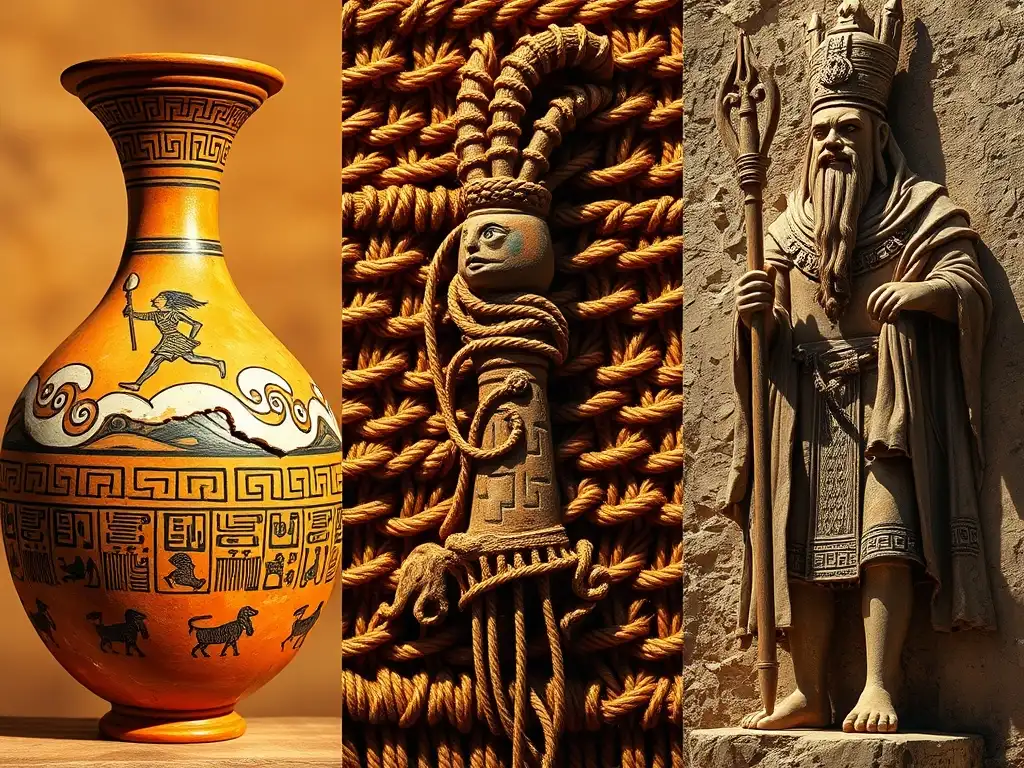
The Staff God's enduring presence in Andean art is evident in its diverse manifestations across various media. From the monumental stone carvings that dominated the landscape to the intricately woven textiles and meticulously crafted ceramics, the deity's image permeates the artistic expressions of multiple Andean cultures. Each medium offers unique opportunities to explore the deity's attributes, symbolism, and role within the broader religious context.
The variations in style and representation across different art forms reveal the adaptability of the Staff God's iconography and its capacity to be interpreted and reinterpreted across different cultural and artistic traditions. The sheer variety of materials and artistic techniques employed to depict the Staff God underscores its enduring significance in Andean societies.
The Staff God in Andean Ceramics: Iconographic Details
Andean ceramics provide a wealth of information about the Staff God's iconography. The details of his attire, headdress, and the staff itself vary significantly depending on the culture and time period. Some ceramics depict the Staff God with elaborate headdresses, intricate clothing, and staffs adorned with symbolic elements, showcasing the artisan's skill and the importance of the deity. Others show a more simplified representation, emphasizing the staff as the central symbol of power.
The iconographic details on these ceramics offer valuable insights into the evolving beliefs and artistic conventions surrounding the Staff God throughout Andean history. Analyzing these details allows researchers to trace changes in artistic styles and religious practices over time. The colors and patterns used on the ceramics also provide clues to the symbolic meaning associated with the Staff God's image.
The Staff God in Andean Textiles: Weaving Power and Divinity
Andean textiles offer a unique perspective on the Staff God's iconography. The intricate weaving techniques used to create these textiles allowed for a level of detail and complexity not always achievable in other media. The Staff God is often depicted within larger narrative scenes, interacting with other deities or participating in ritualistic activities. The textiles' vibrant colors and symbolic patterns further enhance the deity's power and divine status.
These textiles were not merely decorative items but functioned as powerful symbolic objects, embodying religious beliefs and social status. The creation of these textiles was a complex and time-consuming process, reflecting the high value placed on the Staff God and the importance of these artistic representations. The preservation of these textiles provides invaluable insight into the Andean worldview and the role of the Staff God within it.
The Staff God in Andean Stone Carvings: Monumental Representations
Stone carvings provide some of the most impressive and monumental representations of the Staff God. These carvings, often found in temples or ceremonial sites, showcase the deity's power and authority on a grand scale. The scale and detail of these carvings underscore the importance of the Staff God within Andean society. The meticulous craftsmanship and the use of durable materials suggest the enduring significance of the deity and the desire to create lasting monuments to his power.
These monumental representations often feature the Staff God in a prominent position, surrounded by other symbolic elements that enhance his divine status. The location and context of these carvings further reinforce their importance as central features within Andean religious practices. The impressive size and intricate details of these sculptures convey a sense of awe and reverence for the Staff God.
The Legacy of the Staff God: Influence on Later Andean Art
The staff god, a powerful symbol in pre-Columbian Andean art, didn't simply disappear with the decline of certain cultures. Its influence resonates throughout subsequent artistic traditions, demonstrating the enduring power of its iconography. The image, or variations thereof, continued to appear, adapting to the changing cultural landscapes and beliefs of later Andean societies.
This persistence highlights the deep-rooted significance of the deity and its association with authority and divine power within the Andean worldview. The staff god’s enduring presence speaks volumes about the continuity of certain religious and political concepts across diverse Andean cultures. Scholars continue to debate the precise nature of the evolution of the staff god’s representation, with some suggesting a direct lineage, while others propose a more symbolic inheritance, where the core concepts associated with the staff god found expression in new artistic forms.
This evolution of the iconography provides a fascinating case study in the dynamic interplay between cultural change and the enduring power of religious symbolism. The adaptation and reinterpretation of the staff god across centuries showcase the remarkable resilience of ancient Andean beliefs and their lasting impact on artistic expression.
The Persistence of Staff God Symbolism in Inca Art
While the Inca Empire developed its own distinct artistic style, echoes of the staff god motif can be found within Inca art. Though perhaps not as prominent as in earlier cultures, the symbolic elements associated with the staff god — the staff itself, the feathered headdress, and the overall posture of authority — reappear in various forms. These reappearances often take subtler forms, integrated into other iconographic elements, suggesting a conscious or subconscious appropriation of earlier traditions.
For example, certain representations of Inca deities exhibit attributes reminiscent of the staff god, hinting at a possible syncretism or continuation of older religious beliefs within the Inca pantheon. The continued use of the staff as a symbol of power within Inca society also strengthens the connection to the earlier staff god tradition.
Detailed analysis of Inca textiles, ceramics, and metalwork reveals subtle yet unmistakable links to the powerful imagery of the staff god, highlighting a complex relationship between the Inca and their predecessors. Further research into the Inca's incorporation of older traditions is needed to fully understand the extent of this influence.
The Staff God in Colonial Andean Art
The conquest of the Andes by the Spanish did not erase the indigenous artistic traditions overnight. Instead, a fascinating syncretism emerged, blending indigenous Andean imagery with elements of European art. The staff god, albeit often transformed or adapted, continued to appear in colonial-era art, sometimes subtly integrated into religious scenes or woven into the fabric of everyday life.
This blending of cultural symbols reflects the complex power dynamics and cultural exchange that occurred during the colonial period. The staff god's persistence, often reinterpreted within a Christian context, demonstrates the tenacity of indigenous beliefs in the face of colonial oppression. For instance, some scholars suggest that certain representations of saints in colonial Andean art incorporate elements borrowed from the staff god, blurring the lines between indigenous and Christian iconography.
This syncretism, a testament to the enduring power of Andean traditions, provides a rich area of study for understanding the cultural negotiation and adaptation during this turbulent period. Analyzing this phenomenon contributes to a deeper understanding of the cultural resilience of the Andean people.
Decoding the Andean Staff God: A Window into Ancient Beliefs
The staff god's iconography offers a unique window into the complex belief systems of ancient Andean societies. By carefully examining the details of its representation across various cultures and time periods, scholars can begin to unravel the layers of meaning embedded within this powerful symbol. The staff god's attributes – the staff itself, the distinctive headdress, the posture – all contribute to a rich tapestry of meaning.
The careful study of these aspects allows for a deeper understanding of the values and beliefs central to Andean societies. The significance of the staff god’s iconography is not merely aesthetic; it is deeply intertwined with the social, political, and religious structures of Andean civilization.
The Staff God and the Andean Cosmos
The staff god's association with the Andean cosmos is a recurring theme in its iconographic representations. The staff itself might symbolize a connection to the heavens, possibly representing a bridge between the earthly and spiritual realms. The headdress, often adorned with feathers and other symbolic elements, further reinforces this connection, suggesting a link to celestial powers and cosmic order.
Scholars have proposed various interpretations of the staff god's cosmic significance, linking it to specific constellations, celestial events, or cosmological concepts central to Andean worldview. The staff god, therefore, served not only as a terrestrial ruler but also as a mediator between the human world and the divine realm. Further research into astronomical alignments and Andean mythology is crucial for a more complete understanding of this connection.
The Staff God as a Mediator Between Worlds
Beyond its cosmic connections, the staff god frequently appears as a mediator between different worlds or social strata. The staff might represent the god's authority to bridge the gap between the living and the dead, the human and the divine, or even different social classes. The god's role as a mediator is often depicted through its interaction with other figures or symbols in the artwork.
This mediating role highlights the staff god’s importance in maintaining social harmony and cosmic balance. Further investigation into specific examples of this mediating role in Andean art is required to fully appreciate the nuances of this interpretation. The staff god’s mediating role reinforces its significance as a central figure in the Andean worldview.
The Enduring Significance of the Andean Art Staff God Symbolism
The Andean art staff god symbolism remains a compelling subject of study, offering valuable insights into the rich cultural heritage of the Andes. Its persistence across various cultures and time periods highlights its enduring significance within Andean societies. The iconography itself continues to inspire awe and fascination, prompting ongoing research and debate among scholars. The staff god's enduring legacy demonstrates the power of visual representation to convey complex beliefs and values across generations.
Continued study of the staff god's symbolism promises to unveil even more layers of meaning, enriching our understanding of Andean art and culture. The impact of the staff god's imagery on the study of Andean art is undeniable, highlighting its enduring role as a key symbol of power and authority. The staff god remains a powerful symbol, a testament to the enduring legacy of Andean civilizations and their artistic traditions.
- Understanding the Andean Staff God: A Central Figure in Ancient Iconography
- The Significance of the Staff in Andean Iconography
- Regional Variations in the Depiction of the Staff God
- The Staff God in Different Art Forms: Ceramics, Textiles, and Stone Carvings
- The Legacy of the Staff God: Influence on Later Andean Art
- Decoding the Andean Staff God: A Window into Ancient Beliefs
Frequently Asked Questions
What is the "Staff God" in Andean art?
The "Staff God" is a recurring iconographic motif in Andean art, particularly associated with power and authority. Its exact meaning is debated, but it's often linked to deities and rulers.
What civilizations used the Staff God imagery?
The Staff God appears in the art of several Andean civilizations, including the Inca, Moche, and Nazca. Its presence across different cultures suggests a widespread significance.
What does the staff itself symbolize in Andean art?
The staff is a powerful symbol of authority and control in many Andean cultures. It represents leadership, divine connection, and the ability to command.
How is the Staff God depicted in Andean art?
Depictions vary, but the Staff God is often shown with a tall, imposing staff, sometimes with additional symbols like feathers or a head-dress. The style changes depending on the specific culture and time period.
What is the significance of the Staff God's symbolism in relation to Andean religion?
The Staff God's symbolism likely reflects religious beliefs and hierarchical structures. It may represent a deity or a human ruler who possesses divine authority and power.
Final Reflection: The Enduring Legacy of the Staff God
The iconography of the Andean Staff God remains a potent symbol, echoing through millennia to resonate with contemporary discussions of power, authority, and the complex relationship between the human and divine. Its enduring presence in art, from meticulously crafted textiles to monumental stone carvings, speaks to a fundamental human need to understand and represent the forces that shape our world. The intricate details, the carefully chosen materials, and the sheer scale of some representations highlight the profound significance attributed to this deity across different Andean cultures.
The Staff God's influence extends far beyond the realm of aesthetics; it speaks to the very fabric of Andean society and its enduring worldview. The symbolism embedded within these images – the staff itself representing authority, the often-anthropomorphic form suggesting a connection between the earthly and spiritual realms – continues to inform our understanding of Andean cosmology and social structures. Art is not what you see, but what you make others see.
– Edgar Degas. This quote, while not directly about Andean art, perfectly encapsulates the power of the Staff God's representation to shape our perception and understanding of a rich and complex culture.
Consider the implications of this enduring symbolism. How does the representation of power, both human and divine, continue to shape our own perceptions of leadership and authority? What can we learn from the Andean approach to representing the sacred, and how might we apply these lessons to our own contemporary understanding of power dynamics?
I urge you to delve deeper into the rich tapestry of Andean art, to explore the nuances of the Staff God's iconography, and to reflect on the enduring power of visual representation to communicate complex ideas across time and cultures. Let the legacy of the Staff God inspire you to examine your own world with a fresh perspective, recognizing the enduring power of symbols and their ability to shape our understanding of ourselves and the world around us.
Embrace the Power of Andean Artistry!
Thank you for exploring the captivating world of Andean art with us! Discovering the iconic representations of power within this rich cultural heritage deepens our understanding of its significance. Now, let's actively engage with this beauty.
Here are some ways to further immerse yourself in this fascinating theme:
- Visit local museums or cultural centers featuring Andean art to experience these powerful symbols firsthand.
- Share your newfound knowledge with friends and family—perhaps by hosting a discussion or creating a presentation about the cultural influence of Andean iconography.
- Create your own artwork inspired by Andean motifs, blending traditional elements with your personal artistic style.
What aspect of Andean art resonates most with you, and how will you integrate it into your life? Your perspective could inspire a fascinating discussion!