
Moche Mysteries: Unanswered Questions and Ongoing Research

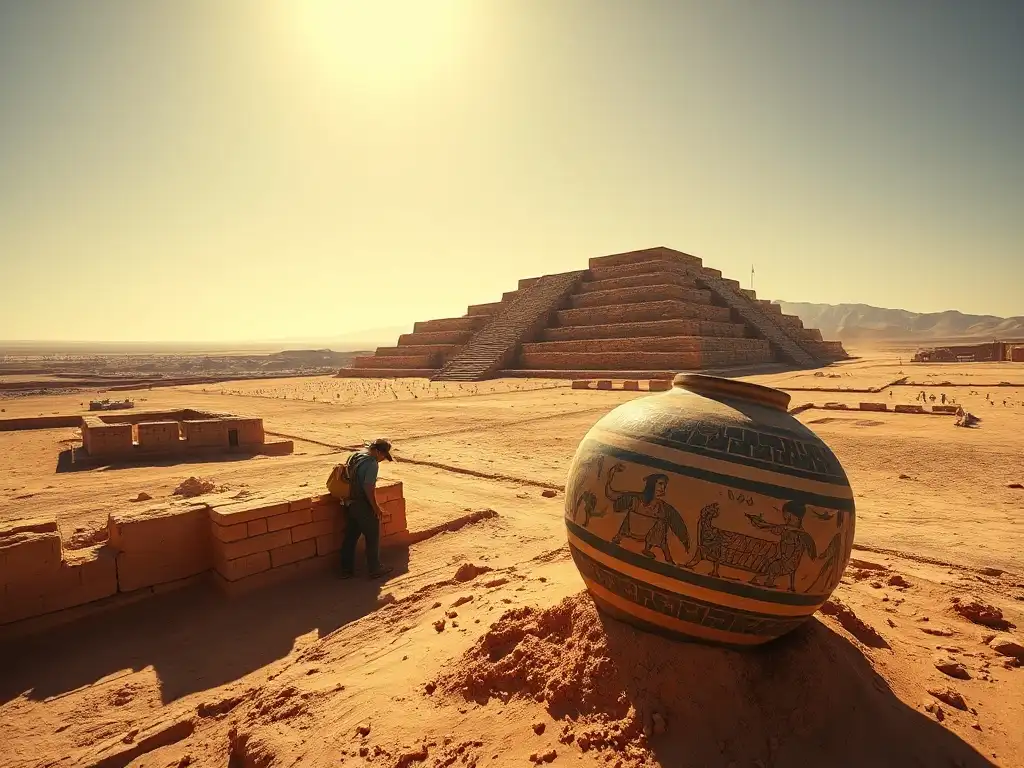
Step into a world lost to time, yet echoing with untold stories. For centuries, the Andean civilizations have captivated our imaginations, their legacy a tapestry woven from breathtaking artistry, sophisticated engineering, and enigmatic rituals. But some threads remain stubbornly elusive... Prepare to delve into the captivating world of the Moche culture and the unanswered questions that continue to baffle experts. Discover the mysteries that shroud this remarkable civilization and join us as we explore the ongoing research striving to unlock their secrets.
The Moche civilization, flourishing along the northern coast of Peru from approximately 100 CE to 800 CE, left behind a remarkable legacy of intricate artistry, sophisticated engineering, and a deeply complex social structure. Their iconic pottery, depicting vivid scenes of daily life, ritual sacrifices, and powerful deities, continues to fascinate and inspire awe. However, despite extensive archaeological research, many aspects of Moche culture remain shrouded in mystery.
This article delves into some of the key unanswered questions surrounding the Moche, exploring ongoing research efforts that aim to illuminate their enigmatic world and shed light on their societal structures, religious beliefs, and daily existence. Understanding these unresolved puzzles is crucial to a complete appreciation of this remarkable civilization and its enduring impact on Peruvian history and culture.
We will explore the fascinating questions that still puzzle researchers today, focusing on areas where new discoveries are constantly reshaping our understanding of the Moche. Prepare to be captivated by the enduring mysteries of this ancient civilization and the ongoing quest to unravel their secrets.
Unveiling the Enigmas of Moche Society
The Moche left behind a rich archaeological record, including monumental architecture, elaborate tombs, and vast quantities of exquisitely crafted artifacts. Yet, many aspects of their social organization remain uncertain. Archaeologists have identified evidence of a hierarchical society, with distinct elites controlling resources and power.
However, the exact nature of this hierarchy, the mechanisms of social mobility (or lack thereof), and the extent of social stratification are still debated. The role of religion in shaping social structures also remains a significant area of investigation. Were religious leaders also political leaders?
How did religious beliefs influence daily life and social interactions? These are just some of the questions that continue to fuel ongoing research into Moche societal structures. Further complicating the picture is the limited textual evidence available; the Moche did not possess a writing system in the same way as other contemporaneous civilizations, leaving researchers reliant on interpreting material culture for clues.
Moche Culture Unanswered Questions: Key Areas of Investigation
Several key areas of Moche culture continue to challenge researchers. While significant progress has been made, many fundamental questions remain unanswered. This section will explore some of the most pressing areas of research that are actively being investigated:
The Purpose of Moche Iconography: Beyond the Known
Moche pottery is renowned for its incredibly detailed and lifelike depictions of various scenes. While many portrayals seem to depict aspects of daily life, such as fishing, agriculture, and warfare, many others remain enigmatic. The frequent representation of ritual sacrifices, often involving human victims, raises questions about their religious significance and social implications. What was the purpose of these sacrifices?
Were they intended to appease the gods, consolidate power, or achieve some other, yet-unknown goal? The symbolic meaning behind many of the depicted figures and objects also remains unclear. Ongoing research uses a multidisciplinary approach, combining art history, anthropology, and archaeology, to interpret these complex images and unravel their hidden meanings. The sheer volume and variety of iconography presents a substantial challenge, making this area a fertile ground for future research.
Decoding Moche Rituals and Ceremonies
Beyond the sacrificial scenes, the Moche engaged in a variety of other rituals and ceremonies. Evidence suggests the existence of elaborate religious practices involving specific locations, objects, and perhaps even specialized priesthoods. However, the precise nature of these rituals, their frequency, and their social context remain largely unclear. The discovery of new sites and the application of new analytical techniques continue to provide valuable insights, but many aspects of Moche religious life remain a subject of ongoing investigation.
Were there specific calendar cycles that dictated ritual events? How did these rituals reinforce social hierarchies and power structures? These are crucial questions that need further exploration. The complexity of the rituals themselves, often inferred from fragmented evidence, adds another layer of difficulty to the research process.
Social Hierarchy and Power Dynamics in Moche Society
The Moche society was clearly stratified, with distinct elites enjoying privileges and power. However, the precise nature of this hierarchy and the mechanisms through which power was exercised remain subjects of debate. Evidence suggests that the elite controlled access to resources and played a significant role in religious ceremonies.
But how did they maintain their power? What were the social and economic structures that underpinned their authority? The study of elite burials, monumental architecture, and the distribution of artifacts offers valuable insights, but many questions about social mobility, political organization, and the dynamics of power remain unanswered.
Detailed analysis of settlement patterns and the distribution of material culture across different social groups may provide further clues. The interplay between religious and political power is a particularly intriguing area that requires further investigation. The exact nature of the relationship between the elite and the commoners remains a subject of ongoing discussion and research.
Ongoing Research: Shedding Light on Moche Civilization
The study of Moche culture is a vibrant and ever-evolving field, with new discoveries and interpretations constantly reshaping our understanding. Researchers employ a multidisciplinary approach, combining archaeology, anthropology, and other scientific techniques to uncover the secrets of this fascinating civilization. This ongoing work is crucial to addressing many unanswered questions about their societal structure, religious beliefs, and ultimately, their demise.
The meticulous excavation and analysis of sites, coupled with advanced scientific dating and material analysis methods, are providing unprecedented insights into Moche life. This continuous effort ensures that our understanding of the Moche is not static, but rather a dynamic process of discovery and refinement.
The ongoing research not only helps us understand the Moche but also provides valuable lessons for the preservation of cultural heritage and the interpretation of ancient societies. Many mysteries still remain, but the dedication of researchers worldwide is steadily chipping away at the enigma of Moche culture.
Advances in Archaeological Excavations at Huaca de la Luna
Huaca de la Luna, a significant Moche ceremonial center, continues to yield remarkable findings. Recent excavations have uncovered intricate murals depicting scenes of ritual sacrifice, warfare, and daily life, offering unprecedented glimpses into Moche religious practices and social hierarchy. The use of advanced imaging techniques, such as ground-penetrating radar, allows archaeologists to map subsurface features and plan excavations more strategically, minimizing damage and maximizing the recovery of valuable artifacts.
Detailed analysis of the pigments used in the murals provides insights into Moche artistic techniques and the availability of resources. The discovery of new architectural features, such as hidden chambers and elaborate drainage systems, further enhances our understanding of the site's complexity and functionality.
Careful documentation of each find, including meticulous photography and 3D modeling, ensures the preservation of this invaluable information for future generations of researchers. The ongoing work at Huaca de la Luna promises to continue unveiling further details about the Moche's sophisticated society.
New Perspectives on Moche Ceramic Production and Style
Moche pottery is renowned for its exquisite craftsmanship and realistic depictions of people, animals, and mythical creatures. Recent research focuses not only on the artistic aspects but also on the technological processes involved in ceramic production. Analysis of clay sources and firing techniques reveals the sophistication of Moche technology and their understanding of materials science.
Studies of kiln structures and the organization of workshops shed light on the social organization of ceramic production, potentially revealing specialized artisan groups or guilds. The stylistic variations observed across different regions and time periods are now being analyzed using advanced statistical methods, helping researchers identify regional styles and track changes over time.
These studies are crucial for understanding the economic and social significance of pottery within Moche society, as well as its role in religious and political contexts. The detailed examination of Moche ceramics offers a rich tapestry of information about this advanced ancient civilization.
Analysis of Moche Burial Practices and Mortuary Rituals at Sipán
The Sipán site, famous for its spectacular royal tombs, remains a crucial source of information on Moche burial practices. Ongoing research focuses on the analysis of grave goods, human remains, and the context of the burials themselves.
Advanced techniques like isotopic analysis of skeletal remains can reveal information about the diet and origins of the individuals interred, shedding light on social status and mobility within Moche society. The meticulous study of grave goods, including elaborate gold and silver ornaments, intricate textiles, and finely crafted pottery, provides valuable insights into Moche beliefs about the afterlife and the importance of ritual.
Furthermore, the analysis of the arrangement of bodies and grave goods within the tombs reveals crucial information about Moche mortuary rituals and their social structures. The ongoing analysis at Sipán continues to provide critical information about the political and religious elite of Moche society and their beliefs about death and the afterlife.
The Moche Collapse: Exploring the Reasons Behind the Decline
The reasons behind the decline and eventual collapse of the Moche civilization remain a topic of intense debate among researchers. While no single factor can fully explain this complex historical event, a combination of environmental, social, and potentially external pressures likely contributed to their downfall. The lack of a single, universally accepted explanation highlights the complexity of societal collapse and the need for continued investigation.
Understanding the Moche collapse offers valuable lessons for understanding the fragility of even the most sophisticated societies. The ongoing investigation into this collapse remains a critical area of research for understanding the dynamics of ancient civilizations.
Environmental Factors and El Niño Events
The impact of El Niño events on Moche society is a crucial aspect of ongoing research. Evidence suggests that periods of intense flooding and drought, associated with El Niño, may have severely impacted agricultural production, leading to widespread famine and societal instability. The analysis of sediment cores and pollen records provides valuable information about past climatic conditions and their impact on the environment.
The study of Moche irrigation systems and their resilience to extreme weather events is critical for understanding their ability to adapt to environmental challenges. The interplay between environmental stress and societal response is crucial to understanding the Moche collapse. The effects of climate change on ancient civilizations are relevant today, given the current climate crisis.
Internal Conflicts and Societal Instability
Evidence suggests that internal conflicts and societal instability may have played a significant role in the Moche decline. Archaeological findings, such as evidence of warfare and violence, point towards potential internal strife within the Moche state. The analysis of social stratification and power dynamics within Moche society is critical for understanding potential sources of conflict and instability.
The study of elite power struggles and potential challenges to authority could shed light on the internal factors that contributed to the collapse. The interplay between internal conflicts and environmental stress is crucial for understanding the Moche decline. Understanding internal conflict is critical for understanding societal collapse in general.
The Role of External Pressures
While internal factors likely played a significant role, the possibility of external pressures, such as warfare or competition with neighboring groups, cannot be ruled out. Archaeological evidence of interaction with other cultures needs further investigation to determine the extent of these interactions and their potential impact on Moche society. The analysis of trade networks and the flow of goods and ideas could reveal evidence of external influences.
The study of potential conflicts with neighboring groups requires further research to determine their role in the Moche decline. The interplay between internal and external pressures is crucial for a complete understanding of the Moche collapse. The possibility of external influences underscores the complex interplay of factors leading to the demise of civilizations.
Moche Legacy: What We Still Don't Know
The Moche left behind a remarkable archaeological record, yet many aspects of their civilization remain shrouded in mystery. Deciphering their complex social structures, understanding the full extent of their political reach, and uncovering the secrets of their advanced technologies are ongoing challenges for researchers. While we have a good grasp of their artistic achievements, reflected in their stunning pottery and metalwork, many questions remain about the daily lives of ordinary Moche people.
Did social stratification exist as rigidly as some interpretations suggest? What were the roles of women in Moche society beyond the depictions we see in their art? These are fundamental questions that continue to drive research.
The sheer volume of unearthed artifacts, while invaluable, also presents a logistical challenge; cataloging, analyzing, and interpreting this wealth of material requires considerable time and resources. Furthermore, the delicate nature of many artifacts necessitates careful preservation techniques, further slowing the pace of research. Understanding the full scope of Moche cultural practices and beliefs requires a multidisciplinary approach, combining archaeological findings with anthropological interpretations and linguistic analysis (where applicable).
The Extent of Moche Political Influence
The precise extent of Moche political influence remains a topic of debate among scholars. While evidence suggests a centralized power structure, the exact nature of this governance and its reach across the vast Moche territory is unclear. Did the Moche exert direct control over all the regions within their sphere of influence, or did they employ a more indirect system of alliances and tributary relationships?
The distribution of Moche artifacts across a wide geographical area indicates a significant level of interaction and exchange, but determining whether this reflects political control or simply extensive trade networks requires further investigation. The identification of distinct regional variations in Moche art and architecture suggests a degree of autonomy within the larger Moche state, complicating the picture of a uniformly governed empire.
Future research focusing on comparative analyses of regional artifacts and settlement patterns will be crucial in clarifying this aspect of Moche political organization. Detailed mapping of settlement locations and their relative sizes, combined with analysis of the types and quantities of artifacts found at each site, could reveal patterns of power distribution and political control.
Moche Technology and Engineering: Irrigation Systems and Hydraulic Works
The Moche were masters of hydraulic engineering, constructing intricate irrigation systems that allowed them to flourish in the arid coastal regions of Peru. However, the full extent of their engineering prowess and the sophistication of their water management techniques are still being explored. How did they manage to build and maintain these extensive networks across challenging terrains?
What were the social and organizational structures that facilitated such large-scale projects? The precise techniques used in canal construction, water diversion, and reservoir management are still being investigated, with ongoing research using modern technology to better understand the Moche's ingenuity. Analyzing the sediment layers in and around these ancient irrigation systems can provide clues about their construction methods and maintenance practices.
Furthermore, comparing the Moche systems with those of other contemporary Andean cultures can help us understand the unique aspects of their engineering achievements. The integration of advanced modeling techniques and geographic information systems (GIS) could offer new insights into the scale and complexity of the Moche hydraulic infrastructure.
Future Research Directions in Moche Studies
Future research into Moche culture should focus on integrating new technologies and interdisciplinary approaches. The use of advanced imaging techniques, such as ground-penetrating radar and LiDAR, can help uncover previously unknown settlements and infrastructure. Further, isotopic analysis of human remains can provide insights into diet and migration patterns, shedding light on social structures and interactions. The application of advanced statistical methods to large datasets of archaeological findings can reveal previously hidden patterns and relationships.
Moreover, collaborative efforts involving archaeologists, anthropologists, historians, and other specialists are essential to provide a more holistic understanding of this complex civilization. A particular focus on the lives and roles of women in Moche society is crucial to counterbalance existing biases in interpretations based primarily on elite burials and iconography. Finally, engaging with contemporary Peruvian communities and incorporating their perspectives and traditional knowledge can enrich our understanding of the Moche legacy.
The Enduring Fascination with Moche Culture: Why the Mysteries Persist
The enduring fascination with Moche culture stems from a combination of factors. Their sophisticated art, particularly their lifelike pottery depicting scenes of daily life, ritual, and warfare, continues to captivate audiences worldwide. The sheer scale and complexity of their engineering feats, such as their intricate irrigation systems and monumental architecture, are awe-inspiring.
However, the enigmatic nature of their religious beliefs and social structures, coupled with the many unanswered questions about their origins, rise, and fall, add to the allure. The mysteries surrounding the Moche, far from diminishing interest, fuel ongoing research and public engagement. The potential for new discoveries and reinterpretations keeps the field vibrant and exciting.
Furthermore, the Moche's story resonates with our contemporary fascination with ancient civilizations and their ability to achieve remarkable things despite limited resources and technologies. The Moche's advanced understanding of hydraulic engineering, for example, remains relevant in today's world, facing challenges of water scarcity and sustainable resource management. Their legacy continues to inspire and challenge us to learn more.
- Unveiling the Enigmas of Moche Society
- Moche Culture Unanswered Questions: Key Areas of Investigation
- Ongoing Research: Shedding Light on Moche Civilization
- The Moche Collapse: Exploring the Reasons Behind the Decline
- Moche Legacy: What We Still Don't Know
- The Enduring Fascination with Moche Culture: Why the Mysteries Persist
- What are some of the biggest unanswered questions about the Moche culture?
- How advanced was Moche technology, and what are some examples?
- What is known about Moche religious practices and beliefs?
- How did the Moche civilization rise to power, and what factors contributed to its decline?
- What are some ongoing research efforts focusing on the Moche culture?
Frequently Asked Questions
What are some of the biggest unanswered questions about the Moche culture?
The Moche culture leaves many mysteries. Some of the biggest unanswered questions revolve around the nature of their political organization, the details of their religious beliefs, and the causes of their societal collapse. Ongoing research continues to shed light on these areas.
How advanced was Moche technology, and what are some examples?
Moche technology was remarkably advanced for its time. Examples include their sophisticated irrigation systems, masterful metalworking (gold, silver, copper), and exceptional ceramic artistry. Their achievements reflect advanced engineering and artistic skills.
What is known about Moche religious practices and beliefs?
Moche religion appears to have centered around powerful deities, often depicted in their elaborate ceramics. Evidence suggests ancestor veneration and a complex system of ritual sacrifices, including human sacrifice, played a significant role. The exact nature of their beliefs remains partially unclear.
How did the Moche civilization rise to power, and what factors contributed to its decline?
The Moche's rise to power involved expanding agricultural production, effective political organization, and military prowess. Their decline is attributed to a combination of factors, including environmental changes, internal conflicts, and potentially external pressures.
What are some ongoing research efforts focusing on the Moche culture?
Archaeologists are actively working to excavate new sites, analyze artifacts using advanced techniques, and interpret iconography to better understand the Moche. DNA analysis and environmental studies are also contributing to unraveling their mysteries.
Final Reflection: Echoes of the Moche: Unraveling a Civilization's Secrets
The enduring mystery of the Moche civilization continues to resonate today, a powerful testament to the enduring allure of the unknown and the boundless capacity of human ingenuity. Their sophisticated artistry, complex social structures, and enigmatic rituals continue to captivate archaeologists and historians alike, leaving us with more questions than answers, even in the 21st century. The sheer scale of their achievements, juxtaposed with the abruptness of their decline, presents a compelling puzzle that demands further investigation.
The Moche's legacy extends far beyond the beautifully preserved artifacts unearthed from their tombs. Their influence on subsequent Peruvian cultures is undeniable, and their artistic innovations continue to inspire contemporary artists. Their intricate ceramics, monumental architecture, and sophisticated irrigation systems speak to a level of societal organization and artistic expression that remains remarkable. The past is never dead. It's not even past.
- William Faulkner. This quote perfectly encapsulates the ongoing relevance of Moche studies; their story is not merely a historical account, but a living narrative that continues to shape our understanding of human civilization.
Consider the unanswered questions surrounding the Moche's sudden collapse, the intricacies of their religious beliefs, and the true extent of their societal hierarchies. These mysteries invite us to engage with the past not as a static entity, but as a dynamic process of discovery. You, the reader, are now part of this ongoing conversation. I urge you to delve deeper, to explore the resources available, and to contribute to the ongoing unraveling of the Moche's enigmatic story. Let their legacy inspire you to seek knowledge, to question assumptions, and to appreciate the rich tapestry of human history.
Unveil the Secrets of the Moche!
Thank you for exploring the captivating world of Moche civilization with us! You've delved into fascinating mysteries and discovered the ongoing research that continues to illuminate these ancient legacies. Now, let's take your passion for the Moche to the next level!
Here are some exciting ways to deepen your exploration:
- Join the Conversation: Share your thoughts and questions about the Moche in the comments below! What aspects of their culture most captivated you? What unanswered questions remain?
- Dive Deeper: Explore our resources section for books, articles, and documentaries that will enhance your understanding of Moche culture and archaeology.
- Spread the Word: Share this article with friends and on social media to spark conversations about this incredible civilization!
What do you believe is the most significant remaining mystery surrounding the Moche, and how might you contribute to unraveling it?