
The Rhythm of Life: How Andean Calendars Shape Modern Timekeeping

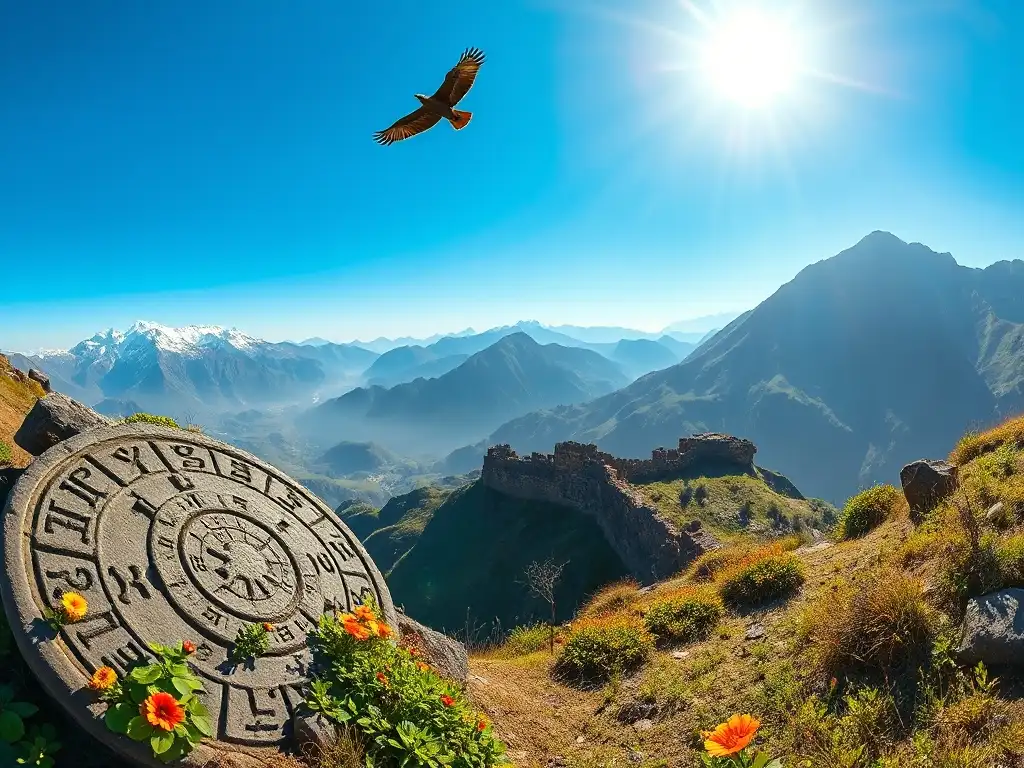
Dive into the enigmatic world of the Andes, where towering mountains held secrets as vast as the civilizations they cradled. For centuries, the Incas, Moche, Nazca, and Tiahuanaco thrived, leaving behind a legacy etched in stone and woven into the very fabric of their time. But what truly orchestrated their lives? Uncover the fascinating history of the Andean calendar system, a complex and sophisticated method of timekeeping that continues to resonate today. Prepare to be amazed by the intricate connection between ancient wisdom and modern time. Explore the mysteries waiting within...
The Andes Mountains, a spine of towering peaks running down the western coast of South America, have witnessed the rise and fall of some of the most fascinating civilizations the world has ever known. From the intricate artistry of the Nazca Lines to the sophisticated engineering of Machu Picchu, the legacy of these Andean cultures continues to resonate today.
One particularly compelling aspect of this legacy is their complex and nuanced calendar systems, which profoundly influenced their societies and surprisingly, continue to subtly shape modern Andean timekeeping. This article delves into the history of Andean calendar systems, exploring their diverse forms, their intricate connection to agriculture and ritual, and their enduring impact on contemporary Andean life.
We will examine how these ancient systems of timekeeping reflect a deep understanding of the natural world and a sophisticated approach to societal organization, offering valuable insights into the ingenuity and resilience of Andean civilizations. Understanding the Andean calendar system history is key to understanding the enduring cultural fabric of the region.
Diverse Systems of Timekeeping: A Tapestry of Calendars
The Andean region wasn't unified under a single calendar system. Instead, a fascinating tapestry of different methods for tracking time existed, reflecting the diverse geography and cultures of the region. The Incas, for example, utilized a complex system based on a combination of solar and lunar observations, incorporating a 365-day solar year and a shorter lunar cycle.
This system, while sophisticated, differed significantly from those used by other Andean cultures. The Moche, known for their stunning pottery and metalwork, likely employed a calendar closely tied to agricultural cycles, reflecting the importance of farming in their society. Evidence suggests that their calendar was based on observations of the stars and the positions of the sun, allowing them to predict the optimal times for planting and harvesting.
The Nazca, famous for their enigmatic geoglyphs, also possessed a calendar system, the specifics of which are still being deciphered by researchers. However, the alignment of some of their structures with celestial events strongly suggests a deep understanding of astronomy and its relationship to timekeeping. Further research is needed to fully understand the intricacies of the calendar systems used by smaller, less documented groups across the vast Andean region.
The Inca Calendar: A Masterpiece of Astronomical Knowledge
The Inca calendar, perhaps the most extensively studied, was a remarkable feat of astronomical observation and mathematical precision. It wasn't a simple linear progression of days but rather a complex interplay of different cycles. The koya, a 365-day solar year, was divided into twelve lunar months, each associated with specific agricultural activities and religious festivals.
Additionally, a shorter 360-day calendar was used for administrative purposes, showcasing the sophisticated understanding of time’s different manifestations. The Inca calendar was not solely a tool for agricultural planning; it was deeply intertwined with their religious beliefs and social structure. Specific dates were designated for important rituals, ceremonies, and celebrations, reflecting the close relationship between the cosmos and earthly life in Inca cosmology.
The precise details of the Inca calendar's intricacies, however, still require further investigation, as much of the knowledge was transmitted orally and not documented in writing. The surviving evidence, including archaeological findings and ethnohistorical accounts, paints a picture of a sophisticated system, but many details remain shrouded in mystery. ⏳
The Enduring Legacy: Andean Calendars in Modern Life
Despite the Spanish conquest and the subsequent suppression of many indigenous traditions, elements of Andean calendar systems persist in modern Andean communities. While the precise methods of timekeeping may have evolved, the fundamental connection between the natural world and the rhythm of life remains strong. Many agricultural practices still follow traditional cycles, reflecting the enduring wisdom embedded within these ancient systems. Furthermore, many festivals and celebrations continue to be tied to specific dates on the traditional calendars, preserving a vital link to the past.
The knowledge of these systems is being actively revived and studied, highlighting their continued relevance and importance in understanding contemporary Andean culture. The ongoing research and revitalization of these ancient practices underscore the richness and resilience of Andean cultural heritage. This demonstrates that the "Andean calendar system history" is not merely a historical curiosity but a living tradition. 🌺
Further Research and Ongoing Discoveries
The study of Andean calendar systems is an ongoing process, with new discoveries and interpretations constantly emerging. Researchers continue to analyze archaeological evidence, decipher ancient texts (where available), and interview community members to piece together a more complete understanding of these complex systems. The interdisciplinary nature of this research, drawing on astronomy, anthropology, archaeology, and ethnohistory, is crucial for unlocking the secrets of these ancient timekeeping methods.
As research progresses, our understanding of the Andean calendar system history will undoubtedly deepen, revealing even more about the sophisticated cultures that created them. The potential for new discoveries and insights remains significant. ✨
- Diverse Systems of Timekeeping: A Tapestry of Calendars
- The Inca Calendar: A Masterpiece of Astronomical Knowledge
- The Enduring Legacy: Andean Calendars in Modern Life
- Further Research and Ongoing Discoveries
Understanding the Foundations of Andean Timekeeping
This section delves into the core principles underpinning the Andean calendar systems, exploring how their unique approach to timekeeping differed significantly from those of other ancient civilizations. Understanding this foundational knowledge is crucial to appreciating the lasting impact of these systems on modern Andean culture. The Andean calendar system history is not a monolithic entity; rather, it's a complex tapestry woven from diverse regional traditions, evolving over millennia. We will unravel the threads of this rich history, examining the cosmological beliefs, agricultural practices, and societal structures that shaped these intricate systems.
The Andean Cosmovision and the Concept of Time
The Andean concept of time was deeply intertwined with their cosmovision, a holistic worldview encompassing the interconnectedness of the cosmos, nature, and humanity. Unlike linear Western conceptions of time, the Andean understanding was cyclical and multi-layered. Time wasn't merely a sequence of events; it was a dynamic interplay between the celestial bodies, the agricultural cycle, and the human experience.
This cyclical perception is reflected in their calendars, which weren't simply tools for measuring time but rather instruments for harmonizing human activities with the natural rhythms of the Andes. The Andean people viewed time as a continuous flow, a river rather than a straight line, emphasizing the cyclical nature of life, death, and rebirth, mirroring the changing seasons and the celestial movements. This holistic approach permeated every aspect of their lives, from agricultural practices to religious ceremonies.
Their calendars served as a guide for optimal planting and harvesting times, ensuring the continuity of their societies. The importance of this interconnectedness is further highlighted by the close relationship between the calendar and their religious beliefs and practices. Many rituals and ceremonies were timed to coincide with specific astronomical events and agricultural cycles.
Pre-Inca Calendrical Systems: A Diverse Heritage
Before the Inca Empire unified much of the Andes, numerous distinct cultures developed their own intricate calendrical systems. The Moche, Nazca, and Tiahuanaco civilizations, among others, each possessed unique methods of tracking time, reflecting their respective environments and beliefs. These systems weren't necessarily standardized across the entire Andean region; instead, they varied regionally, showcasing the diversity of Andean cultures and their adaptations to distinct ecological niches.
For instance, the Nazca lines, though their precise purpose remains debated, are strongly suspected to have played a role in astronomical observations and possibly calendrical reckoning. Further research is needed to fully understand the intricacies of these pre-Inca systems and their relationships with one another.
Evidence suggests that the use of knotted strings, known as quipus, played a significant role in recording and transmitting calendrical information across generations, showcasing the sophistication of their record-keeping techniques. The complexity of these systems underscores the advanced understanding of astronomy and mathematics possessed by these pre-Columbian societies.
Key Elements of Ancient Andean Calendars
Several key elements characterized the ancient Andean calendars. These included:
- Solar observations: The sun's position and its annual journey across the sky played a crucial role in determining the agricultural cycle and religious festivals. Many sites show clear evidence of sophisticated astronomical observations aligned with solstices and equinoxes.
- Lunar cycles: The phases of the moon were also important, affecting agricultural practices and influencing the timing of various rituals. The interplay between solar and lunar cycles created a complex and nuanced system for tracking time.
- Stellar observations: The positions and movements of prominent constellations provided additional markers for timekeeping. Specific constellations were associated with particular seasons or agricultural tasks.
- Agricultural cycles: The timing of planting and harvesting was intimately linked to the calendar, ensuring optimal yields and the survival of the communities. The agricultural cycle was central to their lives, and the calendar served as a vital guide for its management.
The integration of these elements resulted in highly accurate and effective calendars that profoundly influenced the daily lives of Andean communities. The precision and sophistication of these systems are a testament to the advanced understanding of astronomy and the deep connection between the Andean people and their environment. The legacy of these calendars continues to resonate in modern Andean communities, shaping their worldview and practices to this day.
Further research into the specifics of regional variations within the Andean calendar system is essential to fully appreciate the diversity and complexity of this rich cultural heritage. The study of Andean calendar system history continues to reveal new insights into the intellectual and cultural achievements of these remarkable civilizations.
The Inca Calendar: A Sophisticated System
The Inca calendar system, a marvel of ancient Andean ingenuity, wasn't a single, monolithic entity but rather a complex interplay of solar and lunar observations, deeply interwoven with their agricultural practices and religious beliefs. Understanding the Inca calendar requires appreciating its multifaceted nature, going beyond simple date-keeping to encompass a holistic worldview that synchronized human life with the rhythms of the cosmos. This sophisticated system, passed down through generations via oral tradition and meticulously observed by priests, profoundly shaped Inca society and continues to resonate in modern Andean culture.
The precision and complexity of their astronomical knowledge, revealed through archaeological findings and ethnohistorical accounts, challenge our understanding of pre-Columbian achievements. The study of the "Andean calendar system history" reveals a sophisticated understanding of celestial mechanics far surpassing simplistic notions of primitive timekeeping.
The Inca Solar Calendar: Tracking the Sun's Path
The Inca solar calendar tracked the sun's annual journey across the sky, marking solstices and equinoxes with great precision. They didn't rely on written records; instead, they utilized sophisticated observational techniques, likely employing strategically placed markers and structures to monitor the sun's position. These observations were crucial for agricultural planning, as the Inca calendar directly influenced planting and harvesting cycles.
For instance, the summer solstice, a pivotal moment in the Inca year, marked the beginning of the capacocha season, a period of significant agricultural activity. The precise timing of this event, determined through careful solar observation, ensured optimal planting conditions and maximized crop yields. The intricate knowledge of the sun's movements, reflected in the Inca calendar, showcases their advanced understanding of astronomy and its practical applications.
This wasn't just about knowing when to plant; it was about understanding the very fabric of their world and their place within it. Further research into the precise methods used to track the sun's path is needed to fully elucidate the sophistication of this aspect of the Andean calendar system history.
The Inca Lunar Calendar: Cycles of the Moon
Complementing the solar calendar, the Inca lunar calendar tracked the phases of the moon, influencing various aspects of Inca life, from religious ceremonies to everyday activities. The lunar cycle, with its predictable rhythm, provided a shorter-term framework for organizing time, interweaving with the longer solar cycles. Unlike the solar calendar's focus on agriculture, the lunar calendar played a more significant role in regulating religious and social events.
Specific moon phases were associated with particular rituals and festivals, highlighting the moon's importance in the Inca cosmology. While the precise details of their lunar calendar remain partially elusive due to the lack of written records, archaeological evidence suggests a deep understanding of lunar cycles and their integration into their societal structure.
Understanding this aspect is crucial for a comprehensive understanding of the "Andean calendar system history". The interplay between the lunar and solar calendars demonstrates the Inca's sophisticated understanding of celestial mechanics and their ability to integrate these observations into a holistic system.
The Importance of Inti Raymi and Other Inca Calendar Festivals
Inti Raymi, the Festival of the Sun, was the most important celebration in the Inca calendar, a grand ceremony celebrating the winter solstice and the Inca sun god, Inti. This festival, held around June 24th, involved elaborate rituals, processions, sacrifices, and feasts, showcasing the profound connection between the Inca calendar and their religious beliefs. Other significant festivals, timed according to both the solar and lunar calendars, included Capac Raymi (celebrating the harvest), Coya Raymi (honoring the Inca queen), and numerous smaller, localized celebrations.
These festivals weren't merely social events; they were integral to the Inca social fabric, reinforcing social hierarchies, reaffirming religious beliefs, and ensuring the continuity of their culture. The precise timing of these festivals, dictated by the Inca calendar, underscores its importance in shaping Inca society and its religious life.
Studying these festivals offers invaluable insights into the intricate relationship between timekeeping, religion, and social organization within the Inca empire, enriching our understanding of the Andean calendar system history and its lasting impact. The vibrant tapestry of Inca celebrations, meticulously timed according to their complex calendar, provides a window into the heart of their civilization.
Andean Calendar System History: From Ancient Practices to Modern Use
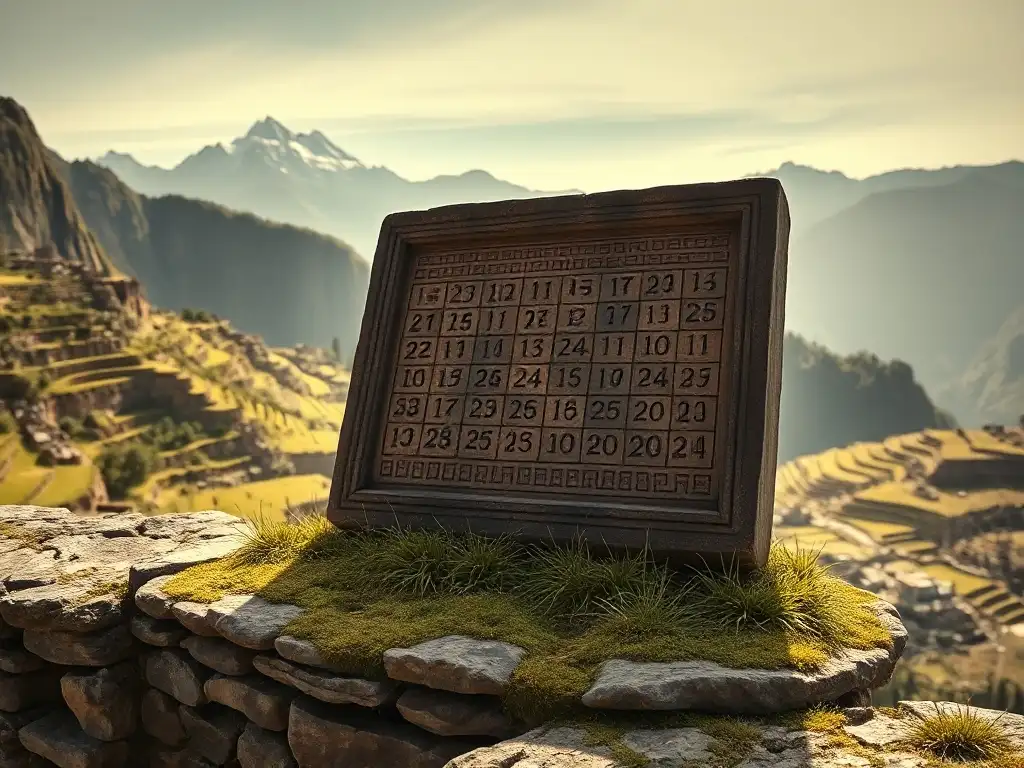
The Andean calendar system history is a fascinating tapestry woven from intricate astronomical observations, agricultural necessities, and deeply ingrained spiritual beliefs. Unlike the linear calendars of many other cultures, the Andean system was complex and multifaceted, incorporating a variety of interwoven cycles reflecting both the celestial movements and the rhythms of the natural world. Understanding this history requires acknowledging the diversity of Andean cultures; the Inca calendar, for instance, while influential, wasn't universally applied across all Andean societies.
The Moche, Nazca, and Tiwanaku each developed their own unique calendrical systems, though often exhibiting shared principles rooted in observations of the sun, moon, and stars. These systems weren't simply tools for tracking time; they were integral to the very fabric of Andean life, shaping societal structures, agricultural practices, and religious rituals.
Evidence suggests that sophisticated knowledge of astronomy and mathematics underpinned these calendars, allowing for precise predictions of solstices, equinoxes, and other celestial events crucial for agricultural planning and religious observances. The enduring legacy of these complex systems is evident in the continued use of some calendrical practices in contemporary Andean communities.
How Andean Calendars Guided Agriculture and Rituals
Andean calendars were inextricably linked to agriculture and ritual, providing a framework for optimizing crop yields and conducting religious ceremonies. The precise timing of planting and harvesting was dictated by the calendar, ensuring optimal conditions for growth and maximizing harvests. For example, the Inca quipu, a complex system of knotted cords, is believed to have recorded agricultural data, including planting dates and crop yields, reflecting a sophisticated understanding of seasonal variations and their impact on agriculture.
These calendars weren't static; they were dynamic tools adjusted based on local ecological conditions and accumulated generational knowledge. The observation of specific constellations, the phases of the moon, and the position of the sun were all used to predict weather patterns and guide agricultural practices. Furthermore, religious festivals and ceremonies were meticulously timed according to the calendar, ensuring harmony between the human world and the cosmos.
This synchronization was crucial to maintaining social order and ensuring the prosperity of the community. The precise alignment of temples and agricultural terraces with celestial events further underscores the profound importance of astronomical observations in shaping Andean life. The integration of agriculture and ritual within the calendrical framework showcases a holistic worldview that prioritized the interconnectedness of nature, society, and the divine.
Surviving Andean Calendrical Practices in Contemporary Communities
Despite the passage of centuries and the imposition of European calendars, remnants of the ancient Andean calendrical systems persist in many contemporary Andean communities. While the precise details may vary across different regions and ethnic groups, many traditional practices continue to reflect the enduring influence of these ancient systems. For example, many communities still use traditional methods of timekeeping based on the observation of celestial events and the cycles of nature. Indigenous knowledge keepers maintain a deep understanding of these systems, passing down their knowledge through generations.
The celebration of traditional festivals and ceremonies, often tied to specific dates on the ancient calendars, further demonstrates the continued relevance of these systems. These practices are not mere historical relics; they are living traditions that continue to shape the daily lives of many Andean communities. The integration of ancient practices with modern realities highlights the resilience and adaptability of Andean cultures.
[Specific examples of surviving practices in various communities pending]. The continued use of these systems underscores the importance of recognizing and preserving indigenous knowledge and cultural heritage. The preservation of these traditions is crucial for maintaining cultural identity and fostering sustainable development.
The Role of Andean Calendars in Sustainable Farming Practices
The principles embedded within the ancient Andean calendar systems hold valuable lessons for contemporary sustainable farming practices. The emphasis on close observation of natural cycles, the adaptation to local environmental conditions, and the integration of traditional knowledge with modern techniques offer a path towards more resilient and environmentally responsible agriculture. The ancient Andean approach to agriculture, guided by their intricate calendar systems, prioritized biodiversity and soil conservation.
Techniques like crop rotation, terracing, and water management were all informed by a deep understanding of the natural rhythms of the Andean landscape. These practices resulted in sustainable food production that minimized environmental impact. By re-examining these ancient methods, modern farmers can gain valuable insights for developing more sustainable agricultural systems.
[Specific examples of how ancient Andean practices can inform modern sustainable agriculture pending]. The integration of traditional knowledge with modern scientific understanding offers a promising approach to addressing the challenges of climate change and ensuring food security in the Andean region and beyond. The study of the Andean calendar system offers valuable lessons in sustainable resource management and harmonious coexistence with the environment.
The Impact of Andean Timekeeping on Modern Andean Culture
The Andean calendar system history is deeply intertwined with the fabric of modern Andean life. While the precise mechanisms of ancient timekeeping might be lost to the sands of time, their influence resonates powerfully in contemporary Andean society. This influence isn't merely a matter of historical curiosity; it's a living testament to the enduring power of cultural memory and the continuing relevance of indigenous knowledge systems.
Understanding this impact requires examining how ancient Andean concepts of time continue to shape social structures, agricultural practices, and spiritual beliefs across various Andean communities. The persistence of these traditions highlights the richness and complexity of Andean cultural heritage and the ongoing efforts to preserve and revitalize them. We'll explore how this rich legacy manifests in various aspects of modern Andean life, demonstrating the profound and lasting impact of the Andean calendar system.
The Persistence of Andean Time Concepts in Community Celebrations
Many Andean communities continue to observe traditional festivals and celebrations that are directly linked to the rhythms and cycles identified in ancient Andean calendars. These celebrations aren't merely historical reenactments; they are living expressions of cultural identity, deeply embedded in the daily lives of Andean people. For example, the Inti Raymi, the Inca festival celebrating the winter solstice, remains a vibrant and significant event in many communities.
This celebration, timed according to the solar calendar's movements, involves elaborate rituals, music, dance, and feasting, showcasing the enduring influence of the ancient Inca calendar system on modern Andean culture. Furthermore, numerous other local festivals, often tied to agricultural cycles or specific deities, reflect the continued relevance of traditional Andean timekeeping. These events serve not only as celebrations but also as crucial mechanisms for transmitting indigenous knowledge and cultural values across generations.
The precise dates and rituals vary across different communities, reflecting the diversity of Andean cultures and their unique interpretations of the ancient calendar system. Detailed ethnographic studies are needed to fully document the myriad ways in which these celebrations maintain the legacy of Andean timekeeping.
Andean Calendars and the Preservation of Indigenous Knowledge
The study and preservation of Andean calendars are increasingly recognized as crucial for safeguarding indigenous knowledge and promoting cultural revitalization. The intricate systems of astronomical observation and calendrical reckoning developed by Andean civilizations represent a sophisticated understanding of the natural world. These systems provide insights into the agricultural practices, social structures, and spiritual beliefs of ancient Andean societies.
Preserving this knowledge is not just about preserving history; it is about empowering indigenous communities to maintain their cultural identity and autonomy. Efforts to document and interpret these calendars involve collaboration between archaeologists, anthropologists, astronomers, and community members, ensuring that the knowledge is passed on accurately and respectfully. This collaborative approach recognizes the importance of respecting indigenous perspectives and acknowledging their expertise in interpreting their own heritage.
Moreover, the rediscovery and revitalization of ancient knowledge systems can contribute to sustainable development initiatives by offering insights into traditional ecological knowledge and sustainable resource management. The interconnectedness of these elements underscores the vital role of Andean calendar systems in modern Andean culture.
Contemporary Interpretations of Ancient Andean Calendars
Contemporary scholars and indigenous communities continue to engage in ongoing research and reinterpretations of ancient Andean calendars. New discoveries and analyses are constantly refining our understanding of these complex systems. The development of new technologies and methodologies have allowed for a more precise and comprehensive study of ancient astronomical observations and their connection to calendrical cycles.
This includes the use of digital tools for analyzing astronomical data and the application of advanced statistical methods for interpreting patterns in archaeological records. Moreover, indigenous communities themselves play a crucial role in interpreting the meaning and significance of these calendars within their own cultural contexts. Their perspectives are essential for understanding the nuances and subtleties of traditional knowledge systems, which often go beyond simply tracking time.
The integration of scientific methods and indigenous knowledge offers a richer and more nuanced understanding of Andean timekeeping, ensuring that interpretations are grounded in both academic rigor and cultural sensitivity. This ongoing process of interpretation and reinterpretation reflects the dynamic and evolving nature of Andean culture and its continuous engagement with its rich past. The ongoing research and collaboration highlight the ongoing importance of the Andean calendar system history in shaping contemporary understandings of Andean culture.
The Legacy of Andean Calendars: A Timeless Influence
The Andean calendar system history is far richer and more complex than a simple count of days and years. It's a deeply interwoven tapestry of cosmology, agriculture, social organization, and spirituality that continues to resonate in modern Andean communities.
Understanding this legacy reveals a sophisticated system of timekeeping that went far beyond mere practicality; it was a fundamental aspect of life itself, shaping beliefs, practices, and social structures. Unlike the linear progression of Western calendars, the Andean systems often emphasized cyclical time, reflecting the recurring patterns of nature – the planting and harvesting seasons, the movements of celestial bodies, and the rhythms of life and death.
This cyclical understanding of time is a critical element in understanding the enduring influence of these ancient systems. The impact of the Andean calendar system extends beyond historical significance; its principles are still actively employed in various aspects of contemporary Andean life, demonstrating the remarkable resilience and adaptability of this ancient knowledge.
The Significance of Understanding the Andean Calendar System
Understanding the Andean calendar system is crucial for comprehending the complexities of Andean civilizations. It wasn't simply a tool for scheduling; it was a fundamental framework for organizing society and interacting with the cosmos. For example, the Inca quipu, a complex system of knotted strings, wasn't just a record-keeping device, but a sophisticated tool for representing numerical and potentially calendrical data.
Archaeological evidence suggests a profound understanding of astronomical cycles, reflected in the precise alignment of many monumental structures with significant celestial events. The ability to predict agricultural cycles through meticulous observation of the stars and the environment was vital for survival and prosperity. This knowledge allowed for efficient resource management, fostering social stability and economic growth.
Furthermore, the integration of the calendar with religious and ritualistic practices underscores its importance. Many festivals and ceremonies were timed according to the calendar, reinforcing social cohesion and reaffirming the community's relationship with the divine. The precise timing of agricultural activities also reflects this deep connection, demonstrating a holistic approach to life where spiritual and material aspects were inextricably linked.
Detailed study of specific Andean calendar systems, such as the Inca's or the Moche's, reveals nuanced differences and regional variations, highlighting the diversity of cultural expressions within the Andean world. Understanding these nuances enriches our appreciation of the complexity and sophistication of these ancient societies.
The Importance of Preserving Andean Calendrical Traditions
The preservation of Andean calendrical traditions is not merely an academic pursuit; it's a vital aspect of safeguarding cultural heritage and identity. Many indigenous communities continue to utilize traditional methods of timekeeping, integrating them into their daily lives and religious practices. These traditions are often passed down orally through generations, representing an unbroken link to the past. However, the encroachment of Western calendars and globalization poses a significant threat to the survival of these invaluable traditions. The imposition of a linear, Western-centric view of time can lead to the erosion of traditional knowledge and practices.
Efforts to document and preserve these traditions are crucial. This includes meticulous research, collaboration with indigenous communities, and the development of educational programs that promote awareness and understanding. Ethnographic studies, coupled with archaeological findings, contribute to a more complete understanding of the calendar systems' historical context and their continued relevance.
Digital archiving and the creation of accessible resources can also play a significant role in ensuring the long-term survival of these cultural treasures. Moreover, supporting indigenous-led initiatives focused on the revitalization and transmission of these traditions is paramount to their continued existence. The survival of Andean calendrical traditions is essential for maintaining cultural diversity and ensuring the continuity of Andean cultural identity.
Future of Andean Timekeeping and its role in Cultural Identity
The future of Andean timekeeping is inextricably linked to the continued assertion of indigenous cultural identity. As Andean communities navigate the complexities of globalization and modernization, the preservation and integration of traditional calendrical systems offer a powerful means of maintaining their cultural heritage. This isn't about a simple choice between tradition and modernity; rather, it's about finding ways to harmonize the two. For example, integrating aspects of the Andean calendar system into educational curricula can help foster a sense of pride and cultural awareness among younger generations.
Furthermore, promoting the understanding and appreciation of Andean timekeeping within a broader context can contribute to a more inclusive and multifaceted understanding of time itself. The cyclical view of time inherent in many Andean systems offers a valuable counterpoint to the linear perspective that dominates Western thought.
This can lead to a richer, more nuanced understanding of temporal concepts and their influence on human societies. The ongoing research and collaboration between scholars and indigenous communities are essential for ensuring the continued relevance and influence of Andean calendrical traditions in the future.
This collaborative approach ensures that the knowledge and wisdom embedded within these systems remain not only preserved but also actively contribute to shaping a more comprehensive and culturally sensitive understanding of time and its place in human experience. The future of Andean timekeeping is bright, promising a continued influence on cultural identity and a wider appreciation of diverse perspectives on time itself.
Frequently Asked Questions
What is the Andean calendar system?
The Andean calendar system wasn't a single, unified system, but rather a collection of regional calendars used by different Andean civilizations. These calendars were often based on astronomical observations, agricultural cycles, and religious beliefs, varying in complexity and implementation across different cultures.
How did the Incas use their calendar?
The Inca calendar, a sophisticated system, integrated solar and lunar cycles with a complex system of knotted strings called quipus. It guided agricultural practices, religious festivals, and administrative tasks, demonstrating a deep understanding of astronomy and timekeeping.
What role did astronomy play in the Andean calendar systems?
Astronomy played a crucial role, with many calendars directly tied to the movements of the sun, moon, and stars. These observations were vital for predicting agricultural seasons and establishing the timing of important religious ceremonies and festivals.
Were all Andean calendars the same?
No, the Andean civilizations had diverse calendar systems. While sharing some similarities, like the importance of seasonal cycles, calendars differed significantly in specific methods of tracking time and their integration into daily life across cultures like the Moche, Nazca, and Tiahuanaco.
How do Andean calendars relate to modern timekeeping?
While not directly used today, studying the Andean calendar systems provides valuable insights into ancient astronomical knowledge and the intricate relationship between culture, environment, and timekeeping. Their sophisticated understanding of celestial movements continues to fascinate and inspire researchers.
Final Reflection: Echoes of the Andes in Modern Time
The intricate wisdom embedded within the Andean calendar systems continues to resonate, challenging our linear perception of time and offering a profound alternative to the globally dominant Gregorian calendar. Understanding these ancient methods of timekeeping isn't just an academic exercise; it's a crucial step in appreciating the diverse ways humans have organized and interacted with the natural world throughout history. The enduring legacy of these calendars forces us to reconsider our own relationship with time and the environment.
The Andean calendar's influence extends far beyond its historical context. Its cyclical nature, deeply connected to agricultural cycles and celestial events, offers a powerful counterpoint to the relentless march of modern time. It reminds us of the interconnectedness of all things, a perspective often lost in our fast-paced, technology-driven society. Time is not linear, but a circle. The past, present, and future are all happening at once.
This sentiment, though not directly from an Andean source, encapsulates the essence of their cyclical worldview, a perspective that holds valuable lessons for a world grappling with environmental challenges and a sense of disconnect from the natural rhythms of life.
Consider the profound implications of this ancient knowledge. How might embracing a more cyclical understanding of time, one that values the interconnectedness of past, present, and future, impact your own life? I invite you to reflect on your own relationship with time, to consider the rhythms that govern your daily life, and to explore the possibility of integrating a more holistic, nature-centric perspective into your own personal calendar. Let the echoes of the Andes inspire you to find a deeper connection with the world around you and the cyclical flow of existence.
Embrace the Andean Way: Transform Your Perception of Time!
Thank you for exploring the fascinating world of Andean calendars! You've discovered how ancient wisdom shapes our modern understanding of time. Now, let's put that knowledge into practice and embrace the rhythmic way of life offered by Andean civilizations.
- Integrate Andean wisdom into your daily life: Plan your activities according to the lunar cycles and the seasonal rhythms celebrated in Andean traditions. For example, you might schedule less demanding tasks during a waning moon, or focus on projects requiring growth and expansion during a waxing moon.
- Engage with Andean culture: Participate in local events or workshops that celebrate Andean traditions and share your experiences with loved ones. Learning about the Inca calendar, for instance, can offer a fresh perspective on time management.
- Connect with a community: Join a group or online forum dedicated to Andean culture and time perception. Sharing ideas and learning from others will deepen your understanding and enhance your experience.
How can you incorporate these Andean principles to create a more balanced and harmonious daily rhythm? Consider how aligning your activities with natural cycles can lead to a more fulfilling and meaningful life.