
The PreCeramic Andean Mind: Understanding Their Cognitive Abilities


Unravel the mysteries of a world lost to time. Journey with us into the heart of the Andes, where remarkable civilizations flourished long before the Incas. Prepare to be captivated by the ingenuity and complexity of Preceramic Andean cognitive development, a testament to human potential that will redefine your understanding of ancient history. Discover how these early Andean societies shaped their world, and the surprising advancements they achieved. Delve deeper and uncover the secrets of their brilliance.
The preceramic Andean societies, flourishing millennia before the Inca Empire, present a fascinating puzzle for archaeologists and anthropologists alike. Their achievements in agriculture, social organization, and artistic expression, all predating the use of pottery, challenge our understanding of early human cognitive development. This article delves into the remarkable cognitive abilities demonstrated by these early Andean populations, examining the archaeological evidence that reveals their sophisticated intellect and complex social structures.
We'll explore how their ingenuity shaped their world and laid the foundation for the later, more widely known Andean civilizations. Understanding their cognitive development offers crucial insight into the evolution of human thought and adaptation in challenging environments, enriching our understanding of the broader tapestry of human history.
The development of complex societal structures and innovative technologies in the absence of widespread ceramic technology highlights the remarkable ingenuity and adaptability of these early Andean peoples, and the remarkable capacity for cognitive development in diverse environments. This study is essential for a complete understanding of "Preceramic Andean cognitive development".
Introduction to Preceramic Andean Societies and Intellect
The Preceramic period in the Andes, spanning roughly 8000 to 1800 BCE, witnessed the development of complex social structures and technological innovations in a challenging, high-altitude environment. These societies, while lacking the readily identifiable markers of later Andean cultures like pottery, demonstrated a sophisticated understanding of agriculture, resource management, and social organization. Evidence suggests the existence of specialized labor, complex trade networks, and possibly even early forms of religious or ceremonial practices.
Their ability to adapt to the harsh Andean terrain, cultivate crops like squash and beans, and build intricate irrigation systems showcases a level of cognitive capacity often underestimated in studies of early human societies. The development of sophisticated technologies, such as the mastery of weaving, demonstrates an advanced level of abstract thought and problem-solving skills. This early ingenuity is a testament to the human capacity for innovation and adaptation in diverse and challenging conditions.
Defining the Preceramic Period in the Andes
The Preceramic period in the Andes is characterized by the absence of pottery, a crucial technological advancement that marks a significant shift in many other cultures' development. However, this lack of pottery doesn't signify a lack of sophistication. Instead, it highlights the unique trajectory of Andean development, where other technologies and forms of expression took precedence.
This period is defined by the initial stages of settled agriculture, the development of increasingly complex social structures, and the emergence of distinct regional cultural identities. The chronological boundaries of the Preceramic period vary regionally, with some areas exhibiting evidence of early agriculture and settlement much earlier than others.
Despite this regional variation, the overall characteristics of this period—the absence of pottery and the presence of sophisticated pre-ceramic technologies—provide a unifying framework for understanding this crucial phase in Andean history. Understanding these variations in timing and characteristics is crucial for a nuanced understanding of "Preceramic Andean cognitive development".
Archaeological Evidence of Early Andean Cognitive Skills
Archaeological discoveries provide compelling evidence of the advanced cognitive skills of Preceramic Andean societies. For instance, the sophisticated irrigation systems found in several sites demonstrate a remarkable understanding of hydrology and engineering principles. These systems, often built across challenging terrain, required careful planning, coordination, and a deep knowledge of the environment.
Furthermore, the intricate textiles and woven artifacts unearthed from this period showcase advanced weaving techniques and aesthetic sensibilities. The complexity of the designs, the use of diverse materials, and the precision of the workmanship point to a high level of manual dexterity and artistic skill. The discovery of monumental architecture, such as the platforms and structures found at certain sites, indicates a capacity for large-scale project planning and management, suggesting complex social organization and leadership structures.
These examples, combined with evidence of early agriculture and long-distance trade, paint a picture of a society with remarkable cognitive abilities that laid the groundwork for the later development of Andean civilizations. The sophisticated nature of these achievements underscores the advanced cognitive abilities of Preceramic Andean peoples and their significant contribution to the overall narrative of "Preceramic Andean cognitive development".
- Introduction to Preceramic Andean Societies and Intellect
- Defining the Preceramic Period in the Andes
- Archaeological Evidence of Early Andean Cognitive Skills
- What is meant by "Preceramic Andean cognitive development"?
- How did researchers study the Preceramic Andean mind without written records?
- What were some key cognitive achievements of the Preceramic Andean cultures?
- How does studying Preceramic Andean cognitive development contribute to our understanding of human history?
- What are some examples of Preceramic Andean societies whose cognitive abilities are studied?
Cognitive Skills in the Preceramic Andes: A Deep Dive

This section delves into the fascinating cognitive abilities demonstrated by the inhabitants of the Andes during the Preceramic period (circa 8000-1800 BCE). We'll explore evidence suggesting sophisticated levels of spatial reasoning, artistic expression, and symbolic thought, challenging preconceived notions about the cognitive development of early Andean societies. Understanding these advancements helps us appreciate the complexity of Preceramic Andean cognitive development and its significant contribution to the broader history of human intellectual evolution. The term "Preceramic Andean cognitive development" itself highlights the remarkable achievements made before the widespread adoption of pottery.
Spatial Reasoning in Preceramic Andean Architecture
The impressive architectural feats of the Preceramic Andes provide compelling evidence of advanced spatial reasoning capabilities. Consider the monumental structures at Caral, one of the oldest known urban centers in the Americas. The precise planning and execution of these large-scale projects, including intricate irrigation systems and carefully aligned buildings, demand a high degree of spatial awareness and sophisticated understanding of geometry and engineering principles. This wasn't simply a matter of haphazard construction; the alignment of structures with celestial bodies suggests an advanced understanding of astronomy and its implications for agriculture and societal organization.
Further evidence of sophisticated spatial reasoning is found in the construction of raised fields and terraces in various Andean regions. These agricultural innovations not only increased crop yields but also required a deep understanding of topography, water management, and long-term environmental planning. The precise placement of these fields, often on steep slopes, demonstrates a remarkable ability to visualize and manipulate three-dimensional space, a clear indicator of advanced cognitive skills related to Preceramic Andean cognitive development.
Early Andean Art: Reflecting Cognitive Complexity
Preceramic Andean art, while seemingly simple in its materials (often stone, bone, and textiles), reveals a surprising level of cognitive complexity. The intricate designs found on textiles and carved stones showcase advanced abstract thinking and symbolic representation. Geometric patterns, often featuring complex interweaving and repetition, suggest an understanding of mathematical principles and an ability to manipulate visual information in sophisticated ways. This is not merely decoration; these patterns likely held deeper meaning, reflecting a complex cosmology and social structure.
The creation of these intricate designs also requires advanced fine motor skills and coordination, hinting at a sophisticated level of neuro-cognitive development. The precision and consistency seen in many Preceramic artifacts point towards established artistic traditions and the transmission of knowledge across generations. This artistic expression was not simply aesthetic; it served as a vehicle for communication, storytelling, and the consolidation of social identity. The development of these artistic skills is a crucial aspect of Preceramic Andean cognitive development.
Symbolic Thinking in Preceramic Andean Artifacts
The presence of symbolic thinking in Preceramic Andean artifacts is perhaps the most compelling evidence of advanced cognitive abilities. While deciphering the precise meaning of these symbols remains a challenge, their existence itself indicates a capacity for abstract thought and the creation of complex systems of representation. The use of specific colors, shapes, and motifs across different sites suggests a shared understanding of symbolic language and a degree of cultural cohesion.
For instance, the recurring presence of certain animal motifs in various Preceramic art forms may indicate a complex relationship between humans and their environment, reflecting a sophisticated understanding of the natural world and its symbolic significance. Furthermore, the careful placement and arrangement of objects within burial contexts suggests a belief in an afterlife and a complex understanding of social status and ritual practices.
This symbolic representation in Preceramic Andean artifacts is a powerful testament to the cognitive capabilities of these early Andean societies and a key element of Preceramic Andean cognitive development. Further research, including detailed analysis of archaeological finds and the application of advanced analytical techniques, is crucial for a more comprehensive understanding of the symbolic systems used in this period.
Preceramic Andean Intellectual Development: Key Aspects

This section delves into the fascinating cognitive abilities of Preceramic Andean societies, focusing on their technological advancements, social structures, and ritualistic practices. Understanding their intellectual development provides crucial insights into the foundations upon which later Andean civilizations were built. The term "Preceramic Andean cognitive development" encapsulates the remarkable intellectual growth witnessed before the widespread adoption of pottery. This period showcases ingenuity and complex thought processes that deserve detailed exploration.
Technological Innovations and Problem-Solving in the Preceramic Era
The Preceramic Andean period, spanning roughly 8000 to 1800 BCE, witnessed significant technological innovations that demonstrate sophisticated problem-solving skills. These weren't merely practical advancements; they reflect a capacity for abstract thought and planning crucial for societal development. Consider, for example, the development of sophisticated agricultural techniques. The challenges of the Andean environment – high altitudes, varied terrains, and unpredictable weather – demanded innovative solutions.
Preceramic Andeans developed intricate irrigation systems, terracing techniques on steep slopes, and specialized tools for cultivation. These weren't simple adaptations; they involved careful observation of environmental patterns, a deep understanding of plant life cycles, and the ability to plan and execute large-scale projects demanding coordination amongst multiple individuals. Evidence suggests the use of sophisticated water management systems, including canals and reservoirs, far exceeding the capabilities of many contemporaneous societies. The construction of these systems required advanced surveying techniques, indicating a high level of spatial reasoning and mathematical understanding.
Furthermore, the development of textiles during this period showcases remarkable dexterity and advanced knowledge of fiber manipulation. The intricate weaving techniques, using various materials like cotton and camelid fibers, reveal a high level of cognitive complexity. The design motifs, often geometric and symbolic, suggest abstract thought and a sophisticated understanding of symbolic representation. The creation of these textiles was not simply a utilitarian act; it played a significant role in social status and ritual practices. This highlights the interconnectivity between technological innovation, social structures, and cognitive development.
The complex social organization of Preceramic Andean societies is another indicator of advanced cognitive abilities. Evidence from archaeological sites suggests the existence of hierarchical structures, specialized labor, and sophisticated systems of exchange. The organization of large-scale public works projects, such as the aforementioned irrigation systems and monumental architecture (e.g., the earliest monumental structures at Caral), necessitates a high degree of social coordination and planning. These projects required the mobilization of significant labor forces, the establishment of leadership structures, and the development of systems for resource allocation and conflict resolution.
The development of sophisticated burial practices also points towards a complex understanding of social structures and the afterlife. Elaborate grave goods, including meticulously crafted artifacts and offerings, suggest a belief system that extended beyond the purely material world. This suggests the development of abstract thought, a capacity for symbolic representation, and a sophisticated understanding of social roles and status.
The presence of specialized burial sites, such as those found at certain locations, also suggests the existence of social hierarchies and specialized religious roles. Further research into settlement patterns and social stratification would illuminate the complexity of Preceramic Andean social organization and its relationship to cognitive development.
The Role of Ritual and Ceremony in Cognitive Development
Ritual and ceremony played a crucial role in the cognitive development of Preceramic Andean societies. Archaeological evidence reveals the existence of elaborate ritual spaces and the use of symbolic objects in religious practices. These practices were not simply superstitious acts; they served as a means of transmitting knowledge, reinforcing social bonds, and shaping collective identity. The construction of monumental architecture, such as the platforms and temples at sites like Caral, served as focal points for ritual activities and likely played a significant role in shaping collective memory and social cohesion.
The use of symbolic objects and motifs in ritual contexts suggests a developed capacity for abstract thought and symbolic representation. These objects often incorporated intricate designs and patterns, representing concepts beyond immediate material reality. The consistent repetition of certain motifs across different sites and time periods suggests the existence of shared beliefs and practices, indicating a level of cultural cohesion and social integration.
The interpretation of these symbols, however, remains a subject of ongoing research and requires further investigation to fully understand their role in shaping Preceramic Andean cognitive development. Further research into the iconography and symbolism associated with these rituals would provide invaluable insights into the beliefs and worldview of these early Andean societies. The study of these rituals offers a window into the development of complex belief systems and their contribution to the overall cognitive landscape of the Preceramic Andes.
Comparing Preceramic Cognitive Development Across Andean Regions
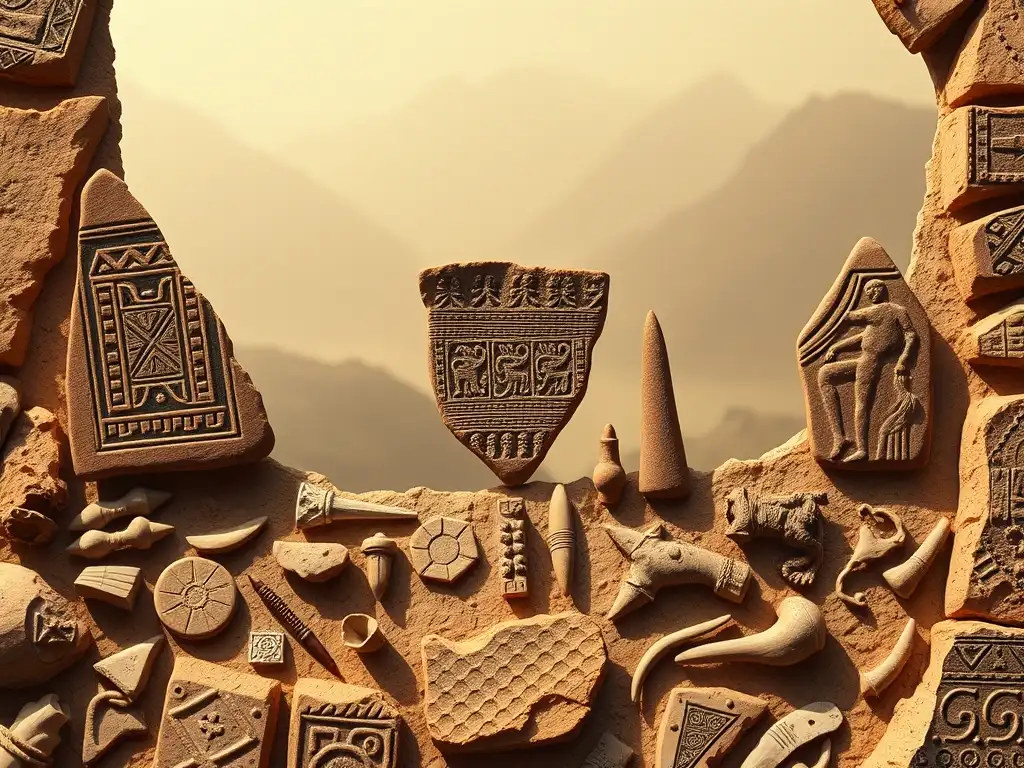
The study of Preceramic Andean cognitive development presents a fascinating challenge, requiring careful analysis of limited archaeological evidence. While direct measures of intelligence are impossible, we can infer cognitive abilities from technological advancements, social structures, and artistic expressions. This section will explore regional variations in the Preceramic period, acknowledging the inherent limitations in interpreting past cognitive processes. Understanding the nuances of regional development is crucial to avoiding generalizations about a monolithic "Andean mind."
The Preceramic era, spanning roughly 8000 to 1800 BCE, witnessed a diverse tapestry of cultural advancements across various Andean regions, each leaving behind unique markers of their cognitive capacities. This diversity highlights the importance of analyzing each region individually to fully grasp the complexities of Preceramic Andean cognitive development. The term "Preceramic" itself, referring to the period before the widespread adoption of pottery, helps to define the chronological scope of this early intellectual flourishing.
Regional Variations in Preceramic Cognitive Abilities
Significant variations existed in technological achievements across different Andean regions during the Preceramic period. Coastal regions, such as those inhabited by the early inhabitants of Peru's northern coast, demonstrate a sophisticated understanding of marine resources and a remarkable ability to adapt to a challenging environment. Evidence suggests advanced fishing techniques and the development of specialized tools for harvesting and processing marine life.
This mastery of their environment points to advanced problem-solving skills and a nuanced understanding of ecological principles – key indicators of advanced cognitive development. In contrast, highland regions, such as those around the Ayacucho basin, show evidence of early agricultural practices and the domestication of plants, suggesting a different set of cognitive strengths focused on resource management and agricultural innovation. The development of complex irrigation systems in some areas further supports this notion of sophisticated planning and organizational abilities.
The differences in environmental challenges and available resources likely shaped the specific cognitive skills that developed in each region. Further research is needed to fully understand the interplay between environment, technology, and cognitive development in these diverse Andean contexts. Analyzing the specific tools, technologies, and social structures of each region can help us better understand the unique cognitive landscapes of the Preceramic Andean world.
The Caral site in the Supe Valley of Peru stands as a testament to the advanced cognitive capabilities of its inhabitants. The construction of monumental architecture, including large pyramids and plazas, required sophisticated planning, organization, and labor management. This level of societal coordination points to complex social structures and a high degree of cooperation – impressive feats of cognitive achievement.
The scale of the project, along with evidence of specialized crafts and a complex system of resource distribution, suggests a centralized authority and a sophisticated understanding of social engineering. Furthermore, the absence of weaponry or defensive structures within Caral suggests a peaceful society, potentially indicating advanced conflict resolution strategies and a different approach to social organization compared to other contemporaneous societies. The development and maintenance of this complex social system required advanced cognitive abilities in areas such as communication, social interaction, and conflict management.
Analyzing the social structures and organization of Caral offers valuable insights into the cognitive capacities of Preceramic Andean societies. The complexity of Caral’s societal structure strongly suggests advanced cognitive abilities in social organization and planning.
Kotosh Religious Complex: Evidence of Abstract Thought
The Kotosh religious complex in the central Andes provides compelling evidence of abstract thought during the Preceramic period. The iconic "Temple of the Crossed Hands" displays a complex iconography that likely held deep symbolic meaning. The intricate carvings and architectural design suggest a highly developed capacity for symbolic representation and abstract thought.
These symbolic representations likely played a crucial role in religious beliefs and social cohesion. The deliberate construction and preservation of these religious sites indicate a significant investment in spiritual and ritual practices, suggesting a sophisticated understanding of the spiritual realm and its impact on social life. The presence of these complex religious structures and the sophisticated iconography they display clearly demonstrates a capacity for abstract thought and symbolic representation that is far from rudimentary.
Further studies of the iconography and associated artifacts could reveal further insights into the cosmology and worldview of the Kotosh culture. The development of complex religious systems and symbolic representation in Kotosh provides compelling evidence of advanced cognitive abilities in the Preceramic Andes. The "Temple of the Crossed Hands" remains a powerful symbol of the Preceramic Andean capacity for abstract thought and symbolic representation.
Preceramic Andean Cognitive Development: Implications and Conclusions
This section delves into the profound implications of understanding Preceramic Andean cognitive development and its lasting legacy. The evidence unearthed through archaeological findings, particularly concerning sophisticated toolmaking, complex social structures, and early artistic expressions, strongly suggests a level of cognitive sophistication far exceeding previous assumptions about early human societies.
This challenges Eurocentric narratives of cognitive development and offers a more nuanced and inclusive understanding of human intellectual capabilities across different cultures and geographical locations. The Preceramic Andean cognitive development wasn't a linear progression; it was a dynamic interplay of environmental adaptation, technological innovation, and social organization, all contributing to a unique cognitive landscape.
The Legacy of Preceramic Cognitive Achievements
The cognitive advancements of the Preceramic Andean period laid the groundwork for the remarkable achievements of later Andean civilizations. The mastery of agriculture, evidenced by sophisticated irrigation systems and diverse crop cultivation, demonstrates an advanced understanding of environmental processes and resource management. This knowledge wasn't simply practical; it was embedded within a complex worldview reflected in their art and ritual practices.
Consider, for instance, the intricate designs found on Preceramic pottery, which reveal abstract thinking and symbolic representation. These aren't simply decorative elements; they are visual expressions of a complex cosmology and social order. The development of sophisticated textile production, along with the early evidence of metallurgy, points to a high level of technological innovation and problem-solving capabilities— hallmarks of advanced cognitive processes.
The enduring legacy of this period is not just material; it's a cognitive framework that shaped subsequent Andean societies and their interactions with the environment. Their understanding of astronomy, reflected in early architectural alignments, further emphasizes their advanced cognitive capacities and sophisticated observation skills. This careful observation and understanding of the natural world directly influenced their agricultural practices, social structures, and belief systems.
Future Research Directions in Understanding Preceramic Andean Thought
Further research is crucial to fully grasp the intricacies of Preceramic Andean cognitive development. This requires a multidisciplinary approach, integrating archaeological findings with anthropological insights, linguistic analysis (where possible through examining later languages’ roots), and cognitive science methodologies. Specifically, future research should focus on:
- Advanced Dating Techniques: Refining dating methodologies to establish a more precise chronological framework for the development of different cognitive capabilities is paramount. This will allow for a more accurate understanding of the pace and sequence of change.
- Cognitive Archaeology: Applying cognitive archaeology principles to analyze artifacts and sites to infer cognitive processes and mental models of the Preceramic Andean populations. This involves detailed analysis of tool design, settlement patterns, and symbolic representations.
- Comparative Studies: Comparative studies with other contemporaneous cultures across the globe can provide valuable insights into the universality and specificity of cognitive development. This will help contextualize Andean achievements within a broader global perspective.
- Ethnoarchaeological Studies: Ethnoarchaeological studies of contemporary Andean communities can provide valuable analogies and insights into the possible meanings and functions of Preceramic artifacts and practices.
Preceramic Andean Cognitive development and its impact on later Andean societies
The cognitive achievements of the Preceramic Andean period had a profound and lasting impact on the development of subsequent Andean societies. The sophisticated understanding of agriculture, resource management, and social organization established during this era provided a solid foundation for the complex political and economic systems that characterized later civilizations like the Inca. The innovative technologies and artistic traditions developed in the Preceramic period continued to evolve and flourish, becoming integral aspects of later Andean cultures.
For example, the mastery of textile production and metallurgy, first evidenced in the Preceramic period, reached extraordinary levels of sophistication in later Andean societies. The complex symbolic systems and cosmological beliefs also found their roots in this early period, shaping the religious and ideological frameworks of later civilizations. The ability to build monumental structures, already hinted at in certain Preceramic sites, would later be fully realized in the impressive architectural achievements of the Inca and other later Andean cultures.
In essence, the Preceramic Andean cognitive development wasn't just a precursor; it was the bedrock upon which the remarkable achievements of later Andean societies were built. The legacy of this period continues to resonate in the cultural heritage of the Andes today. The ingenuity and adaptability demonstrated by Preceramic Andean populations serve as a testament to the remarkable capacity of the human mind to innovate and thrive in challenging environments.
Frequently Asked Questions
What is meant by "Preceramic Andean cognitive development"?
This refers to the intellectual and mental advancements of Andean societies before the development of pottery (the Ceramic period). It examines their problem-solving skills, abstract thinking, and social organization without the aid of written language or advanced ceramics.
How did researchers study the Preceramic Andean mind without written records?
Scholars analyze archaeological evidence such as complex architecture, sophisticated tools, elaborate burial practices, and early agricultural techniques to infer cognitive abilities. Art and iconography also provide valuable insights.
What were some key cognitive achievements of the Preceramic Andean cultures?
Preceramic Andean societies demonstrated advanced planning and organization in agriculture and construction, showcasing complex social structures and a capacity for abstract thought as evidenced by their symbolic representations.
How does studying Preceramic Andean cognitive development contribute to our understanding of human history?
It challenges Eurocentric narratives by showcasing the remarkable intellectual capabilities of these societies and expands our understanding of human cognitive evolution in diverse contexts, highlighting the independent development of complex societies.
What are some examples of Preceramic Andean societies whose cognitive abilities are studied?
Researchers study various groups, including those associated with Caral, Kotosh, and other early sites in the Andes, focusing on their social organization, technological innovations, and symbolic expressions to understand their cognitive development.
Final Reflection: Echoes of the Andes: A Legacy of Ingenuity
The Preceramic Andean societies, despite lacking ceramics, possessed a sophisticated cognitive landscape that continues to challenge and inspire us today. Their advancements in agriculture, social organization, and monumental architecture stand as a testament to the remarkable capacity of the human mind to adapt and innovate, even under seemingly limiting circumstances. This understanding is not merely an academic exercise; it forces us to reconsider our own assumptions about technological progress and the very definition of "civilization."
The enduring impact of Preceramic Andean thought is undeniable, shaping our understanding of early human development and challenging Eurocentric narratives of progress. Their innovative agricultural techniques, for example, continue to inform sustainable farming practices, demonstrating the wisdom embedded within their seemingly simple technologies. The past is never dead. It's not even past.
– William Faulkner. This quote rings true when considering the continuing relevance of Preceramic Andean ingenuity to contemporary challenges in resource management and societal organization. Their achievements serve as a powerful reminder that complex societies can flourish without the technological markers we often associate with advancement.
Consider the ingenuity of these early Andean communities. Their mastery of their environment, their intricate social structures, and their ability to create monumental works – all without the benefit of ceramics – should inspire us to re-evaluate our own perspectives and embrace the potential for innovation that lies within us all. You, too, possess the capacity for remarkable achievement.
Take a moment to reflect on the challenges you face and the innovative solutions you might uncover by embracing the spirit of ingenuity demonstrated by the Preceramic Andean people. Let their legacy inspire you to create your own lasting impact on the world.
Unveil the Secrets of Andean Intelligence!
Thank you for exploring the fascinating world of the Pre-Ceramic Andean civilization and their remarkable cognitive abilities. You've gained valuable insights into a culture that shaped one of history's most intriguing societies. Now, let's delve deeper into their lasting legacy.
Here are some ways to continue your exploration:
- Join an online community dedicated to Andean civilizations to connect with other enthusiasts and share ideas.
- Conduct further research: Explore academic papers and documentaries focusing on the cognitive achievements and ingenuity of the Andean people.
- Share your discoveries with friends and on social media to spark conversations about the remarkable achievements of ancient cultures.
Reflecting on your journey, consider this: What aspect of the Pre-Ceramic Andean civilization most inspires you, and how can their ingenuity inform your own perspective today?