Andean Agriculture and Food

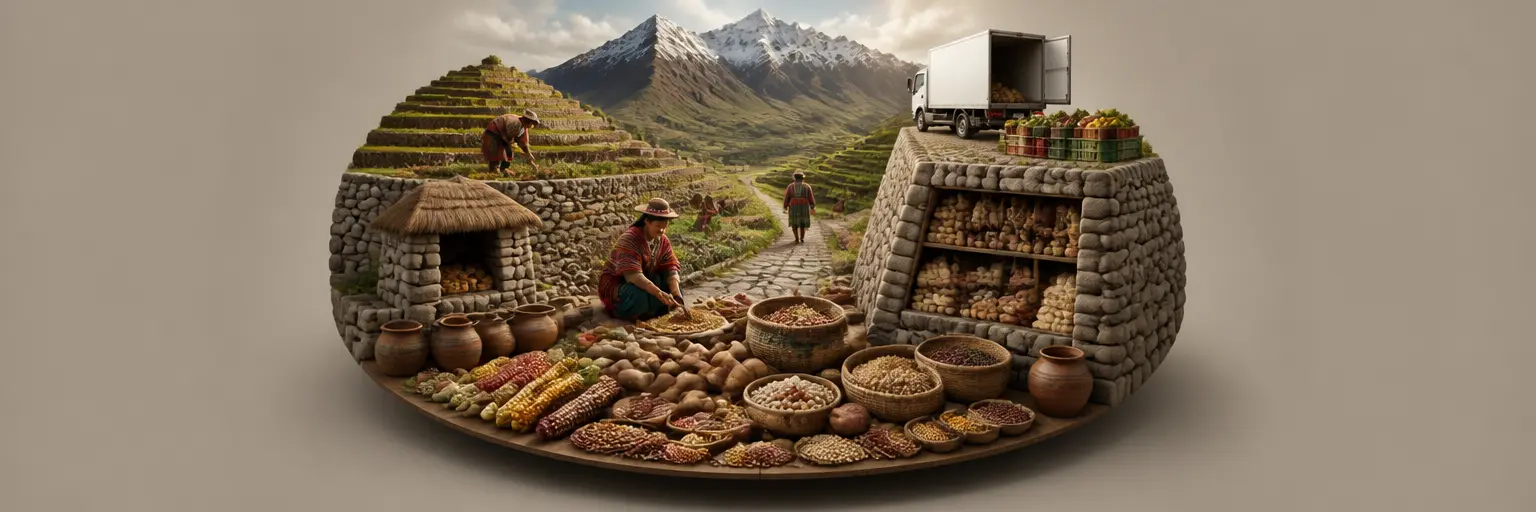
Discover how ancient Andean societies mastered the storage and distribution of food to thrive in challenging mountain environments. Explore ingenious terraces, storehouses, drying techniques, and trade networks that preserved maize, potatoes, quinoa, and other staples while supporting communities across the Andes. 🌽🏔️ Learn how Inca innovation and regional cooperation created resilient food systems that shaped Andean agriculture, technology, and civilization.
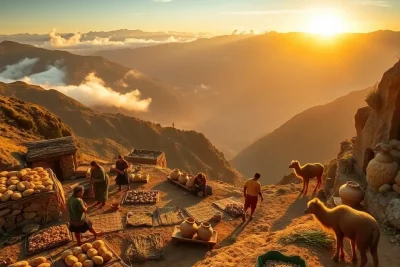
Discover how ancient Andean civilizations developed sophisticated systems for the storage and distribution of food across some of the world’s most challenging landscapes. This subcategory explores the agricultural knowledge, preservation techniques, transportation networks, and community organization used by the Incas, Moche, Nazca, Tiahuanaco, and other Andean societies. Learn how high-altitude communities protected harvests, managed seasonal shortages, and moved essential resources between coastal valleys, mountain terraces, and the highlands.
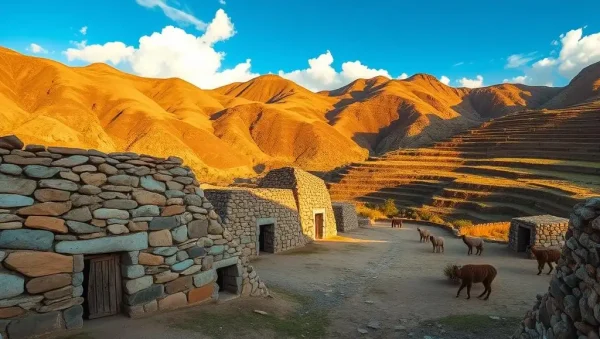
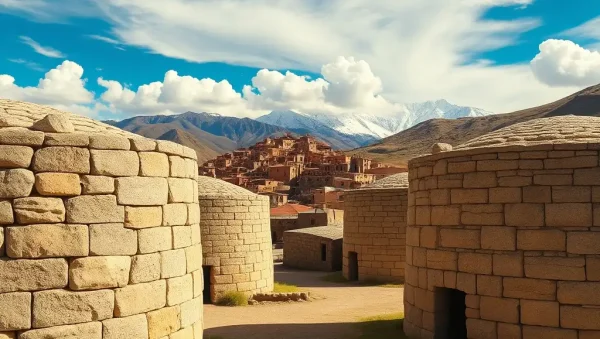
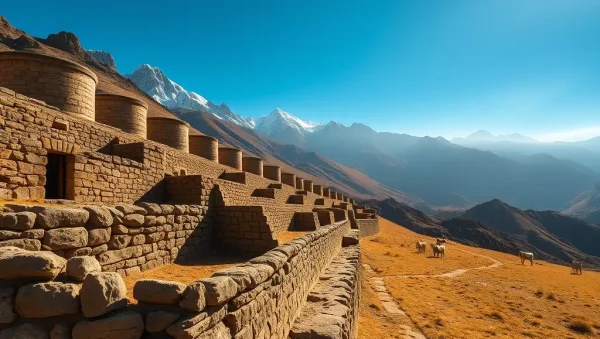
Explore the Inca storage facilities known as qollqas, which played a central role in preserving grains, potatoes, chuño, dried meat, and other essential foods. Built throughout the empire, these storehouses were often positioned near administrative centers, roads, military outposts, and ceremonial sites. Their design took advantage of cool temperatures, dry air, ventilation, and elevated locations to reduce spoilage and protect supplies.
Learn how qollqas supported the organization of the Inca Empire and strengthened its system of food security. Stored products could be distributed during famines, natural disasters, military campaigns, religious ceremonies, or public works projects. This network reveals the relationship between agricultural production, state administration, taxation, labor obligations, and imperial power in the Andes.
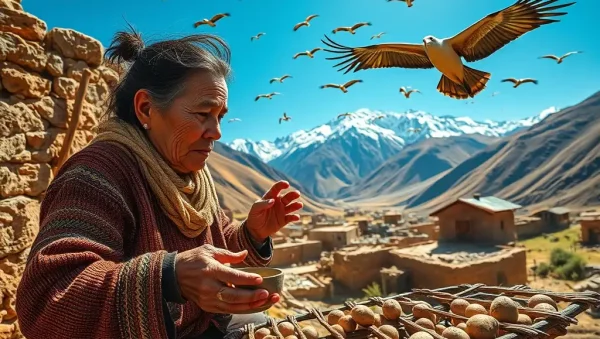
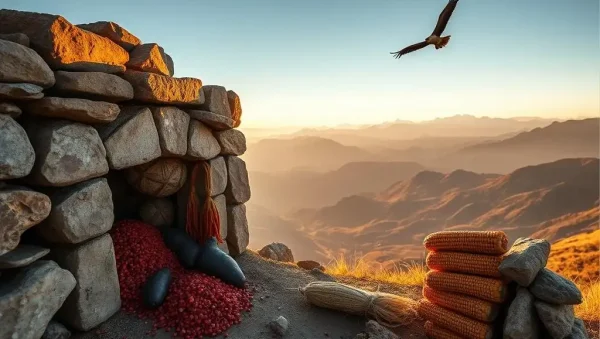
Andean farmers developed remarkable methods for preserving food over long periods. One of the best-known techniques was the production of chuño, a freeze-dried potato created through repeated freezing, thawing, and pressing. This lightweight product could be stored for years and transported over long distances, providing a dependable source of nutrition in high-altitude environments.
Other preservation methods included drying, salting, smoking, and fermenting. Charqui, or dried meat, helped communities preserve llama, alpaca, and other animal products, while dried maize, quinoa, beans, peppers, and fish expanded the available food supply. These techniques demonstrate the depth of ancient Andean food technology and the ability of local communities to adapt to extreme climates.
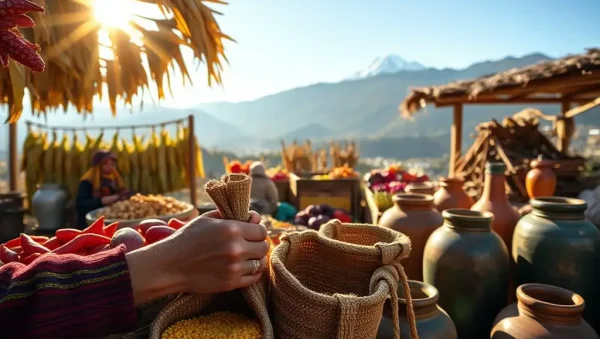
Discover the staple crops that sustained Andean populations and formed the foundation of regional food storage. Potatoes thrived in highland environments, quinoa provided a nutrient-rich grain, and maize was cultivated in warmer valleys and lower elevations. Together with beans, oca, ulluco, maca, chili peppers, and other native crops, these foods supported diverse diets and complex agricultural economies.
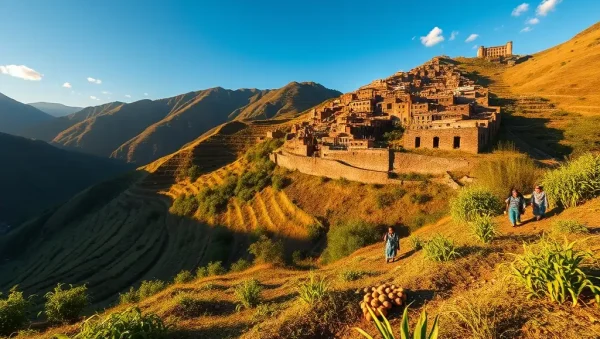
This section examines how crop diversity reduced the risks caused by frost, drought, pests, and changing weather conditions. Readers can learn how vertical agriculture enabled Andean communities to cultivate different ecological zones and exchange products between them. Storage practices ensured that surplus harvests remained available beyond the growing season and helped communities maintain resilience during difficult years.
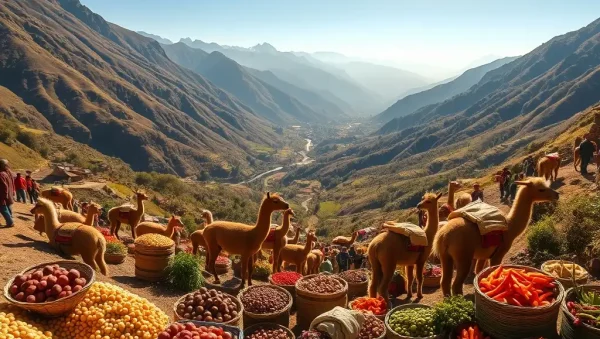
Before the arrival of horses and wheeled transport, llamas served as essential pack animals in the Andes. Llama caravans carried food, textiles, fuel, and other goods along mountain paths, connecting highland settlements with coastal regions and fertile valleys. Their ability to travel through steep terrain made them particularly valuable for moving dried potatoes, maize, quinoa, salt, meat, and other supplies.
Learn how caravan routes supported Andean trade networks and encouraged economic relationships between communities. Although llamas carried limited loads compared with modern transport, organized caravans could connect distant regions and maintain a steady flow of resources. Their movement was closely linked to markets, festivals, political authority, religious exchange, and the distribution of agricultural products.
The Inca road system, often called the Qhapaq Ñan, provided the infrastructure needed to move food and supplies across the empire. Bridges, stairways, tunnels, rest stations, and administrative centers allowed officials, messengers, armies, and caravans to travel through varied landscapes. Food stored along these routes could support state personnel, travelers, workers, and soldiers.
Explore how the road network connected food-producing regions with major urban and ceremonial centers. Distribution was coordinated through administrative planning, labor systems, local authorities, and storehouse management. The Qhapaq Ñan illustrates how transportation technology and political organization worked together to create one of the most effective food distribution systems in pre-Columbian South America.
Food storage and distribution depended on cooperation between households, villages, local leaders, and the state. Systems such as ayllu organization, reciprocal labor, and collective agricultural work helped communities plant, harvest, process, and store food. Shared responsibilities created networks of mutual support that were particularly important in regions affected by altitude, drought, frost, or irregular rainfall.
Readers will discover how food surpluses were managed not only as private possessions but also as resources connected to social obligations and political relationships. Redistribution could reinforce alliances, support religious events, assist vulnerable populations, and provide laborers with food. These traditions highlight the social dimensions of Andean agriculture and the importance of cooperation in maintaining food security.
Andean food systems connected dramatically different ecological zones. Coastal societies such as the Moche and Nazca relied on irrigation agriculture, marine resources, and fertile river valleys, while highland communities cultivated tubers, grains, and camelid herds. Goods moved between these regions through trade, tribute, kinship networks, and organized exchange.
Explore how dried fish, sea salt, cotton, maize, peppers, potatoes, quinoa, coca leaves, and animal products traveled across the Andes. The movement of these goods encouraged cultural interaction and strengthened regional economies. Understanding these networks provides insight into how ancient Andean civilizations transformed environmental diversity into a powerful advantage.
Archaeologists study storehouses, ceramic vessels, food remains, agricultural terraces, roads, and settlement patterns to reconstruct ancient systems of food management. Excavated qollqas, granaries, kitchens, drying areas, and administrative sites offer evidence of what people cultivated, preserved, consumed, and distributed.
Scientific methods such as botanical analysis, residue analysis, isotope research, and examination of ancient seeds help reveal the history of Andean agriculture. These discoveries allow researchers to understand changing diets, regional trade, climate adaptation, and the political role of food. By studying the archaeological record, visitors can connect everyday food practices with the broader history of Andean civilizations.
Qollqas were Inca storehouses used to preserve and organize food, clothing, tools, weapons, and other supplies. Their contents could support armies, state workers, religious ceremonies, public projects, and communities facing shortages. Many were designed with ventilation and dry conditions to help protect stored products.
They preserved potatoes by producing chuño. Fresh potatoes were exposed to freezing temperatures at night, warmed during the day, and pressed to remove moisture. Repeating this process created a lightweight, durable food that could be stored for long periods and rehydrated when needed.
Food was transported using human porters, llama caravans, mountain paths, rivers, and the extensive Inca road system. Dried and lightweight products such as chuño, charqui, maize, quinoa, salt, and dried fish were especially suitable for long-distance movement.
Food distribution helped the Inca state feed workers, soldiers, officials, and travelers while responding to emergencies and supporting major construction projects. It also strengthened political authority by linking local production, taxation, labor obligations, storehouses, and imperial administration.
Yes. Coastal, valley, and highland communities exchanged products from their different ecological environments. Coastal groups supplied fish, salt, and maize, while highland communities provided potatoes, quinoa, llama products, and other goods. These exchanges created interconnected Andean food networks long before European contact.