
From Llama Caravans to Coastal Canoes: Transport in Andean Barter

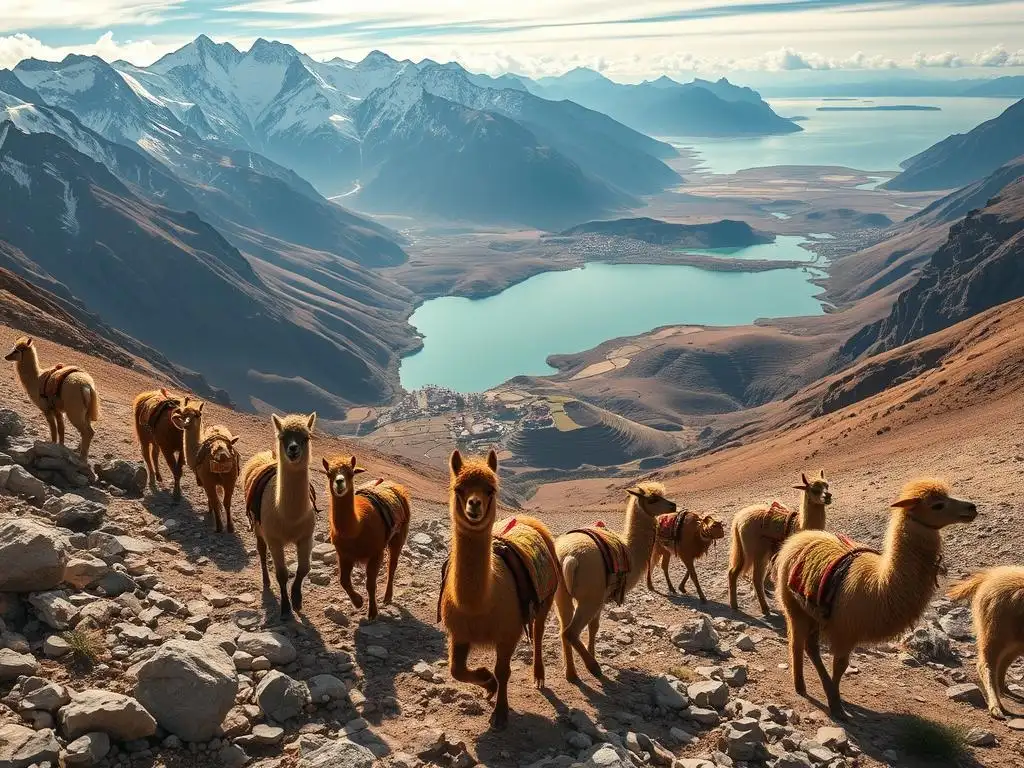
Step into a world lost to time, yet echoing with the ingenuity of ancient Andean masters. Imagine a landscape sculpted by towering mountains and vast deserts, where civilizations thrived despite the challenges. This is the story of the Andes, and we invite you to uncover its secrets.
But how did these remarkable cultures, from the Incas to the Nazca, connect across such diverse terrain? Discover the surprising answers as we delve into the fascinating world of Andean civilization transportation methods, revealing the intricate systems that fueled their trade and shaped their destinies. Prepare to be amazed by the ingenuity of their solutions – from llama caravans to coastal canoes – in our exploration of Andean Trade and Economy.
-
Andean Civilization Transportation Methods: A Journey Through Time
- The Importance of Transportation in Andean Economic Systems
- Llama Caravans: The Backbone of Inland Trade
- Coastal Rafts and Navigation: Waterways of Exchange
- Footpaths and Mountain Trails: Connecting Communities
- Comparison: Llama Caravans vs. Coastal Rafts
- The Evolution of Andean Transportation Methods
- Impact of Andean Transportation on Social and Political Development
-
Frequently Asked Questions
- What were the primary methods of transportation used by Andean civilizations?
- How did the Incas manage to transport goods across challenging terrain?
- What role did waterways play in Andean transportation?
- How did the geography of the Andes influence transportation methods?
- Were there any technological advancements in Andean transportation?
- Final Reflection: Echoes of the Andes: A Legacy of Ingenuity in Motion
- **Embark on Your Journey of Discovery! **
Andean Civilization Transportation Methods: A Journey Through Time
The Andes Mountains, a formidable natural barrier stretching along the western coast of South America, presented unique challenges and opportunities for the ancient civilizations that thrived within its complex ecosystem. Understanding how these societies overcame geographical obstacles is key to comprehending their economic success and cultural exchange.
This article explores the diverse transportation methods employed by Andean civilizations, focusing on their crucial role in facilitating the intricate barter systems that underpinned their economies. We will journey through time, examining the ingenious solutions implemented by cultures like the Inca, Moche, Nazca, and Tiahuanaco, showcasing how their transportation networks shaped their societies and left a lasting legacy.
From the sturdy llama caravans traversing high-altitude passes to the nimble coastal canoes navigating treacherous currents, the ingenuity of Andean transportation systems stands as a testament to human adaptability and innovation. This exploration will reveal how effective transportation systems were not just logistical achievements, but fundamental components of the vibrant Andean trade and economy, enabling the exchange of vital goods and ideas across vast distances.
The Importance of Transportation in Andean Economic Systems
The economic success of Andean civilizations was intrinsically linked to their ability to move goods efficiently. The varied geography – encompassing high-altitude plains, arid coastal deserts, and lush Amazonian foothills – necessitated a diverse range of transportation solutions. The absence of wheeled vehicles, a common feature in other ancient societies, forced Andean peoples to develop innovative methods leveraging the natural resources available to them.
The transportation of goods wasn't simply a matter of logistics; it was a cornerstone of their barter systems. The efficient movement of goods like textiles, ceramics, precious metals, agricultural products, and building materials fueled economic growth and facilitated complex social interactions between different communities. The scale of these networks, evidenced by archaeological finds spread across vast distances, underscores the sophistication of their transportation systems and their essential role in shaping Andean societies.
The absence of a unified currency further highlighted the importance of efficient transportation in facilitating the exchange of goods and services through barter. Without reliable transportation, the intricate web of trade that characterized these civilizations would have been impossible to maintain. This section will delve into the specific methods employed, highlighting their impact on the Andean economic landscape.
Llama Caravans: The Backbone of Inland Trade
Llamas, domesticated camelids, were indispensable to the inland trade of the Andes. Their surefootedness allowed them to traverse the challenging mountain terrain, carrying significant loads across vast distances. Llama caravans, often consisting of dozens or even hundreds of animals, represented a crucial mode of transportation, connecting distant communities and facilitating the exchange of goods.
The efficiency of these caravans was dependent not only on the animals themselves but also on the sophisticated organizational structures and logistical expertise developed by Andean societies. The success of the Andean barter system was heavily reliant on the reliable transportation provided by these remarkable animals.
Llama Domestication and its Impact on Andean Trade Networks
The domestication of llamas, estimated to have occurred around [specific date pending], revolutionized Andean trade networks. Prior to domestication, the transport of goods across the Andes would have been significantly more challenging and limited. Llamas provided a sustainable and efficient means of carrying heavy loads, dramatically increasing the range and volume of goods that could be exchanged.
This increased trade facilitated the spread of ideas, technologies, and cultural practices, fostering a degree of interconnectedness across vast geographical areas. The impact of llama domestication on the social and economic structures of Andean societies cannot be overstated; it was a pivotal moment that shaped their development and prosperity.
Organizing and Managing Llama Caravans in the Inca Empire
The Inca Empire, known for its meticulous organization and administrative prowess, perfected the art of managing llama caravans. Evidence suggests the use of [specific organizational structures pending], ensuring efficient movement of goods and minimizing losses. The Inca system involved carefully planned routes, strategically located resting stations (tambos), and a well-trained workforce responsible for managing the caravans. These systems allowed for the reliable and predictable transport of goods, facilitating the empire's vast and complex economy. The scale and efficiency of Inca-managed llama caravans remain a remarkable feat of logistical engineering, demonstrating the advanced organizational capabilities of the empire.
Goods Transported by Llama Caravans: Salt, Textiles, and Obsidian
Llama caravans transported a wide range of goods across the Andean landscape. High-value items such as salt, crucial for preserving food and vital for daily life, were regularly transported. Fine textiles, produced in various regions specializing in different techniques and materials, were also carried, showcasing the interconnectedness of Andean textile production.
Obsidian, a volcanic glass used for tools and weapons, traveled vast distances, highlighting the extensive trade networks connecting distant communities. The diversity of goods transported underscores the crucial role of llama caravans in supporting the Andean barter system and facilitating economic interaction across the empire. The sheer volume of goods moved speaks to the efficiency and importance of this transportation method.
The Pacific Ocean played a vital role in the economic and social life of several Andean civilizations. Coastal communities, particularly those along the Peruvian coast, developed sophisticated techniques for navigating and utilizing the ocean for trade and transport. Their mastery of raft construction and navigation allowed them to exploit marine resources and establish extensive trade networks connecting distant settlements. The ocean wasn't just a barrier; it was a highway facilitating the exchange of goods and ideas.
This maritime prowess is a testament to the ingenuity and adaptability of these ancient Andean peoples, who harnessed the power of the ocean to their advantage. The development of seafaring technologies directly impacted the scale and efficiency of their trade networks, showcasing a remarkable level of technological advancement for the time. The construction and maintenance of these rafts required specialized knowledge and skills, passed down through generations of skilled craftspeople.
Types of Reed Rafts Used by Andean Coastal Communities
Different coastal communities employed various types of reed rafts, each adapted to specific needs and environmental conditions. The most common material was totora, a buoyant reed that grows abundantly along the Peruvian coast. These rafts ranged in size and complexity, from small, single-person rafts used for fishing to larger, multi-person rafts capable of carrying significant cargo. Some rafts were simple, consisting of bundles of reeds lashed together, while others were more elaborate, incorporating platforms and sails for improved stability and maneuverability.
The construction techniques varied across different regions, reflecting local adaptations and expertise. Archaeological evidence, including remnants of reed rafts and depictions in pottery, provides valuable insights into the diversity of these seafaring vessels. The sophistication of these rafts showcases a deep understanding of materials science and naval architecture within Andean coastal communities.
Navigation Techniques and Coastal Trade Routes Along the Pacific
Andean coastal navigators employed sophisticated techniques to navigate the Pacific Ocean. While the use of celestial navigation is debated, their knowledge of coastal landmarks, currents, and wind patterns was undoubtedly crucial. They likely used a combination of observation and experience to chart their courses and reach their destinations. Established coastal trade routes connected various settlements, facilitating the exchange of goods such as fish, textiles, pottery, and precious metals.
These routes weren't simply linear paths; they were complex networks that adapted to seasonal changes and environmental conditions. The understanding of ocean currents and wind patterns was paramount, allowing navigators to optimize their journeys and minimize risks associated with unpredictable weather. The effectiveness of these trade routes is evidenced by the widespread distribution of similar goods and cultural practices along the coast.
The Role of Seafaring in the Chincha Kingdom's Trade
The Chincha Kingdom, a pre-Inca civilization flourishing along the central coast of Peru, is a prime example of a society whose prosperity was deeply intertwined with seafaring. Their control of coastal trade routes enabled them to accumulate significant wealth through the exchange of cotton textiles, fish products, and other valuable goods. Their skilled navigators established connections with distant communities, expanding their influence and economic power.
The Chincha's maritime expertise contributed significantly to their dominance in the region. Archaeological evidence, such as their impressive coastal settlements and the remains of their large rafts, underscores their reliance on maritime trade for their economic and political success. Their story highlights the crucial role of seafaring in shaping the political landscape and economic prosperity of ancient Andean societies.
Footpaths and Mountain Trails: Connecting Communities
The challenging Andean geography necessitated the development of intricate networks of footpaths and mountain trails. These routes, often carved into steep slopes and traversing treacherous terrain, were vital for connecting communities scattered across the diverse landscapes. These paths were not merely trails; they were lifelines, facilitating the movement of people, goods, and information across vast distances and varied altitudes. The construction and maintenance of these paths required immense effort and ingenuity, reflecting the importance of interconnectivity in Andean societies. The paths themselves often followed pre-existing animal trails, adapting to the natural contours of the land.
Engineering of the Inca Road System for Trade and Communication
The Inca road system stands as a remarkable feat of engineering. This extensive network of roads, spanning thousands of kilometers across the Andes, connected the vast Inca Empire. The roads facilitated the efficient movement of troops, messengers, and goods, contributing significantly to the Inca's political and economic control.
The construction involved meticulous planning and execution, with sophisticated techniques employed to overcome the challenging topography. Suspension bridges, carved terraces, and strategically placed waystations were integral to the system's functionality. The Inca road system showcases a remarkable level of organizational and engineering prowess, highlighting the empire's capacity to mobilize resources and maintain control over a vast and diverse territory.
The Importance of Foot Traffic in Local Agricultural Exchange
Foot traffic played a crucial role in local agricultural exchange within Andean communities. Farmers often carried their produce to nearby markets on foot, exchanging their goods for other necessities. This system of direct exchange fostered strong social ties and facilitated the distribution of food resources within and between communities.
The scale of agricultural production and the need for food security drove the development of efficient and reliable footpaths connecting agricultural areas to population centers. This system, while seemingly simple, was vital to the survival and prosperity of Andean communities. The rhythm of life was often dictated by the seasonal changes and the necessity of moving agricultural goods effectively.
Challenges of Transportation in the Andes' Vertical Ecology
The Andes' vertical ecology presented significant challenges to transportation. The varied altitudes, steep slopes, and unpredictable weather conditions posed considerable obstacles. The transport of goods across different ecological zones required adaptation and innovation. Animals such as llamas and alpacas were crucial for carrying goods, but their carrying capacity was limited, and their movement was constrained by the terrain.
The construction and maintenance of transportation routes were labor-intensive, demanding significant human resources. Overcoming these challenges required ingenuity, resilience, and a deep understanding of the Andean environment. The success of Andean civilizations in navigating these obstacles is a testament to their ability to adapt and innovate.
Comparison: Llama Caravans vs. Coastal Rafts
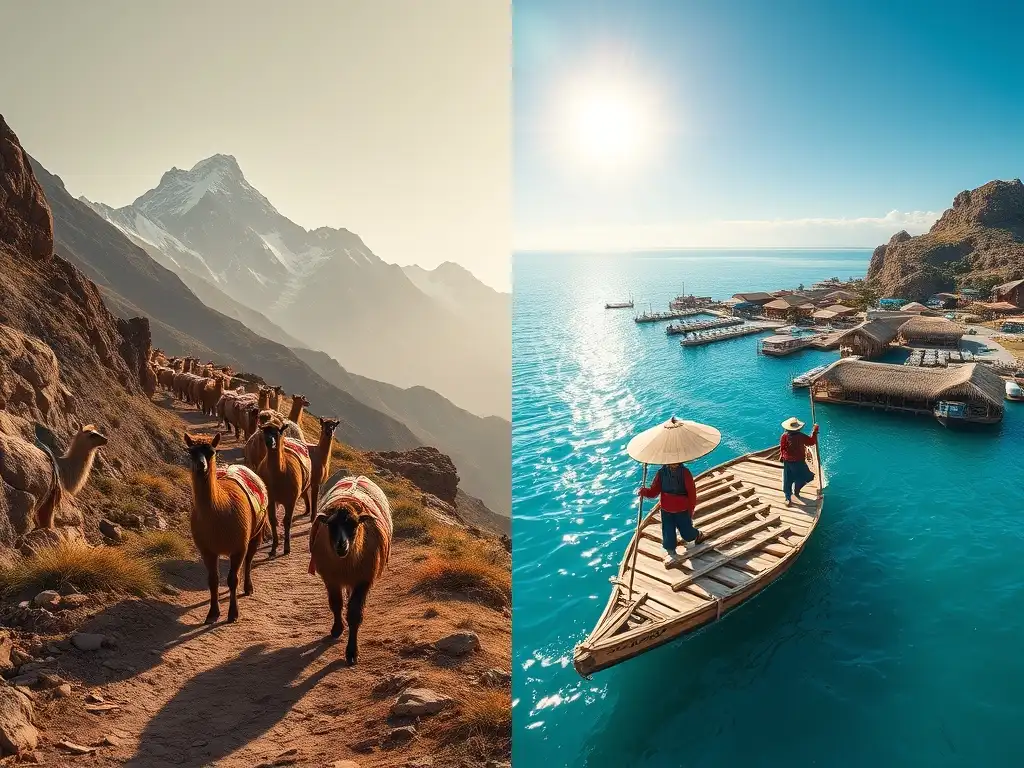
Llama caravans and coastal rafts represented two distinct yet crucial transportation methods in the Andean world, each adapted to the unique geographical challenges of its environment. Llama caravans, primarily used in the highlands, relied on the surefootedness and strength of llamas to transport goods across rugged terrain. These animals could navigate steep mountain passes and treacherous trails inaccessible to wheeled vehicles. In contrast, coastal rafts, prevalent along the Pacific coast, utilized the ocean currents and winds to move goods and people across vast distances.
These rafts, often constructed from bundled reeds like totora, were remarkably seaworthy and played a vital role in maritime trade networks. The choice between these methods depended heavily on the nature of the goods being transported, the destination, and the availability of suitable terrain or waterways. The contrasting landscapes shaped not only the technology but also the economic and social structures of the Andean civilizations.
Advantages and Limitations of Llama Caravans in High Altitude
The use of llama caravans in the high Andes presented both significant advantages and limitations. The advantages stemmed from the llama's remarkable adaptability to high-altitude conditions. Their ability to carry substantial loads (up to 100 pounds) across challenging terrain made them indispensable for transporting goods like textiles, ceramics, and precious metals between distant communities. Llamas also required relatively little maintenance compared to other pack animals. However, limitations were equally significant.
The speed of llama caravans was inherently slow, making long-distance trade a lengthy process. The carrying capacity of a single llama was also limited, necessitating large caravans for significant quantities of goods. Moreover, the availability of suitable grazing land for the llamas dictated the routes and pace of travel. The vulnerability of the caravans to inclement weather and potential banditry further constrained their effectiveness. These factors meant that while llamas were crucial, they were not without their significant drawbacks.
Advantages and Limitations of Coastal Rafts in Maritime Trade
Coastal rafts, constructed from materials like totora reeds, offered unique advantages for maritime trade along the Andean coast. Their maneuverability and ability to utilize ocean currents and winds allowed for efficient transportation of goods over long distances. The relative simplicity of their construction also made them accessible to a wider range of communities. However, these rafts also faced significant limitations. Their vulnerability to strong storms and unpredictable ocean currents posed considerable risks.
The limited carrying capacity compared to larger vessels restricted the volume of goods that could be transported. Furthermore, the reliance on favorable winds and currents meant that voyages could be considerably delayed. Navigation was also challenging, relying on celestial observation and experience. The inherent fragility of the rafts compared to more robust boats also limited their lifespan. Despite these limitations, coastal rafts remained an essential component of the Andean coastal trade networks.
How Different Transportation Methods Served Diverse Regional Needs
The diverse geography of the Andes fostered the development of a variety of transportation methods, each tailored to the specific needs of different regions. In the arid coastal regions, where navigable rivers were scarce, coastal rafts became the primary means of transport, facilitating trade between coastal settlements and potentially even across the Pacific. In the highlands, the rugged terrain necessitated the use of llamas as pack animals, connecting communities across mountain passes and valleys. In more temperate valleys, where rivers were more prevalent, canoes and other watercraft likely played a more significant role.
This specialization reflects the ingenuity of Andean societies in adapting their transportation technologies to the unique challenges of their environment. The varied topography directly influenced the development of specialized transportation methods, highlighting the interconnection between geography and societal development. This adaptability is a key feature of understanding Andean civilization transportation methods.
The Evolution of Andean Transportation Methods
The development of Andean transportation systems was a gradual process, evolving over millennia in response to changing environmental conditions, technological innovations, and the expansion of trade networks. The evolution wasn't uniform across the vast Andean region, with different societies developing distinct transportation solutions based on their particular geographic contexts and technological capabilities.
Pre-Inca Transportation Systems: Regional Variations
Before the Inca Empire's rise, various Andean societies developed their own unique transportation systems. The Moche civilization, for instance, relied heavily on coastal transport, utilizing sophisticated rafts and potentially even larger boats for maritime trade. In the highlands, cultures like the Wari and Tiwanaku developed extensive networks of roads and trails, although the extent of their use of pack animals remains a subject of ongoing research.
These pre-Inca systems laid the foundation for the later, more sophisticated Inca infrastructure. The diversity of these early systems underscores the adaptability of Andean societies in responding to their environment and the need for efficient transport.
Inca Innovations in Transportation Infrastructure: The Qhapaq Ñan
The Inca Empire significantly advanced Andean transportation technology with the construction of the Qhapaq Ñan, a vast network of roads and trails spanning thousands of miles across the Andes. This impressive feat of engineering involved the construction of bridges, tunnels, and strategically placed resting places for travelers and pack animals. The Qhapaq Ñan not only facilitated the movement of goods and troops but also played a crucial role in integrating the diverse populations of the empire.
This sophisticated infrastructure is a testament to the Inca's organizational capacity and engineering prowess. The Qhapaq Ñan is considered one of the most significant achievements in ancient Andean engineering and a crucial component of understanding Andean civilization transportation methods.
The Legacy of Andean Transportation in Contemporary Andean Communities
The legacy of Andean transportation methods continues to shape the lives of contemporary Andean communities. While modern technologies like roads and vehicles have become more prevalent, llamas remain an important means of transport in remote areas where access is limited. Traditional knowledge of navigating Andean terrain and utilizing local resources for transportation is still relevant today.
Many aspects of traditional Andean transportation, including techniques for building rafts and trails, have been passed down through generations, illustrating the enduring influence of ancient practices. The continuation of these practices demonstrates the persistence of traditional knowledge and its adaptation to modern contexts. This highlights the long-term impact of ancient Andean transportation systems on the region's culture and economy.
The development of sophisticated transportation systems profoundly impacted the social and political landscape of Andean civilizations. Efficient movement of people and goods fostered stronger inter-regional connections, leading to increased cultural exchange and the emergence of larger, more complex societies. The ability to quickly transport resources and armies was crucial in consolidating power and maintaining control over vast territories.
For instance, the Inca's extensive road network, the Qhapaq Ñan, allowed for rapid mobilization of troops, enabling them to quell rebellions swiftly and maintain their dominance over a geographically diverse empire. The efficient transport of agricultural surpluses also played a critical role in supporting larger population centers and reducing the risk of famine, thereby contributing to social stability and economic growth.
Without effective transportation, the scale and complexity of Andean societies would have been drastically limited. The interconnection facilitated by transport systems wasn't merely logistical; it was fundamentally entwined with the social fabric and political structures of these civilizations.
How Transportation Facilitated the Spread of Quechua and Inca Culture
The Inca's mastery of transportation played a crucial role in the spread of their language, Quechua, and cultural practices throughout their vast empire. The Qhapaq Ñan, with its network of roads and relay stations (tambos), enabled the swift and efficient movement of Inca officials, soldiers, and messengers. These individuals acted as vectors for cultural transmission, introducing Quechua as the lingua franca and promoting Inca religious beliefs, administrative systems, and artistic styles across diverse regions.
The systematic relocation of populations (mit'a) also contributed significantly to cultural diffusion. People from different regions were moved to work on various projects throughout the empire, leading to intermingling and the adoption of common cultural practices.
The ease of travel along the Qhapaq Ñan facilitated this process, accelerating the homogenization of culture under Inca rule and leaving a lasting legacy on the Andean region. This contrasts sharply with the slower, less widespread cultural dissemination observed in pre-Inca civilizations which lacked comparable infrastructure.
The Role of Transportation in Building the Inca Empire's Power
The Inca Empire's remarkable expansion and enduring power were inextricably linked to its advanced transportation infrastructure. The Qhapaq Ñan, a marvel of engineering, allowed for the rapid deployment of military forces to suppress rebellions and conquer new territories. The ability to move troops and supplies swiftly across mountainous terrain gave the Inca a significant advantage over their adversaries.
Furthermore, the efficient transport of resources – from food and textiles to building materials – supported the growth of urban centers and the construction of monumental architecture, bolstering the empire's prestige and power. The control over trade routes, facilitated by the Qhapaq Ñan, also provided the Inca with significant economic leverage, enhancing their ability to extract resources and tribute from conquered populations. The interconnectedness provided by the road system reinforced the empire's administrative control, allowing for effective communication and the enforcement of laws across vast distances.
This logistical prowess contributed significantly to the Inca Empire's longevity and influence. Without this sophisticated system, the Inca’s military campaigns and administrative control would have been far more challenging, if not impossible.
The Impact of the Qhapaq Ñan on Andean Integration
The Qhapaq Ñan, meaning "Royal Road" in Quechua, stands as a testament to the Inca's engineering prowess and its profound impact on Andean integration. This extensive network of roads, spanning thousands of kilometers across diverse landscapes, facilitated unprecedented levels of interaction and exchange between different Andean communities. The Qhapaq Ñan wasn't merely a transportation system; it was a vital artery connecting disparate regions, fostering economic interdependence, and promoting cultural exchange.
The movement of goods, people, and ideas along the road fostered a sense of shared identity and facilitated the development of a unified Andean culture, at least within the Inca Empire's sphere of influence. The road system also enabled the efficient distribution of resources, mitigating the impact of regional shortages and contributing to overall societal stability.
The Qhapaq Ñan's legacy extends beyond the Inca Empire's collapse; its remnants continue to serve as a reminder of the crucial role of infrastructure in shaping Andean societies and fostering integration across diverse geographical regions. The integration fostered by the Qhapaq Ñan was a key factor in the cultural and economic cohesion of the Inca Empire and had a lasting influence on the region's development.
Frequently Asked Questions
What were the primary methods of transportation used by Andean civilizations?
Andean civilizations utilized a variety of methods depending on geography. Llama caravans were crucial for highland transport of goods, while coastal canoes facilitated trade and travel along the Pacific coast. Footpaths and roads also played a significant role in the Inca Empire.
How did the Incas manage to transport goods across challenging terrain?
The Incas built an extensive network of high-altitude roads and bridges, alongside using llamas as pack animals. They also developed sophisticated storage systems (warehouses) along these routes to facilitate the movement of goods and supplies.
What role did waterways play in Andean transportation?
Waterways, especially the Pacific Ocean and major rivers, were vital for coastal trade and fishing. Reed boats (balsas) were commonly used for navigating rivers and coastal waters, supporting both local and long-distance travel.
How did the geography of the Andes influence transportation methods?
The diverse geography, including mountains, deserts, and coasts, significantly impacted transport. Llamas were ideal for the highlands, while boats were essential for coastal regions. The challenging terrain necessitated the development of ingenious engineering solutions like suspension bridges.
Were there any technological advancements in Andean transportation?
Yes, the Incas developed advanced road systems with sophisticated engineering, including stone pavements and suspension bridges. They also organized relay systems for faster communication and movement of messengers along their extensive road network.
Final Reflection: Echoes of the Andes: A Legacy of Ingenuity in Motion
The ingenious transportation systems of the Andean civilizations, from the humble llama caravan to the daring coastal canoe, remain a testament to human adaptability and resourcefulness, a legacy that continues to resonate in modern infrastructure and sustainable practices. Their solutions, born from necessity and shaped by the challenging Andean terrain, offer valuable lessons for contemporary society grappling with similar issues of efficient and environmentally conscious movement of goods and people.
The enduring impact of these ancient methods is undeniable; their influence can be seen not only in the continued use of llamas in some Andean communities, but also in the innovative approaches to sustainable transportation being developed today. The ingenuity of these ancient cultures serves as a powerful reminder that sustainable solutions are not a modern invention, but rather a deeply rooted human capacity. The past is never dead. It's not even past.
- William Faulkner. This quote perfectly encapsulates the enduring relevance of understanding the transportation methods of the Andean civilizations, as their impact continues to shape our present and future.
Consider the challenges faced by these ancient Andean communities, and how their innovative solutions—from carefully planned road systems to the mastery of water transport—allowed them to thrive. Now, consider your own life. What challenges do you face, and what innovative solutions can you develop, drawing inspiration from the resourcefulness and adaptability of the Andean people? Let the echoes of their ingenuity inspire you to find creative and sustainable solutions in your own world, embracing a future where innovation and respect for the environment go hand in hand.
**Embark on Your Journey of Discovery! **
Thank you for exploring the fascinating evolution of transport in Andean civilization! We hope you appreciate the ingenuity of the transportation systems—from llama caravans to coastal canoes—that shaped the lives of countless generations.
Now, let's put your newfound knowledge to use!
- **Dive deeper:** Explore our interactive maps and resource guides to learn how these transportation methods influenced trade routes and cultural exchange.
- **Share your insights:** Discuss your discoveries with friends and family, or join our online community forum to connect with other enthusiasts.
- **Explore further:** Consider a trip to the Andes to experience the vibrant culture and landscapes firsthand.
What aspect of Andean transportation most intrigues you, and how do you see its influence on modern transportation?