
The Legacy of Barter: How Ancient Practices Influenced Modern Andean Trade

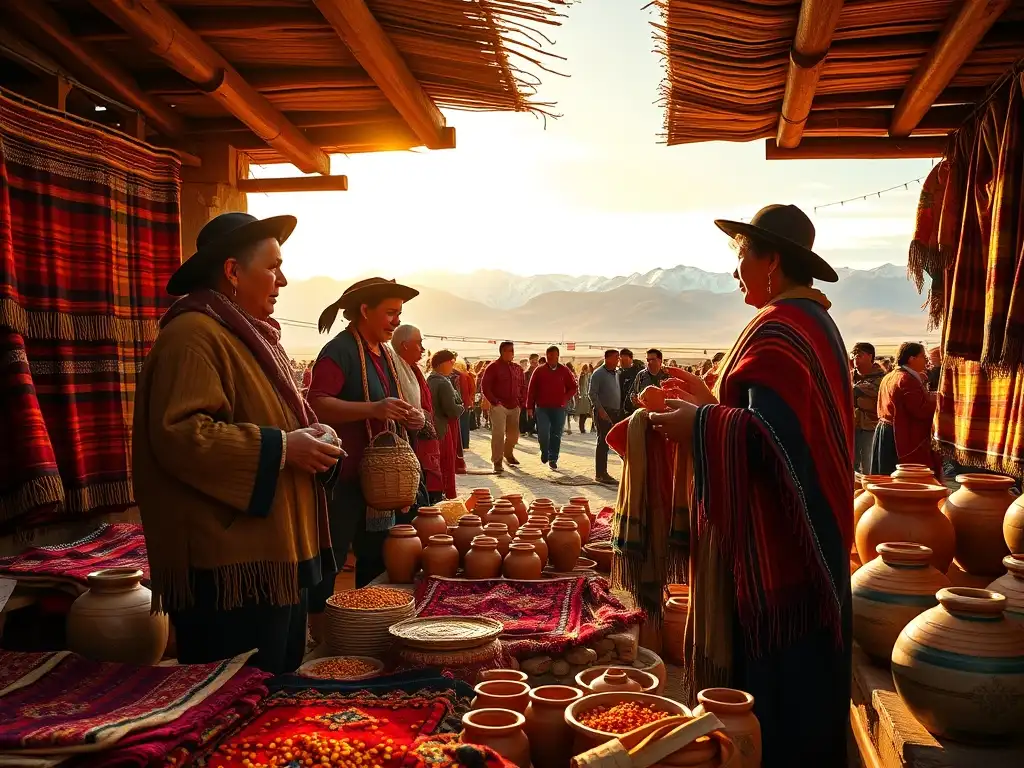
Welcome to Andean Civilizations, where the echoes of a lost world whisper tales of ingenuity and resilience. Prepare to be captivated by the intricate tapestry of Andean history, culture, and innovation. But first, consider this: what secrets lie hidden within the Ancient Andean barter trade practices that shaped not only the past, but also the vibrant economic landscape of the Andes today? Journey with us to uncover the fascinating legacy of these ancient systems and their enduring influence.
The Andes Mountains, a spine of towering peaks running down the western coast of South America, cradled some of the most fascinating and sophisticated pre-Columbian civilizations. These cultures, including the Inca, Moche, Nazca, and Tiahuanaco, developed complex social structures and innovative technologies, but their economic systems often relied heavily on barter—a direct exchange of goods and services without the use of currency.
This article delves into the intricate world of ancient Andean barter trade practices, exploring how these ancient systems shaped modern economic interactions in the region and left an enduring legacy on Andean trade. We will examine the specific goods exchanged, the networks established, and the lasting impact these practices have had on the region's economic landscape, all while exploring the fascinating nuances of "Ancient Andean barter trade practices."
The Diverse Goods of Andean Barter
Andean barter wasn't a simple exchange of one item for another. The goods traded reflected the diverse environments and specialized skills of different communities. Coastal regions, for example, offered abundant seafood, cotton textiles, and seashells, which were highly valued inland.
Highland communities, on the other hand, traded agricultural products like potatoes, maize, and quinoa, along with precious metals like gold and silver, alpaca wool, and intricately crafted ceramics. The value of each item was determined not only by its utility but also by its symbolic significance and the labor involved in its creation. For instance, finely woven textiles, often adorned with intricate designs, held immense cultural and economic value, reflecting the skill and status of the weaver.
This complex system of valuation, deeply rooted in cultural practices, is a crucial aspect of understanding the intricacies of ancient Andean barter. We can even see echoes of this system in modern Andean markets, where the quality and craftsmanship of a product often influences its price more than a standardized monetary value.
Extensive Exchange Networks: Connecting Andean Communities
The success of the Andean barter system relied on extensive exchange networks that connected communities across vast geographical distances. These networks weren't simply random encounters; they were carefully structured systems facilitated by established trade routes, often following river valleys or mountain passes. These routes weren't just paths; they were vital arteries connecting different ecological zones and fostering economic interdependence between communities. Evidence suggests that specific groups or individuals acted as intermediaries, facilitating the exchange of goods and information across these networks.
These intermediaries likely played a crucial role in maintaining social order and resolving disputes related to trade. The establishment and maintenance of these networks demonstrate a level of social organization and economic planning far exceeding simplistic notions of isolated, self-sufficient communities. The intricate interplay of these networks and the role of intermediaries require further research to fully understand the extent of their influence on the Andean economy.
The Enduring Legacy: From Barter to Modern Markets
While the widespread use of currency has largely replaced barter in modern Andean economies, the legacy of these ancient practices remains palpable. The emphasis on direct exchange, the importance of personal relationships in business transactions, and the continued preference for high-quality, handcrafted goods all reflect the enduring influence of ancient Andean barter systems. Many rural Andean communities still rely on informal exchange networks, often supplementing or replacing monetary transactions, especially in remote areas with limited access to formal banking systems.
The vibrant markets of Andean cities also showcase a blend of modern and traditional economic practices, with bartering sometimes used alongside monetary exchange, especially in the trade of agricultural products and handicrafts. The persistence of these practices underscores the deep-rooted nature of these ancient economic systems and their adaptability to modern contexts.
Understanding this legacy is crucial for appreciating the complex economic history of the Andes and for developing sustainable economic policies for the region. The study of "Ancient Andean barter trade practices" provides invaluable insights into these enduring economic traditions.
- The Diverse Goods of Andean Barter
- Extensive Exchange Networks: Connecting Andean Communities
- The Enduring Legacy: From Barter to Modern Markets
Understanding Ancient Andean Barter Systems

This section delves into the intricacies of ancient Andean barter systems, exploring their evolution, significance, and lasting impact on the region's economic landscape. We will examine how these systems functioned, the goods exchanged, and the social structures they supported, ultimately revealing the sophisticated economic strategies employed by pre-Columbian Andean societies. Understanding these ancient practices sheds light on the enduring influence of barter on modern Andean trade and economic systems. The keyword phrase "Ancient Andean barter trade practices" will be explored through various examples and analyses.
The Roots of Barter in Andean Civilizations
The roots of barter in the Andes stretch back millennia, predating even the Inca Empire. Early agricultural societies, relying on diverse crops and limited access to resources, naturally developed exchange systems based on direct trade. Archaeological evidence, such as the discovery of diverse artifacts in burial sites and settlements, suggests extensive exchange networks existed long before the emergence of centralized states.
These early forms of barter laid the foundation for more complex systems that would evolve over time. The exchange wasn't solely about material goods; social relationships and reciprocal obligations played a vital role, solidifying alliances and maintaining social cohesion. The practice of ayni, a form of reciprocal labor exchange, was crucial, demonstrating the deeply embedded social nature of Andean economic transactions.
Even seemingly simple exchanges were underpinned by complex social dynamics, demonstrating a sophisticated understanding of economic principles within a social context. These early practices provide a crucial foundation for understanding the later, more elaborate barter systems.
Pre-Incan Barter Networks and their Significance
Before the Inca Empire's unification, diverse Andean cultures, including the Moche, Nazca, and Tiahuanaco, had established extensive barter networks. These networks connected geographically dispersed communities, facilitating the exchange of specialized goods and resources. The Nazca, renowned for their intricate textiles and ceramics, likely traded these items for agricultural products from other regions.
Similarly, coastal communities specialized in fishing and salt production, exchanging these commodities for highland goods like potatoes and llamas. The scale and complexity of these networks imply sophisticated organization and communication systems. Evidence suggests the use of intermediary traders or specialized exchange locations, indicating a level of economic sophistication often overlooked in discussions of "primitive" barter systems.
Analyzing the distribution of specific artifacts across vast geographical areas provides compelling evidence for the extent and importance of these pre-Incan barter networks. The distribution patterns of specific types of pottery, textiles, and metals offer invaluable insights into the trade routes and the economic relationships between different Andean societies.
Barter as a Cornerstone of Andean Economic Life
Barter wasn't simply a supplementary economic activity in the Andes; it was a cornerstone of daily life, deeply integrated into social and religious practices. The Inca Empire, while introducing a more centralized administrative system, did not eliminate barter. Instead, they incorporated it into their own economic structures, utilizing it alongside tribute systems and state-controlled markets.
The mit'a, a system of labor service, also functioned as a form of indirect exchange, contributing to the overall economic flow. Even with the introduction of standardized weights and measures under Inca rule, barter continued to play a crucial role, particularly in rural areas and among less-centralized communities. The persistence of barter, even within a more formalized economic system, highlights its resilience and enduring importance in the Andean context.
Understanding this enduring influence allows us to appreciate the complex interplay between tradition and innovation in the development of Andean economic systems. The legacy of these ancient barter practices continues to shape modern Andean trade, reminding us of the deep historical roots of economic exchange in the region. The study of "Ancient Andean barter trade practices" reveals a rich tapestry of economic strategies and social interactions that shaped the history and culture of the Andes.
Key Features of Ancient Andean Barter Trade Practices
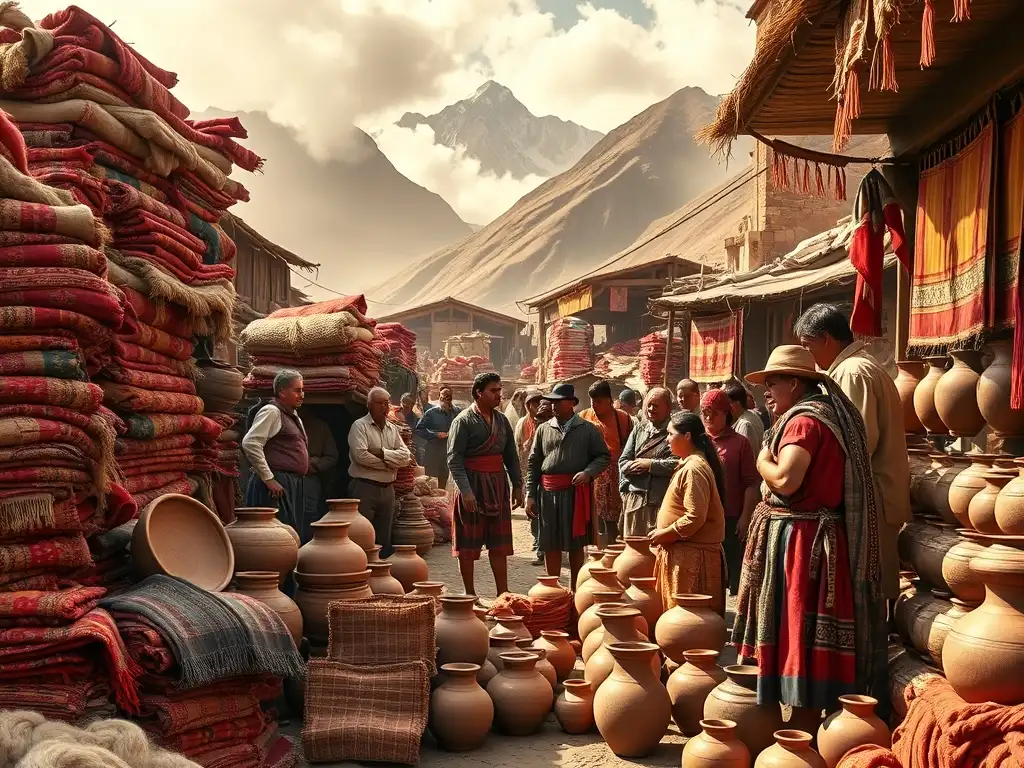
This section delves into the fascinating intricacies of ancient Andean barter systems, exploring the key features that shaped their economic and social landscape. Understanding these practices provides crucial insight into the sophisticated organization and interconnectedness of Andean societies long before the arrival of European monetary systems. The term "Ancient Andean barter trade practices" itself encompasses a vast array of exchange methods, reflecting the diverse geographical and cultural contexts across the Andes. We will examine the core elements that defined this system, revealing its resilience and adaptability over centuries.
Reciprocity formed the bedrock of ancient Andean barter. It wasn't simply a transactional exchange; it was deeply embedded within the social fabric, reinforcing kinship ties and solidifying community bonds. The exchange of goods wasn't solely driven by economic need but also by social obligations. For instance, the ayni system among the Inca involved reciprocal labor exchange, where communities collaborated on projects like agriculture or construction, with the understanding of mutual support and shared benefit.
This system extended beyond immediate family and encompassed broader networks of communities. Failure to reciprocate could lead to social sanctions, highlighting the significant social weight placed upon these exchanges. This inherent social dimension significantly differentiated Andean barter from purely market-based systems found in other parts of the world. The emphasis on ayni and similar practices ensured social cohesion and fostered a sense of community responsibility.
Furthermore, the exchange of goods often involved ceremonial rituals and symbolic gestures, further underscoring the social importance of these transactions. This wasn't just about acquiring goods; it was about maintaining social harmony and reinforcing community identity. The system was remarkably effective in distributing resources and managing risk within a largely agrarian society.
Goods Exchanged in Ancient Andean Barter
The range of goods exchanged in ancient Andean barter systems was remarkably diverse, reflecting the varied environments and specialized production across the Andes. Agricultural products, naturally, dominated the exchanges. Potatoes, maize, quinoa, coca leaves, and various fruits formed the staples of these transactions. Textiles, particularly those made from alpaca and llama wool, were highly valued and frequently exchanged.
These textiles served both practical and ceremonial purposes, their quality and intricacy reflecting the skill of the weaver and the social status of the owner. Ceramics, ranging from everyday pottery to elaborate funerary vessels, were also significant commodities. The styles and decorations of these ceramics frequently varied across regions, providing valuable clues about trade networks and cultural interactions. Precious metals like gold and silver, particularly in the later periods, played an increasingly important role, often used in prestigious ceremonial objects and ornaments.
Furthermore, specialized crafts, including tools, weapons, and ornaments, were exchanged, demonstrating a sophisticated level of craftsmanship and specialization within Andean societies. The variety and quantity of goods exchanged highlight the complexity and well-established nature of the barter system. Archaeological evidence continues to reveal new insights into the extent and scope of these trade networks.
The Role of Specialized Crafts in Barter Transactions
Specialized crafts played a crucial role in ancient Andean barter, showcasing the advanced technological skills and intricate social organization of these societies. Highly skilled artisans produced goods that were highly valued and sought after throughout the region. Potters, weavers, metalworkers, and stone carvers were particularly important, with their products often becoming key commodities in barter transactions.
The creation of these specialized goods required significant investment in time, skill, and resources, leading to their high value in the exchange networks. For instance, finely crafted textiles, showcasing intricate designs and superior weaving techniques, could command high value in exchange for agricultural products or other goods. Similarly, elaborate metalwork, particularly gold and silver objects, were associated with elite status and held significant symbolic meaning, making them highly desirable items in barter.
The existence of specialized crafts indicates not only a sophisticated division of labor but also the presence of complex trade networks that facilitated the distribution of these specialized goods across diverse regions. The integration of these specialized crafts into the barter system demonstrates the sophisticated economic and social dynamics of ancient Andean civilizations. Further research into ancient Andean metallurgy and textile production could reveal even more about the role of specialized crafts in their barter systems.
The Inca Empire's Influence on Barter
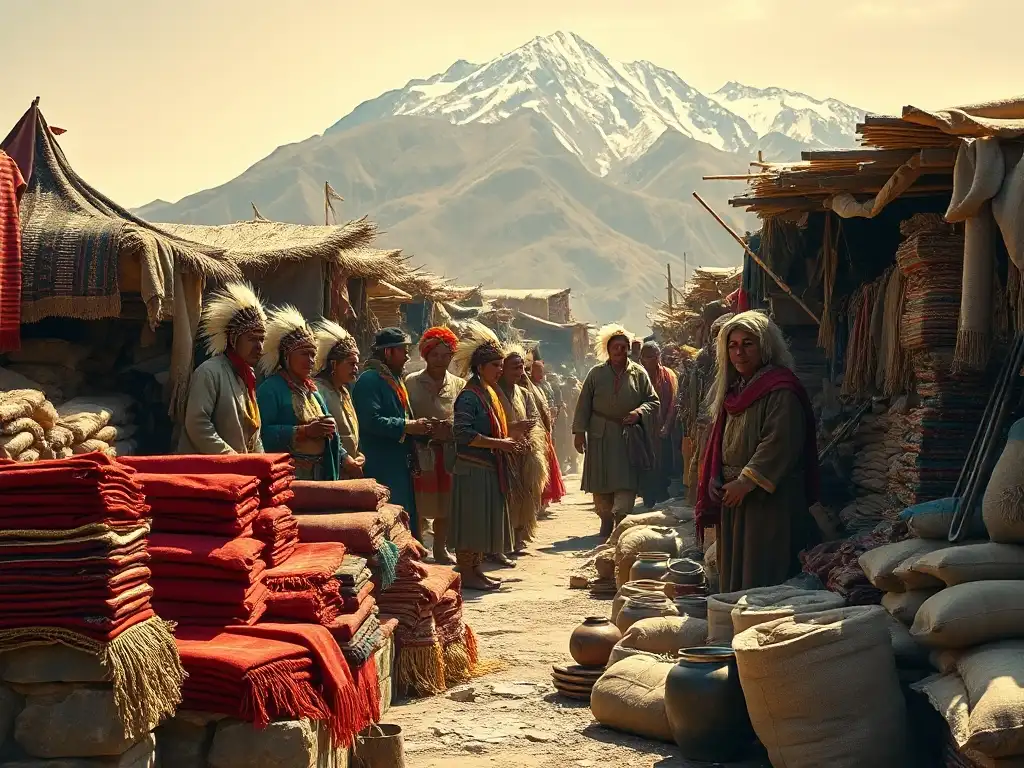
The Inca Empire, at its zenith, controlled a vast territory encompassing diverse ecological zones and populations. While the Inca implemented a sophisticated system of tribute and redistribution, barter continued to play a significant role in their economy, particularly at the local level and within specialized craft production. Understanding the Inca's approach to barter is crucial to appreciating the complexity of their economic system and its enduring legacy on Andean trade practices.
The Inca didn't simply replace barter; they integrated it within a larger framework of state control and resource management. This integration, however, wasn't uniform across the empire, varying based on geographic location, population density, and the availability of resources.
For instance, coastal communities heavily reliant on fishing might have engaged in more extensive barter networks compared to highland agricultural communities with a more centralized system of redistribution orchestrated by the state. This nuanced understanding of the Inca's approach to ancient Andean barter trade practices is essential to comprehending the lasting impact on subsequent Andean economies.
Inca Integration of Barter within their Economy
The Inca state, while powerful, couldn't directly control every aspect of economic exchange within its vast territory. Barter remained a vital mechanism for supplementing the state-controlled system. This involved both the exchange of goods and services directly between individuals and communities, and also the incorporation of barter into the broader system of tribute and redistribution.
Artisans, for example, might have received a portion of their payment in the form of goods or services through barter, while also contributing a portion of their production as tribute to the state. This created a hybrid system where state-controlled mechanisms coexisted with traditional barter systems, leading to a flexible and resilient economic model. The Inca strategically leveraged this duality, using their control over resources and infrastructure to influence the flow of goods and services, even within the context of local barter networks.
This involved establishing standardized weights and measures (though the specifics are still under research), facilitating trade routes, and ensuring a degree of stability in the exchange system. This careful integration is a testament to the sophistication of Inca economic policies, showcasing the adaptability of ancient Andean barter trade practices to broader economic structures.
The Mit'a System and its Relation to Barter
The mit'a, the Inca system of mandatory labor service, also had intricate connections with barter. While primarily focused on public works projects and agricultural production for the state, the mit'a could indirectly facilitate barter. Individuals participating in the mit'a often received payment in the form of food and other necessities, which they could then use in barter transactions.
Furthermore, the mit'a workers, often specialized in specific crafts or agricultural practices, could exchange their skills and services for goods outside the official mit'a system. This created a secondary, informal economy where barter played a crucial role in supplementing the official economy.
The extent of this informal barter, however, is difficult to quantify precisely due to the limited surviving documentation, leaving some aspects of ancient Andean barter trade practices within the mit'a system open to further investigation. Archaeological evidence, however, points towards a significant role for barter in the everyday lives of mit'a workers and their communities.
Standardizing Exchanges under Inca Rule
While barter remained prevalent, the Inca Empire implemented measures aimed at standardizing exchanges to some extent. This included the use of standardized weights and measures for certain goods, particularly those used in tribute or state-controlled markets. While precise details are often debated among scholars, the evidence suggests that the Inca sought to impose some degree of order and predictability on the exchange system.
This wasn't about eliminating barter, but rather about managing it more effectively within the broader context of their economy. The standardization efforts likely focused on essential goods like maize, potatoes, textiles, and metalwork, facilitating both internal redistribution and external trade. The implementation of these standards, however, was likely uneven across the empire, with local variations in practices persisting.
The impact of these standardization efforts on the overall efficiency and fairness of ancient Andean barter trade practices is a complex topic requiring further research and analysis. Nevertheless, the very attempt to standardize reveals a conscious effort by the Inca to manage and optimize their economic system, even within the framework of existing barter traditions.
The Endurance of Barter in Post-Colonial Andes
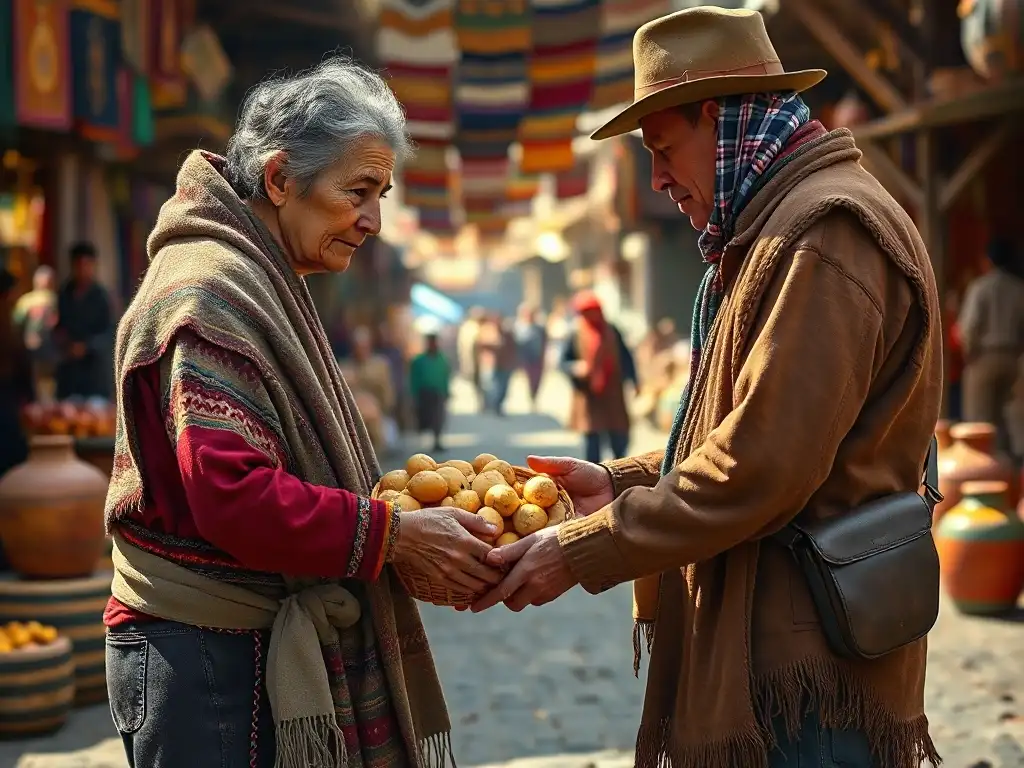
The legacy of ancient Andean barter trade practices extends far beyond the pre-Columbian era. While the arrival of the Spanish conquistadors brought with it a fundamentally different economic system based on currency and centralized markets, barter persisted, adapting and evolving to survive within the new colonial and, later, post-colonial realities. Understanding this enduring presence requires examining how Andean communities creatively integrated traditional exchange networks with the imposed market economy.
This wasn't simply a matter of survival; barter often represented a form of resistance, a way to maintain cultural identity and economic autonomy in the face of colonial oppression. The resilience of these ancient practices provides valuable insight into the complex interplay between tradition and modernity in the Andean region.
The continued prevalence of barter demonstrates the deep-rooted significance of reciprocal exchange within Andean societies and its enduring relevance in shaping modern economic realities. Analyzing these practices reveals a complex economic landscape where traditional systems and modern market forces coexist and often intersect in surprising ways.
Barter as a Resistance to Colonial Economies
The Spanish colonial system attempted to impose a monetary-based economy, disrupting established Andean barter systems and aiming to control resource distribution. However, indigenous communities actively resisted this imposition. Barter continued to thrive in many areas, functioning as a form of economic resistance.
By maintaining traditional exchange networks, communities preserved a degree of autonomy and control over their resources, bypassing the exploitative mechanisms of the colonial economy. This was particularly true in remote areas where the reach of the colonial administration was limited. The exchange of goods and services outside the formal colonial market enabled Andean communities to maintain their social structures and cultural practices, which were often threatened by colonial policies.
Examples include the continued use of ayni (reciprocal labor exchange) and mita (labor tribute), although often adapted to circumvent colonial control. This active resistance, manifested through the continued practice of barter, highlights the importance of these traditions in preserving Andean cultural identity and economic self-sufficiency.
The Persistence of Traditional Barter Practices
Despite the introduction of a market economy, traditional Andean barter practices have shown remarkable resilience. In many rural communities, the exchange of goods and services continues to be a significant part of everyday life. This persistence is not simply a matter of economic necessity; it is also deeply embedded in the social fabric of Andean communities.
For example, the practice of yanaconazgo, a form of reciprocal labor relationship, continues in modified forms in some areas. Similarly, the exchange of agricultural products, handcrafted goods, and labor remains prevalent in many communities, solidifying social bonds and reinforcing community solidarity. The continued use of these ancient Andean barter trade practices highlights their enduring social and cultural significance.
These practices are not merely economic transactions; they are embedded in intricate systems of kinship, reciprocity, and social obligation. Data on the prevalence of these practices in specific communities is [specific information pending], however anecdotal evidence strongly suggests their continued importance.
The Impact of Market Economies on Andean Barter
While traditional barter practices persist, the introduction of market economies has had a significant impact on their scope and function. The integration of cash economies has led to a gradual shift in the types of goods and services exchanged through barter. While traditional items like agricultural produce and handcrafted textiles are still commonly bartered, the incorporation of cash transactions has introduced new dynamics.
For instance, barter may now be used to supplement cash income, or to exchange goods and services that are not readily available in the market. This doesn't necessarily signify a decline in the importance of barter; rather, it suggests an adaptation and integration of traditional practices within a broader economic context. The relationship between barter and market economies is complex and dynamic, with the two often coexisting and influencing each other.
A deeper understanding of this interplay requires further research into the specific economic contexts of different Andean communities and the diverse ways in which barter continues to shape their economic and social lives. The future of “Ancient Andean barter trade practices” will likely involve a continued negotiation between tradition and modernity.
Modern Manifestations of Ancient Andean Barter
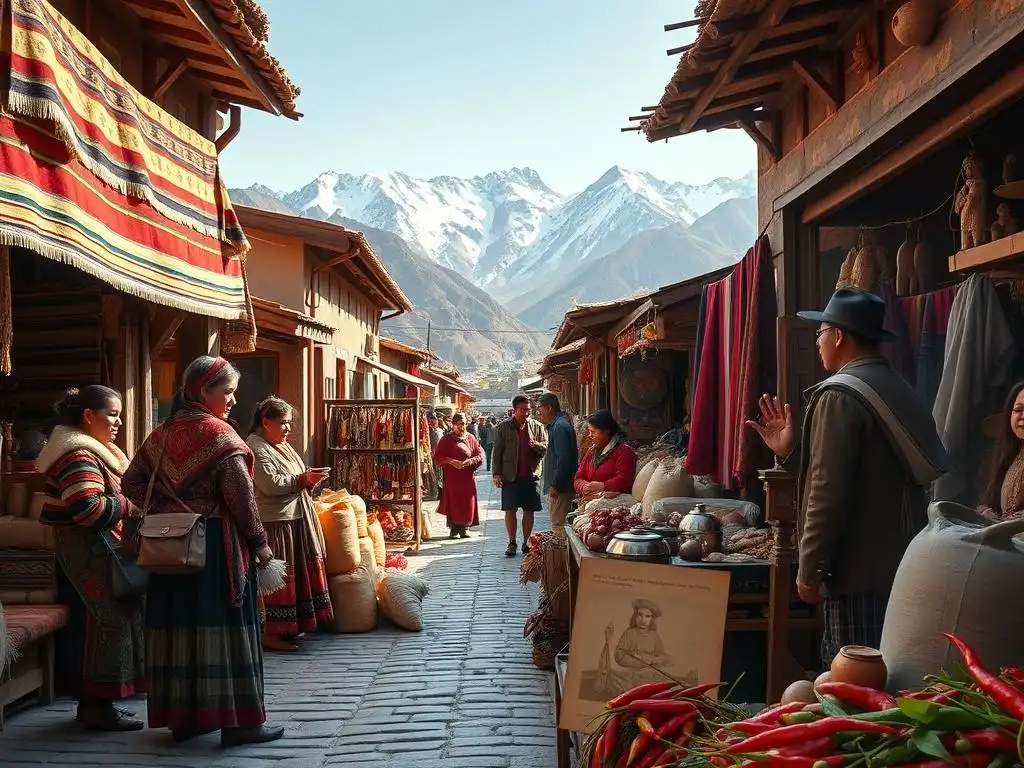
The echoes of ancient Andean barter systems resonate even today, subtly shaping modern trade practices across the Andes. While formal monetary systems dominate, the spirit of direct exchange persists, particularly in rural communities and niche markets. Understanding these modern manifestations offers crucial insight into the enduring legacy of these ancient practices and their remarkable adaptability.
Analyzing this continuity illuminates how deeply ingrained these exchange methods were, and how they continue to influence economic behaviors in the region. This section will explore the continued presence of barter, not as a primary economic system, but as a supplementary and resilient practice within the broader context of a modern economy. The resilience of these ancient traditions in the face of globalization highlights their inherent value and social significance.
Barter in Contemporary Andean Communities
In many remote Andean communities, barter remains a vital part of daily life. It's not a complete replacement for monetary exchange, but rather a complementary system, often used for goods and services not easily quantified in monetary terms. For example, a farmer might trade a portion of their harvest – say, potatoes or quinoa – for a handcrafted item like a woven textile or a repaired tool from a local artisan.
This system fosters strong social bonds and mutual support within the community, strengthening the social fabric in ways that purely monetary transactions often cannot. This isn't simply a relic of the past; it's an active, living system, adapting and evolving to meet the needs of contemporary Andean communities.
The frequency and scale of these transactions vary considerably depending on factors like geographical isolation, access to markets, and the overall economic health of the community. Further research is needed to quantify the exact pr