
The Enigmatic Moche Deities: Unraveling Their Roles and Attributes

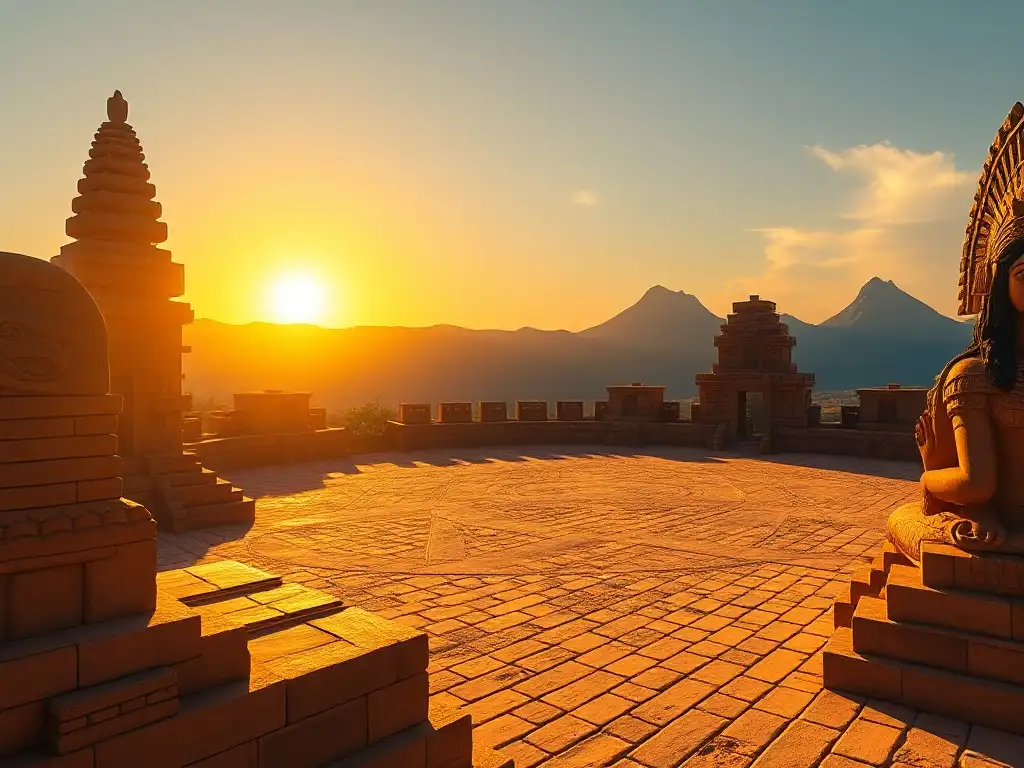
Step into a world lost to time, yet echoing with power and mystery. The Andean Civilizations website unveils the captivating stories of ancient empires, from the intricate artistry of the Nazca to the architectural marvels of Tiahuanaco. But today, we delve into the heart of one civilization, focusing on the enigmatic Moche gods and goddesses. Their roles and attributes remain shrouded in secrets – secrets we invite you to uncover as we unravel the fascinating tapestry of their beliefs and rituals. Prepare to be amazed.
- Moche Gods and Goddesses: An Exploration of Their Roles
- Unveiling the Pantheon of the Moche Civilization
- Key Moche Deities and Their Attributes
- The Interconnectedness of Moche Divinities
- Moche Religious Practices and Their Connection to Deities
- The Enduring Legacy of Moche Religious Beliefs
-
Frequently Asked Questions
- What were the Moche people's principal deities?
- How did the Moche depict their gods and goddesses in art?
- What role did religion play in Moche society?
- What evidence exists to support our understanding of Moche gods and goddesses?
- How do the Moche gods and goddesses compare to those of other Andean cultures?
- Final Reflection: Echoes of the Moche Pantheon in Our Modern World
- Unveil the Mysteries of the Moche Deities!
Moche Gods and Goddesses: An Exploration of Their Roles
The Moche civilization, flourishing along the northern coast of Peru from approximately 100 CE to 800 CE, left behind a remarkable legacy of intricate artistry and complex religious beliefs. Their sophisticated understanding of the world is vividly portrayed in their stunning ceramics, monumental architecture, and elaborate burial practices. Central to their worldview was a pantheon of powerful deities, whose roles and attributes are gradually being revealed through meticulous archaeological research and interpretation of their iconic artwork.
This article delves into the enigmatic world of Moche gods and goddesses, exploring their diverse representations and the societal significance they held within this fascinating pre-Columbian culture. Understanding these divine figures provides crucial insight into the Moche's social structure, agricultural practices, warfare, and overall cosmological perspective.
We will examine key deities, analyzing their iconography and the narratives they convey about the Moche worldview. Prepare to embark on a journey to decipher the secrets held within the captivating imagery of Moche religion.
The Ai Apaec: The Supreme Deity?
The Ai Apaec is arguably the most prominent figure within the Moche pantheon, frequently depicted in a fierce, monstrous form. Often portrayed wearing a fearsome mask and adorned with elaborate headdresses, the Ai Apaec is associated with both creation and destruction, embodying the duality inherent in the natural world. Some scholars suggest that the Ai Apaec represents a powerful force of nature, perhaps embodying earthquakes, volcanoes, or other powerful natural phenomena.
Its depictions vary significantly across different Moche artifacts, hinting at a complex and potentially multifaceted nature, rather than a simple good versus evil dichotomy. Many depictions show him with fanged jaws, clawed hands, and a serpentine body, all reinforcing his association with raw power and the unpredictable forces of nature.
Further research is needed to fully grasp the nuanced aspects of this powerful deity and its role in the Moche cosmology. [Specific information pending on the exact number of Ai Apaec depictions found]
The Decapitated Deity: Symbol of Sacrifice and Renewal
One particularly striking and recurring motif in Moche iconography is the depiction of a decapitated deity. This figure, often shown in a state of suffering or sacrifice, is believed to represent a cyclical process of death and rebirth, crucial to the Moche understanding of agriculture and the renewal of life. The decapitation itself might symbolize the sacrifice necessary for fertility and the regeneration of the land.
The imagery is often coupled with scenes of ritual sacrifice, suggesting a direct link between the deity's suffering and the prosperity of the Moche society. The symbolism is deeply layered and complex, with interpretations varying among scholars.
However, the consistent presence of this motif in various media – from pottery to metalwork – underlines its central role in Moche religious beliefs. The emotional impact of these depictions speaks volumes about the Moche’s reverence for their deities and their acceptance of cyclical processes within their world.
The Role of Female Deities: Fertility and the Sea
While the male deities often dominate in terms of sheer scale and visual prominence, the female deities played equally crucial roles within the Moche pantheon. These goddesses were frequently associated with fertility, the sea, and the abundance of life. Depictions often showcase them in elegant garments, adorned with seashells and other symbols of prosperity.
Unlike the often-violent imagery associated with male deities, the depictions of female deities usually emphasize grace and nurturing qualities, reflecting their role in sustaining life and ensuring the prosperity of the Moche communities. The connection to the sea is particularly significant, considering the Moche's dependence on marine resources.
Further study is required to definitively categorize and analyze the different roles and attributes attributed to individual female deities within the Moche pantheon. More detailed analysis of the iconography associated with specific female figures is needed to fully understand their individual roles and significance within the Moche religious system.
Interpreting Moche Iconography: Challenges and Future Research
Interpreting Moche iconography presents significant challenges. The lack of written records necessitates a reliance on visual analysis, requiring careful consideration of context, stylistic variations, and potential symbolic meanings. Scholars continue to debate the precise interpretations of many images, and new discoveries regularly add layers of complexity to our understanding.
Future research using advanced technologies like 3D modeling and digital analysis could provide further insights into the subtle details of Moche artwork and help refine our understanding of their religious beliefs. The ongoing efforts of archaeologists and art historians continue to illuminate the richness and complexity of Moche religion, promising a more complete picture of this fascinating civilization in the years to come. The study of Moche gods and goddesses is a dynamic field, constantly evolving as new evidence emerges and new interpretations are proposed.
Unveiling the Pantheon of the Moche Civilization
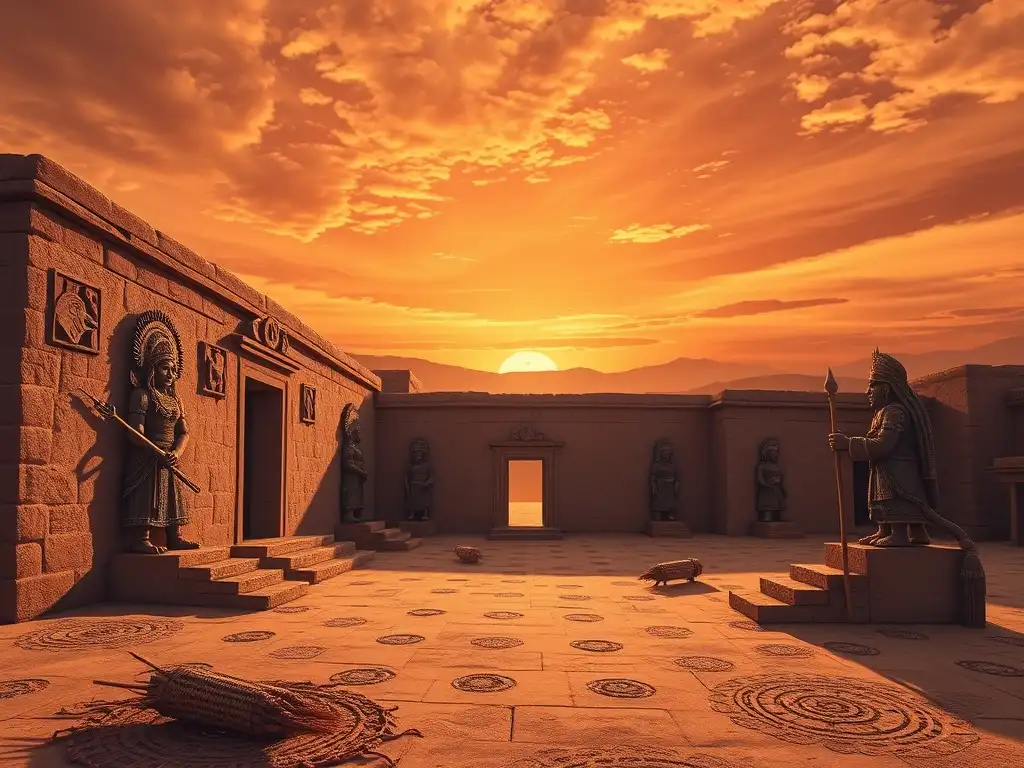
This section delves into the complex religious landscape of the Moche civilization, exploring the identities and roles of their principal deities. The Moche, a pre-Columbian culture flourishing on the northern coast of Peru from approximately 100 to 800 CE, left behind a rich artistic legacy that provides invaluable insights into their beliefs. Their pottery, in particular, is replete with depictions of powerful figures, often engaged in dramatic scenes that illuminate their cosmological worldview.
Understanding these representations is key to grasping the nuances of Moche religion and its pervasive influence on their society. The intricate details found in Moche art, from the subtle expressions on the faces of their deities to the symbolic objects they hold, offer a window into a fascinating, albeit enigmatic, belief system.
This exploration of Moche gods and goddesses will focus on the most prominent figures, analyzing their iconography and attempting to decipher their functions within the Moche pantheon. The study of these powerful figures helps us to better understand the spiritual life of this remarkable civilization and its lasting impact on the region.
The Significance of Religion in Moche Society
Religion played a central role in Moche society, permeating virtually every aspect of their lives. Evidence suggests that religious rituals were integral to their agricultural practices, ensuring bountiful harvests crucial for survival in their arid coastal environment. The Moche deeply revered their deities, believing them to control the forces of nature, including the vital water supply, fertile lands, and the sea.
This reliance on divine intervention is clearly reflected in their art, with numerous depictions of offerings and ceremonies. The construction of monumental structures, such as pyramids and temples, further emphasizes the importance of religious activities in their social organization. These grand constructions served not only as places of worship but also as centers of power, highlighting the close relationship between religious leaders and the ruling elite.
Analyzing the distribution of artifacts and the location of religious sites reveals a highly structured religious system, with specialized priests and elaborate rituals likely overseen by powerful figures within the societal hierarchy. The Moche's dedication to their gods is further evidenced by the elaborate burial practices associated with their elite, indicating a belief in an afterlife and the continued importance of religious symbols even beyond death. The prevalence of human sacrifice, while grim, points to the profound significance of religious devotion in the Moche worldview, where the appeasement of the deities was considered paramount.
Introduction to the Moche Deities
The Moche pantheon is not fully understood, with much remaining shrouded in mystery. However, through the careful study of their iconography, several key deities have been identified. These figures are often depicted in highly stylized forms, showcasing specific attributes and symbols that help to define their roles. One prominent deity, frequently portrayed as a powerful warrior or a majestic figure adorned with elaborate headdresses and regalia, is often interpreted as a supreme god, possibly representing the sun or a creator deity.
Another common figure is a female deity, often associated with fertility and the sea, sometimes depicted with marine creatures or symbols of abundance. Other deities are represented with animalistic features, reflecting the Moche's close connection with the natural world and their belief in animal spirits. These representations, found on various artifacts such as pottery, textiles, and metalwork, provide crucial clues to understanding the complex relationships between these deities and their roles within the broader Moche cosmology.
Detailed analysis of individual artifacts, including the specific symbols and contexts in which these deities are depicted, is essential for further unraveling the mysteries of the Moche pantheon. Further research, including comparative studies with other Andean cultures and advanced technological analysis of Moche artifacts, is crucial for a more comprehensive understanding of their beliefs. The study of Moche gods and goddesses is an ongoing process of discovery, with each new artifact and analysis revealing more about the rich and complex spiritual life of this remarkable civilization.
Key Moche Deities and Their Attributes
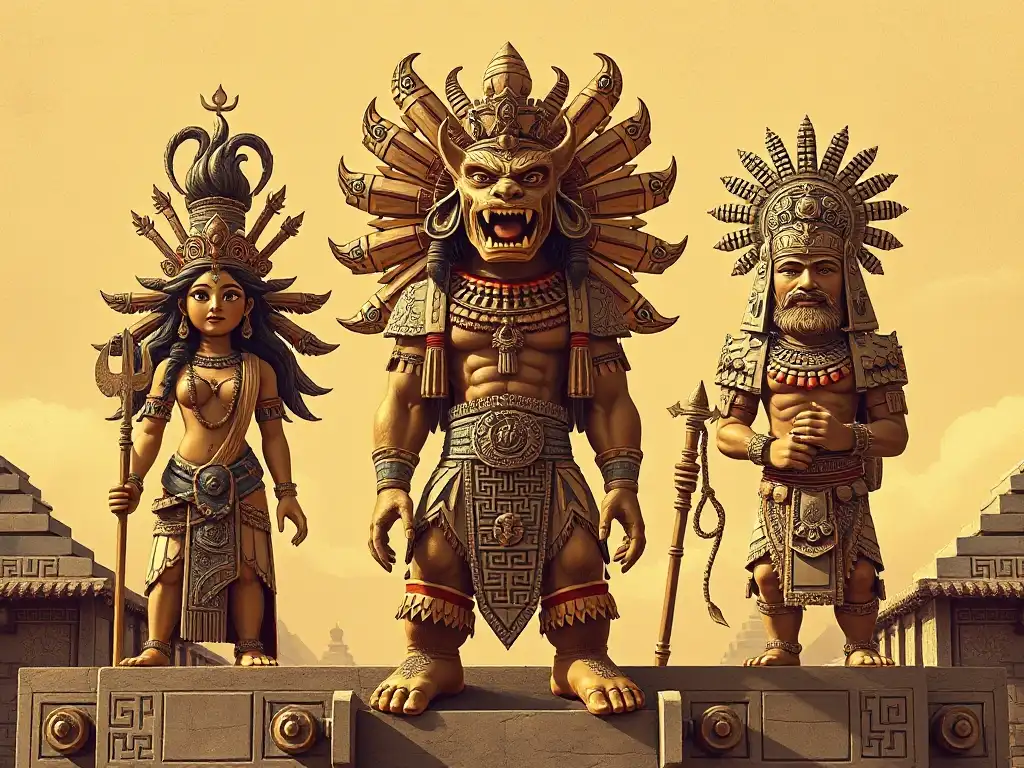
The Moche pantheon, a vibrant tapestry of gods and goddesses, reflects the complex social and environmental landscape of the ancient Moche civilization. Understanding these deities is crucial to interpreting their art, rituals, and worldview. While specific names aren't always explicitly provided in surviving artifacts, careful analysis of iconography and archaeological context allows us to piece together the roles and attributes of key figures within their religious system.
The Moche's preoccupation with fertility, warfare, and the natural world is vividly expressed through their depictions of these powerful entities. Their gods and goddesses weren't simply abstract concepts but active participants in the lives of the Moche people, shaping their beliefs and practices.
This section delves into the characteristics of some of the most prominent figures in the Moche pantheon, exploring their influence and significance. The study of Moche gods and goddesses offers a fascinating glimpse into the spiritual heart of this remarkable civilization.
Ai Apaec: The Decapitator God
Ai Apaec stands as one of the most striking and controversial figures in the Moche pantheon. Often depicted as a fearsome warrior-god, he is readily identified by his distinctive features: fanged mouth, clawed hands, and a prominent headdress frequently incorporating feline elements. His association with decapitation is undeniable, prominent in numerous ceramic vessels and metalwork. The prevalence of these depictions raises questions about the role of sacrifice and warfare in Moche society.
Was Ai Apaec a god of war, demanding human sacrifice to ensure victory? Or was his role more nuanced, perhaps representing the cyclical nature of life and death, or the power of the underworld? These are complex questions that continue to fuel scholarly debate surrounding Moche religion. Further research into the context of Ai Apaec's depiction, including associated iconography and ritual offerings, is crucial for a more comprehensive understanding.
Ai Apaec's Role in Moche Rituals
The exact nature of Ai Apaec's involvement in Moche rituals remains somewhat mysterious. However, the sheer number of depictions featuring decapitation strongly suggests a significant role in sacrificial practices. These depictions are not merely decorative; they are often intricately detailed, suggesting a deliberate and ritualistic purpose. Some scholars propose that Ai Apaec presided over rituals designed to appease the gods or ensure successful harvests.
Others suggest a more complex relationship, where human sacrifice was seen as a necessary offering to maintain cosmic balance. The absence of detailed textual records makes definitive conclusions challenging. Further investigation into the spatial context of discovered artifacts – for example, the location of Ai Apaec representations within Moche sites – could provide valuable insights into his ritual functions.
Symbolic Representations of Ai Apaec
Ai Apaec's iconography is rich in symbolism. His fanged mouth and clawed hands emphasize his power and ferocity. The feline elements in his headdress, often incorporating jaguar or puma motifs, connect him to the power of the wild and the supernatural.
The act of decapitation itself may symbolize the subjugation of enemies, the control of natural forces, or even a ritualistic offering to ensure fertility. The variety of representations, however, suggests a multifaceted symbolism, with interpretations varying depending on the specific context of the artifact. A thorough analysis of the variations in Ai Apaec's iconography across different Moche artistic styles could reveal further nuances in his symbolic meaning.
The Moon Goddess: A Powerful Feminine Figure
In contrast to the often aggressive imagery associated with Ai Apaec, the Moche Moon Goddess embodies a powerful yet nurturing feminine principle. While less frequently depicted than some male deities, her presence is significant, highlighting the importance of female power within the Moche religious system. She is often represented with a serene demeanor, adorned with elaborate jewelry and headdresses that emphasize her status and divine authority. Her association with the moon, a celestial body deeply connected to cycles of growth and decay, emphasizes her role in fertility and the well-being of the Moche people.
The Moon Goddess's Connection to Fertility and Agriculture
The Moche Moon Goddess's connection to fertility and agriculture is evident in her iconography. She is often depicted amidst scenes of abundance, surrounded by flourishing crops and animals. This reflects the crucial role of agriculture in Moche society, highlighting the goddess's power to ensure successful harvests and prosperity.
Her association with the moon's cycles, which govern the timing of planting and harvesting, further solidifies this connection. The Moon Goddess wasn't merely a passive observer of natural processes; she was an active participant, ensuring the bounty of the land. The relationship between the Moon Goddess and agricultural practices suggests a complex interplay between religious belief and practical concerns within Moche society.
Artistic Depictions of the Moche Moon Goddess
Artistic depictions of the Moche Moon Goddess vary, but common features include elaborate headdresses, often adorned with crescent moons or stars, and jewelry that emphasizes her regal status. She is frequently shown in a serene pose, conveying a sense of calm authority. Unlike some of the more violent depictions of male deities, the imagery associated with the Moon Goddess is predominantly peaceful and nurturing, reflecting her association with life-giving forces.
The diversity in artistic representations across different media – pottery, textiles, metalwork – suggests a complex and evolving understanding of this important figure in the Moche pantheon. Further study of these variations could provide a deeper understanding of the evolution of her role and attributes over time. Analyzing the stylistic differences in the depiction of the Moon Goddess across various Moche sites could also reveal regional variations in religious beliefs and practices.
The Sun God: Source of Life and Power
The Sun God stands as one of the most prominent figures in the Moche pantheon, embodying the life-giving force and power that sustained their civilization. Depicted frequently in their art, the Sun God wasn't merely a celestial body; he represented the very essence of existence, the source of all energy and growth. The Moche deeply revered the sun, recognizing its crucial role in agriculture, their primary source of sustenance.
The cyclical nature of the sun's journey across the sky mirrored their understanding of life, death, and rebirth, shaping their spiritual beliefs and worldview. Their agricultural practices were intimately tied to the solar calendar, highlighting the profound influence of the Sun God on their daily lives.
The success of their harvests, the well-being of their communities, and even the political stability of their realm were all directly linked to the Sun God's benevolence. Evidence suggests elaborate rituals and ceremonies were conducted to appease and honor this powerful deity, ensuring continued prosperity and protection from adversity.
The Sun God's Importance in Moche Cosmology
The Sun God's importance transcended mere agricultural significance; he occupied a central position within the Moche cosmology. He was not just a provider of life-giving warmth but also a symbol of power and authority, often depicted in regal attire, mirroring the rulers of the Moche society. This association cemented the legitimacy of the ruling elite, linking their power to the divine.
The Sun God's influence extended beyond the earthly realm; he was believed to govern the celestial sphere, controlling the movements of the stars and planets. This cosmic authority further elevated his status, rendering him the supreme being in the Moche pantheon, a figure of awe and reverence.
The Sun God's role in Moche cosmology reveals a sophisticated understanding of the interconnectedness of the natural world, highlighting the intricate relationship between the earthly and celestial realms in their spiritual beliefs. The intricate details of Moche cosmology are still being uncovered, but the Sun God remains a key figure in understanding their complex religious system.
The Sun God's Iconography: A Radiating Face and Felines
The Sun God's iconography is consistently recognizable in Moche art. Frequently depicted with a radiating face, often adorned with elaborate headdresses and ornaments, he projects an aura of power and majesty. The radiating sunbursts surrounding his face symbolize his life-giving energy and cosmic influence.
The use of vibrant colors, particularly gold and red, further emphasizes his importance and divine status. Interestingly, felines, often jaguars or pumas, are frequently associated with the Sun God. These powerful predators, symbolizing strength, agility, and nocturnal prowess, likely represented aspects of the Sun God's power, perhaps his ability to both bring life (day) and control the darkness (night).
The combination of the human face and feline attributes creates a powerful and compelling image, reflecting the complex nature of the deity. The consistent visual representation across various mediums, including pottery and metalwork, underscores the Sun God’s profound significance in Moche culture. Further research into the symbolic meaning of the feline association with the Sun God could uncover deeper layers of Moche religious beliefs.
Other Notable Moche Supernatural Beings
Beyond the Sun God, the Moche pantheon included a diverse array of supernatural beings, each with unique attributes and roles within their religious system. These deities reflected the diverse aspects of the Moche world, from the fertile lands to the powerful ocean. Understanding these other supernatural figures provides a richer understanding of the Moche people's worldview and their complex relationship with their environment.
The pantheon wasn't limited to a single supreme god; it encompassed a rich tapestry of supernatural entities reflecting the varied aspects of Moche life and their natural world. The diversity of these beings hints at a nuanced and sophisticated religious system, far more complex than previously understood.
The Iguana God: Associated with Fertility and Water
The Iguana God, another prominent figure in Moche iconography, is strongly associated with fertility and water. Iguanas, with their association with rain and lush vegetation, are viewed as symbols of abundance and prosperity. The Moche, heavily reliant on agriculture, naturally revered this deity.
Depictions of the Iguana God often show him in a stylized, almost ritualistic pose, highlighting his importance in ceremonies related to rainfall and successful harvests. The association with water is particularly significant, given the arid coastal environment in which the Moche civilization thrived. Their reliance on irrigation systems for agriculture makes the Iguana God’s role in controlling water sources crucial to their survival and prosperity.
The Iguana God's importance underscores the Moche's deep connection to their environment and their understanding of the vital role of water in sustaining life. Further study of Moche art and rituals can illuminate the precise nature of the Iguana God’s influence and the practices associated with its worship.
The Sea Monster: Representing the Power of the Ocean
The Moche also revered the power of the ocean, represented by the formidable Sea Monster. This powerful creature, often depicted with gaping jaws and serpentine body, symbolized the untamed force of the sea – both its destructive potential and its life-giving capacity.
The Sea Monster’s presence in Moche art highlights the importance of the ocean in their lives, not only as a source of food but also as a powerful, awe-inspiring force of nature. The depiction of the Sea Monster often features intense detail and dramatic movement, reflecting the unpredictable nature of the ocean and its potential for both bounty and devastation.
The Moche's ability to navigate and fish in the Pacific Ocean demonstrated their mastery of the sea, suggesting a complex and respectful relationship with the powerful deity representing its power. Further analysis of the Sea Monster's depictions could reveal insights into the Moche's maritime practices and their understanding of oceanic forces.
The Interconnectedness of Moche Divinities
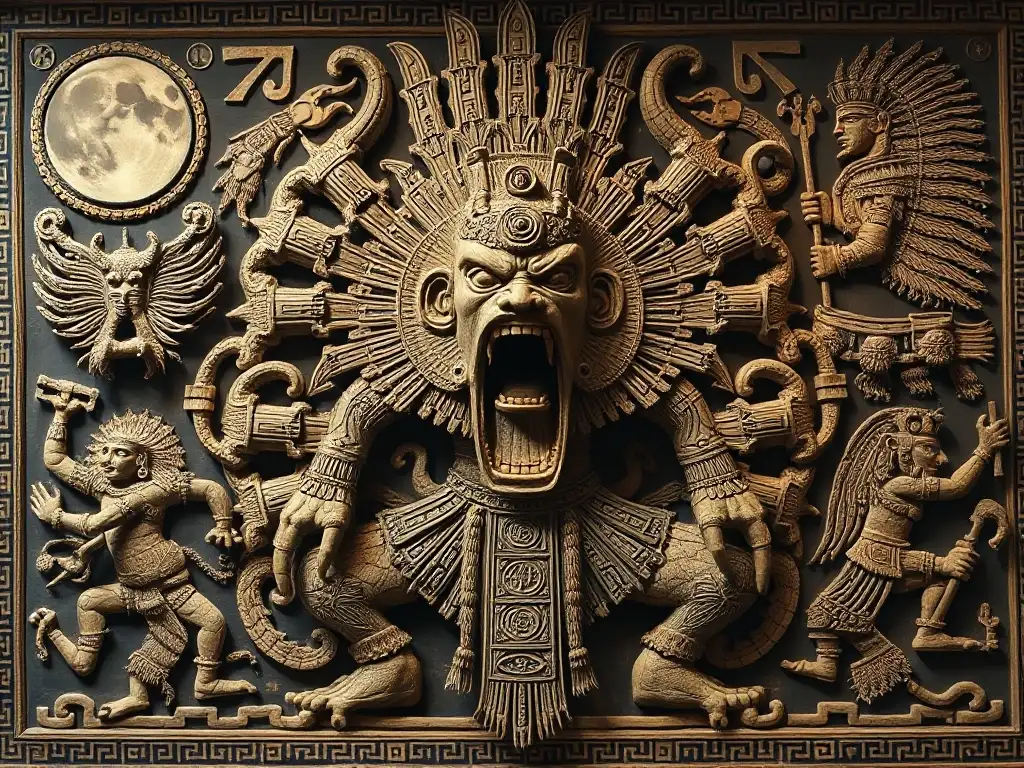
The Moche pantheon, while seemingly diverse in its iconography, reveals a complex web of interconnected relationships between its various gods and goddesses. Understanding these relationships is crucial to grasping the nuances of Moche religious beliefs and practices. Rather than a rigid hierarchy, the Moche system appears to have involved fluid interactions and shifting power dynamics depending on the specific context and ritual.
This interconnectedness is evident in the recurring motifs and shared attributes found across different deities, suggesting a synergistic rather than strictly hierarchical structure. For example, the Ai Apaec, a fearsome deity often depicted with flayed skin and monstrous features, is sometimes shown alongside other deities, implying a complex, perhaps even ambivalent, role within the overall cosmology. The absence of a single supreme deity further underscores this interconnectedness, with power seemingly distributed amongst a council of important figures.
Further research is needed to fully elucidate the intricate dynamics of this system, particularly regarding the lesser-known deities and their interactions with more prominent figures. Careful analysis of Moche ceramics, textiles, and other artifacts will continue to shed light on this fascinating aspect of their religious beliefs. The intricate details of these depictions suggest a deep understanding of the complex relationships between these Moche gods and goddesses.
Relationships and Hierarchies within the Moche Pantheon
The Moche pantheon wasn't a simple pyramid with one supreme god at the top. Instead, scholars suggest a more complex network of deities, with power dynamics shifting based on context and ritual. Some deities, like the Decapitator, are prominently featured, suggesting significant power and influence.
However, even the Decapitator's role isn't straightforward; representations often depict both violence and fertility, signifying a complex and multifaceted nature. Other deities, like the Ai Apaec, seem to occupy a more ambiguous position, sometimes portrayed as a fearsome figure and at other times alongside other gods in a more collaborative role. This fluidity challenges traditional notions of hierarchical pantheons.
We can analyze the relationships between Moche gods and goddesses by examining their representations in different contexts. For instance, certain iconographic pairings consistently appear in ceramics and metalwork, suggesting specific relationships or shared functions. Further complicating the picture are the numerous unidentified or poorly understood deities depicted in Moche art. Their roles and interactions with the more prominent figures remain a subject of ongoing research.
We are still piecing together the full picture of the Moche pantheon, and new discoveries continue to refine our understanding of the relationships and hierarchies within it. The subtle nuances in their depictions—postures, gestures, and accompanying symbols—provide valuable clues to unraveling these intricate connections. The lack of written records, however, necessitates a heavily iconographic approach to interpreting these relationships.
How Moche Gods and Goddesses Influenced Daily Life
The Moche gods and goddesses weren't merely abstract concepts; they permeated daily life, influencing everything from agriculture and warfare to social structures and individual rituals. Evidence suggests that Moche religious practices were deeply intertwined with agricultural cycles, with deities associated with fertility and harvest playing a crucial role in ensuring successful crops. The importance of water management in the arid coastal region is also reflected in the iconography, with some deities possibly representing water sources or controlling rainfall.
The Moche believed that appeasing these deities was essential for their well-being and prosperity. This is reflected in the elaborate offerings found in Moche tombs and ceremonial sites.
Furthermore, the prominence of warfare in Moche society is evident in the representation of warrior gods and goddesses. These deities likely played a significant role in legitimizing military campaigns and bolstering the power of the elite. The depictions of captive warriors and sacrificial rituals in Moche art suggest a complex relationship between religious beliefs and warfare.
Beyond the grand narratives, daily life was likely infused with smaller, more personal rituals dedicated to specific deities or ancestral spirits. These might have involved offerings of food, drink, or other precious goods, aimed at securing blessings or protection. The pervasive influence of the Moche gods and goddesses on daily life highlights the central role religion played in shaping their society and culture.
The sheer volume and variety of artifacts depicting these deities underscore their importance in all aspects of Moche existence. Uncovering more of these artifacts will only further enhance our understanding of their daily religious practices.
Moche Religious Practices and Their Connection to Deities
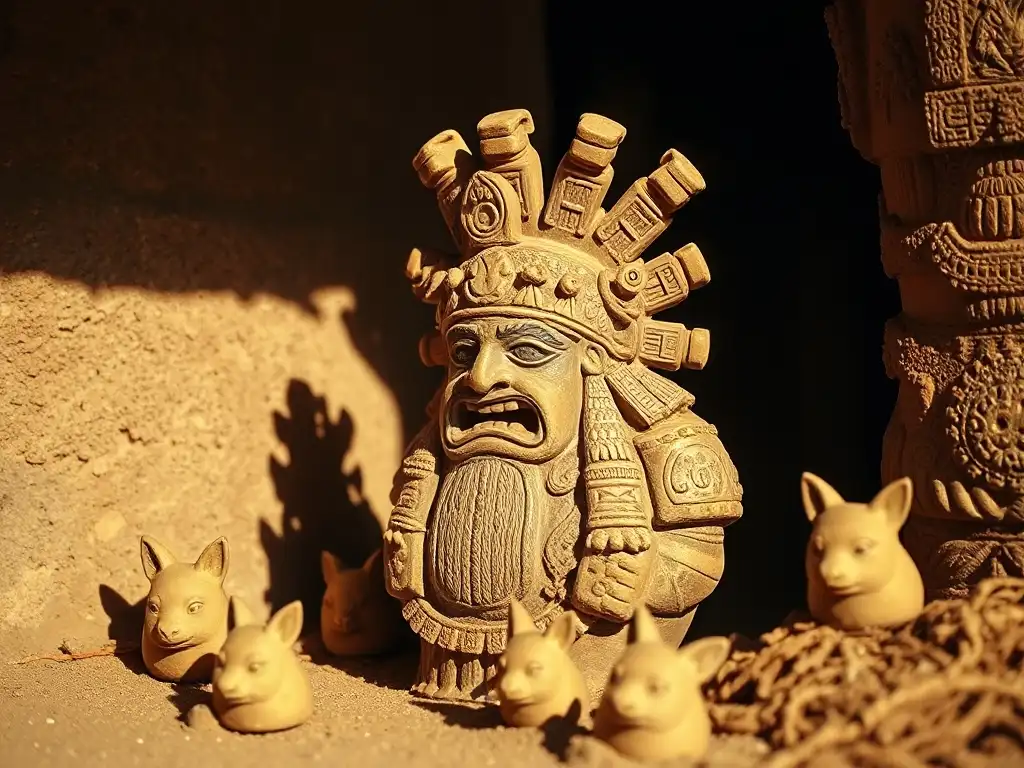
The Moche people, renowned for their sophisticated artistry and complex social structures, held a deeply ingrained religious system that permeated all aspects of their lives. Their beliefs centered around a pantheon of deities, often depicted in elaborate ceremonies and powerfully evocative art. Understanding Moche religious practices is crucial to deciphering the roles and attributes of their gods and goddesses, a subject that has captivated researchers for decades. The interplay between ritual, iconography, and societal structure reveals a civilization deeply invested in maintaining a harmonious relationship with the supernatural world. The Moche worldview, as reflected in their religious practices, reveals a society deeply concerned with fertility, warfare, and the cyclical nature of life and death. This intricate system of beliefs profoundly influenced their daily lives, from agricultural practices to warfare strategies. The power and influence of the Moche gods and goddesses are undeniably evident in the surviving artifacts and archaeological findings.
Rituals and Ceremonies Dedicated to the Gods
Moche religious rituals were likely elaborate affairs, often involving human sacrifice, a practice evidenced by numerous archaeological discoveries. These sacrifices, while grim, were not considered solely acts of violence but rather offerings intended to appease or honor specific deities. The scale and complexity of these rituals suggest a highly organized priestly class responsible for conducting ceremonies and interpreting divine will. Evidence suggests that different deities were associated with specific rituals, reflecting the diverse aspects of the Moche worldview.
For example, rituals dedicated to Ai Apaec, the most prominent Moche deity, may have differed significantly from those associated with lesser-known gods and goddesses. Unfortunately, the precise details of many rituals remain elusive, leaving room for ongoing scholarly debate and investigation. Further research, particularly analyzing the context of discovered human remains and associated artifacts, might shed more light on the specific procedures and social implications of these ceremonies.
The study of Moche texts, though limited, could also provide further insight into these practices. The lack of extensive written records, however, continues to be a significant challenge. More detailed analysis of the layout and architecture of Moche ceremonial centers could also provide valuable contextual information.
Moche Art and Iconography as a Reflection of Their Beliefs
Moche art serves as an invaluable window into their religious beliefs. Their exquisite ceramic vessels, gold ornaments, and textiles are replete with iconography that directly reflects their pantheon and associated rituals. The careful and detailed execution of these artworks reveals a deep understanding and reverence for their deities. The frequency with which specific deities appear in artistic representations offers clues about their relative importance within the Moche religious hierarchy.
The stylistic choices made by Moche artisans – the colors, materials, and compositions – provide further insights into the symbolic meaning associated with each deity. Analyzing this iconography helps us understand not only the individual attributes of each god but also the complex relationships between them. The symbolic language employed in Moche art presents a rich field of study, offering a deeper understanding of their religious cosmology.
Ceramic Vessels Depicting Ai Apaec and Sacrificial Scenes
The most striking examples of Moche religious art are their ceramic vessels. Many depict Ai Apaec, often portrayed as a fearsome warrior-god, sometimes with a jaguar-like face and elaborate headdress. These depictions often show Ai Apaec within scenes of human sacrifice, highlighting his association with power, violence, and perhaps even the cycle of life and death. The details in these ceramic vessels are remarkable; even the expressions on the faces of sacrificial victims are often vividly rendered.
The careful attention to detail suggests that these were not merely decorative objects but rather sacred representations intended for ritual use. The prevalence of these depictions indicates the central role Ai Apaec played in the Moche pantheon. Further study of similar vessels, paying close attention to variations in Ai Apaec's portrayal, might reveal subtle shifts in meaning or interpretations over time.
Analysis of the Symbolism: Felines, Birds, and Celestial Bodies
Moche iconography is rich with symbolism. Felines, particularly jaguars, are frequently depicted, often associated with power, ferocity, and the underworld. Birds, especially raptors, symbolize the sky and might represent intermediaries between the earthly and supernatural realms. Celestial bodies, such as the sun and moon, also feature prominently, reflecting the Moche's understanding of the cosmos and the cyclical nature of time.
These symbols are not used randomly; their careful arrangement within artistic compositions reveals a complex system of meaning and interconnectedness. Analyzing the placement and interaction of these symbols within different artworks could unlock deeper insights into the Moche worldview. By carefully studying the context in which these symbols appear, researchers can begin to unravel the intricate web of meaning embedded within Moche art.
For instance, the combination of a feline and celestial body might indicate a specific ritual or a particular aspect of a deity's power. Further research is needed to fully decipher the nuanced meanings of these pervasive symbolic elements. The careful study of Moche art, therefore, offers a crucial pathway to understanding their complex religious beliefs and the roles of their gods and goddesses.
The Enduring Legacy of Moche Religious Beliefs
The Impact of Moche Deities on Later Andean Cultures
The influence of Moche religious beliefs, particularly their pantheon of gods and goddesses, extended far beyond their own civilization. While the specifics of their iconography and rituals differed, the underlying themes of fertility, warfare, and ancestor veneration resonated with subsequent Andean cultures. For instance, the Moche emphasis on agricultural abundance, often symbolized by their depictions of powerful deities associated with water and maize, found echoes in the religious practices of the later Chimú and Inca empires.
These later civilizations, while possessing their own distinct theological frameworks, incorporated elements of the Moche worldview into their own systems of belief. The continuity is evident in the shared motifs found in ceramics and textiles, suggesting a cultural transmission and adaptation of Moche religious concepts. The persistence of certain deity types – powerful rulers often associated with supernatural abilities, for example – points to the enduring impact of the Moche religious landscape on the Andean region.
Further research into comparative iconography and ritual practices could illuminate the precise nature and extent of this cultural inheritance. Analyzing the distribution of Moche artifacts in later Andean contexts might also provide valuable insights into the mechanisms of this transmission. The study of Moche religious beliefs, therefore, offers a crucial lens through which to understand the broader trajectory of Andean religious development, highlighting the significant contribution of Moche gods and goddesses to the shaping of subsequent religious expressions.
Understanding the Moche Worldview Through Their Gods
The Moche pantheon, richly depicted in their elaborate ceramics and monumental architecture, provides invaluable insights into their worldview. Their gods and goddesses weren't merely abstract entities; they were active participants in the Moche experience, intimately connected to the daily lives of the people. The prominence of deities associated with agriculture, such as those depicted with maize cobs or controlling water sources, highlights the central role of agriculture in Moche society. Their prosperity and survival were inextricably linked to the success of their harvests, making agricultural deities key figures in their religious system.
Conversely, the frequent depiction of warrior gods and goddesses, often engaged in violent combat or ritual sacrifice, underscores the importance of warfare and conquest in Moche culture. These depictions, often rendered with striking realism and detail, not only illustrate the Moche aesthetic sensibilities but also offer a glimpse into their social structure and values. The presence of both benevolent and malevolent deities within the Moche pantheon reflects a complex understanding of the world, acknowledging both the potential for abundance and the ever-present threat of hardship. Further, the presence of deities associated with the underworld and ancestor veneration indicates a strong belief in the continuity between the living and the dead, a theme common to many Andean cultures.
By carefully studying the iconography and contexts in which these Moche gods and goddesses appear, researchers can gain a deeper understanding of the Moche worldview, their social dynamics, and the values they held dear. The intricate details of their art offer a powerful, albeit indirect, window into the beliefs that shaped their society. Careful analysis of the artifacts reveals a sophisticated and nuanced understanding of their relationship with the divine.
Frequently Asked Questions
What were the Moche people's principal deities?
The Moche pantheon was diverse, but prominent deities included the Ai Apaec, a fearsome deity often depicted as a fanged figure, and a deity associated with the sea, reflecting their reliance on fishing. Other important figures included fertility deities and ancestor spirits.
How did the Moche depict their gods and goddesses in art?
Moche art, particularly their pottery and metalwork, vividly portrays their deities. These depictions often show deities with distinctive features, such as elaborate headdresses, jewelry, and symbolic attire, reflecting their power and attributes. Ceremonial scenes are frequently shown.
What role did religion play in Moche society?
Religion was central to Moche life, influencing their agriculture, warfare, and social structure. Rituals and sacrifices were likely integral to maintaining cosmic balance and appeasing the gods. Religious leaders held significant power within the society.
What evidence exists to support our understanding of Moche gods and goddesses?
Our understanding comes primarily from archaeological discoveries, including elaborate tombs, temples, and the aforementioned ornate pottery and metalwork. These artifacts provide visual representations and clues to the roles and significance of different deities.
How do the Moche gods and goddesses compare to those of other Andean cultures?
While sharing some common themes with other Andean cultures (like fertility and ancestor veneration), the Moche pantheon shows unique iconography and stylistic choices in its artistic depictions of deities. Specific attributes and roles often differed significantly.
Final Reflection: Echoes of the Moche Pantheon in Our Modern World
The intricate world of the Moche deities, far from being a relic of a distant past, continues to resonate with us today. Their powerful imagery, complex mythology, and enduring artistic legacy offer a compelling window into a civilization that prioritized both the earthly and the spiritual. Understanding their roles and attributes provides not only historical insight but also a deeper appreciation for the enduring human need to understand and connect with the divine.
The Moche's sophisticated understanding of their environment, reflected in their pantheon's diverse representations of nature's forces, remains a powerful reminder of our own interconnectedness with the world around us. The gods are not to be feared, but understood; for in understanding them, we understand ourselves.
This sentiment, though not directly from a Moche source, encapsulates the enduring relevance of their beliefs. Their artistic representations, vibrant and emotionally charged, continue to inspire awe and wonder, demonstrating the timeless power of artistic expression to convey complex spiritual ideas. The enduring mystery surrounding certain deities only adds to their allure, prompting further research and interpretation, a testament to the richness of their cultural legacy.
Consider, for a moment, the enduring power of symbolism. The Moche's masterful use of iconography to represent their deities speaks to the human need to create visual representations of the unseen. How do you, personally, connect with the spiritual or the unseen?
What symbols resonate with you, and what stories do they tell? By exploring these questions, we can draw a powerful connection between the ancient Moche and our own contemporary experiences, recognizing the enduring human quest for meaning and understanding in a complex world. Let the enigmatic Moche deities inspire you to delve deeper into your own spiritual landscape and appreciate the rich tapestry of human belief systems throughout history.
Unveil the Mysteries of the Moche Deities!
Thank you for exploring the captivating world of the Moche deities with us! Your journey into their mysterious roles and attributes is just beginning. Let's delve deeper into this fascinating civilization.
Here are some suggestions to further your exploration:
- Expand your knowledge: Visit a local museum or explore online resources to view Moche artifacts and learn more about their deities. Many museums offer virtual tours and high-resolution images of their collections.
- Join the discussion: Share your thoughts on Moche mythology in the comments below or on social media. Connect with fellow enthusiasts of Andean civilizations and share your insights.
- Dive deeper: Research the enduring influence of Moche deities on modern Andean cultures. You might discover surprising and compelling connections between ancient beliefs and contemporary practices.
Reflecting on the enigmatic Moche deities, which aspect of their mythology resonates most with you, and why? We encourage you to share your thoughts and contribute to our ongoing discussion.