
Huayna Capac: The Last Great Inca Ruler Before the Tumultuous Divide

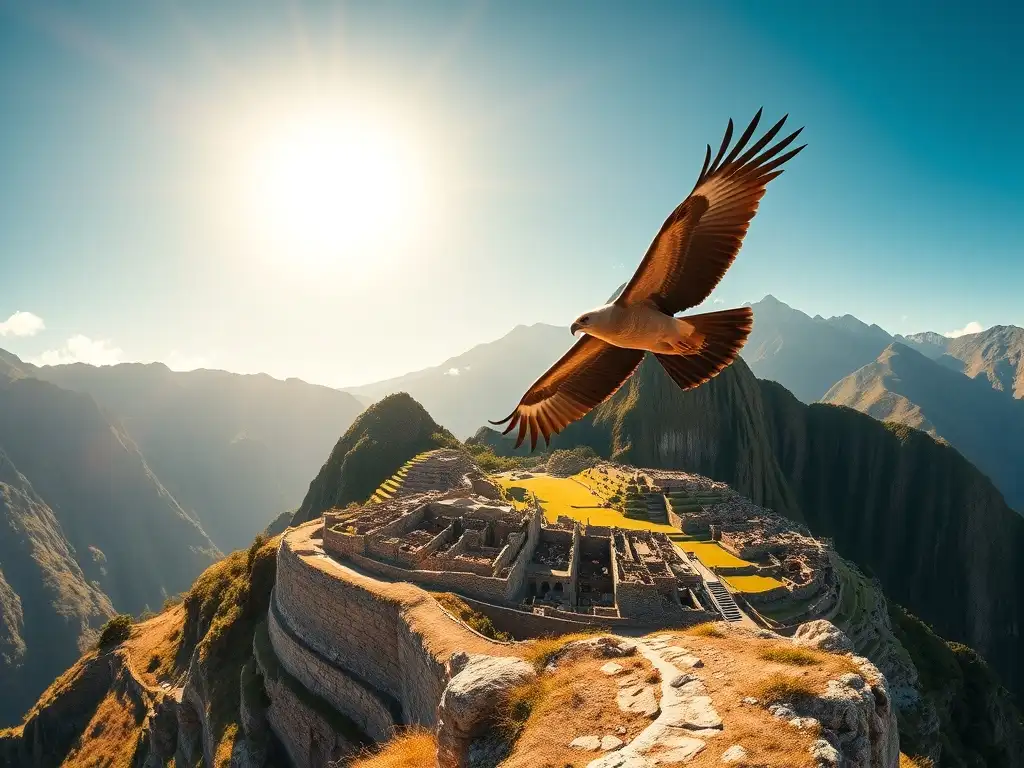
Step into a world lost to time, yet echoing with the grandeur of empires past. Andean Civilizations unveils the secrets of a remarkable era, revealing the ingenuity and power of ancient societies like the Incas, Moche, and Nazca. But who was the last great Inca emperor to stand before the storm?
Discover the fascinating story of Huayna Capac, whose reign marked both the zenith and the tragic beginning of the end for the Inca Empire. Delve into his life and legacy—a tale of ambition, conquest, and ultimately, a devastating inheritance – and unlock the mysteries surrounding this pivotal figure in Andean history.
-
Huayna Capac: The Last Great Inca Emperor Before the Tumultuous Divide
- The Ascent of Huana Capac to Inca Power
- Expansion and Consolidation Under Huayna Capac
- The Reign of Prosperity and Cultural Flourishing
- The Seeds of Discord: Challenges to Huayna Capac's Rule
- The Death of Huayna Capac and the Inca Succession Crisis
- Legacy of Huayna Capac: A Pivotal Figure in Inca History
- Frequently Asked Questions
- Final Reflection: The Enduring Legacy of Huayna Capac
- **Unveil the Legacy of Huayna Capac Today! **
Huayna Capac: The Last Great Inca Emperor Before the Tumultuous Divide
The Inca Empire, a civilization renowned for its sophisticated engineering, intricate social structures, and vast territorial reach, witnessed its zenith under the rule of Huayna Capac. This article delves into the life and reign of this remarkable Sapa Inca, exploring his rise to power, his significant military campaigns, and his lasting impact on the Inca Empire before its tragic fracturing following his death.
Understanding Huayna Capac's reign is crucial to grasping the complexities of the Inca civilization and the eventual Spanish conquest. We will examine his achievements, his challenges, and his legacy as the last great Inca emperor before the tumultuous events that ultimately led to the empire's downfall.
This exploration will cover key aspects of his life, from his early years to his ambitious expansionist policies and significant administrative reforms, solidifying his place as a pivotal figure in Andean history and a significant example for the keyword "Huayna Capac Inca Emperor".
The Ascent of Huana Capac to Inca Power
Early Life and Royal Lineage of the Inca Emperor
Huayna Capac's early life remains shrouded in some mystery, typical of many Inca rulers. However, historical accounts suggest he was born in the late 15th century, a son of Topa Inca Yupanqui, one of the most successful Inca emperors. His precise birth date and mother's identity are debated by scholars, but his royal lineage is undeniable, placing him in direct line for succession to the Sapa Inca throne.
This noble birth significantly influenced his future rise to power, paving the way for his eventual claim to the empire's leadership. His upbringing undoubtedly involved rigorous training in military strategies, political maneuvering, and Inca traditions, preparing him for the immense responsibilities of ruling the vast and complex Inca Empire.
Huayna Capac's Accession to the Sapa Inca Throne
The transition of power within the Inca Empire was often complex, involving both inheritance and political maneuvering. While Huayna Capac was a legitimate heir, his path to the throne wasn't without challenges. [Specific details regarding the succession process and any potential rivals pending]. His ascension marked a continuation of the expansive policies of his predecessors, yet he also brought his own unique style and ambitions to the role. The exact circumstances surrounding his accession, including any potential conflicts or power struggles, require further investigation.
Consolidating Power: Quelling Rebellions and Asserting Authority
Upon assuming the throne, Huayna Capac faced the immediate task of consolidating his power. The vast Inca Empire was not without internal tensions and potential rebellions. [Details on specific rebellions and how Huayna Capac dealt with them are needed]. His success in quelling these uprisings and establishing his authority across the empire is a testament to his political acumen and military prowess. This early demonstration of strength and decisive leadership set the stage for his later ambitious expansionist policies.
Expansion and Consolidation Under Huayna Capac
Military Campaigns and Conquests in the Northern Territories
Huayna Capac's reign was marked by significant military expansion, particularly into the northern territories. He led numerous campaigns, extending the Inca Empire's reach significantly. [Specific details on major battles, conquered territories, and military strategies are needed]. These military victories not only expanded the empire's geographical boundaries but also brought vast resources and new populations under Inca rule. His military achievements solidified his reputation as a powerful and effective leader.
Huayna Capac and the Expansion into Ecuador and Colombia
The expansion into Ecuador and Colombia represented a major achievement during Huayna Capac's reign. [Specific details about the conquered regions in Ecuador and Colombia, the resistance encountered, and the integration of these new territories into the Inca Empire are needed]. This expansion brought significant cultural and economic benefits to the Inca Empire, enriching the empire with new resources and diverse populations. His successful conquests in these regions significantly enlarged the Inca Empire's influence and power in the Andes.
Administrative Reforms: Road Networks and Storage Systems
Beyond military expansion, Huayna Capac implemented significant administrative reforms to better manage the growing empire. He invested heavily in improving the existing road networks, known as Qhapaq Ñan, which were crucial for communication, trade, and military movements. [Specific details on improvements made to the road network, including construction of new roads and maintenance of existing ones, are needed]. Furthermore, he focused on improving the empire's storage systems, ensuring efficient distribution of resources throughout the vast territories.
These administrative reforms were essential for the efficient functioning and stability of the expanding Inca Empire. The efficient management of resources and improved communication were vital to maintaining control and order across such a vast and diverse territory. These advancements reflect Huayna Capac's attention to detail and his strategic vision for the long-term stability and prosperity of his empire.
The Reign of Prosperity and Cultural Flourishing
Huayna Capac's reign, spanning roughly from 1493 to 1527, is widely considered a golden age for the Inca Empire. He inherited a vast and powerful empire from his father, Túpac Inca Yupanqui, and significantly expanded its reach and influence through shrewd diplomacy and military campaigns. His reign saw a period of unprecedented peace and prosperity, fostering significant advancements in art, architecture, agriculture, and social organization.
The empire's infrastructure expanded dramatically, connecting distant regions with intricate road networks and improving communication and trade. This period of stability allowed for significant cultural development and artistic expression, solidifying the Inca's position as one of the most sophisticated civilizations in the pre-Columbian Americas. The meticulous organization of the empire facilitated efficient resource management and fostered a sense of unity and shared identity among the diverse populations under Inca rule.
This era laid the foundation for the empire's later achievements, even as the seeds of its eventual downfall were also sown. The sheer scale of Huayna Capac's accomplishments underscores his importance as a pivotal figure in Inca history. His legacy is etched not only in the physical remains of his era but also in the enduring cultural traditions that survived the Spanish conquest.
The Development of Inca Art and Architecture: Cuzco and Beyond
During Huayna Capac's reign, Inca art and architecture reached new heights. Cuzco, the imperial capital, underwent significant expansion and beautification. The city's layout, with its intricate network of streets and plazas, reflects the sophisticated urban planning of the Inca. Massive stone structures, such as the Sacsayhuamán fortress, showcase the Inca's mastery of stonework.
The precision and scale of these constructions are awe-inspiring, demonstrating a remarkable understanding of engineering and construction techniques. Beyond Cuzco, impressive architectural achievements were undertaken throughout the empire. Temples, palaces, and administrative centers were built in various regions, reflecting local styles while maintaining a consistent imperial aesthetic.
The use of intricate carvings, vibrant colors, and sophisticated designs in textiles, pottery, and metalwork further highlights the artistic flourishing of this period. The widespread construction projects not only enhanced the empire's beauty but also served practical purposes, such as providing housing, storage, and religious centers for the growing population. The legacy of Huayna Capac's era is visible in the numerous surviving structures across the Andes, standing as testaments to the empire's artistic prowess and engineering skills.
Economic Growth: Agricultural Intensification and Resource Management
Huayna Capac's reign saw a significant expansion of the Inca's already impressive agricultural system. The mit'a system, a form of labor tribute, was utilized to construct extensive irrigation systems and terracing on mountain slopes, maximizing arable land. This resulted in increased agricultural productivity and food surpluses, supporting the growing population and fueling economic growth.
The Inca also implemented advanced agricultural techniques, such as crop rotation and the cultivation of diverse crops, to ensure food security and resilience against environmental challenges. The empire's vast network of roads facilitated the efficient distribution of agricultural products and other resources, strengthening the economy and fostering trade between different regions. The centralized control over resources allowed for the equitable distribution of goods and the provisioning of public works projects.
This efficient management of resources contributed significantly to the empire's stability and prosperity during Huayna Capac's rule. The economic prosperity of this period provided the resources necessary for the expansion of the empire and its cultural flourishing.
Social and Cultural Life: Festivals, Rituals, and Community Organization
Under Huayna Capac, Inca society thrived with a complex and well-organized social structure. Elaborate festivals and rituals played a central role in Inca life, reinforcing social cohesion and religious beliefs. These events brought communities together, fostering a sense of shared identity and strengthening the social fabric of the empire.
The Inca's highly structured social organization, with its hierarchical system of ayllus (kinship groups) and officials, ensured efficient administration and social order. The mit'a system, while demanding, also provided opportunities for social mobility and participation in community projects. The emphasis on community cooperation and collective responsibility fostered a strong sense of social solidarity and mutual support.
The integration of diverse populations into the Inca empire was facilitated through the establishment of common customs, religious practices, and administrative structures. This social harmony contributed to the stability and prosperity of the empire during Huayna Capac's reign, allowing for the flourishing of culture and artistic expression.
The Seeds of Discord: Challenges to Huayna Capac's Rule
Despite the apparent prosperity and stability of Huayna Capac's reign, several factors contributed to the eventual decline and fracturing of the Inca Empire. These challenges, both internal and external, sowed the seeds of discord that would ultimately lead to the empire's collapse following his death. The vast size of the empire and the diversity of its populations presented inherent challenges to maintaining centralized control and suppressing dissent.
The growing power of regional elites and the emergence of factionalism within the imperial court further weakened the empire's unity and stability. The arrival of European diseases, particularly smallpox, devastated the Inca population, weakening the empire's ability to resist internal and external pressures. These intertwined factors created a volatile situation that ultimately led to a period of civil war and instability after Huayna Capac's death.
Growing Regional Tensions and Resistance to Central Authority
The vastness of the Inca Empire presented significant challenges to maintaining centralized control. As the empire expanded, regional tensions arose between different ethnic groups and powerful local leaders who resented the imposition of Inca rule. Resistance to central authority grew in some regions, particularly in areas that had been recently conquered. These tensions were often exacerbated by economic grievances and cultural clashes.
The Inca administrative system, while effective in many ways, struggled to fully address the diverse needs and concerns of the different populations within the empire. This resistance, combined with the weakening of central authority in the later years of Huayna Capac's reign, created a climate of instability that would contribute to the empire's fragmentation after his death. The seeds of rebellion were sown, waiting for the opportune moment to germinate and challenge the authority of the Inca rulers.
The Impact of Smallpox and Other Diseases on the Inca Population
The arrival of smallpox and other Old World diseases in the Americas had a devastating impact on the Inca population. Lacking immunity to these diseases, the Inca suffered immense losses, weakening the empire's military strength and administrative capacity. The sudden and widespread mortality disrupted social structures, economic activities, and political stability.
The loss of experienced leaders, skilled artisans, and agricultural workers further undermined the empire's ability to function effectively. The widespread death and social disruption created a power vacuum and exacerbated existing tensions within the empire, paving the way for internal conflicts and further weakening the empire's ability to resist external threats. The impact of these diseases was a crucial factor in the downfall of the Inca Empire, significantly weakening its resilience and contributing to its eventual collapse.
The Emergence of Factionalism and Power Struggles
In the later years of Huayna Capac's reign, factionalism and power struggles began to emerge within the imperial court. Competition for succession and control over resources led to divisions among the Inca elite, undermining the empire's unity and stability. This internal strife weakened the empire's ability to respond effectively to external threats and internal rebellions. The absence of a clear and universally accepted succession plan further exacerbated these conflicts.
The struggle for power after Huayna Capac's death escalated into a full-blown civil war between his sons, Huáscar and Atahualpa, further weakening the empire and making it vulnerable to the Spanish conquest. The internal divisions and power struggles within the Inca elite were a critical factor contributing to the rapid decline and ultimate collapse of the once-mighty Inca Empire. The legacy of these internal conflicts continues to shape our understanding of the Inca's final years.
The Death of Huayna Capac and the Inca Succession Crisis
The death of Huayna Capac in 1527 (or possibly 1528 – the exact date remains debated by historians) plunged the Inca Empire into a period of intense political turmoil. His unexpected demise, coupled with the lack of a clear successor, triggered a power struggle that ultimately weakened the empire, making it vulnerable to the Spanish conquest just a few decades later. The circumstances surrounding his death itself are shrouded in some mystery, with smallpox, possibly brought by Europeans, being a widely accepted theory among scholars.
However, other explanations, including assassination, have also been suggested, fueling further debate among historians. The absence of a designated heir and the ensuing dispute over the throne shattered the carefully constructed imperial unity that Huayna Capac had cultivated throughout his reign. The resulting conflict irrevocably altered the trajectory of the Inca Empire.
The Death of Huayna Capac in Tumibamba
Huayna Capac's death occurred in Tumibamba, a strategically important city in modern-day Ecuador. This location, far from the imperial capital of Cusco, further complicated the succession process. The remoteness of Tumibamba meant that news of his death spread slowly, allowing for conflicting claims to the throne to emerge and solidify before a unified response could be organized.
The city itself held significant cultural and political importance for the Inca, and its association with Huayna Capac's death adds another layer of complexity to the already turbulent situation. Some historians speculate that choosing Tumibamba as his final resting place was a deliberate political move, although its exact significance remains a subject of ongoing scholarly discussion. The geographical distance acted as a catalyst for the ensuing power struggle.
The Contested Succession: Huascar and Atahualpa's Claims
The primary contenders for the throne were Huascar and Atahualpa, Huayna Capac's sons. Huascar, considered the elder son and initially favored by the court in Cusco, enjoyed the support of the traditional Inca aristocracy. He inherited the southern parts of the empire, including Cusco, the heart of the Inca civilization. Atahualpa, on the other hand, had governed the northern provinces, including Quito, and possessed a powerful military force.
His claim to the throne, initially less prominent, gained considerable momentum due to his strong military backing and his control over vast resources. This division of support, geographically and ideologically, set the stage for a devastating civil war. The brothers’ rivalry, fueled by ambition and strategic advantage, tore the empire apart.
The Inca Civil War: A Prelude to Spanish Conquest
The ensuing civil war between Huascar and Atahualpa was brutal and protracted, lasting several years and consuming vast resources. The conflict significantly weakened the Inca Empire's military strength and its internal cohesion. The war depleted manpower, disrupted trade routes, and sowed discord among the different regions of the empire. This internal strife created a power vacuum, a critical vulnerability that Francisco Pizarro and the Spanish conquistadors expertly exploited.
The weakened Inca state, already fractured by the civil war, proved no match for the technologically superior and strategically astute Spanish forces. The Inca Civil War ultimately paved the way for the swift and relatively easy conquest of the Inca Empire by the Spanish. The conflict's devastating consequences are still felt in the cultural and political landscape of the Andean region today.
Legacy of Huayna Capac: A Pivotal Figure in Inca History
Huayna Capac, despite the tumultuous events following his death, remains a significant figure in Inca history. His reign, though ultimately cut short, left an indelible mark on the empire's administration, infrastructure, and overall development. His policies and accomplishments shaped the Inca world in profound ways, even as his death triggered its downfall. Understanding his legacy requires analyzing his achievements against the backdrop of the subsequent crisis, revealing a complex and multifaceted ruler.
Huayna Capac's Impact on Inca Infrastructure and Administration
Huayna Capac oversaw a period of significant expansion and consolidation of the Inca Empire. He significantly improved existing infrastructure, including roads, bridges, and irrigation systems, facilitating trade and communication across the vast empire. His administrative reforms streamlined governance, enhancing efficiency and control within the vast territory.
He implemented effective systems for collecting taxes and managing resources, demonstrating a keen understanding of imperial logistics. The expansion of the road network, for instance, allowed for quicker mobilization of troops and facilitated the efficient distribution of goods, vital aspects of imperial control. His administrative reforms laid the groundwork for a more centralized and unified state, although this unity would crumble after his death.
The Significance of Huayna Capac's Reign in the Decline of Tawantinsuyu
While Huayna Capac's reign was a period of expansion and prosperity, it also inadvertently contributed to the subsequent decline of Tawantinsuyu (the Inca Empire). The rapid expansion stretched the empire's resources and administrative capabilities, creating internal strains that ultimately manifested in the succession crisis. The vast territory proved difficult to govern effectively, especially in the absence of a strong and decisive successor.
The very success of his reign, in terms of territorial expansion, created a larger, more vulnerable empire susceptible to internal conflict and external threats. The inherent challenges of governing such a vast and diverse empire, exacerbated by his untimely death, led to its ultimate collapse.
Huayna Capac's Place in the Lineage of Inca Emperors
Huayna Capac occupies a critical position in the lineage of Inca emperors. He is remembered as one of the last great Inca rulers, presiding over a period of considerable expansion and relative stability before the catastrophic events that led to the Spanish conquest. His reign marked a high point in Inca power and influence, making the subsequent decline all the more dramatic.
His legacy is complex and multifaceted, reflecting both the achievements of his reign and the tragic consequences of his death and the ensuing civil war. He stands as a pivotal figure in Inca history, symbolizing both the grandeur and the fragility of the Inca Empire. His position in the Inca royal line underscores the importance of effective succession planning and the devastating consequences of its failure.
Frequently Asked Questions
Who was Huayna Capac?
Huayna Capac was the eleventh Sapa Inca, ruling the Inca Empire at its zenith from approximately 1493 to 1527. He's considered one of the greatest Inca emperors, known for his significant military and administrative achievements.
What were Huayna Capac's major accomplishments?
His reign saw the expansion of the Inca Empire to its greatest extent, incorporating territories in modern-day Ecuador and Colombia. He also implemented important administrative reforms and oversaw significant infrastructural projects.
How did Huayna Capac's death impact the Inca Empire?
Huayna Capac's unexpected death from smallpox triggered a succession crisis. This weakened the empire, ultimately contributing to the Spanish conquest.
What was the significance of Huayna Capac's rule?
His reign represented a high point of Inca power and prosperity. His achievements laid the groundwork for future Inca expansion, though his death ultimately marked a turning point.
Where can I learn more about Huayna Capac and the Inca Empire?
Explore the Andean Civilizations website for in-depth information on Huayna Capac, the Inca Empire, and other fascinating Andean cultures. You can also find numerous books and scholarly articles on this topic.
Final Reflection: The Enduring Legacy of Huayna Capac
The reign of Huayna Capac, though tragically cut short, remains a pivotal moment in Inca history, shaping the empire's trajectory and ultimately its vulnerability to Spanish conquest. His ambitious expansion, sophisticated administrative systems, and complex family dynamics continue to resonate in our understanding of pre-Columbian societies and the fragility of even the most powerful empires. The echoes of his rule reverberate through the very stones of Machu Picchu and the vibrant cultures of the Andes today.
Huayna Capac's legacy is not simply one of territorial expansion, but of a complex interplay between political ambition, cultural exchange, and the inherent tensions within a vast and diverse empire. His attempts to unify disparate regions through infrastructure projects and strategic marriages highlight the challenges of maintaining control over such a geographically and culturally diverse realm. The empire, like a great tree, had grown too tall and its branches too far apart to remain unified under a single crown.
This quote, though anachronistic, captures the inherent fragility of the Inca state under the weight of its own success, a fragility ultimately exposed by his death and the subsequent civil war.
Consider, for a moment, the vastness of the Inca empire and the intricate tapestry of its social structures. Huayna Capac's story is a reminder that even the most powerful civilizations are susceptible to internal conflicts and external pressures. You, the reader, are invited to reflect on the lessons learned from his life and reign.
How can we, in our own lives and communities, learn from the successes and failures of past empires to build more resilient and equitable societies? Let the story of Huayna Capac inspire you to examine the complexities of power, unity, and the enduring legacy of those who came before us.
**Unveil the Legacy of Huayna Capac Today! **
Thank you for exploring the remarkable story of Huayna Capac, a pivotal figure in Inca history. Your journey through his reign has provided valuable insights into the complexities of leadership and societal change during a transformative period. Now, let's delve even deeper into the rich tapestry of Andean civilizations.
Here are some ways to continue your exploration:
- **Discover** the stories of other great Inca rulers by exploring our extensive archives. Learn how their reigns shaped Andean culture and left a lasting legacy.
- **Share** this article with friends and on social media to spark engaging conversations about Inca history and its continuing relevance.
- **Join our community** by subscribing to our newsletter. You'll receive exclusive content, articles, and updates on upcoming events focusing on Andean civilizations.
What aspects of Huayna Capac's leadership most fascinate you, and how do you believe his story informs our understanding of leadership in the modern world?