
Hidden Narratives: Exploring the Symbolic Language of the Moche

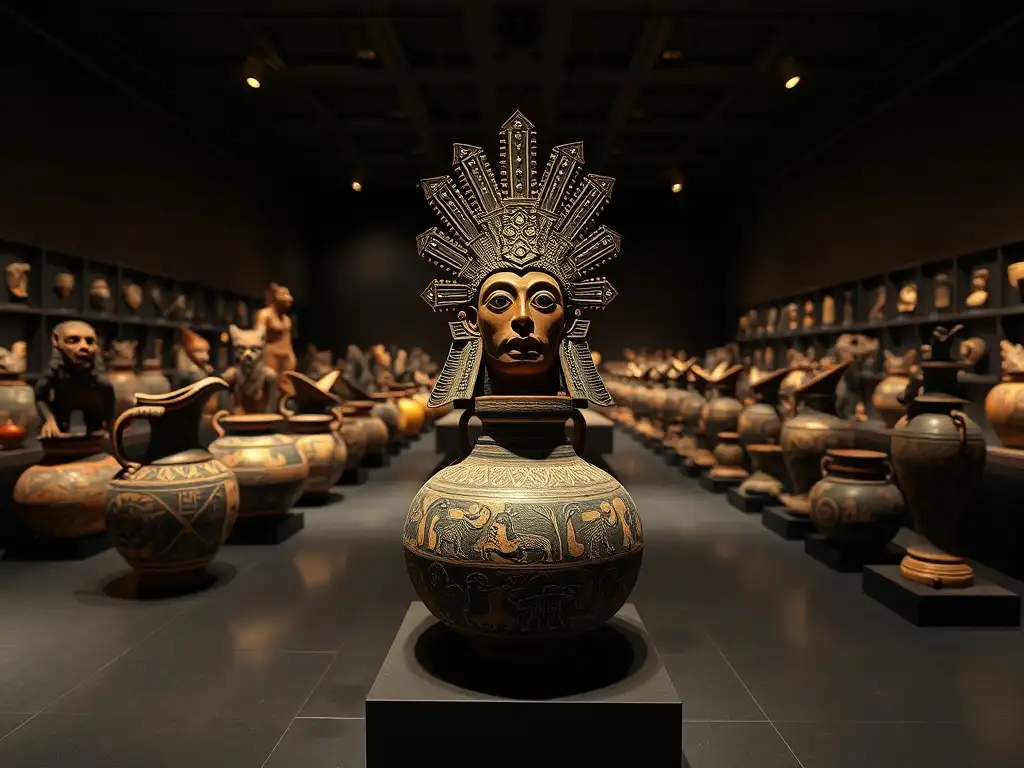
Unravel the mysteries of a lost world. Dive into the vibrant tapestry of Andean civilization, where intricate artistry whispered secrets across millennia. Intriguing symbols, meticulously crafted onto magnificent Moche pottery, hold the key to understanding their complex society. Prepare to be captivated as we explore the Moche pottery symbolic meaning, revealing the hidden narratives etched within these ancient artifacts. Journey with us to uncover the fascinating stories they tell.
The Moche culture, flourishing along the northern coast of Peru from approximately 100 CE to 800 CE, left behind a legacy far richer than its impressive irrigation systems and monumental architecture. Their artistry, particularly their exquisite pottery, serves as a captivating window into their complex worldview, revealing intricate social structures, religious beliefs, and daily life. This article delves into the fascinating world of Moche pottery, exploring the symbolic meaning embedded within these meticulously crafted vessels and uncovering the hidden narratives they whisper across the millennia.
Understanding the symbolic language of the Moche pottery provides invaluable insight into this remarkable civilization and its enduring influence on Andean culture. We will examine specific motifs, their contextual significance within Moche society, and the ongoing scholarly interpretations that continue to shed light on their profound meaning.
This exploration is crucial for understanding not only the Moche themselves, but also the broader context of Andean art and its enduring power to communicate across time. The keyword "Moche pottery symbolic meaning" will be explored in detail throughout this article.
Deciphering the Iconography: Key Symbols and Their Interpretations
Moche pottery is renowned for its vibrant colors, realistic depictions, and intricate detailing. But beyond the aesthetic appeal lies a complex system of symbols that convey profound meaning. Common motifs include:
- Warriors and Warfare: Frequently depicted in dynamic battle scenes, these representations are not merely records of conflict but likely symbolize the importance of military power and social hierarchy within Moche society. The detail of weaponry, attire, and even facial expressions suggests a nuanced understanding of these events' social and political implications. Further research is needed to fully understand the specific meanings of different warrior depictions, as some may represent specific clans or elite figures.
- Religious Figures and Rituals: The depiction of priests, shamans, and ritualistic practices provides crucial insights into the Moche religious system. The presence of specific deities, often portrayed with distinctive attributes, offers clues to the pantheon and their roles in Moche beliefs. The detailed representations of sacrifices and rituals help us understand the Moche's relationship with the supernatural and their world.
- Erotic Imagery: The inclusion of explicit sexual imagery in Moche pottery has long been a subject of scholarly debate. While interpretations vary, this imagery is often linked to themes of fertility, ritual, and potentially, social control. The explicit nature of these depictions suggests a more open attitude towards sexuality than often found in other ancient cultures, demanding further investigation into their social and religious contexts. [Specific examples of erotic imagery and their interpretations pending]
- Animals and Nature: Moche potters skillfully depicted the diverse fauna of their coastal environment, including marine life, birds, and mammals. These representations are not simply naturalistic depictions but carry symbolic weight, often reflecting the importance of nature in their worldview and the role of animals in their religious beliefs. [Data on specific animal symbolism and its relation to Moche mythology pending]
The Context of Creation: Production and Distribution of Moche Pottery
The creation and distribution of Moche pottery were not random acts but were carefully organized and controlled processes. [Information on the specific organization of Moche pottery production and its social implications pending]. Understanding this context is crucial for interpreting the symbolic meaning of the pottery itself. The quality and style of the pottery often correlated with the social status of the owner or intended recipient, suggesting a system of social stratification. Further research into the archaeological sites where pottery was produced and discovered is vital for a more complete understanding of this aspect of Moche culture.
Ongoing Research and Interpretations: New Perspectives on Moche Symbolism
The study of Moche pottery and its symbolic language is an ongoing endeavor. New discoveries and technological advancements continue to reveal fresh insights into the lives and beliefs of the Moche people. The application of new methodologies such as advanced imaging techniques and interdisciplinary collaborations between archaeologists, art historians, and anthropologists promises to further illuminate the intricate symbolism embedded within these remarkable artifacts.
The ever-evolving interpretations of Moche symbolism highlight the dynamic and multifaceted nature of this ancient culture, continually rewarding those who seek to understand its rich tapestry of meaning. The ongoing research emphasizes the need for continued investigation into the "Moche pottery symbolic meaning" for a more complete understanding of this fascinating culture.
- Deciphering the Iconography: Key Symbols and Their Interpretations
- The Context of Creation: Production and Distribution of Moche Pottery
- Ongoing Research and Interpretations: New Perspectives on Moche Symbolism
- The Moche Decapitator God: Understanding Sacrifice and Power
- The Ai Apaec: Representation of Divine Authority
- Moche Animal Symbolism: Zoomorphic Figures and Their Roles
- Moche Bird Symbolism: The Meaning of Avian Motifs
- Moche Serpent Symbolism: Interpretations of the Reptilian Form
- Moche Geometric Patterns and Their Possible Meanings
Unveiling the Moche World Through Art
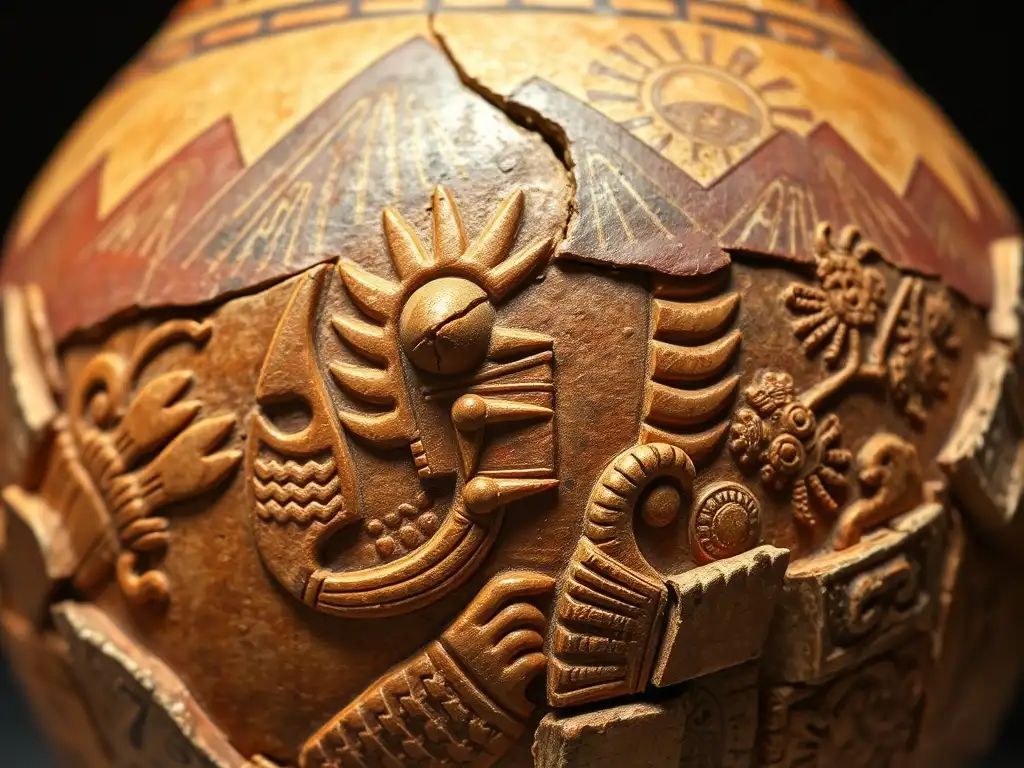
The Moche Culture: A Brief Overview
The Moche civilization flourished along the northern coast of Peru from approximately 100 CE to 800 CE. Known for their sophisticated irrigation systems that allowed them to thrive in a desert environment, the Moche were also master artisans, particularly renowned for their intricate and highly expressive pottery. Their society was hierarchical, with a powerful elite controlling resources and religious practices. Archaeological evidence suggests a complex social structure with specialized labor and a strong emphasis on warfare and ritual.
Understanding the Moche requires appreciating their mastery of engineering, their sophisticated social organization, and, critically, their rich symbolic language expressed most powerfully through their pottery. Their artistic output wasn't merely decorative; it served as a powerful tool for communicating religious beliefs, social structures, and historical narratives. This detailed examination of Moche pottery will reveal the depth and complexity of their worldview.
Moche Art as a Window to their Beliefs
Moche pottery wasn't simply functional; it was a vital component of their religious and social life. Elaborate depictions of deities, mythical creatures, and scenes of daily life are painted or sculpted onto the vessels, offering invaluable insights into their cosmology and values. For example, the frequent portrayal of powerful figures, often adorned with elaborate headdresses and regalia, suggests a strong belief in a hierarchical social order with powerful rulers and priests.
These depictions aren't simply portraits; they are carefully constructed narratives that convey power, authority, and divine legitimacy. The recurring motifs of stylized animals, such as jaguars, birds of prey, and snakes, highlight the importance of these creatures in their symbolic system, likely representing supernatural forces or embodying specific qualities valued by the Moche. The detailed rendering of these figures, with their expressive features and dynamic poses, emphasizes their significance within the Moche worldview.
Analyzing Moche pottery symbolic meaning reveals a rich tapestry of interconnected beliefs and practices. The sheer variety of imagery found on these artifacts underscores the complexity of their religious landscape and the sophistication of their artistic expression.
The Importance of Symbolism in Moche Society
Symbolism permeated all aspects of Moche life, serving as a powerful means of communication and social control. Their intricate pottery is a prime example of this pervasive use of symbols. The careful selection and arrangement of motifs were not arbitrary; they conveyed specific meanings and narratives integral to their culture. Consider, for instance, the frequent depiction of ritual scenes, such as sacrifices or ceremonies.
These representations weren't simply documenting events; they actively participated in the perpetuation of religious beliefs and practices. The Moche used these visual narratives to reinforce their social hierarchy and transmit their worldview across generations. The use of color, too, played a significant role in the Moche symbolic language. Certain colors were associated with specific deities or concepts, adding layers of meaning to the already complex imagery.
Further research into the pigments and their sources could provide even more detailed insights into the Moche's understanding of the natural world and its symbolic significance. Understanding the intricacies of Moche symbolism is key to understanding their society, their beliefs, and their legacy. The rich tapestry of images, colors, and narratives woven into their pottery continues to fascinate and challenge researchers today, continuously revealing new facets of this extraordinary civilization. The enduring power of Moche pottery symbolic meaning lies in its ability to connect us to a past that, though distant, remains remarkably vivid and relevant.
Decoding the Symbolic Language of Moche Pottery
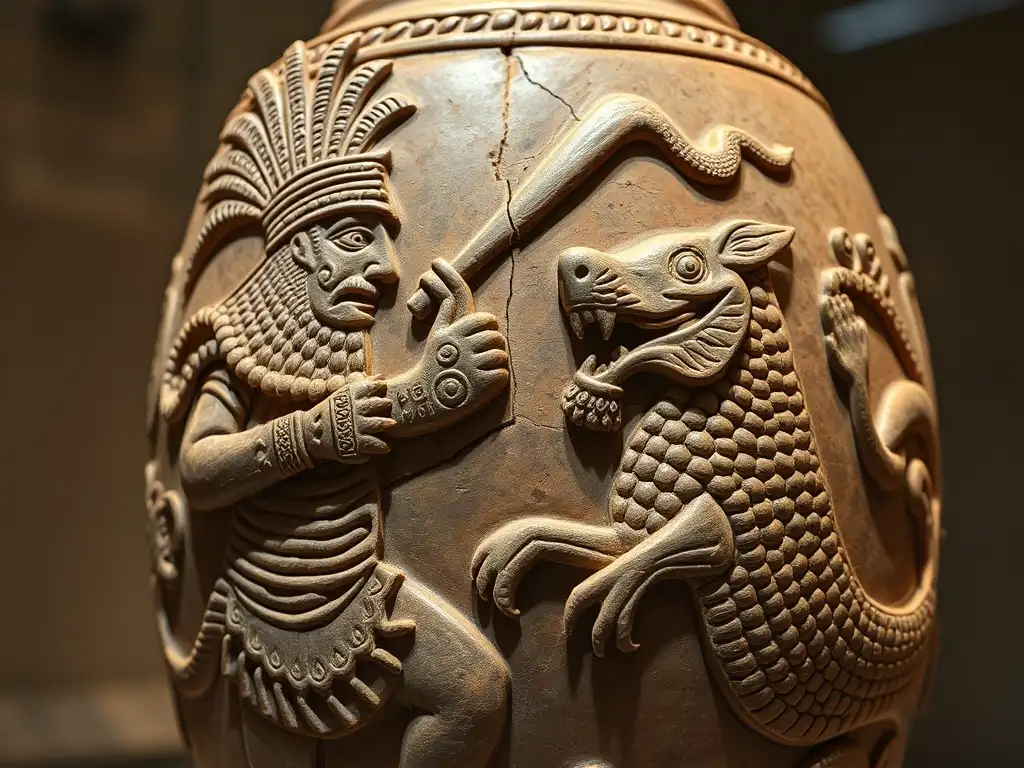
The Moche civilization, flourishing along the northern coast of Peru from approximately 100 CE to 800 CE, left behind a remarkable legacy—a vast corpus of intricately decorated pottery. These aren't merely vessels; they are rich tapestries of narrative, meticulously crafted to convey complex social structures, religious beliefs, and daily life. Understanding the symbolic language embedded within these ceramics provides invaluable insight into the Moche worldview and their sophisticated artistic capabilities.
The careful study of Moche pottery symbolic meaning reveals a society deeply engaged in ritual, warfare, and a profound connection to the natural world. This section delves into the key elements that unlock the secrets held within these ancient artifacts.
Moche Pottery: More Than Just Vessels
Moche pottery transcends its utilitarian function. While undoubtedly used for practical purposes, these vessels served as powerful mediums for storytelling and the expression of cultural values. The sheer artistry involved—the precision of the modeling, the vibrancy of the pigments, and the complexity of the scenes depicted—underscores the significance attached to these objects. Consider, for example, the meticulous detail in portraying human figures, often depicted in dynamic poses, engaging in a range of activities from feasting and warfare to ritual ceremonies.
Even seemingly mundane objects, like fruits or plants, are rendered with an almost photographic realism, hinting at the importance of agricultural practices and the natural environment in Moche society. The use of different colors also holds symbolic weight; for instance, red is often associated with blood and sacrifice, while yellow might represent the sun or maize. The creation of these vessels wasn't a mere craft; it was a ritualized process, imbued with symbolic meaning from the selection of clay to the final firing.
The enduring quality of the pottery itself is a testament to the expertise and dedication of the Moche artisans. Their work provides a window into the artistic ingenuity and spiritual beliefs of this remarkable culture. The level of detail found in these pieces is astonishing, and continued research is uncovering more subtle nuances in their symbolic language.
Iconography and Narrative on Moche Ceramics
The iconography of Moche ceramics is rich and multifaceted. Recurring motifs, such as the depiction of deities, mythical creatures, and scenes of warfare and ritual, form a complex visual narrative. Many depictions showcase powerful figures, likely rulers or priests, adorned with elaborate headdresses and regalia.
These figures often dominate the composition, emphasizing their social standing and religious authority. The narratives portrayed on the pottery frequently depict scenes of human sacrifice, suggesting the importance of these rituals in Moche society. Often, these sacrifices involve elaborate ceremonies, with priests and attendants participating in the act.
The scenes are not merely depictions of violence, but rather complex rituals with profound symbolic meaning, possibly connected to ensuring fertility, appeasing the gods, or maintaining cosmic order. Scholars continue to debate the precise interpretations of these scenes, but the artistry and detail undeniably communicate the centrality of ritual in Moche life. The placement of specific symbols within the narrative also plays a role; for example, the presence of particular plants or animals may indicate specific deities or events.
Common Moche Motifs and Their Interpretations
Several common motifs repeatedly appear in Moche pottery, each carrying its own unique symbolic weight. The study of these recurring symbols provides crucial clues for understanding the Moche worldview. For instance:
- The Decapitated Figure: This motif, frequently depicted in scenes of sacrifice, likely represents a symbolic death and rebirth, highlighting the cyclical nature of life and the cosmos. The significance of this motif is still being researched, but it is undoubtedly a central theme in Moche iconography.
- Feline Deities: Powerful feline figures, often depicted with human-like attributes, are believed to represent powerful deities. Their presence suggests a strong connection to the natural world and the symbolic importance of animals in Moche religious beliefs. These depictions can vary considerably in style and detail, indicating diverse interpretations or distinct deities within the feline pantheon.
- The Maize God: Representations of maize, a staple crop for the Moche, are often interpreted as symbolic of fertility, abundance, and the life-giving power of the earth. The depiction of maize alongside other symbols, such as water or the sun, further enriches its symbolic meaning.
- Warriors and Warfare: Depictions of warriors, often engaged in battles or ceremonies, highlight the importance of warfare in Moche society. However, these depictions are not simply glorifications of violence; they may also represent ritual combat, or the symbolic struggle between opposing forces.
Understanding these motifs and their variations is essential for deciphering the complex messages encoded in Moche pottery. Further research using advanced techniques such as 3D scanning and spectral imaging will undoubtedly lead to new discoveries and a more nuanced understanding of the symbolism within this unique artistic tradition. The ongoing investigation into Moche pottery symbolic meaning continues to unveil the rich tapestry of this fascinating civilization.
Key Symbols in Moche Art and Their Meanings
The Moche civilization, flourishing along the northern coast of Peru from approximately 100 CE to 800 CE, left behind a rich legacy of artistic expression, most notably in their exquisite pottery. These ceramic artifacts are not merely aesthetically pleasing; they are windows into the Moche worldview, revealing complex religious beliefs, social structures, and daily life. Understanding the Moche pottery symbolic meaning requires careful examination of recurring motifs and their contextual placement within the broader cultural landscape.
The intricate detail and stylistic consistency across various pottery forms highlight the importance of these symbols within Moche society. Analyzing these symbols allows us to reconstruct a more nuanced understanding of their beliefs and practices. This section will explore some of the key recurring symbols and their potential interpretations.
The Moche Decapitator God: Understanding Sacrifice and Power
The Moche Decapitator God, a prominent figure in Moche iconography, is frequently depicted in scenes of ritual sacrifice and warfare. He is usually shown wielding a knife or club, often in the act of decapitating a captive. The gruesome imagery is not simply gratuitous violence; it speaks volumes about the Moche understanding of power, authority, and the relationship between the human and divine realms.
Several interpretations exist regarding the Decapitator God's role. Some scholars suggest he represents a deity associated with warfare and conquest, symbolizing the Moche's military prowess and expansion. Others propose a more complex interpretation, linking the decapitation scenes to ritual sacrifice aimed at appeasing powerful deities or ensuring a bountiful harvest.
The act of decapitation itself might symbolize the subjugation of enemies, the control over life and death, or the extraction of vital energy. The detailed depictions, often showing the captured individual's expressions of fear and agony, underscore the gravity of the event and its significance within the Moche cosmology.
The prevalence of this motif across various pottery styles and sizes suggests its central role in their religious beliefs and social practices. Further research into the specific contexts of these depictions, including accompanying symbols and the overall narrative of the pottery piece, is crucial for a more complete understanding of this powerful symbol.
The intensity of the imagery, coupled with the artistry involved in its creation, reinforces the importance of this figure within the Moche pantheon. The Decapitator God’s presence transcends mere decoration; it represents a core element of Moche religious and political ideology.
The Ai Apaec, another significant figure in Moche mythology, is often depicted as a multi-faced deity, embodying a complex interplay of power and fertility. Unlike the Decapitator God's focus on violence, the Ai Apaec's symbolism is more multifaceted, encompassing both destructive and generative forces. Its multiple faces, often displaying expressions ranging from serenity to ferocity, might represent different aspects of the deity or its influence on various aspects of Moche life.
The Ai Apaec is frequently associated with water, agriculture, and the cyclical nature of life and death. Its presence on Moche pottery often suggests a connection to fertility rituals and the importance of agricultural prosperity. The complex iconography surrounding the Ai Apaec, including its association with other symbolic elements like felines and serpents, indicates a deeper, more nuanced understanding of divine power than a simple interpretation might suggest.
The intricate details of its representation – the varied facial expressions, the arrangement of its limbs, and the presence of accompanying figures – are all critical components in unraveling its symbolic meaning. Further research is needed to fully comprehend the complex layers of meaning embedded within this enigmatic figure. The Ai Apaec’s enduring presence in Moche art solidifies its standing as a central figure of their religious beliefs.
Moche Animal Symbolism: Zoomorphic Figures and Their Roles
Moche pottery is abundant with zoomorphic representations, showcasing a diverse range of animals, both real and mythical. These animal figures are not simply decorative elements; they carry significant symbolic weight, reflecting the Moche's close relationship with the natural world and their understanding of the cosmos.
The most common animal motifs include felines (often jaguars or pumas), birds of prey, snakes, and marine creatures. Each animal holds a specific symbolic meaning, often linked to their perceived characteristics. For instance, felines were likely associated with power, strength, and hunting prowess. Birds of prey might have symbolized speed, agility, and connection to the upper world. Snakes, often depicted with intricate details, possibly represented fertility, healing, or the underworld. Marine animals, given the Moche's coastal location, likely held significant importance, reflecting their reliance on the sea for sustenance and their understanding of its power.
| Animal | Potential Symbolic Meaning | Example Depiction |
|---|---|---|
| Feline | Power, strength, hunting, royalty | Often depicted with sharp claws and fierce gaze |
| Bird of Prey | Speed, agility, connection to the upper world | Shown in flight or perched, often with sharp talons |
| Snake | Fertility, healing, underworld, transformation | Intricate scales and often coiled around objects |
| Marine Animals | Abundance, sustenance, power of the ocean | Depicted with realistic details and often in motion |
The specific meaning of each animal could vary depending on its context within the overall composition of the pottery. Further studies using comparative analysis across various pottery pieces and careful consideration of accompanying symbols are necessary to fully decipher the complex system of animal symbolism within Moche art. The abundance and variety of these zoomorphic representations highlight the central role of the natural world in Moche culture and their sophisticated understanding of its symbolic significance.
The intricate details and lifelike qualities of these depictions further underscore the Moche's artistic skill and their deep connection with the animals that surrounded them. The study of Moche pottery symbolic meaning through animal representations provides crucial insights into their worldview and understanding of the cosmos.
Moche Bird Symbolism: The Meaning of Avian Motifs
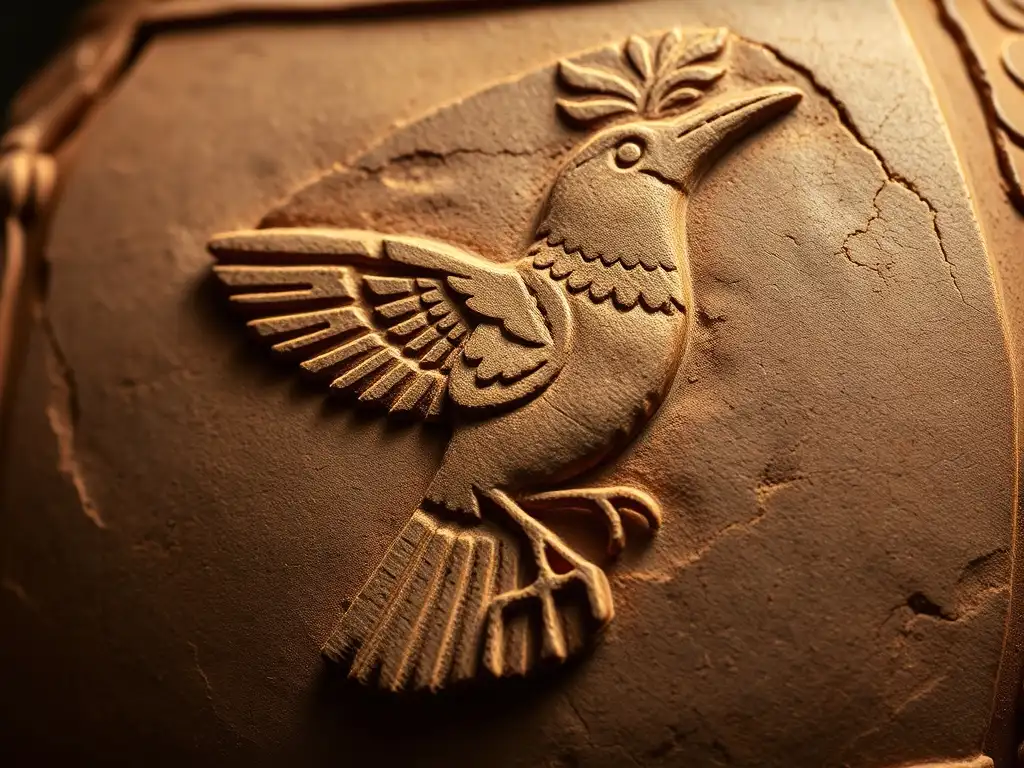
Birds hold a prominent place in Moche iconography, frequently appearing in their elaborate pottery and other artistic expressions. These avian motifs are not merely decorative; they carry deep symbolic weight, often reflecting the Moche worldview and their relationship with the natural world. Different bird species depicted in Moche art likely held different meanings. For example, raptors like eagles or hawks might symbolize power, dominance, and perhaps even shamanic abilities, given their association with the upper world and the sun.
Conversely, water birds like pelicans or herons could represent fertility, abundance, and the vital role of water in the Moche agricultural system. The specific context in which the bird is depicted—its posture, its interaction with other elements in the scene, and the overall style of the artifact—further nuances the interpretation. Scholars continue to debate the precise meanings of various avian motifs, but it's clear that birds played a crucial role in Moche symbolic language, representing a range of concepts vital to their culture.
Careful examination of the artistic details, along with an understanding of the Moche environment and societal structures, is critical to unlocking the full significance of these captivating images. Further research into specific bird species and their representation in various Moche artifacts is needed to fully understand the nuances of Moche bird symbolism. The ongoing discovery of new artifacts continues to enrich our understanding of this complex aspect of Moche culture.
Moche Serpent Symbolism: Interpretations of the Reptilian Form
Serpents, like birds, are recurring figures in Moche art, often depicted with a remarkable level of detail and expressive power. Their symbolic meaning is complex and multifaceted, potentially encompassing both positive and negative connotations depending on the specific artistic context. In some instances, serpents might represent the life-giving forces of nature, particularly water and fertility, mirroring their association with rain and underground springs in many cultures.
The cyclical shedding of their skin could have symbolized regeneration and renewal, connecting them to the Moche understanding of life, death, and rebirth. However, serpents could also represent danger, chaos, and the unseen forces of the underworld. Their association with the earth and the potentially destructive power of nature could have given them a dualistic symbolic meaning.
The depiction of serpents intertwined or engaged in combat could have represented the conflict between opposing forces, a common theme in Moche mythology and worldview. Understanding the full spectrum of serpent symbolism in Moche art requires a careful consideration of the broader context within which they appear, including the other elements present in the scene and the overall style of the artifact. Further investigation into the specific iconographic details surrounding serpent depictions will undoubtedly shed more light on their intricate symbolic meanings.
Moche Geometric Patterns and Their Possible Meanings
Beyond the iconic representations of animals and humans, Moche art incorporates a wide range of geometric patterns that, while seemingly abstract, likely held significant symbolic meaning. These patterns, frequently found on pottery, textiles, and metalwork, often consist of intricate arrangements of triangles, squares, zigzags, and spirals. Some scholars suggest that these geometric patterns could represent abstract concepts, such as the cosmos, the organization of society, or even the structure of the Moche worldview. The precise meaning of each pattern remains a subject of ongoing research and debate, but their consistent appearance and meticulous execution suggest that they were far from mere decoration.
The repetition of certain patterns across different artifacts might indicate their importance and widespread cultural significance. Additionally, the combination of geometric patterns with other symbolic elements in a single artwork could suggest a complex layering of meaning. For instance, a geometric pattern might be used to emphasize or frame a representation of a deity or a significant event.
The study of Moche geometric patterns requires a meticulous approach, comparing similar patterns across different artifacts and analyzing their context within the larger Moche artistic tradition. Further research into the spatial arrangements and relationships between these patterns could reveal deeper levels of symbolic meaning. The potential connection between these patterns and Moche cosmology and social organization deserves further investigation.
Moche Pottery Symbolic Meaning: A Deeper Dive
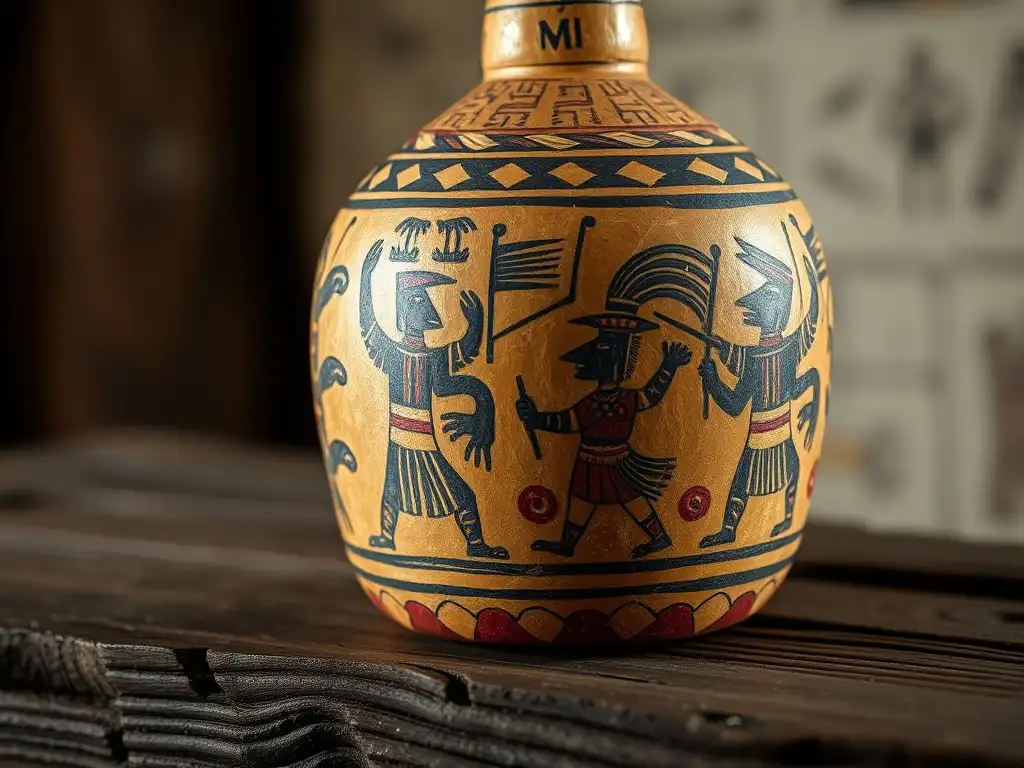
The vibrant and intricate pottery of the Moche civilization (c. 100-800 CE) offers a unique window into their complex worldview. Far from mere vessels, Moche ceramics served as powerful tools for communicating narratives, beliefs, and social structures. Understanding the symbolic meaning embedded within these artifacts requires careful analysis of their iconography, color palettes, and contextual clues.
This section delves into the multifaceted symbolism present in Moche pottery, exploring how these seemingly simple objects reveal profound insights into the culture that created them. The keyword phrase "Moche pottery symbolic meaning" is central to understanding this rich artistic legacy. This analysis aims to move beyond surface-level observations, uncovering the deeper layers of meaning embedded within these remarkable pieces.
Interpreting Moche Ceramic Scenes: Narrative Sequences
Moche potters were masterful storytellers. Many ceramic vessels depict complex scenes, often unfolding across the surface in a narrative sequence. These aren't simply random arrangements; rather, they are carefully constructed visual narratives that transmit information about Moche mythology, rituals, and social hierarchy. For example, scenes frequently depict battles, hunts, and ceremonies, often featuring stylized depictions of deities, shamans, and warriors.
The arrangement of figures and objects within these scenes is crucial to interpretation. Consider a common motif: a warrior standing victoriously over a defeated enemy. This isn't just a depiction of violence; it's a statement about power, conquest, and perhaps even the legitimacy of Moche rule.
The details—the warrior's attire, weaponry, and the posture of the defeated foe—all contribute to the overall meaning. Analyzing the sequential nature of these scenes allows us to piece together complex stories and understand the cultural values emphasized by the Moche. The careful observation of these narrative sequences is key to unlocking the "Moche pottery symbolic meaning."
Furthermore, the use of perspective and scale within these scenes adds another layer of complexity. The Moche employed a unique artistic style, often distorting figures and objects to emphasize certain aspects of the narrative. The size and placement of figures within the scene often reflect their social standing or importance within the narrative. Larger figures typically represent more powerful individuals, such as rulers or deities. The study of these stylistic choices offers further insight into the social dynamics and beliefs of the Moche society.
The Role of Color in Moche Symbolic Representation
Color played a significant role in Moche symbolic representation. The use of specific colors wasn't arbitrary; rather, it conveyed specific meanings and associations. Scholars have identified various color palettes and their potential symbolic significance. For instance, red often symbolized blood, sacrifice, and warfare, while yellow might represent the sun, gold, and divinity.
The interplay of colors within a single scene adds further complexity to the interpretation. A vessel depicting a ritual scene might use red to highlight the act of sacrifice, while yellow might be used to represent the deity being honored. Understanding the symbolic meaning attributed to different colors is crucial for a complete understanding of the "Moche pottery symbolic meaning."
| Color | Potential Symbolic Meaning | Example in Moche Pottery |
|---|---|---|
| Red | Blood, sacrifice, warfare, power | Depiction of a warrior's blood-soaked clothing in a battle scene |
| Yellow/Gold | Sun, divinity, wealth, power | Representation of a deity adorned with golden ornaments |
| White | Purity, fertility, possibly associated with the moon | Depiction of a priest or shaman in ceremonial attire |
| Black | Death, the underworld, mystery | Scenes depicting funerary rituals or underworld deities |
| Brown/Beige | Earth, fertility, everyday life | Scenes depicting agricultural activities or daily life |
The precise meaning of colors could vary depending on the context and specific combination used. Further research is needed to fully elucidate the Moche color symbolism. More detailed studies, particularly combining archaeological and anthropological findings, are required to deepen our understanding.
Moche Pottery as a Reflection of Daily Life and Rituals
Moche pottery doesn't only depict mythological narratives; it also offers valuable insights into daily life and rituals. Representations of agricultural practices, fishing, and other everyday activities provide a glimpse into the economic and social structures of Moche society. The depiction of food, clothing, and tools reveals details about material culture and lifestyle. Furthermore, many vessels depict ritual scenes, providing clues about religious beliefs and practices.
These scenes often feature shamans, priests, and deities, and often depict ritualistic practices, such as sacrifice or offerings. The combination of these everyday and ritual scenes provides a comprehensive understanding of Moche society. By studying these depictions, we can gain a deeper understanding of their social hierarchy, religious beliefs, and daily life, further illuminating the "Moche pottery symbolic meaning."
The presence of specific motifs, such as stylized animals or plants, also carries symbolic weight. These elements often represent important aspects of Moche mythology or religious beliefs. For example, the frequent depiction of felines might symbolize power, agility, and supernatural abilities.
Similarly, the representation of specific plants could relate to agricultural practices or religious ceremonies. The detailed study of these motifs, in conjunction with the broader context of the scenes in which they appear, is essential for a comprehensive understanding. More research is needed to fully unravel the symbolic language of these recurring motifs and further illuminate the multifaceted nature of Moche pottery.
Analyzing the Context of Moche Pottery Finds
Understanding the symbolic meaning embedded within Moche pottery requires meticulous analysis of the context surrounding its discovery. Archaeologists don't simply unearth pots and assign meanings; they carefully consider the location, associated artifacts, and overall site stratigraphy. For example, the presence of a particular type of Moche pottery in a high-status tomb, alongside gold ornaments and elaborate textiles, suggests a different symbolic weight than the same pot found in a more humble dwelling.
The careful excavation and recording of the spatial relationships between artifacts is crucial. A pot found near human remains might signify offerings to the deceased, revealing beliefs about the afterlife. Conversely, pots discovered in ritual contexts, such as those associated with ceremonial centers or platforms, likely held a different symbolic significance, perhaps related to community rituals or religious practices.
The surrounding environment also plays a critical role. For instance, pottery depicting marine life found near coastal settlements might symbolize the importance of fishing and maritime resources to the Moche people, while depictions of agricultural scenes found in inland settlements could highlight the significance of agriculture to their economy and worldview. Furthermore, the association of pottery with other artifacts, such as tools, weapons, or religious paraphernalia, provides valuable clues about the overall context and intended use of the vessel and its symbolism.
The meticulous recording of these contextual elements is essential to interpret the symbolic messages encoded within the Moche pottery. Without this contextual information, interpretations can be speculative and misleading, potentially distorting our understanding of Moche culture and beliefs.
Therefore, a comprehensive understanding of "Moche pottery symbolic meaning" necessitates a deep engagement with the archaeological context of each find. The careful study of the site's stratigraphy, the surrounding artifacts, and the environmental setting provides a crucial framework for interpreting the symbolic language conveyed in the pottery.
Moche Symbolic Language: Beyond Pottery
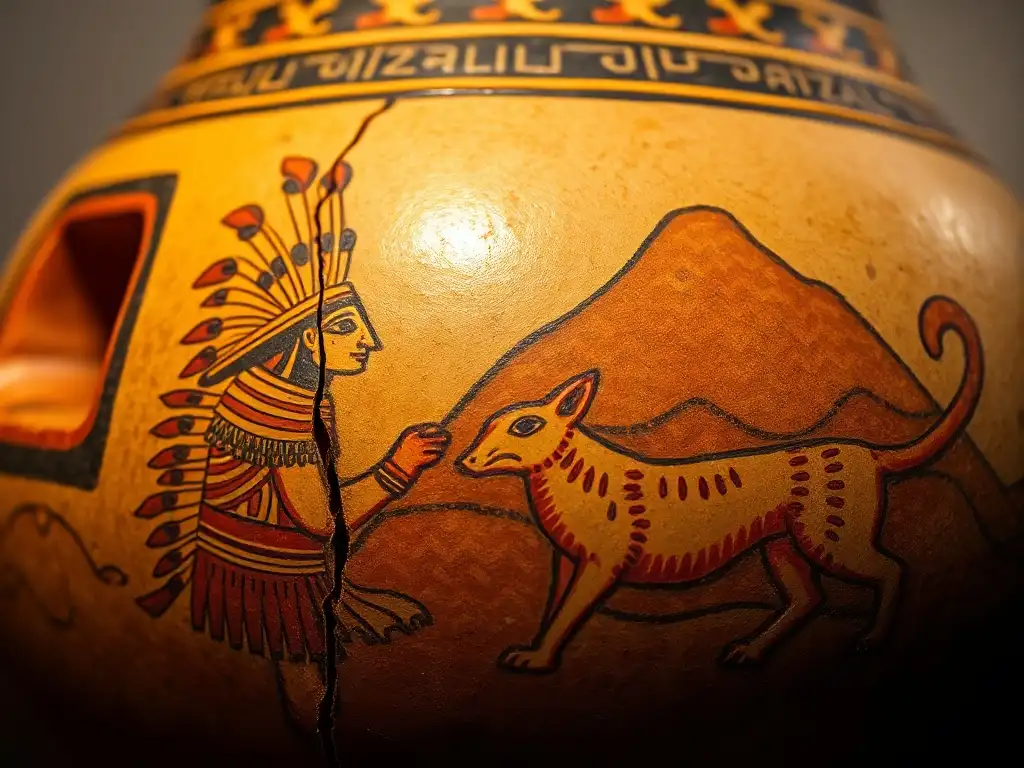
The Moche civilization, flourishing along the northern coast of Peru from approximately 100 CE to 800 CE, left behind a remarkable legacy of artistry. While their pottery is justly famous for its vivid depictions of daily life and mythical creatures, understanding the Moche pottery symbolic meaning requires looking beyond the ceramics.
The Moche worldview, rich in symbolism, permeated all aspects of their material culture, from the intricate designs on their textiles to the masterful craftsmanship of their metalwork and the powerful imagery found in their murals. This section delves into the symbolic language employed across various Moche art forms, revealing a complex society with a sophisticated understanding of the cosmos and their place within it.
Uncovering this symbolic language offers a deeper appreciation for the Moche's spiritual beliefs, social structures, and artistic achievements. The intricate detail and vibrant colors used across different mediums consistently point towards a culture deeply invested in representing their world through symbolic expression.
Moche Metalwork: Symbolic Representations in Gold and Silver
Moche metalworkers were exceptionally skilled, crafting intricate objects from gold, silver, and copper alloys. These weren't merely decorative pieces; they served crucial ceremonial and symbolic roles. For instance, gold, often associated with the sun and the elite, frequently appeared in the form of masks, ornaments, and ceremonial objects.
These pieces often depicted deities, powerful figures, or symbolic motifs, reinforcing the power and status of the wearer or the significance of the ritual. Silver, on the other hand, might have held associations with the moon or the underworld, reflected in its use in certain types of adornments and ritual implements. Analysis of surviving examples reveals recurring motifs such as stylized birds, feline figures, and anthropomorphic representations, all laden with symbolic weight and suggesting narratives about power, fertility, and the cosmos.
The careful selection of materials, combined with the intricate craftsmanship, highlights the importance of these objects within Moche society and their role in conveying complex symbolic meanings. Detailed studies of the metallurgical techniques employed further reveal the advanced technological understanding of the Moche, adding another layer to the appreciation of their symbolic artistry.
Moche Textiles: The Symbolic Significance of Weaving Patterns
Moche textiles, while often fragmented due to the fragility of the material, reveal a sophisticated understanding of weaving techniques and symbolic representation. Surviving fragments, often found in tombs alongside other artifacts, showcase intricate patterns and designs, frequently featuring geometric motifs, stylized animals, and human figures. These patterns were not randomly chosen; they likely held specific meanings related to social status, ritual practices, or mythological narratives.
For example, certain patterns might have indicated the wearer's social standing within the community, or they could have been used to represent specific deities or mythical beings. The use of different colors and fibers also likely held symbolic significance, perhaps representing different aspects of the natural world or the spiritual realm.
Unfortunately, a comprehensive understanding of the Moche pottery symbolic meaning and their textile symbolism is hampered by the limited survival of complete pieces and the lack of deciphered written language, leaving room for further research and interpretation. However, the surviving fragments provide tantalizing glimpses into the rich symbolic world of Moche textile art.
Moche Mural Art: Exploring the Narratives in Painted Walls
Moche mural art, found adorning the interior walls of elite tombs and ceremonial structures, provides another crucial window into their symbolic world. These murals, often depicting scenes of warfare, ritual ceremonies, and mythical encounters, offer compelling visual narratives. The vibrant colors and dynamic compositions draw the viewer into scenes that convey powerful messages.
The depictions of warriors, often adorned with elaborate headdresses and regalia, showcase the importance of warfare in Moche society and the symbolic power associated with military achievements. Scenes of ritual ceremonies, featuring priests, shamans, and possibly deities, reveal insights into their religious beliefs and practices. The depiction of mythical creatures, often intertwined with human figures, suggests a complex mythology that linked the human and supernatural realms.
The scale and complexity of these murals, coupled with the carefully chosen imagery, underscore their importance as powerful vehicles for communicating Moche beliefs and values. By studying these murals, we gain a deeper understanding of their social structures, religious beliefs, and artistic achievements, adding another dimension to our appreciation of the richness and complexity of Moche culture. Further research into the pigments and techniques used in these murals could uncover additional insights into the creative process and symbolic intentions of the Moche artists.
The Legacy of Moche Symbolism
The Moche, a pre-Columbian culture flourishing on Peru's northern coast between 100 and 800 CE, left behind a remarkable artistic legacy, particularly in their exquisite pottery. These aren't simply vessels; they are intricate narratives frozen in clay, brimming with Moche pottery symbolic meaning. The vibrant colors, detailed figures, and complex scenes depict a range of subjects—from everyday life and ritual practices to mythical creatures and powerful deities.
Understanding this symbolic language offers a window into the Moche worldview, their social structures, and their beliefs about the cosmos. Their artistic skill was unparalleled, and the level of detail achieved in their ceramic work is astonishing. Consider, for example, the precision with which they rendered human features, animal anatomy, and even the textures of fabrics.
This meticulous attention to detail underscores the profound significance they attached to their artistic expressions. The legacy of Moche symbolism continues to resonate, influencing subsequent Andean cultures and inspiring contemporary interpretations.
The Influence of Moche Iconography on Later Andean Cultures
The Moche's sophisticated artistic style and symbolic language clearly impacted later Andean cultures. While the exact mechanisms of transmission remain a subject of ongoing research, the stylistic echoes and thematic similarities are undeniable. For instance, certain motifs—like the depiction of specific deities or mythical creatures—appear in later Chimú and Inca art, albeit with stylistic variations reflecting the changing cultural contexts.
This suggests a process of cultural exchange and adaptation, where elements of Moche iconography were reinterpreted and integrated into the artistic traditions of succeeding civilizations. The continuity of certain symbolic elements across centuries speaks to their enduring power and significance within the Andean worldview.
Analyzing these parallels helps us to trace the evolution of Andean artistic traditions and to better understand the complex relationships between different Andean cultures. The enduring appeal of Moche imagery is also evident in its continued use in contemporary Andean art, suggesting a deep-rooted connection to the past.
Modern Interpretations of Moche Art and Symbolism
Modern scholars and artists continue to engage with Moche art and symbolism, offering fresh perspectives on its meaning and significance. Archaeological discoveries regularly unearth new artifacts, adding layers of complexity to our understanding. Advanced imaging techniques allow for a more detailed analysis of the pottery, revealing subtle details previously unseen. Furthermore, interdisciplinary approaches, combining archaeology, anthropology, and art history, provide a richer context for interpreting the symbolic language.
For example, recent studies have shed light on the role of specific colors in Moche iconography, connecting them to specific deities or rituals. This interdisciplinary approach is crucial to understanding the complex layers of meaning embedded within the art. The ongoing research on Moche art and symbolism ensures that their rich legacy continues to inspire and challenge us. The Moche pottery symbolic meaning remains a topic of ongoing debate, with new interpretations constantly emerging.
The Ongoing Study of Moche Symbolic Language
The decipherment of Moche symbolic language is an ongoing process, requiring careful analysis of numerous artifacts and contextual information. While many symbols have been tentatively identified, much remains unknown. The challenge lies in the lack of written records, forcing researchers to rely on visual evidence and contextual clues.
This necessitates a meticulous approach, combining close observation of artistic details with a deep understanding of the Moche social and religious practices. The study of Moche symbolism is not just about identifying individual elements; it's about understanding the intricate relationships between them and how they function within a broader system of meaning. Future research will likely involve more sophisticated technologies and interdisciplinary collaborations, offering even deeper insights into this fascinating culture.
The ongoing research into Moche pottery symbolic meaning promises to continue enriching our understanding of this remarkable civilization for years to come. The unraveling of this complex symbolic language remains a captivating pursuit, offering a glimpse into the vibrant and sophisticated culture of the ancient Moche.
Preserving the Symbolic Richness of Moche Heritage
The enduring fascination with Moche pottery stems not only from its exquisite artistry but also from the wealth of symbolic information it contains. Understanding this symbolism is crucial for preserving and interpreting the Moche legacy accurately. The challenge lies in the fact that much of the meaning is lost to time, requiring careful, interdisciplinary approaches to decipher the imagery.
Archaeologists, art historians, and anthropologists work collaboratively to analyze the context of discovery, stylistic variations within the pottery, and potential links to other aspects of Moche culture, such as their religious practices and social structures. This collaborative effort is essential, as isolated interpretations of individual pieces risk misrepresenting the broader cultural significance.
For example, the recurring motif of a feline deity might be interpreted in isolation as simply a representation of a powerful animal. However, when considered alongside other artifacts depicting similar imagery in different contexts—such as ceremonial contexts or alongside representations of human sacrifice—a more nuanced understanding emerges, suggesting a complex relationship between the feline deity and Moche religious beliefs.
Furthermore, preservation efforts extend beyond academic study. Museums and cultural institutions play a vital role in safeguarding these fragile artifacts, ensuring their accessibility for future generations of researchers and the public. Careful conservation techniques are employed to prevent deterioration, and digital archiving initiatives are underway to create virtual representations of the pottery, making them accessible to a wider audience while protecting the originals.
These efforts are not merely about preserving physical objects; they are about preserving cultural knowledge and ensuring that the symbolic richness of Moche heritage continues to inspire and inform future generations. The ongoing research and conservation efforts are crucial for preventing the loss of irreplaceable cultural heritage and for furthering our understanding of this fascinating civilization.
The careful documentation and analysis of Moche pottery, coupled with responsible preservation strategies, are vital for unlocking the full potential of this symbolic treasure trove. Without these meticulous approaches, the intricate narratives embedded within the pottery risk being lost forever, significantly diminishing our understanding of Moche culture and its enduring legacy.
Frequently Asked Questions
What is the significance of Moche pottery?
Moche pottery is incredibly significant because it provides invaluable insights into their daily life, religious beliefs, and social structures. The artistry and detail are unparalleled, offering a window into their world.
What are the common themes depicted in Moche pottery?
Common themes include depictions of rituals, warfare, daily activities, and mythical creatures. These portrayals provide clues to their complex society and worldview.
What is the symbolic meaning of the colors used in Moche pottery?
The colors used held symbolic importance. For example, red might represent blood or power, while yellow could symbolize the sun or gold. Specific meanings are still debated by scholars.
How did the Moche create their intricate pottery designs?
Moche artisans used a variety of techniques, including pre-firing incision, painting, and modeling to achieve their remarkably detailed and lifelike designs. The process was time-consuming and required immense skill.
Where can I learn more about the symbolic meaning of Moche pottery?
You can find more information in academic journals, museum exhibits dedicated to pre-Columbian art, and reputable online resources focusing on Andean civilizations. Further research will reveal more fascinating details.
Final Reflection: Unearthing the Enduring Legacy of Moche Symbolism
The vibrant artistry of the Moche civilization continues to resonate today, a testament to the power of visual storytelling and the enduring human need to express complex ideas through symbolic language. Their intricate pottery, far from mere vessels, serves as a powerful window into a sophisticated society, revealing their beliefs, rituals, and social structures with breathtaking detail. Understanding this symbolism is not merely an academic exercise; it's a key to unlocking a deeper appreciation for the ingenuity and cultural richness of a vanished world.
The Moche's masterful use of symbolism continues to inspire artists, archaeologists, and anthropologists alike, prompting ongoing research and reinterpretation of their legacy. Their depictions of deities, mythical creatures, and everyday life offer a glimpse into a worldview profoundly different from our own, yet strangely familiar in its exploration of fundamental human experiences. The past is never dead. It's not even past.
– William Faulkner. This quote perfectly encapsulates the enduring relevance of the Moche's artistic and symbolic expressions; their narratives transcend time, offering valuable insights into the human condition across millennia.
Consider the intricate details, the vibrant colors, the powerful narratives woven into each piece of Moche pottery. Let these images spark your own curiosity. What stories do you see within their designs? What aspects of the human experience resonate with you? Take the time to delve deeper into the world of Moche symbolism; explore the available resources, visit museums showcasing their art, and allow yourself to be transported to a time when artistry and spirituality were inextricably intertwined. The journey of understanding will be as rewarding as the destination itself.
Thank you for exploring the fascinating world of the Moche culture with us! By deciphering their symbolic language, you've gained a deeper appreciation for their rich narratives and artistic achievements. Let's continue your journey of discovery!
Here are some ways to further engage with these incredible narratives:
- **Connect with fellow enthusiasts** by joining a local archaeological society or an online forum dedicated to Andean civilizations. You'll find new perspectives and expand your knowledge.
- **Share this article** with friends and family, or post it on social media to encourage conversations about the vital importance of cultural heritage preservation.
- **Visit a museum** with a significant collection of Moche artifacts. Immerse yourself in their stories and don't hesitate to ask the museum staff about the symbolism depicted in the various pieces.
Which aspects of Moche culture most captivated you, and how do you believe their legacy shapes our understanding of ancient societies?