
The Inca Understanding of Astronomy: Charting the Heavens

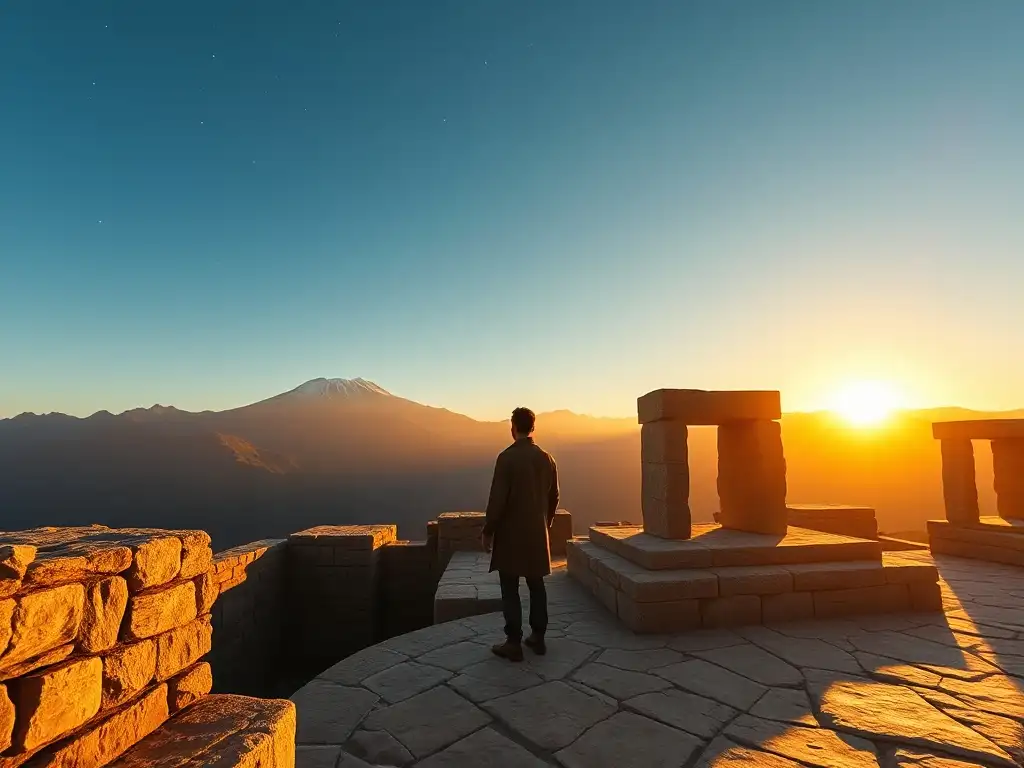
Unravel the mysteries of a lost world… Prepare to be amazed by the ingenuity of the Andean civilizations. From the intricate artistry of the Nazca Lines to the architectural marvels of Machu Picchu, their legacy endures. But did you know the Incas possessed a sophisticated understanding of astronomy, far beyond what was once believed? Dive into the fascinating world of Inca astronomical calculations and discover how these ancient sky watchers charted the heavens, leaving behind a celestial legacy that continues to intrigue us today.
The Inca Empire, renowned for its sophisticated engineering and intricate social structures, also possessed a deep understanding of astronomy. Far from simply observing the celestial bodies, the Inca people integrated astronomical knowledge into their daily lives, religious practices, and agricultural cycles. This intricate relationship between the heavens and earthly affairs is reflected in their sophisticated calendar systems, precise agricultural practices, and the orientation of their monumental architecture.
Understanding Inca astronomical calculations reveals a civilization deeply connected to the cosmos, demonstrating a level of scientific sophistication that continues to fascinate and inspire researchers today. This article delves into the methods and significance of Inca astronomy, exploring how their observations shaped their worldview and influenced the development of their remarkable civilization.
We will examine their observational techniques, the tools they employed, and the profound impact their astronomical knowledge had on Inca society. The study of Inca astronomical calculations offers a unique window into the intellectual and spiritual life of this remarkable Andean civilization.
Introduction to Inca Astronomy and its Significance
Inca astronomy wasn't a purely theoretical pursuit; it was inextricably linked to the practicalities of life. The Inca calendar, for instance, wasn't just a way to track time; it was a vital tool for planning agricultural activities. The precise timing of planting and harvesting was crucial for their survival, and astronomical observations provided the necessary data.
The rising and setting of specific constellations signaled the optimal times for sowing and reaping various crops, ensuring food security for the vast Inca population. Furthermore, religious ceremonies and festivals were meticulously aligned with celestial events, demonstrating the profound influence of astronomy on Inca religious beliefs and practices. The Inca's understanding of the solstices and equinoxes, for example, played a key role in their elaborate rituals and symbolic architecture.
This deep integration of astronomy into the fabric of Inca society highlights its significance beyond mere scientific observation. It was a fundamental element of their worldview, shaping their social structures, religious practices, and their very relationship with the natural world. The accuracy of their astronomical calculations, evidenced by the precise alignment of many Inca structures, speaks volumes about their observational skills and advanced understanding of celestial mechanics.
Inca Astronomical Observations: Methods and Tools
Inca astronomers, unlike their counterparts in other ancient civilizations, didn't leave behind written records detailing their methods. Our understanding is largely based on archaeological evidence, such as the precise alignment of buildings and the arrangement of ceremonial sites. One of the most striking examples is the alignment of many Inca structures with the solstices and equinoxes. These alignments were not accidental; they were carefully planned and executed, demonstrating a sophisticated understanding of celestial movements. While they lacked sophisticated instruments like telescopes, the Inca utilized a range of ingenious tools and techniques for their observations. These included:
- Careful observation of the sun's path: The Inca meticulously tracked the sun's movements throughout the year, noting its position at solstices and equinoxes. This allowed them to develop a highly accurate solar calendar.
- Observation of stars and constellations: Specific constellations held significant religious and agricultural meaning, their appearance signaling important times of the year. The Inca likely used prominent landmarks and natural features to track the positions of these stars.
- Use of gnomons: Simple gnomons, essentially vertical sticks or poles, were likely used to measure the sun's shadow and determine the time of day and the solstices.
- Observatories: While not as elaborate as some observatories in other cultures, specific locations, possibly elevated vantage points or specially designed structures, likely served as dedicated observation points. Further research is needed to fully understand the nature and function of these potential observatories.
The Inca’s methods, though seemingly rudimentary compared to modern techniques, were remarkably effective in providing the astronomical data necessary for their agricultural, religious, and societal needs. The accuracy of their observations, reflected in the precise alignment of their buildings and the effectiveness of their agricultural practices, stands as a testament to their keen observation skills and deep understanding of the celestial realm. Further research into Inca astronomical calculations promises to uncover even more about this fascinating aspect of their civilization.
The Role of the Sun in Inca Cosmovision
The Inca worldview was deeply intertwined with the celestial bodies, particularly the sun. Inti, the sun god, wasn't simply a deity; he was the very source of life, the driving force behind the Inca empire's agricultural success, and a central figure in their religious and social structure. The sun's daily journey across the sky, its seasonal variations, and its power over the weather were all meticulously observed and incorporated into Inca society's functioning. The Inca's understanding of the sun's movements wasn't merely an intellectual exercise; it was a fundamental aspect of their survival and prosperity.
Accurate predictions of solstices and equinoxes were crucial for planning agricultural cycles, determining the timing of religious festivals, and ensuring the overall well-being of the empire. Their sophisticated astronomical observations, therefore, were not purely scientific endeavors but deeply embedded within their spiritual and practical lives. The sun's influence extended beyond the physical realm; it shaped their beliefs, their rituals, and their governance.
The Inca's ability to predict solar events with remarkable accuracy demonstrates a sophisticated understanding of astronomy and its implications for their society. This intricate relationship between the Inca and the sun underscores the profound connection between their culture and the natural world. The Inca's success in agriculture and their imperial expansion were inextricably linked to their deep understanding and reverence for the sun.
Inti: The Inca Sun God
Inti, the Inca sun god, held supreme importance in Inca cosmology. He was not just a deity but the source of all life and energy, the father of the Inca royal lineage, and the ultimate guarantor of the empire's prosperity. Depicted as a powerful and radiant figure, Inti was revered through elaborate rituals, sacrifices, and grand festivals.
Temples dedicated to Inti, such as the Coricancha in Cusco, were magnificent structures, adorned with gold and silver, reflecting the immense wealth and power associated with the sun god. The Inca believed that Inti's favor was essential for successful harvests, military victories, and the overall well-being of the empire. Royal lineage was directly tied to Inti, legitimizing the Inca emperor's authority and reinforcing his divine right to rule.
The Inca's profound devotion to Inti shaped every aspect of their lives, from daily routines to grand state ceremonies. Understanding Inti's role is key to understanding the Inca's worldview and their intricate relationship with the cosmos. The veneration of Inti was not just a religious practice; it was a fundamental element of Inca political and social order.
Solar Festivals and Rituals
The Inca calendar was meticulously structured around the sun's movements, resulting in a series of significant solar festivals and rituals. These events were not simply celebrations; they were crucial ceremonies aimed at maintaining harmony between the human world and the celestial realm. The Inti Raymi, the most important festival, celebrated the winter solstice, marking the sun's return to strength and promising renewed life and prosperity.
This festival involved elaborate processions, sacrifices, and feasting, with the Inca emperor playing a central role. Other significant festivals were associated with the solstices and equinoxes, each with its own specific rituals and significance. These celebrations provided opportunities for reaffirming social bonds, reinforcing the Inca's relationship with Inti, and ensuring a bountiful harvest.
The precise astronomical observations underpinning the timing of these festivals highlight the Inca's advanced understanding of the sun's movements and their ability to integrate this knowledge into their social and religious practices. The elaborate nature of these rituals underscores the paramount importance of the sun in Inca society. The festivals were not merely religious events but also crucial social and political gatherings, reinforcing the Inca's power and consolidating their control over the empire.
The Importance of the Moon in Inca Culture
While the sun held paramount importance, the moon also played a significant role in Inca culture and daily life. Quilla, the moon goddess, was revered as a powerful deity, associated with fertility, femininity, and the cyclical nature of life. Unlike the sun's seemingly constant power, the moon's phases were seen as reflecting the cyclical changes in nature and the human world.
The Inca's meticulous observation of the moon's phases was not just a matter of astronomical interest; it was intimately linked to their agricultural practices, religious beliefs, and social organization. The moon's influence on the tides, the weather, and the growth of crops was recognized and incorporated into their understanding of the natural world.
The moon's cycles provided a framework for organizing time, regulating agricultural activities, and predicting important events. The Inca’s keen awareness of lunar patterns demonstrates their sophisticated understanding of celestial mechanics and their remarkable ability to apply this knowledge to practical aspects of their lives.
Quilla: The Inca Moon Goddess
Quilla, the Inca moon goddess, held a prominent position in Inca mythology and religious practices. She was often depicted as a female deity, associated with femininity, fertility, and the cyclical nature of life and death. Unlike Inti, the sun god, who represented strength and power, Quilla embodied the rhythms and cycles of nature.
Her phases, from new moon to full moon, were seen as mirroring the changing seasons and the ebb and flow of life. Quilla was worshipped through rituals and offerings, reflecting her importance in the Inca worldview. Her connection to fertility was particularly significant, influencing agricultural practices and rituals related to reproduction.
The Inca's understanding of Quilla's influence on the natural world highlights their sophisticated astronomical knowledge and their deeply spiritual relationship with the cosmos. The reverence for Quilla reveals a more nuanced understanding of the celestial bodies, beyond the dominant role of the sun god. Her symbolic representation provides valuable insight into the complexities of Inca religious beliefs and their intricate connection with nature.
Lunar Cycles and Agricultural Practices
The Inca's agricultural practices were intricately linked to the lunar cycles. The phases of the moon were carefully observed and used to determine the optimal times for planting, harvesting, and other agricultural activities. The Inca believed that certain lunar phases were more favorable for planting specific crops, while others were better suited for harvesting.
This knowledge, passed down through generations, allowed them to maximize their crop yields and ensure food security for their vast empire. The Inca's understanding of the moon's influence on plant growth and the timing of agricultural activities demonstrates their profound connection with the natural world and their practical application of astronomical knowledge. This detailed understanding of lunar cycles, combined with their knowledge of solar patterns, enabled the Inca to develop highly efficient and sustainable agricultural systems, contributing significantly to the empire's prosperity and stability.
Their ability to accurately predict lunar patterns and integrate this knowledge into their agricultural practices highlights their sophisticated astronomical observations and their practical application of this knowledge for the benefit of their society. The close relationship between lunar cycles and agricultural practices showcases the Inca's deep understanding of the interconnectedness of the celestial and terrestrial realms.
Inca Constellations and Star Lore
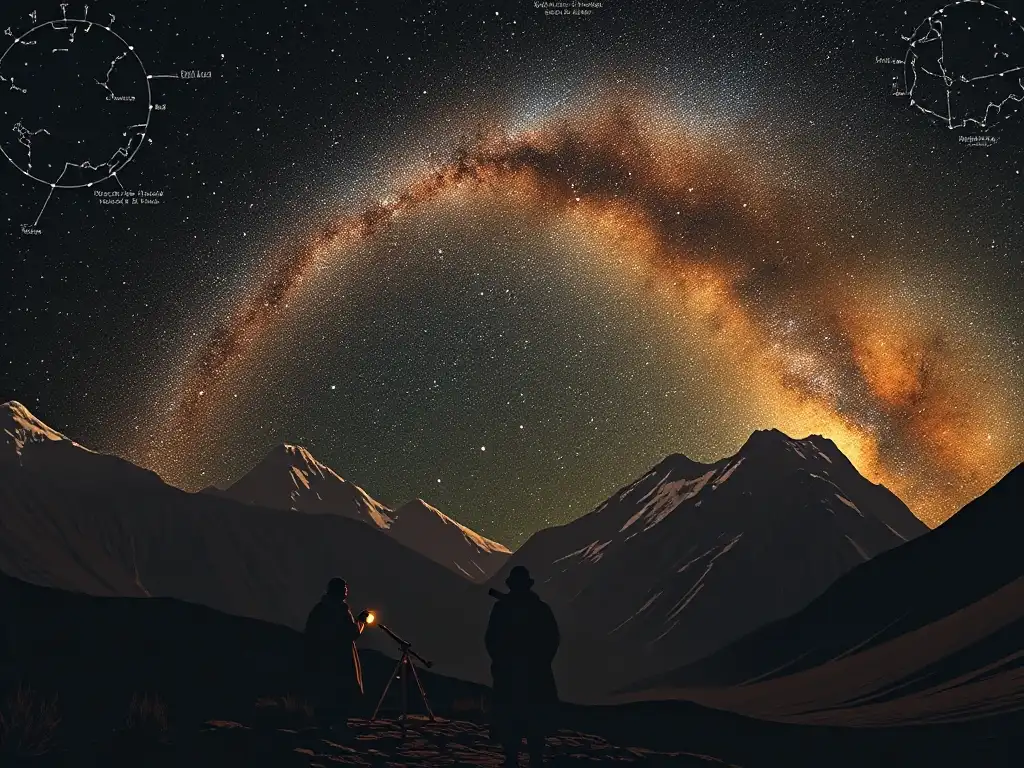
Inca astronomy wasn't solely about precise calculations; it was deeply intertwined with their mythology and worldview. The Inca people didn't possess written language in the same way as many other ancient civilizations, so their understanding of the cosmos was passed down through oral traditions, stories, and carefully observed celestial events. Their constellations, unlike those of the Greeks or other cultures, weren't typically represented by anthropomorphic figures or animals.
Instead, they often reflected the landscape and the animals important to their daily lives. For example, specific star groupings might have represented llamas, condors, or significant mountains. These constellations were not static; their interpretations likely varied across different regions and communities within the vast Inca Empire, reflecting local variations in both mythology and the visible sky.
The stories associated with these constellations served not only to explain the night sky but also to transmit important cultural values and beliefs from one generation to the next. The oral tradition ensured the continuity of this astronomical knowledge, strengthening the connection between the Incas and their perceived place within the cosmos.
Identifying Key Star Patterns
Identifying specific star patterns was crucial for Inca astronomical practices. While they lacked sophisticated instruments like astrolabes, their keen observational skills allowed them to recognize and track the movements of key celestial bodies. Their observations focused particularly on the brightest stars and constellations, which were used to mark important seasonal changes.
Many of these observations were likely made with the naked eye, honed over generations of careful observation. The precise methods used to identify and record these patterns are still under investigation by scholars, but evidence suggests that they employed mnemonic devices and oral traditions to transmit this knowledge accurately. This involved associating specific star configurations with landmarks, agricultural cycles, or mythological narratives.
The accuracy of their star identification is evident in the precision with which they aligned their monumental structures, such as Machu Picchu, with significant celestial events. Further research into Inca astronomical records and archeological findings continues to shed light on the sophisticated methods they employed for celestial navigation.
The Significance of the Milky Way
The Milky Way held a particularly prominent place in Inca cosmology. It wasn't simply a band of light across the night sky but a powerful symbol often associated with the Mayu, the river, a fundamental element in Inca life and spirituality. The Milky Way's celestial river was seen as a counterpart to the earthly rivers that sustained life in the Andean region.
This connection reinforced the cyclical nature of life and the importance of water in their agricultural practices. The Milky Way's position in the sky was used to mark the solstices and equinoxes, signifying crucial moments in the agricultural calendar.
The celestial river's position and movement were carefully observed and interpreted as signs indicating favorable or unfavorable conditions for planting and harvesting. The significance of the Milky Way demonstrates the deep integration of astronomy into the Inca worldview, where celestial phenomena were not separate from the everyday realities of life.
Inca Astronomical Calculations: Precision and Purpose
The Inca's understanding of astronomy went far beyond simple observation. They developed sophisticated techniques for making astronomical calculations, crucial for regulating their agricultural practices and societal organization. Although they did not have a written number system comparable to those of other ancient civilizations, their understanding of celestial cycles and their ability to predict them were remarkably precise.
This precision wasn't achieved through complex mathematical formulas in the Western sense, but rather through meticulous observation, carefully maintained oral traditions, and practical applications of their astronomical knowledge. The accuracy of their predictions is a testament to their deep understanding of the natural world and their ability to integrate this knowledge into their daily lives.
Inca Mathematical Skills and Measurement
While the Inca did not utilize a written numerical system like the Egyptians or Romans, they possessed advanced mathematical skills vital for their astronomical observations and engineering feats. They employed sophisticated methods of counting and measurement, likely based on a quipu system (a system of knotted cords). This system, while not directly representing numerical values in the way we understand them today, allowed for the recording and manipulation of large quantities of data, including astronomical observations and agricultural yields.
Their ability to construct massive structures like Sacsayhuamán, with its precisely fitted stones, demonstrates a high level of geometrical understanding and practical application of mathematical principles. While the exact methods are still being researched, it's evident that their mathematical and engineering skills were intricately connected to their astronomical knowledge, enabling them to plan and execute complex projects with remarkable accuracy.
Using Astronomy for Agriculture and Calendar Creation
Inca astronomical calculations were fundamentally linked to their agricultural practices and the creation of their calendar. By observing the movements of the sun, moon, and stars, they could accurately predict the seasons and plan their planting and harvesting cycles. The solstices and equinoxes were particularly important, marking crucial times for agricultural activities. Their calendar, based on a combination of solar and lunar cycles, allowed them to manage resources effectively and ensure food security for their vast population.
This intricate understanding of celestial movements and their impact on agriculture was essential to their success as an empire. The precision of their agricultural calendar, evident in their ability to sustain a large population through intensive farming techniques, underscores the critical role of astronomy in the Inca civilization. This close relationship between astronomy and agriculture highlights the practical application of their astronomical knowledge and its profound impact on Inca society.
Inca Observatories and Sacred Sites
The Inca civilization, renowned for its sophisticated engineering and intricate social structures, possessed a deep understanding of astronomy. This knowledge wasn't merely academic; it was deeply interwoven with their daily lives, religious beliefs, and societal organization. Inca astronomers, likely a specialized priestly class, meticulously observed the celestial movements, using this knowledge to inform agricultural practices, religious rituals, and even urban planning.
Their observations weren't conducted in isolated observatories in the modern sense, but rather integrated into sacred sites strategically located across the vast Inca empire. These sites, often perched high in the Andes mountains, provided clear views of the night sky, minimizing atmospheric interference. The precise locations were selected based on their astronomical significance, often aligning with solstices or equinoxes.
The Inca's understanding of the cosmos wasn't just about charting the heavens; it was about understanding their place within a larger, divinely ordained order. The accuracy of their observations, considering the available technology, is remarkable and speaks to their dedication and expertise.
The Intihuatana Stones
Among the most intriguing Inca astronomical features are the Intihuatana stones. These intricately carved stones, found at various sacred sites throughout the empire, including Machu Picchu, are believed to have served as astronomical instruments. While their exact function remains a subject of ongoing debate among archaeologists and scholars, the prevailing theory suggests that they were used to mark the solstices and equinoxes, aligning with the sun's path across the sky.
The precision of their construction is astonishing; some Intihuatana stones are perfectly aligned with the cardinal directions, demonstrating a sophisticated understanding of geometry and surveying. The name itself, "Intihuatana," translates to "where the sun is tied," reflecting the stone's perceived role in controlling or anchoring the sun's journey. The stones weren't simply markers; they were powerful symbols of the Inca's connection to the cosmos and the sun's life-giving energy, crucial for their agricultural society.
Further research is needed to fully elucidate their function, but their astronomical significance is undeniable. Analysis of their orientation and alignment with celestial events continues to reveal new insights into Inca astronomical practices.
Coricancha: The Temple of the Sun
Coricancha, located in Cusco, the Inca capital, was the most significant religious center in the empire. This "Temple of the Sun" was not only a place of worship but also a sophisticated astronomical observatory. Its architecture was meticulously designed to align with the sun's movements, particularly during solstices and equinoxes.
The temple's precise orientation allowed for the observation of the sun's path throughout the year, providing crucial information for agricultural planning and religious calendrical cycles. The walls of Coricancha were said to be adorned with gold, further emphasizing the sun's importance in Inca cosmology. The temple's design allowed for the precise tracking of the sun's position, enabling the Inca to predict solstices and equinoxes with remarkable accuracy.
This knowledge was essential for regulating the agricultural calendar and maintaining the social order, demonstrating the deep integration of astronomy into their daily lives and religious beliefs. The meticulous planning and execution of Coricancha's construction underscore the Inca's advanced understanding of astronomy and its central role in their society.
Inca Astronomy and its Impact on Society
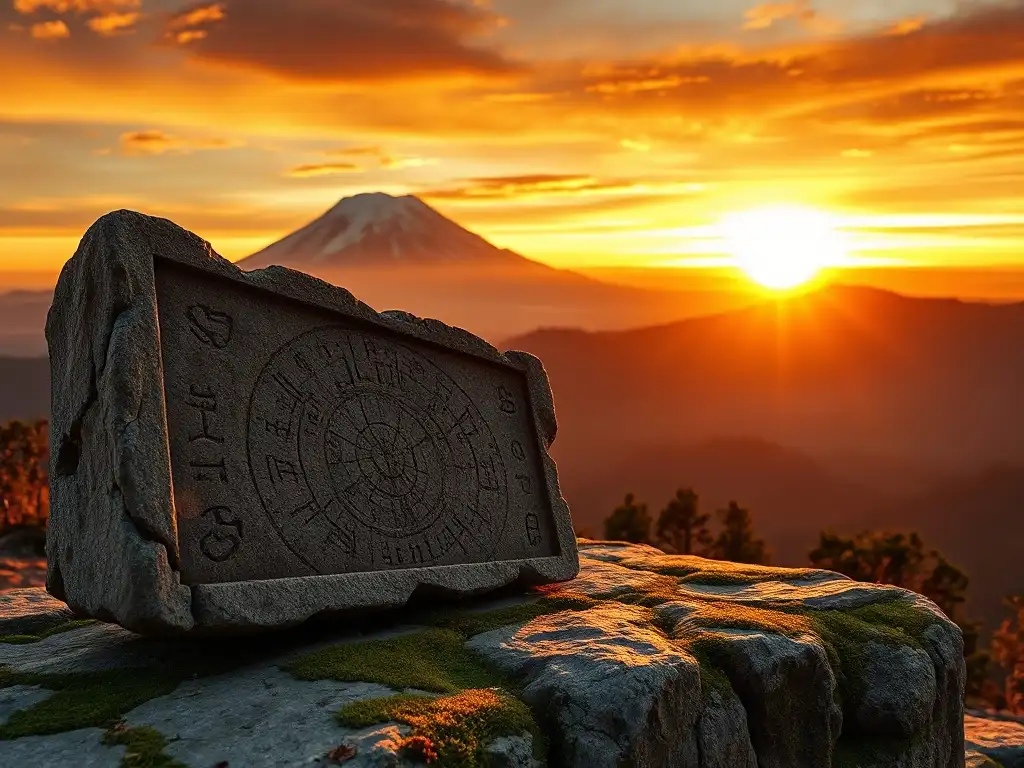
The Inca's mastery of astronomical calculations wasn't simply a matter of intellectual curiosity; it profoundly impacted various aspects of their society. Their understanding of celestial cycles was integral to their agricultural practices, religious beliefs, and even their urban planning. The close connection between the heavens and earthly life is clearly evident in their architectural designs, religious rituals, and social structures. The influence of Inca astronomical calculations is visible throughout their civilization, showcasing the sophisticated way they integrated their knowledge of the cosmos into their daily lives.
Influence on Architecture and City Planning
Inca architecture and city planning demonstrate a clear understanding and application of astronomical principles. Cities like Cusco were designed with a strong alignment to the solstices and equinoxes. The placement of buildings, streets, and canals often reflects a deliberate attempt to align with the sun's path, emphasizing the importance of celestial events in their urban planning.
This meticulous attention to astronomical alignment is not only aesthetically pleasing but also reveals a sophisticated understanding of geometry and surveying. The precision in the construction of their buildings and the alignment of key structures with the cardinal directions and celestial events show an advanced level of astronomical knowledge and its practical application in urban design. The Inca’s understanding of astronomy is not just reflected in their religious sites but also in their everyday environment, indicating the deep integration of astronomical knowledge into their lives.
Integration into Religious Beliefs and Practices
Inca religious beliefs and practices were deeply intertwined with their astronomical observations. The sun, moon, and stars were seen as powerful deities, and their movements were carefully observed and interpreted. Religious festivals and rituals were often timed to coincide with significant celestial events, such as solstices and equinoxes. The Inca calendar, closely tied to their astronomical knowledge, played a crucial role in organizing their agricultural cycles and religious celebrations.
This close relationship between astronomy and religion underscores the central role that the cosmos played in their worldview. The Inca's deep understanding of the heavens informed not only their practical lives but also their spiritual beliefs, highlighting the profound impact of astronomical calculations on their society and culture. The intricate relationship between their astronomical knowledge and religious practices showcases the deep integration of these aspects in Inca society.
The Legacy of Inca Astronomy
The Inca legacy in astronomy is profound and multifaceted, extending far beyond simple calendar-keeping. Their intricate understanding of celestial movements shaped their societal structures, agricultural practices, and religious beliefs. This wasn't merely a passive observation of the stars; the Inca actively engaged with the cosmos, interpreting celestial events to inform crucial decisions impacting their entire empire.
Their sophisticated knowledge allowed for precise predictions of solstices and equinoxes, crucial for planning agricultural cycles and religious ceremonies. The Inca calendar, though not as precisely documented as some other ancient calendars, clearly demonstrates a deep understanding of the movements of the sun, moon, and stars. Evidence suggests a complex system of observation, using landmarks and carefully positioned structures to track celestial bodies.
This wasn't confined to a priestly class; astronomical knowledge likely permeated Inca society, influencing daily life from the emperor to the common farmer. The legacy continues to inspire awe and curiosity, prompting ongoing research to unravel the complexities of their celestial knowledge. The precision and sophistication of their astronomical insights are a testament to their intellectual capabilities and their deep connection with the natural world.
Modern Understanding of Inca Astronomical Knowledge
Modern understanding of Inca astronomical knowledge is built upon painstaking archaeological research, anthropological studies, and the careful interpretation of surviving records. While written records are scarce, the Inca's architectural marvels, such as Machu Picchu and Sacsayhuamán, offer invaluable insights. The precise alignment of structures with significant celestial events suggests a deliberate integration of astronomy into urban planning.
For example, the orientation of certain buildings and windows in Machu Picchu aligns with the solstices, allowing for precise tracking of the sun's annual journey. Furthermore, the study of Inca iconography and textiles reveals symbolic representations of constellations and celestial phenomena, providing further clues to their astronomical understanding. Researchers are increasingly using advanced technologies, such as computer modeling and digital mapping, to analyze the spatial relationships within Inca sites and to recreate their celestial observations.
This interdisciplinary approach, combining archaeology, anthropology, and astronomy, continues to refine our understanding of Inca astronomical calculations and their broader significance within Inca society. The ongoing research highlights the complexity and sophistication of their knowledge, challenging previous assumptions and revealing a more nuanced picture of Inca civilization.
Continuing the Study of Inca Celestial Practices
The study of Inca celestial practices is a vibrant and ongoing field of research. Many questions remain unanswered, requiring further investigation to fully comprehend the intricacies of their astronomical knowledge. Future research will likely focus on several key areas: more detailed analysis of existing archaeological sites to identify additional astronomical alignments; a deeper exploration of Inca mythology and cosmology to understand the cultural and religious context of their celestial observations; and the development of more sophisticated computational models to simulate the Inca's astronomical calculations and predictions.
The collaboration between specialists in archaeology, anthropology, astronomy, and other related fields is crucial to continue advancing our understanding. New discoveries and innovative research methods promise to reveal even more about the Inca's sophisticated understanding of the cosmos and its influence on their lives.
This ongoing research not only sheds light on Inca civilization but also contributes to a broader understanding of the development of astronomy in ancient societies worldwide. The intricate connection between the Inca and their celestial environment remains a compelling area of study for years to come.
Conclusion: The Profound Impact of Inca Astronomy
Inca astronomical calculations were far from rudimentary; they represented a sophisticated understanding of celestial mechanics deeply interwoven with their culture, religion, and daily life. Their precise observations and architectural alignments demonstrate a remarkable level of technological and intellectual achievement. The legacy of Inca astronomy extends beyond its practical applications in agriculture and calendar-keeping; it speaks to a profound connection between humanity and the cosmos, a worldview that shaped their society and continues to inspire awe and wonder today. The ongoing research continues to unveil the complexities of Inca astronomical practices, challenging preconceived notions and revealing the depth and breadth of their knowledge. Understanding Inca astronomy provides not only a glimpse into their past but also valuable insights into the human capacity for scientific observation and the enduring power of celestial events to shape human civilizations. The study of Inca astronomical calculations is a testament to the enduring fascination with the cosmos and the rich tapestry of human ingenuity.
- Introduction to Inca Astronomy and its Significance
- Inca Astronomical Observations: Methods and Tools
- The Role of the Sun in Inca Cosmovision
- The Importance of the Moon in Inca Culture
- Inca Constellations and Star Lore
- Inca Astronomical Calculations: Precision and Purpose
- Inca Observatories and Sacred Sites
- Inca Astronomy and its Impact on Society
- The Legacy of Inca Astronomy
- Conclusion: The Profound Impact of Inca Astronomy
Frequently Asked Questions
What was the Incas' primary tool for astronomical observations?
The Incas primarily used carefully positioned structures like temples and intihuatanas (solar observatories) to track celestial movements. They also relied on skilled observers who meticulously recorded their findings.
How accurate were the Inca astronomical calculations?
Inca astronomical calculations were remarkably accurate for their time, allowing them to predict seasonal changes and agricultural cycles with precision. This knowledge was essential for their survival.
Did the Inca calendar rely on astronomical observations?
Yes, the Inca calendar was intricately linked to astronomical observations. The agricultural cycle was directly tied to the solar and lunar movements, as reflected in their precise calendar system.
What role did astronomy play in Inca religion and society?
Astronomy played a pivotal role in Inca religion and society. Celestial events were believed to influence daily life and agricultural success, and were incorporated into religious rituals and festivals.
Beyond the sun, what other celestial bodies did the Inca study?
The Incas studied the moon, stars, and constellations, using their movements to enhance their understanding of time and the cosmos. This knowledge informed their religious beliefs and agricultural practices.
Final Reflection: Echoes of the Andes in the Cosmos
The Inca understanding of astronomy wasn't merely a scientific pursuit; it was the very foundation of their societal structure, a deeply interwoven tapestry of spirituality, agriculture, and governance. Their meticulous observations of celestial bodies, far from being a relic of the past, offer a powerful lens through which to examine our own relationship with the cosmos and the importance of understanding our place within it. The precision of their calculations, even with limited technology, stands as a testament to human ingenuity and the enduring power of observation.
The Inca's profound connection to the stars continues to resonate today, reminding us of the interconnectedness of all things. Their sophisticated calendar systems, aligned with agricultural cycles and religious ceremonies, highlight the vital role astronomy played in shaping their culture and society. The universe is written in the language of mathematics, and its characters are triangles, circles, and other geometrical figures,
Galileo Galilei once wrote, a sentiment that echoes the Inca's own mathematical approach to understanding the heavens. Their legacy challenges us to reconsider our own assumptions about the relationship between science and spirituality, reminding us that knowledge can be both practical and profoundly meaningful.
Consider, for a moment, the vastness of the night sky and the intricate patterns woven within it. The Inca, with their keen eyes and deep understanding, charted those patterns, creating a system that guided their lives and shaped their civilization. You too, can find your own path to understanding the cosmos, whether through scientific inquiry, artistic expression, or simply by taking a moment to gaze at the stars. Let the legacy of the Inca inspire you to look beyond the everyday, to seek deeper connections, and to appreciate the enduring power of human observation and ingenuity.
Unveil the Secrets of the Andean Sky!
Thank you for exploring the fascinating connection between Inca civilization and astronomy. You've learned how ancient Peruvians used their understanding of the cosmos to guide their agricultural practices and spiritual beliefs. Now, let's delve deeper and integrate this astronomical knowledge into your own life!
**Take the next steps:**
- **Explore the Stars:** Use a telescope or a stargazing app to identify constellations and celestial events, just as the Incas did. Regularly observe the night sky and connect what you see with the rich tapestry of Inca mythology and traditions.
- **Share Your Discoveries:** Connect with fellow astronomy enthusiasts by joining online forums or local astronomy clubs. Share your observations, photographs, and stories about the Inca's astronomical heritage.
- **Engage with History:** Visit a museum showcasing Andean artifacts, or plan a trip to sites significant in Inca astronomy. Immerse yourself in the wonders of this ancient culture and deepen your understanding.
What celestial wonder will capture your attention next, and how will it enrich your daily life?