
Atahualpa's Wealth: The Riches That Lured the Spanish to the Andes

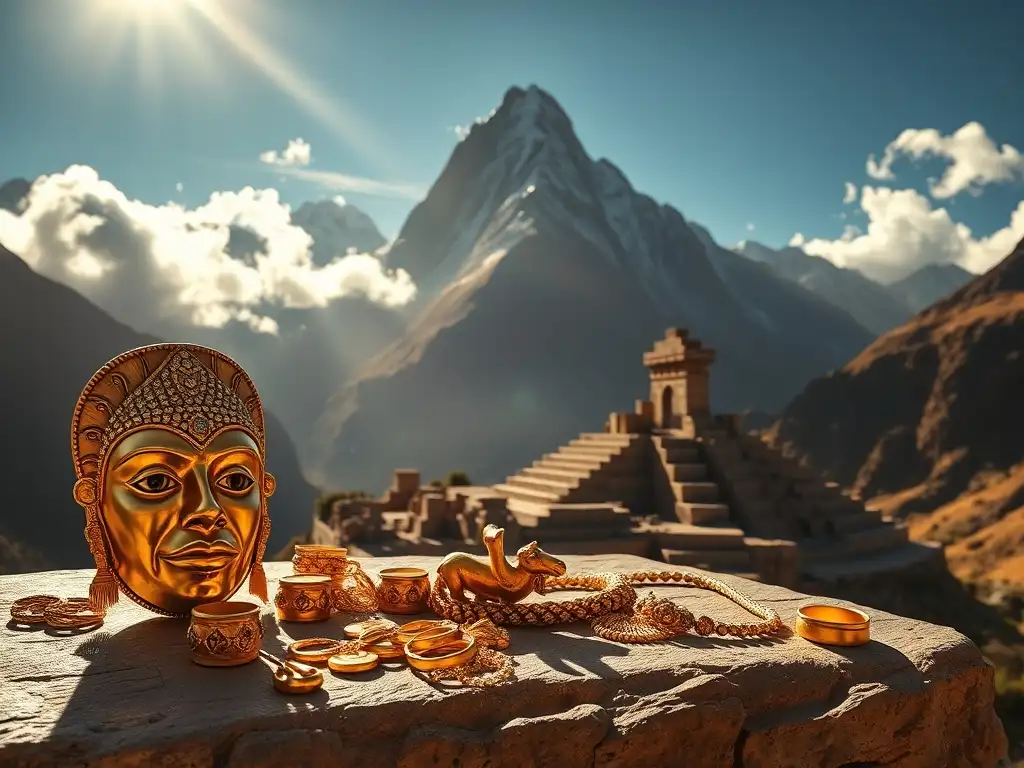
Step into a world lost to time, where the echoes of empires still resonate. Imagine mountains steeped in gold, a civilization unmatched in its artistry and ingenuity. Atahualpa's gold treasures whisper tales of the Inca empire's breathtaking wealth – a fortune so vast it ignited the Spanish Conquest. Dare to uncover the secrets behind this legendary hoard and the fate of the Andean civilizations in our exploration of “Atahualpa's Wealth: The Riches That Lured the Spanish to the Andes.” Journey with us…
The Spanish conquest of the Inca Empire, a pivotal moment in South American history, was fueled by more than just ambition and the thirst for power. The legendary wealth of the Inca, particularly that amassed by the last Sapa Inca, Atahualpa, played a crucial role in attracting the Spanish conquistadors to the Andes. This article delves into the allure of Inca gold and other riches, exploring the vast resources controlled by Atahualpa and the Inca Empire, and demonstrating how these treasures ultimately sealed the fate of a powerful civilization.
We will examine the extent of Inca wealth, both in terms of the empire's overall resources and Atahualpa's personal possessions, revealing the scale of the prize that ignited the Spanish conquest and forever altered the course of Andean history. Understanding Atahualpa's wealth is key to understanding the dynamics of the conquest itself, offering a compelling perspective on this transformative period.
The sheer magnitude of the Inca's gold and silver, along with other precious artifacts, served as a powerful magnet, drawing Francisco Pizarro and his men across the ocean and into a confrontation that would result in the downfall of a sophisticated and thriving civilization. The story of Atahualpa’s wealth is thus inextricably linked to the story of the Spanish conquest, highlighting the devastating consequences of unchecked greed and the enduring legacy of the Inca Empire.
The Allure of Inca Gold: Setting the Stage for Conquest
The Inca Empire, at its zenith, controlled a vast territory encompassing much of the Andes Mountains. Their sophisticated economy was based on a complex system of tribute and redistribution, resulting in the accumulation of immense wealth. Gold, in particular, held immense symbolic significance within Inca culture, representing the sun god Inti and serving as a powerful symbol of royal authority.
Inca artisans were renowned for their mastery of goldsmithing, creating intricate and beautiful objects that further enhanced the allure of their treasure. News of this abundance, exaggerated though it may have been by early explorers and conquistadors, fueled the Spanish ambition.
The stories of cities paved with gold, temples adorned with precious metals, and royal palaces overflowing with riches spread rapidly throughout Europe, igniting a feverish desire for conquest amongst the Spanish. This initial fascination with the potential riches of the Inca Empire provided the essential impetus for the perilous journey across the ocean and the subsequent brutal conquest.
Atahualpa and the Inca Empire's Vast Resources
Atahualpa, the last Sapa Inca to rule before the Spanish conquest, inherited an empire at the peak of its power. His reign, though brief, witnessed the culmination of centuries of Inca expansion and economic prosperity. The resources under his control were staggering, encompassing not just gold and silver, but also vast quantities of agricultural produce, textiles, livestock, and human labor.
The Inca controlled a sophisticated system of agriculture, including terraced farming and irrigation systems, ensuring a surplus of food that supported a large population and a powerful military. This economic strength undergirded the Inca Empire's military might and political influence, making it a highly desirable target for the ambitious Spanish conquistadors. The Inca's control over significant mineral resources, including gold and silver mines, further enhanced their wealth and power, solidifying their position as a target for Spanish conquest.
The Extent of Inca Wealth and Power
The Inca Empire's wealth was not merely a matter of precious metals; it was a reflection of their mastery over their environment and their ability to mobilize the resources of a vast population. Their economic system was highly organized, with a complex network of roads, warehouses, and administrative officials ensuring the efficient distribution of goods and resources throughout the empire.
This organizational prowess facilitated the accumulation of vast surpluses, which were used to support the imperial court, fund public works projects, and maintain a powerful army. The Inca's control over resources extended far beyond gold and silver, encompassing fertile agricultural lands, abundant livestock, and skilled artisans.
[Specific information pending: Precise figures on the overall economic output of the Inca Empire are difficult to obtain due to the limitations of historical records, but further research can provide a more detailed quantitative analysis]. This multifaceted wealth contributed significantly to the Empire's strength and stability, making it an exceptionally attractive prize for the Spanish.
Atahualpa's Personal Riches and Possessions
Beyond the immense resources of the Inca Empire as a whole, Atahualpa himself possessed considerable personal wealth. As the Sapa Inca, he controlled access to the royal treasury, which contained vast quantities of gold, silver, and other precious objects. His personal possessions included elaborate clothing adorned with gold and jewels, ceremonial objects crafted from precious metals, and a vast collection of artifacts reflecting the Inca's artistic and cultural achievements.
[Specific information pending: Detailed inventories of Atahualpa's personal possessions are scarce, but archaeological finds and historical accounts can provide further insights]. These personal treasures, in addition to his control over the empire's resources, made Atahualpa a particularly tempting target for Pizarro and his men.
The ransom he offered—a room filled with gold and another filled twice over with silver—highlights the immense personal wealth he commanded, a wealth that ultimately contributed to his demise. The allure of this extraordinary personal wealth significantly influenced the events of the conquest, making Atahualpa's capture a pivotal moment in the Spanish conquest of the Inca Empire.
The First Encounters: Tales of Andean Treasures
The initial encounters between the Spanish conquistadors and the Inca Empire were punctuated by awe-inspiring displays of Inca wealth. Early chronicles detail the sheer abundance of gold and silver ornaments, vessels, and religious artifacts that adorned Inca palaces and temples. These accounts, often exaggerated for dramatic effect, fueled the insatiable greed of the conquistadors, painting a picture of an empire overflowing with riches beyond European comprehension.
The sheer volume of precious metals, the intricate craftsmanship, and the sheer scale of the Inca’s use of these materials were unlike anything the Spanish had ever witnessed. The stories of lavish ceremonies, where gold and silver were used liberally, further intensified the desire for conquest. These early narratives, while sometimes unreliable in their specifics, undeniably established the reputation of the Inca Empire as a land of untold wealth, a perception that would drive the Spanish conquest for years to come.
Spanish Accounts of Inca Gold and Silver
Spanish chroniclers, such as Pedro Pizarro and chroniclers of the Royal Commentaries of the Incas, provide invaluable, albeit biased, insights into the Inca's use of gold and silver. Their accounts frequently describe massive quantities of gold and silver objects, from intricately crafted figurines and jewelry to colossal statues and ceremonial vessels. These writings often highlight the Inca's mastery of metallurgy, noting the techniques used to work with these precious metals, creating objects of remarkable beauty and sophistication.
However, it’s important to acknowledge the inherent bias in these accounts. The Spanish, driven by avarice and a desire to justify their conquest, often exaggerated the wealth of the Inca to legitimize their actions and to impress their audiences back in Europe.
Despite this bias, these accounts remain crucial primary sources for understanding the initial perceptions of Inca wealth by the conquistadors. Careful analysis, comparing multiple accounts and considering the context of their creation, allows for a more nuanced understanding of the reality of Inca wealth.
The Impact of Inca Wealth on European Imagination
The tales of Inca gold and silver profoundly impacted the European imagination. The sheer scale of the riches, previously unimaginable in Europe, sparked a wave of fascination and avarice. The descriptions of the Inca's sophisticated metalworking techniques and their lavish use of precious metals captivated European audiences, fueling further expeditions and conquests.
The narrative of the Inca’s wealth became inextricably linked to the justification of the Spanish conquest, portraying it as a divinely ordained mission to acquire these riches and bring the benefits of Christianity to the "New World." This narrative, disseminated through chronicles and other accounts, contributed to the widespread belief in the immense wealth of the Americas, stimulating further exploration and colonization. The impact can still be seen today in the enduring fascination with Inca gold and its representation in popular culture.
The Ransom of Atahualpa: A Mountain of Gold
The capture of Atahualpa, the last Sapa Inca, marked a pivotal moment in the Spanish conquest. Facing imprisonment and potential execution, Atahualpa offered an immense ransom in gold and silver to secure his freedom. The offer, initially dismissed by some of Pizarro's men, quickly became the focus of the entire expedition.
The scale of the proposed ransom was unprecedented: a room filled with gold to a height of one man, and a second room filled twice as high with silver. This staggering promise, a testament to the Inca Empire's vast wealth, captivated the Spanish conquistadors and ultimately shaped the course of the conquest. The sheer ambition of Atahualpa’s offer became legendary, illustrating the immense resources at the disposal of the Inca Empire and the desperate measures taken to secure survival.
The Offer and the Gathering of Inca Treasures
Atahualpa's offer spurred a frantic effort to gather the promised ransom. Messages were sent throughout the empire, demanding the delivery of gold and silver from conquered provinces and loyal subjects. The Inca nobility, facing the threat of Spanish retaliation, complied, contributing vast quantities of gold and silver artifacts and ornaments. The sheer scale of this operation is remarkable.
Thousands of people were mobilized to transport the precious metals to Cajamarca, where Atahualpa was held captive. The collection of the ransom revealed not only the Inca's wealth but also the centralized power of their empire and its ability to mobilize resources on a massive scale. The speed and efficiency with which the ransom was gathered underscore the Inca's extensive network and the power of their emperor.
The Composition of the Ransom: Gold, Silver, and Precious Stones
Atahualpa's ransom was far more than just gold and silver. While the bulk of the ransom consisted of these precious metals, it also included a significant quantity of precious stones, intricately worked into jewelry and ornaments. The gold was fashioned into various forms, from massive plates and statues to smaller figurines and jewelry. The silver, while less valuable than gold in Spanish estimation, was equally abundant.
The combination of gold, silver, and precious stones showcased the Inca's mastery of metalwork and their appreciation for luxury and artistry. The ransom was a testament to the sophistication of Inca craftsmanship and the vast resources at their disposal. The precise composition of the ransom, however, remains a subject of scholarly debate, with some details lost to history.
The Fate of Atahualpa's Ransom and Its Distribution
Despite fulfilling his promise, Atahualpa was ultimately executed by the Spanish. His ransom, a monumental accumulation of gold and silver, was quickly seized by Pizarro and his men. The distribution of the spoils was far from equitable, with Pizarro and his closest allies receiving the lion's share. The immense wealth obtained from the ransom fueled further Spanish conquests, financing expeditions into other parts of the Andes and beyond.
A significant portion of the gold and silver was shipped back to Spain, enriching the Spanish crown and further fueling the Spanish Empire's expansion. The fate of Atahualpa’s ransom serves as a stark reminder of the brutal realities of the Spanish conquest and the devastating impact it had on the Inca Empire and its people. The legacy of this wealth continues to shape our understanding of this pivotal moment in history.
The Reality Behind the Myth: The True Scale of Inca Riches
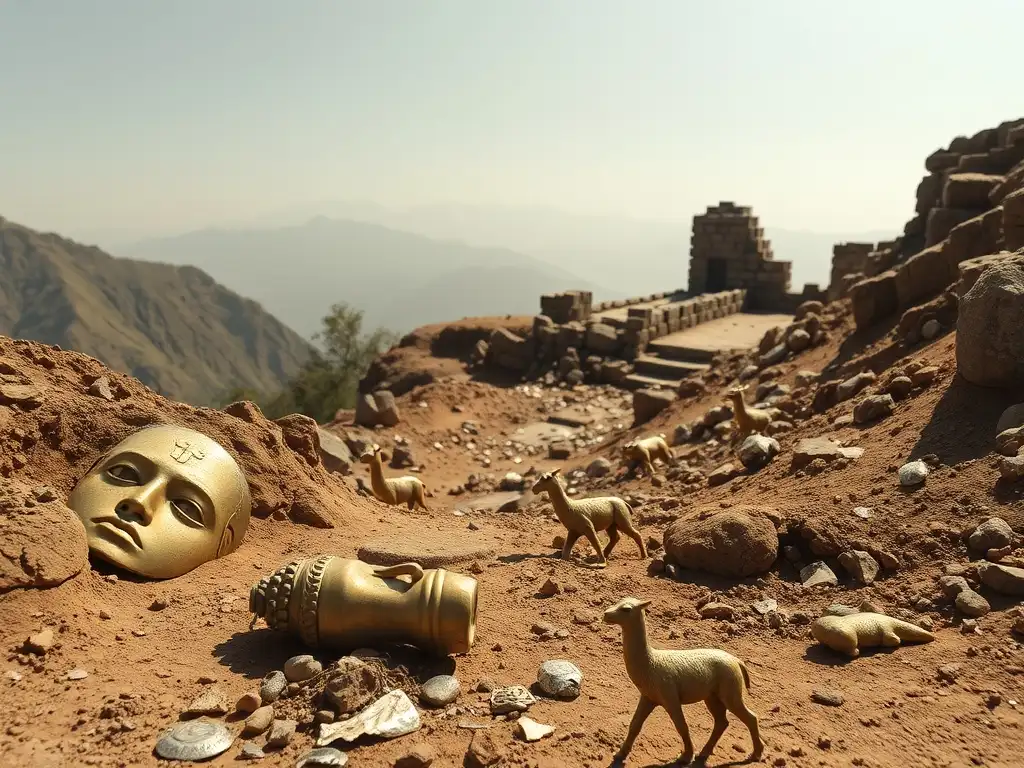
The legendary wealth of Atahualpa, the last Sapa Inca, has been dramatically amplified over the centuries. While the stories of rooms filled with gold and silver are captivating, the reality is more nuanced. The Inca Empire, while undeniably wealthy, didn't possess the vast, easily accessible treasure chests often depicted.
Their wealth was intricately tied to their sophisticated economic and agricultural systems, rather than simply mountains of precious metals. The Spanish conquistadors, fueled by rumors and their own avarice, greatly exaggerated the extent of the Inca's gold reserves to justify their conquest and subsequent plunder. Historians now believe that while significant quantities of gold and silver existed, it was distributed throughout the empire, often in the form of religious artifacts, adornments for elites, and ceremonial objects, not in easily accessible hoards.
The sheer scale of the empire, spanning thousands of miles across diverse terrains, also meant that resources were not centrally located. Understanding this distributed nature of Inca wealth is crucial to grasping the true impact of the conquest.
Beyond Gold: Inca Agricultural and Technological Wealth
The Inca empire's wealth extended far beyond gold and silver. Their mastery of agriculture, particularly terracing and irrigation techniques, enabled them to cultivate diverse crops in challenging Andean landscapes. This agricultural prowess produced surplus food, sustaining a large population and supporting a complex social structure.
Their technological achievements, such as sophisticated road networks, intricate stonework (evident in Machu Picchu and other sites), and advanced metallurgical skills (beyond gold and silver, they worked with copper and bronze), contributed significantly to their overall economic strength and prosperity. These achievements, often overlooked in discussions focused solely on gold, represent a more enduring and substantial form of wealth than easily plundered precious metals. The ingenuity and organizational skills required to create and maintain these systems are a testament to the Inca's economic and engineering prowess.
The Inca Economic System: A Foundation for Wealth
The Inca economic system was a complex and highly organized network based on a system of ayllu communities and mit'a labor. The ayllu were kinship-based groups responsible for cultivating land and contributing to community projects. The mit'a system involved a form of rotational labor service, where individuals contributed their time and skills to state projects, such as building infrastructure, agriculture, or mining. This system ensured a consistent flow of resources to the empire's center and supported large-scale projects.
The state controlled the production and distribution of goods, including textiles, ceramics, and agricultural products, further strengthening its economic power. This sophisticated system, rather than simple gold accumulation, was the true bedrock of Inca wealth and prosperity. It was this organized system that allowed the Inca to support their vast empire and its diverse population.
The Legacy of Atahualpa's Gold: Impact on the Conquest
The legend of Atahualpa's immense gold treasure significantly influenced the course of the Spanish conquest. The ransom offered by Atahualpa to secure his release – a room filled with gold and another with silver – fueled the Spanish conquistadors' insatiable greed and solidified their determination to conquer the Inca Empire. The sheer scale of the ransom, although ultimately insufficient to cover the Spanish demands, provided a tangible prize that spurred further exploration and conquest.
The pursuit of this wealth galvanized the Spanish soldiers and fueled their ambition, driving them to overcome the challenges of the Andean terrain and the Inca resistance. The gold obtained, while significant, ultimately represented only a fraction of the Inca's overall wealth and resources.
How the Pursuit of Inca Riches Fueled the Spanish Conquest
The Spanish conquest was undeniably driven by the lust for gold and other riches. The rumors of Atahualpa's wealth, coupled with the already existing desire for resources and expansion, created a potent cocktail of greed and ambition. The Spanish conquistadors were not solely motivated by religious zeal; the promise of untold riches played a pivotal role in their determination to overcome all obstacles.
The initial success in obtaining Atahualpa's ransom further fueled their ambitions, leading to the systematic plunder of Inca cities and temples. This search for wealth led to the destruction of Inca culture and the exploitation of its people. The pursuit of Inca gold became a self-fulfilling prophecy, shaping the brutality and scope of the conquest.
The Long-Term Consequences of the Inca Gold Rush
The massive extraction of gold and silver from the Inca Empire had profound and lasting consequences. It fueled the Spanish colonial economy and contributed to the rise of Spain as a global power. However, this wealth came at a tremendous cost to the Inca people, who suffered immense losses in terms of life, culture, and resources. The disruption of the Inca economic system and the forced labor imposed by the Spanish had devastating effects on the Andean population for generations.
The ecological impact of mining operations also left a lasting scar on the environment. The legacy of the Inca gold rush, therefore, is a complex one, marked by both the short-term gains for Spain and the long-term suffering and upheaval inflicted on the Andean world. The exploitation of resources and the destruction of cultural heritage continue to resonate today.
The Search for Lost Inca Treasures: Modern Archaeological Findings
The allure of Atahualpa's gold and the broader riches of the Inca Empire continues to fuel archaeological expeditions across the Andes. Modern archaeological techniques, including ground-penetrating radar, LiDAR, and advanced metal detection, are revolutionizing the search for lost Inca treasures. These technologies allow researchers to explore vast areas efficiently, identifying potential sites previously inaccessible or undetectable.
For instance, recent surveys using LiDAR have revealed previously unknown Inca settlements and agricultural terraces hidden beneath dense vegetation in the cloud forests. These discoveries not only shed light on the extent of the Inca Empire but also offer valuable insights into their sophisticated agricultural practices and societal organization. The analysis of artifacts unearthed at these sites, from intricately crafted gold jewelry to everyday pottery, helps piece together a richer understanding of Inca life and their mastery of metallurgy and artistry.
Furthermore, the study of ancient Inca roads and infrastructure, often revealed through aerial surveys and geophysical techniques, provides crucial information about the logistical capabilities and the vast network that connected the empire. The uncovering of these previously hidden sites continuously challenges and refines our understanding of the Inca civilization’s scale and complexity.
The Ongoing Quest for Inca Artifacts and Sites
The search for Inca artifacts and sites is a dynamic and ongoing process. Archaeologists face numerous challenges, including the harsh Andean environment, the deterioration of ancient structures, and the illegal looting of artifacts. Despite these obstacles, research continues to push forward, driven by a desire to uncover more about the Inca’s history, culture, and technological advancements.
Numerous teams are actively engaged in fieldwork, meticulously excavating sites and analyzing their findings. The collaboration between international researchers and local communities is proving crucial in ensuring responsible and sustainable archaeological practices, prioritizing the preservation of cultural heritage alongside scientific discovery.
The ongoing research is not only about finding gold and precious artifacts, but also about understanding the daily lives of the Inca people, their social structures, and their relationship with their environment. This holistic approach allows for a more nuanced and complete picture of the Inca civilization to emerge, moving beyond the romanticism surrounding the gold and focusing on the broader cultural context.
The Preservation of Inca Heritage
The preservation of Inca heritage is paramount. The immense value of Atahualpa's gold and the other treasures of the Inca Empire extends beyond their monetary worth; they represent an irreplaceable link to a rich and complex past. Efforts to preserve these artifacts and sites are multifaceted, encompassing archaeological excavation and conservation techniques, as well as community engagement and educational initiatives.
Museums and cultural institutions are working to create climate-controlled environments to protect delicate artifacts from degradation. Digital preservation methods, such as 3D scanning and virtual reconstructions, are also being employed to create accessible digital archives, allowing wider audiences to appreciate Inca heritage without risking damage to the original artifacts. Moreover, educating local communities about the importance of preserving their cultural heritage is critical.
Community-based tourism initiatives can provide economic opportunities while simultaneously promoting responsible stewardship of Inca sites. The preservation of Inca heritage is not merely a matter of protecting artifacts; it’s about safeguarding a significant part of human history and ensuring that future generations can learn from and appreciate this remarkable civilization.
Conclusion: Atahualpa's Gold and the Enduring Legacy of the Inca Empire
Atahualpa's gold, while a significant factor in the Spanish conquest, represents only a fraction of the Inca Empire's remarkable legacy. The enduring appeal of the Inca's wealth, symbolized by the legendary gold treasures, continues to fascinate and inspire. However, the true wealth of the Inca Empire lies in its sophisticated social structures, its advanced agricultural techniques, its intricate road network, and its remarkable artistic and architectural achievements.
Modern archaeological discoveries continually reveal new facets of this complex civilization, challenging our understanding and enriching our appreciation of their contributions to human history. The ongoing quest for Inca artifacts and the commitment to their preservation are not just about uncovering lost treasures; they are about understanding a remarkable civilization and its lasting impact on the world.
The story of Atahualpa's gold serves as a powerful reminder of the cultural and historical significance of the Inca Empire, underscoring the need for continued research, careful preservation, and responsible engagement with this invaluable heritage. The legacy of the Inca Empire continues to resonate, not only through the allure of its gold but through the enduring power of its culture and achievements.
- The Allure of Inca Gold: Setting the Stage for Conquest
- Atahualpa and the Inca Empire's Vast Resources
- The First Encounters: Tales of Andean Treasures
- The Ransom of Atahualpa: A Mountain of Gold
- The Reality Behind the Myth: The True Scale of Inca Riches
- The Legacy of Atahualpa's Gold: Impact on the Conquest
- The Search for Lost Inca Treasures: Modern Archaeological Findings
- Conclusion: Atahualpa's Gold and the Enduring Legacy of the Inca Empire
- What treasures did Atahualpa possess that captivated the Spanish conquistadors?
- How did Atahualpa amass such immense wealth?
- Was all of Atahualpa's gold and silver seized by the Spanish?
- What happened to Atahualpa after the Spanish captured him?
- What is the significance of Atahualpa's gold treasures in understanding the Inca Empire?
Frequently Asked Questions
What treasures did Atahualpa possess that captivated the Spanish conquistadors?
Atahualpa, the last Sapa Inca, controlled an empire overflowing with gold and silver. His wealth, including elaborate jewelry, religious artifacts, and vast quantities of precious metals, fueled Spanish ambition and led to the conquest.
How did Atahualpa amass such immense wealth?
The Inca Empire's highly organized economy, based on extensive agriculture and a sophisticated system of tribute, generated incredible riches. Control over vast resources and skilled artisans allowed for the accumulation of precious metals and other valuable goods.
Was all of Atahualpa's gold and silver seized by the Spanish?
While the Spanish plundered a significant portion of Atahualpa's ransom, a substantial amount was likely hidden or lost during the chaos of the conquest and subsequent civil unrest. Much remains undiscovered to this day.
What happened to Atahualpa after the Spanish captured him?
Following his capture, Atahualpa initially offered a massive ransom of gold and silver for his freedom. Despite fulfilling his promise, he was executed by the Spanish under Francisco Pizarro.
What is the significance of Atahualpa's gold treasures in understanding the Inca Empire?
Atahualpa's wealth reveals the scale and sophistication of the Inca economy and its control over resources. The treasures also represent the artistic achievements and religious beliefs of the Inca civilization.
Final Reflection: The Enduring Legacy of Atahualpa's Gold
The allure of Atahualpa's wealth remains a potent symbol of the brutal collision between the Inca Empire and the Spanish conquistadors, a collision whose consequences continue to shape our understanding of colonialism and its enduring impact. The staggering quantities of gold and silver amassed by the Inca, and subsequently plundered by Pizarro, serve as a stark reminder of the devastating power of greed and the fragility of even the most advanced civilizations. This isn't just ancient history; it's a story that resonates deeply with contemporary issues of resource exploitation and the lasting wounds of imperialism.
The story of Atahualpa's gold is more than just a tale of lost treasures; it's a narrative that underscores the complexities of cultural exchange and the devastating consequences of unchecked power. The sheer scale of the Inca's wealth, meticulously documented by Spanish chroniclers, continues to fascinate and horrify in equal measure. It forces us to confront the ethical implications of conquest and the enduring legacy of exploitation. As the historian John Hemming eloquently stated, The conquest of the Inca Empire was not simply a military victory; it was a profound cultural and economic transformation that irrevocably altered the course of history.
This quote encapsulates the lasting impact of the events surrounding Atahualpa's reign and the subsequent plunder of his kingdom.
Consider the weight of this history. Reflect on the enduring impact of colonialism, not just in the Andes, but across the globe. You, the reader, hold the power to learn from the past and to actively shape a more just and equitable future. Let the story of Atahualpa's gold serve as a cautionary tale, a reminder of the importance of respecting diverse cultures and safeguarding against the destructive forces of greed and unchecked ambition. Let us strive to build a world where the pursuit of wealth does not come at the cost of human dignity and cultural heritage.
**Unveil the Wonders of Atahualpa's Legacy! **
Thank you for joining us on this journey through the riches of Atahualpa and the captivating allure of the Andes Mountains. You've explored how wealth has shaped history, and now it's time to take inspired action!
- **Delve deeper into Andean history:** Explore our collection of articles that delve into the intricate cultures and empires of the Andes region. We offer a wealth of information on the fascinating history of this remarkable area.
- **Share your thoughts:** Join our vibrant community discussion and share your perspectives on how Atahualpa's story impacts your understanding of history. Engage with fellow history enthusiasts by commenting below!
- **Plan an Andean adventure:** Consider visiting the breathtaking Andean regions to experience this rich history firsthand. Numerous local tours highlight sites related to Atahualpa and the Inca civilization, offering unforgettable experiences.
What aspect of Atahualpa's immense wealth most fascinates you, and how do you believe his legacy continues to shape our understanding and perceptions of indigenous Andean cultures today?