
Atahualpa's Gambit: How a King's Pride Sealed the Fate of an Empire

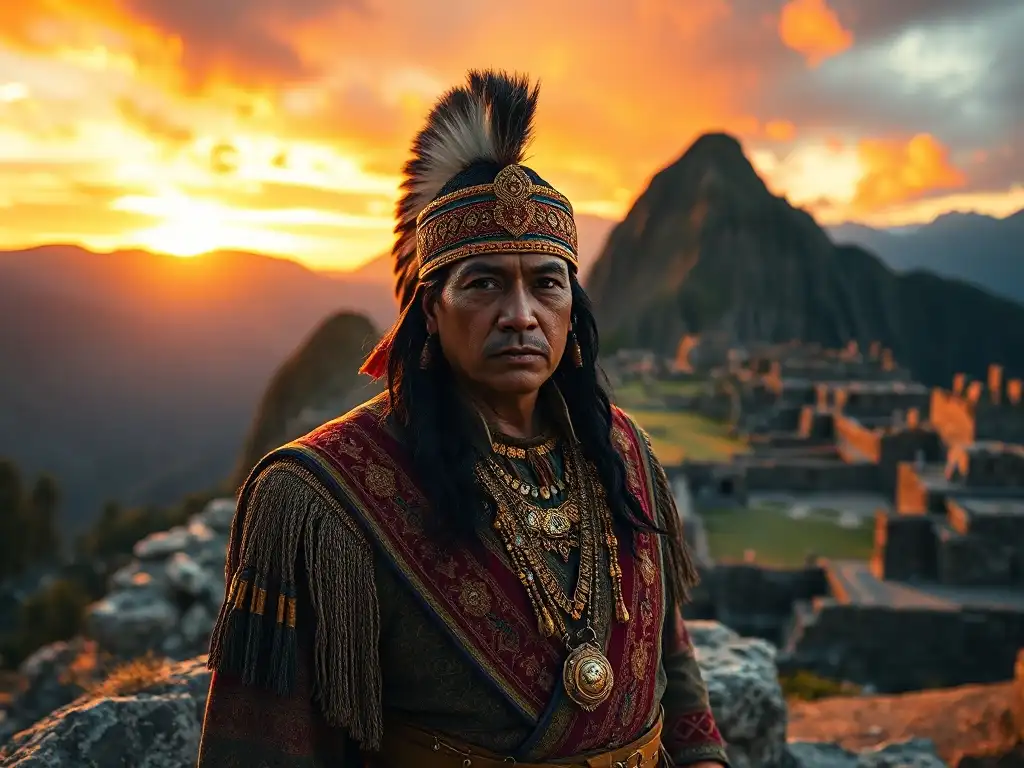
Step into a world lost to time, yet echoing with the grandeur of the Andes. Prepare to unravel the mysteries of ancient empires, from the intricate artistry of the Nazca lines to the sophisticated engineering of the Incas. But first, consider Atahualpa: his reign, a captivating blend of power and ambition, ultimately led to the devastating consequences detailed in our exploration of " Atahualpa Inca reign consequences." Dare to discover how one king's choices irrevocably altered the course of history... Dive in and uncover the truth.
The Spanish conquest of the Inca Empire remains one of history's most dramatic and consequential events. While the superior weaponry and disease vectors of the conquistadors played a significant role, internal strife within the Inca Empire itself paved the way for its swift downfall.
This article delves into the reign of Atahualpa, the last Sapa Inca to rule a unified empire, exploring how his decisions, fueled by ambition and perhaps a touch of pride, ultimately contributed to the empire's demise. We will examine the key events of Atahualpa's reign and analyze how the consequences of his actions irrevocably altered the course of Andean history.
Understanding Atahualpa's reign is crucial to comprehending the complexities of the Spanish Conquest and its lasting impact on the Andean world. This exploration will focus on the consequences of Atahualpa's reign in shaping the outcome of the Inca Empire's encounter with the Spanish, using the keyword "Atahualpa Inca reign consequences" to highlight the central theme.
Introduction: The Inca Empire on the Brink
By the time Atahualpa ascended to the throne, the Inca Empire, despite its vastness and power, was already experiencing significant internal tensions. Decades of expansion had stretched its resources thin, and the intricate system of governance, while impressive, was showing cracks under the strain. Rumors of discontent amongst conquered populations simmered beneath the surface of apparent imperial unity. The empire's sophisticated infrastructure, including its extensive road network and agricultural innovations, while impressive feats of engineering, were not enough to prevent the looming crisis.
The seeds of the Empire's downfall were sown long before Pizarro's arrival, a critical context often overlooked when discussing the Spanish conquest. The empire's vulnerability, exacerbated by internal conflicts, made it ripe for exploitation by the Spanish. This inherent weakness, coupled with Atahualpa's actions, sealed the Inca Empire's fate.
Atahualpa's Rise to Power and the Inca Civil War
Atahualpa's ascension to the throne was far from peaceful. His rise was intertwined with a brutal civil war that tore the Inca Empire apart, weakening it significantly before the Spanish even set foot on its soil.
The Inca Succession Crisis
The death of Huayna Capac, the previous Sapa Inca, plunged the empire into a crisis of succession. The Inca system of inheritance was not always clear-cut, leading to disputes and power struggles amongst potential heirs. Huayna Capac's death left two prominent sons vying for control: Huáscar, who claimed legitimacy through his father's prior designation, and Atahualpa, who had gained significant support in the northern provinces during his father's lifetime. This power vacuum created an opportunity for ambitious nobles and generals to align themselves with either faction, further destabilizing the empire.
Atahualpa vs. Huáscar: A Kingdom Divided
The ensuing conflict between Atahualpa and Huáscar was a bloody and protracted affair. Both brothers commanded loyal armies, and the war raged across the length and breadth of the empire. The conflict drained the empire's resources, diverting manpower and wealth away from essential functions of governance and defense. The war also sowed deep divisions among the Inca people, fracturing loyalties and undermining the very fabric of imperial authority.
The resulting chaos and devastation left the Inca Empire vulnerable and significantly weakened, providing the perfect opportunity for the comparatively small Spanish force to conquer a once mighty civilization. The consequences of this civil war, directly influenced by Atahualpa's ambition, are undeniable in the swift collapse of the Inca Empire under the Spanish conquest. The legacy of this conflict remains a pivotal point in understanding "Atahualpa Inca reign consequences".
The Arrival of the Spanish and Pizarro's Ambitions
The arrival of Francisco Pizarro and his conquistadors in the Andes marked a pivotal moment in Inca history. Driven by insatiable greed and a thirst for conquest, Pizarro's ambition far outweighed his military strength. His initial expeditions, while small in scale, were meticulously planned, leveraging existing tensions within the Inca Empire to his advantage.
He understood that the Inca, despite their vast empire, were not a monolithic entity. Internal conflicts and succession disputes, simmering beneath the surface of imperial power, provided fertile ground for Pizarro's exploitative strategy. Pizarro's audacious plan wasn't merely to conquer; it was to seize control of the Inca's immense wealth, accumulated over centuries of sophisticated agricultural practices and centralized administration.
This wasn't a simple military campaign; it was a calculated gamble, a meticulously orchestrated heist on a grand scale. He used his knowledge of the Inca's internal strife to sow discord and weaken their resistance, a tactic that would prove crucial in his eventual triumph.
Francisco Pizarro's Expedition to the Andes
Pizarro's expedition wasn't a sudden, haphazard venture. It was the culmination of years of planning and exploration, fueled by rumors of unimaginable riches in the Andes. His initial voyages, fraught with peril and hardship, laid the groundwork for his later, more successful campaigns.
He carefully studied the Inca's customs, their social structures, and their internal power struggles. This careful observation, coupled with his ruthless pragmatism, allowed him to exploit the weaknesses within the Inca Empire. The expedition's logistical challenges were immense, navigating treacherous terrain and overcoming harsh climatic conditions.
The men who accompanied Pizarro were a mix of hardened veterans and opportunistic adventurers, bound together by the promise of gold and glory. Their journey, a testament to human endurance and ambition, ultimately paved the way for the conquest of a mighty empire. The meticulous planning and calculated risk-taking involved in the expeditions exemplified Pizarro's strategic brilliance, however morally reprehensible his actions might be viewed today.
Initial Encounters and the Spanish Strategy
The initial encounters between the Spanish and the Inca were marked by a mixture of awe and apprehension on both sides. The Inca, accustomed to their own military superiority, initially underestimated the Spanish. The Spanish, on the other hand, carefully observed the Inca's customs and military tactics, using this knowledge to their advantage.
They employed a strategy of deception and intimidation, exploiting the Inca's unfamiliarity with firearms and horses. The Spanish often presented themselves as emissaries of a higher power, leveraging religious symbols and rituals to manipulate the Inca's beliefs. This psychological warfare, combined with their superior weaponry, allowed them to gain an upper hand, despite their numerical inferiority.
The initial encounters were carefully orchestrated to sow fear and confusion among the Inca, creating an environment ripe for exploitation. This initial phase of the conquest was not merely about brute force; it was a masterclass in psychological warfare and strategic manipulation.
Atahualpa's Fatal Decision at Cajamarca
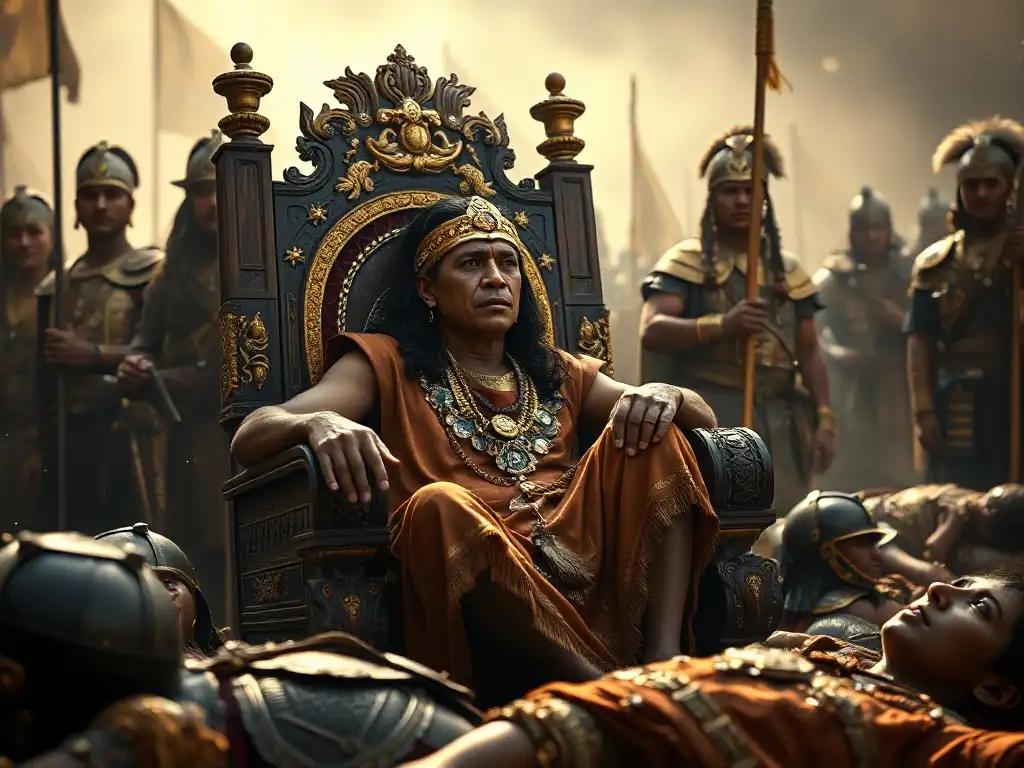
Atahualpa's decision to meet Pizarro at Cajamarca proved to be a catastrophic misjudgment, a fatal flaw in his leadership. His confidence, born from the Inca's military might and his own perceived invincibility, blinded him to the true nature of the Spanish threat. The setting itself, a seemingly peaceful plaza, became a trap, a carefully orchestrated ambush. Atahualpa's arrogance, fueled by his position as Sapa Inca, prevented him from recognizing the danger.
He failed to adequately assess the capabilities of his adversaries, a fatal error that would seal the fate of his empire. His decision not to heed warnings from his advisors, a testament to his overconfidence, ultimately led to the devastating consequences that followed. The events at Cajamarca serve as a cautionary tale about the dangers of underestimating one's enemies and the importance of sound judgment in the face of uncertainty.
The Inca's Underestimation of the Spanish
The Inca's underestimation of the Spanish was a key factor in their defeat. Accustomed to military dominance within their own vast empire, they failed to grasp the true nature of the Spanish threat. The Inca's superior numbers were rendered ineffective by the Spanish's superior weaponry, particularly firearms and cannons, which were completely unfamiliar to the Inca. The psychological impact of these weapons, coupled with the shock of encountering horses, further exacerbated the Inca's disadvantage.
Furthermore, the Inca lacked a cohesive understanding of the Spanish's strategic objectives and their willingness to employ treachery and deception. Their traditional methods of warfare, while effective against other Andean groups, proved utterly inadequate against the Spanish conquistadors’ brutal tactics. The Inca’s failure to comprehend the technological and strategic advantages of the Spanish proved to be a decisive factor in the outcome of the conflict.
Atahualpa's Refusal to Submit
Atahualpa's refusal to submit to Pizarro's demands was a pivotal moment that sealed his fate and, consequently, the fate of the Inca Empire. His pride, his unwavering belief in his own power, prevented him from acknowledging the overwhelming force arrayed against him. His refusal to accept the authority of the Spanish, driven by a combination of cultural arrogance and a deep-seated sense of self-importance, proved disastrous.
This unwavering resistance, while admirable in its defiance, ultimately proved futile against the superior weaponry and ruthless tactics of the Spanish conquistadors. His steadfast refusal to kneel before Pizarro, a symbolic act of submission, was a tragic miscalculation that cost him his life and his empire.
The Cajamarca Massacre: A Turning Point
The Cajamarca massacre was a brutal and decisive turning point in the Spanish conquest of the Inca Empire. The systematic slaughter of thousands of unarmed Inca soldiers demonstrated the Spanish conquistadors' ruthless efficiency and their utter disregard for human life. The massacre, a chilling display of superior weaponry and military strategy, effectively shattered the Inca's military strength and undermined their morale. The event sent shockwaves throughout the empire, sowing fear and confusion among the Inca population.
This act of violence marked not just a military victory for the Spanish but a symbolic triumph, demonstrating the overwhelming power imbalance between the two civilizations. The Cajamarca massacre stands as a stark reminder of the brutality and devastating consequences of the Spanish conquest. The consequences of Atahualpa's reign, culminating in this event, irrevocably altered the course of Andean history.
Atahualpa's Imprisonment and the Ransom
The Inca King's Captivity
Atahualpa's capture at Cajamarca marked a pivotal moment in Inca history and the Spanish conquest. The carefully orchestrated ambush, employing superior weaponry and tactical surprise, left the Inca army routed and their emperor in the hands of Francisco Pizarro. Atahualpa's initial arrogance, fueled by a belief in Inca invincibility, contributed significantly to his downfall.
He underestimated the Spanish, failing to recognize the lethal potential of their firearms and horses. His imprisonment, initially within Cajamarca's confines, later shifted to a more secure location, highlighting the Spanish's growing control over the Inca capital and their strategic awareness of potential resistance. The conditions of his captivity, while not explicitly brutal in the initial stages, were designed to break his spirit and undermine his authority.
The psychological impact of confinement, separation from his people, and the constant presence of his captors, played a crucial role in shaping the subsequent events. This captivity was not merely physical; it was a calculated strategy to cripple the Inca resistance by removing its leader.
The Offer of Gold and Silver: A Futile Attempt
Faced with imprisonment and the disintegration of his empire, Atahualpa offered an immense ransom—a room filled with gold and twice as much with silver—in exchange for his freedom. This staggering offer, a testament to the Inca's wealth and Atahualpa's desperation, was a gamble. He likely believed that his release would allow him to consolidate his power, rally his forces, and expel the Spanish.
The Spanish, however, were far more interested in the gold and silver than in releasing the Inca emperor. The collection of the ransom, a process that took months and involved the mobilization of resources from across the Inca empire, became a macabre spectacle. While the Inca diligently complied, filling the designated spaces with precious metals, the Spanish simultaneously consolidated their control, seizing key Inca officials and weakening the empire's infrastructure.
The sheer scale of the ransom, eventually melted down and shipped back to Spain, underscores the vastness of the Inca empire's wealth and the profound impact of its exploitation by the conquistadors. Despite fulfilling his side of the bargain, Atahualpa's fate remained sealed. The ransom, far from securing his freedom, instead became a catalyst for his demise.
The Execution of Atahualpa and its Aftermath
The Spanish Breach of Faith
The Spanish betrayal remains one of the most infamous aspects of the conquest. Despite receiving the promised ransom—an amount exceeding anything previously seen in the Western world—Pizarro and his men concocted accusations against Atahualpa, charging him with various crimes, including fratricide and rebellion. These accusations, lacking concrete evidence, were merely pretexts to justify the execution and eliminate a powerful obstacle to their ambition.
The pretext of a fair trial was a cynical maneuver, designed to mask the blatant violation of a negotiated agreement and the ruthless pursuit of power and wealth. This breach of faith, which shocked even some of the Spanish conquistadors, demonstrated the conquistadors' disregard for Inca life and their unwavering determination to subjugate the empire. The event solidified the perception of the Spanish as treacherous and untrustworthy, fueling further resistance among the Inca people.
The Death of the Inca Emperor
Atahualpa's execution, carried out by strangulation in July 1533, marked a watershed moment in the conquest. His death, a consequence of Spanish greed and ambition, left a power vacuum within the Inca Empire, exacerbating the chaos and facilitating the Spanish takeover. The manner of his death, while seemingly less brutal than other possible methods, was nonetheless a calculated act of humiliation designed to further demoralize the Inca population and cement Spanish dominance.
The execution was not a mere judicial act; it was a symbolic annihilation of Inca authority and a brutal demonstration of Spanish power. The death of the emperor, a figurehead of immense religious and political significance, profoundly impacted the Inca people, leaving them vulnerable and disoriented.
Consequences of Atahualpa’s Death on the Inca Empire
Atahualpa's death had catastrophic consequences for the Inca Empire. The immediate effect was a power struggle among competing Inca factions, further weakening the empire's ability to resist Spanish encroachment. The lack of a strong central authority created an environment of instability, ripe for exploitation by the conquistadors.
The execution also deeply demoralized the Inca population, undermining their faith in their leadership and their will to resist. This loss of faith, combined with the superior military technology of the Spanish, effectively paved the way for the complete subjugation of the Inca Empire. The legacy of Atahualpa’s death extends beyond the immediate aftermath; it represents a pivotal moment in the decline of a great civilization and the beginning of a new era of colonization and cultural upheaval.
The consequences of his reign's end continue to shape the historical and cultural landscape of the Andean region to this day. The events surrounding his capture, ransom, and execution serve as a cautionary tale about the perils of underestimating one's adversaries and the devastating consequences of unchecked ambition and greed.
The Collapse of the Inca Empire
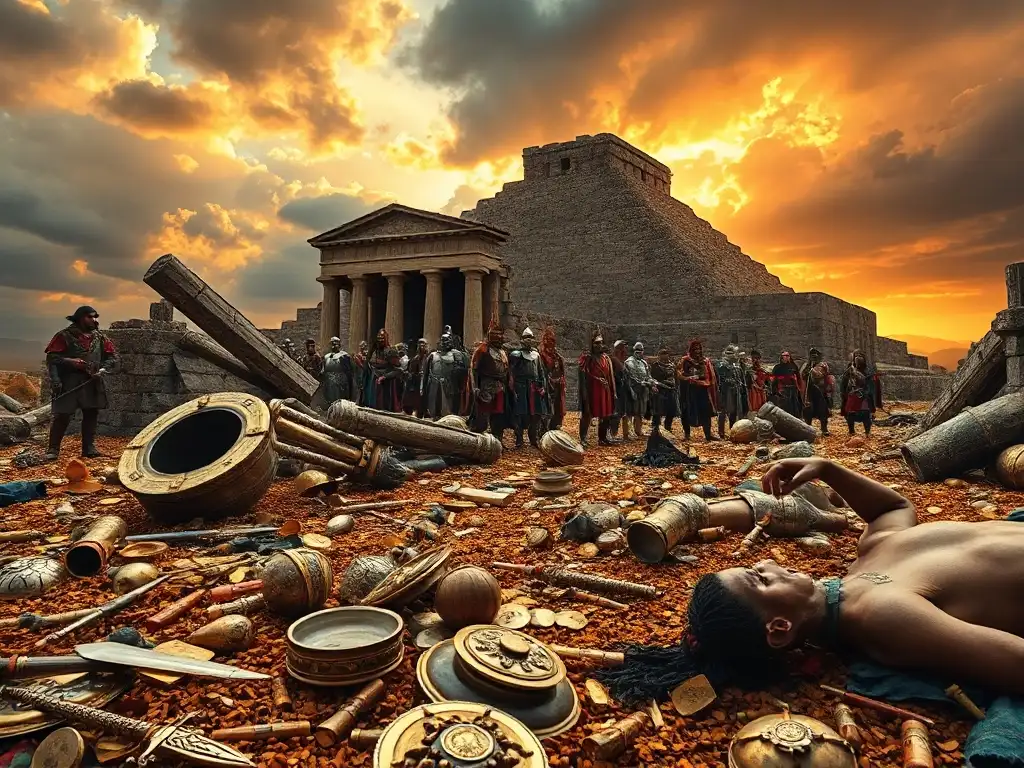
The Inca Empire, a marvel of engineering and administration, crumbled surprisingly quickly under the weight of the Spanish conquest. Several factors contributed to this rapid downfall, beyond the superior weaponry of the conquistadors. Internal strife played a crucial role. Atahualpa's ascension to the throne, following a brutal civil war with his half-brother Huáscar, had left the empire deeply fractured and vulnerable.
The loyalties of various provinces were divided, with many still supporting Huáscar or harboring resentment towards Atahualpa's ruthless tactics. This internal weakness significantly hampered the Inca's ability to mount a unified and effective defense against the Spanish. Furthermore, the Inca's understanding of the Spanish, their motives, and their technology was severely limited.
They underestimated the potential of horses, firearms, and steel weaponry, leading to tactical miscalculations that proved catastrophic. The Inca's reliance on traditional warfare tactics, which proved effective against other Andean groups, proved completely inadequate against the Spanish's superior military strategy and technology. The psychological impact of the conquistadors' seemingly supernatural power also played a significant part in the collapse.
The Political Vacuum and Instability
The execution of Atahualpa left a gaping political void at the heart of the Inca Empire. The carefully constructed system of succession and governance, based on the authority of the Sapa Inca, was shattered. The Spanish deliberately exploited this instability, installing and deposing puppet rulers to further fragment the empire and prevent any organized resistance.
This power vacuum led to widespread chaos and internal conflicts amongst various Inca factions vying for power, further weakening their ability to resist Spanish encroachment. The absence of a strong central authority allowed the Spanish to gradually consolidate their control over different regions, exploiting existing tensions and rivalries to their advantage.
The ensuing power struggles amongst the Inca nobility diverted resources and attention away from the larger threat posed by the Spanish, ultimately contributing to the empire's complete collapse. The Spanish skillfully manipulated these internal conflicts to their advantage, strategically supporting different factions to weaken the overall resistance.
The Spanish Consolidation of Power
The Spanish conquest wasn't a single decisive battle but a protracted process of gradual consolidation. Following Atahualpa's execution and the subsequent installation of puppet rulers, the Spanish strategically expanded their control, establishing settlements and exploiting the Inca's infrastructure. They leveraged existing administrative systems and networks to their advantage, using Inca officials and labor to build their own power structures.
The Spanish meticulously dismantled the Inca's centralized economy, redirecting resources and wealth towards themselves. The introduction of European diseases, such as smallpox, further decimated the Inca population, crippling their ability to resist.
The exploitation of the existing mita system (labor tribute) was crucial for the Spanish; they used it to extract massive amounts of labor for mining and construction, bolstering their economic and military power while weakening the Inca's capacity for resistance. The establishment of encomiendas, granting Spanish conquistadors control over indigenous labor and resources, cemented their control over the land and its people.
The Lasting Impact of the Conquest
The consequences of the Spanish conquest were profound and long-lasting, shaping the political, social, and cultural landscape of the Andes for centuries. The Inca Empire's sophisticated agricultural systems and infrastructure were largely destroyed or repurposed to serve Spanish interests. The introduction of European diseases caused devastating population declines, dramatically altering the demographic makeup of the region. The Spanish imposed their own language, religion, and social structures, leading to the suppression of Inca traditions and beliefs.
This cultural imposition had a lasting impact on the identity and cultural heritage of the Andean people. The economic impact was equally significant; the Inca's highly organized economy was replaced by a system designed to extract resources for the benefit of the Spanish crown. This led to the exploitation of indigenous populations and the establishment of a colonial economic system that perpetuated inequality for centuries.
Atahualpa's Reign: A Summary
Atahualpa's reign, though brief, was marked by intense political upheaval and ultimately ended in tragedy. His rise to power was secured through a brutal civil war against his half-brother Huáscar, a conflict that significantly weakened the Inca Empire. This internal struggle left the empire fractured and vulnerable to external threats. Atahualpa's leadership style was characterized by ruthlessness and a centralized control, which, while effective in some aspects, alienated many within the empire.
His decision to confront Pizarro, despite warnings from his advisors, highlights a potentially overconfident assessment of the Spanish threat. The infamous ransom paid in gold and silver, a desperate attempt to secure his release, ultimately proved futile. His execution at the hands of Pizarro marked a pivotal moment in the conquest of the Inca Empire.
The End of an Era
Atahualpa's death marked not only the end of his own life but also the symbolic end of the Inca Empire as an independent entity. His execution removed the last powerful symbol of Inca authority and resistance. The ensuing power vacuum allowed the Spanish to consolidate their control with relative ease.
The Inca's sophisticated administrative and social structures, which had held the empire together for centuries, began to unravel in the absence of a strong central leader. The traditional religious practices and beliefs of the Inca were gradually suppressed as the Spanish enforced their own religious doctrines. The loss of political and spiritual leadership led to the disintegration of the empire’s social fabric, paving the way for the colonial era.
The Legacy of Atahualpa's Actions
Atahualpa's decisions, particularly his involvement in the civil war and his underestimation of the Spanish, had far-reaching consequences. His actions contributed directly to the vulnerability of the Inca Empire, making it susceptible to conquest. The legacy of his reign serves as a cautionary tale about the dangers of internal conflict and the importance of accurate assessment of external threats.
His story continues to be studied as a case study in leadership, political strategy, and the impact of colonialism. Analyzing his reign provides valuable insights into the complex dynamics that led to the collapse of the Inca Empire and the subsequent Spanish colonization of the Andes. His name remains synonymous with both the grandeur and the tragic downfall of a once-mighty empire.
Lessons from the Fall of the Inca Empire
The fall of the Inca Empire offers crucial lessons about the fragility of even the most powerful empires and the importance of internal unity and accurate assessment of external threats. The Inca's downfall serves as a stark reminder of the devastating consequences of internal conflict. The empire's vulnerability to the Spanish stemmed not solely from superior weaponry but also from the deep divisions and political instability that preceded the conquest.
The consequences highlight the importance of strong leadership, effective communication, and a nuanced understanding of potential adversaries. The story of Atahualpa's reign and the subsequent collapse of the Inca Empire continues to resonate, serving as a cautionary tale for leaders and nations throughout history.
The careful analysis of this historical event offers profound insights into the complex interplay between internal factors and external pressures that can lead to the demise of even the most formidable civilizations. Understanding these lessons is critical for preventing similar catastrophes in the future.
Key Inca Figures and Further Reading
Atahualpa's reign, though brief, was significantly impacted by the key figures surrounding him. His half-brother Huáscar, whose claim to the Inca throne Atahualpa ultimately defeated in a bloody civil war, played a crucial role in weakening the Inca Empire, leaving it vulnerable to Pizarro's conquest. The internal strife and lingering resentments among the Inca nobility, exacerbated by Atahualpa's own actions, created fertile ground for Spanish exploitation.
Furthermore, the loyalties of various curacas (local chiefs) shifted dramatically during this period, some supporting Atahualpa, others Huáscar, and many ultimately siding with the Spanish for self-preservation or perceived advantage. Understanding the complex web of relationships between these key players is essential to fully grasping the consequences of Atahualpa's reign.
The actions, or inactions, of these individuals directly contributed to the empire's downfall. For example, the lack of unified resistance after Atahualpa's capture highlights the fragility of the Inca power structure following the civil war.
To delve deeper into the intricacies of Atahualpa's reign and its consequences, exploring further resources is highly recommended. Several academic journals publish articles focusing on the Inca Empire's final years and the Spanish conquest. These scholarly works often provide detailed analyses of the political landscape, the key figures involved, and the strategic decisions that led to the Inca Empire's demise.
Furthermore, numerous books, written by both historians and archaeologists, offer a variety of perspectives on Atahualpa's leadership and its impact. These texts often include primary source materials, such as chronicles written by Spanish conquistadors, which offer valuable, albeit often biased, insights into the events of that era. By consulting diverse sources, one can gain a more comprehensive understanding of the complexities surrounding Atahualpa's reign and its lasting consequences for the Inca civilization.
Careful consideration of varying interpretations is crucial for a nuanced understanding of this pivotal period in Andean history. Remember to critically evaluate sources and consider potential biases when conducting your research. The multifaceted nature of Atahualpa's reign requires a multi-faceted approach to understanding its impact.
- Introduction: The Inca Empire on the Brink
- Atahualpa's Rise to Power and the Inca Civil War
- The Arrival of the Spanish and Pizarro's Ambitions
- Atahualpa's Fatal Decision at Cajamarca
- Atahualpa's Imprisonment and the Ransom
- The Execution of Atahualpa and its Aftermath
- The Collapse of the Inca Empire
- Atahualpa's Reign: A Summary
- Key Inca Figures and Further Reading
- What were the main consequences of Atahualpa's reign for the Inca Empire?
- How did Atahualpa's personality contribute to the Inca Empire's downfall?
- What role did the civil war between Atahualpa and Huáscar play in the Spanish conquest?
- Did Atahualpa's ransom have any impact on the outcome of the conquest?
- Beyond the immediate conquest, what are the long-term consequences of Atahualpa's reign?
Frequently Asked Questions
What were the main consequences of Atahualpa's reign for the Inca Empire?
Atahualpa's reign, though short, had devastating consequences. His internal conflicts and lack of preparation for Spanish invasion left the Inca Empire vulnerable, ultimately leading to its swift conquest and collapse.
How did Atahualpa's personality contribute to the Inca Empire's downfall?
Atahualpa's arrogance and underestimation of the Spanish, coupled with his fierce rivalry with his half-brother Huáscar, weakened the empire internally, making it easy prey for Pizarro's forces.
What role did the civil war between Atahualpa and Huáscar play in the Spanish conquest?
The civil war severely weakened the Inca Empire, distracting its resources and dividing its people. This internal conflict allowed the comparatively small Spanish army to exploit the situation and conquer the Inca Empire more easily.
Did Atahualpa's ransom have any impact on the outcome of the conquest?
While Atahualpa's massive ransom temporarily bought him time, it ultimately failed to prevent his execution. The Spanish greed and desire for more ensured the Inca Empire's subjugation despite the considerable wealth offered.
Beyond the immediate conquest, what are the long-term consequences of Atahualpa's reign?
Atahualpa's reign marks a pivotal moment in Andean history, signifying the end of an era. The destruction of the Inca Empire had lasting impacts on the political, social, and cultural landscape of the Andes region.
Final Reflection: The Enduring Legacy of Atahualpa's Choices
The story of Atahualpa's reign serves as a stark reminder that even the most powerful empires can crumble under the weight of internal divisions and miscalculations. His gamble, a desperate attempt to consolidate power, ultimately paved the way for the devastating Spanish conquest and the irreversible fracturing of the Inca civilization. The consequences of his actions resonate even today, a potent lesson in the fragility of power and the importance of strategic foresight.
Atahualpa's story is more than just a historical account; it's a cautionary tale that continues to shape our understanding of leadership, cultural clash, and the enduring impact of colonialism. His pride, his ambition, and his ultimately fatal underestimation of the Spanish conquistadors remain potent symbols of the complexities of power dynamics. History is a gallery of pictures, in which there are few originals, and many copies.
– Edward Gibbon. This quote perfectly encapsulates the cyclical nature of power struggles and the repeated lessons history offers, lessons we must strive to learn from Atahualpa's tragic fate.
Consider the choices you make, the decisions that shape your own life and the lives of those around you. Atahualpa's legacy compels us to examine our own ambitions, to assess the potential consequences of our actions, and to strive for a greater understanding of the intricate web of cause and effect that governs our world. Let his story be a catalyst for introspection, a reminder that even in the face of seemingly insurmountable odds, wisdom and foresight can be our most powerful weapons. Learn from the past, and build a better future.
Unveil Your Own Legacy: Take Action Today!
Thank you for exploring the fascinating world of Atahualpa and the remarkable Andean civilizations. Your journey through history has highlighted the profound impact of leadership and decision-making on the fate of empires. Now, it's time to apply this inspiration and take decisive action!
Here's how you can further explore the legacy of the Andes and leave your own mark:
- **Deepen your understanding:** Learn more about the fall of the Inca Empire and how leadership decisions influenced its decline. Consider how these lessons are relevant to challenges we face today.
- **Share your knowledge:** Discuss your insights with friends, family, or online communities. Use the hashtag #AndeanLegacies to connect with others who share a passion for history and ancient cultures.
- **Engage with others:** Join a local history group, an online forum, or participate in discussions about ancient civilizations. Connecting with like-minded individuals can broaden your perspective and deepen your appreciation for the past.
What aspect of Atahualpa's story resonates most with you, and how will this understanding guide your future actions?