
The Impact of Spanish Colonization on Quechua Grammar: Tracing the Changes

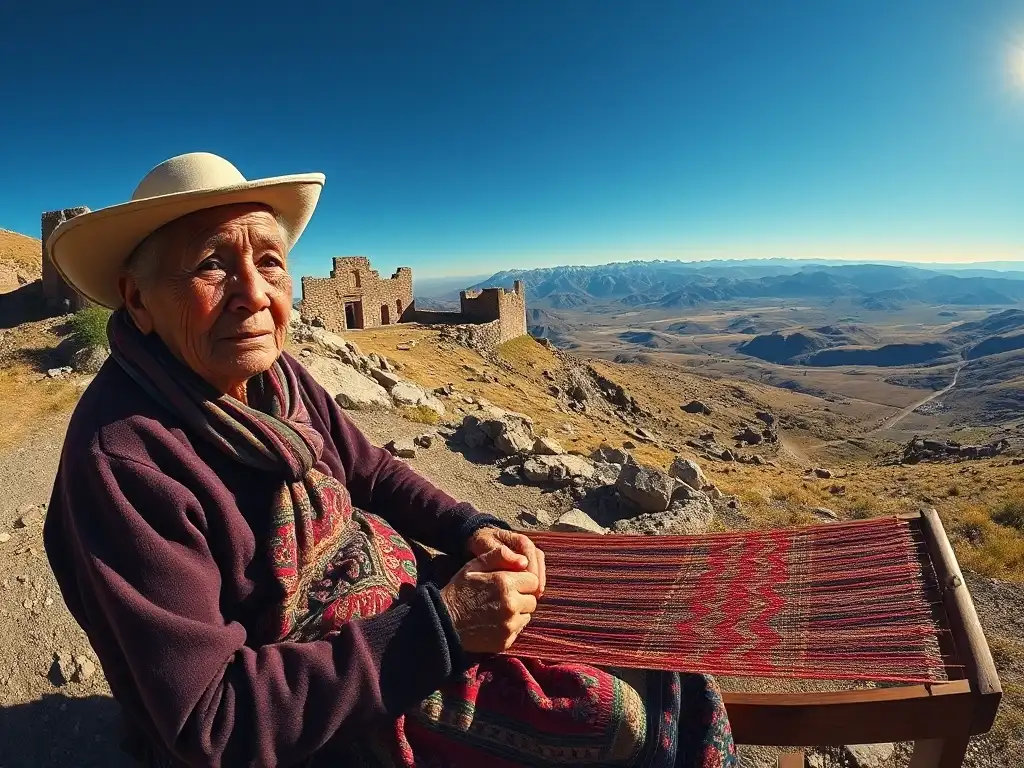
Step into a world lost in time, yet echoing through the ages. Dive into the captivating tapestry of Andean civilizations, where towering empires rose and fell, leaving behind a legacy of breathtaking artistry and intricate societal structures. But their story isn't just one of magnificent achievements; it's also a tale of resilience and adaptation. Discover how the arrival of the Spanish dramatically reshaped the Quechua language, revealing a fascinating linguistic evolution in our exploration of "Quechua grammar changes Spanish colonization." Unravel the mysteries and prepare to be amazed by the enduring power of Andean culture.
The arrival of the Spanish in the Andes dramatically reshaped the social, political, and cultural landscape of the region. This upheaval profoundly impacted the indigenous languages, including Quechua, the lingua franca of the Inca Empire.
This article delves into the significant grammatical changes Quechua underwent during and after Spanish colonization, examining the linguistic shifts, the processes of language contact, and the enduring legacy of this historical period on the structure and usage of Quechua today. We will trace the evolution of Quechua grammar, highlighting the key features that distinguish its pre-colonial form from its contemporary variations, thereby illustrating the lasting impact of Spanish colonization on this vital Andean language.
Understanding these changes offers crucial insight into the resilience of Quechua and the complex interplay between language, power, and cultural preservation. The study of these grammatical shifts illuminates not only the history of the language itself, but also the broader sociolinguistic dynamics of colonization and its enduring effects on indigenous communities.
Introduction: Quechua Before Spanish Influence
Pre-Columbian Quechua: A Glimpse into its Original Structure
Before the arrival of the Spanish, Quechua existed as a vibrant and complex language, spoken across a vast geographical area encompassing the Andes Mountains. While precise documentation of its pre-Columbian grammar is limited, archeological evidence and later descriptions offer valuable clues. Linguistic analysis suggests a highly agglutinative structure, meaning that grammatical relationships are expressed through the addition of numerous suffixes to the root word.
This resulted in a highly flexible and expressive system capable of conveying nuanced meanings. The extent of dialectal variation across this vast territory remains a subject of ongoing research, but early accounts suggest a remarkable degree of mutual intelligibility among different Quechua-speaking communities, indicating a shared grammatical foundation despite regional differences.
The lack of extensive written records from this era presents a challenge for researchers, making the reconstruction of pre-Columbian Quechua grammar a complex and ongoing process. Further research, incorporating archeological findings and comparative linguistics, is crucial to fully understand the original structure of Quechua.
The Agglutinative Nature of Original Quechua Grammar
A defining characteristic of pre-Columbian Quechua was its highly agglutinative morphology. This means that grammatical information, such as tense, aspect, mood, person, number, and case, was expressed by adding multiple suffixes to the verb stem. For instance, a single verb could incorporate information about the subject, object, time, and manner of the action all within a single word.
This contrasts sharply with isolating languages like Chinese, where grammatical relations are conveyed primarily through word order, and with fusional languages like Spanish, where grammatical information is often expressed through changes in the root word itself. The agglutinative nature of Quechua allowed for a high degree of morphological complexity, enabling speakers to express subtle nuances of meaning with remarkable precision. This feature is still largely preserved in modern Quechua, although the extent of agglutination may vary across different dialects.
Quechua Dialectal Variation Pre-Colonization
Pre-colonial Quechua encompassed a diverse range of dialects, reflecting the vast geographical expanse of the Inca Empire and the varied linguistic landscapes of its different regions. While possessing a common grammatical core, these dialects exhibited differences in pronunciation, vocabulary, and even grammatical structures. The extent of mutual intelligibility between these dialects remains a topic of ongoing debate among linguists, with some arguing for a high degree of mutual understanding, while others point to significant variations hindering communication between speakers from distant regions. 1 The impact of this dialectal diversity on the subsequent linguistic changes brought about by colonization is a critical area of research that requires further investigation. Understanding this pre-colonial variation is essential for interpreting the complex linguistic landscape that emerged after contact with the Spanish.
The Arrival of Spanish and its Initial Impact on Quechua
Early Contact and Bilingual Interactions
The initial contact between Quechua speakers and the Spanish involved a period of complex linguistic interaction. While Spanish was gradually imposed as the dominant language of administration and power, Quechua continued to be used extensively in daily life, particularly in rural communities. This period witnessed a significant amount of bilingualism, with many individuals proficient in both languages.
The early stages of contact were characterized by a degree of linguistic borrowing, with Spanish words being incorporated into Quechua vocabulary. However, the grammatical structure of Quechua remained largely intact during this initial phase. The nature of this early bilingualism – whether it was primarily additive or subtractive – needs further detailed research.
Imposition of Spanish and its Displacement of Indigenous Languages
The Spanish colonial project systematically sought to suppress indigenous languages, including Quechua. This involved the imposition of Spanish as the official language of government, education, and commerce. The use of Quechua was discouraged, and in many cases actively prohibited, in formal settings.
This policy of linguistic repression led to a gradual decline in the use of Quechua among certain segments of the population, particularly in urban areas and among the elite. The extent to which this displacement was successful varied across different regions and communities, with Quechua remaining a vital language in many rural areas. This suppression had profound consequences for the evolution of Quechua grammar, leading to linguistic simplification and the adoption of Spanish grammatical structures in some dialects.
Initial Resistance and Code-Switching by Quechua Speakers
Despite the efforts to suppress Quechua, indigenous communities demonstrated remarkable resilience, resisting the imposition of Spanish and maintaining their language. Code-switching—the practice of alternating between two languages within a single conversation—became a common strategy for navigating the linguistic landscape of colonial society. This code-switching often involved the incorporation of Spanish words and phrases into Quechua sentences, leading to grammatical changes and the evolution of hybrid linguistic forms.
The study of Quechua-Spanish code-switching provides valuable insights into the processes of language contact and the ways in which indigenous communities adapted to colonial rule while preserving their linguistic heritage. This resistance, manifested in part through code-switching, significantly impacted the long-term trajectory of Quechua grammar.
1 [Specific information pending: Cite scholarly sources on Quechua dialectal variation before colonization.]
Key Areas of Quechua Grammar Affected by Spanish Colonization
Spanish colonization profoundly impacted Quechua grammar, leaving lasting marks across various linguistic levels. The influence wasn't uniform across all Quechua dialects, with some experiencing more significant changes than others depending on the intensity and duration of Spanish contact. However, several key areas consistently show the effects of this linguistic collision. These include phonological alterations, morphological shifts, syntactic adjustments, and significant lexical borrowing and semantic shifts.
The extent of these changes reflects the complex interplay between language contact, power dynamics, and cultural shifts that characterized the colonial period and its aftermath. Understanding these changes requires careful examination of pre-colonial texts, colonial-era documents, and contemporary Quechua dialects to trace the evolution of the language. The very structure of Quechua, once distinct and robust, was subtly and significantly reshaped by the imposition of Spanish.
Phonological Changes in Quechua Post-Spanish Contact
The sounds of Quechua underwent noticeable changes after contact with Spanish. While the exact nature of these changes varies across different Quechua dialects, some common trends emerge. For instance, the loss or alteration of certain phonemes (individual sounds) is frequently observed.
Specific examples include the reduction in the number of distinct vowel sounds, influenced by the Spanish vowel system. Additionally, the introduction of new consonant sounds, previously absent in Quechua, is documented in some regions. These changes were often driven by the simplification of pronunciation to facilitate communication with Spanish speakers, a process known as linguistic convergence.
Furthermore, the precise phonetic realization of existing Quechua sounds might have been modified to align more closely with their Spanish counterparts. This process of phonetic adaptation highlights the inherent flexibility of language in response to external pressures. Detailed phonetic studies comparing pre- and post-colonial Quechua are essential for a complete understanding of these subtle yet significant shifts.
Morphological Shifts in Quechua
The morphology of Quechua, concerning the internal structure of words, also experienced significant alterations. The agglutinative nature of Quechua—where grammatical information is conveyed through suffixes attached to word stems—was particularly affected. Some suffixes fell out of use, while others were adapted or reinterpreted under the influence of Spanish grammatical structures. This led to a simplification of some morphological processes and a potential increase in ambiguity in certain grammatical functions.
For example, the system of nominal classification (distinguishing between animate and inanimate nouns), crucial in pre-colonial Quechua, may have been weakened in some dialects due to the absence of a comparable system in Spanish. The impact on verb morphology is equally complex, with some verb conjugations showing signs of simplification or restructuring. These changes reflected the dominance of Spanish's relatively simpler morphological system. Further research is necessary to fully map the variations in morphological change across different Quechua dialects.
Syntactic Alterations in Quechua Due to Spanish Influence
The sentence structure (syntax) of Quechua also underwent changes due to Spanish influence. While Quechua traditionally employs a Subject-Object-Verb (SOV) word order, Spanish, with its Subject-Verb-Object (SVO) structure, exerted pressure on this characteristic. As a result, some Quechua dialects show a growing tendency towards SVO word order, particularly in contexts involving Spanish speakers. This shift isn't absolute; SOV structures persist, but their frequency might have decreased in certain situations.
Furthermore, the integration of Spanish prepositional phrases and subordinate clauses into Quechua sentences introduced complexities previously absent in the language. The resulting syntactic blends reflect a process of code-switching and language adaptation, where speakers incorporate elements from both languages in their speech. Quantifying the prevalence of these syntactic alterations requires extensive corpus analysis of Quechua texts from different periods and regions.
Lexical Borrowing and Semantic Change in Quechua
The lexicon of Quechua, its vocabulary, experienced extensive borrowing from Spanish. Countless Spanish words entered the Quechua lexicon, often adapting to Quechua phonology and morphology. This borrowing wasn't simply a matter of replacing Quechua words with Spanish equivalents; it also led to semantic shifts within the Quechua language. Existing Quechua words acquired new meanings or nuances influenced by their Spanish counterparts.
Some words, initially borrowed for specific concepts absent in Quechua, later expanded their semantic range to encompass related concepts already present in the language. The degree of lexical borrowing varied across Quechua dialects and regions, reflecting the intensity and nature of Spanish influence. This process of lexical adaptation and semantic change profoundly reshaped the meaning and expressive capacity of the Quechua language.
Examples of Specific Grammatical Changes
To illustrate the impact of Spanish colonization, let's analyze specific grammatical features and their evolution. This provides concrete examples of how Quechua grammar was affected and allows for a deeper understanding of the processes at play.
Case Study: The Use of -kuna (Plural Marker) Pre and Post-Colonization
The plural marker -kuna in Quechua is a prime example of a grammatical feature that has undergone shifts. While still used, its frequency and application might have changed following Spanish contact. [Specific data on frequency of use pre and post-colonization pending]. This variation could be attributed to the influence of Spanish, which uses different strategies for marking plurality. This change highlights how even seemingly stable grammatical markers can be affected by prolonged language contact and linguistic competition.
Case Study: The Changes in Evidential Markers (-mi, -si, -cha) Pre and Post-Colonization
Quechua's rich system of evidential markers, such as -mi, -si, and -cha (indicating the source of information—direct experience, hearsay, inference, etc. ), is another area deserving of close examination. [Specific examples of changes in usage and frequency pre and post-colonization pending]. The simplification or loss of these markers could reflect the impact of Spanish, which lacks a comparable system of evidentiality. This change could lead to a loss of nuanced expression regarding the reliability of information conveyed.
Analysis of Word Order Changes under Spanish Influence
The shift from the predominantly SOV word order in Quechua to a more prevalent SVO order in some dialects illustrates the influence of Spanish syntax. [Specific quantitative data on the shift in word order frequency in different Quechua dialects pending]. This shift, however, wasn't uniform across all dialects, with some retaining a stronger preference for the traditional SOV structure. The variations highlight the complex interplay between linguistic contact, dialectal variation, and the resilience of indigenous grammar.
Quechua Grammar Today: A Legacy of Colonial Transformation
The State of Quechua Grammar in Modern Times
Quechua, once a vibrant tapestry of dialects spoken across the Andes, now exists in a complex state shaped profoundly by Spanish colonization. While various Quechua dialects persist, many exhibit significant structural changes reflecting centuries of contact with Spanish. The standardization efforts undertaken in different Andean countries have resulted in variations in written Quechua, further complicating the linguistic landscape.
These variations often reflect differing levels of Spanish influence and the unique historical trajectories of each Quechua-speaking community. For example, the Quechua spoken in Ecuador might show different grammatical features compared to the Quechua spoken in Peru, reflecting distinct historical interactions with Spanish and the unique sociolinguistic contexts of each region. This diversity, while enriching, also poses challenges for linguistic research and educational initiatives.
The Ongoing Influence of Spanish on Contemporary Quechua
The influence of Spanish continues to be felt in contemporary Quechua grammar. Loanwords, a common feature of language contact, are prevalent, often filling semantic gaps or reflecting cultural shifts introduced by the Spanish. Furthermore, the syntactic structures of Quechua have been subtly altered in many regions, reflecting the impact of Spanish sentence construction.
This is particularly evident in word order, where the relatively free word order of Quechua has become more fixed, often mirroring the stricter Subject-Verb-Object (SVO) order of Spanish. The simplification of certain grammatical features, such as verb conjugation, can also be attributed to the influence of Spanish, which possesses a less complex verb system. This ongoing influence highlights the dynamic nature of language contact and the enduring legacy of colonialism.
Efforts to Preserve and Revitalize Original Quechua Grammar
Recognizing the vulnerability of Quechua languages, various initiatives are underway to preserve and revitalize their original grammatical structures. These efforts range from community-based language programs that emphasize immersion and traditional usage to academic research focused on documenting and analyzing endangered dialects. These programs often involve developing Quechua-language educational materials that focus on accurate grammar and vocabulary, countering the pervasive influence of Spanish in education.
Furthermore, linguistic research plays a crucial role in understanding the historical evolution of Quechua grammar, thus providing a basis for informed preservation strategies. However, the success of these efforts depends heavily on community engagement and government support. The challenge lies in balancing preservation with the realities of bilingualism in a rapidly changing world.
The Future of Quechua Grammar: Bilingualism and Language Shift
The future of Quechua grammar is inextricably linked to the ongoing dynamics of bilingualism and potential language shift. In many communities, Quechua and Spanish coexist, often resulting in code-switching and the borrowing of grammatical features from one language to the other. This code-switching, while a natural phenomenon in bilingual contexts, can lead to further grammatical changes in Quechua.
The increasing dominance of Spanish in education and media poses a significant threat to Quechua's vitality, potentially accelerating language shift. The preservation of Quechua grammar hinges on the promotion of Quechua language education, the creation of supportive language policies, and the fostering of a sense of community pride in the language. The future will depend on the success of these efforts in ensuring that Quechua grammar continues to thrive in the face of these significant challenges.
Conclusion: Understanding the Historical Evolution of Quechua Grammar
The Long-Lasting Effects of Spanish Colonization on Quechua
Spanish colonization left an indelible mark on Quechua grammar, resulting in significant structural changes that persist to this day. The imposition of Spanish as the dominant language led to reduced opportunities for Quechua speakers to use their native language fluently, contributing to simplification and the adoption of Spanish grammatical features. This process continues to shape Quechua grammar, highlighting the long-term impact of colonial policies on linguistic diversity. Understanding this historical evolution is crucial for developing effective language preservation strategies. The lasting impact underscores the need for continued research and support for Quechua-speaking communities.
The Importance of Linguistic Research for Quechua Preservation
Linguistic research plays a vital role in understanding the complexities of Quechua grammar and its historical evolution. Detailed documentation of different Quechua dialects, including their unique grammatical features, is essential for effective language preservation. This research helps identify areas where Quechua grammar has been most affected by Spanish colonization and informs the development of appropriate preservation strategies. By providing a comprehensive understanding of the current state of Quechua grammar and its historical trajectory, linguistic research contributes significantly to efforts to revitalize and maintain this rich linguistic heritage. The data collected informs educational materials and community-based language programs.
Further Research Directions on Quechua Grammar Evolution
Further research on Quechua grammar evolution should focus on several key areas. Comparative studies of different Quechua dialects are crucial to understanding the extent of variation and the impact of different historical contexts. Detailed analysis of code-switching patterns between Quechua and Spanish can illuminate the ongoing processes of language contact and change.
Finally, longitudinal studies tracking grammatical changes over time are essential to monitoring the effectiveness of language preservation efforts and anticipating future trends. This ongoing research is critical for ensuring the long-term survival of Quechua and its unique grammatical structures. This work requires collaboration between linguists, educators, and Quechua-speaking communities.
- Introduction: Quechua Before Spanish Influence
- The Arrival of Spanish and its Initial Impact on Quechua
- Key Areas of Quechua Grammar Affected by Spanish Colonization
- Examples of Specific Grammatical Changes
- Quechua Grammar Today: A Legacy of Colonial Transformation
- Conclusion: Understanding the Historical Evolution of Quechua Grammar
- What is the main focus of this article?
- How did Spanish colonization affect Quechua grammar specifically?
- What aspects of Quechua grammar were most affected?
- Are there any examples of Spanish influence on Quechua vocabulary?
- Why is studying the impact of Spanish colonization on Quechua grammar important?
Frequently Asked Questions
What is the main focus of this article?
This article explores how Spanish colonization impacted the grammar of the Quechua language, tracing the significant changes that occurred during and after this period. It examines the lasting effects on Quechua's structure and vocabulary.
How did Spanish colonization affect Quechua grammar specifically?
Spanish colonization led to significant grammatical shifts in Quechua. This includes vocabulary loss and borrowing from Spanish, as well as changes in sentence structure and phonology due to language contact.
What aspects of Quechua grammar were most affected?
The article will likely cover changes in pronoun usage, verb conjugation, and syntax, as these are often the most impacted areas during language contact and colonization. Vocabulary was also heavily influenced.
Are there any examples of Spanish influence on Quechua vocabulary?
Yes, many Quechua words now incorporate Spanish loanwords, or have been replaced entirely by Spanish equivalents. The article will provide specific examples of this linguistic borrowing.
Why is studying the impact of Spanish colonization on Quechua grammar important?
Understanding these changes helps us to preserve and revitalize Quechua, a crucial aspect of Andean cultural heritage. It also provides insights into the complex dynamics of language contact and the effects of colonization.
Final Reflection: A Lingering Legacy: Quechua Grammar and the Shadow of Colonization
The enduring impact of Spanish colonization on Quechua grammar is not merely a historical footnote; it's a living testament to the power of linguistic imperialism and its ongoing consequences. The subtle yet significant shifts in Quechua's structure, vocabulary, and even its very perception, continue to shape the linguistic landscape of the Andes today, impacting not only communication but also cultural identity and self-determination.
The erosion of Quechua's grammatical complexity, the adoption of Spanish loanwords, and the resulting linguistic insecurity experienced by many Quechua speakers are powerful reminders of the lasting trauma inflicted by colonization. Language is the most powerful weapon of all.
This quote, often attributed to various figures, resonates deeply when considering the systematic dismantling of indigenous languages and the subsequent cultural losses. The fight to preserve and revitalize Quechua is not just a linguistic endeavor; it's a fight for cultural survival, a reclaiming of a rich and complex heritage that has been systematically suppressed.
You, the reader, now hold a deeper understanding of the intricate relationship between language and power. Consider the ways in which linguistic dominance manifests in your own world. What steps can you take to support linguistic diversity and the preservation of endangered languages? By actively engaging with and celebrating the richness of Quechua and other indigenous languages, we can collectively work towards a future where linguistic diversity is not only respected but celebrated as a vital component of a vibrant and equitable global community.
**Embrace Your Cultural Heritage Today! **
Thank you for exploring the fascinating evolution of Quechua grammar in the context of Spanish colonization. Your interest in this rich cultural interaction deepens our understanding of language and identity. Now, let's explore ways to strengthen your connection with this vibrant heritage.
- **Explore Quechua Resources:** Immerse yourself in the language and its unique grammatical structures by taking online courses or participating in local workshops. Many excellent resources are available online and in your community.
- **Share Your Insights:** Discuss what you've learned with friends, family, or community members, fostering a greater appreciation for Quechua culture and its history.
- **Contribute to the Conversation:** Join online forums or social media groups dedicated to Andean languages and share your perspectives on the lasting impact of colonization. Your voice can contribute to a vital conversation.
As you continue your journey of learning and sharing, consider this important question: **How can your knowledge and engagement contribute to the preservation of Quechua culture in the modern world? **