
Llama Power: How Andean Farmers Harnessed Animal Labor for Sustainable Agriculture


Step into a world lost to time, yet echoing with the ingenuity of ancient Andean cultures. For centuries, these remarkable civilizations thrived, leaving behind a legacy of breathtaking artistry and sophisticated technologies. But what secrets lie hidden within their agricultural practices? Discover the surprising story of Andean llama farming techniques—a testament to sustainable living that shaped entire societies—and unlock the mysteries of their enduring power. Prepare to be amazed.
The Andes Mountains, a breathtaking landscape of towering peaks and fertile valleys, nurtured some of the most sophisticated agricultural societies in pre-Columbian America. While innovative terracing and irrigation systems are often highlighted, a crucial element of Andean agricultural success frequently remains understated: the ingenious harnessing of animal labor, primarily through llamas and alpacas.
This article delves into the diverse and sustainable farming techniques employed by Andean communities, focusing on the multifaceted role of llamas in shaping their agricultural practices and ensuring food security across generations. We will explore how these remarkable animals contributed not only to crop cultivation but also to transportation, fiber production, and overall community resilience, highlighting the intricate relationship between humans and animals in the Andean ecosystem.
Understanding these techniques provides valuable insights into the ingenuity and sustainability of Andean agriculture and offers potential lessons for modern agricultural practices. The integration of llamas into farming practices demonstrates a sophisticated understanding of animal husbandry and resource management, showcasing the adaptability and resilience of Andean civilizations.
Llama Domestication and Husbandry in the Andes
Llama domestication, estimated to have occurred around 4,000 years ago, marked a pivotal moment in Andean agricultural development. Careful breeding programs, passed down through generations, resulted in animals well-suited to the challenging Andean terrain. Llamas were selected for their strength, endurance, and docility, making them ideal for carrying heavy loads across steep slopes and difficult paths. Their dietary needs were perfectly adapted to the available resources, consuming grasses and shrubs that grew abundantly in the high-altitude pastures. Detailed records on breeding practices, unfortunately, are scarce, but archaeological evidence suggests a deep understanding of animal health and reproductive cycles, ensuring a sustainable llama population capable of supporting the agricultural needs of the community. [Specific information on breeding practices pending further research]. The relationship between Andean farmers and their llamas extended beyond mere utility; llamas became integral members of the community, their well-being directly linked to the success of the agricultural enterprise.
Utilizing Llamas for Transportation and Plowing
The rugged terrain of the Andes presented significant challenges to transportation. The use of llamas to carry agricultural goods, such as harvested crops and fertilizer, to and from markets and storage facilities was essential. These animals could navigate treacherous paths with remarkable ease, carrying substantial loads over long distances. This efficient transport system was critical to the success of Andean agriculture, allowing farmers to access wider markets and exchange goods with neighboring communities.
Furthermore, evidence suggests that llamas were also used as a form of plow animal in some regions. While not as efficient as oxen in flatlands, their strength and surefootedness proved advantageous in the uneven Andean fields. [Specific examples of llama-powered plowing techniques need further research and verification]. This innovative use of animal power significantly reduced the labor demands on human farmers, allowing them to focus on other crucial aspects of agriculture.
Llamas and the Management of Andean Terraces
Andean agriculture relied heavily on sophisticated terracing systems to create level plots for cultivation on steep slopes. Llamas played a crucial role in maintaining these terraces. Their manure provided a valuable source of fertilizer, enriching the soil and enhancing crop yields. The carefully managed grazing of llamas on terrace edges also helped to prevent erosion and maintain the integrity of these vital agricultural structures.
The integration of llama grazing into terrace management highlights the holistic and sustainable approach of Andean agricultural practices, emphasizing the interconnectedness of all aspects of the ecosystem. [Quantitative data on the impact of llama manure on crop yields is needed]. The symbiotic relationship between llamas and the terraced fields ensured long-term agricultural productivity.
The Sustainable Legacy of Andean Llama Farming
The Andean farmers' mastery of llama husbandry and its integration into their agricultural system stands as a testament to their deep understanding of sustainable resource management. The techniques employed were not just efficient but also environmentally responsible, minimizing the impact on the fragile Andean ecosystem. The symbiotic relationship between humans, llamas, and the environment ensured long-term agricultural success and community prosperity.
Understanding these techniques offers valuable insights for contemporary agriculture, highlighting the potential of integrating animal power and sustainable practices for achieving food security and environmental stewardship. The legacy of Andean llama farming serves as a powerful reminder of the ingenuity and wisdom of past civilizations and offers lessons that remain relevant in today's world. The careful balance between human needs and environmental sustainability demonstrated in Andean llama farming techniques is a crucial lesson for the future of agriculture.
- Llama Domestication and Husbandry in the Andes
- Utilizing Llamas for Transportation and Plowing
- Llamas and the Management of Andean Terraces
- The Sustainable Legacy of Andean Llama Farming
- What role did llamas play in Andean agriculture?
- What specific farming techniques involved llamas?
- How did llama farming contribute to sustainable agriculture in the Andes?
- Were there any specialized breeds of llamas used for farming purposes?
- How did Inca civilization integrate llama farming into their empire?
The Significance of Andean Llama Farming in Ancient Agriculture

Andean llama farming techniques were not merely a source of meat and fiber; they were integral to the sophisticated agricultural systems that sustained these remarkable civilizations. Llamas provided a crucial link between the often challenging Andean terrain and the needs of a growing population. Their contributions extended far beyond simple animal husbandry, significantly impacting crop production, transportation, and overall societal development.
Understanding the significance of llama farming is key to appreciating the ingenuity and sustainability of Andean agricultural practices. This section will explore the multifaceted role of llamas in shaping Andean agricultural success, highlighting the symbiotic relationship between humans and animals in this unique ecosystem. Analyzing ancient Andean farming practices reveals a deep understanding of environmental stewardship, a lesson we can still learn from today.
The Role of Llamas in Andean Civilizations
Llamas served multiple vital functions within Andean societies. Beyond providing wool for clothing and textiles – a crucial aspect of Andean cultural identity – their importance in agriculture was paramount. They acted as pack animals, carrying heavy loads of agricultural goods across challenging mountainous landscapes.
This efficient transportation system allowed for the movement of crops, tools, and building materials, facilitating trade and the development of larger, more complex settlements. Furthermore, llama dung provided a valuable fertilizer, enriching the often-poor soils of the Andes and boosting crop yields. This natural fertilizer, rich in nutrients, supplemented other agricultural methods, illustrating the holistic and integrated nature of Andean farming practices.
The cyclical nature of using llama manure as fertilizer showcases a closed-loop system that minimized waste and maximized resource utilization, a testament to the sophistication of Andean agricultural knowledge. Ancient texts and archaeological evidence consistently point to the central role of llamas in every aspect of daily life, emphasizing their crucial economic and social significance.
Sustainable Practices of Traditional Llama Herding
Traditional Andean llama herding practices were deeply rooted in sustainable principles. Farmers carefully managed their herds, ensuring that grazing patterns didn't deplete the fragile Andean ecosystems. This involved a sophisticated understanding of rotational grazing, where herds were moved systematically between different pastures to allow for regeneration.
This prevented overgrazing, a common problem in less carefully managed livestock systems. Furthermore, llamas' natural resistance to harsh conditions and their relatively low water requirements contributed to the sustainability of the system. Their diet, consisting primarily of native grasses and shrubs, minimized competition with human food sources.
The integration of llama herding with other agricultural practices, such as crop cultivation and terracing, further enhanced sustainability. Llamas, therefore, weren't simply livestock; they were an integral part of a carefully balanced ecosystem that ensured the long-term viability of Andean agriculture. This holistic approach to llama management offers valuable insights into sustainable livestock practices relevant even in modern agriculture.
Llama Domestication and its Impact on Andean Farming
The domestication of the llama represents a pivotal moment in Andean agricultural history. While the precise timeline remains a subject of ongoing research, the impact of this domestication is undeniable. It marked a significant shift from hunter-gatherer lifestyles to more settled agricultural communities. The availability of reliable animal labor, coupled with the benefits of llama dung as fertilizer, dramatically increased agricultural productivity.
This increased productivity allowed for larger populations and the development of more complex social structures. The ability to transport goods efficiently facilitated trade and the exchange of ideas, further accelerating the growth and development of Andean civilizations. The domestication of the llama, therefore, wasn't just a technological advancement; it was a catalyst for societal transformation, fundamentally shaping the course of Andean history and its unique agricultural achievements. The enduring legacy of llama domestication continues to be felt in the region today, underscoring its profound and lasting impact.
Andean Llama Farming Techniques: A Deep Dive

This section delves into the sophisticated and sustainable agricultural practices employed by Andean communities, focusing on the multifaceted role of llamas in their farming systems. The integration of llamas wasn't simply about animal husbandry; it represented a holistic approach to resource management, maximizing efficiency and minimizing environmental impact. Understanding these techniques provides crucial insight into the ingenuity and resilience of Andean civilizations. We'll explore three key areas: llama traction for land preparation, the use of llama dung as fertilizer, and the vital role of llama wool in the agricultural economy.
Llama Traction for Land Preparation
Andean farmers ingeniously harnessed llama strength for essential agricultural tasks, primarily land preparation. Unlike the heavy plowing seen in other agricultural societies, Andean llama farming techniques involved a more nuanced approach suited to the challenging terrain. Llamas, with their surefootedness and relatively gentle nature, were ideally suited to the steep slopes and uneven landscapes characteristic of the Andes.
Instead of heavy plows, they used lighter tools like chaquitacllas (foot-plows) which were pulled by llamas. This minimized soil erosion, a significant concern in mountainous regions. The llamas were trained to navigate the challenging terrain, pulling the chaquitacllas across the fields with surprising efficiency.
The use of llama traction was not limited to plowing. Llamas also aided in transporting tools, seeds, and harvested crops, significantly reducing the physical burden on farmers. This efficient system allowed for the cultivation of even the most remote and challenging areas, maximizing arable land and food production.
The training of llamas for these tasks was likely passed down through generations, reflecting a deep understanding of animal behavior and training techniques specific to the Andean context. Furthermore, the relatively small size of the llamas, compared to oxen or horses, prevented significant soil compaction, further contributing to the sustainability of the farming practices. This gentler approach to land preparation helped maintain soil health and productivity over the long term.
Utilizing Llama Dung as Natural Fertilizer
Llama dung played a crucial role in maintaining soil fertility within Andean agricultural systems. Far from being considered waste, it was a valuable resource carefully managed and utilized as a natural fertilizer. The nutrient-rich dung, carefully collected and composted, provided essential nutrients to the crops, improving yields and promoting healthy plant growth. This practice minimized the need for chemically-intensive fertilizers, reflecting a commitment to sustainable agriculture.
The process of collecting and managing llama dung was likely integrated into the daily routines of Andean communities. Specific areas may have been designated for dung collection, and the composting process itself may have been a communal activity, fostering social cohesion while addressing practical agricultural needs. The use of llama dung, along with other organic materials like crop residues, created a rich and fertile soil environment, contributing to the long-term sustainability of Andean agricultural practices.
This holistic approach to waste management showcases the resourcefulness and environmental awareness of Andean farmers. Further research is needed to fully understand the specific composting techniques employed and their impact on soil properties. [Specific information pending on detailed composting methods].
Llama Wool and its Role in Agricultural Communities
Llama wool, beyond its obvious value for textiles, played a crucial role in supporting Andean agricultural communities. The wool was used to create a variety of items essential for farming, including ropes, bags for carrying seeds and harvest, and protective clothing to shield farmers from harsh weather conditions at high altitudes. The production and utilization of llama wool were thus deeply intertwined with agricultural practices.
The durability and warmth of llama wool made it ideal for creating tools and clothing designed to withstand the challenging Andean climate. Ropes made from llama wool were used in various aspects of farming, from securing crops during transport to building fences and irrigation systems. The wool’s versatility allowed for a level of self-sufficiency within agricultural communities, reducing reliance on external resources. This reduced reliance on external resources contributed significantly to the resilience and self-sufficiency of Andean communities.
The production, processing, and application of llama wool were integral elements of the overall Andean agricultural system, highlighting the interconnectedness of different aspects of their way of life. The entire process, from shearing to weaving, likely involved communal participation, further reinforcing the social fabric of these communities. This highlights the deeply integrated nature of Andean llama farming techniques within their broader social and economic structures.
Specific Applications of Llama Power in Andean Agriculture
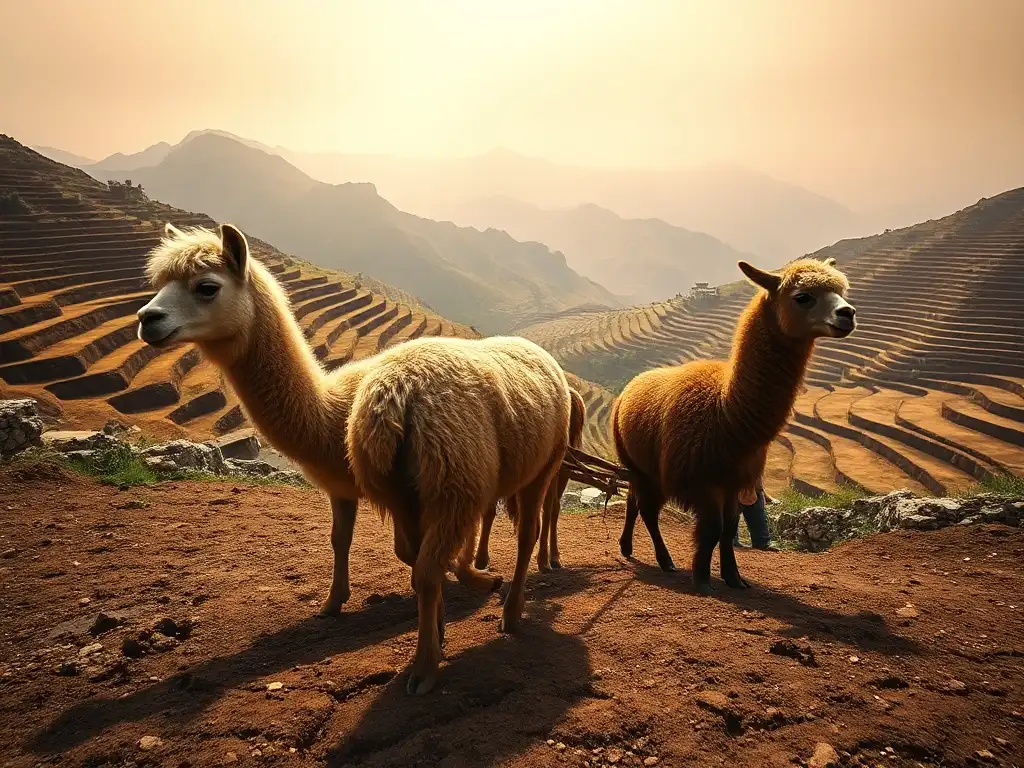
The ingenuity of Andean farmers in harnessing llama power extended far beyond simple pack animal transportation. Llamas played a crucial, multifaceted role in shaping sustainable agricultural practices across diverse Andean ecosystems. Their contributions were deeply interwoven with the social and economic fabric of these societies, demonstrating a sophisticated understanding of animal husbandry and its integration with agricultural needs.
This section will delve into some specific applications of llama power, showcasing the nuanced ways in which these animals were integral to Andean agricultural success. Understanding these techniques offers valuable insights into the resilience and ingenuity of Andean farming methods, particularly relevant in discussions surrounding Andean llama farming techniques.
Llama Caravans: Transportation of Agricultural Goods
Llama caravans were the lifeblood of Andean trade and agricultural distribution. Their ability to traverse challenging mountain terrain efficiently made them indispensable for moving agricultural surpluses, seeds, and other vital goods across vast distances. Caravans, often numbering dozens of llamas, were meticulously organized, with experienced herders guiding them along established trails. The load capacity of each llama was carefully managed to avoid overexertion, reflecting a sustainable approach to animal labor.
A single llama could carry up to 30% of its body weight for considerable distances. This meant that a caravan of 20 llamas could transport up to 1200 kg of goods, a significant amount considering the limited transportation alternatives available in the mountainous Andes. The organization of these caravans, the knowledge of trails, and the careful management of the llamas’ workload demonstrated a profound understanding of logistics and animal welfare, essential components of sustainable Andean llama farming techniques.
Llama-Assisted Terracing and Field Construction
Andean agriculture thrived on ingenious terracing systems that transformed steep slopes into productive farmland. Llamas played a crucial role in the construction and maintenance of these terraces. Their strength was harnessed to transport stones and earth, facilitating the creation of retaining walls that prevented soil erosion and provided level planting surfaces. While human labor was undoubtedly the primary driver, llamas significantly increased the efficiency of terracing construction. Imagine the arduous task of carrying heavy stones uphill – llamas provided a far more efficient solution, minimizing the physical strain on human workers and speeding up the process. This integration of animal and human labor highlights a key aspect of Andean llama farming techniques: a holistic approach combining human ingenuity with animal power to achieve sustainable agricultural outcomes. The efficiency gains from llama assistance allowed for the creation and maintenance of larger and more complex terrace systems, directly impacting food production capacity.
The Use of Llamas in Highland Agriculture
The high-altitude environments of the Andes presented unique challenges for agriculture. Llamas proved exceptionally well-suited to these harsh conditions. Their tolerance for cold and altitude, coupled with their ability to graze on sparse vegetation, made them ideal for highland farming. Beyond transportation, their dung served as a valuable fertilizer, enriching the nutrient-poor soils common in high-altitude regions. This natural fertilization contributed to soil health and improved crop yields. Furthermore, their grazing habits helped prevent overgrazing by controlling vegetation growth and preventing the dominance of certain plant species. This ecological balance was crucial to the sustainability of highland agriculture. The careful integration of llamas into the highland ecosystem exemplifies the sophisticated understanding of Andean llama farming techniques, highlighting a sustainable approach that considered the interconnectedness of animal husbandry and environmental management. These practices are a testament to the adaptability and resourcefulness of Andean farmers in maximizing agricultural output in challenging environments.
The Symbiotic Relationship Between Andean Farmers and Llamas

The success of Andean agriculture wasn't solely dependent on innovative farming techniques; it was intricately intertwined with the strategic integration of llamas into their agricultural practices. This symbiotic relationship, developed over millennia, allowed Andean farmers to achieve a level of sustainable food production remarkable for its efficiency and environmental consciousness. Llamas weren't merely beasts of burden; they were integral components of a sophisticated agricultural ecosystem, providing crucial labor, fertilizer, and even textiles.
This deep-rooted connection between humans and llamas is a testament to the ingenuity and adaptability of Andean civilizations. Understanding this relationship is key to appreciating the complexities and successes of Andean farming. The effective utilization of llamas in Andean agriculture significantly impacted the development of sophisticated Andean llama farming techniques.
Cultural Significance of Llamas in Andean Rituals and Beliefs
Llamas held profound cultural and spiritual significance for Andean communities, extending far beyond their practical agricultural uses. They were not simply seen as livestock but as sacred animals, deeply interwoven with religious beliefs and rituals. Many ceremonies and festivals involved llamas, highlighting their importance in the Andean worldview.
For example, llama sacrifices were performed to appease deities and ensure bountiful harvests, reflecting the deep respect and reverence afforded to these animals. Their wool, used to create intricate textiles, often featured in ceremonial garments, further emphasizing their sacred status. This deep-seated cultural connection ensured the responsible and sustainable management of llama herds, as harming or neglecting these animals was considered an affront to the spiritual realm.
The spiritual and cultural importance of llamas reinforced the practical benefits, creating a holistic approach to animal husbandry that contributed to the longevity of Andean farming practices. The intertwining of spiritual beliefs and agricultural practices showcases the unique perspective of Andean llama farming techniques.
The Economic Importance of Llama Herding for Andean Communities
Beyond their cultural significance, llamas provided substantial economic benefits to Andean communities. Their primary role was as pack animals, transporting goods across challenging terrains. This significantly reduced the labor required for transporting crops and other essential resources. Llama dung served as a valuable fertilizer, enriching the soil and improving crop yields. The wool provided material for clothing and textiles, generating income through trade and barter.
The meat provided a crucial source of protein, contributing to the dietary needs of Andean communities. This multifaceted economic contribution made llama herding a cornerstone of Andean livelihoods, ensuring economic stability and resilience. The economic viability of llama herding further cemented its importance within the overall agricultural system and the sophisticated Andean llama farming techniques employed. The diverse economic contributions of llamas highlight their importance beyond mere agricultural labor.
Llama Management and Sustainable Land Use Practices
Andean llama farming techniques weren't simply about utilizing llamas for labor; they involved sophisticated management practices designed to ensure both the well-being of the animals and the sustainability of the land. Farmers employed rotational grazing techniques, moving llama herds across different pastures to prevent overgrazing and soil erosion. They carefully monitored the health of their animals, providing necessary care and veterinary attention.
This holistic approach to llama management ensured the long-term viability of their herds and prevented environmental degradation. The integration of llamas into the agricultural system wasn't haphazard; it was a carefully planned and executed strategy that prioritized sustainability. This commitment to sustainable practices ensured the long-term success of Andean agriculture, demonstrating the sophisticated understanding of ecological balance inherent in Andean llama farming techniques.
The sustainable practices employed underscore the ingenuity and foresight of Andean farmers. Their approach to llama management serves as a model for responsible animal husbandry and sustainable land use.
Modern Relevance of Andean Llama Farming Techniques
Lessons from Traditional Practices for Sustainable Agriculture Today
Andean llama farming techniques offer valuable lessons for contemporary sustainable agriculture. For centuries, Andean communities perfected methods that minimized environmental impact while maximizing yields. Their approach, deeply intertwined with their understanding of the fragile Andean ecosystem, provides a blueprint for modern farmers seeking environmentally friendly practices.
One key takeaway is the emphasis on integrated farming systems. Llamas weren't just a source of meat and fiber; their dung served as fertilizer, enriching the soil naturally and reducing reliance on chemical inputs. This holistic approach, where animal husbandry and crop cultivation are closely linked, offers a powerful model for reducing reliance on external resources and enhancing biodiversity.
Furthermore, traditional Andean practices prioritized grazing management to prevent overgrazing and soil erosion. Careful rotation of pastures ensured the land's regenerative capacity, preventing degradation and maintaining long-term productivity. This contrasts sharply with some modern intensive farming practices that can lead to soil depletion and environmental damage. The meticulous attention paid to water management in traditional Andean agriculture, often involving sophisticated irrigation systems adapted to the high-altitude environment, is another crucial lesson for today’s world, particularly in the face of increasing water scarcity.
Challenges and Opportunities for Llama Farming in the 21st Century
While traditional Andean llama farming techniques provide a valuable model, their application in the 21st century faces challenges. One significant hurdle is the competition from industrial agriculture. The efficiency and scale of industrial farming often make it more economically attractive, putting pressure on traditional practices. However, increasing consumer awareness of sustainability and ethical sourcing presents a significant opportunity. Demand for organically produced goods and products from sustainable sources is growing, creating a market niche for llama products produced using traditional methods.
Another challenge is the preservation of traditional knowledge. As younger generations move to urban areas, the knowledge and skills associated with traditional Andean llama farming are at risk of being lost. Efforts to document and transmit this knowledge, through educational programs and community initiatives, are crucial for the long-term survival of these valuable practices.
Moreover, research into improving llama breeds for specific purposes, such as increased fiber production or disease resistance, can enhance the economic viability of llama farming, making it a more attractive livelihood option for Andean communities. This requires a balance between modernization and the preservation of traditional techniques.
Preserving Andean Agricultural Heritage through Llama Farming
Preserving Andean agricultural heritage through llama farming necessitates a multifaceted approach. This involves not only supporting existing llama farmers but also actively promoting the adoption of traditional techniques by new generations. This could be achieved through initiatives such as:
- Government subsidies and incentives: Providing financial support to llama farmers who adopt sustainable practices.
- Educational programs: Training programs that teach traditional Andean farming techniques to young people.
- Community-based initiatives: Supporting community-led efforts to preserve and promote llama farming.
- Market development: Creating markets for llama products that reward sustainability and ethical practices.
- Research and development: Investing in research to improve llama breeds and farming practices.
The preservation of Andean llama farming techniques is not merely a matter of nostalgia; it is a crucial element in ensuring food security and environmental sustainability in the Andean region and beyond. These techniques represent a rich repository of knowledge that can contribute significantly to the development of more sustainable agricultural practices globally. By supporting and promoting these traditions, we can ensure that the wisdom of the Andes continues to benefit future generations.
Frequently Asked Questions
What role did llamas play in Andean agriculture?
Llamas were essential to Andean agriculture. They provided fertilizer (guano), were used as pack animals for transporting goods, and their fiber was used for textiles. Their presence significantly impacted the efficiency and sustainability of farming practices.
What specific farming techniques involved llamas?
Andean farmers utilized llamas for plowing fields (though not in the traditional sense with a plow), transporting crops and irrigation materials, and spreading fertilizer. These techniques were adapted to the challenging Andean terrain.
How did llama farming contribute to sustainable agriculture in the Andes?
Llama farming promoted sustainable land management. Their grazing habits helped maintain biodiversity, and their manure provided natural fertilizer, reducing the need for harsh chemical alternatives. This minimized environmental impact.
Were there any specialized breeds of llamas used for farming purposes?
While not distinct breeds in the modern sense, Andean farmers likely selected and bred llamas based on their strength, temperament, and suitability for specific tasks like carrying heavy loads or working in the fields. This was a form of natural selection over generations.
How did Inca civilization integrate llama farming into their empire?
The Inca empire heavily relied on llamas for trade, transportation, and agricultural production. They implemented sophisticated systems for llama herding and management, integrating it into their complex societal structure and economic system.
Final Reflection: The Enduring Legacy of Llama Power
The ingenious agricultural practices of Andean communities, utilizing llama power, offer a potent counterpoint to modern, often unsustainable, farming methods. These ancient techniques, far from being relics of the past, hold vital lessons for a world grappling with climate change and food security. The resilience and adaptability demonstrated by these farming communities are a testament to the power of human ingenuity working in harmony with nature.
The enduring impact of llama farming on Andean culture is profound, extending far beyond mere agricultural production. It represents a deep-rooted connection between humans and their environment, a symbiotic relationship built on respect and sustainability. This connection is reflected in the rich tapestry of Andean traditions, folklore, and even spiritual beliefs, where the llama holds a significant place. The llama is not just an animal; it is a member of the family, a partner in life's work.
This sentiment, though anecdotal, speaks volumes about the integral role of the llama in the Andean way of life and the deep respect afforded to these animals.
Consider the wisdom embedded in these traditional practices. You, the reader, are now equipped with a deeper understanding of sustainable agriculture. Will you apply this knowledge to your own life? Perhaps it's by supporting ethical and sustainable food sources, advocating for responsible land management, or simply appreciating the ingenuity of ancient farming techniques. Let the legacy of llama power inspire you to seek harmony between human needs and the delicate balance of our planet.
Unlock the Potential of Llama Power!
Thank you for exploring the remarkable ways Andean farmers have harnessed the power of llamas in sustainable agriculture. By learning about their innovative practices, you've gained insights that can inspire modern farming methods. Now, let's put that knowledge to work!
Here are some ways you can get involved:
- **Experience llama farming firsthand:** Visit a local farm or agricultural center that uses llamas and see how these amazing animals contribute to sustainable agriculture.
- **Share your newfound knowledge:** Discuss what you've learned with friends and family. You might inspire others to adopt more sustainable practices in their own lives!
- **Expand your knowledge:** Look for online courses or workshops focused on sustainable livestock management and traditional indigenous farming techniques. Learning more is key to making a difference.
How do you envision integrating traditional practices like llama herding into modern agriculture? Share your ideas below!