
The Chakana Cross: Andean Symbol of Order and Cosmic Balance

Dive into the enigmatic world of the Andean civilizations! Prepare to be captivated by their breathtaking artistry, advanced technologies, and profound spiritual beliefs. What secrets does the Chakana cross, a powerful Inca symbol, hold? Uncover the meaning behind this iconic symbol and unlock the mysteries of Andean cosmic order – your journey into the heart of ancient Andean culture begins now.
The Chakana cross, also known as the Inca cross, is a powerful and enduring symbol deeply rooted in the cosmology and worldview of the Andean civilizations. Far from being a mere religious icon, the Chakana represents a complex interplay of earthly and celestial realms, embodying concepts of balance, harmony, and the interconnectedness of all things. This article delves into the multifaceted meaning of the Chakana cross, exploring its significance within Inca culture and its broader relevance to the Andean worldview.
We will examine its symbolic representation of the cosmos, its connection to agricultural practices, and its continued relevance in contemporary Andean societies. Understanding the Chakana cross provides invaluable insight into the sophisticated spiritual and philosophical understanding of the Inca and other pre-Columbian Andean cultures.
Its enduring presence speaks volumes about the enduring power of Andean symbolism and its continued resonance in the modern world. Prepare to journey into the heart of Andean cosmology and uncover the profound meaning behind this iconic symbol.
The Chakana Cross: A Cosmic Representation
The Chakana's most striking feature is its distinct form: a cross with three stepped levels, often depicted within a square or circle. This seemingly simple design holds profound cosmological significance. The three levels are traditionally interpreted as representing the three worlds recognized by Andean cosmology: the Hanan Pacha (upper world, the heavens), the Kay Pacha (middle world, the earthly realm), and the Ukhu Pacha (lower world, the underworld).
Each level is interconnected, symbolizing the continuous flow of energy and the interdependence of these different planes of existence. The four arms of the cross, extending from the central point, represent the cardinal directions (north, south, east, and west), further emphasizing the Chakana's role as a map of the cosmos. The central point itself often symbolizes the axis mundi, the central point connecting all three worlds.
This intricate design showcases the Inca's profound understanding of the universe and their place within it. Detailed studies of Chakana depictions across various Andean cultures reveal subtle variations in design, suggesting regional interpretations and evolving understandings of its symbolic meaning over time. [Specific regional variations and dating of Chakana depictions pending].
The Chakana and Andean Agriculture
The Chakana’s connection to agriculture is undeniable, reflecting the vital role farming played in Andean societies. The three levels of the cross can also be interpreted as representing the stages of agricultural cycles: planting, growth, and harvest. The stepped design mirrors the terraced fields, andenes, meticulously crafted into the Andean landscape to maximize agricultural output.
The Chakana, therefore, served not only as a cosmological symbol but also as a practical reminder of the cyclical nature of life and the importance of agricultural practices for survival and prosperity. The precise alignment of the andenes with the solstices and equinoxes further strengthens the link between the Chakana's cosmic representation and the practicalities of Andean agriculture. [Specific examples of Chakana designs found on agricultural tools or in agricultural contexts pending].
The Chakana Cross Beyond the Inca Empire: A Wider Andean Significance
While strongly associated with the Inca Empire, the Chakana's origins likely predate Inca rule. Similar stepped cross designs have been found in pre-Inca Andean cultures, suggesting a much longer history and a broader Andean significance beyond the Inca civilization. This suggests a shared cosmological understanding across various Andean groups.
The Chakana's enduring presence in various forms across different Andean communities highlights its adaptability and its capacity to transcend specific cultural boundaries. The similarities and subtle differences in Chakana depictions across diverse Andean cultures offer valuable insights into the evolution of Andean symbolism and the exchange of ideas between different communities. [Specific examples of Chakana variations in pre-Inca cultures pending].
The Chakana Cross in Modern Andean Culture
Even today, the Chakana cross continues to hold significant meaning for many Andean communities. It remains a potent symbol of Andean identity and cultural heritage. It is frequently used in contemporary art, textiles, and religious practices, demonstrating its enduring appeal and its continued relevance in modern Andean society.
The Chakana's enduring presence serves as a powerful testament to the resilience of Andean culture and its capacity to adapt and evolve while retaining its core values and beliefs. The cross serves as a reminder of the rich heritage and the interconnectedness of past and present. [Specific examples of contemporary uses of the Chakana cross pending].
- The Chakana Cross: A Cosmic Representation
- The Chakana and Andean Agriculture
- The Chakana Cross Beyond the Inca Empire: A Wider Andean Significance
- The Chakana Cross in Modern Andean Culture
Understanding the Chakana: An Introduction to the Inca Cross
This section delves into the profound symbolism of the Chakana cross, a powerful emblem deeply intertwined with Inca cosmology and worldview. Often referred to as the Inca cross, the Chakana transcends mere geometric representation; it's a complex symbol reflecting the Andean understanding of the universe, human existence, and the interconnectedness of all things. Understanding its meaning requires exploring its intricate design and its relationship to the Andean concept of ayni – reciprocity and balance. The Chakana cross meaning Inca is far richer than a simple religious symbol; it represents a holistic philosophy deeply embedded in Andean culture.
What is the Chakana? Exploring its Geometric Form and Significance
The Chakana, at its most basic level, is a stepped cross. However, its significance goes far beyond its simple appearance. Its geometric form is meticulously crafted, with each element holding specific meaning. The cross typically features three superimposed squares, creating a three-level structure. This three-level structure is often interpreted as representing the three worlds in Andean cosmology: the Hanan Pacha (upper world, the celestial realm), the Kay Pacha (middle world, the earthly plane where humans reside), and the Ukhu Pacha (lower world, the underworld).
The twelve points of the outer square are sometimes interpreted as the twelve months of the Inca solar year, further emphasizing the Chakana's connection to the cycles of nature and the cosmos. The central square often contains further symbolic elements, such as a representation of the sun or other deities. The overall design is not static; variations exist across different Andean cultures and time periods, reflecting regional and stylistic differences. The precision and careful construction of the Chakana, whether carved in stone, woven into textiles, or painted on ceramics, underscore its importance as a sacred symbol.
The Chakana's Connection to Andean Cosmology and Worldview
The Chakana's significance is profoundly rooted in the Andean worldview. It represents the interconnectedness of all things, the balance between opposing forces, and the cyclical nature of time. The three levels of the Chakana mirror the Andean understanding of the universe as a layered system, each realm interconnected and influencing the others. The concept of ayni, reciprocity and balance, is central to the Chakana's meaning. It emphasizes the need for harmony between humans, nature, and the spiritual world. Disrupting this balance was believed to have negative consequences, highlighting the importance of living in accordance with the natural order.
The Chakana was not merely a decorative element; it served as a powerful reminder of the Andean worldview and the responsibility humans have to maintain cosmic equilibrium. Its presence in Inca architecture, textiles, and other artifacts underscores its central role in Inca society. The Chakana cross meaning Inca is not limited to a single interpretation; its multifaceted symbolism continues to inspire awe and fascination, reflecting the depth and complexity of Andean culture.
Understanding the Chakana requires appreciating its intricate design, its cosmic associations, and its role in shaping Andean beliefs and practices. Further research into the specific regional variations and interpretations of the Chakana is needed to fully grasp its rich symbolism within the diverse tapestry of Andean civilizations.
The Chakana Cross Meaning Inca: Decoding its Symbolism
The Chakana cross, often referred to as the Inca cross, holds profound significance within Andean cosmology. Far from a simple religious symbol, the Chakana represents a complex interplay of spatial organization, spiritual beliefs, and the interconnectedness of life. Understanding its meaning requires delving into the intricate worldview of the Inca and pre-Inca Andean cultures.
This section explores the multiple layers of interpretation embedded within this powerful emblem, focusing on its representation of cardinal directions, levels of existence, and the duality inherent in Andean thought. The Chakana cross meaning Inca is rich and multifaceted, reflecting a sophisticated understanding of the cosmos and humanity's place within it.
Chakana and the Four Cardinal Directions: A Spatial Representation
The most immediate interpretation of the Chakana involves its representation of the four cardinal directions: North, South, East, and West. Each arm of the cross corresponds to one of these directions, reflecting the Andean's profound understanding of spatial orientation and its connection to the cosmos. This isn't simply a geographical mapping; it's a symbolic representation of the forces and energies associated with each direction.
For example, the East might represent the rising sun and new beginnings, while the West might symbolize the setting sun and the transition into the spirit world. Ancient Andean settlements often displayed a deliberate orientation aligned with these cardinal directions, emphasizing the importance of this cosmic order. The precise symbolic associations with each direction varied across different Andean cultures and time periods, but the fundamental connection between the Chakana and spatial organization remained consistent.
Further research is needed to fully understand the nuanced variations in these associations across different Andean groups. [Specific information pending: Detailed regional variations in cardinal direction symbolism within Chakana representations].
The Three Levels of Existence: Hanan Pacha, Kay Pacha, and Uku Pacha in the Chakana
Beyond the four cardinal directions, the Chakana also embodies the three levels of Andean cosmology: Hanan Pacha, Kay Pacha, and Uku Pacha. The central square represents Kay Pacha, the earthly realm where humans dwell. The upper arms extend into Hanan Pacha, the upper world, the realm of the gods and celestial beings. Conversely, the lower arms reach into Uku Pacha, the underworld, the realm of ancestors and the earth's hidden power. This tripartite division of reality is fundamental to Andean thought, emphasizing the interconnectedness of these three planes of existence. The Chakana visually encapsulates this cosmology, showing how these levels are not separate but rather interwoven and interdependent. The central square, often depicted with intricate designs, further emphasizes its importance as the intersection point between these three realms. This representation highlights the Andean belief in the cyclical nature of life, death, and rebirth, reflecting a deep understanding of natural processes.
The Interconnection of Opposites: Duality in the Chakana Symbol
The Chakana's design beautifully illustrates the Andean concept of duality, the belief in the interconnectedness of opposing forces. The cross itself represents the balance between these opposing forces: light and darkness, male and female, life and death. The perfectly symmetrical structure visually represents this harmony, suggesting that these opposing forces are not mutually exclusive but rather essential components of a greater cosmic balance.
The Inca, and other Andean cultures, did not view these dualities as conflicting but rather as complementary aspects of a unified whole. This understanding is reflected in various aspects of Andean life, from their agricultural practices to their social structures. The Chakana, therefore, serves as a powerful visual metaphor for this fundamental principle of Andean cosmology.
The intricate details within the Chakana's design, often varying across different examples, could further emphasize specific aspects of these dualities, offering opportunities for deeper analysis and a more nuanced understanding of their symbolic meaning. [Specific information pending: Detailed analysis of variations in Chakana designs and their correlation to specific dualities].
Chakana in Andean Art and Architecture
The Chakana cross, a potent symbol deeply embedded in Andean cosmology, transcends mere decorative elements; it's a fundamental architectural and artistic motif reflecting the worldview of several pre-Columbian Andean cultures, most prominently the Inca. Its presence isn't merely ornamental; it's imbued with profound meaning, representing the interconnectedness of the cosmos, the human realm, and the spiritual world. Understanding the Chakana's pervasive use requires examining its diverse manifestations across different artistic mediums and architectural contexts.
The intricate detail and strategic placement within Andean structures underscores its significance as a powerful emblem of Andean identity and belief systems. The enduring legacy of the Chakana cross meaning Inca is undeniable.
The Chakana in Inca Architecture: Examples and Applications
Inca architecture masterfully integrates the Chakana cross into its designs, often subtly weaving it into the very fabric of its structures. While not always overtly prominent, its presence is strategically planned, reflecting a sophisticated understanding of its symbolic power. Consider, for instance, the meticulously crafted stonework of Machu Picchu.
While not always explicitly depicted as a standalone cross, the arrangement of stones, the pathways, and even the overall layout of the city subtly echoes the Chakana's four-quadrant structure. This suggests a deliberate attempt to mirror the cosmic order represented by the symbol, grounding the city within the Andean worldview. Furthermore, researchers have identified potential Chakana representations in the intricate designs of Inca palaces and temples, although further research is needed to definitively confirm these interpretations.
The precise placement and scale of these potential Chakana motifs within the architecture might hold clues to their specific functions and symbolic meanings within the broader Inca cosmological framework. Detailed analysis of surviving structures and archaeological evidence could reveal further examples and deepen our comprehension of the Chakana cross meaning Inca within the context of architectural design.
Chakana Motifs in Andean Textiles and Ceramics
Beyond architecture, the Chakana cross finds vibrant expression in Andean textiles and ceramics. These artifacts offer a wealth of information about the symbol's evolution and its multifaceted meanings across different Andean cultures. In textiles, the Chakana is often woven into intricate patterns, incorporating other symbolic elements such as llamas, geometric shapes, and stylized representations of nature.
The use of vibrant colors further enhances the symbolic power of the Chakana, often relating specific hues to particular aspects of the Andean cosmology. Similarly, Chakana motifs appear frequently on ceramic vessels, frequently alongside depictions of deities, mythical creatures, and scenes from daily life. The diversity of these depictions highlights the Chakana's adaptability and its capacity to be integrated into various artistic contexts, reflecting its central role in Andean culture and belief systems.
A comprehensive study of these textile and ceramic pieces reveals a rich tapestry of interpretations, offering valuable insights into the evolving Chakana cross meaning Inca. For example, the specific variations in the Chakana's depiction across different regions and time periods can reflect subtle shifts in cultural practices and beliefs. Further research into the iconography and stylistic variations across different Andean regions would provide a more nuanced understanding of the Chakana's meaning and evolution.
The Chakana's Presence in Ancient Andean Rituals and Ceremonies
The Chakana cross wasn't merely a decorative element; it played a vital role in ancient Andean rituals and ceremonies. Its presence in religious practices underscores its deep connection to the spiritual realm and its function as a conduit between the earthly and celestial planes. Archaeological evidence suggests that the Chakana was used in ceremonies related to the solstices and equinoxes, aligning its symbolic representation with the cyclical movements of the sun and the cosmos.
Furthermore, the Chakana's association with sacred mountains and other significant geographical features suggests its importance in maintaining a harmonious relationship between the human world and the natural environment. While specific details of these rituals remain largely unknown, the persistence of the Chakana motif across various Andean cultures strongly suggests its crucial role in maintaining cosmic balance and social order. Further investigation into the archeological and anthropological evidence could reveal more about the specific rituals and ceremonies in which the Chakana cross played a central role.
The potential discovery of additional artifacts, such as ritual objects or inscribed texts, might shed further light on the Chakana cross meaning Inca within the context of religious practices. The continued study of these rituals allows us to better understand the profound significance of the Chakana and its enduring legacy in Andean spiritual traditions.
Variations of the Chakana: Regional Interpretations and Styles
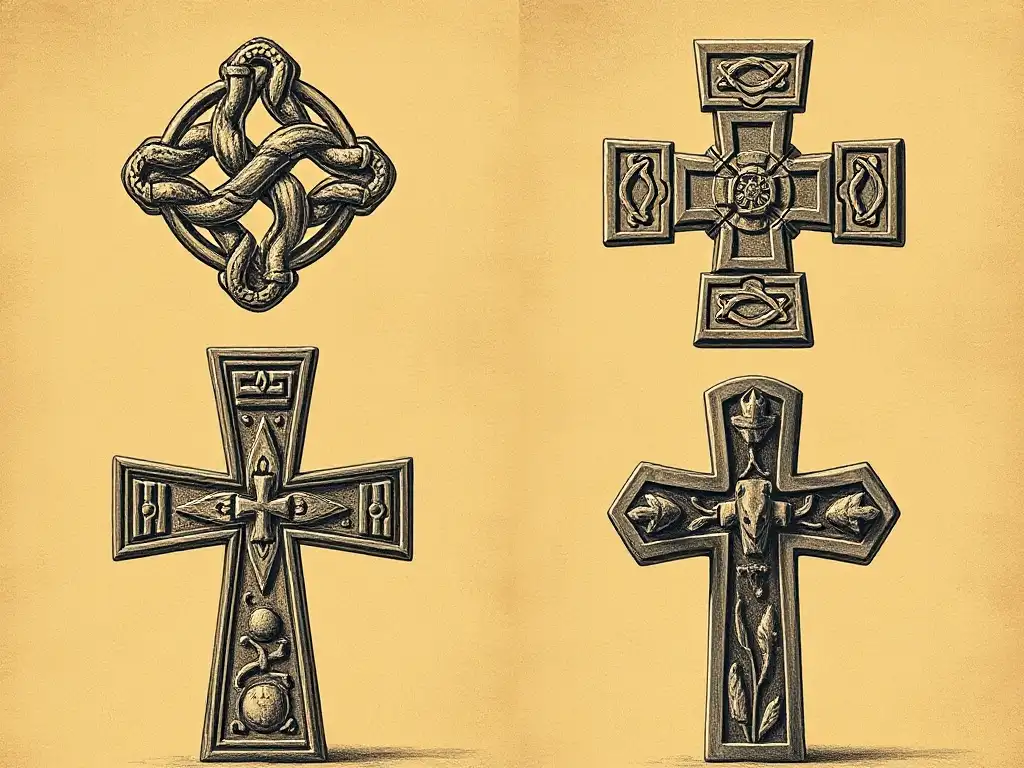
The Chakana cross, a powerful symbol of Andean cosmology, wasn't uniformly depicted across all cultures and regions. While the basic structure—a stepped cross with three levels—remained consistent, subtle variations in design and interpretation emerged, reflecting the unique beliefs and artistic styles of different Andean groups. Understanding these nuances offers a richer appreciation of the Chakana's enduring significance.
Chakana Variations Across Different Andean Cultures
The Inca Empire, while spreading the Chakana's influence widely, didn't create the symbol. Evidence suggests its origins predate the Inca, with variations found in pre-Inca cultures. For example, representations found in Tiahuanaco ruins exhibit a slightly different proportioning of the steps, sometimes with more pronounced angles or added decorative elements.
The Nazca culture, known for their intricate geoglyphs, may have incorporated Chakana-like motifs in their designs, though definitive interpretations are still debated among archaeologists. Further research is needed to fully understand the Chakana's presence in Nazca art. The Moche culture, famed for their elaborate ceramics, may also have used the Chakana, though its presence is less prominent compared to other Andean cultures.
Analyzing these regional variations reveals a fascinating interplay between a shared symbolic core and distinct cultural expressions. This wasn't simply a case of copying; each culture adapted the Chakana to reflect its own worldview. The Inca, for instance, might have emphasized the Chakana's connection to the Ceque system—a network of sacred lines connecting significant sites—more than earlier cultures. This highlights the Chakana's adaptability and its capacity to resonate across diverse Andean societies. The table below summarizes some key differences observed in various Andean cultures:
| Culture | Chakana Characteristics | Notable Features |
|---|---|---|
| Tiahuanaco | Steeper steps, sometimes asymmetrical, added motifs | More geometric emphasis, potentially earlier versions |
| Inca | Balanced proportions, often incorporated into textiles | Consistent style across the empire, symbolic integration |
| Nazca | Possible inclusion in geoglyphs, debated interpretation | Requires further research for conclusive evidence |
| Moche | Less frequent depiction, requires further investigation | Limited evidence necessitates further study |
The subtle differences in these depictions underscore the dynamic nature of Andean symbolism and the Chakana's evolution through different cultural lenses. The seemingly simple symbol carries within it a complex tapestry of meanings, shaped by the unique histories and beliefs of the Andean peoples. Further research into the stylistic variations of the Chakana is crucial for a complete understanding of its significance.
The Evolution of the Chakana Through Time
The Chakana's visual representation evolved over centuries, reflecting shifts in Andean cosmology and artistic expression. While the core structure remained consistent, minor alterations in design and symbolic associations occurred. For example, the addition of decorative elements, such as intricate knotwork or animal figures, might have been used to enhance the Chakana's spiritual significance or to reflect the artistry of a specific time period. The Inca period witnessed a standardization of the Chakana's design, likely due to the empire's centralized power and influence. However, even within the Inca Empire, regional variations persisted, suggesting a degree of local adaptation.
The Chakana is not merely a static symbol; it's a living testament to the enduring power of Andean spirituality.
Determining the precise timeline of these changes requires careful analysis of archaeological findings, including textiles, ceramics, and stone carvings. The scarcity of dated artifacts presents a challenge, making precise chronological sequencing difficult. However, by studying the stylistic features of the Chakana across different periods, researchers can begin to reconstruct its evolution and trace the shifts in its symbolic meaning. For example, a shift from simpler designs to more elaborate ones might suggest a growth in the complexity of Andean cosmology or a change in artistic techniques.
This research is ongoing and constantly evolving as new discoveries are made. The continued study of the Chakana promises to unveil a richer understanding of the Andean worldview and its artistic expressions. Further research, specifically radiocarbon dating of artifacts featuring the Chakana, will be crucial to refine our understanding of its temporal evolution.
Chakana Symbolism Today: Modern Interpretations and Uses
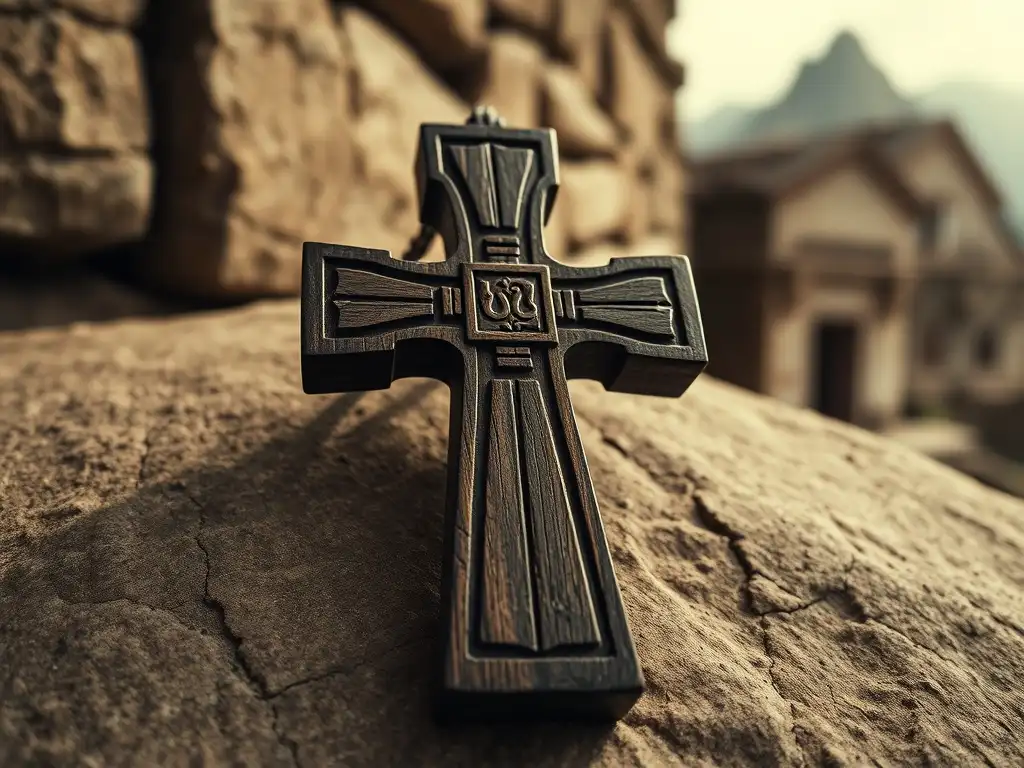
The Chakana cross, far from being a relic of the past, continues to hold profound significance in contemporary Andean societies. Its enduring power stems from its ability to resonate with modern interpretations of spirituality, identity, and social justice. While its original meaning within Inca cosmology remains central, the Chakana has evolved to encompass a broader range of meanings, reflecting the dynamism of Andean cultures. Understanding these modern interpretations is crucial to appreciating the enduring legacy of this powerful symbol. The Chakana cross meaning Inca, while rooted in ancient beliefs, has branched out to encompass new layers of significance.
The Chakana's Relevance in Contemporary Andean Culture
The Chakana remains a potent symbol within contemporary Andean communities. It's frequently seen woven into textiles, carved into wood and stone, and painted on murals and other artwork. This isn't merely decorative; it's a conscious affirmation of cultural heritage and spiritual connection.
For example, many indigenous communities use the Chakana in ceremonies and rituals, reaffirming its importance in their spiritual practices. The cross’s representation of the four elements (earth, air, fire, water) and the four directions (north, south, east, west) provides a framework for understanding the interconnectedness of life, a concept deeply ingrained in Andean worldview. Furthermore, the Chakana's representation of the bridge between the earthly and spiritual realms continues to be a source of inspiration for Andean spiritual leaders and practitioners.
The enduring presence of the Chakana in modern Andean life is a testament to its enduring power and relevance. It's a visible reminder of a rich cultural heritage that continues to shape Andean identities. The use of the Chakana in contemporary settings demonstrates its adaptability and its continuing ability to resonate with modern audiences.
The Chakana as a Symbol of Andean Identity and Heritage
Beyond its spiritual significance, the Chakana has become a powerful symbol of Andean identity and heritage. It represents a connection to ancestral wisdom, a shared history, and a collective struggle for self-determination. The Chakana's use in political and social movements underscores its ability to unite people across geographical boundaries and social classes. It serves as a visual representation of indigenous pride and resistance against colonial oppression.
This adoption of the Chakana as a symbol of resistance is not surprising, given its historical significance within Inca society and its enduring symbolic power. The Chakana cross meaning Inca, in this context, expands beyond its cosmological implications to represent the resilience and cultural continuity of Andean peoples. The symbol has become a unifying force, a powerful reminder of shared identity, and a beacon of hope for a future rooted in ancestral wisdom and cultural pride.
Many contemporary artists incorporate the Chakana into their work, using it as a vehicle to explore themes of identity, cultural preservation, and social justice. The Chakana's versatility as a symbol allows it to adapt to the evolving needs and expressions of Andean communities, ensuring its continued relevance in the 21st century. This multifaceted use speaks volumes about the symbol’s enduring power and its capacity to transcend temporal and spatial boundaries.
The Chakana Cross: A Legacy of Andean Wisdom
The Enduring Significance of the Chakana
The Chakana cross, also known as the Inca cross, holds profound meaning within Andean cosmology. Its enduring significance transcends mere religious symbolism; it represents a holistic worldview encompassing the interconnectedness of the cosmos, humanity, and the natural world. For centuries, the Chakana has served as a powerful emblem of balance, harmony, and spiritual ascension. Understanding its intricate design reveals layers of meaning deeply rooted in the Andean worldview, reflecting their sophisticated understanding of astronomy, agriculture, and spiritual practices.
The Chakana's enduring presence in Andean art and culture underscores its continued relevance as a symbol of identity and spiritual connection. Even today, its imagery resonates with a sense of ancient wisdom and enduring spiritual power, making it a captivating subject for study and reflection. The Chakana cross meaning Inca is deeply tied to this rich tapestry of beliefs and practices.
Deconstructing the Chakana: A Geometric Representation of the Cosmos
The Chakana's distinctive design is a powerful visual representation of the Andean understanding of the cosmos. Its geometric structure—a stepped cross with three levels—is not arbitrary. Each level symbolizes a different realm: the upper world (Hanan Pacha), the human world (Kay Pacha), and the underworld (Ukhu Pacha).
The three steps of the cross are not just equal; they represent a hierarchical structure, reflecting the Andean belief in a carefully ordered universe. The square at the center represents the axis mundi, the connection point between these three realms, a crucial concept in Andean spirituality signifying the interconnectedness of all things. This intricate geometric arrangement isn't simply decorative; it's a map of the universe as understood by the Inca and other Andean cultures.
This intricate symbolism highlights the sophistication of Andean cosmology and its profound influence on their art and daily life. Understanding the Chakana cross meaning Inca requires appreciating this cosmic perspective.
The Chakana and the Inca Empire: Symbol of Power and Identity
While the Chakana's origins predate the Inca Empire, it was adopted and embraced by the Inca as a potent symbol of their power and identity. Inca rulers used the Chakana extensively in their architecture, textiles, and religious ceremonies. Its presence on monumental structures like Machu Picchu reinforces its status as a symbol of imperial authority and cosmic order.
The meticulous craftsmanship evident in Chakana depictions on Inca artifacts underscores its sacred significance. The use of the Chakana in Inca iconography wasn't solely decorative; it served a vital role in reinforcing the legitimacy of the Inca rule and their connection to the divine. The Chakana cross meaning Inca thus evolved into an emblem of imperial power, but always retained its deeper cosmological significance.
Beyond the Inca: The Chakana's Wider Andean Significance
It's crucial to remember that the Chakana’s symbolism extends beyond the Inca Empire. Evidence suggests that similar stepped cross designs existed in pre-Inca Andean cultures, pointing to a much older and wider tradition. The Chakana's enduring presence in the art and culture of various Andean groups highlights its pan-Andean significance, transcending specific ethnic or political boundaries.
This shared symbolism speaks to a common Andean understanding of the cosmos and the importance of maintaining balance and harmony within the universe. Therefore, while the Chakana cross meaning Inca is significant, understanding its broader Andean context is essential for a complete appreciation of its profound symbolism.
The Chakana Today: A Continuing Symbol of Hope and Unity
Even today, the Chakana remains a potent symbol in Andean cultures. It continues to represent hope, unity, and the enduring connection between humanity and the cosmos. Its enduring presence in contemporary Andean art, textiles, and spiritual practices demonstrates its continued relevance and significance.
The Chakana serves as a powerful reminder of the rich cultural heritage of the Andes and the enduring wisdom of its ancient civilizations. Its evocative imagery continues to inspire artists, spiritual leaders, and individuals seeking a deeper connection to their heritage and the natural world. The Chakana cross meaning Inca, therefore, continues to evolve and adapt while retaining its core symbolism of cosmic order and balance.
Frequently Asked Questions
What is the Chakana cross?
The Chakana cross is a sacred symbol from the Andean region, particularly associated with the Inca civilization. It represents cosmic balance, the four elements, and the connection between the earthly and spiritual realms.
What does the Chakana cross symbolize?
The Chakana's symbolism is complex but generally represents the four cardinal directions, the three worlds (upper, middle, and lower), and the integration of different aspects of life. It signifies harmony and balance within the cosmos.
How did the Inca use the Chakana cross?
The Inca used the Chakana in religious ceremonies, architecture, and textiles. It was a powerful symbol of their worldview and a visual representation of their understanding of the universe.
What is the difference between the Chakana and other crosses?
Unlike the Christian cross, the Chakana has a distinct stepped design, representing the three levels of the Andean cosmos. Its symbolism is rooted in Andean cosmology rather than Christian theology.
Why is the Chakana cross significant today?
The Chakana remains a powerful symbol of Andean identity and heritage. It continues to hold spiritual significance for many people and represents a rich cultural legacy.
Final Reflection: Weaving the Chakana's Legacy into the Present
The Chakana cross, far from being a relic of the Inca past, remains a potent symbol resonating with contemporary concerns about harmony, balance, and interconnectedness. Its enduring power lies not just in its historical significance, but in its capacity to offer a framework for understanding our complex world and our place within it. The intricate design, representing the four elements, the cardinal directions, and the spiritual realms, continues to inspire awe and contemplation.
The Chakana's influence extends far beyond the Andes, weaving itself into the tapestry of modern spirituality and artistic expression. Its enduring appeal speaks to a deep-seated human need for order and meaning in a chaotic world. The universe is not outside of us. It is within us.
This sentiment, though not directly from Inca cosmology, perfectly encapsulates the Chakana's message of interconnectedness and the inherent unity of all things. Its enduring presence in contemporary Andean culture, and its growing recognition globally, serves as a testament to its timeless relevance.
Consider the Chakana's message of balance and harmony. How can you integrate this principle into your own life? Embrace the interconnectedness of all things, striving for equilibrium in your personal and professional spheres. Let the Chakana's enduring wisdom guide you towards a more mindful and balanced existence, reminding you of the beauty and power found in unity and respect for the natural world. The journey towards understanding and applying this ancient wisdom is a continuous one, and your own exploration is just beginning.
Rediscover Your Connection to Cosmic Balance!
Thank you for exploring the profound significance of the Chakana Cross. Your interest shows a commitment to understanding the intricate harmony and order this ancient symbol represents.
Ready to deepen your understanding? Here are some next steps:
- Delve further into Andean heritage by exploring related symbols and their meanings. Learn more about the principle of reciprocity in Andean cultures with our article on Ayni.
- Join our vibrant community and share your thoughts and questions about the Chakana Cross with fellow enthusiasts on our forum. Let's learn together!
- Share the wisdom—pass this article along to a friend who might appreciate the insights of the Andean civilizations.
What aspect of the Chakana Cross resonates most with you, and how do you see it influencing your life or practices? We'd love to hear your perspectives!