
The Sacred Landscape: How the Andes Shaped Andean Spatial Thought

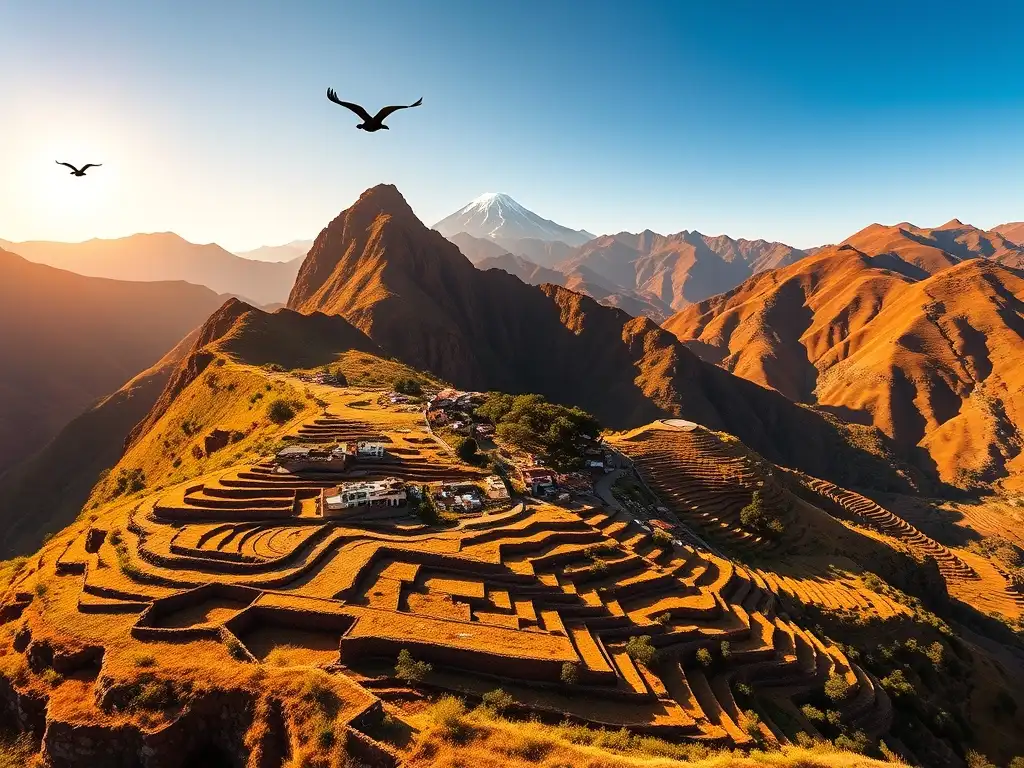
Step into a world lost to time, yet echoing in the majestic Andes Mountains. Imagine a civilization where the very landscape dictated their worldview, where mountains were not merely geographical features, but sacred entities shaping their existence. This is the story of Andean spatial thought history, a fascinating journey into the cosmology and worldview of the Incas, Moche, Nazca, and Tiahuanaco. Prepare to uncover the secrets woven into the sacred landscape – a legacy that continues to resonate today. Dive in and explore!
The imposing Andes Mountains, a spine of rock and ice running down the western coast of South America, weren't merely a geographical feature for the ancient Andean civilizations. They were the very foundation of their worldview, profoundly shaping their understanding of space, time, and the cosmos.
This article delves into the intricate relationship between the Andean landscape and the development of Andean spatial thought, exploring how the physical environment influenced their perception of the world and their interaction with it. We will examine the profound impact of the Andes' geography – its towering mountains, flowing rivers, and fertile valleys – on the spatial concepts and cosmological beliefs of cultures like the Inca, Moche, Nazca, and Tiahuanaco.
Understanding this symbiotic relationship is key to unlocking the complexities of Andean cosmology and their unique understanding of the world around them. This exploration will reveal how the sacred landscape became inextricably woven into the fabric of Andean spatial thought and its enduring legacy.
Introduction to Andean Spatial Understanding
Andean spatial understanding differed significantly from Western perspectives. It wasn't a purely objective, Cartesian mapping of the world, but a deeply symbolic and relational system. Space was not simply empty; it was imbued with meaning, reflecting the interconnectedness of the physical world and the spiritual realm. The Andean worldview emphasized a holistic vision, where the celestial and terrestrial were intertwined, and humans were seen as integral parts of a larger cosmic order.
This understanding of space wasn't static; it was dynamic, evolving through rituals, ceremonies, and the constant negotiation between the human and natural worlds. Understanding this perspective requires moving beyond a purely geographical analysis and embracing the complex interplay of cosmology, mythology, and everyday life. The physical landscape served as a canvas upon which Andean societies projected their beliefs and aspirations, shaping their social structures, political organizations, and agricultural practices.
The Influence of Andean Geography on Spatial Concepts
The dramatic geography of the Andes profoundly impacted how Andean peoples perceived and organized their space. The towering mountains, deep valleys, and fast-flowing rivers dictated the possibilities and limitations of settlement, agriculture, and communication. This geographical influence wasn't merely practical; it was deeply embedded in their worldview, shaping their spiritual beliefs and cosmological understanding. The very act of inhabiting such a challenging environment fostered a unique spatial consciousness, one that recognized the power and agency of nature and the importance of adapting to its rhythms and forces.
Andean Topography and its Impact on Spatial Perception
The extreme topography of the Andes—ranging from arid coastal deserts to high-altitude plains and lush cloud forests—created diverse ecological niches and influenced settlement patterns. The verticality of the Andes, with its distinct altitudinal zones ( quechua, puna, jalca, etc. ), shaped spatial organization. Each zone held specific ecological and symbolic meanings, influencing agricultural practices, ritual activities, and the overall perception of space.
The challenges of navigating this varied terrain fostered a keen awareness of spatial relationships and the importance of verticality in their understanding of the cosmos. This verticality is reflected in their architectural designs, agricultural systems, and even their mythological narratives. For example, [specific information pending] illustrates the importance of verticality in their understanding of the cosmos.
The Role of Mountains in Shaping Andean Worldview
Mountains occupied a central position in the Andean worldview. They were not simply geographical features but sacred entities, often considered the dwelling places of deities and ancestral spirits. The towering peaks represented a connection between the earthly and celestial realms, serving as pathways to the supernatural. Many mountaintops were considered sacred sites, where rituals and ceremonies were performed to ensure the well-being of the community and maintain the balance of the cosmos.
The Inca, for example, revered certain mountains as apu (mountain gods), offering sacrifices and paying homage to their power. This reverence extended beyond individual mountains to the entire mountain range, which was seen as a living entity, shaping the lives and destinies of Andean communities. The imposing presence of the Andes instilled a deep respect for the power of nature and a profound understanding of humanity's place within the larger cosmic order.
Rivers, Valleys, and their Symbolic Significance in Spatial Thought
Rivers and valleys played a crucial role in Andean spatial thought, representing life-giving forces and pathways of communication and trade. The fertile valleys provided the basis for agriculture, supporting dense populations and complex social structures. Rivers, meanwhile, were not just sources of water but also symbolic conduits connecting different parts of the Andean world, both physically and spiritually.
Their life-giving properties linked them to fertility, abundance, and the cyclical nature of life and death. Many Andean myths and legends feature rivers as powerful symbols, reflecting their importance in the everyday lives and spiritual beliefs of Andean communities.
The integration of water management systems into the landscape further demonstrated the intimate connection between Andean people and their environment, shaping their spatial consciousness and their relationship with the sacred. The intricate canal systems, for example, were not merely practical solutions but also reflected a deep understanding of the interconnectedness of the landscape and the importance of maintaining harmony within the ecosystem.
Key Concepts in Andean Spatial Thought
Understanding Andean spatial thought requires grasping several key concepts that intertwined the physical landscape with the spiritual realm. The Andes weren't merely a geographical backdrop; they were an active participant in the worldview of Andean cultures. The relationship between humans and the environment was deeply symbiotic, with mountains, rivers, and even the earth itself holding immense spiritual significance. This interconnectedness shaped how Andean societies organized their lives, built their cities, and understood their place in the cosmos.
Their spatial understanding was not a static map, but rather a dynamic, ever-evolving reflection of their cosmology and beliefs. This perspective significantly impacted their agricultural practices, social structures, and artistic expressions. The intricate relationship between the physical and spiritual realms is a central theme that permeates all aspects of Andean spatial thought, leaving a lasting legacy on our understanding of their sophisticated culture.
The Concept of Tawantinsuyu as a Spatial Model
The Inca Empire's organization, known as Tawantinsuyu ("the four regions"), exemplifies Andean spatial thinking. It wasn't simply a political structure but a spatial model reflecting the cosmos. The four quarters—Chinchaysuyu (northwest), Antisuyu (northeast), Contisuyu (southwest), and Collasuyu (southeast)—represented a harmonious arrangement mirroring the cardinal directions and celestial bodies. This division wasn't arbitrary; it incorporated geographical features, ethnic groups, and resource distribution into a coherent spatial framework.
The capital, Cusco, situated at the heart of the empire, served as a symbolic center, connecting the four quarters and representing the axis mundi, the central point linking the earthly and celestial realms. The Tawantinsuyu model demonstrated a sophisticated understanding of spatial organization, integrating political, social, and cosmological elements within a unified framework. This spatial organization facilitated efficient administration, resource management, and the maintenance of social harmony across a vast and diverse empire.
Pachamama and the Sacredness of the Earth
Pachamama, the Earth Mother, represents a fundamental concept in Andean spatial thought. She is not merely the physical earth but a living entity, a powerful force that sustains life and demands respect. The land itself was considered sacred, imbued with spiritual energy, and integral to Andean life. Agricultural practices, such as terraced farming and the careful management of water resources, reflected a deep understanding of and reverence for Pachamama. Offerings and rituals were regularly performed to appease and honor her, emphasizing the interconnectedness between human actions and the earth's fertility. The very act of cultivating the land was a spiritual practice, a form of dialogue with Pachamama. This deep respect for the land ensured the sustainability of their agricultural systems and their continued connection to the spiritual world. The concept of Pachamama is deeply embedded in the Andean worldview, shaping their spatial perception and their relationship with the natural world.
The Significance of Apus and Mountain Deities
The Apus, or mountain deities, held immense importance in Andean spatial thought. These snow-capped peaks were not simply geographical features but powerful spiritual beings, often considered intermediaries between the human and celestial realms. Villages and settlements were frequently located in relation to specific Apus, reflecting a deliberate integration of the sacred landscape into their spatial organization. The Apus influenced daily life, providing water, protection, and fertility.
Their presence shaped the layout of agricultural terraces, irrigation systems, and even the design of buildings. Rituals and offerings were regularly conducted to appease the Apus, ensuring their continued favor and protection. The veneration of the Apus underscores the deep spiritual significance of the Andean landscape and its profound influence on their spatial understanding. The veneration of the Apus continues to this day, demonstrating the enduring power of this cosmological belief.
The Concept of Chakana as a Bridge Between Worlds
The Chakana, or Andean cross, is a powerful symbol representing the bridge between the three levels of the Andean cosmos: the Hanan Pacha (upper world), Kay Pacha (present world), and Ukhu Pacha (underworld). This symbol reflects a complex spatial understanding that integrates the earthly realm with the celestial and subterranean worlds. The Chakana’s four arms, often depicted with stepped elements, symbolize the four cardinal directions and the interconnectedness of these different realms.
Its central point represents the axis mundi, the connection between the heavens and the earth. The Chakana wasn't just a decorative motif; it was a powerful cosmological symbol deeply embedded in Andean spatial thought, reflecting their understanding of the interconnectedness of different realms and their own position within the cosmos. The presence of the Chakana in various contexts, from textiles to architecture, underscores its central role in Andean cosmology and its influence on spatial perception.
Mapping the Andean Cosmos: Spatial Representations
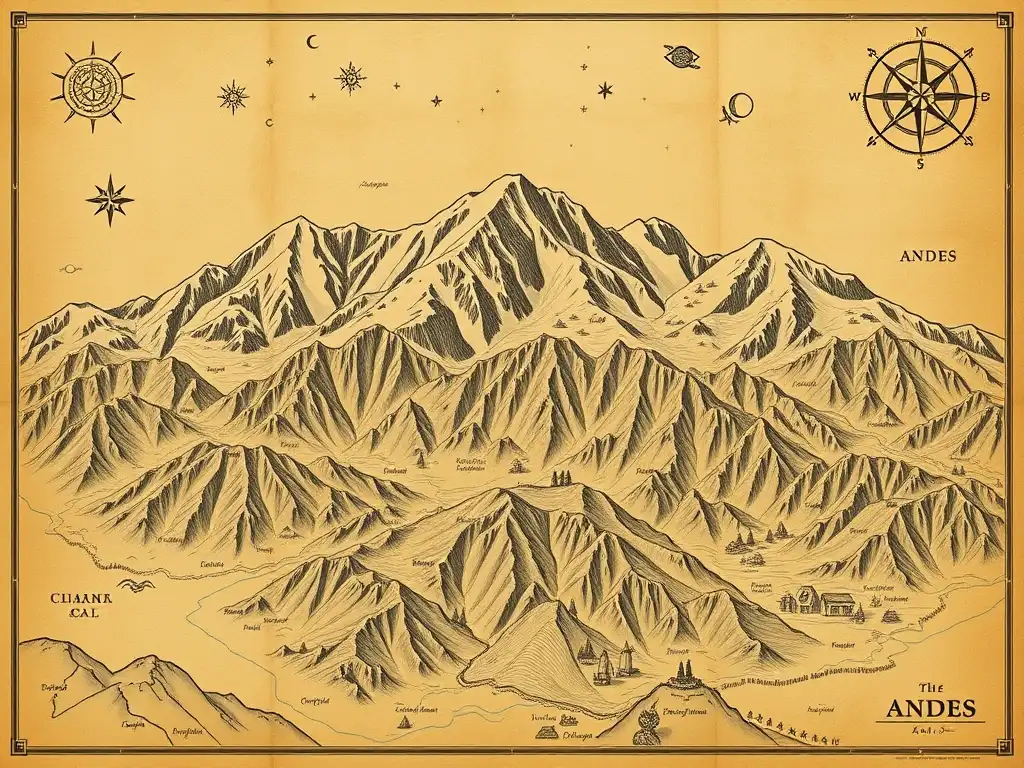
Andean civilizations developed sophisticated methods for representing their understanding of the cosmos, reflecting a deep integration of spatial awareness and spiritual beliefs. Their spatial mapping wasn't solely for practical purposes; it was intrinsically linked to their cosmology, social structures, and spiritual practices. The ways in which they represented space reveal a keen understanding of both the physical and spiritual dimensions of their world.
The Use of Lines and Geoglyphs in Spatial Mapping
The Nazca Lines, among the most famous examples of Andean spatial representation, are vast geoglyphs etched into the desert landscape. While their precise purpose remains debated, they likely served as a form of spatial mapping, possibly linked to astronomical observations, ritual practices, or even a combination of both. These intricate designs, visible only from the air, demonstrate a sophisticated understanding of geometry and spatial planning.
Their scale and complexity highlight the significance of the landscape itself as a canvas for expressing cosmological beliefs and spatial relationships. The creation and maintenance of these monumental works demonstrate the importance of spatial representation within Andean culture and their ability to manipulate the landscape to reflect their worldview. Further research is needed to fully understand their complex meaning and function.
The Layout of Andean Cities as Spatial Expressions
Andean cities weren't haphazardly constructed; their layouts often reflected a deep understanding of spatial organization and cosmology. Cusco, the Inca capital, exemplifies this with its intricate network of streets and buildings arranged along a series of axes aligned with significant geographical features and celestial events. The city's design incorporated sacred sites, palaces, and administrative centers into a unified spatial system, mirroring the hierarchical structure of Inca society and its relationship with the cosmos.
The careful planning and execution of these urban landscapes demonstrate a sophisticated understanding of spatial design and its role in reinforcing social structures and cosmological beliefs. The strategic placement of buildings and the incorporation of natural features into urban planning were not coincidental but reflect deliberate design choices rooted in their spatial thought.
The Significance of Sacred Sites and their Spatial Relationships
Sacred sites played a crucial role in Andean spatial thought, acting as focal points connecting the earthly and spiritual realms. These sites, often located on mountaintops, near water sources, or at significant geographical junctions, were not merely places of worship but integral parts of a larger spatial network. Their placement and relationships to other sites reflect a sophisticated understanding of the landscape's symbolic and spiritual significance.
The spatial arrangement of these sacred places, and their connection to pathways and pilgrimage routes, created a meaningful and interconnected landscape that reinforced social cohesion and spiritual beliefs. The importance of these sacred sites continues to resonate today, highlighting the enduring influence of Andean spatial thought on the cultural landscape. Further research is needed to fully understand the complex network of relationships between these sites and their function within the broader Andean cosmology.
Andean Spatial Thought History: A Chronological Perspective
Early Andean Spatial Concepts in Pre-Inca Cultures
Understanding Andean spatial thought requires a journey back in time, far beyond the Inca Empire. Pre-Inca cultures, such as the Chavín, Moche, Nazca, and Tiwanaku, each possessed unique spatial understandings deeply intertwined with their cosmologies and social structures. The Chavín, for example, utilized intricate networks of pathways and plazas in their ceremonial centers, suggesting a carefully planned and symbolic spatial arrangement reflecting their religious beliefs. The Moche, renowned for their sophisticated irrigation systems, demonstrated a mastery of manipulating the landscape to meet their agricultural needs, revealing a practical yet spiritually significant approach to space.
Their monumental architecture, often integrated into the natural environment, points to a profound connection between the built and natural worlds. The Nazca, famous for their geoglyphs, created massive designs visible only from the air, challenging our understanding of spatial perception and prompting questions about their intended audience and purpose. These enigmatic lines suggest a deep understanding of the landscape and its relation to celestial bodies. The Tiwanaku, with their impressive city planning and sophisticated water management systems, further demonstrate the sophisticated spatial planning and engineering capabilities of pre-Inca societies.
Their monumental architecture and city layout suggest a hierarchical structure and a deliberate organization of space to reflect social and religious power. These early Andean cultures laid the groundwork for the later development of Inca spatial thought, demonstrating a long history of complex and nuanced relationships between people and their environment. Archaeological evidence continuously reveals new insights into the intricate spatial practices of these pre-Inca societies, enriching our understanding of Andean spatial thought.
The Inca Expansion and its Impact on Spatial Organization
The Inca expansion dramatically reshaped the Andean landscape and, consequently, Andean spatial thought. The Inca's remarkable administrative and engineering skills were instrumental in creating a vast, interconnected empire. The chaski relay system, a sophisticated network of messengers traversing mountain passes and valleys, exemplifies the Inca's understanding of spatial connectivity. Their impressive road system, the Qhapaq Ñan, not only facilitated communication and trade but also served as a powerful symbol of imperial control and the unification of diverse populations within a shared spatial framework.
The Inca’s understanding of Andean geography directly influenced their urban planning. Cities like Cusco, strategically located in a geographically advantageous position, were planned according to a precise and symbolic layout reflecting the Inca worldview, with sacred sites and administrative centers meticulously positioned. The Inca's use of tampus (roadside rest stops) along the Qhapaq Ñan highlights their attention to the spatial experience of travelers and the importance of providing regular intervals of rest and replenishment.
The Inca also implemented standardized building techniques and architectural styles across their empire, creating a unified aesthetic that reinforced their political and ideological control. This standardization, however, did not erase pre-existing local spatial customs completely; instead, it often integrated them into a broader imperial framework. The Inca's impact on Andean spatial organization was profound and enduring, leaving a legacy that continues to influence the region today.
The Legacy of Andean Spatial Ideas in Contemporary Communities
The legacy of Andean spatial thought continues to resonate in contemporary Andean communities. Traditional agricultural practices, such as the construction of andenes (terraces) to maximize arable land, demonstrate a continued engagement with the challenges and opportunities presented by the steep, mountainous landscape. Furthermore, the importance of sacred sites and pilgrimage routes reflects the ongoing significance of place-based spiritualities and the enduring power of ancestral traditions.
Many Andean communities still maintain a close relationship with the natural environment, integrating it into their daily lives and spiritual practices. The use of traditional building materials and techniques also reflects a continued connection to the landscape and a respect for traditional ways of life. The knowledge and practices related to Andean spatial thought have been passed down through generations, often orally, and are still actively practiced and adapted to contemporary challenges.
However, modernization and globalization pose significant challenges to the preservation of these traditional spatial understandings. Efforts to document and preserve these practices are crucial for understanding the ongoing relevance of Andean spatial thought in the twenty-first century. The study of contemporary Andean communities provides valuable insights into the continuity and transformation of spatial concepts over time.
The Interplay of Time and Space in Andean Thought
Cyclical Time and its Connection to Spatial Patterns
Andean thought is characterized by a cyclical understanding of time, deeply intertwined with spatial patterns. Rather than a linear progression, time is perceived as a recurring cycle, often represented by agricultural cycles and celestial movements. This cyclical perception of time influenced the spatial organization of Andean communities, with the positioning of settlements and agricultural fields reflecting the rhythms of nature.
The annual agricultural cycle, for instance, structured the daily routines and social organization of Andean communities, shaping their spatial interactions. The movement of the sun and stars provided a crucial temporal framework, informing the construction of astronomical observatories and influencing the timing of rituals and ceremonies.
Understanding the cyclical nature of time is essential to comprehending Andean spatial arrangements, as many aspects of Andean life were structured in accordance with these natural rhythms. The cyclical perspective on time was not merely an abstract concept; it was directly linked to practical matters like agriculture and resource management, shaping the spatial organization of settlements and agricultural lands.
The Concept of Kay Pacha, Hanan Pacha, and Uku Pacha
The Andean cosmology encompasses a three-tiered universe: Kay Pacha (the earthly realm), Hanan Pacha (the upper world), and Uku Pacha (the underworld). This tripartite division of the cosmos significantly influenced Andean spatial thought. Kay Pacha, the earthly realm, is the space where humans live and interact with the natural world.
Hanan Pacha, the celestial realm, is associated with the sun, moon, and stars, and is considered the abode of deities and ancestors. Uku Pacha, the underworld, is associated with the earth's depths and is believed to be the source of life and fertility. These three realms are not seen as separate entities but rather as interconnected and interdependent, with pathways and portals connecting them.
This understanding of the cosmos profoundly influenced the spatial organization of Andean settlements, with sacred sites and ceremonial centers often designed to reflect the relationship between these three worlds. The integration of these three realms in Andean spatial thought highlights the interconnectedness of the human world with the spiritual and natural realms.
Rituals and Ceremonies as Spatial-Temporal Events
Rituals and ceremonies played a crucial role in shaping Andean spatial thought, functioning as powerful spatial-temporal events. These rituals were not merely religious observances but also social and political acts that reinforced social structures and expressed cosmological beliefs. The spatial arrangement of participants and sacred objects during ceremonies was carefully planned, reflecting the hierarchy and social relations within the community.
Ceremonial centers, often located at significant geographical points, served as focal points for community gatherings and ritual activities, shaping the spatial organization of settlements and reinforcing social structures. The timing of these rituals was also crucial, often coinciding with agricultural cycles or astronomical events, highlighting the close relationship between time and space in Andean thought.
These ritual practices were not just confined to specific locations; they involved movement across the landscape, reinforcing the interconnectedness of different spaces. The study of these rituals and ceremonies offers valuable insights into the complex interplay between time, space, and social organization in Andean cultures.
Decoding the Andean Landscape: An Analysis of Spatial Practices
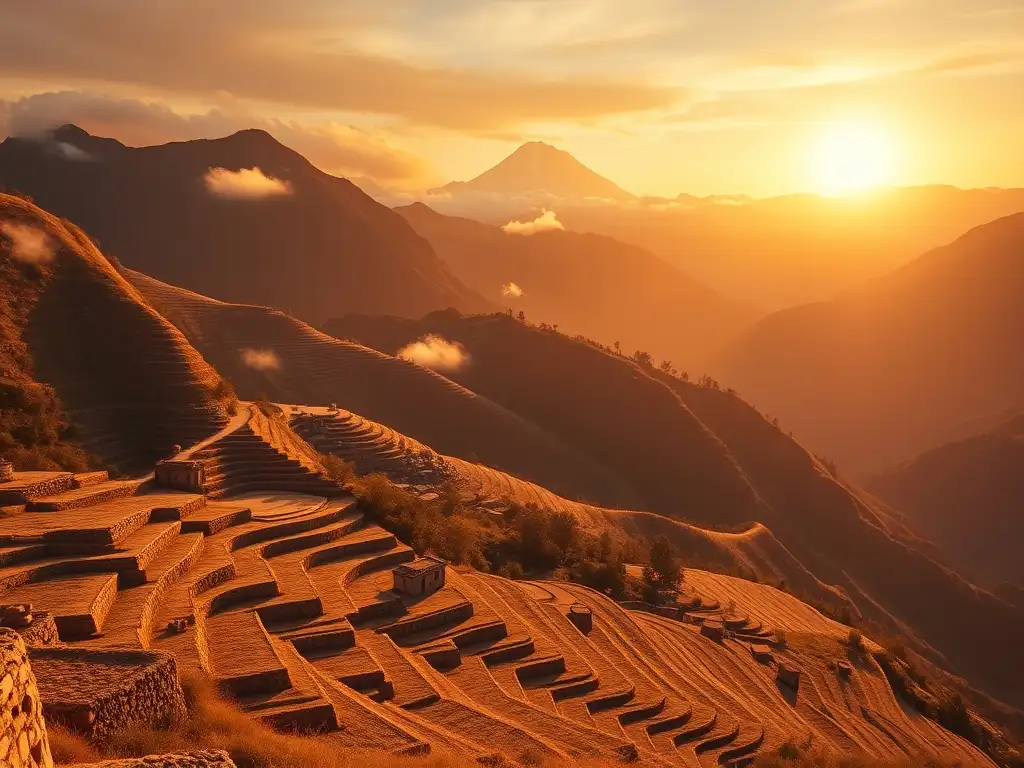
The Andes Mountains, a formidable and awe-inspiring natural feature, profoundly shaped the spatial thought of the Andean civilizations. Their understanding of space wasn't simply a matter of geographical location; it was deeply intertwined with their cosmology, social organization, and agricultural practices. The sheer scale and dramatic topography of the Andes dictated settlement patterns, infrastructure development, and even their spiritual beliefs.
The mountainous terrain, with its valleys, high plateaus, and coastal deserts, presented both challenges and opportunities, fostering ingenious adaptations that are reflected in their unique spatial arrangements. Understanding Andean spatial practices requires moving beyond a simple map-based interpretation and delving into the symbolic meanings embedded within their landscape. The placement of settlements, the construction of roads and irrigation systems, and the location of ceremonial sites all contributed to a complex and dynamic spatial organization that reflected their worldview.
This wasn't simply a pragmatic approach to survival; it was a deliberate construction of a sacred landscape, where the physical and spiritual realms were inextricably linked. The Andean understanding of space was inherently relational, emphasizing interconnectedness between humans, the environment, and the supernatural.
Andean Agricultural Techniques and their Spatial Implications
Andean agricultural techniques were not merely practical solutions to food production; they were integral to their spatial organization. The development of sophisticated terracing systems, like those found in the Inca Empire and earlier cultures, dramatically altered the landscape, creating a series of interconnected agricultural zones that optimized resource utilization. These terraces weren't simply a way to cultivate steep slopes; they were a statement of human dominion over nature, a testament to their ingenuity and their ability to reshape the environment to their needs.
The spatial distribution of agricultural fields, alongside the careful management of water resources through intricate irrigation systems, demonstrates a profound understanding of the Andean ecosystem and its spatial dynamics. The careful planning and execution of these projects involved a complex social organization, highlighting the importance of communal labor and shared responsibility in shaping their spatial environment.
The precise placement of terraces, often aligned with celestial events, suggests a deep connection between agricultural practices and their cosmological beliefs. This integration of practical needs with spiritual significance further underscores the holistic nature of Andean spatial thought.
The Role of Pilgrimages in Defining Sacred Spaces
Pilgrimages played a crucial role in defining and reinforcing the sacred spaces within the Andean landscape. These journeys, often undertaken to significant sites like mountain peaks or ceremonial centers, weren't merely physical movements; they were spiritual journeys that connected individuals to the divine and strengthened communal bonds. The routes themselves became imbued with sacred significance, transforming the landscape into a network of interconnected spiritual pathways.
The construction of resting places, shrines, and other infrastructure along pilgrimage routes further solidified the sacred character of these spaces. The annual pilgrimages, often timed with specific agricultural cycles or celestial events, reinforced the cyclical nature of Andean time and the importance of maintaining harmony between the human and spiritual realms.
The spatial organization of these pilgrimage routes reflects a deep understanding of the landscape, its resources, and its spiritual significance, showing how the physical and spiritual were inextricably linked in their worldview. Evidence from various Andean cultures points to the importance of these journeys in maintaining social cohesion and reinforcing shared beliefs.
The Spatial Organization of Andean Social Structures
The spatial organization of Andean societies mirrored their social hierarchies and political structures. Cities like Cusco, the Inca capital, were meticulously planned, with distinct zones for residential areas, administrative buildings, religious centers, and agricultural lands. This structured layout reflected the centralized nature of the Inca Empire and the importance of social control.
However, this pattern of spatial organization varied across different Andean cultures, reflecting their unique social structures and political systems. Smaller settlements, often located in strategic locations within the landscape, show different spatial patterns reflecting their local needs and social organization. The distribution of resources, the construction of infrastructure, and the location of ceremonial sites all contributed to a complex spatial arrangement that reflected the social and political dynamics of each society.
Analyzing the spatial organization of Andean settlements provides valuable insights into their social structures, power dynamics, and the ways in which they adapted to the challenges of the Andean environment. The spatial arrangement of settlements, whether urban centers or rural villages, reveals much about the social, economic, and political realities of these societies.
Conclusion: The Enduring Legacy of Andean Spatial Thought
Andean spatial thought, deeply rooted in the unique characteristics of the Andes Mountains, represents a sophisticated and holistic understanding of the relationship between humans and their environment. Their ingenious agricultural techniques, intricate road systems, and carefully planned settlements demonstrate an unparalleled ability to adapt to and reshape their surroundings. The integration of spiritual beliefs into their spatial practices underscores the profound connection between the physical and spiritual realms within their worldview.
The enduring legacy of Andean spatial thought continues to inspire awe and admiration, offering valuable lessons on sustainable living, resource management, and the importance of respecting the environment. Further research and a deeper understanding of Andean spatial practices can contribute to contemporary discussions regarding sustainable development and harmonious coexistence between humans and nature.
The study of "Andean spatial thought history" reveals a rich tapestry of ingenuity and spiritual connection to the land. The legacy of these civilizations continues to resonate, offering valuable insights for understanding our relationship with the environment.
Understanding the Andean Worldview Through Spatial Analysis
Understanding Andean spatial thought requires moving beyond a purely geographical interpretation. It necessitates a deep dive into the Andean worldview, recognizing the profound interconnectedness between the physical landscape and the spiritual realm. For Andean civilizations, the mountains, valleys, rivers, and celestial bodies weren't simply geographical features; they were active participants in a dynamic cosmological system.
Their spatial organization mirrored this cosmology, reflecting a complex interplay of social structures, religious beliefs, and environmental adaptation. The placement of settlements, agricultural terraces, and monumental architecture wasn't arbitrary; it was carefully planned to align with the perceived energies and flows of the landscape, reflecting a profound understanding of the earth's power and its influence on human life. This understanding is crucial to interpreting the intricate patterns of settlement distribution and the symbolic meaning embedded within the spatial arrangement of Andean societies.
Analyzing the spatial organization of Andean societies, therefore, offers a unique window into their deeply spiritual and interconnected worldview. The careful consideration of site selection, for instance, often reveals a deliberate connection to sacred sites, water sources, and agricultural productivity, underscoring the holistic nature of Andean spatial planning.
The study of Andean spatial thought necessitates a multidisciplinary approach. Archaeologists, anthropologists, and historians must collaborate to decipher the complex interplay between material culture and cosmological beliefs.
For example, the intricate network of roads and pathways that crisscrossed the Inca Empire wasn't simply a logistical achievement; it was a physical manifestation of their worldview, connecting sacred sites and facilitating the movement of people and resources within a carefully structured cosmos. Similarly, the carefully planned agricultural terraces, which sculpted the Andean landscape, served not only a practical purpose but also represented a harmonious integration of human activity with the natural environment, reflecting a deep respect for the cyclical rhythms of nature and the interconnectedness of all living things.
By carefully examining the interplay of these elements, we gain a richer understanding of how Andean societies structured their world and the deep spiritual significance they attributed to their spatial organization. This multidisciplinary approach is essential for a comprehensive understanding of Andean spatial thought.
Furthermore, understanding Andean spatial thought requires acknowledging the dynamism of the Andean landscape itself. The Andes are a highly variable environment, characterized by dramatic changes in altitude, climate, and terrain. Andean civilizations adapted to this diverse landscape, developing sophisticated strategies for resource management and settlement planning.
Their spatial organization reflects this adaptive capacity, showcasing a remarkable understanding of environmental factors and their impact on human life. The intricate system of irrigation canals, for example, not only provided water for agriculture but also served as a powerful symbol of human control over nature and a testament to the ingenuity of Andean engineers.
The integration of these systems into the broader spatial organization of Andean societies highlights the intricate relationship between human activity and the natural environment, showcasing a sophisticated understanding of ecological principles and their influence on spatial planning. This understanding helps explain the sophisticated strategies employed by Andean societies to navigate and manage the challenges posed by their rugged and dynamic environment.
- Introduction to Andean Spatial Understanding
- The Influence of Andean Geography on Spatial Concepts
- Key Concepts in Andean Spatial Thought
- Mapping the Andean Cosmos: Spatial Representations
- Andean Spatial Thought History: A Chronological Perspective
- The Interplay of Time and Space in Andean Thought
- Decoding the Andean Landscape: An Analysis of Spatial Practices
- Conclusion: The Enduring Legacy of Andean Spatial Thought
- Understanding the Andean Worldview Through Spatial Analysis
Frequently Asked Questions
What is "Andean spatial thought"?
Andean spatial thought refers to the unique ways ancient Andean cultures perceived and interacted with their environment. It wasn't just about physical space, but also the spiritual and cosmological dimensions interwoven with their landscape. This integrated understanding shaped their cities, agriculture, and beliefs.
How did the Andes Mountains influence Andean spatial thought?
The rugged and challenging terrain of the Andes profoundly impacted Andean spatial thought. Their understanding of space was deeply connected to the mountains' verticality, ecological zones, and the perceived spiritual power emanating from them. This shaped their agricultural practices and urban planning.
What role did religion play in Andean spatial thought?
Religion was central to Andean spatial thought. Sacred sites, mountains ( apus), and water sources were considered powerful and imbued with spiritual energy. The arrangement of settlements and agricultural terraces reflected these religious beliefs and the desire to harmonize with the natural world.
How did Andean spatial thought manifest in their cities?
Andean cities weren't simply functional spaces; they were carefully planned to reflect their cosmological beliefs. The placement of buildings, temples, and agricultural fields often aligned with specific astronomical events or geographical features, demonstrating a deep integration of the sacred and the secular.
How does studying Andean spatial thought contribute to our understanding of history?
Studying Andean spatial thought offers a different lens through which to understand ancient civilizations. It challenges Eurocentric perspectives by highlighting the complexity and sophistication of Andean knowledge systems and their holistic approach to relating with the environment. It reveals a unique way of organizing society and interacting with the world.
Final Reflection: Echoes of the Andes in a Globalized World
The enduring legacy of Andean spatial thought continues to resonate in contemporary discussions of environmentalism, community development, and indigenous rights. Understanding how the Andes shaped Andean perceptions of space is not merely an academic exercise; it's a crucial lens through which to view the challenges and opportunities facing both Andean communities and the global community at large. The interconnectedness of human life and the natural world, a core tenet of Andean cosmology, offers a powerful counterpoint to the exploitative tendencies of modern industrial society.
The profound impact of the Andes on Andean worldview is undeniable, shaping not only their relationship with the land but also their social structures, spiritual beliefs, and artistic expressions. This intricate tapestry of interconnectedness, where the sacred and the mundane are interwoven, offers a valuable lesson for a world increasingly fractured by division and environmental degradation. The mountains are not just mountains, they are the dwelling place of the spirits, the source of life, and the very foundation of our being.
This sentiment, though paraphrased, encapsulates the deep spiritual connection that underpins Andean spatial thought and its enduring relevance.
Consider the implications of this interconnected worldview for your own life. How do you perceive your relationship with the environment? Can you identify ways in which your understanding of space is influenced by your cultural background and personal experiences? By engaging with the rich tapestry of Andean spatial thought, we can gain a deeper appreciation for the diversity of human experience and cultivate a more sustainable and harmonious relationship with the world around us. Let the echoes of the Andes inspire you to re-evaluate your own place within the larger landscape of life.
Unveil the Power of the Andes in Your Life!
Thank you for exploring the profound connection between the Andes Mountains and Andean spatial thought. We hope this journey has inspired you to appreciate the significant role landscapes play in shaping culture and identity. Now, let's delve deeper.
Here are some impactful ways to continue your exploration:
- Visit a local museum or cultural center showcasing Andean art and history for an immersive experience.
- Share this article with friends and family, or post it on social media to spark discussions about the influence of geography on our perspectives.
- Reflect on your own relationship with nature: Consider how your environment shapes your thoughts, beliefs, and interactions within your community. Keep a journal or simply take time for mindful observation.
Now, we'd love to hear from you: How has a specific landscape influenced your worldview or shaped your perspective?