
Tiahuanaco's Temporal Perspective: Celestial Alignments and Sacred Cycles

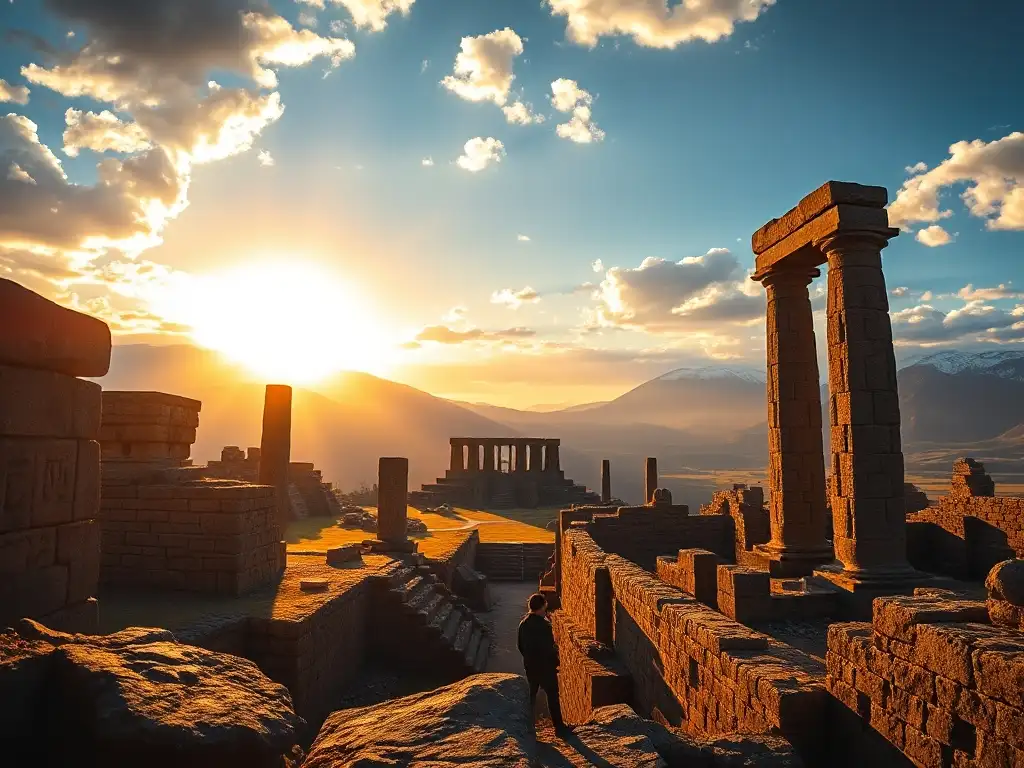
Step into a world lost to time, yet echoing with the whispers of a celestial past. Uncover the mysteries of the Andes, a land where towering mountains met breathtaking ingenuity. Prepare to be captivated by the Tiahuanaco celestial alignments, a testament to the sophisticated astronomical knowledge of an ancient civilization. Were these precise alignments mere coincidence, or did they hold the key to a profound understanding of the cosmos? Delve into the fascinating world of Andean cosmology and discover the answers within.
The ancient city of Tiahuanaco, located on the shores of Lake Titicaca in modern-day Bolivia, remains an enigma wrapped in layers of archaeological mystery. This article delves into the fascinating relationship between Tiahuanaco's monumental architecture and the celestial movements, exploring how the city's builders incorporated astronomical knowledge into their sacred urban planning.
We will uncover evidence suggesting that the precise placement of structures, plazas, and even smaller features was carefully designed to reflect and interact with specific solar and stellar events, marking the passage of time through a sophisticated system of sacred cycles. Understanding Tiahuanaco's celestial alignments provides crucial insights into the Andean worldview, revealing a deep connection between the terrestrial and celestial realms, a cosmological perspective that shaped their society and beliefs.
This exploration will shed light on how the Tiahuanaco people perceived and measured time, not merely as a linear progression, but as a cyclical and interwoven relationship with the cosmos.
The Kalasasaya Temple: A Celestial Observatory?
The Kalasasaya Temple, the most prominent structure at Tiahuanaco, is a prime example of potential astronomical integration. Its massive stone blocks, some weighing several tons, are meticulously arranged. Many researchers believe the temple's orientation, along with the positioning of its gateways and internal features, directly correlates with solstices and equinoxes.
For example, the "Gateway of the Sun," a monumental stone carving adorned with intricate depictions of deities and celestial figures, is believed to have played a role in tracking solar movements. While the exact methods remain debated, the precision of the construction suggests a deep understanding of astronomical cycles.
Further research is needed to fully decipher the complex interplay of light and shadow within the Kalasasaya Temple throughout the year, but the circumstantial evidence strongly suggests its use as a functional observatory integrated into the city's sacred landscape. Detailed analysis of the sun's path across the temple's walls throughout the year could reveal more precise alignments.
The Puma Punku and its Potential Astronomical Significance
Puma Punku, another remarkable site within the Tiahuanaco complex, presents its own set of intriguing possibilities for astronomical alignment. While less overtly aligned than the Kalasasaya Temple, the precision of Puma Punku's massive stone blocks and their complex arrangement suggests a level of engineering skill that surpasses many of its contemporaries. Some researchers hypothesize that the seemingly random arrangement of stones might instead represent a sophisticated astronomical calendar, or a map of the constellations.
The precise angles and orientations of some of the large platforms may correlate with significant celestial events, though further research, specifically detailed 3D modeling and analysis of the site's layout in relation to the sky, is needed to confirm these hypotheses. The sheer scale and precision of Puma Punku continue to inspire awe and challenge our understanding of Andean engineering and astronomical knowledge.
Beyond the Major Structures: Subtle Alignments and Ritual Practices
The celestial alignments at Tiahuanaco are not limited to the major structures. Smaller features, such as smaller platforms, monoliths, and even the layout of residential areas, may have played a role in tracking celestial events or marking specific times of the year. These subtler alignments, often overlooked, might reveal a more comprehensive understanding of the Tiahuanaco people's astronomical knowledge and its integration into daily life.
The integration of astronomy into the everyday life of the Tiahuanaco people suggests a profound cosmological worldview, where the celestial and terrestrial realms were deeply interconnected. Further research involving detailed mapping and analysis of the entire Tiahuanaco complex is needed to fully appreciate the breadth and depth of their astronomical observations and their implications for their social and religious practices. The discovery of additional artifacts and further analysis of existing ones will undoubtedly shed more light on this fascinating subject.
The study of Tiahuanaco's celestial alignments offers a captivating glimpse into the sophisticated knowledge and worldview of this remarkable Andean civilization. The intricate relationship between architecture and astronomy underscores the deep connection between the terrestrial and celestial realms, highlighting the importance of the cosmos in shaping their society and beliefs.
- The Kalasasaya Temple: A Celestial Observatory?
- The Puma Punku and its Potential Astronomical Significance
- Beyond the Major Structures: Subtle Alignments and Ritual Practices
- What are celestial alignments, and why are they important in the study of Tiahuanaco?
- How did the Tiahuanaco people use celestial alignments in their daily lives?
- What specific structures in Tiahuanaco show evidence of celestial alignments?
- What is the significance of the solstices and equinoxes in the context of Tiahuanaco's celestial alignments?
- Are there any ongoing research projects investigating Tiahuanaco's celestial alignments?
Understanding Tiahuanaco Time Concepts
This section delves into the intricate relationship between the Tiahuanaco civilization and their perception of time, heavily influenced by celestial observations and cyclical patterns. Unlike linear Western conceptions of time, the Tiahuanaco worldview embraced a cyclical understanding, deeply intertwined with agricultural cycles, astronomical events, and their cosmology. Understanding their concept of time is crucial to interpreting their monumental architecture and complex societal structures.
The meticulous planning and execution evident in their constructions strongly suggest a sophisticated understanding of astronomy and its impact on their daily lives and spiritual beliefs. This section explores the evidence supporting this claim, revealing how their timekeeping influenced their social organization and religious practices. The precise nature of their calendrical system remains a subject of ongoing research, but the available evidence points towards a highly developed system deeply rooted in their astronomical observations.
The Significance of Astronomy in Tiahuanaco Society
Astronomy played a pivotal role in Tiahuanaco society, shaping their agricultural practices, religious rituals, and even their urban planning. Evidence suggests that the placement of monumental structures, such as the Kalasasaya Temple and the Puerta del Sol (Sun Gate), was carefully aligned with celestial events, specifically solstices and equinoxes. This alignment wasn't accidental; it demonstrates a profound understanding of astronomical cycles and their influence on the environment.
Careful studies of the architecture reveal precise orientations that correlate with the sun's movement throughout the year. For example, the main axis of the Kalasasaya Temple is believed to have been aligned with the rising sun during the winter solstice, a significant event in the Andean agricultural calendar.
The Tiahuanaco people were not simply passive observers of the cosmos; they actively engaged with it. Their understanding of celestial cycles allowed them to predict seasonal changes, which were crucial for agricultural planning and resource management. This knowledge likely conferred significant social power to those who possessed it, reinforcing the importance of astronomy within their hierarchical society.
Furthermore, the intricate carvings on the Puerta del Sol, depicting various celestial bodies and possibly a complex calendar system, suggest a deep symbolic connection between the earthly and celestial realms. The careful observation of celestial movements wasn't simply a scientific endeavor; it was intrinsically linked to their religious beliefs and worldview.
Further research into the iconography of the Puerta del Sol and other Tiahuanaco artifacts promises to reveal more about their astronomical knowledge and its integration into their religious practices. The precision of these alignments, considering the technology available at the time, is truly remarkable and underscores the sophistication of their astronomical understanding.
Tiahuanaco's Worldview and its Relation to Time
The Tiahuanaco worldview, deeply rooted in their understanding of celestial cycles, viewed time not as a linear progression but as a cyclical process of renewal and regeneration. This cyclical perception is reflected in their agricultural practices, which were intimately connected to the seasonal changes dictated by the sun and other celestial bodies. The cyclical nature of their agricultural calendar, likely synchronized with the astronomical calendar, reinforced their understanding of time as a continuous loop of birth, death, and rebirth.
This cyclical concept of time is also evident in their religious beliefs. The worship of deities associated with the sun, moon, and stars suggests a strong connection between the celestial realm and the human world. Rituals and ceremonies were likely timed to coincide with significant astronomical events, further highlighting the importance of celestial cycles in their spiritual life.
Their art and iconography often depict celestial bodies and cosmological themes, reinforcing the centrality of astronomy in their worldview. This holistic approach, integrating astronomy into their daily lives, religious practices, and societal structures, sets the Tiahuanaco civilization apart and illustrates their complex understanding of the universe and their place within it.
Further research into their religious texts and iconography, if any survive, would undoubtedly provide a more complete picture of their unique perception of time and its role in their society. The cyclical nature of their worldview offers a fascinating contrast to linear conceptions of time, highlighting the diverse ways in which ancient civilizations understood and interacted with the cosmos.
Tiahuanaco Celestial Alignments: Decoding the Cosmos
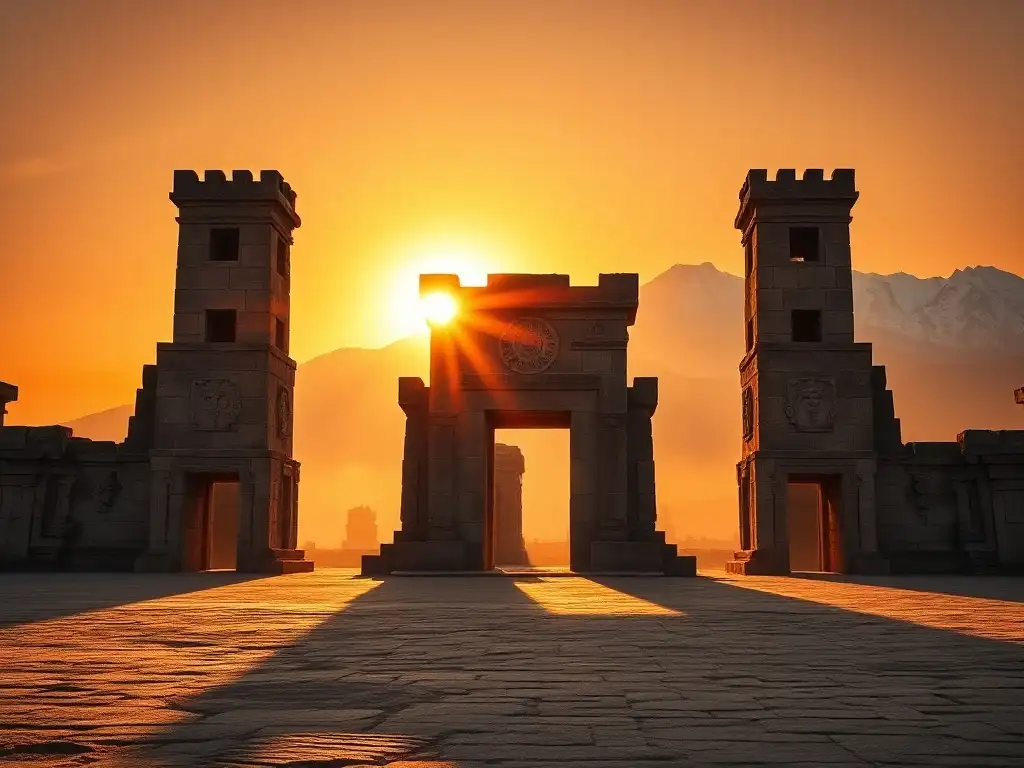
This section delves into the intricate relationship between the monumental architecture of Tiahuanaco and the celestial movements, exploring how the city's layout may have served as a massive astronomical observatory reflecting a sophisticated understanding of the cosmos. The precise astronomical orientations of several key structures suggest a deep understanding of solar and potentially lunar cycles, far surpassing the capabilities often attributed to pre-Columbian societies.
This sophisticated knowledge likely played a crucial role in their agricultural practices, religious ceremonies, and overall worldview. The study of Tiahuanaco celestial alignments provides invaluable insights into the Andean civilization's cosmological beliefs and their advanced understanding of astronomy.
Identifying Key Astronomical Alignments at Tiahuanaco
Identifying the precise astronomical alignments at Tiahuanaco requires careful consideration of several factors. Firstly, the orientation of structures like the Kalasasaya platform and the Akapana pyramid needs to be meticulously surveyed and analyzed using modern astronomical software and techniques. This involves accounting for precession, the slow wobble of the Earth's axis, which alters the position of the celestial poles over time. Secondly, we must consider the possible use of multiple alignments, reflecting different celestial events or periods.
For example, a structure might align with the solstices and equinoxes, or with specific constellations prominent in the Andean sky. Finally, the interpretation of these alignments requires careful consideration of the cultural context. Were these alignments intentional, or were they coincidental? The evidence strongly suggests the former, given the precision and repetition found across different structures.
The following table summarizes some of the key structures and their proposed astronomical alignments:
| Structure | Proposed Alignment(s) | Significance | Further Research Needed |
|---|---|---|---|
| Kalasasaya Platform | Equinoxes, possibly solstices | Marks the transition between seasons; agricultural calendar | Precise dating of construction |
| Akapana Pyramid | Solar alignments (sunrise/sunset) | May have served as a solar calendar or ritual center | Detailed topographic survey |
| Pumapunku | [Specific alignments pending] | [Significance pending further research] | Extensive ground-penetrating radar analysis |
The ongoing research into these alignments is crucial for a complete understanding of Tiahuanaco's cosmological significance. The application of advanced surveying techniques, coupled with sophisticated astronomical modeling, promises to unveil further details about the city's intricate relationship with the cosmos. This research continuously refines our understanding of the sophistication of Andean astronomy and its integral role in their society.
The Akapana Pyramid and Solar Alignments
The Akapana pyramid, one of the largest structures at Tiahuanaco, exhibits compelling evidence of solar alignments. While its exact function remains debated, its orientation suggests a deliberate connection to the sun's movements. Some researchers propose that specific entrances or internal chambers might have been used to mark solstices and equinoxes, creating a sophisticated solar calendar. The pyramid's layered construction, with its intricate network of channels and internal spaces, further supports the hypothesis of a complex astronomical function.
The precision of these alignments, considering the scale of the structure and the available technology, is truly remarkable. Further research, including detailed 3D modeling and analysis of the sun's path throughout the year, is needed to fully understand the Akapana's astronomical significance. The potential for uncovering further alignments within the pyramid's complex internal structure is exciting.
Kalasasaya Platform and its Equinox Alignments
The Kalasasaya Platform stands as a testament to the Tiahuanaco people's astronomical prowess. Its precise alignment with the equinoxes is one of the most striking examples of Tiahuanaco celestial alignments. During the equinoxes, the sun rises and sets precisely along the platform's cardinal axes, creating a visually stunning spectacle.
This alignment likely played a significant role in the cultural and religious life of the Tiahuanaco people, marking the crucial transition between seasons and impacting agricultural practices. The platform's layout, with its monumental stones and intricate carvings, suggests a highly ritualized space where celestial events were observed and celebrated. The precise positioning of the Gate of the Sun, a nearby structure featuring intricate carvings, may also contribute to the platform's astronomical significance.
Further research into the platform's construction techniques and the symbolic meaning of its carvings could significantly enhance our understanding of its function within the larger cosmological framework of Tiahuanaco. The careful study of the Kalasasaya Platform continues to reveal new insights into the advanced astronomical knowledge of this remarkable civilization. The precision of the equinox alignments, evident even today, underscores the sophistication of their astronomical observations and their profound connection to the cosmos.
Pumapunku and its Potential Celestial Connections
Pumapunku, a remarkably engineered complex within the larger Tiahuanaco site, presents a compelling case study for the investigation of Tiahuanaco celestial alignments. Its precise, massive stonework, featuring stones fitted together with millimeter precision, has long captivated researchers and fueled speculation about its astronomical significance. While definitive proof remains elusive, several theories propose that Pumapunku's architecture was deliberately oriented to track significant celestial events.
One prominent theory suggests that the orientation of Pumapunku's platforms and structures aligns with solstices and equinoxes. The meticulous positioning of these massive blocks, some weighing many tons, could have served as a sophisticated calendar, marking the passage of time and the cyclical changes in the seasons. This alignment with the sun's annual journey would have been crucial for an agrarian society, allowing for accurate predictions of planting and harvesting times. The precision required to achieve such alignments speaks to an advanced understanding of astronomy and engineering capabilities far beyond what was previously assumed for the time period.
Further complicating and enriching the discussion, researchers have also explored the possibility that Pumapunku's structures were designed to track other celestial bodies, perhaps even specific constellations significant to Tiahuanaco cosmology. The orientation of certain walls and structures might reflect the movements of stars and planets, potentially linking the terrestrial layout with a broader celestial map. This would suggest a sophisticated understanding of the cosmos, far beyond simple solar tracking.
However, this hypothesis necessitates further investigation and corroboration through rigorous astronomical analysis and archaeological evidence. The lack of clear, unambiguous evidence is a significant challenge in definitively proving such a complex astronomical connection.
The debate surrounding Pumapunku's astronomical function is ongoing. Some scholars argue that the precise alignments observed are coincidental, the result of practical considerations rather than deliberate celestial planning. Others maintain that the evidence strongly suggests intentional alignment, pointing to the sophisticated engineering and the potential symbolic significance of specific celestial events within Tiahuanaco culture.
The ongoing research and analysis of Pumapunku's architecture, coupled with further study of Tiahuanaco's cosmology, will hopefully shed more light on this fascinating enigma and its relationship to the broader tapestry of Tiahuanaco celestial alignments. The mystery, however, remains a testament to the enduring power and complexity of this ancient civilization's achievements.
Sacred Cycles and Rituals in Tiahuanaco
Tiahuanaco's impressive architecture and sophisticated urban planning weren't merely aesthetic achievements; they were deeply intertwined with a complex system of sacred cycles and rituals reflecting a profound understanding of celestial movements. The city's layout, the orientation of its structures, and the intricate carvings found throughout suggest a society meticulously attuned to the rhythms of the cosmos, using these rhythms to organize their lives, from agriculture to religious ceremonies. The precise nature of their calendrical systems remains a topic of ongoing research, but evidence strongly points to a sophisticated integration of solar, lunar, and possibly even stellar cycles in their worldview.
This intricate relationship between the terrestrial and celestial realms is central to understanding Tiahuanaco's enduring legacy. The keyword "Tiahuanaco celestial alignments" perfectly encapsulates this core aspect of their civilization.
The Role of Lunar Calendars in Tiahuanaco Culture
While the precise details of Tiahuanaco's lunar calendar remain elusive, archaeological evidence suggests a significant role for lunar cycles in regulating their social and religious life. The phases of the moon likely influenced agricultural practices, determining optimal times for planting and harvesting. Furthermore, many of the rituals and ceremonies were probably timed to coincide with specific lunar phases, perhaps new moons or full moons holding particular significance.
The cyclical nature of the moon, mirroring the cyclical patterns of life and death, likely held deep symbolic meaning within their cosmology. Intricate carvings depicting crescent moons and possibly lunar eclipses have been found on various artifacts, further supporting this hypothesis.
Further research into the iconography and potential calendrical markings on these artifacts could illuminate the precise nature of their lunar observations and their integration into the broader societal structure. Understanding the significance of the moon within Tiahuanaco's worldview provides crucial insights into their sophisticated understanding of time and its influence on their daily lives and spiritual practices.
Rituals and Ceremonies Linked to Solstices and Equinoxes
The orientation of several key structures at Tiahuanaco, notably the Kalasasaya complex, suggests a deliberate alignment with the solstices and equinoxes. These celestial events, marking the turning points of the solar year, likely held immense religious importance. The precise angles of sunrise and sunset on these significant days may have been carefully incorporated into the design of the city, creating powerful visual and symbolic effects.
Imagine the community gathering at dawn on the winter solstice, witnessing the sun rise at a specific point along the horizon, perhaps marking the beginning of a crucial ritual cycle. The convergence of architecture and astronomy suggests that these events weren't simply observed but actively participated in, shaping the social and religious fabric of Tiahuanaco society.
While the specifics of these rituals remain largely unknown, the architectural evidence strongly suggests their centrality to Tiahuanaco's religious calendar. Further investigation into the iconography and possible ritual deposits within the Kalasasaya complex could provide valuable insights into the nature of these solstice and equinox ceremonies.
Agricultural Practices Guided by Stellar Observation
Beyond the solar and lunar cycles, evidence suggests that Tiahuanaco’s sophisticated understanding of celestial movements extended to the stars. Their agricultural success in the challenging Andean environment likely depended on a detailed knowledge of the seasonal changes and the precise timing of planting and harvesting. Stellar observations would have been crucial for predicting these cycles with accuracy.
Constellations, rising and setting at specific times of the year, could have served as celestial markers for the agricultural calendar. While direct evidence linking specific constellations to agricultural practices is currently limited, the advanced level of their agricultural techniques and their overall astronomical expertise strongly suggest the use of stellar observations for agricultural planning.
Future research focusing on ethnoastronomical parallels with contemporary Andean communities and further analysis of Tiahuanaco's iconography could reveal more precise details about their stellar observations and their impact on their agricultural practices. This highlights the interconnectedness of their cosmological worldview and their practical needs, demonstrating a holistic approach to life deeply rooted in their understanding of the cosmos.
Tiahuanaco's Legacy: Influence of Astronomical Knowledge
The sophisticated astronomical knowledge of the Tiahuanaco culture wasn't simply a theoretical pursuit; it profoundly impacted their daily lives and left an enduring legacy on subsequent Andean civilizations. Their understanding of celestial cycles directly influenced their agricultural practices, religious rituals, and social organization. This intricate interplay between the heavens and earthly life is a testament to their advanced understanding of the cosmos.
The precision with which they aligned structures with celestial events suggests a deep-seated belief in the interconnectedness of the terrestrial and celestial realms. This wasn't just about observing the stars; it was about integrating that knowledge into the very fabric of their society. The meticulous planning and execution of their monumental architecture, clearly aligned with key astronomical events, underscores the central role of celestial observation in their worldview.
The Lasting Impact on Andean Timekeeping
Tiahuanaco's influence on Andean timekeeping is evident in the continuity of certain calendrical systems and astronomical practices across different cultures and time periods. While the specific methods may have varied, the fundamental importance of celestial cycles in regulating agricultural activities and societal organization remained remarkably consistent. The precise alignment of structures like the Puerta del Sol with solstices and equinoxes suggests a highly developed system of timekeeping, far more accurate than previously assumed.
This system, while not fully understood, likely incorporated sophisticated knowledge of precession and other celestial phenomena, demonstrating a deep understanding of long-term astronomical cycles. Evidence suggests that knowledge of these cycles was passed down through generations, shaping the agricultural practices and religious beliefs of later Andean civilizations.
The legacy of Tiahuanaco's advanced timekeeping techniques is still being unravelled, with ongoing research revealing new insights into the complexity and precision of their astronomical observations. This enduring legacy highlights the importance of the Tiahuanaco's celestial alignments in shaping Andean societies long after their decline.
How Tiahuanaco's Wisdom Shaped Subsequent Cultures
The Tiahuanaco civilization's astronomical insights weren't confined to their own society. Their influence radiated outwards, impacting the development of subsequent Andean cultures, including the Inca. While the exact nature of this transmission remains a subject of ongoing research, there's compelling evidence suggesting a cultural continuity in astronomical practices and beliefs.
For example, certain architectural features and ritualistic practices observed in later Andean cultures bear striking similarities to those found in Tiahuanaco. This suggests a possible diffusion of knowledge and techniques, with Tiahuanaco serving as a crucial source of astronomical expertise for later societies. The intricate calendar systems and sophisticated understanding of celestial cycles found in later Andean cultures may owe a significant debt to the legacy of Tiahuanaco.
The extent of this influence is still being explored, but it's clear that Tiahuanaco's astronomical achievements played a pivotal role in shaping the cosmological worldview and societal structures of subsequent Andean civilizations. Further research into the transmission of knowledge and the cultural exchange between Tiahuanaco and later Andean societies is crucial to fully understanding the scope of this significant legacy.
Tiahuanaco's Celestial Alignments: Ongoing Research and Debates
The study of Tiahuanaco's celestial alignments is an ongoing process, with numerous researchers actively engaged in investigating the precise nature and purpose of these alignments. While some alignments are relatively well-established, such as the solstice alignments of the Puerta del Sol, others remain the subject of ongoing debate and investigation. The use of modern technologies, such as advanced surveying techniques and computer modeling, has significantly enhanced our understanding of these alignments.
However, challenges remain, including the incomplete nature of the archaeological record and the complexities of interpreting ancient astronomical practices. Different interpretations of the available data have led to various hypotheses regarding the specific astronomical events that Tiahuanaco's structures were designed to track. These ongoing debates highlight the complexity of the subject and the need for continued interdisciplinary research to fully understand the significance of Tiahuanaco's celestial alignments.
The ongoing research and debates surrounding Tiahuanaco's celestial alignments underscore the enduring fascination with this enigmatic civilization and the richness of its astronomical legacy. New discoveries and refined analytical techniques promise to further illuminate this fascinating aspect of Andean cosmology. The ongoing quest to decipher the secrets of Tiahuanaco's celestial alignments serves as a testament to the enduring power of its astronomical legacy and its contribution to our understanding of ancient Andean civilizations.
Frequently Asked Questions
What are celestial alignments, and why are they important in the study of Tiahuanaco?
Celestial alignments refer to the precise positioning of structures in relation to astronomical events like solstices and equinoxes. Understanding these alignments helps us decipher the Tiahuanaco people's sophisticated knowledge of astronomy and its role in their culture and religious practices. This reveals their advanced understanding of the cosmos.
How did the Tiahuanaco people use celestial alignments in their daily lives?
The alignments likely played a crucial role in regulating agricultural cycles, religious ceremonies, and possibly even their social organization. By tracking celestial events, they could predict seasons and plan accordingly. This knowledge was vital for their survival.
What specific structures in Tiahuanaco show evidence of celestial alignments?
The Gate of the Sun, the Kalasasaya Temple, and other significant structures exhibit clear evidence of deliberate alignment with key celestial events. Researchers continue to analyze these structures to fully understand their astronomical significance. The precision is remarkable.
What is the significance of the solstices and equinoxes in the context of Tiahuanaco's celestial alignments?
The solstices and equinoxes, marking the longest and shortest days of the year, likely held great religious and symbolic importance. The alignments of structures with these events suggest a deep understanding of the cyclical nature of time and its connection to the cosmos. These were pivotal moments in their calendar.
Are there any ongoing research projects investigating Tiahuanaco's celestial alignments?
Yes, many archaeologists and astronomers are actively researching Tiahuanaco's celestial alignments using modern technology. New discoveries continue to refine our understanding of the complexity and sophistication of Tiahuanaco astronomy. This ongoing research is crucial to unraveling the mysteries of the site.
Final Reflection: Echoes of the Andes: Tiahuanaco's Enduring Legacy
The meticulous celestial alignments of Tiahuanaco aren't just ancient artifacts; they are a testament to a civilization's profound understanding of the cosmos, a knowledge system that continues to resonate with us today. Understanding their sophisticated astronomical observations challenges our modern assumptions about pre-Columbian societies and forces us to reconsider the depth of their intellectual and spiritual achievements. The precision with which they charted the movements of the sun and stars speaks to a level of scientific and spiritual integration rarely seen.
The enduring power of Tiahuanaco's legacy lies not only in its architectural marvels but in the questions it raises about our own relationship with the universe. Its intricate calendar system, reflected in the precise orientation of its structures, speaks to a deep connection with the cyclical nature of time and the cosmos. This resonates deeply with contemporary discussions surrounding environmental sustainability and our place within the larger ecological system. The universe is within you, as you are within the universe.
This ancient wisdom, perhaps echoing the sentiments of Tiahuanaco's builders, reminds us of our interconnectedness with all things.
Consider the implications of Tiahuanaco's achievements. How can we, in our modern world, recapture a sense of awe and wonder at the cosmos, a sense that clearly fueled the creators of this remarkable civilization? Let the precision of Tiahuanaco's celestial alignments inspire you to look up at the night sky, to marvel at its vastness, and to reflect on your own place within the grand cosmic dance. Embrace the cyclical nature of time, learn from the past, and strive to build a future guided by a deeper understanding of our interconnectedness with the universe and each other.
**Unearth the Cosmic Wisdom of Tiahuanaco! **
Thank you for exploring the celestial wonders and sacred cycles of Tiahuanaco with us. Your curiosity reveals a deep understanding of the profound connection between ancient cultures and the cosmos. Now, let's put that knowledge to work!
- Dive Deeper into the Stars: Research how a specific indigenous culture's unique perspective on celestial events shapes its traditions. For example, explore the Inca's use of constellations in agriculture or the Mayan understanding of the calendar.
- Visit Tiahuanaco: If possible, plan a trip to this awe-inspiring site to witness its astronomical precision firsthand. The experience will be unforgettable.
- Share Your Insights: Discuss your newfound knowledge with friends, family, or online communities to inspire others and foster a greater appreciation for Andean history.
Reflecting on Tiahuanaco's rich heritage, consider which celestial cycle resonates most deeply with you and how it might inform your own perception of time. Perhaps the annual solar cycle, or the lunar phases, offer a new perspective.