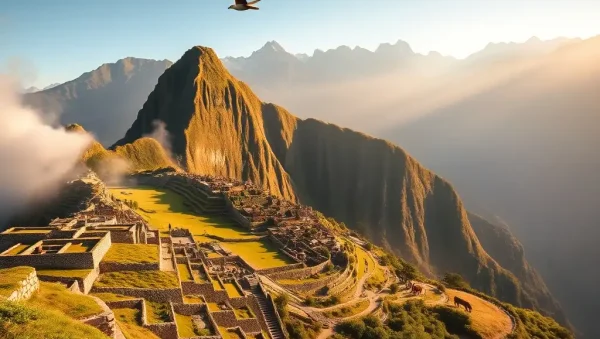
Ancient Andean Civilizations

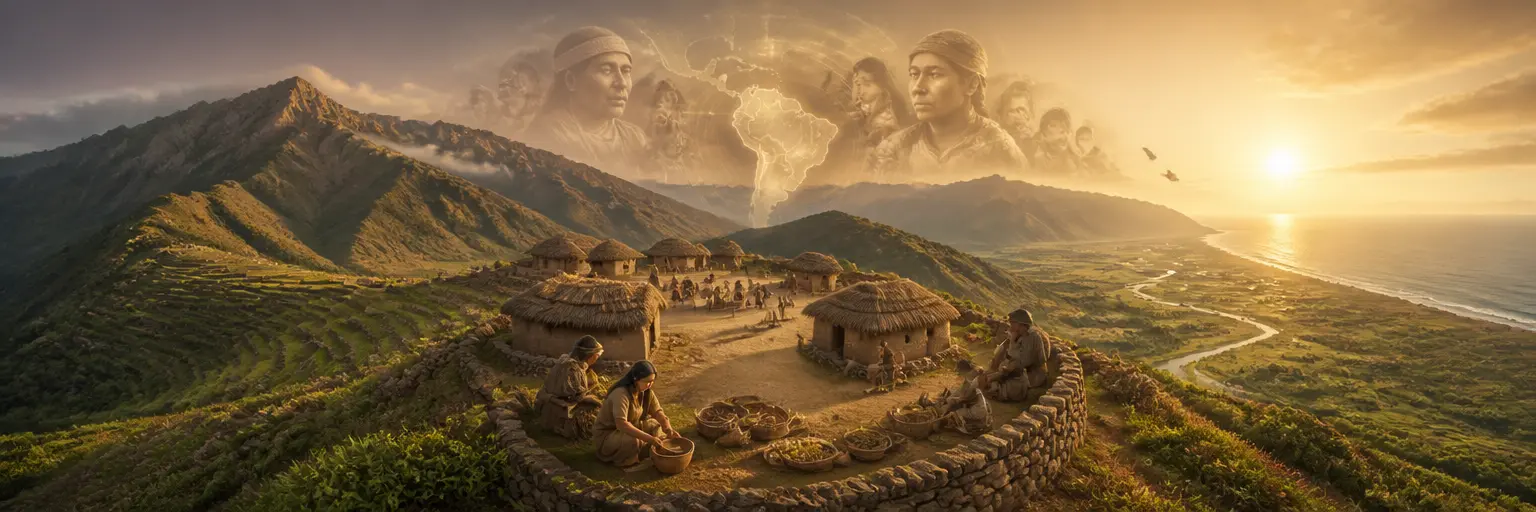
🌄 Explore the fascinating origins and first settlements of the ancient Andes, where early communities transformed challenging landscapes into thriving centers of culture, agriculture, and innovation. Discover how migration, domestication, sacred traditions, and pioneering architecture shaped the foundations of Andean civilization—from coastal valleys to highland plateaus. 🏺 Uncover the archaeological evidence, ancient technologies, and social developments that paved the way for remarkable societies such as the Moche, Nazca, Tiahuanaco, and Inca, bringing the story of early Andean history to life.
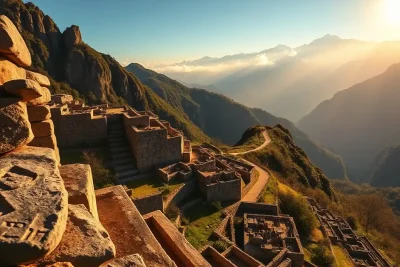
Explore the fascinating origins and first settlements of Ancient Andean civilizations, from the earliest hunter-gatherer communities to the development of permanent villages, ceremonial centers, agriculture, and complex societies. This subcategory examines how people adapted to the Andes Mountains, Pacific coast, highland plateaus, valleys, and river oases, laying the foundations for later cultures such as the Inca, Moche, Nazca, and Tiahuanaco. Discover the archaeological evidence, ancient technologies, environmental challenges, and cultural traditions that shaped the first societies of the Andean world.
Learn how early human groups entered and adapted to the diverse landscapes of South America. Topics include the first migrations into the Andean region, early hunter-gatherer communities, seasonal mobility, mountain shelters, coastal camps, and the archaeological evidence used to understand prehistoric Andean life.
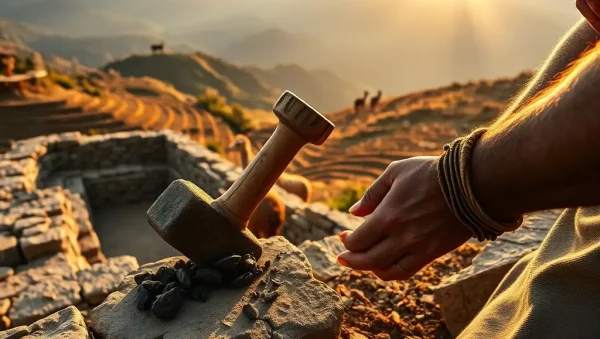
Readers can discover how people survived in challenging environments through stone tools, hunting techniques, fishing, gathering, and knowledge of local plants and animals. These early adaptations were essential to the later growth of permanent settlements and helped establish long-lasting relationships between Andean communities and their natural surroundings.
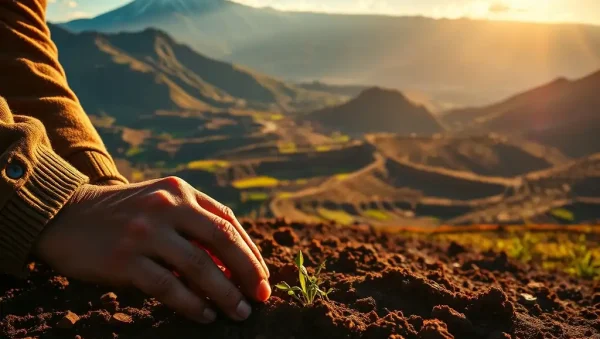
Explore the gradual transition from mobile lifestyles to settled communities in the Andes. This transformation involved the development of agriculture, food storage, domesticated plants, animal herding, and more stable forms of social organization. Archaeological sites reveal how early Andean people created homes, workshops, communal spaces, and ceremonial areas.
Special attention is given to the importance of maize, potatoes, quinoa, camelids, and fishing resources in supporting population growth. The emergence of permanent villages encouraged trade, craft specialization, shared religious practices, and new forms of leadership that shaped the foundations of Andean civilization.
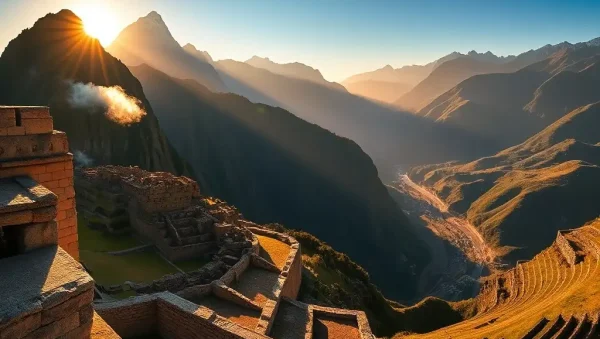
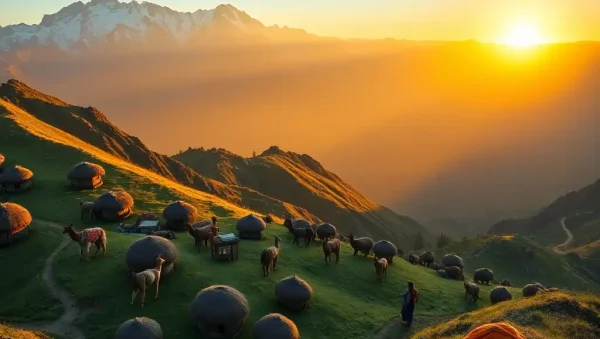
Discover the structure and daily life of the earliest Andean villages. This section explores houses, plazas, storage facilities, burial areas, agricultural terraces, irrigation systems, and communal buildings found in highland and coastal settlements. These features provide valuable information about family life, work, social identity, and cooperation among early communities.
Readers will learn how settlement design reflected economic organization, environmental adaptation, and emerging social hierarchy. From small farming villages to larger ceremonial centers, early settlements demonstrate the increasing ability of Andean societies to manage resources, organize labor, and create shared cultural traditions.
Investigate the first communities along the Pacific coast, where fishing, shellfish gathering, hunting, and trade supported some of the earliest permanent settlements in the Andes. Coastal societies developed specialized tools, fishing technologies, boats, nets, and methods for preserving food in an arid environment.
The relationship between coastal settlements and inland valleys was equally important. Trade networks connected marine resources with agricultural products, stone, textiles, and other goods, encouraging cultural exchange and helping create the conditions for complex societies such as those that later flourished in the Moche and Nazca regions.
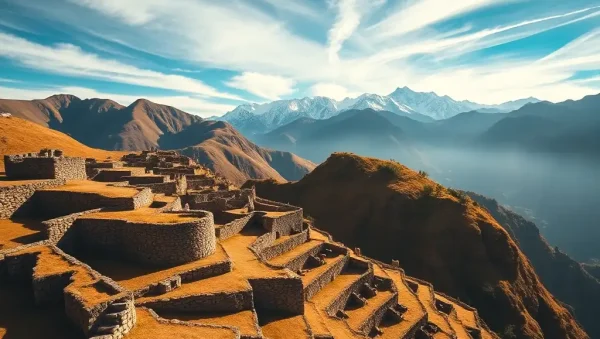
Explore how early Andean communities settled in high-altitude valleys, plateaus, and mountain basins. Highland populations developed farming techniques suited to cold temperatures, steep terrain, variable rainfall, and thin soils. Their innovations included terraces, raised fields, irrigation channels, frost-resistant crops, and camelid herding.
These achievements demonstrate the remarkable environmental knowledge of ancient Andean peoples. By cultivating potatoes, quinoa, oca, and other native crops, communities created reliable food systems and supported growing populations. Highland settlement patterns later influenced the development of major Andean cultures, including Tiahuanaco and the Inca Empire.
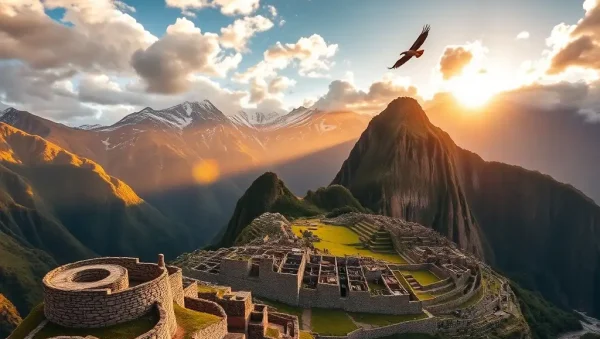
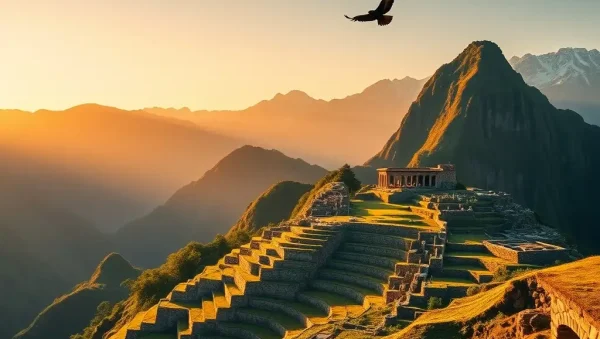
Learn about the earliest buildings and public spaces constructed by Andean communities. Early architecture included domestic structures, communal work areas, temples, sunken plazas, platforms, and monumental mounds. These sites reveal that religion, ceremony, and collective identity were central to the development of early settlements.
Readers can examine how monumental construction required planning, labor, leadership, and shared beliefs. Ceremonial centers served as places for rituals, feasting, exchange, and political interaction, creating social connections that extended beyond individual villages and helped establish regional cultural traditions.
Understand how archaeologists reconstruct the history of the first Andean settlements. Excavations, radiocarbon dating, pottery analysis, human remains, botanical evidence, animal bones, architecture, and ancient tools all contribute to the study of early Andean civilization.
This section also considers the challenges of interpreting archaeological evidence. Preservation conditions, limited written records, changing landscapes, and incomplete excavations mean that many questions remain open. New discoveries continue to reshape our understanding of migration, settlement, agriculture, religion, and social development in the ancient Andes.
Humans reached the Andean region thousands of years ago, with archaeological evidence indicating early settlement during the late Pleistocene and early Holocene periods. Exact dates vary by location, and ongoing research continues to refine our understanding of the first migrations into the mountains, valleys, and Pacific coast.
The earliest settlements ranged from temporary camps to permanent villages. They included simple homes, food-processing areas, storage facilities, workshops, burial spaces, and, in some regions, ceremonial structures. Settlement design depended heavily on local resources, climate, altitude, and access to water.
Agriculture encouraged permanent settlement, population growth, food storage, trade, and social organization. Crops such as potatoes, maize, quinoa, and oca allowed communities to live in diverse environments, while irrigation, terraces, and raised fields improved food production and supported increasingly complex societies.
Early communities relied on a combination of resources, including wild plants, marine fish, shellfish, camelids, guinea pigs, birds, maize, potatoes, quinoa, and freshwater. Many settlements prospered because they combined different ecological zones through travel, trade, seasonal movement, and cultural exchange.
The first settlements established many of the traditions later developed by the Inca, Moche, Nazca, and Tiahuanaco. Agricultural technologies, ceremonial practices, trade networks, architectural techniques, and systems of cooperation all emerged over long periods, forming the cultural foundations of later Ancient Andean civilizations.