Ancient Andean Civilizations

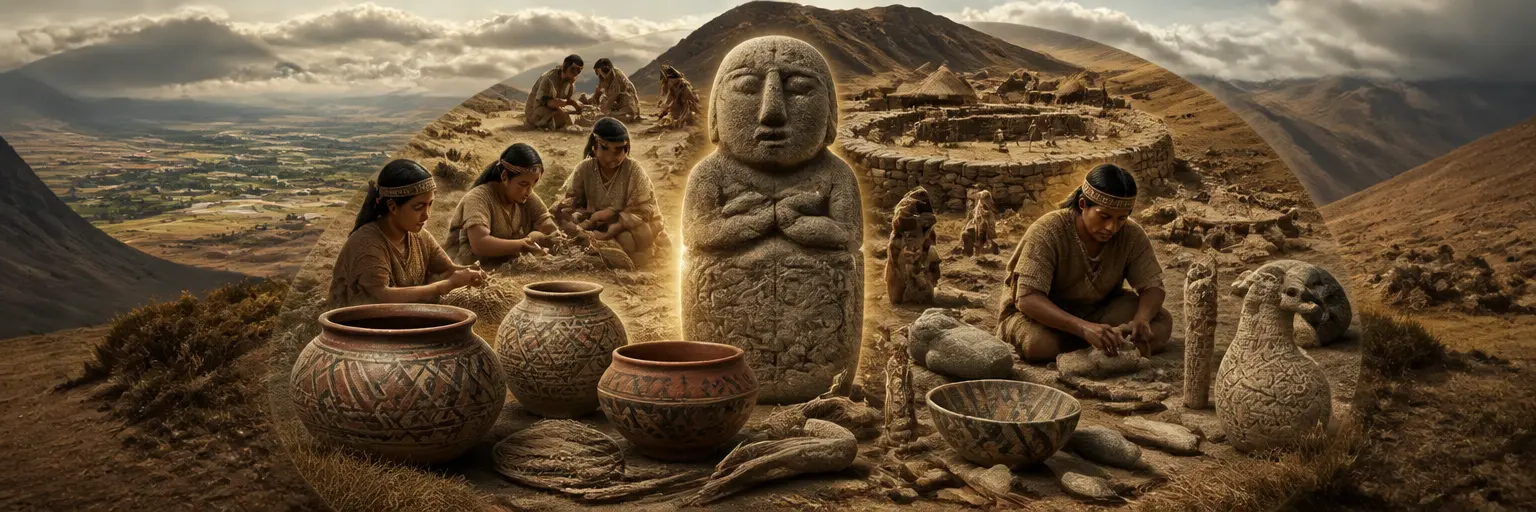
Discover the origins of Andean civilization through Early Andean Art and Culture of the Pre-Ceramic Period 🏺🌄. Explore ancient settlements, monumental architecture, textiles, tools, rituals, and symbolic artworks that reveal how early communities adapted to the Andes and developed complex social traditions long before pottery. Uncover the creativity, innovation, and enduring heritage that shaped the foundations of ancient Andean history and culture.
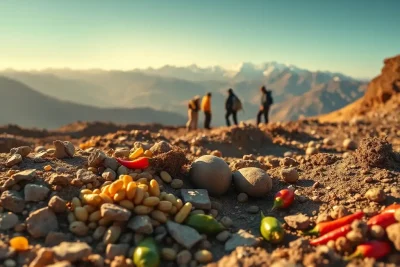
Discover the origins of Andean civilization through Early Andean Art and Culture, with a focus on the Pre-Ceramic Period. Long before pottery, monumental temples, and the rise of the Inca Empire, communities across the Andes developed sophisticated traditions of hunting, gathering, fishing, architecture, textile production, ritual, and trade. This subcategory explores how early peoples adapted to the mountains, coasts, valleys, and highlands of South America, creating the foundations of later ancient Andean cultures.
The Pre-Ceramic Period refers to the era before widespread pottery production in the Andean region. During this formative stage, communities relied on stone tools, woven fibers, shell ornaments, bone implements, and organic materials to support daily life. Readers can learn how early hunter-gatherers and increasingly settled groups obtained food, organized shelters, and responded to the diverse environments of the Andes.
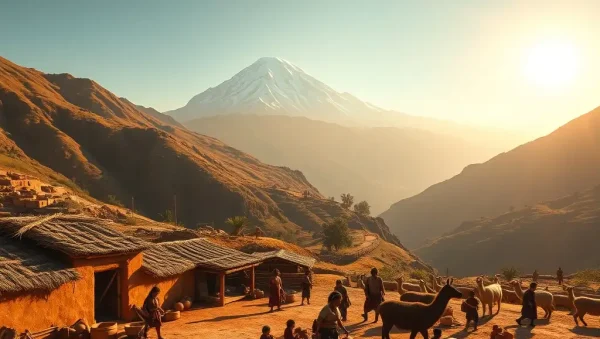
This section examines the transition from mobile subsistence to more permanent settlement. Topics may include coastal fishing communities, highland hunting traditions, plant gathering, early agriculture, and the development of seasonal economies. These changes reveal how innovation and environmental knowledge shaped the earliest stages of Andean history.
Stone technology was central to survival during the Pre-Ceramic Period. Explore the manufacture and use of projectile points, scrapers, grinding stones, knives, axes, and other lithic tools. These artifacts provide important evidence about hunting strategies, food preparation, woodworking, hide processing, and the movement of people across ancient landscapes.
Readers will also discover how technological traditions differed between the Pacific coast, western valleys, and Andean highlands. By studying tool shapes, materials, and manufacturing methods, archaeologists reconstruct patterns of innovation, exchange, mobility, and cultural adaptation long before the emergence of the Moche, Nazca, Tiahuanaco, and Inca civilizations.
The Pacific coast offered abundant marine resources that supported some of the earliest settled communities in the Andes. This section explores fishing, shellfish collection, sea hunting, reed technology, and coastal trade. Maritime communities used local resources creatively, building shelters and tools suited to one of the world’s most distinctive desert-coast environments.
Information about early coastal settlements helps explain why permanent or semi-permanent communities developed in areas with limited rainfall. Archaeological evidence from shell middens, fishing equipment, burial sites, and foundations shows how marine economies contributed to social cooperation, ritual activity, and the growth of early Andean cultural traditions.
Some of the most remarkable achievements of early Andean culture involved materials that rarely survive. Discover the importance of fiber technology, basketry, cordage, mats, nets, and early textiles made from cotton, reeds, grasses, and other plant materials. These objects served practical, ceremonial, and symbolic purposes.
Early textile traditions also demonstrate advanced planning and technical skill. Readers can explore weaving methods, the preservation of organic artifacts in dry coastal environments, and the role of textiles in clothing, fishing, storage, architecture, trade, and ritual. Such evidence challenges the assumption that monumental stonework was the only measure of ancient Andean achievement.
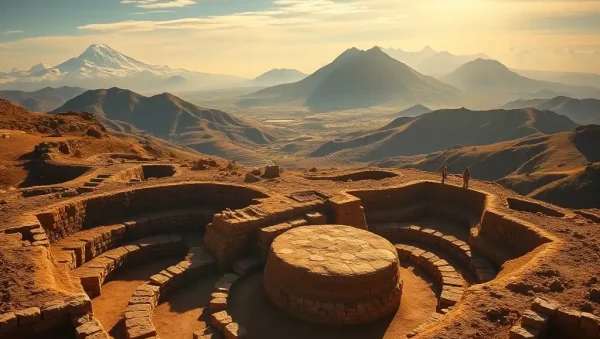
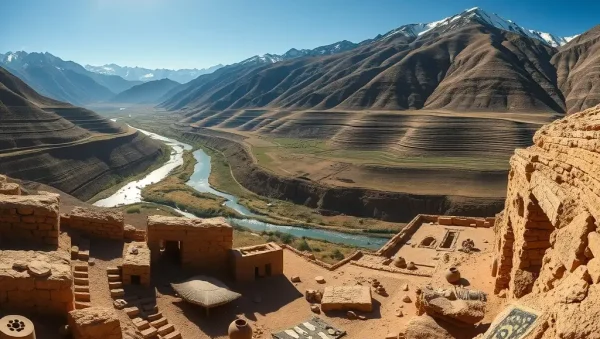
Before large ceramic-producing societies emerged, Andean communities were already constructing organized shelters, platforms, plazas, and ceremonial spaces. This section introduces Pre-Ceramic architecture, including communal buildings, sunken plazas, ritual structures, and early monumental sites associated with organized labor and shared belief systems.
These buildings provide clues about leadership, cooperation, ceremony, and social identity. By examining construction techniques, site planning, landscape placement, and repeated rebuilding, readers can understand how sacred architecture helped transform settlements into centers of community life and laid the groundwork for later Andean religious traditions.
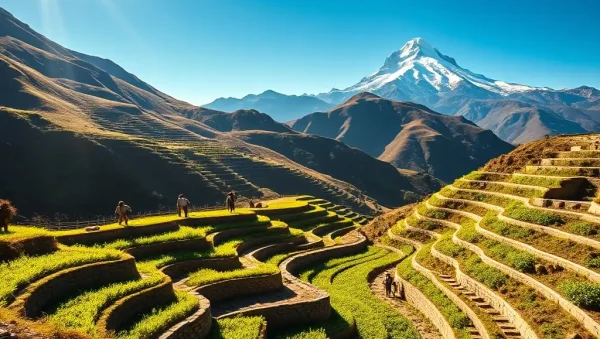
The development of agriculture was a gradual process rather than a sudden revolution. Learn how early Andean peoples experimented with plant cultivation, seed selection, irrigation, storage, and seasonal farming. Crops such as cotton, squash, beans, potatoes, and other regional plants became increasingly important as communities adjusted their economies.
This section explains how farming interacted with hunting, fishing, and gathering. It also considers the effects of domestication on settlement patterns, population growth, labor organization, diet, and social relationships. Understanding early agriculture is essential for tracing the long-term development of Andean civilization.
Burials and ritual objects offer valuable insights into the spiritual world of Pre-Ceramic communities. Explore grave goods, body treatment, ancestor veneration, ceremonial offerings, and sacred landscapes. These practices suggest that early Andean societies had complex beliefs about death, memory, identity, and connections between people and the natural world.
Archaeological discoveries can also reveal differences in age, status, occupation, and community role. Although interpretations must remain cautious, burial patterns and ritual architecture help researchers understand how early religious practices influenced social organization and prepared the cultural foundations for later Andean belief systems.
Our coverage highlights how archaeologists reconstruct early Andean history using excavation, radiocarbon dating, environmental research, material analysis, and comparative studies. Because many early settlements were built from perishable materials, researchers combine archaeological evidence, climate data, botanical remains, animal bones, and preserved fibers to create a fuller picture of the past.
Readers can expect accessible explanations of important discoveries, archaeological terminology, and debates about chronology and cultural development. This approach places Early Andean Art and Culture within the broader history of ancient South America while emphasizing the evidence behind current interpretations.
The Pre-Ceramic Period was the era before pottery became widespread in the Andean region. Communities during this time used stone, bone, shell, wood, reeds, cotton, and other materials while developing hunting, fishing, gathering, textile production, architecture, and early agriculture.
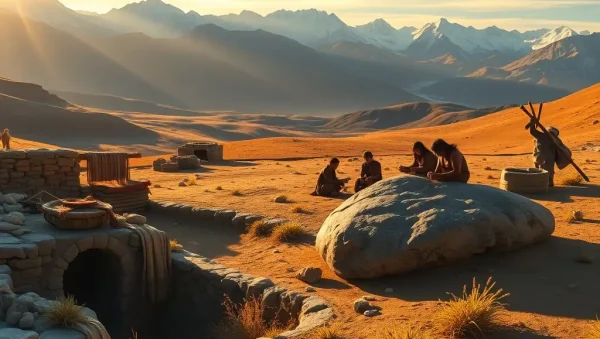
Some communities remained mobile or moved seasonally, while others established increasingly permanent settlements. Coastal resources, agriculture, water availability, and local environmental conditions influenced whether groups lived in villages, camps, or larger communal centers.
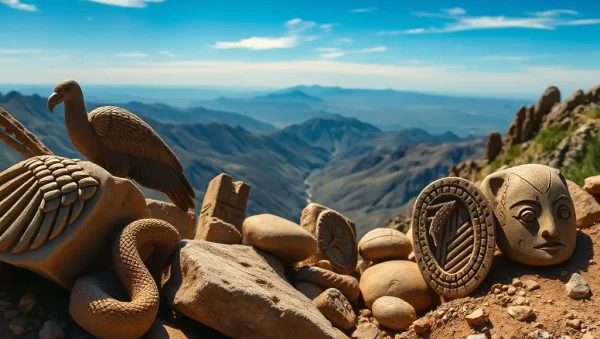
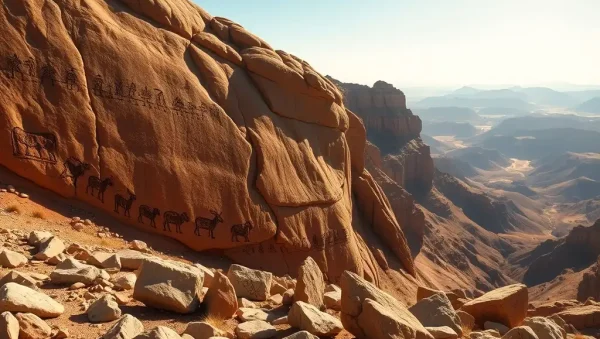
Early Andean art included woven textiles, basketry, cordage, shell ornaments, carved stone objects, decorated tools, body adornment, architectural design, and ritual arrangements. Organic materials were especially important, although they survive best in dry or protected archaeological environments.
Pre-Ceramic architecture demonstrates that communities could organize labor and shared activities before the rise of later complex civilizations. Ceremonial structures, plazas, platforms, and planned settlements provide evidence of social cooperation, ritual practices, and emerging forms of leadership.
Early innovations in agriculture, fishing, textiles, architecture, ritual, and trade created long-lasting cultural foundations. These developments influenced later societies, including the Norte Chico or Caral tradition, Chavín, Moche, Nazca, Tiahuanaco, and eventually the Inca Empire.