Andean Technology and Innovation

Discover how ancient Andean communities transformed everyday life through ingenious tools and implements crafted from stone, wood, bone, metal, and fiber. 🛠️ Explore practical innovations used for farming, cooking, weaving, hunting, construction, and household tasks, revealing the remarkable creativity and resourcefulness of the Incas, Moche, Nazca, and Tiahuanaco. Learn how Andean technology combined function, sustainability, and craftsmanship to support thriving civilizations in challenging landscapes.
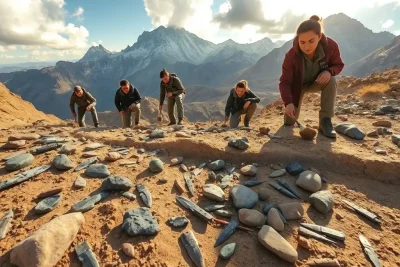

Discover how ancient Andean societies transformed natural materials into practical tools, household implements, farming equipment, textiles, and objects for everyday use. This subcategory explores the technology and innovation of Andean civilizations, including the Incas, Moche, Nazca, Tiahuanaco, and other cultures that developed sophisticated solutions for life in the Andes. From stone tools and agricultural implements to weaving instruments, cooking utensils, storage vessels, and fishing equipment, these artifacts reveal the knowledge, creativity, and adaptability of ancient Andean communities.
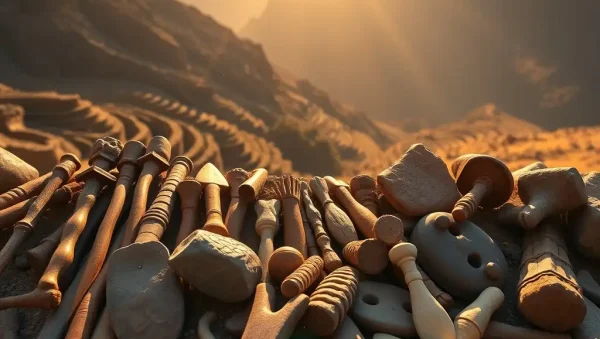
Learn how Andean farmers cultivated crops across challenging mountain landscapes using specialized tools and techniques. This section examines digging sticks, hoes, stone axes, harvesting implements, planting tools, and other equipment used to grow potatoes, quinoa, maize, coca, and other important crops. Andean agricultural technology was closely connected to terraces, irrigation systems, raised fields, and careful soil management.
Readers can explore how tools were adapted to different environments, from high-altitude plateaus to coastal valleys. Discover how practical knowledge supported food production, reduced erosion, and helped communities thrive in the Andes. These implements offer valuable insight into Inca farming tools, pre-Inca agriculture, sustainable cultivation, and the daily work of ancient Andean farmers.
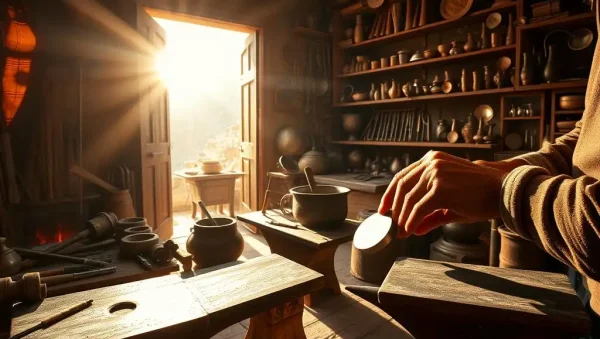
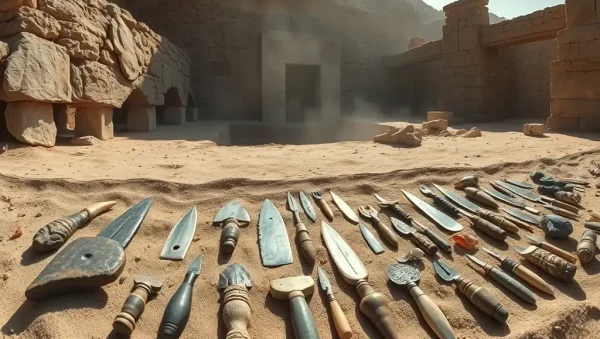
Explore the materials and manufacturing techniques used to create everyday tools in ancient Andean societies. Stone, wood, bone, shell, and animal fiber were shaped into knives, scrapers, hammers, needles, awls, cutting tools, and other implements. Ancient Andean craftsmanship demonstrates a detailed understanding of durability, sharpness, balance, and the properties of local resources.
This section explains how archaeologists interpret tool marks, wear patterns, and archaeological contexts to understand the activities performed with these objects. Whether used for hunting, construction, food preparation, leatherworking, or domestic tasks, these artifacts reveal the practical intelligence behind Andean technology and innovation.
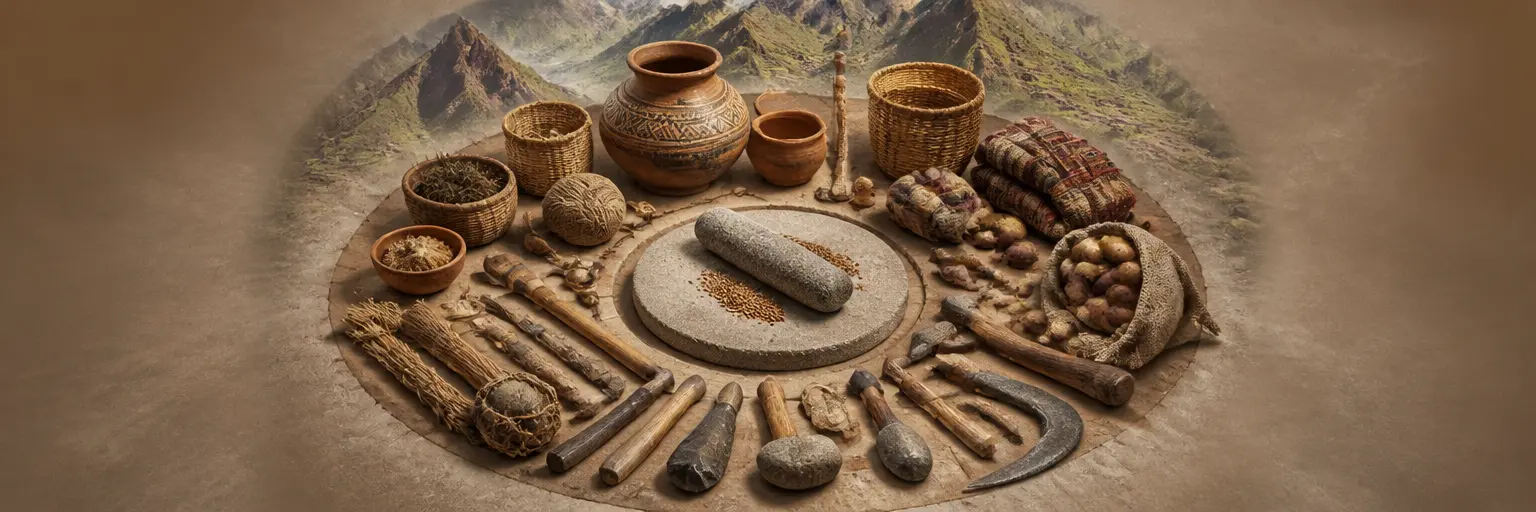
Discover the tools that supported food preparation and domestic life in ancient Andean communities. Grinding stones, mortars, pestles, knives, baskets, serving vessels, ceramic cooking pots, and storage containers played an essential role in transforming raw ingredients into meals. These objects provide evidence of ancient Andean food technology, household organization, and culinary traditions.
Readers can learn how families processed maize, quinoa, tubers, herbs, and other foods using efficient household equipment. The study of cooking implements also reveals regional differences between highland, coastal, and valley cultures, as well as the connection between everyday objects, nutrition, trade, and social life in civilizations such as the Moche, Nazca, Tiahuanaco, and Inca.
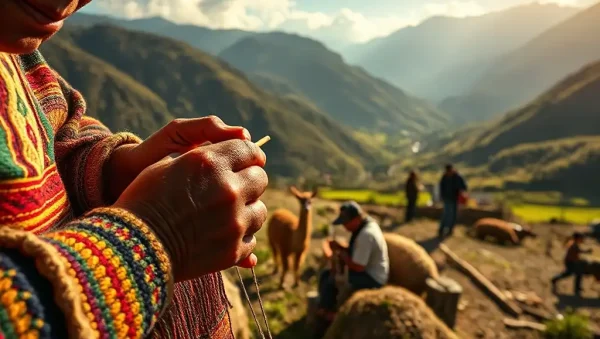
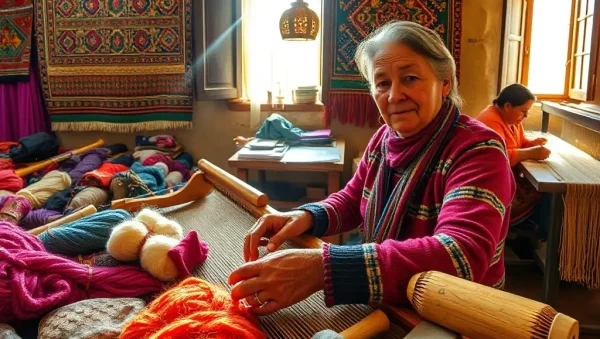
Textile production was one of the most advanced technologies in the ancient Andes. Explore spindles, spindle whorls, looms, weaving tools, needles, combs, and other implements used to produce cotton, wool, and camelid-fiber textiles. Andean weaving technology enabled artisans to create finely patterned fabrics, clothing, ritual garments, bags, cords, and other essential objects.
This section highlights the importance of textiles in daily life, economic exchange, religious ceremony, and political identity. Learn how tools helped produce intricate designs and how weaving traditions continued across generations. The evidence offers a deeper understanding of Inca textiles, Moche craftsmanship, ancient fiber technology, and the skilled labor of Andean weavers.
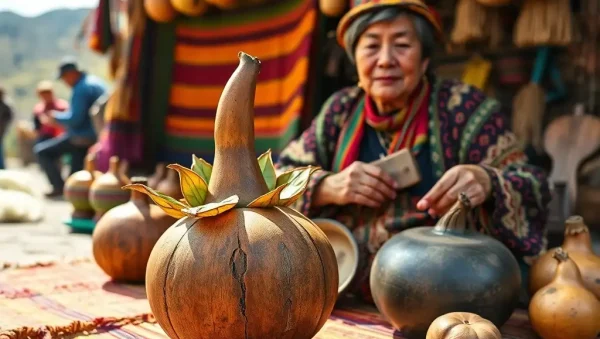
Examine the ceramic vessels and practical containers used to store, transport, prepare, and serve food and liquids. Ancient Andean potters created jars, bowls, bottles, cooking vessels, and large storage containers suited to different needs. Pre-Columbian pottery technology reflects knowledge of clay selection, shaping, firing, decoration, and functional design.
Readers can discover how vessels supported household economies, long-distance travel, agricultural storage, and community ceremonies. Water jars and transport containers were especially important in arid coastal regions and highland environments. Their forms and decorations also provide clues about regional identity, trade networks, social status, and the daily routines of ancient Andean people.
Learn about the tools used to obtain food and move goods across the varied landscapes of the Andes. Fishing nets, hooks, harpoons, hunting equipment, carrying frames, baskets, ropes, and other implements helped communities adapt to coastal waters, mountain valleys, forests, and high plateaus. These objects demonstrate the close relationship between Andean innovation and the local environment.
This section also explores how llamas, alpacas, boats, footpaths, and carrying technologies supported transportation and exchange. By studying these implements, readers can understand how ancient Andean societies connected distant ecological zones and distributed resources such as fish, salt, maize, textiles, metals, and agricultural products.
Everyday tools may appear simple, but they provide important evidence about ancient Andean history. Archaeologists study their materials, shapes, locations, repairs, and patterns of use to reconstruct domestic activities, labor systems, trade, technology, and cultural change. Archaeological artifacts from the Andes help transform ordinary objects into evidence of complex human experiences.
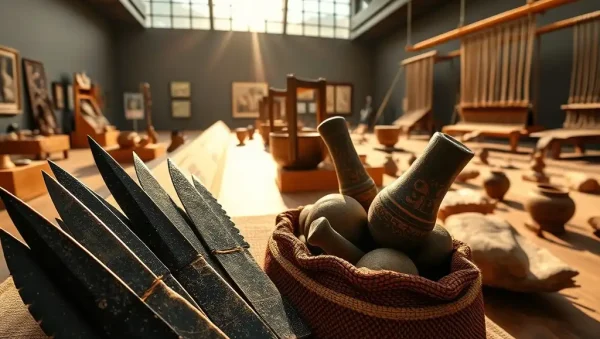
Explore how museums, excavations, conservation projects, and scientific analysis preserve these objects for future generations. From microscopic residue analysis to experimental archaeology, modern research continues to reveal how tools were made and used. These discoveries make the technological achievements of the Inca, Moche, Nazca, Tiahuanaco, and other Andean cultures accessible to students, researchers, and history enthusiasts.
Ancient Andean communities used agricultural tools, grinding stones, knives, ceramic vessels, baskets, weaving implements, fishing equipment, storage containers, and woodworking tools. The exact types varied according to local resources, climate, occupation, and cultural tradition.
Common materials included stone, wood, bone, shell, clay, cotton, camelid fiber, plant fiber, and metal. Artisans selected materials according to their strength, flexibility, availability, and intended function. Many objects combined several materials to improve performance.
Everyday implements reveal how people farmed, cooked, traveled, produced textiles, stored food, and organized household labor. They provide evidence of practical knowledge and technological innovation that may not always be visible in monumental architecture or ceremonial art.
No. The Inca Empire inherited, improved, and reorganized technologies developed by earlier cultures, including the Moche, Nazca, Tiahuanaco, Wari, and other societies. Andean innovation developed over thousands of years through experimentation, regional exchange, and adaptation.
Important information comes from archaeological excavations, museum collections, academic publications, laboratory analysis, and experimental archaeology. Reliable resources about Andean technology and innovation can help readers compare artifacts, understand their contexts, and explore the history of ancient Andean civilizations.