Pre-Incan Cultures of the Coast

Discover the fascinating world of Paracas culture, one of the most remarkable pre-Incan civilizations of Peru’s coast 🏺. Explore its extraordinary textile art, distinctive ceramics, ancient burial traditions, and enduring contributions to Andean history. From the arid coastal valleys to the Paracas Peninsula, uncover how this innovative society shaped the cultural heritage of ancient Peru through craftsmanship, ritual, and adaptation 🌄.
Discover the fascinating history of the Paracas Culture, one of the most important pre-Incan cultures of the Peruvian coast. Flourishing on the southern coast of Peru between approximately 800 BCE and 100 CE, the Paracas civilization is renowned for its remarkable textiles, ceremonial traditions, medical knowledge, funerary practices, and adaptation to one of the world’s driest environments. This subcategory from Andean Civilizations explores Paracas archaeology, art, religion, daily life, technology, and its influence on later cultures such as the Nazca.
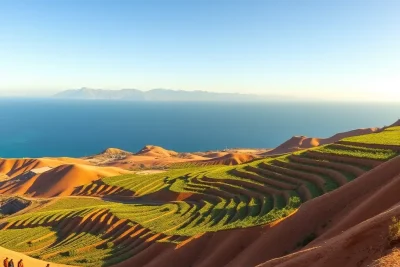
The Paracas Culture developed in the coastal valleys and deserts of southern Peru, particularly around the Paracas Peninsula, Ica Valley, Pisco Valley, and Chincha region. Although the environment was extremely arid, nearby marine resources, fertile river valleys, and carefully managed agricultural areas enabled communities to thrive. Readers can learn how geography shaped Paracas settlement patterns, trade networks, food production, and cultural development.
Explore the origins of this ancient Andean society and its place among the pre-Incan cultures of the coast. Articles in this section examine the chronology of Paracas traditions, including the commonly recognized Paracas Cavernas and Paracas Necropolis phases, while explaining their connections with earlier Andean societies and their possible influence on the later Nazca civilization.
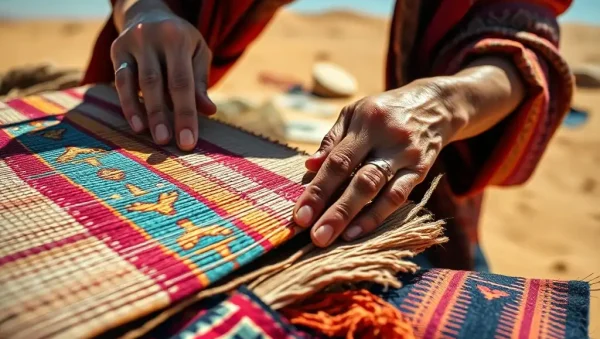
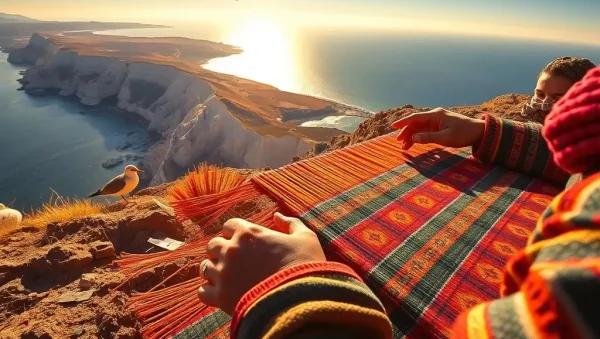
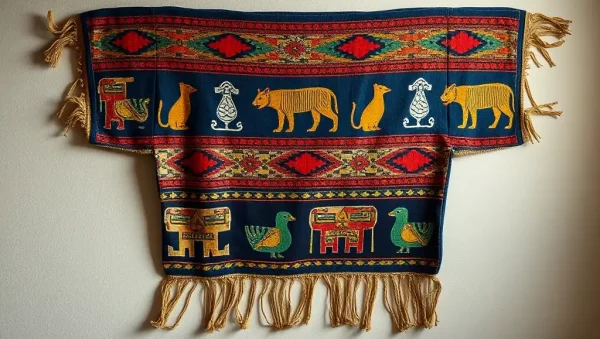
Paracas textiles are among the finest artistic achievements of the ancient Americas. Elaborately embroidered garments, mantles, tunics, headpieces, and burial cloths featured vivid colors and complex images of humans, animals, supernatural beings, plants, and symbolic figures. Discover how Paracas artists used cotton, camelid fibers, natural dyes, and advanced weaving techniques to create objects of extraordinary detail.
This section also explores the meaning and craftsmanship behind Paracas art. Readers can expect information about textile production, iconography, artistic symbolism, and the role of clothing in identity, status, ritual, and burial ceremonies. These Paracas textiles provide valuable evidence about religion, social hierarchy, technology, and the worldview of this ancient coastal civilization.
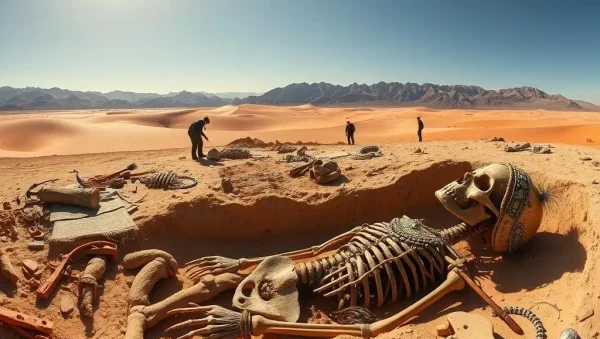
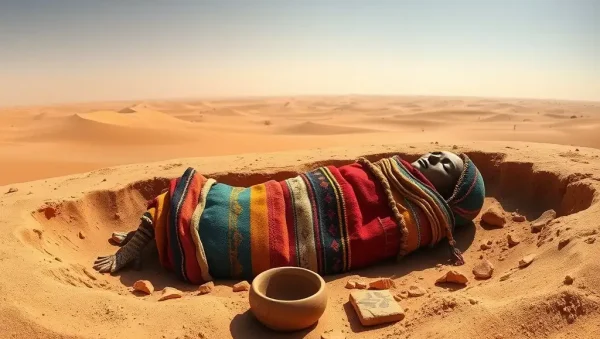
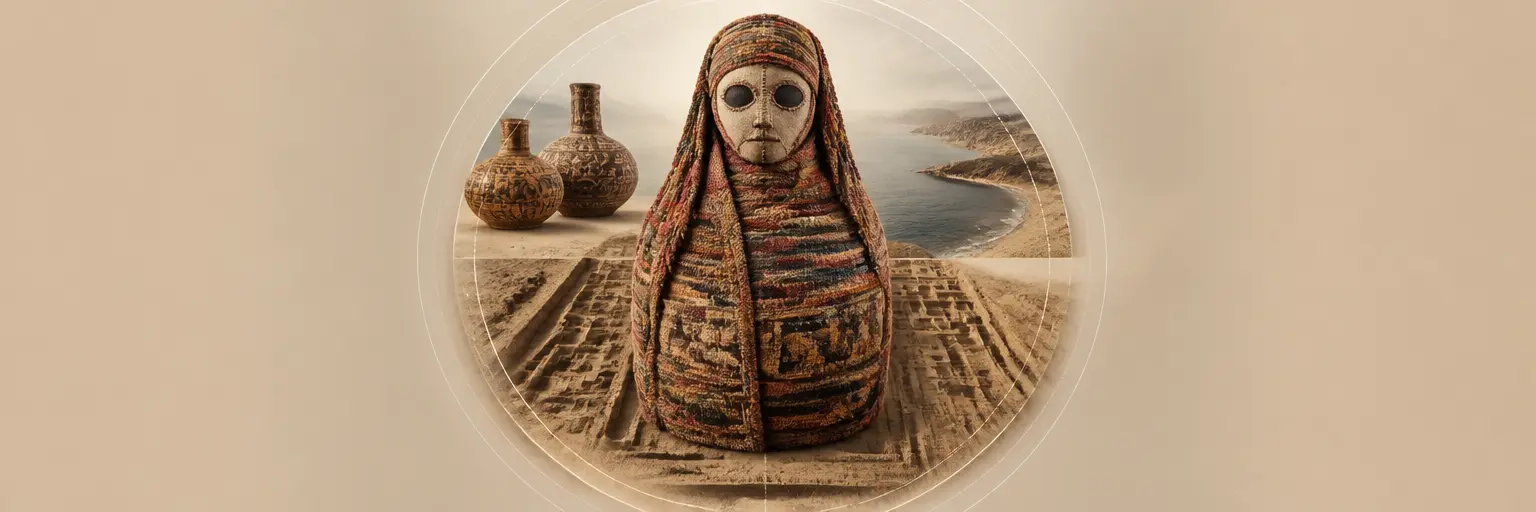
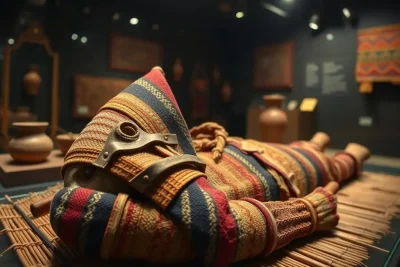
The Paracas people are especially known for their sophisticated burial traditions. Archaeological discoveries from the Paracas Necropolis revealed bundles containing human remains wrapped in layers of decorated textiles, often accompanied by pottery, food, tools, jewelry, and other offerings. Learn how these burials reflect beliefs about death, ancestors, social position, and the continuation of life beyond the physical world.
Detailed studies of Paracas funerary bundles have also helped researchers understand population health, age, diet, disease, clothing, and ritual customs. Our content explains the difference between Paracas burial traditions, examines the significance of grave goods, and discusses why these discoveries are essential for understanding ancient Peruvian history and coastal archaeology.
One of the most remarkable aspects of Paracas society was its practice of cranial trepanation, a surgical procedure involving the removal or modification of part of the skull. Archaeologists have found skulls showing signs of healing, suggesting that some patients survived these operations. Explore the tools, techniques, possible medical purposes, and cultural context of this ancient practice.
Paracas medicine was connected to practical knowledge, ritual beliefs, and the treatment of injuries. Articles in this subcategory examine evidence of trepanation, dental modification, nutrition, trauma, and disease, while presenting the discoveries responsibly and clearly. Readers will gain insight into the scientific and cultural achievements of one of the earliest known surgical traditions in the Andes.
Life in Paracas communities depended on a combination of fishing, shellfish gathering, agriculture, hunting, and trade. The rich Pacific Ocean provided marine resources, while river valleys supported the cultivation of crops such as maize, beans, peppers, and cotton. Learn how Paracas communities adapted to desert conditions and built an economy based on diverse sources of food and materials.
This section explores everyday life, household activities, clothing, food preparation, tools, crafts, and community organization. By studying archaeological evidence, readers can better understand how families lived, how labor was organized, and how coastal resources supported the development of complex society in ancient Peru.
Paracas religious beliefs can be explored through textiles, ceramics, burial objects, and representations of supernatural figures. Repeated images of powerful beings, birds, felines, serpents, plants, and transformed human forms suggest a rich symbolic tradition. Discover how these images may have expressed ideas about fertility, nature, ancestors, protection, transformation, and the relationship between humans and the spirit world.
Because many Paracas beliefs were not recorded in writing, archaeologists interpret religious practices through material evidence. This subcategory presents different scholarly perspectives on Paracas mythology, ceremonial life, sacred imagery, and ancestor worship, helping readers distinguish between archaeological evidence and speculation.
Paracas material culture includes ceramics, bone tools, stone implements, metal ornaments, weaving equipment, and agricultural instruments. These objects reveal the technical knowledge and creative abilities of Paracas craftspeople. Readers can explore pottery forms, decorative styles, manufacturing methods, and the ways objects were used in domestic, ritual, and funerary contexts.
Paracas technology was closely connected to the environment and social organization. From textile production to water management and surgical instruments, the civilization developed practical solutions to coastal challenges. Learn how these innovations contributed to the growth of ancient Andean civilization and influenced cultural developments in southern Peru.
Archaeological research at the Paracas Peninsula and surrounding valleys has transformed our understanding of early complex societies on the Peruvian coast. Discoveries of tombs, textiles, ceramics, mummies, settlements, and ceremonial objects continue to provide evidence about Paracas history. This section introduces important sites, excavation findings, museum collections, and the methods used to study the culture.
The legacy of Paracas can also be seen in its relationship with the Nazca Culture and other ancient Andean traditions. Readers can explore cultural continuity, artistic influence, regional exchange, and the debates surrounding chronology and identity. Together, these subjects show why Paracas remains essential to the study of pre-Columbian Peru, Andean archaeology, and ancient coastal cultures.
The Paracas Culture was an ancient civilization that developed on the southern coast of Peru between approximately 800 BCE and 100 CE. It is best known for its advanced textiles, elaborate burials, medical practices, ceramics, and adaptation to the coastal desert environment.
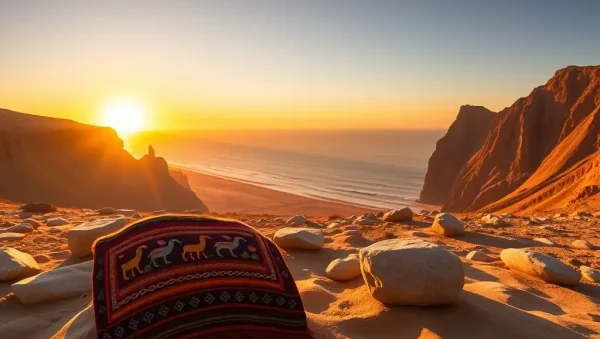
Paracas communities lived mainly around the Paracas Peninsula, Pisco Valley, Ica Valley, and nearby coastal regions of southern Peru. Their economy combined marine resources from the Pacific Ocean with agriculture in river valleys and desert oases.
Paracas textiles are famous for their exceptional craftsmanship, vibrant natural colors, complex embroidery, and symbolic imagery. Many mantles and burial garments contain detailed representations of humans, animals, supernatural beings, and ceremonial figures.
Yes. Archaeological evidence shows that Paracas surgeons practiced cranial trepanation, a procedure involving the opening or modification of the skull. Some skulls display signs of healing, indicating that patients survived at least certain operations.
The Paracas and Nazca cultures developed in related regions of southern Peru and share certain artistic and technological traditions. Many scholars believe that Nazca society emerged partly from earlier Paracas cultural developments, although the exact relationship remains an important topic in Andean archaeology.