
The Chavín Staff God: A Central Figure in Their Belief System

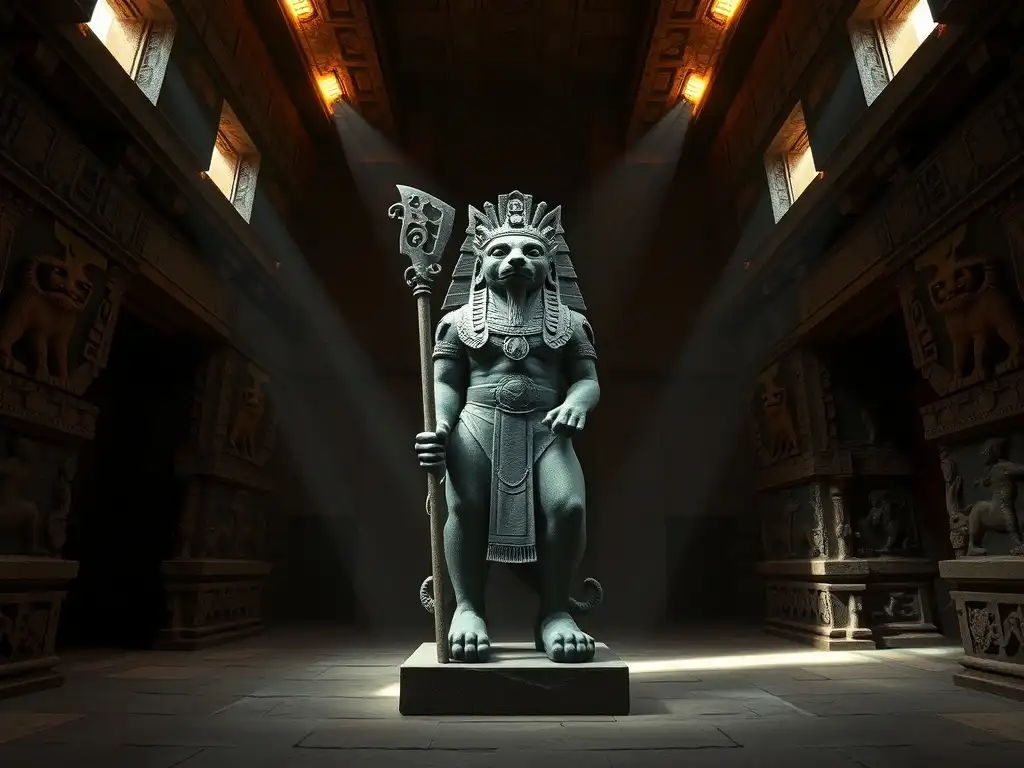
Step into a world lost to time, yet echoing with power and mystery. Journey with us through the breathtaking landscapes and enigmatic cultures of the Andes, where towering empires rose and fell. Discover the secrets held within the intricate artistry and advanced technology of civilizations like the Incas, Moche, and Nazca. But first, prepare to be captivated by the Chavín Staff God symbolism, a potent emblem at the heart of Pre-Incan coastal societies – a symbol whose meaning continues to unravel before our very eyes. Uncover its significance and delve deeper into the fascinating world of Andean beliefs.
The Chavín culture, flourishing in the Andes Mountains of Peru from approximately 900 to 200 BCE, remains a captivating enigma for archaeologists and historians alike. Their sophisticated religious beliefs, reflected in their awe-inspiring art and architecture, are central to understanding this formative period in Andean civilization. This article delves into the symbolism of the Chavín Staff God, a central figure in their complex pantheon and a powerful symbol that permeates their artistic expressions.
We will explore its iconography, its role in Chavín religious practices, and its enduring significance in interpreting the culture's worldview. Understanding the Chavín Staff God's symbolism provides crucial insight into the intricate religious landscape of this influential pre-Incan society and its impact on subsequent Andean cultures.
The pervasive nature of this deity in Chavín art suggests a profound influence on the daily lives and spiritual beliefs of the people. This exploration will uncover the mysteries surrounding this fascinating figure and offer a deeper understanding of the Chavín's rich and complex legacy.
Understanding the Chavín Culture and its Religious Landscape
The Chavín civilization, located in the northern highlands of Peru, is known for its unique artistic style and its influence on subsequent Andean cultures. Their religious beliefs were deeply intertwined with their daily lives, and their art served as a powerful medium for expressing these beliefs. Chavín religious practices centered around a complex pantheon of deities, often depicted in zoomorphic and anthropomorphic forms, reflecting a sophisticated understanding of the natural world.
Evidence suggests the use of hallucinogenic plants played a significant role in their rituals, possibly facilitating communication with the spirit world and enhancing the experience of religious ceremonies. The architecture of their monumental sites, such as the Chavín de Huántar temple complex, reflects their highly organized social structure and their reverence for their deities.
The intricate carvings and sculptures found within these sites are testament to their advanced artistic skills and their profound spiritual beliefs. The Chavín people were skilled artisans, creating intricate textiles, pottery, and metalwork, many of which incorporate religious motifs and imagery.
The Chavín worldview, as interpreted from their art and architecture, appears to have been deeply concerned with the forces of nature, particularly the power of mountains, rivers, and animals. This reverence for the natural world is clearly demonstrated in the depiction of various deities and mythical creatures. The Staff God, as we will explore further, is a prime example of this connection between the spiritual and natural realms.
The impact of the Chavín worldview on subsequent Andean cultures is undeniable, with many of their religious motifs and artistic styles reappearing in later periods. Understanding the Chavín religious landscape is therefore crucial to understanding the broader development of Andean civilization.
The Emergence of the Staff God in Chavín Art
The Chavín Staff God is a recurring motif in Chavín art, typically depicted as a fierce, anthropomorphic figure with feline features. 😼 This deity is often shown wearing a headdress adorned with fangs and claws, symbolizing power and ferocity. The Staff God is frequently portrayed holding a staff, a prominent symbol of authority and religious power.
The staff itself is often intricately carved with additional symbolic motifs, further enhancing its significance. The depiction of the Staff God varies across different Chavín artifacts, but the core features—feline features, fangs, claws, and the staff—remain consistent, indicating its central importance within their religious system.
The Staff God's appearance in various media, including stone carvings, pottery, and textiles, underscores its pervasive role in Chavín society. Its presence on ceremonial objects, such as ceremonial vessels and staffs, suggests its importance in ritualistic practices. The consistent portrayal of the Staff God emphasizes its status as a key figure within the Chavín pantheon, acting as a powerful mediator between the human and spiritual realms.
The symbolism embedded within the Staff God's iconography is multifaceted and requires careful analysis to fully understand its significance within the context of Chavín religious beliefs. Further research is needed to fully decipher the nuances of the Staff God's symbolism and its connection to other deities within the Chavín pantheon.
The detailed study of individual artifacts featuring the Staff God can shed further light on the evolution of this iconic figure and its role in the Chavín worldview. The precise meaning of specific elements within the Staff God's iconography remains a subject of ongoing scholarly debate, highlighting the complexity and richness of Chavín religious beliefs.
Iconography of the Chavín Staff God: Key Features
The Chavín Staff God, a central figure in the Chavín culture's religious beliefs, is depicted with a complex and fascinating iconography. Its representations are far from uniform, varying across different artistic media and contexts. However, several key features consistently appear, allowing for a better understanding of its symbolic significance. The deity is often portrayed as a composite being, blending characteristics of various animals and possessing a powerful, almost otherworldly aura. This fusion of elements reflects the Chavín worldview, which emphasized the interconnectedness of the natural world and the spiritual realm. The stylistic choices, such as the use of sharp angles and exaggerated features, further contribute to the deity's imposing presence and the sense of awe it inspires. The intricate detail and skillful execution of the carvings and sculptures showcase the sophisticated artistic capabilities of the Chavín civilization. Studying these features reveals valuable insights into their religious beliefs and societal structures.
The Serpent Motifs in the Staff God Imagery
Serpent motifs are prevalent in Chavín art and are strongly associated with the Staff God. These serpents are not always depicted realistically; often they are stylized, with exaggerated features and symbolic elements intertwined. Sometimes they are coiled around the deity, acting as a visual frame or a source of power.
In other instances, the serpent itself forms part of the deity's body, becoming intertwined with its features. The serpent's association with the Staff God is likely linked to its symbolic meanings within the Chavín worldview – possibly representing fertility, healing, or the underworld. The serpent's ability to shed its skin could also symbolize renewal and transformation, further enriching the symbolism of the Staff God.
Analysis of the positioning and interaction of the serpent with the Staff God offers clues to understanding the intricate layers of meaning within Chavín iconography. The precise interpretation requires further research, but it's clear that the serpent plays a crucial role in the Staff God’s overall symbolism.
Feline Characteristics of the Chavín Deity
The Chavín Staff God frequently incorporates feline characteristics, adding to its multifaceted nature. These characteristics are often subtly integrated, appearing in the deity's eyes, claws, teeth, or overall posture. The feline features may be directly incorporated into the deity's body, or they might be represented through symbolic elements such as jaguars' spots or the stylized depiction of fangs. The inclusion of feline traits connects the Staff God to the power and prestige associated with jaguars in Andean cultures.
Jaguars were revered creatures, often symbolizing strength, power, and even shamanic abilities. By incorporating feline attributes, the Chavín artists likely sought to imbue the Staff God with these powerful characteristics, reinforcing its role as a central figure in their religious beliefs. The precise meaning of the feline traits needs further investigation, but their inclusion undoubtedly adds depth to the complex symbolism of the Staff God.
Avian Attributes of the Staff God
Beyond feline and serpentine attributes, the Chavín Staff God also exhibits avian characteristics, particularly those associated with birds of prey. These avian features, like sharp talons, beaks, or wings, are frequently stylized and integrated into the deity’s overall form. The inclusion of avian attributes likely reflects the importance of birds in Chavín cosmology.
Birds, particularly raptors, were often viewed as intermediaries between the earthly and spiritual realms, capable of soaring to great heights and possessing keen vision. The incorporation of avian characteristics may therefore emphasize the Staff God’s power and ability to connect different realms, furthering its role as a mediator or a divine figure with far-reaching influence. The specific bird species represented and their particular symbolism within the Chavín culture requires further scholarly investigation to fully understand the nuances of this iconography.
Interpreting the Chavín Staff God's Symbolism
The Chavín Staff God's symbolism is multifaceted and complex, reflecting the sophisticated religious beliefs of the Chavín culture. Interpreting its meaning requires considering its various iconographic features and the broader context of Chavín society and religion. Scholars have proposed several interpretations, each offering valuable insights into the deity's significance.
The lack of written records from the Chavín period presents challenges, but careful analysis of the surviving art and artifacts, combined with anthropological research on later Andean cultures, sheds light on the possible meanings. The diverse interpretations highlight the richness and ambiguity inherent in the deity's symbolism, opening avenues for ongoing scholarly discussions.
The Staff God as a Symbol of Power and Authority
One prominent interpretation of the Chavín Staff God emphasizes its role as a symbol of power and authority within Chavín society. The deity's imposing presence, composite nature, and the intricate detail of its depictions suggest a powerful, almost supernatural force. Its association with elite contexts, such as temples and ceremonial centers, further supports this interpretation.
The Staff God's image may have served to legitimize the power of the ruling elite, reinforcing their social status and authority. The use of the Staff God's image in various contexts suggests its use as a tool for consolidating political power and shaping social order. Further research into the spatial distribution of Staff God representations could strengthen this interpretation.
The Staff God and Agricultural Fertility
Another crucial aspect of the Chavín Staff God's symbolism is its potential connection to agricultural fertility. The integration of animal motifs associated with fertility, such as serpents and felines, along with the Staff God’s overall association with life-giving forces, suggests its role in ensuring bountiful harvests. The Chavín culture's dependence on agriculture makes this interpretation particularly compelling.
The Staff God might have been seen as a guarantor of agricultural prosperity, a divine being whose favor was essential for the survival and well-being of the community. Further investigation into the relationship between the Staff God's iconography and agricultural practices during the Chavín period is needed to solidify this interpretation.
The Staff God as a Mediator Between Worlds
The Staff God’s composite nature and its incorporation of animal attributes associated with different realms—the terrestrial, the underworld, and the celestial—suggests its role as a mediator between these worlds. The deity's ability to bridge these realms would have been essential in Chavín religious practices, facilitating communication with the divine and ensuring the well-being of the community. The Staff God might have been seen as a conduit for blessings, ensuring successful harvests, healing, and protection from harm.
Further research on Chavín rituals and religious practices could provide more concrete evidence supporting this interpretation of the Staff God as a powerful mediator between the earthly and spiritual realms. The complex symbolism of the Staff God continues to fascinate and challenge researchers, prompting further exploration of its profound significance within the Chavín civilization.
The Staff God’s Presence Across Chavín Sites
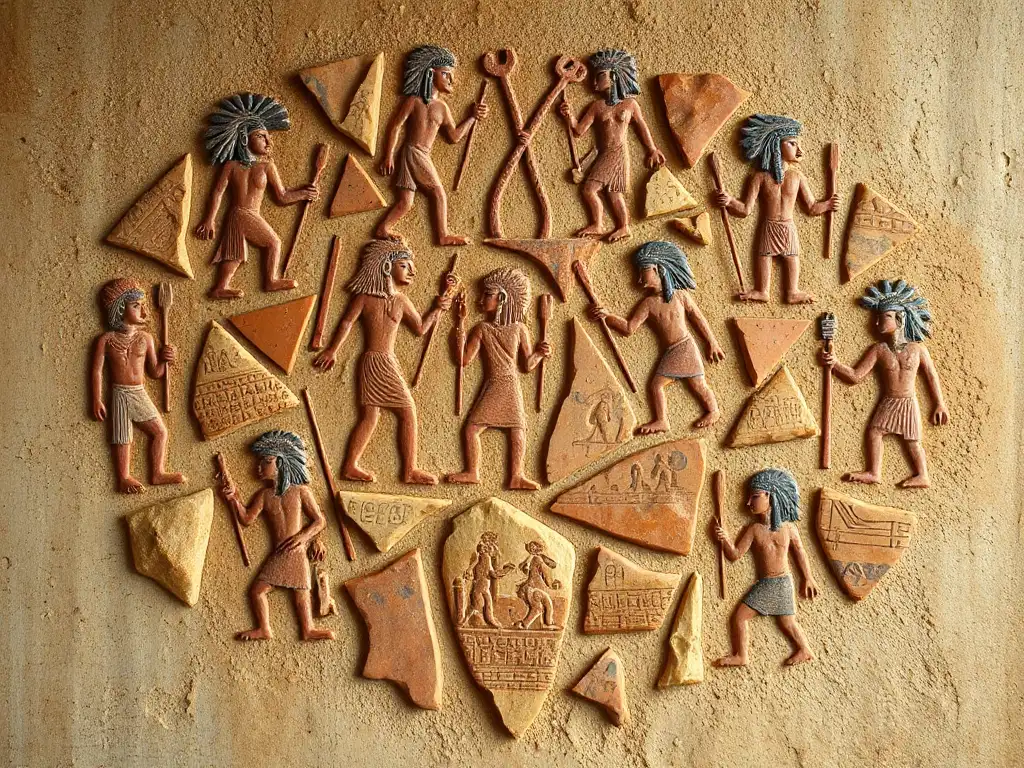
The Chavín Staff God, a deity depicted wielding a staff and often with feline features, wasn't confined to a single location. Archaeological evidence demonstrates its widespread presence across numerous Chavín sites, highlighting the significant role this figure played in unifying the religious beliefs of the culture.
The consistent imagery, though subject to stylistic variations, suggests a central, pan-Chavín religious system, with the Staff God acting as a key focal point. The distribution of artifacts featuring the Staff God, from monumental sculptures to smaller ceramic pieces, points towards a well-established network of communication and cultural exchange across the geographically dispersed Chavín settlements.
This widespread presence isn't merely a matter of artistic replication; it implies a deeply rooted theological significance, a shared belief system that transcended local variations and fostered a sense of collective identity amongst diverse Chavín communities. Further research into the distribution patterns of Staff God artifacts could reveal more about the organization and reach of the Chavín religious network.
The Staff God at Chavín de Huantar
Chavín de Huantar, the namesake and arguably the most important center of the Chavín culture, naturally holds the most prominent examples of Staff God representations. The Lanzón, a massive monolithic sculpture depicting a deity with similar attributes to the Staff God, stands as a powerful testament to the deity's importance within the main temple complex. The intricately carved details on the Lanzón, along with the overall scale of the monument, underscore the reverence held for this figure.
Beyond the Lanzón, numerous other artifacts unearthed at Chavín de Huantar depict the Staff God in various poses and contexts, reinforcing its central position within the religious rituals and beliefs practiced at this pivotal site. These depictions frequently feature the staff itself – a potent symbol of power and authority.
Analysis of these artifacts provides valuable insights into the rituals and ceremonies that likely took place at Chavín de Huantar, centered around the veneration of the Staff God. The sheer volume of Staff God imagery at Chavín de Huantar serves as irrefutable proof of its central role in the religious landscape of this crucial Chavín settlement.
Regional Variations in Staff God Depictions
While the core attributes of the Chavín Staff God remain consistent across different sites, subtle variations in artistic style and iconography are evident. These regional differences, however, don’t necessarily indicate distinct deities but rather reflect the unique artistic expressions and local adaptations of a shared religious belief system. Some sites might emphasize certain aspects of the Staff God’s iconography more than others – for instance, the feline features might be more pronounced in some regions, while the staff itself might be depicted differently.
These variations are analogous to regional dialects within a language – distinct yet mutually intelligible. Understanding these nuances requires careful analysis of the stylistic elements in different artifacts from various Chavín sites.
Further research might reveal correlations between these stylistic variations and specific geographical locations or even social structures within the Chavín civilization. The diversity in artistic expressions actually strengthens the argument for a unified religious system, where local artists adapted a common theme to their specific contexts.
Influence of the Chavín Staff God on Later Andean Cultures
The influence of the Chavín Staff God extended far beyond the chronological limits of the Chavín culture itself. Its iconography and symbolism left an indelible mark on subsequent Andean religious traditions. The feline features, the staff, and other associated motifs reappeared in the art and religious practices of later cultures, suggesting a continuous thread of religious influence spanning centuries.
The impact can be seen in the artistic styles and religious iconography of cultures that followed, demonstrating a lasting legacy that shaped the religious landscape of the Andes. This enduring influence points to the deep-seated power and significance of the Chavín pantheon and the enduring resonance of the Staff God's symbolism within the Andean world.
The Staff God's Legacy in Subsequent Religious Iconography
The persistence of the Staff God’s symbolic elements in the art of later Andean cultures is a compelling testament to its enduring influence. While the exact nature of the connection requires further study, the recurring motifs – the feline features, the staff, and other associated symbols – suggest a clear lineage of religious ideas. These elements appeared in various forms, subtly adapted and integrated into the religious iconography of later Andean societies.
This suggests a process of cultural transmission and adaptation, where the core symbolic elements of the Chavín Staff God were reinterpreted and integrated into new religious systems. Identifying specific examples of this influence in later Andean art and religious practices is crucial to understanding the long-term impact of the Chavín culture and its religious beliefs. Careful comparative analysis of Chavín artifacts and those of later cultures is essential to fully appreciate the extent of this legacy.
Parallels with Other Andean Deities
The Chavín Staff God shares certain similarities with other Andean deities from both earlier and later periods, hinting at potential connections and continuities in religious beliefs. These parallels might point to an underlying shared cosmology or a common set of symbolic elements that were adapted and reinterpreted across different cultures and time periods. Further research into the iconography and attributes of these other deities is crucial to understand the relationships and potential influences between the Chavín Staff God and other prominent figures in the Andean pantheon.
Examining these parallels can provide valuable insights into the evolution of religious beliefs and the development of complex religious systems in the Andean region. This comparative approach allows for a deeper understanding of the broader religious landscape of the Andes and the role of the Chavín Staff God within that context.
The Enduring Significance of the Chavín Staff God Symbolism
The Chavín Staff God, a deity depicted with a complex iconography featuring a staff, feline features, and often a headdress, holds a central place in understanding Chavín religious beliefs and their lasting impact on Andean culture. Its symbolism is far from simplistic; rather, it represents a complex interplay of power, fertility, and possibly shamanic practices. Scholars continue to debate the precise meaning of each element within the iconography, but several interpretations offer compelling insights into its enduring significance.
The recurring motif of the staff itself, for example, might represent authority, control over the natural world, or even a conduit for spiritual energy. Its presence in numerous Chavín artifacts highlights its importance within their cosmology.
The feline features, often depicted as a combination of jaguar and possibly other felines, suggest a connection to the power and mystery of the animal kingdom. In Andean cultures, jaguars frequently symbolize power, strength, and the unseen forces of nature. This association with the jaguar adds another layer to the Staff God's complex symbolism, linking the deity to the potent forces of the natural world.
The inclusion of additional elements like fangs, claws, or spotted markings further emphasizes this connection to the predatory and powerful aspects of the jaguar. The precise interpretation of these details remains a subject of ongoing research, but their repeated presence leaves no doubt about their importance.
Furthermore, the headdresses often associated with the Chavín Staff God are equally intriguing. These headdresses, frequently elaborate and complex, might represent specific rituals, social status, or even the deity's control over the cosmos. Some headdresses depict elements like snakes or birds, suggesting a broader connection to the interconnectedness of the Andean ecosystem within their religious beliefs. The variation in headdress styles found across different Chavín artifacts suggests a potential evolution of the deity's representation over time or perhaps different regional interpretations of the same deity. These variations provide valuable insight into the fluidity and dynamism of Chavín religious practices.
The enduring significance of the Chavín Staff God symbolism is evident in its influence on subsequent Andean cultures. Elements of its iconography, particularly the feline features and the staff itself, appear in later artistic expressions, suggesting a continuous reverence for the deity or, at the very least, a sustained influence of its symbolic power. The Staff God’s legacy serves as a testament to the power of religious iconography to transcend time and shape cultural identity across generations.
Its continued study offers valuable insights into the development of religious thought and artistic expression in the ancient Andes, deepening our understanding of Chavín civilization and its lasting impact on the region. The meticulous study of Chavín artifacts and their iconography continues to reveal new insights into the complex symbolism of the Chavín Staff God, ensuring its relevance in the ongoing discussion of Andean art and religion.
- Understanding the Chavín Culture and its Religious Landscape
- The Emergence of the Staff God in Chavín Art
- Iconography of the Chavín Staff God: Key Features
- Interpreting the Chavín Staff God's Symbolism
- The Staff God’s Presence Across Chavín Sites
- Influence of the Chavín Staff God on Later Andean Cultures
- The Enduring Significance of the Chavín Staff God Symbolism
Frequently Asked Questions
What is the Chavín Staff God?
The Chavín Staff God is a central figure in the religious iconography of the Chavín culture (900-200 BCE) of the Andes. It's depicted as a complex, often terrifying deity, with features combining animal and human characteristics. Its symbolism is still debated by scholars.
What is the significance of the Staff God's imagery?
The Staff God's imagery, often featuring feline, serpent, and bird elements, likely represented the powerful forces of nature and the cosmos. This complex iconography suggests a sophisticated religious belief system. Interpretations vary among researchers.
What materials were used to depict the Chavín Staff God?
The Chavín Staff God was depicted in various materials, including stone carvings, ceramics, and textiles. These depictions varied in size and detail, depending on their purpose and location. Monumental stone sculptures are particularly impressive.
How did the Chavín Staff God influence other Andean cultures?
The Chavín artistic style, including depictions of the Staff God, significantly influenced subsequent Andean cultures. Its imagery and religious concepts spread throughout the region, suggesting a powerful cultural impact. This is evident in the art of later cultures.
Where can I see examples of Chavín Staff God depictions?
Examples of Chavín Staff God depictions can be found in museums around the world, particularly in Peru. The Chavín de Huántar archaeological site itself houses many important examples. Online resources also offer images and information.
Final Reflection: Decoding the Chavín Staff God's Enduring Legacy
The Chavín Staff God, a seemingly ancient deity, continues to resonate with us today, not merely as a historical artifact but as a powerful symbol of the enduring human need to understand the cosmos and our place within it. Its intricate iconography, far from being a relic of a bygone era, offers a compelling lens through which to examine our own persistent fascination with power, spirituality, and the search for meaning in a complex world. The enduring mystery surrounding this figure speaks volumes about the enduring power of symbolic representation.
The Chavín Staff God's influence extends far beyond the archaeological record; its imagery, imbued with both terrifying and captivating elements, has subtly shaped our understanding of ancient Andean cultures and the very nature of religious iconography. Its impact on subsequent artistic and religious expressions in the Andes is undeniable, a testament to its potent symbolic power. The past is never dead. It's not even past.
– William Faulkner. This quote perfectly encapsulates the continued relevance of the Chavín Staff God, whose influence echoes through time, shaping our understanding of the past and informing our present.
Consider the intricate details of the Staff God's representation – the feline features, the shamanistic headdress, the powerful stance. What do these symbols evoke in you? What connections can you draw between the ancient Andean quest for understanding and your own personal search for meaning? I invite you to delve deeper, to explore the rich tapestry of symbolism woven into this ancient figure, and to consider how its enduring legacy might inspire your own journey of self-discovery and understanding.
Unveil the Mysteries of the Chavín Staff God!
Thank you for exploring the fascinating world of the Chavín civilization and its revered Staff God. Understanding this iconic figure significantly enhances our understanding of Andean culture and spiritual beliefs. Now, let's delve even deeper!
- Explore further: Investigate the other significant deities of the Chavín culture and their influence on daily life and religious practices.
- Join the discussion: Share your thoughts on the Staff God's potential parallels with deities from other cultures in our **community forum**.
- Share your knowledge: Create a multimedia presentation about the Chavín civilization to share with friends, family, or your local community, sparking interest in Andean history.
How did spirituality shape the development and societal structures of ancient civilizations? What role did religious beliefs play in their daily lives?