
The Inca Legal System: How It Was Replaced by Spanish Law

Uncover the mysteries of the Andes! For centuries, the Inca Empire thrived, building a sophisticated society with intricate customs and laws. But what happened when the Spanish arrived? Dive into the fascinating story of the Inca legal system and its dramatic replacement by Spanish law – a collision of worlds that reshaped the very fabric of Andean life. Discover how a complex system of justice gave way to a new order, and explore the enduring legacy of this pivotal moment in history. Prepare to be amazed.
The Spanish conquest of the Inca Empire dramatically altered the social, political, and legal landscape of the Andes. While the Inca Empire’s sophisticated infrastructure and agricultural practices are well-documented, their legal system often receives less attention. Understanding the Inca legal system is crucial to comprehending the profound and lasting impact of the Spanish conquest.
This article delves into the intricacies of the pre-Columbian Inca legal framework, highlighting its key aspects and analyzing how it was systematically dismantled and replaced by Spanish law, a process that fundamentally reshaped Andean society. We will explore the Inca's methods of social control, their judicial processes, and the types of punishments they implemented, contrasting them with the legal structures imposed by the Spanish colonizers.
This analysis will help us understand not only the mechanics of the Inca legal system but also the profound cultural and societal shifts that followed the Spanish conquest, a pivotal moment in Andean history. The keyword "Inca legal system Spanish replacement" will be explored through a detailed examination of this transition.
Understanding the Pre-Columbian Inca Legal Framework
The Inca legal system, unlike codified European systems, was primarily customary and based on a complex interplay of religious beliefs, social hierarchy, and the emperor's authority. Justice wasn't dispensed through written laws but through a network of officials and community leaders who interpreted and applied customary norms. This system emphasized maintaining order and social harmony within the empire, reflecting the Inca worldview which prioritized collective well-being over individual rights.
While we lack written Inca legal codes, archaeological evidence, accounts from Spanish chroniclers (though often biased), and ethnographic studies of later Andean communities offer valuable insights into how this system functioned. The Inca's intricate system of record-keeping, using quipus (knotted strings), likely played a significant role in documenting legal precedents and administrative decisions.
This method of record-keeping, although not a written legal code, provided a framework for consistency and continuity in the application of customary laws across the vast empire. The absence of written laws, however, allowed for greater flexibility and adaptation to specific circumstances, a crucial factor in managing a diverse and geographically expansive empire.
Key Aspects of the Inca Justice System
The Inca justice system operated within a highly stratified society. The emperor, considered a divine figure, held ultimate authority, but the administration of justice was delegated through a hierarchical structure. Local disputes were often resolved within the community, with community leaders playing a crucial mediating role. More serious crimes or disputes that transcended local boundaries were handled by higher-ranking officials.
This system aimed for swift and effective resolution of conflicts, prioritizing the maintenance of social order and the emperor's authority. The emphasis on community involvement in resolving disputes reflects the Inca value of ayni, reciprocal labor and mutual support, which permeated all aspects of Inca life. The system wasn't solely punitive; it also incorporated restorative justice elements, aiming to reconcile parties and maintain social cohesion.
Inca Laws and Social Control
Inca laws focused on maintaining social order and stability. Crimes against the state, such as rebellion or treason, were severely punished. Similarly, crimes that disrupted the intricate social fabric, like theft or adultery, were also considered serious offenses. The concept of collective responsibility was prominent; entire communities could be held accountable for the actions of their members.
This system of social control reinforced the importance of community cooperation and adherence to established norms. The Inca's emphasis on collective responsibility differed significantly from the individualistic focus of later Spanish legal systems. [Specific examples of Inca laws and their application pending]. This section needs further research to include specific examples of Inca laws and how these impacted daily life.
The Role of Inca Judges and Officials
The administration of justice relied on a network of officials at various levels, from local leaders to high-ranking judges appointed by the emperor. These officials were responsible for investigating crimes, mediating disputes, and imposing punishments. Their authority stemmed from their position within the hierarchical structure and their perceived connection to the emperor’s divine authority. These officials were often chosen for their wisdom, integrity, and knowledge of customary law.
The system depended on the perceived legitimacy and impartiality of these officials, ensuring public trust and acceptance of their decisions. [Specific details on the training and selection of Inca judges and officials pending]. Further research is needed to describe the process and criteria involved in the selection and training of these important figures.
Punishments and Penalties in Inca Society
Punishments varied depending on the severity of the crime and the social standing of the offender. Common punishments included fines (often in the form of labor or goods), exile, and corporal punishment. The death penalty was reserved for the most serious crimes, often involving treason or rebellion against the emperor. Interestingly, punishments often aimed to restore balance and harmony within the community rather than simply inflicting retribution.
This focus on restorative justice contrasts sharply with the often brutal and arbitrary punishments imposed by the Spanish legal system. [Specific examples of Inca punishments and their application pending]. Further research is necessary to provide detailed examples of punishments and their frequency in Inca society. The contrast between Inca and Spanish punitive measures is a crucial area for further development.
The Arrival of the Spanish and its Legal Impact
The arrival of the Spanish conquistadors in the Andes marked a profound turning point, not just politically and militarily, but also legally. The Inca legal system, sophisticated and deeply ingrained in Andean society for centuries, faced an unprecedented challenge. The Spanish, driven by their own legal framework rooted in Roman law and infused with the tenets of the Catholic Church, began the process of dismantling and replacing the indigenous legal structure.
This wasn't a swift, clean break, but rather a gradual, often violent, process of imposition and assimilation that unfolded over decades. The initial stages involved disruption and conflict, as the very foundations of Inca law were undermined by the actions and decrees of the conquering power. The initial shockwave of the conquest itself irrevocably altered the legal landscape, creating a vacuum that the Spanish legal system would progressively fill.
The Inca's intricate system of ayllus (kinship-based communities) and their inherent legal structures were disrupted, leading to significant social and economic upheaval. The Spanish conquest didn't simply introduce a new legal system; it fundamentally reshaped the social fabric upon which Inca law was built.
The Spanish Conquest of the Inca Empire and Legal Disruption
The Spanish conquest itself was a brutal and disruptive force, instantly unsettling the established order and the Inca legal system. The capture and execution of Atahualpa, the Inca emperor, symbolized the complete collapse of the existing power structure. With the emperor gone, the established lines of authority and legal processes crumbled.
The ensuing civil wars amongst Inca factions further destabilized the empire, creating chaos and further eroding the effectiveness of the traditional legal mechanisms. The Spanish systematically dismantled the Inca bureaucracy, replacing officials with their own appointees. This act directly undermined the authority of Inca judges and other legal professionals, who were replaced with those loyal to the Spanish Crown.
The looting and destruction of Inca temples and administrative centers, repositories of legal precedents and knowledge, also contributed to the irreversible loss of the Inca legal heritage. This period of violence and upheaval effectively paved the way for the imposition of Spanish law.
Imposition of Spanish Law in the Andes
The Spanish systematically imposed their own legal codes in the Andes, a process far from seamless. The Leyes de Indias (Laws of the Indies), a complex body of legislation governing the Spanish colonies, became the primary legal framework. This vast collection of laws, spanning centuries, regulated virtually every aspect of colonial life, from land ownership and taxation to criminal justice and religious observance.
The application of these laws, however, was often uneven and inconsistent, varying depending on local circumstances and the discretion of colonial officials. Spanish legal concepts, alien to the Inca worldview, struggled to fully penetrate Andean society. Concepts like private property, as understood by the Spanish, were fundamentally different from the communal land ownership system practiced by the Inca.
The imposition of Spanish law represented a deliberate attempt to erase Inca legal traditions and replace them with a system that served the interests of the Spanish Crown. This process was not merely a legal change but also a cultural and ideological imposition.
The Transition from Inca Law to Spanish Colonial Law
The transition from Inca law to Spanish colonial law was a protracted and complex process, far from a simple substitution. It involved a gradual erosion of Inca legal practices and their replacement with Spanish equivalents. This transition wasn't uniform across the Andes; the pace and nature of the change varied significantly depending on factors such as distance from Spanish centers of power, the resistance of local populations, and the effectiveness of Spanish administrative control.
Initially, there was a period of overlap, where elements of both systems coexisted, often in a state of tension and conflict. Indigenous communities often continued to utilize traditional customs and dispute resolution mechanisms alongside the newly imposed Spanish laws.
However, the long-term trajectory was clear: the Spanish legal system, backed by military might and political dominance, progressively eclipsed Inca legal traditions. The Spanish Crown's aim was to create a legal system that reinforced its control and extracted resources from the conquered territory.
Challenges of Implementing Spanish Legal Codes
Implementing Spanish legal codes in the Andes presented numerous challenges. The sheer complexity of the Leyes de Indias made consistent application difficult, even for trained Spanish officials. Moreover, the cultural chasm between Spanish and Inca legal philosophies created significant obstacles. The Spanish emphasis on individual rights and private property conflicted sharply with the Inca system of communal ownership and collective responsibility.
Language barriers also hampered effective implementation. The lack of widespread Spanish fluency among the Andean population meant that many were unaware of their legal rights and obligations under the new system. Furthermore, the vastness of the Inca empire and the diverse indigenous populations within it made it difficult for the Spanish to enforce laws uniformly across such a large and varied territory. Corruption among Spanish officials further complicated matters, undermining the legitimacy and effectiveness of the legal system.
Initial Conflicts between Inca and Spanish Legal Traditions
The initial phases of the transition were marked by significant conflicts between Inca and Spanish legal traditions. These conflicts arose not only from differing legal principles but also from fundamental differences in worldview and social organization. The Inca emphasis on communal harmony and collective responsibility clashed with the Spanish focus on individual rights and private property. Disputes over land ownership, particularly, became a major source of conflict.
Traditional Inca forms of dispute resolution, often involving community elders and consensus-building, were superseded by Spanish legal procedures, which often favored the Spanish over the indigenous population. The imposition of harsh punishments for infractions under Spanish law, often exceeding traditional Inca penalties, also led to resentment and resistance. These initial clashes highlight the deeply rooted cultural and philosophical differences that underpinned the legal conflict.
Gradual Erosion of the Inca Legal System
The erosion of the Inca legal system was a gradual process, extending over several generations. As Spanish control consolidated, Inca legal institutions and practices gradually declined in influence. The replacement of Inca officials with Spanish appointees weakened the traditional legal structures, leaving indigenous communities vulnerable to the imposition of Spanish law. The introduction of Spanish-style courts and legal processes further marginalized traditional mechanisms for dispute resolution.
The suppression of indigenous languages and cultural practices also contributed to the decline of Inca law, as the very framework upon which it was built was systematically undermined. This erosion was not a passive process; it involved active efforts by the Spanish to replace Inca legal traditions with their own, often through coercion and violence. The long-term consequence was the near-total disappearance of the Inca legal system, replaced by the colonial legal framework of Spanish rule.
The Nature of Spanish Colonial Law in the Andes
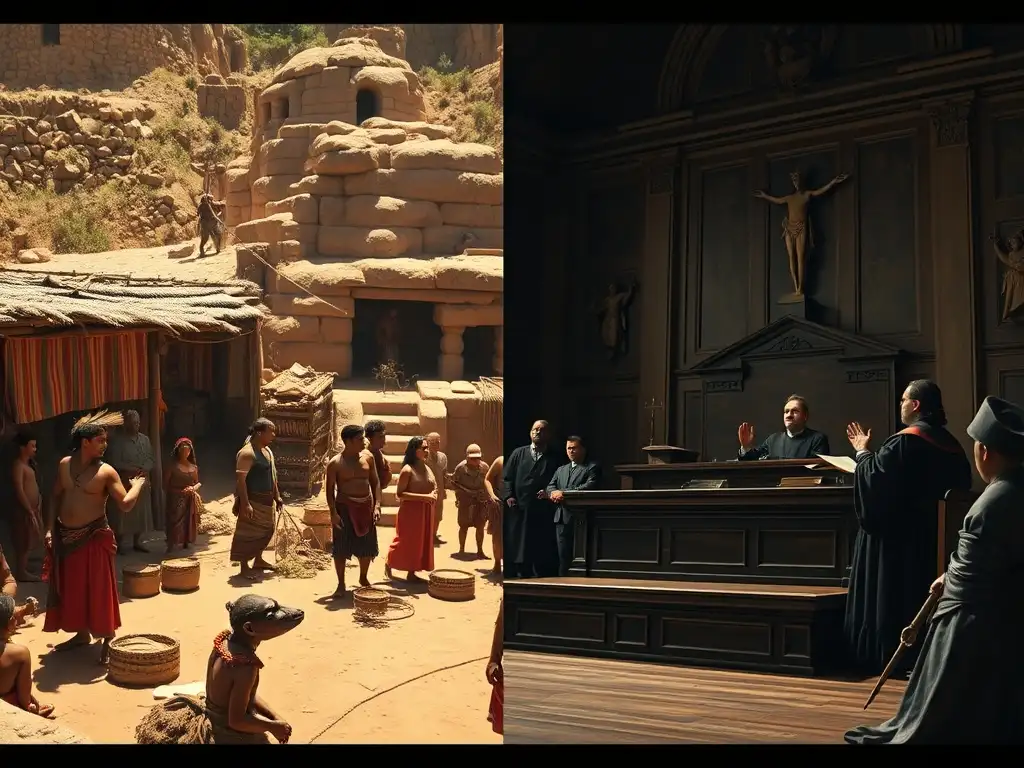
The imposition of Spanish colonial law in the Andes marked a dramatic shift from the existing Inca legal system. Spanish law, rooted in Roman law and heavily influenced by the Catholic Church, was characterized by its hierarchical structure, its emphasis on written codes, and its focus on individual property rights—concepts largely foreign to the Inca worldview. The implementation wasn't uniform across the vast Andean territories; local customs and practices sometimes persisted, albeit often in a modified or marginalized form, alongside the imposed Spanish legal framework.
This created a complex interplay of legal traditions, resulting in a hybrid system that reflected both indigenous and colonial influences. The Spanish sought to establish a system that would solidify their control, extract resources, and convert the indigenous population to Christianity.
This process was far from seamless, encountering resistance and adaptation from the Inca people and their descendants. The legacy of this clash of legal systems continues to resonate in modern Andean societies.
The Viceregal System and its Legal Implications
The Spanish viceregal system, with its centralized authority residing in the viceroy, played a crucial role in shaping the implementation of Spanish law in the Andes. The viceroy, appointed by the Spanish crown, acted as the supreme legal authority within his jurisdiction. He oversaw the administration of justice, appointed judges, and ensured the enforcement of royal decrees and ordinances. This centralized system, however, often struggled to effectively govern the vast and diverse Andean region.
Communication difficulties and the vast distances involved frequently led to inconsistencies in the application of law across different provinces. Furthermore, the viceroy's power often clashed with that of local officials, including corregidores and encomenderos, leading to legal disputes and corruption. The inherent limitations of the viceregal system often hindered the consistent and equitable application of Spanish law.
The Introduction of Spanish Legal Concepts
The introduction of Spanish legal concepts significantly altered the Andean legal landscape. Concepts like private property, individual rights, and codified laws were largely absent from the Inca system. The Spanish introduced the Recopilación de Leyes de los Reinos de las Indias, a compilation of laws governing the Spanish colonies in the Americas. This comprehensive legal code established a framework for civil, criminal, and administrative matters, replacing the customary Inca legal practices.
The Spanish legal system emphasized written documentation and formal procedures, a stark contrast to the Inca system's reliance on oral traditions and customary practices. This shift had profound implications for the Andean population, requiring them to adapt to unfamiliar legal processes and concepts. The implementation of written laws, however, often favored the Spanish elite, who possessed the literacy skills necessary to navigate the complex legal system.
The Role of the Church in Shaping Colonial Law
The Catholic Church played a significant role in shaping colonial law in the Andes. Church courts, known as ecclesiastical courts, held jurisdiction over matters related to religious doctrine, morality, and marriage. The Church's influence extended beyond religious matters, however, as it frequently intervened in cases involving indigenous populations, often advocating for their protection or, conversely, justifying their subjugation.
The Church's interpretation of Spanish law often influenced its application, particularly in areas concerning indigenous land ownership, labor practices, and social hierarchies. The Requerimiento, a formal statement read to indigenous populations asserting Spanish sovereignty and demanding their submission, exemplifies the Church's role in justifying the conquest and subsequent imposition of Spanish law. The Church's involvement in defining and shaping colonial law intertwined religious and secular power, creating a complex legal and social environment.
Key Differences Between Inca and Spanish Legal Systems
The Inca and Spanish legal systems differed fundamentally in their structure, principles, and methods of enforcement. The Inca system was largely unwritten, relying on oral traditions, customary practices, and the authority of the Sapa Inca and his officials. Justice was often dispensed through community-based mechanisms, emphasizing restorative justice and reconciliation.
The Spanish system, in contrast, was codified, emphasizing written laws, formal procedures, and a hierarchical judicial structure. This contrast highlights the differences between the two cultures' understandings of law, order, and justice. The shift from a largely oral and customary legal system to a written and codified one had profound consequences for the Andean population, impacting their social structures, economic activities, and worldview.
Contrasting Concepts of Justice and Punishment
The Inca and Spanish approaches to justice and punishment differed significantly. Inca justice emphasized restoring balance and harmony within the community. Punishments were often geared towards restitution or community service, rather than harsh physical penalties. The Spanish system, however, incorporated more severe forms of punishment, including corporal punishment, imprisonment, and even the death penalty.
This difference reflects the contrasting philosophical underpinnings of the two legal systems. The Spanish approach emphasized retribution and the maintenance of order through the imposition of fear, while the Inca system prioritized the restoration of social harmony. This shift in approach significantly impacted the lives of the Andean people, who experienced a harsher and more punitive legal system under Spanish rule.
Property Rights: Inca vs. Spanish Perspectives
A significant difference between the Inca and Spanish legal systems lay in their treatment of property rights. The Inca system emphasized communal land ownership and resource management, with land allocated based on the needs of the community. Individual ownership of land was largely absent.
The Spanish, however, introduced the concept of private property, emphasizing individual ownership and the right to exclusive use and control of land and resources. This shift had profound economic and social consequences, leading to the privatization of land previously held communally and the displacement of indigenous communities from their ancestral lands. The Spanish concept of private property became a cornerstone of their colonial economic system, facilitating the extraction of resources and the establishment of large-scale agricultural enterprises.
The Impact on Inca Social Structures
The replacement of the Inca legal system with Spanish law had a devastating impact on Inca social structures. The Inca system was intricately linked to its social organization, with the ayllu (community) serving as the fundamental unit of social and economic life. The imposition of Spanish law, with its emphasis on individual rights and private property, undermined the communal basis of Inca society. The mita labor system, though existing under the Inca, was intensified and exploited under the Spanish, further disrupting traditional social structures and leading to widespread suffering.
The Spanish legal system also favored the Spanish elite, granting them privileges and power while subjugating the indigenous population. This resulted in a significant restructuring of Andean society, marking a profound shift in power dynamics and social relations. The legacy of this transformation is evident in the social and political landscape of the Andes today.
Consequences of the Legal Replacement
The replacement of the Inca legal system with Spanish law had profound and lasting consequences across Andean society. The indigenous system, while complex and nuanced, was fundamentally different from the European model. The Inca system emphasized community harmony, reciprocal obligations, and a strong connection to the land and its resources.
Decisions were often made through consensus and mediation, prioritizing restorative justice over punitive measures. The Spanish system, in contrast, was based on codified laws, hierarchical authority, and a focus on individual rights and property ownership, often leading to conflict with existing Andean social structures. This clash of legal philosophies resulted in significant social and cultural upheaval, profoundly altering the fabric of Andean life.
The immediate impact was felt across all levels of society, from the elite to the commoner. The disruption of traditional power structures and the imposition of a foreign legal framework led to widespread confusion, resistance, and ultimately, the erosion of indigenous legal traditions.
Social and Cultural Transformations
The imposition of Spanish law led to significant social and cultural transformations within Andean communities. The ayllu, the traditional communal land-holding system, was gradually dismantled as individual land ownership became the norm under Spanish law. This transition disrupted established social hierarchies and economic practices, leading to the displacement of many indigenous populations and the concentration of land in the hands of the Spanish conquistadors and their Creole descendants.
The introduction of new concepts such as private property and individual rights clashed with the Inca emphasis on collective responsibility and communal well-being. Furthermore, the Spanish legal system often reinforced existing inequalities, exacerbating existing power imbalances within Andean society. The indigenous legal system, with its emphasis on mediation and consensus, was replaced by a system that prioritized formal legal processes and often resulted in harsh punishments.
This shift had a lasting impact on Andean culture, leading to the loss of traditional methods of conflict resolution and the erosion of indigenous legal knowledge. The cultural memory of the Inca legal system, however, remained strong in many communities, influencing resistance movements and shaping future legal struggles.
The Legacy of the Inca Legal System
Despite its replacement by Spanish law, the legacy of the Inca legal system continues to resonate in various aspects of Andean life. Elements of traditional customary law, particularly in rural communities, persist alongside the formal legal structures inherited from the colonial era. This coexistence of legal systems reflects a complex historical reality where indigenous practices have adapted and survived despite centuries of oppression.
The emphasis on community and reciprocity, integral to the Inca legal system, continues to inform social relationships and conflict resolution in many Andean communities. While the formal structures of the Inca legal system are gone, the underlying principles of social harmony and collective responsibility remain deeply embedded in the cultural fabric of the region.
The enduring presence of these principles is a testament to the resilience of indigenous legal traditions and their ability to adapt and persist even in the face of significant historical upheaval. Studying these remnants allows for a richer understanding of the lasting influence of the Inca legal system.
Lasting Impacts of Spanish Colonial Law in the Andean Region
The Spanish colonial legal system left an indelible mark on the Andean region, shaping its legal landscape for centuries to come. The introduction of Roman law principles, coupled with the Spanish legal framework, created a hybrid system that blended indigenous customary law with European legal traditions. This fusion, however, was often uneven and resulted in the marginalization of indigenous legal norms.
The emphasis on private property, hierarchical authority, and codified laws fundamentally altered the social and economic structures of the region. Land tenure systems were transformed, leading to the displacement of indigenous populations and the concentration of wealth in the hands of the Spanish elite.
Furthermore, the Spanish legal system often served to reinforce existing inequalities, perpetuating a system of social hierarchy that continues to have consequences today. The legacy of colonial law is evident in modern Andean legal systems, where aspects of Spanish legal tradition are intertwined with indigenous legal practices.
The Spanish Legal System's Legacy in Modern Andean Legal Systems
The influence of the Spanish legal system remains deeply embedded in the modern legal frameworks of Andean nations. Many aspects of contemporary Andean law, particularly in areas such as property rights, criminal procedure, and civil law, reflect the direct legacy of Spanish colonial legislation. The concept of codified law, the hierarchical structure of the judiciary, and the emphasis on individual rights are all features inherited from the Spanish colonial period. However, this legal heritage is not without its complexities. In recent decades, there has been a growing recognition of the need to incorporate indigenous legal traditions into national legal systems. This has led to efforts to acknowledge and integrate elements of customary law into formal legal frameworks, creating a more inclusive and representative legal system. This process is ongoing and presents significant challenges, requiring a careful balance between respecting indigenous legal traditions and maintaining the coherence of national legal systems.
Elements of Spanish Law in Contemporary Legal Frameworks
Several specific elements of Spanish law can be identified in the contemporary legal frameworks of Andean nations. For instance, the concept of escritura pública (public deed), a crucial element in Spanish civil law, continues to play a significant role in land registration and property transactions across the Andean region. Similarly, the principles of Roman law, deeply ingrained in the Spanish legal tradition, are reflected in various aspects of Andean civil and commercial law.
The hierarchical structure of the judiciary, with its emphasis on appellate courts and a centralized system of justice, is another direct legacy of the Spanish colonial legal system. These elements, while integrated into modern legal frameworks, often coexist with and sometimes conflict with indigenous legal traditions, highlighting the complexities of the legal landscape in the Andean region. The ongoing dialogue between these legal traditions is crucial for creating a more equitable and just system.
The Ongoing Debate about Indigenous Legal Rights
The question of indigenous legal rights in Andean nations remains a subject of ongoing debate and legal reform. While there is growing recognition of the importance of incorporating indigenous legal traditions into national legal systems, significant challenges remain. Balancing the principles of national unity and legal consistency with the need to respect indigenous legal pluralism is a complex task.
The debate often revolves around issues of land rights, access to justice, and the recognition of indigenous customary law as a legitimate source of legal authority. Advocacy groups and indigenous communities continue to push for greater recognition of indigenous legal systems and the integration of customary law into formal legal structures.
The struggle for indigenous legal rights is a reflection of the ongoing process of decolonization and the ongoing efforts to create a more equitable and just legal system in the Andean region. This ongoing debate underscores the lasting impact of the Spanish conquest on the legal systems of the Andes.
- Understanding the Pre-Columbian Inca Legal Framework
- Key Aspects of the Inca Justice System
- The Arrival of the Spanish and its Legal Impact
- The Transition from Inca Law to Spanish Colonial Law
- The Nature of Spanish Colonial Law in the Andes
- Key Differences Between Inca and Spanish Legal Systems
- Consequences of the Legal Replacement
- The Spanish Legal System's Legacy in Modern Andean Legal Systems
- What was the nature of the Inca legal system before the Spanish conquest?
- How did the Inca system differ from the Spanish legal system?
- What was the primary method of Spanish legal implementation in the Inca Empire?
- What impact did the replacement of the Inca legal system have on Andean society?
- Were there any attempts to blend Inca and Spanish legal traditions?
Frequently Asked Questions
What was the nature of the Inca legal system before the Spanish conquest?
The Inca legal system was based on customary law and religious beliefs, enforced by officials who judged based on community consensus and the will of the Sapa Inca. Punishments varied depending on the severity of the offense.
How did the Inca system differ from the Spanish legal system?
The Inca system was largely oral and informal, emphasizing community harmony and restitution. The Spanish system, in contrast, was written, codified, and focused on individual rights and punishment.
What was the primary method of Spanish legal implementation in the Inca Empire?
The Spanish implemented their system through force and conquest, replacing Inca laws with Spanish laws and establishing new administrative and judicial structures. They also implemented the Repartimento system.
What impact did the replacement of the Inca legal system have on Andean society?
The replacement led to significant social and economic upheaval, undermining traditional power structures and causing loss of land and resources for many Indigenous people. It also resulted in the imposition of unfamiliar legal concepts and practices.
Were there any attempts to blend Inca and Spanish legal traditions?
While complete integration didn't occur, some syncretism existed. Indigenous practices sometimes influenced the application of Spanish law, particularly in rural areas, though the Spanish system ultimately prevailed.
Final Reflection: Echoes of Empire: The Enduring Legacy of Inca Law
The replacement of the Inca legal system by Spanish law wasn't merely a historical event; it's a stark reminder of the enduring power of colonialism and its lasting impact on legal frameworks worldwide. The intricate web of Andean justice, built on community consensus and a deep connection to the land, was systematically dismantled, leaving behind a legacy of inequality and a fractured understanding of justice itself.
The imposition of Spanish law fundamentally reshaped Andean societies, erasing centuries of indigenous legal traditions and replacing them with a system often ill-suited to the realities of the conquered populations. This act of legal erasure continues to resonate today, influencing land ownership, resource management, and even the very definition of justice within many Latin American nations. The conquerors wrote the history, and their history is not our history.
This simple truth underscores the ongoing need to reclaim and understand the complexities of pre-colonial legal systems.
Consider the implications of this historical shift. How does the legacy of colonial legal systems impact your own understanding of justice and fairness? I urge you to delve deeper into the stories of those whose voices were silenced, to learn from the resilience of indigenous communities, and to advocate for legal systems that are inclusive, equitable, and truly representative of all peoples. Let the echoes of the Inca legal system serve as a powerful reminder of the importance of preserving diverse legal traditions and striving for a more just and equitable future for all.
Unveil the Legacy of Inca Law: Take Action Today!
Thank you for exploring the fascinating intricacies of the Inca legal system with us! You've uncovered essential insights into how ancient principles shaped Inca society and were ultimately transformed by the arrival of Spanish law. Now, it’s time to delve deeper and explore the lasting impact of this rich legal tradition.
Here are some ways you can engage further:
- **Join a local discussion group** focused on indigenous legal systems and their influence on modern jurisprudence. Share your newfound knowledge of the Inca system and its enduring relevance!
- **Conduct research and write** a paper or essay on a specific aspect of Inca law that captivates you. Consider how its underlying principles might still resonate with contemporary legal challenges and solutions.
- **Connect with organizations** advocating for indigenous rights and explore how traditional legal frameworks can inform and inspire current legal reforms. Learn how the wisdom of the past can shape a more just future.
Which aspect of the Inca legal system do you believe offers the most valuable insights for enriching our modern understanding of justice?