
Unveiling the Enigmas: The Scholars Who Deciphered the Ancient Andes

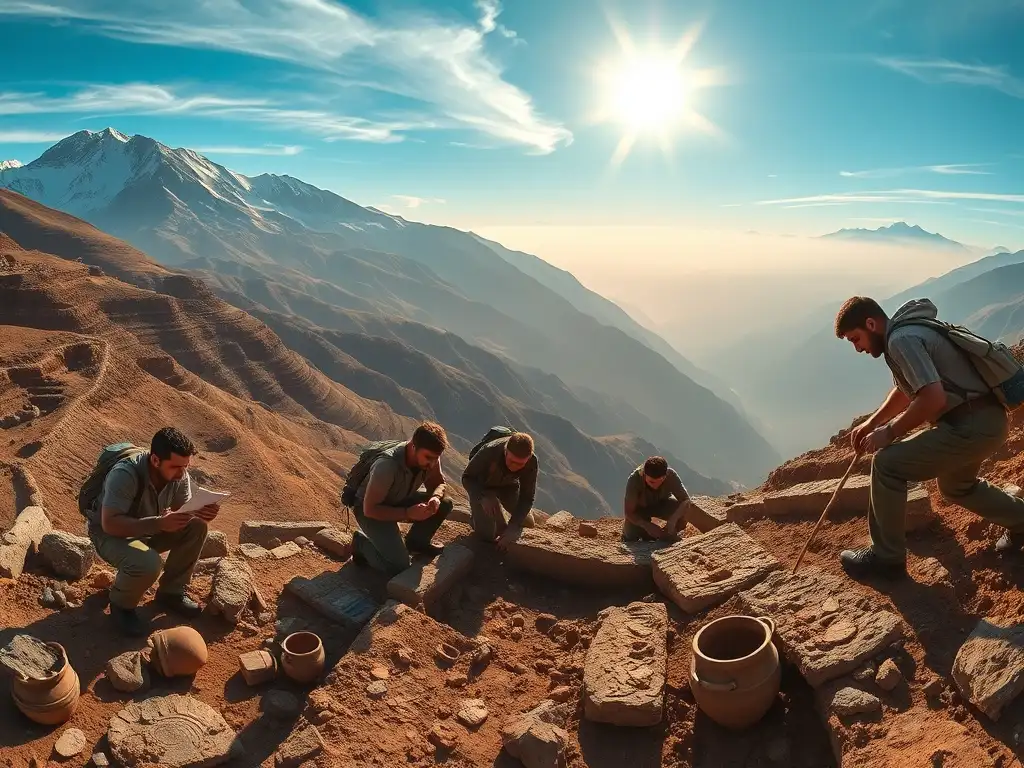
Step into a world lost to time, yet echoing with the whispers of a magnificent past. Dive into the captivating realm of the Andean civilizations, where towering empires like the Inca, Moche, and Nazca left behind a legacy of breathtaking artistry and unparalleled ingenuity. But who were the brilliant minds that unlocked these ancient secrets? Discover the remarkable stories of Ancient Andean civilizations scholars – the unsung heroes who dedicated their lives to deciphering the mysteries of these fascinating cultures. Their journeys of discovery await you – explore their legacies and uncover the truth behind the Andes' enduring enigma.
The study of Ancient Andean civilizations is a fascinating journey through time, revealing a complex tapestry of cultures, innovations, and societal structures. From the towering heights of Machu Picchu to the intricate Nazca Lines, these ancient societies left behind a legacy of breathtaking artistry and sophisticated engineering that continues to captivate and inspire researchers today.
Understanding these remarkable achievements requires delving into the work of countless scholars and chroniclers who, over centuries, have dedicated their lives to deciphering the mysteries of the Andes. This article explores the pivotal roles played by key figures in unraveling the enigmas of these ancient Andean civilizations, highlighting their contributions to our current understanding of Inca, Moche, Nazca, and Tiahuanaco cultures, among others.
We will examine how their meticulous research, insightful interpretations, and painstaking documentation have illuminated the rich history, intricate social structures, and remarkable technological advancements of these fascinating societies. This exploration will help to understand the depth and breadth of scholarship dedicated to the study of Ancient Andean civilizations scholars and their lasting impact on our knowledge of this captivating region.
Introduction to the Study of Ancient Andean Civilizations
The study of Ancient Andean civilizations began long before formal archaeology as a discipline existed. Early observations and accounts, often interwoven with colonial perspectives, laid the groundwork for later, more rigorous scientific investigations. These initial encounters, while sometimes biased or incomplete, provided crucial primary source material – invaluable for understanding the Andean world from the perspective of those who first encountered it.
The initial interpretations, though often lacking the sophistication of modern methodologies, offered essential clues to the complexity of these societies, their beliefs, and their interactions with the natural world. The development of more rigorous methodologies, such as those employed in modern archaeology and anthropology, significantly enhanced our understanding, building upon the foundation laid by these early chroniclers and explorers.
The combination of these early accounts with modern scientific research provides a rich and nuanced picture of the Ancient Andean civilizations. This multifaceted approach is essential for a complete understanding of these fascinating societies.
Early Explorers and Chroniclers of the Andean World
The initial encounters between Europeans and the Andean civilizations were pivotal moments that shaped the trajectory of Andean studies. These early explorers and chroniclers, while often driven by colonial interests, inadvertently preserved invaluable information about the indigenous populations and their way of life. Their writings, though sometimes filtered through a colonial lens, offer crucial insights into the pre-Columbian world, including details about social structures, religious beliefs, technological advancements, and daily life.
The challenges of interpreting these accounts, given the inherent biases of the time and the often fragmented nature of the information, are significant but ultimately rewarding. Careful analysis of these primary sources, combined with archaeological evidence, allows for a more balanced and nuanced understanding of these societies.
The First Encounters: Documenting Andean Life
The initial Spanish chronicles often focused on the Inca Empire, due to its relative political prominence at the time of conquest. However, these accounts also contain scattered references to other Andean cultures, providing glimpses into a broader cultural landscape. These early descriptions, though often lacking the detailed analysis of later scholars, offer invaluable glimpses into daily life, including agricultural practices, clothing, social hierarchies, and religious rituals.
These early accounts, while often limited in scope and perspective, serve as a crucial starting point for the study of Andean civilizations. The challenge lies in discerning fact from fiction, and understanding the limitations imposed by the colonial context in which these accounts were written. Modern scholars carefully analyze these texts, comparing them with archaeological findings to gain a more complete understanding of the past.
Pedro Cieza de León and His Contributions
Pedro Cieza de León, a Spanish chronicler, stands out for his detailed descriptions of the Inca Empire and its diverse regions. His Crónica del Perú, though unfinished, provides a vivid account of Inca society, geography, and customs. Cieza de León’s meticulous observations offer invaluable insights into Inca infrastructure, agriculture, warfare, and religious practices.
His work provides a rich source of information on Inca social organization, political structures, and daily life. His firsthand observations, complemented by interviews with indigenous populations, provide a level of detail rarely found in other early accounts. His detailed descriptions of Inca cities, such as Cusco, are invaluable to our understanding of Inca urban planning and architecture.
Bernabé Cobo and His Insights into Andean Society
Bernabé Cobo, a Jesuit missionary, produced a comprehensive work, Historia del Nuevo Mundo, that offers a broader perspective on Andean societies, extending beyond the Inca Empire. Cobo's work, based on his extensive travels and interactions with indigenous populations, provides valuable information on a variety of Andean cultures, including their languages, customs, and beliefs. His observations encompass a wider range of Andean peoples than many of his contemporaries, offering a more holistic view of the region's cultural diversity.
His insights into Andean cosmology, religious practices, and social structures contribute significantly to our understanding of the complexities of Andean societies. Cobo's work provides a valuable counterpoint to purely colonial perspectives, offering a more nuanced understanding of the indigenous worldview.
- Introduction to the Study of Ancient Andean Civilizations
- Early Explorers and Chroniclers of the Andean World
- What makes the study of Ancient Andean civilizations so challenging for scholars?
- Who are some of the key figures in the study of Ancient Andean civilizations?
- What are some of the major debates amongst Ancient Andean civilizations scholars today?
- How has technology aided in the study of Ancient Andean civilizations?
- Where can I find more information about the work of Ancient Andean civilizations scholars?
Key Figures in Andean Archaeology
This section delves into the pivotal roles played by leading scholars in unraveling the mysteries of Ancient Andean civilizations. Their tireless research and insightful interpretations have fundamentally reshaped our understanding of these fascinating cultures, offering invaluable contributions to the field of Andean archaeology. From pioneering expeditions to groundbreaking discoveries, these individuals have significantly advanced our knowledge of Ancient Andean civilizations scholars.
Pioneers in Andean Archaeological Research
The early decades of Andean archaeology were marked by the intrepid efforts of pioneering scholars who laid the groundwork for future generations of researchers. Their work, often conducted under challenging conditions, established the foundational principles and methodologies that continue to inform contemporary Andean studies. These early scholars faced numerous obstacles, including limited resources, political instability in the region, and a lack of established academic frameworks for interpreting their findings. Despite these hurdles, their contributions remain monumental.
The Contributions of Julio C. Tello
Julio C. Tello (1880-1947), considered the "father of Peruvian archaeology," championed the indigenous origins of Andean civilizations, challenging prevalent theories that attributed their development solely to external influences. Tello's meticulous excavation techniques, particularly at Paracas and Pachacamac, revolutionized archaeological practice in Peru. His focus on preserving the cultural heritage of Peru and his emphasis on indigenous perspectives significantly impacted subsequent Andean archaeological research.
He meticulously documented his findings, leaving behind a rich legacy of detailed reports and artifacts, many of which are still studied today. Tello's work laid the groundwork for understanding the complexity and sophistication of pre-Columbian Andean societies.
Max Uhle's Groundbreaking Work
Max Uhle (1856-1944), a German archaeologist, made significant contributions to the early understanding of Andean cultures through his extensive fieldwork in Peru and other parts of South America. His research, spanning several decades, encompassed a wide range of sites and cultures, offering valuable comparative perspectives. While some of his interpretations have been revised in light of more recent discoveries and theoretical advancements, Uhle's systematic approach to excavation and his vast collection of artifacts remain essential resources for scholars studying Ancient Andean civilizations.
His work on the chronology of Andean cultures provided a crucial framework for subsequent research, even if some of his specific dating methods and conclusions are now considered outdated. His meticulous cataloging and classification of artifacts laid the groundwork for future studies.
Modern Scholars and Their Impact on Andean Studies
Contemporary Andean archaeology builds upon the foundations established by pioneering scholars, employing advanced techniques and theoretical frameworks to address new research questions. Modern scholars have made significant progress in understanding the complexities of Andean societies, integrating diverse perspectives and incorporating interdisciplinary approaches. The ongoing research continues to reveal new insights into the social, political, economic, and religious structures of these remarkable civilizations.
Ruth Shady's Research on Caral
Ruth Shady Solis's groundbreaking work at Caral-Supe has fundamentally reshaped our understanding of the early Andean civilizations. Her meticulous excavations have revealed the complexity of this ancient city, pushing back the timeline of sophisticated urban development in the Andes by several centuries. Shady's research highlights the importance of considering the social and economic organization of Caral, challenging earlier interpretations that emphasized primarily religious aspects.
Her findings have demonstrated the sophistication of early Andean societies, showcasing advanced architectural techniques, irrigation systems, and social organization. She has also championed the preservation and public access to the site, making Caral a model for responsible archaeological practice.
John Rick and the Interpretation of Chavín de Huántar
John Rick's extensive research at Chavín de Huántar has shed light on the enigmatic role this site played in the development of Andean societies. His work has focused on understanding the site's social and political organization, the nature of its religious practices, and its economic significance. Rick's interdisciplinary approach, combining archaeological evidence with anthropological and environmental data, provides a nuanced interpretation of Chavín's influence on the broader Andean region.
His detailed analysis of the architecture, artifacts, and environmental context of Chavín de Huántar has significantly advanced our understanding of this crucial period in Andean prehistory. His contributions highlight the importance of considering the complex interplay of social, political, and environmental factors in shaping the development of Andean civilizations. His work continues to inspire further research and debate among scholars of Ancient Andean civilizations.
Deciphering Andean Writing and Iconography

This section delves into the fascinating work of scholars who dedicated their lives to understanding the complex communication systems of the Ancient Andean civilizations. Their efforts have illuminated aspects of Andean life, beliefs, and societal structures previously shrouded in mystery, significantly advancing our knowledge of these remarkable cultures. The task was, and continues to be, immensely challenging, requiring meticulous analysis, cross-disciplinary collaboration, and a deep understanding of the cultural context. This exploration focuses specifically on the breakthroughs achieved in deciphering Andean writing and iconography, revealing the ingenuity and sophistication of these ancient societies.
Unlocking the Secrets of Andean Communication
The communication systems of the Ancient Andean civilizations present a unique challenge to modern scholars. Unlike the alphabetic systems of many other ancient cultures, the Andes lacked a widely used, standardized written language in the way we understand it. Instead, they relied on a combination of methods, including knotted strings called quipus, intricate iconography found on textiles, ceramics, and stone carvings, and possibly other, yet-to-be-fully-understood systems.
Understanding these diverse forms of communication requires a multifaceted approach, drawing on expertise in archaeology, anthropology, linguistics, and art history. The difficulty lies not only in deciphering the visual representations themselves but also in interpreting their meaning within their specific cultural and historical contexts.
This requires painstaking analysis of numerous artifacts and careful consideration of the environmental and social factors that shaped Andean societies. The absence of a Rosetta Stone equivalent for the Andes makes the task even more complex, requiring scholars to rely on indirect evidence and comparative analysis to make sense of the available data.
The Challenge of Andean Writing Systems
While the existence of a fully developed Andean writing system comparable to those of Mesopotamia or Egypt remains a subject of debate among experts, the quipu system stands out as a sophisticated form of record-keeping. These intricate arrays of knotted strings, made from various materials such as cotton, wool, and camelid fibers, were used to record numerical data, but their potential for representing narrative information is a subject of ongoing research. Scholars have made significant progress in understanding the numerical aspects of quipus, with different knot types and their positions along the strings potentially representing different values.
However, the interpretation of more complex quipus remains a significant challenge. Some scholars believe that the color, material, and spatial arrangement of the strings might encode additional information, potentially representing textual or symbolic data.
The lack of a clear key to decipher the complex meanings encoded in the quipus necessitates a multi-faceted approach, combining statistical analysis with ethnographic and historical insights. The ongoing research into the quipu system continues to yield new insights into the administrative, economic, and possibly even narrative capabilities of this unique form of record-keeping.
Breakthroughs in Understanding the Quipu System
Recent advancements in the study of quipus include the development of new analytical techniques and the application of computational methods. By analyzing large datasets of quipu images and employing statistical and machine-learning algorithms, researchers are uncovering patterns and relationships previously hidden within the complexity of the knotted strings. These technological advancements, coupled with a deeper understanding of Andean social structures and administrative practices, are enabling scholars to make significant progress in deciphering the information encoded within these ancient artifacts.
For instance, the discovery of recurring patterns in knot types and their arrangement suggests a potential system of symbolic notation, going beyond simple numerical representation. This opens up exciting possibilities for understanding aspects of Andean society previously unknown. Further research into the materials used in quipu construction, and the potential variations in regional styles, could further enhance our understanding of this complex system.
Analyzing Andean Iconography: Meaning and Context
Beyond the quipus, the Ancient Andean civilizations employed a rich and complex system of iconography, primarily found on textiles, ceramics, and stone carvings. These images, often depicting deities, mythical creatures, and scenes of daily life, offer invaluable insights into Andean cosmology, religious beliefs, and social structures. Analyzing this iconography requires careful attention to detail, paying close attention to the specific symbols, their arrangement, and the overall context in which they appear.
For example, the recurring motif of the feline deity in Moche art suggests a powerful connection between Andean societies and the natural world. Similarly, the intricate designs on Nazca textiles provide insights into their social organization and textile production techniques. The interpretation of Andean iconography is an ongoing process, relying on the collaborative efforts of archaeologists, art historians, and anthropologists to piece together the meaning of these visual representations.
The ongoing excavation of new sites and the application of advanced imaging techniques continue to reveal new and exciting details, further enriching our understanding of these ancient civilizations. The study of Ancient Andean iconography is a testament to the power of visual communication and its enduring ability to reveal the complexities of past societies.
Contributions of Ethnographers and Anthropologists
Ethnographers and anthropologists have played a pivotal role in understanding the complexities of Ancient Andean civilizations, offering crucial insights beyond the archaeological record. Their immersive fieldwork and meticulous documentation have illuminated aspects of Andean life, social structures, and belief systems often overlooked by other disciplines. By focusing on living cultures and their historical echoes, these scholars have provided a nuanced perspective on the continuity and change within Andean societies, enriching our comprehension of the region's rich tapestry.
This contribution is crucial for understanding the Ancient Andean civilizations scholars have focused on. The study of these civilizations is not solely about deciphering artifacts; it is about understanding the people who created them and the societies they built.
Understanding Andean Culture Through Ethnographic Research
Ethnographic research, characterized by prolonged immersion in a community, has yielded profound insights into Andean cultural practices. By participating in daily life and observing rituals, social interactions, and economic activities, ethnographers have provided invaluable data supplementing archaeological findings. This approach has been especially important in understanding the persistence of pre-Columbian traditions in contemporary Andean societies. The continuity of certain practices, beliefs, and social structures across centuries provides a vital link connecting the past to the present, enriching our understanding of the development and evolution of Ancient Andean civilizations.
Tristan Platt's Studies on Andean Rituals
Tristan Platt's extensive fieldwork, particularly focusing on the Andes of Bolivia, provides a compelling example of the impact of ethnographic research. His work meticulously documents various Andean rituals, providing detailed accounts of their performance, symbolic meanings, and social context. Platt's studies have significantly advanced our understanding of the intricate relationship between Andean cosmology, ritual practices, and social organization.
His attention to detail and nuanced interpretations have challenged traditional views and enriched the broader understanding of Andean religious beliefs. He effectively demonstrates how the study of contemporary practices can illuminate aspects of ancient Andean rituals, offering a dynamic perspective on the continuity of cultural traditions.
Olivia Harris' Work on Andean Kinship
Olivia Harris' work on Andean kinship systems exemplifies the power of anthropological approaches in unraveling complex social structures. Her research has challenged Eurocentric models of kinship, highlighting the unique characteristics of Andean systems and their relationship to land ownership, social hierarchy, and political organization. Harris' studies reveal the intricate interplay between kinship, reciprocity, and social control in Andean societies, shedding light on the dynamics of power and social cohesion across different historical periods. Her in-depth analyses have significantly enriched our comprehension of the social fabric of Ancient Andean civilizations and their intricate systems of governance and community organization.
The Role of Anthropology in Interpreting Andean History
Anthropology's contribution to the study of Ancient Andean civilizations extends beyond simply documenting contemporary practices. By employing anthropological theories and methodologies, scholars have provided crucial frameworks for interpreting archaeological findings and historical accounts. This interdisciplinary approach allows for a more holistic understanding of Andean societies, integrating material culture with social and cultural contexts.
For instance, anthropological analyses of Andean art and iconography have offered rich insights into belief systems and social hierarchies, while studies of Andean material culture have provided valuable information about economic practices and technological advancements. This synergistic approach, combining the perspectives of archaeology and anthropology, is crucial for creating a comprehensive understanding of the Ancient Andean civilizations scholars continue to explore. The combined expertise creates a more complete and accurate picture than either discipline could achieve alone.
The Impact of Scholars on Our Understanding of Andean Civilizations
The study of Ancient Andean civilizations has undergone a dramatic transformation thanks to the tireless work of dedicated scholars. Their contributions have moved beyond simple description to encompass sophisticated analyses of complex social structures, technological innovations, and intricate belief systems. Without their meticulous research, our understanding of these fascinating cultures would remain fragmented and incomplete.
The impact of these "Ancient Andean civilizations scholars" is profound, shaping our current knowledge and guiding future research directions. Their work has not only illuminated the past but also provided invaluable insights into the enduring legacy of Andean cultures on the modern world. This section explores the significant ways scholarly work has reshaped our comprehension of these ancient societies, highlighting key breakthroughs and ongoing debates.
How Scholarly Work Shaped Our Knowledge
The evolution of our understanding of Ancient Andean civilizations is intrinsically linked to the advancements in archaeological techniques, anthropological theories, and historical methodologies employed by scholars. Early explorations often focused on the recovery of artifacts, leading to impressive collections but limited contextual understanding. However, the shift towards more nuanced approaches, emphasizing interdisciplinary collaboration and detailed site analysis, has revolutionized the field. This paradigm shift has allowed scholars to move beyond simply cataloging objects to reconstructing the complex social, political, and economic realities of these societies.
For example, the meticulous excavation and analysis of sites like Machu Picchu provided invaluable data on Inca urban planning, agricultural practices, and social hierarchies. Similarly, the decipherment of Quipu knots, although still an ongoing process, has begun to unlock insights into Inca record-keeping and administrative systems. These examples illustrate how rigorous scholarly work, combining fieldwork, laboratory analysis, and theoretical frameworks, has dramatically enhanced our understanding of Andean civilizations. The careful documentation and analysis of artifacts, coupled with the development of sophisticated dating techniques, have allowed for the creation of more accurate and comprehensive timelines of Andean history.
The Dating of Caral as a Major Breakthrough
The accurate dating of the Caral site in the Supe Valley of Peru, established as one of the oldest known civilizations in the Americas, represents a significant turning point in Andean studies. Prior to the rigorous radiocarbon dating and other scientific analyses performed on Caral, the understanding of early Andean development was significantly limited. The discovery and subsequent research on Caral forced a re-evaluation of existing chronological frameworks and spurred further investigations into the complex societal development of the region long before the Inca Empire.
This breakthrough challenged previously held assumptions about the origins of civilization in the Americas, highlighting the sophistication and complexity of early Andean societies. The accurate dating of Caral also allowed scholars to better understand the processes of cultural exchange and interaction between different Andean groups, leading to a more nuanced understanding of the region's prehistory.
The Importance of Interdisciplinary Approaches
The success of modern Andean studies is largely attributed to the increasing adoption of interdisciplinary approaches. Archaeologists, anthropologists, linguists, historians, and other specialists now collaborate extensively, bringing diverse perspectives and methodologies to bear on research questions. This collaborative approach has proved invaluable in deciphering complex aspects of Andean societies, such as their intricate religious beliefs, sophisticated agricultural techniques, and advanced astronomical knowledge.
For example, the study of Andean textiles requires expertise in archaeology to uncover the artifacts, anthropology to understand their social context, and textile conservation to preserve them for future study. This interdisciplinary approach ensures a more holistic and comprehensive understanding of the past, moving beyond simplistic narratives to capture the multifaceted nature of Andean civilizations. The integration of different perspectives allows for a richer interpretation of the available evidence, leading to more robust and nuanced conclusions.
Current Debates and Future Research in Andean Studies
Despite the significant progress made, many questions remain unanswered. Current debates within Andean studies include: the precise mechanisms of Inca imperial control; the nature and extent of social stratification in different Andean societies; and the long-term impacts of Spanish colonization on Andean cultures and environments. Future research will likely focus on refining existing dating techniques; developing more sophisticated methods for analyzing complex social structures; and exploring the lasting influence of Andean traditions on contemporary societies.
The use of advanced technologies, such as 3D modeling and remote sensing, promises to further enhance our understanding of these ancient civilizations. Furthermore, a greater focus on incorporating indigenous perspectives and knowledge into scholarly research will undoubtedly enrich our understanding and provide a more inclusive and balanced interpretation of Andean history.
The ongoing work of Ancient Andean civilizations scholars continues to unravel the enigmas of these remarkable cultures, promising exciting discoveries in the years to come. The field remains dynamic and vibrant, constantly evolving as new technologies and methodologies are developed.
Conclusion: The Ongoing Journey of Discovery
The study of Ancient Andean civilizations is a dynamic and ever-evolving field. While significant strides have been made in deciphering the mysteries of these remarkable cultures, much remains unknown. The work of scholars past and present has provided invaluable insights into the sophisticated social structures, complex religious beliefs, and remarkable technological achievements of the Incas, Moche, Nazca, and Tiahuanaco, among others.
However, new discoveries continue to challenge existing theories and open up exciting avenues for future research. The legacy of these pioneering Ancient Andean civilizations scholars is not merely a collection of academic papers and interpretations; it's a testament to the enduring power of human curiosity and the unwavering pursuit of knowledge.
Their contributions have not only enriched our understanding of the past but have also fostered a deeper appreciation for the cultural richness and complexity of the Andean region. The spirit of inquiry they embodied continues to inspire new generations of researchers, ensuring that the story of these fascinating civilizations remains a vibrant and ever-evolving narrative.
The Enduring Legacy of Ancient Andean Civilizations Scholars
The impact of scholars dedicated to the study of Ancient Andean civilizations extends far beyond the academic realm. Their meticulous research has profoundly influenced our understanding of pre-Columbian societies, challenging Eurocentric narratives and highlighting the sophisticated advancements of these cultures. For example, the work on Inca road systems has revealed intricate engineering feats and sophisticated logistical planning, showcasing a level of societal organization previously underestimated.
Similarly, studies of Moche ceramics have not only illuminated their artistic prowess but also provided crucial insights into their religious practices and social hierarchies. The painstaking decipherment of quipu knots, a complex system of record-keeping, continues to yield new information about Inca administration and societal organization. These contributions aren't confined to academic journals; they enrich museum exhibits, inform educational materials, and inspire artistic interpretations, ensuring that the knowledge gained reaches a broad audience.
The legacy of these scholars is a richer, more nuanced, and ultimately more accurate understanding of the Ancient Andean civilizations, leaving an enduring mark on our collective knowledge and appreciation of the past. Their detailed analysis of artifacts, meticulous excavation of sites, and careful interpretation of texts have fundamentally reshaped our understanding of these remarkable cultures.
The Need for Continued Research and Preservation
Despite the significant progress made, the study of Ancient Andean civilizations necessitates ongoing research and preservation efforts. Many archaeological sites remain unexplored, and much of the existing evidence requires further analysis. The ongoing threats of looting, climate change, and urbanization pose significant challenges to the preservation of these invaluable cultural heritage sites.
Moreover, the need for interdisciplinary collaboration—bringing together archaeologists, anthropologists, linguists, historians, and other specialists—is paramount to achieve a holistic understanding of these complex societies. Further research is critical to address unanswered questions regarding aspects such as the precise nature of Inca governance, the dynamics of inter-societal relations, and the ultimate causes of the decline of various Andean civilizations. This requires not only dedicated fieldwork but also the development of innovative technologies for analyzing ancient artifacts and environmental data.
The preservation of these sites is equally vital; effective conservation strategies, coupled with robust legal frameworks to combat looting and illegal trafficking of artifacts, are crucial to protect this irreplaceable heritage for future generations. The future of Ancient Andean civilizations scholarship hinges on a concerted effort to continue research, safeguard existing sites, and foster a global appreciation for the importance of preserving this invaluable cultural legacy. The responsibility rests upon us to ensure that the stories of these remarkable civilizations continue to be told and understood.
Frequently Asked Questions
What makes the study of Ancient Andean civilizations so challenging for scholars?
The complex nature of the Andean civilizations, with their diverse cultures and limited written records, presents significant challenges. Scholars must rely heavily on archaeological evidence and ethnohistorical accounts to piece together their history.
Who are some of the key figures in the study of Ancient Andean civilizations?
Prominent scholars include John Rowe (Inca studies), Michael Moseley (Moche), and Junius Bird (various Andean cultures). Their work laid the groundwork for much of our current understanding.
What are some of the major debates amongst Ancient Andean civilizations scholars today?
Ongoing debates revolve around interpreting iconography, understanding social structures, and explaining the collapse of major empires. New discoveries constantly reshape our understanding.
How has technology aided in the study of Ancient Andean civilizations?
Advances in archaeological techniques, such as remote sensing and DNA analysis, have revolutionized the field, allowing scholars to uncover new insights and refine existing theories. 3D modeling also plays an important role.
Where can I find more information about the work of Ancient Andean civilizations scholars?
You can explore academic journals like Latin American Antiquity and Andean Past, as well as university websites and museum archives. Many scholars also publish popular-level books on their research.
Final Reflection: Echoes of the Andes: A Legacy of Discovery
The meticulous work of scholars deciphering the mysteries of the Ancient Andes remains profoundly relevant today, offering invaluable lessons in cultural preservation and the power of interdisciplinary collaboration. Their tireless efforts not only illuminate the past but also provide a crucial framework for understanding complex societal structures and the enduring impact of human ingenuity. The echoes of their discoveries resonate in our present, urging us to protect and appreciate the rich tapestry of human history.
The ongoing influence of these scholars extends far beyond the academic realm; their work inspires a deeper appreciation for the diverse cultures that shaped our world. Their discoveries challenge Eurocentric narratives and highlight the sophisticated advancements of Andean civilizations, often overlooked in traditional historical accounts. The past is never dead. It's not even past.
- William Faulkner. This quote perfectly encapsulates the enduring relevance of understanding the Ancient Andes, reminding us that their legacy continues to shape our present understanding of humanity. Their achievements serve as a powerful testament to the enduring human spirit and the importance of preserving cultural heritage for future generations.
Now, consider the impact of these discoveries on your own perspective. How does learning about the ingenuity and resilience of the Ancient Andean civilizations challenge your preconceived notions about history and culture? I urge you to explore further, to delve deeper into the rich tapestry of Andean history, and to become a champion for the preservation of cultural heritage in your own community. Let the echoes of their discoveries inspire you to seek knowledge, to appreciate diversity, and to contribute to a more inclusive and informed understanding of our shared human past.
**Join the Journey: Uncover the Secrets of the Ancient Andes! **
Welcome to the fascinating world of the Ancient Andes! Your interest is the key to understanding this rich and complex culture. Let's delve deeper into the mysteries we've only begun to explore.
Here are some ways you can continue your exploration:
- **Discover** more about Andean history through our website's extensive collection of articles and resources.
- **Connect** with fellow enthusiasts in our online forum to share insights and ask questions. Your contributions enrich our collective understanding.
- **Research** a lesser-known artifact from the Andes and share your findings on social media using the hashtag #DecodeAndes.
What aspects of Andean civilization intrigue you most, and how will you use your newfound knowledge? We're eager to hear your thoughts!