
The Mysterious PriestKings of Caral: Pioneers of Andean Civilization

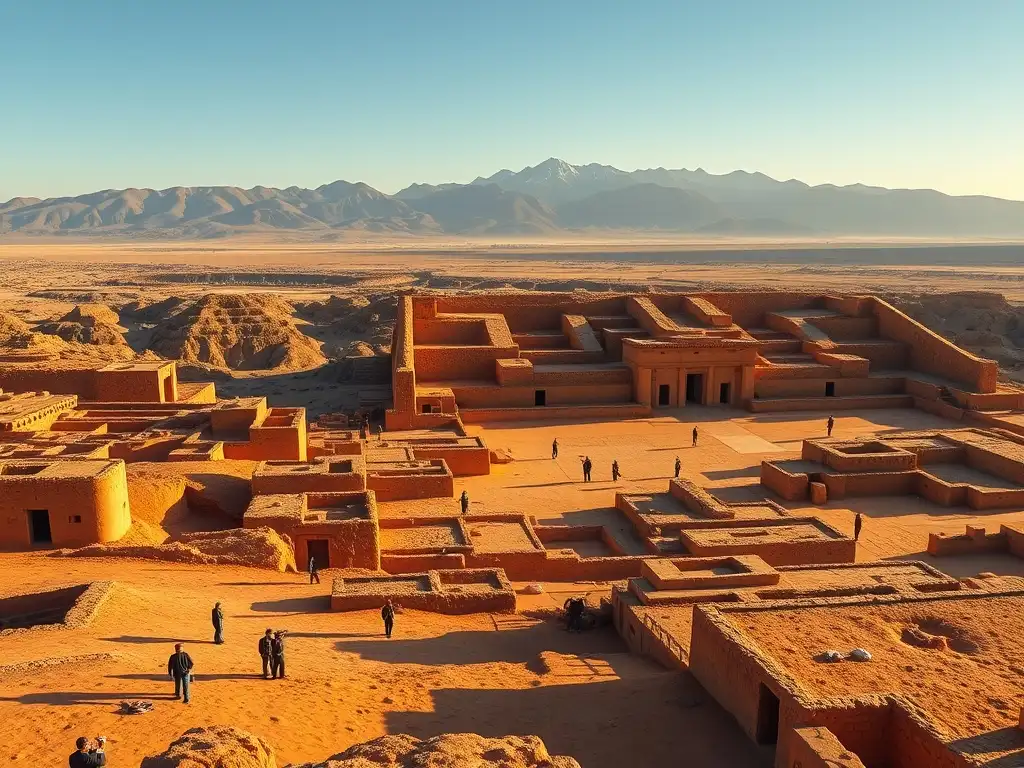
Step into a world lost to time, where the echoes of ancient Andean empires still resonate. Prepare to unravel the enigma of the Andean Civilizations, a tapestry woven with threads of breathtaking artistry, sophisticated technology, and powerful rulers. But who were the enigmatic priest-kings of Caral? Their story, a pivotal chapter in Andean history, is far more complex and fascinating than you might imagine. Dive into the captivating history of Caral priestkings and discover the secrets they hold, unlocking a deeper understanding of the foundations of this remarkable civilization.
- The Enigmatic Priest-Kings of Caral: Forerunners of Andean Civilization
- Understanding the Rise of Caral and its Priest-King Society
- The Power and Influence of Caral's Priest-Kings
- Unveiling the Legacy of the Caral Priest-Kings
- Exploring the Historical Significance of Caral's Rulers
- Frequently Asked Questions
- Final Reflection: Echoes of Caral: A Legacy of Innovation and Mystery
- **Unveil the Secrets of Caral Now! **
The Enigmatic Priest-Kings of Caral: Forerunners of Andean Civilization
The Norte Chico civilization, flourishing in the Supe Valley of Peru between 3000 and 1800 BCE, predates even the ancient Egyptians and Mesopotamians. This remarkable society, centered around the monumental site of Caral, challenges our understanding of early societal development in the Americas. Unlike many other early civilizations that relied heavily on agriculture and warfare, Caral’s power seems to have stemmed from a sophisticated theocratic system governed by a class of influential priest-kings.
This article delves into the fascinating history of these enigmatic figures, exploring their role in shaping Caral's unique societal structure and its lasting legacy on the development of later Andean civilizations. We will examine the available archaeological evidence, analyze their societal influence, and discuss the ongoing mysteries surrounding their lives and power.
Understanding the Caral priest-kings is crucial to comprehending the complex tapestry of Andean history and its surprisingly early advancements. Their story is one of innovation, spiritual influence, and a unique social organization that laid the groundwork for subsequent Andean cultures.
The Archaeological Evidence: Uncovering the Secrets of Caral
The archaeological discoveries at Caral have revolutionized our understanding of early Andean civilization. Extensive excavations have unearthed a remarkable complex of monumental structures, including large pyramids, plazas, and residential areas. The absence of weaponry and defensive structures suggests a society focused on peaceful development and internal organization, rather than external conflict. Analysis of the unearthed artifacts – including textiles, musical instruments (such as flutes!
), and intricate carvings – reveals a high level of artistic and technological sophistication. The careful planning and execution of the city's construction speak volumes about the organizational prowess of its leadership. The size and complexity of the structures suggest a significant labor force, implying a highly structured social hierarchy with specialized roles and a centralized authority, likely wielded by the priest-kings. Evidence suggests a complex system of trade and resource management, indicating a sophisticated economic system managed by the elite.
The Role of the Priest-Kings in Caral's Society
While the exact nature of their power remains a subject of ongoing research, it's clear that the Caral priest-kings held a position of immense authority. They were likely responsible for overseeing religious ceremonies, managing the economy, and organizing public works projects. Their authority likely stemmed from their perceived connection to the supernatural, acting as intermediaries between the people and the divine. The monumental architecture of Caral serves as a powerful testament to their ability to mobilize resources and inspire collective effort.
The absence of clear indicators of wealth accumulation by the priest-kings, unlike in many other early civilizations, suggests that their power was primarily based on spiritual authority and social influence rather than material possessions. This unique aspect of their leadership contributes to the ongoing fascination with their role in shaping Caral's unique societal structure. Further research may uncover more nuanced details about their social status and power dynamics.
The Legacy of the Caral Priest-Kings: A Foundation for Andean Civilization
The influence of Caral, and its priest-kings, extends far beyond its own existence. Many scholars believe Caral's sophisticated societal organization, technological advancements, and religious practices significantly influenced the development of subsequent Andean cultures. The sophisticated irrigation systems, for example, demonstrate a level of engineering expertise that was later refined and expanded upon by subsequent civilizations. The emphasis on ceremonial practices and the development of complex social hierarchies also appear to be echoed in later Andean societies.
The legacy of the Caral priest-kings, therefore, is not merely confined to their own time but extends to the broader trajectory of Andean civilization. Their story stands as a testament to the ingenuity and organizational capabilities of early Andean societies, highlighting the profound impact of their unique social and political structure on the development of the region. Understanding their history is key to understanding the deep roots of Andean culture.
Further Research Areas
While much progress has been made, many questions remain. Future research could focus on:
- A more detailed analysis of the social stratification within Caral society.
- A deeper understanding of the religious beliefs and practices of the Caral people.
- The extent of Caral's influence on later Andean civilizations.
Understanding the Rise of Caral and its Priest-King Society
This section delves into the fascinating societal structure of Caral, the oldest known civilization in the Americas, focusing specifically on the role of its priest-kings and how their influence shaped the development of Andean civilization. We will explore the origins of Caral and the unique social hierarchy that allowed it to flourish, leaving a significant legacy for later Andean cultures. Understanding the Caral priestkings history is crucial to grasping the broader context of Andean development. The rise of Caral challenges traditional narratives of Andean civilization, highlighting the complexity and sophistication of its early societies.
The Pre-Ceramic Origins of Caral: A Foundation for Andean Power
Caral's emergence around 2600 BCE represents a remarkable achievement in pre-ceramic Andean society. Unlike later Andean civilizations that relied heavily on agriculture dependent on irrigation systems, Caral's success stemmed from a sophisticated understanding of resource management in a seemingly less fertile environment. Archaeological evidence suggests a complex social organization even before the full development of ceramics. The construction of monumental structures, such as the large platforms and pyramids, required significant coordinated labor, implying a centralized authority capable of mobilizing a substantial workforce.
This early social organization, arguably spearheaded by the priest-kings, laid the groundwork for the later development of more complex Andean societies. The meticulous planning and execution of these massive projects point to a sophisticated societal structure, well beyond a simple tribal organization. The dedication to such monumental architecture, even before the widespread use of pottery, underscores the importance of religious and ceremonial practices in Caral's societal fabric, further emphasizing the influence of the priest-kings.
The mastery of resource management, including the development of sophisticated techniques in textile production and the gathering of diverse food sources, contributed significantly to Caral's ability to sustain a large population and support the monumental construction projects. The absence of evidence for warfare or significant conflict in the early Caral period suggests a relatively peaceful and collaborative society, perhaps further facilitated by the strong centralized authority of the priest-kings. The meticulous organization required for these early achievements laid the foundation for the later development of Andean power and influence.
The evidence suggests a hierarchical social structure in Caral, with priest-kings occupying the apex. These individuals were not merely religious leaders; they likely held significant political and economic power, controlling resource allocation and overseeing large-scale public works projects. Their influence extended to all aspects of Caral society, from religious ceremonies to the everyday lives of its citizens. The construction of large residential compounds near the ceremonial centers suggests a system of patronage and social stratification, with the priest-kings likely rewarding loyalty and service.
While we lack detailed written records from Caral, the architecture itself speaks volumes about their influence. The size and grandeur of the ceremonial structures, compared to residential areas, highlight the power and prestige associated with the priest-kings. Furthermore, the discovery of elaborate burial sites containing prestigious artifacts suggests that the priest-kings enjoyed a privileged status, even after death. The presence of specialized craft workshops within the city indicates a level of economic control exerted by the priest-kings, enabling the production of luxury goods and the maintenance of specialized craftspeople.
Analyzing the distribution of resources and artifacts within Caral can help to illuminate the extent of the priest-kings' influence and control over the society. Further research is needed to fully understand the mechanics of power and the specific ways in which the priest-kings maintained their authority, but it's clear their role was pivotal in shaping Caral's societal and cultural development. The study of Caral priestkings history offers valuable insights into the early development of complex societies in the Andes. The legacy of Caral's sophisticated social structure, influenced significantly by its priest-kings, continues to resonate in the subsequent development of Andean civilizations.
The Power and Influence of Caral's Priest-Kings
The Caral civilization, flourishing in the Supe Valley of Peru from approximately 2600 to 2000 BCE, predates the Inca by millennia, yet presents a sophisticated social structure centered around powerful priest-kings. Unlike later Andean societies with clear military hierarchies, Caral's power structure appears to have been primarily based on religious authority and control over resources. The priest-kings of Caral weren't necessarily warriors; their influence stemmed from their perceived connection to the divine and their mastery over the complex social and economic systems that sustained the city.
Understanding their power requires examining their role in shaping Caral's architecture, religious practices, and social stratification. The term "priest-king" itself highlights the interwoven nature of religious and political power in this early Andean society. This unique blend is a key element in understanding the "Caral priestkings history."
The monumental architecture of Caral stands as a testament to the organizational prowess and authority of its priest-kings. Massive platforms, plazas, and residential structures, constructed from carefully cut and placed stones, required immense coordinated labor. The scale of these projects, far exceeding the needs of a small community, suggests a highly centralized system of control, with the priest-kings directing and organizing the workforce.
Analysis of the construction techniques and the layout of the city reveals a deliberate design, likely reflecting a carefully planned social and political order. The largest structures, such as the main platform, were likely reserved for ritual activities overseen by the priest-kings, further solidifying their position at the apex of Caral's social hierarchy.
The precise methods of labor organization remain a topic of ongoing research, but the sheer scale of the constructions points towards a sophisticated system managed by powerful individuals – the priest-kings. This impressive feat of engineering is crucial to understanding the influence and power wielded by these early Andean leaders, adding another layer to the "Caral priestkings history."
Religious Practices and the Priest-Kings' Connection to the Divine
The religious beliefs and practices of Caral were intimately intertwined with the authority of the priest-kings. Archaeological evidence suggests a complex ritual life, with the discovery of numerous artifacts, including ceremonial objects and evidence of ritual offerings. These findings indicate that the priest-kings played a central role in mediating between the human and spiritual worlds.
Their control over religious practices likely granted them significant social and political power. The construction of large ceremonial platforms and the presence of specialized buildings dedicated to ritual activities further support this interpretation. The priest-kings weren't simply religious leaders; their role encompassed the control of resources, the organization of labor, and the maintenance of social order, all under the guise of religious authority.
The study of musical instruments found at Caral, such as flutes and panpipes, suggests that music played a vital role in religious ceremonies, with the priest-kings likely leading these performances and using them to reinforce their power and connection to the divine. Further research into the intricate details of Caral's religious practices is essential to fully understand the depth of the priest-kings' influence – a crucial aspect of the "Caral priestkings history."
The social structure of Caral exhibits clear signs of stratification, with evidence suggesting a hierarchical society where the priest-kings occupied the highest position. While the absence of monumental tombs initially suggested a less hierarchical society compared to later Andean cultures, analysis of residential structures and artifact distribution reveals significant differences in living standards. Larger, better-constructed houses, often located near ceremonial centers, likely belonged to the elite associated with the priest-kings.
The distribution of certain types of artifacts, such as finely crafted textiles and pottery, further supports the existence of a privileged class. While the exact nature of social mobility remains uncertain, the evidence suggests that the priest-kings controlled access to resources and opportunities, maintaining their dominance through a combination of religious authority and control over the distribution of wealth.
This carefully managed social hierarchy is a key component of the "Caral priestkings history," demonstrating the sophisticated political and social engineering of this early Andean civilization. Further investigation into the daily lives of various social strata is needed to fully understand the dynamics of power in Caral.
Unveiling the Legacy of the Caral Priest-Kings
The Caral civilization, flourishing in the Supe Valley of Peru between 2600 and 2000 BCE, predates the Inca by millennia, challenging conventional narratives of Andean development. Its unique social structure, centered around powerful priest-kings, significantly impacted subsequent Andean societies. Unlike later empires with clear military hierarchies, Caral's power stemmed from religious authority and sophisticated social organization.
The priest-kings, likely hereditary rulers, controlled resource allocation, oversaw monumental construction projects, and orchestrated complex rituals, solidifying their influence through a potent combination of spiritual and administrative control. Evidence suggests a highly stratified society, with specialized artisans and laborers supporting the elite. The absence of weaponry and defensive structures at Caral suggests a relatively peaceful society, focusing on internal development and possibly inter-regional trade, although the exact nature of their interactions with neighboring groups remains a subject of ongoing research.
Understanding the Caral priest-kings’ role requires analyzing their architectural achievements, ritual practices, and the sophisticated social organization they commanded. This intricate interplay of power, religion, and societal structure sets the stage for a deeper exploration of their lasting legacy.
Caral's Influence on Later Andean Cultures and Leadership
The influence of Caral's priest-kings extends far beyond their immediate geographical location and time period. Their sophisticated urban planning, evident in the carefully laid-out plazas and monumental structures, foreshadows later Andean urban centers. The presence of large public buildings dedicated to ritual activities suggests a centralized religious authority that mirrored and influenced the religious structures of later civilizations.
The emphasis on monumental architecture, exemplified by the massive platforms and pyramids, became a hallmark of Andean societies, indicating a continuing tradition of using architecture to express power and religious beliefs. While specific causal links are difficult to definitively establish due to the time gap and limited written records, the similarities between Caral's social organization and the later development of hierarchical societies in the Andes suggest a strong influence. The concept of a ruling elite wielding both religious and political power, a characteristic of Caral's priest-kings, became a recurring motif in Andean history.
Furthermore, the impressive feats of engineering and social coordination required to construct Caral's monumental structures demonstrate a level of organizational sophistication that likely served as a model for later Andean civilizations. The legacy of Caral is not merely a matter of architectural imitation; it represents the transmission of a powerful model for social organization and leadership across centuries.
Influence on Chavin Culture: Architectural and Religious Similarities
The Chavín culture (900-200 BCE), a significant force in the northern Andes, exhibits striking similarities with Caral, suggesting a potential link in terms of cultural transmission or shared ancestry. Both cultures featured monumental architecture, including large plazas and temples, indicative of centralized religious authority. The use of similar building techniques and materials further strengthens this connection.
Moreover, the religious iconography of both cultures, while distinct in detail, shares certain thematic elements, suggesting a possible continuity of religious beliefs and practices. For instance, the emphasis on ritual and the use of specific motifs in architecture and artifacts hint at a possible shared cosmological worldview. While direct evidence of Caral's direct influence on Chavín remains debated among archaeologists, the parallels are too significant to ignore.
The possibility of cultural exchange or even a direct lineage between the two cultures presents an exciting avenue for further research, potentially revealing crucial insights into the evolution of Andean religious and political systems. Further investigation into the specific religious iconography and ritual practices of both cultures could shed more light on this intriguing possibility. This comparison is crucial for understanding the long-term influence of Caral's priest-kings and their impact on subsequent Andean civilizations' religious and political structures.
The Enduring Mystery of Caral's Priest-Kings and their Civilization
Despite significant archaeological discoveries, many aspects of Caral's priest-kings and their civilization remain shrouded in mystery. The absence of a writing system hinders our understanding of their beliefs, social structures, and political processes. How did the priest-kings maintain their power? What were the specific rituals they conducted? What was the extent of their influence beyond the Supe Valley?
These are just some of the questions that continue to puzzle researchers. The lack of evidence for warfare or extensive conflict raises questions about the nature of their interactions with neighboring groups. Were they primarily focused on internal development, or did they engage in significant trade or diplomatic relations? The precise mechanisms of resource management and social control within Caral also remain unclear.
How did they manage to sustain a complex urban center without the apparent use of forced labor or a large military? The answers to these questions lie in further archaeological excavation and analysis, combined with interdisciplinary approaches involving anthropology, sociology, and other relevant fields. The ongoing investigation of Caral promises to continue to reveal more about the sophisticated nature of this early Andean civilization and the significant role played by its enigmatic priest-kings. Unraveling these mysteries will not only deepen our understanding of Caral but also shed light on the broader evolution of Andean civilizations and the enduring legacy of its pioneering leaders.
Exploring the Historical Significance of Caral's Rulers
The enigmatic Caral civilization, flourishing in the Norte Chico region of Peru from 3000 to 1800 BCE, predates many other well-known Andean cultures. Unlike later Andean societies with clearly defined warrior-kings or emperors, Caral's leadership structure presents a unique puzzle for historians. The term "priest-kings" is often used, but the precise nature of their power and influence remains a subject of ongoing research and debate. Were they solely religious figures, wielding authority through spiritual means?
Or did they also command economic and political power, controlling resources and directing labor? The limited archaeological evidence necessitates careful interpretation, and several competing theories exist. One compelling theory suggests a complex system of social organization, where the priest-kings held a position of high prestige and authority, coordinating large-scale public works projects and managing the complex ceremonial life of the city.
This system likely involved a hierarchical structure, with individuals holding specialized roles supporting the priest-kings. The absence of overt military structures in Caral suggests a different type of power dynamic than those seen in later Andean empires, emphasizing social cohesion and ritual practices over aggressive expansion. Understanding the role of these leaders is key to unlocking the secrets of Caral's remarkable societal organization.
Caral Priestkings History: A Timeline of Key Events
Constructing a precise timeline for Caral's priest-kings is challenging due to the nature of the archaeological evidence. Dating relies on radiocarbon dating of organic materials found at the site, which provides a range rather than exact dates. However, we can create a rough chronological framework based on the phases of Caral's development:
| Phase | Approximate Dates (BCE) | Key Events (Speculative based on archaeological findings) |
|---|---|---|
| Early Caral | 3000-2700 | Initial settlement, establishment of basic social structures, construction of initial monumental architecture. |
| Middle Caral | 2700-2300 | Expansion of the city, construction of larger platforms and temples, intensification of ceremonial activities. |
| Late Caral | 2300-1800 | Peak of Caral's development, construction of the largest structures, evidence of complex social organization. |
| Post-Caral | 1800-1500 | Gradual decline and abandonment of Caral, possible internal conflicts or environmental factors contributing to the end. |
Further research, including advanced dating techniques and detailed analysis of artifacts, is necessary to refine this timeline and gain a more nuanced understanding of the lives and reigns of Caral's priest-kings. The limited textual evidence further complicates this process. The absence of a writing system in Caral means that we rely heavily on material culture for insights into the history and society of this civilization.
Comparing Caral's Leadership with Norte Chico Societies
Caral, while the largest and most studied site in the Norte Chico region, wasn't the only settlement. Numerous smaller sites reveal a complex network of interconnected communities. While the specifics of leadership in these other sites are less well understood, comparisons can offer insights into the broader context of Caral's priest-kings.
Archaeological evidence suggests that these societies shared certain cultural traits—like monumental architecture and sophisticated irrigation systems—but the precise nature of their interaction and the degree of centralized authority remain open questions. Did Caral's priest-kings exert influence over these smaller communities? Was there a level of inter-societal cooperation or competition for resources?
These are critical questions that require more extensive comparative studies of the Norte Chico region. The development of similar architectural styles and technological advancements across multiple sites suggests some level of interaction and potentially shared cultural values, but the extent of Caral's dominance or influence is yet to be fully determined. Further investigation is needed to unveil the precise nature of the relationships between Caral and other Norte Chico societies, shedding light on the role of Caral's leadership in the wider context of the region.
The Importance of Caral Priestkings in Andean History Studies
The study of Caral's priest-kings is crucial for understanding the broader trajectory of Andean civilization. Caral's early development, predating many other well-known Andean cultures by centuries, challenges traditional narratives of Andean history. The unique leadership structure, characterized by the apparent absence of military power and a focus on religious and ceremonial activities, offers a contrasting model to the more militaristic empires that followed.
This challenges the preconceived notion that Andean societies were inherently hierarchical and militaristic. By understanding Caral's social organization and the role of its priest-kings, we gain a more comprehensive understanding of the diversity and complexity of early Andean societies. The research on Caral's priest-kings also highlights the importance of interdisciplinary approaches in archaeological research.
Combining archaeological data with anthropological, sociological, and other perspectives is essential to interpret the complex social dynamics of this ancient civilization. The study of Caral continuously redefines our understanding of Andean origins and provides a crucial framework for examining subsequent Andean societies.
Frequently Asked Questions
Who were the Caral priest-kings?
The Caral priest-kings were likely religious and political leaders of the Caral-Supe civilization. Their power stemmed from their control over religious ceremonies and resources, shaping the society's development. Their exact roles are still debated by scholars.
What is the significance of Caral in Andean history?
Caral is one of the oldest known civilizations in the Americas, predating the Incas by millennia. It demonstrates a sophisticated level of social organization and advanced technological capabilities for its time, challenging previous assumptions about Andean development.
How did the Caral priest-kings maintain power?
The Caral priest-kings likely maintained power through a combination of religious authority and control over resources. They may have managed the distribution of food and other essential goods, consolidating their influence over the population. The exact mechanisms remain a subject of ongoing research.
What kind of technology did the Caral civilization possess?
Caral showcased remarkable architectural skills, constructing large public buildings and sophisticated irrigation systems. They also developed advanced knowledge of textiles and music, evidenced by discoveries at the site. Their achievements were significant for the early Andean region.
How does the Caral civilization relate to later Andean cultures?
While the precise relationship is still being studied, Caral's influence is suspected to have spread throughout the Andean region, potentially influencing later civilizations like the Moche, Nazca, and Incas. Their innovative societal structures and technologies likely paved the way for subsequent Andean developments.
Final Reflection: Echoes of Caral: A Legacy of Innovation and Mystery
The sophisticated urban planning and complex social structures of Caral's priest-kings resonate powerfully with contemporary society, reminding us that advanced civilizations can flourish even without the trappings of metalworking or a written language. Their achievements challenge our preconceived notions of societal development and force us to reconsider the very definition of "civilization." The ingenuity and foresight displayed by the Caral culture offer a compelling counterpoint to the often-linear narratives of historical progress.
The enduring mystery surrounding Caral's priest-kings continues to fascinate and inspire, prompting ongoing research and reinterpretations of Andean history. Their influence extends far beyond the immediate geographical area, shaping the cultural landscape of the Andes and leaving an indelible mark on subsequent civilizations. The past is never dead. It's not even past.
- William Faulkner. This quote perfectly encapsulates the ongoing relevance of Caral, its mysteries continuing to shape our understanding of the past and its potential to inform our future. The legacy of Caral serves as a potent reminder of the rich tapestry of human ingenuity and the enduring power of cultural innovation.
Consider, for a moment, the implications of Caral's existence. What can we learn from a society that prioritized social organization, complex irrigation systems, and artistic expression without the hierarchical structures often associated with later Andean empires? Let the echoes of Caral inspire you to question assumptions, embrace complexity, and appreciate the diverse paths humanity has taken to build thriving societies. The story of Caral is not merely a historical account; it is a call to explore the boundless potential of human collaboration and ingenuity, a potential that continues to resonate in our world today.
**Unveil the Secrets of Caral Now! **
Thank you for exploring the fascinating world of Caral's enigmatic leaders! You've discovered how these influential figures laid the foundation for Andean civilization, leaving behind a rich legacy that continues to inspire us. Now, let's put that inspiration into action!
Here are a few ways to further your understanding and appreciation of this remarkable culture:
- **Take a Virtual Tour:** Explore the ancient ruins of Caral through an online museum or virtual tour. Immerse yourself in the history and architecture that shaped this civilization.
- **Join the Discussion:** Connect with other history enthusiasts in our online forums. Share your thoughts on Caral's leaders and their lasting impact on modern societies.
- **Expand Your Knowledge:** Seek out documentaries or books that explore Andean civilizations in greater detail. Broaden your understanding and discover new perspectives on this captivating era.
What aspect of the Caral civilization most captivates you, and how do you believe it has influenced Andean cultures today?